Americans Actually Support U.S. Global Leadership
Most Americans still want the United States to lead globally—they just want to know what’s in it for them.
By experts and staff
- Published
 Rebecca LissnerCFR ExpertSenior Fellow for U.S. Foreign Policy and Director of the Future of American Strategy Initiative
What role should the United States play in a rapidly changing world? Competing visions of American strategy and global leadership have dominated policy debates since President Donald Trump’s reelection. Although he telegraphed a more restrained, America First policy during his 2024 presidential campaign, Trump’s second term has instead featured intense global engagement, albeit with a more coercive, transactional, and unilateral approach than Washington has previously adopted. This pivot has challenged critics both to characterize the president’s shape-shifting approach and to articulate a more compelling alternative.
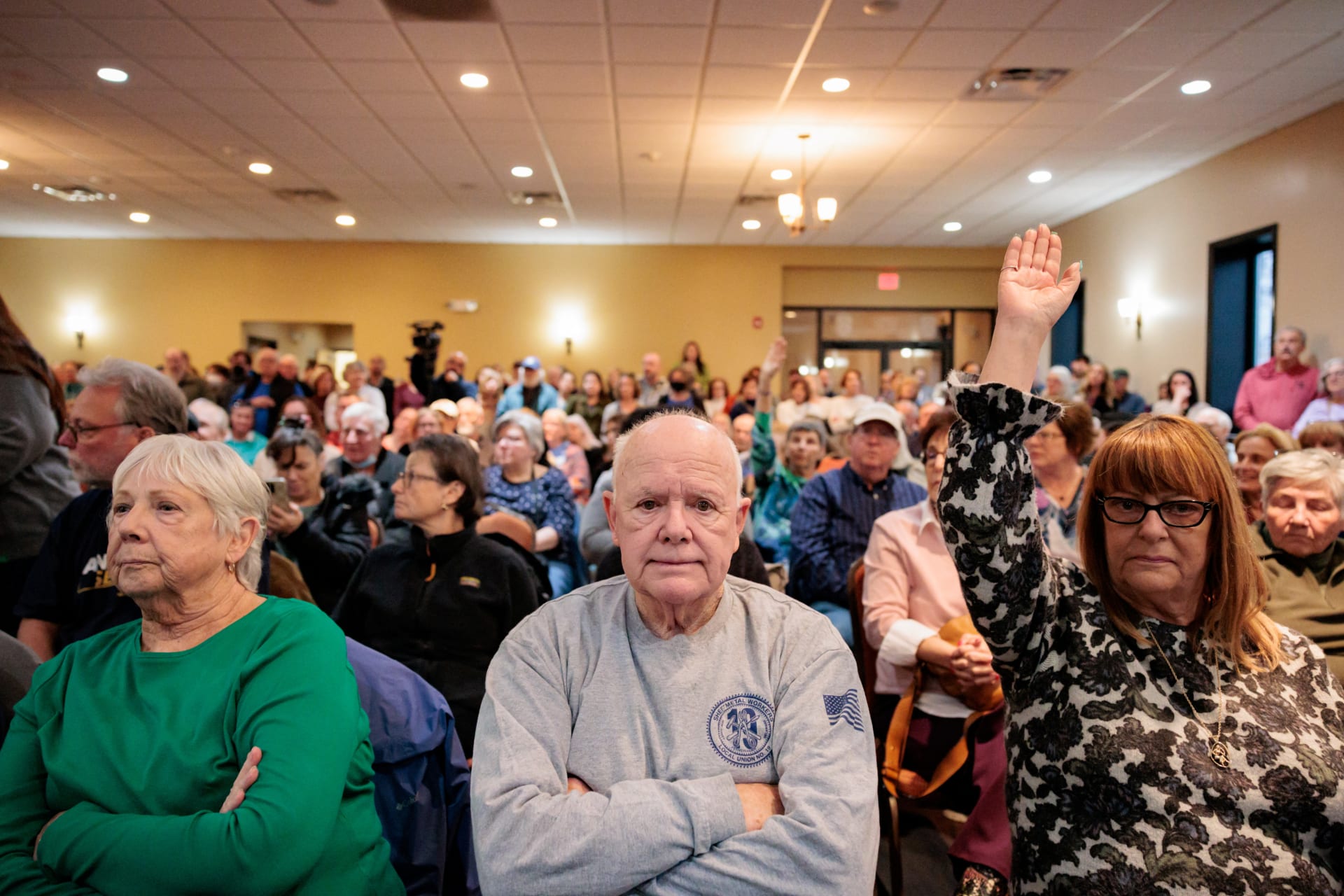
Lost in much of this debate, however, is a clear sense of how Americans themselves conceive of their country’s global role and what they want from U.S. foreign policy. To better understand outside-the-Beltway perspectives, the Council on Foreign Relations (CFR) convened nine bipartisan conversations in late 2025 with 332 Americans representing 29 states—with a particular focus on Arizona, Georgia, and Michigan. Participants met in Atlanta, Detroit, Phoenix, and Washington, DC, as well as virtually.
Combined with public opinion polling, their discussions suggest that the future of the U.S. global role could be less hotly contested than it appears from Washington. The results paint a picture of a public that wants the United States to lead globally, but on issues with clear, direct benefits to their lives and communities.
Listening to Americans on the U.S. Global Role
Across conversations with state and local elected officials, civil-society and business leaders, academics, university students, and members of CFR’s young professional and national member networks, several recurring themes emerged:
The United States should be engaged but not entangled. Participants expressed broad support for an American foreign policy that is active and respected in the world but not militarily entangled in overseas conflicts. Driving this support for sustained engagement was fear of the alternatives: a “might makes right” international system shaped by China and other authoritarian countries, or a disorderly world of competing regional powers. Participants voiced concern about what those systems would mean for the freedom of U.S. citizens, the security of U.S. allies, and the stability of the global economy.
Participants simultaneously stressed the importance of communicating how global engagement directly benefits the security and prosperity of the American people. A Republican mayor from a small city in the South put it succinctly: his constituents will support global engagement if they understand the return on investment. State and local elected officials broadly emphasized the need to connect foreign policy to local outcomes grounded in specific human narratives—dockworkers whose jobs depend on trade, business owners affected by deportations, or farmers who rely on foreign exports.
American foreign policy should be principled but modest. CFR heard strong support for a foreign policy rooted in values such as the rule of law, human rights, and democracy. For many participants, these values are what differentiate the United States from its geopolitical competitors. Yet they expressed deep skepticism of American exceptionalism, or the notion that the United States remains a “shining city on a hill” with the credibility or moral authority to impose its values on others. College students were particularly likely to cite failed U.S. military interventions, support for Israel in Gaza, and democratic erosion at home as reasons the United States should refrain from telling other countries how to govern themselves. They voiced fears that American exceptionalism is seen as arrogant by other countries and as hypocritical by audiences who perceive the declining health of American democracy.
Trade needs to be predictable, not fair. Despite broad support for trade as essential to the U.S. economy—and concern about tariffs’ effects on consumer prices and business input costs, especially in Michigan—many participants voiced misgivings about fairness as a governing principle for global trade. They framed trade as inherently competitive and said they want it to benefit American workers, even if that comes at the expense of other countries. Others noted that trade has not produced fair or equal outcomes for communities within the United States.
Yet participants opposed the uncertainty created by the Trump administration’s tariff decisions and favored “predictable” trade policies that create a stable operating environment for businesses (especially small businesses) and workers. Americans are not anti-trade, but they are demanding a more deliberate and stable approach to the international trading system. On climate, the majority framed action in terms of economic opportunity and the imperative to outcompete China in the clean energy economy, rather than as an area of global cooperation.
Foreign policy begins at home. Participants emphasized that a sound American foreign policy starts with investments in domestic strength. They conveyed significant concern about democratic erosion and partisan polarization as barriers to global engagement, alongside calls to improve the quality of American education and mitigate inequality to shore up the foundations of national strength and cohesion. More broadly, participants emphasized that if Americans feel they are doing well economically, they are more likely to support global engagement and cooperation.
Toward a More Sustainable and Successful Strategy
Those discoveries are anecdotal rather than representative, and they largely predate the extraordinary foreign policy volatility in the early months of 2026. Recent events—such as the U.S. military operation to capture Venezuela’s president, a transatlantic crisis over potential acquisition of Greenland, and war with Iran—could well color how Americans see the costs and benefits of global leadership. Even so, CFR’s conversations provide insights into how Americans are thinking about foreign policy and add texture to polls with similar findings.
Indeed, recent polling paints a similar picture of a public that remains broadly supportive of global engagement. In Chicago Council polling [PDF] conducted in July 2025, 60 percent of Americans said the United States should take an active role in world affairs rather than “staying out,” including majorities of Democrats, Republicans, and independents. An NPR/Ipsos poll found that a majority of Americans (61 percent) believe the United States should be the moral leader of the world, though only 39 percent believe it actually is. And survey results from the Rockefeller Foundation in September 2025 [PDF] showed that 61 percent of Americans agree that the United States should cooperate on global challenges, even if it means compromising on some national interests. Alliances remain popular: in the same Chicago Council survey, 91 percent said maintaining alliances is an effective way to achieve foreign policy goals—a number that has risen over the past decade. Bipartisan majorities also favor international trade, with 79 percent [PDF] of Americans agreeing international trade is good for the U.S. economy, even as 52 percent also support [PDF] restrictions on imported goods to protect American jobs. These recent findings are consistent with fairly stable long-term trends of majority U.S. support for global engagement, alliances, and trade, even as the levels of support have varied and partisan attitudes have shifted over time.
Yet overarching support for global engagement is not a blank check for American aggression or adventurism around the world. Surveys taken around the one-year mark of Trump’s second term suggest many Americans see the current approach as over-torqued: as of January 2026, a growing number of Americans wanted the United States to take a less active role in solving global issues (45 percent of respondents, up from 33 percent in September 2025, according to AP-NORC polling). The historically unpopular nature of the new U.S. war with Iran suggests a similar sentiment.
Public opinion does not determine U.S. strategy. Americans generally do not vote on foreign policy issues, and a body of political science research shows that public opinion often follows cues from political leaders. Even so, understanding the mood and views of Americans across the country matters in scoping the future of the United States’ global role. Any sustainable, successful approach needs to be grounded in public demand and framed in terms that resonate with Americans. Taken together, these conversations and data points reveal something U.S. foreign policy debate has largely overlooked: a durable and fairly bipartisan consensus on the broad contours of American global engagement. Americans want the United States to lead, but to do so in ways that are disciplined and grounded in tangible benefits to their lives.