China and Climate: December 2025
“China and Climate” tracks and breaks down China’s engagement with climate and energy issues around the world. Major climate and energy stories in December highlighted this month include tech-funding announcements, a bilateral nuclear agreement, and ratification of the Agreement on Marine Biological Diversity of Areas Beyond National Jurisdiction (the BBNJ Agreement).
By experts and staff
- Published
- Research Associate, Climate and Energy
- Research Associate, Climate Change Policy
China Announced State-Backed Venture Fund
As U.S.-China competition grew, especially around semiconductors, China announced the launch of a state-backed venture fund on December 26. To increases its push for technological innovation and breakthroughs, the fund seeks to reduce early-stage investment risk and promote financial innovation. The fund is focused on supporting tech start-ups that are developing hard technologies such as quantum technology, aerospace, and energy tech. The announcement outlined goals of aligning financial capital and venture capital investment with the fund’s longer-term development goals established in its five-year plan. The national fund has $14.3 billion and includes three regional reserves established through national equity stakes. Bloomberg reports that the national fund is set to run for twenty years, with the first ten focused on investment and the following ten on exits.
China Unveils Ten-Year Earth System Forecasting Strategy
On December 22, the China Meteorological Administration (CMA) announced its earth system forecasting development strategy for the next ten years. The plan seeks to improve early-warning systems for extreme weather and expand forecasting capabilities. The strategy has both accurate daily forecasting and long-term climate forecasting as additional goalposts. When promoting the new approach, the head of the administration’s Earth System Modeling and Prediction Center, Gong Jiandong, announced that those forecasting and disaster-preparedness technologies will be available for all countries taking part in the Belt and Road Initiative.
Increased self-reliance and technological independence in weather forecasting have been a priority in recent months. In September, CMA reported that its artificial intelligence weather forecasting dataset outperformed Europe’s equivalent in precipitation during the wet season. For over eighty years, Europe’s dataset has been deemed the cornerstone of global climate analysis and forecasting and used to assess atmospheric conditions on a global scale. China’s announced goals establish attempts to shift away from reliance on Europe’s dataset. Further, in December, the CMA, alongside the World Meteorological Organization, released a new set of guidelines on best practices in early warning systems in the energy sector.
China and France Sign Joint Statements on Climate and Nuclear Cooperation
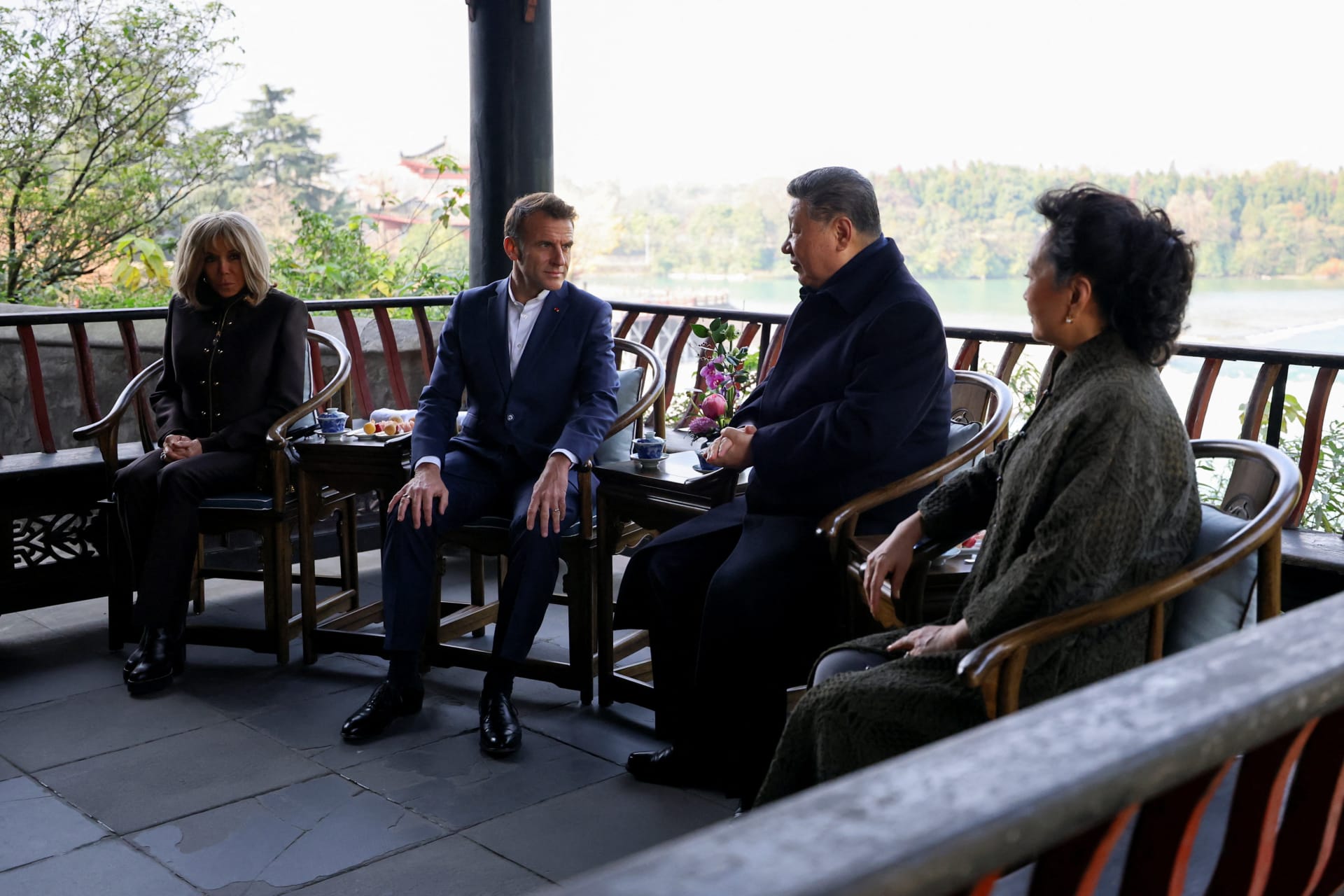
On December 5, China and France released a declaration of further cooperation in the “peaceful uses of nuclear energy,” welcoming “the cooperation between our two countries, both from an industrial and a scientific and technological point of view.” China is building more nuclear power plants than any other country in the world, and France operates Europe’s largest number of nuclear reactors. Both sides “reiterate their shared commitment to foster the safe development of nuclear energy, to strengthen the coordination of the nuclear industrial chain and to jointly preserve its resilience.” Against that backdrop, the two countries will explore the possibility of collaborating on small modular reactors and the integration of artificial intelligence.
The statement on nuclear cooperation was part of a package of announcements, which also included a joint statement on cooperation in addressing global climate and environmental challenges. The statement is the product of a state visit to China by French President Emmanuel Macron at the invitation of Chinese President Xi Jinping. The two countries reaffirmed their commitment to multilateralism and the three Rio Conventions as the “fundamental legal bases and central frameworks for international cooperation to address global climate and environmental challenges.” At a time when the United States, one of the principal architects of those frameworks, is pulling away from international organizations and the science for addressing climate change, China and France indicated their intention to “defend the role of science as the basis of our action.”
Beyond affirming their broad commitment to international climate action and science, the two countries announced a few specific measures of support. China and France indicated support for an “international legally binding instrument aiming to end plastic pollution” and interest in “the possibility of establishing a working group on addressing climate and environmental challenges.”
China Ratifies UN Marine Biodiversity Agreement
On December 15, China presented the UN secretary-general with its “instrument of ratification” for the BBNJ Agreement. The agreement, which entered into force on January 17, 2026, addressed four key issue areas, including marine genetic resources, environmental impact assessments, area-based management tools, and capacity-building and technology transfer, covering previously unregulated fields.
International waters are host to geopolitical competition and emerging industries, such as deep-sea mining, that pose risks to biodiversity and marine ecosystems. China, one the first to sign the treaty, has significant maritime interests. And a spokesperson for China’s Ministry of Foreign Affairs noted that the ratification “demonstrates China’s sense of responsibility as a major country and support for multilateralism.” That support, however, should be taken alongside China’s ongoing dispute with the Philippines over its exclusive economic zone in the South China Sea.
China’s Pushback on the EU CBAM
As the clock ticked into 2026, China’s objections to the European Union’s Carbon Border Adjustment Agreement (CBAM) entering into force on January 1 did not emerge in isolation. At the thirtieth Conference of the Parties in November 2025, the country raised its concerns openly while simultaneously positioning itself as a global climate leader. In a public statement, an official from China’s Ministry of Commerce described the EU’s CBAM as “discriminatory.” A spokesperson noted that the CBAM not only ignores China’s strides in clean energy and low-carbon development but also goes beyond an effort to rein in carbon emissions—constituting an “unfair” trade restriction. China has long claimed that the levy violates World Trade Organization principles. Intended to make sure imported goods meet the same environmental standards as those produced in the EU, the CBAM will impose additional costs on carbon-intensive products that China exports to the EU, such as steel. In 2023, an estimated 4 percent of China’s total exports to the EU were covered by the CBAM.