China in Latin America: December 2025
In December, China announced new tariffs on beef imports from suppliers such as Argentina and Brazil, currently its two largest sources for the commodity. China published its third official policy paper on Latin America, reinforcing the acceptance of the One China principle as a primary condition for diplomatic relations and underscoring China’s commitment to regional cooperation on development, security, and technology. Chinese companies continued to expand influence in Latin America’s mining sector through acquiring three major lithium, copper, and gold-mining companies in the region.
By experts and staff
- Published
- Katya BandouilAssistant Manager, Audience Development & Digital Analytics, Foreign Affairs, Council on Foreign Relations
Trade
China announced it is set to impose a new tariff on beef imports that exceed specific quotas from suppliers such as Argentina, Brazil, and Uruguay. The new trade policy seeks to protect domestic farmers, the Chinese Ministry of Commerce said in a statement. Brazil, which sends nearly half of its beef exports to China, “will continue to engage in dialogue with China and the WTO to mitigate the effects of the measure and defend the legitimate interests of workers and producers in the sector,” according to a joint Brazilian government agency statement.
The Mexican Congress approved new tariffs targeting countries that lack free trade agreements with Mexico, including China, Mexico’s second-largest trading partner. The new tariff rates of up to 50 percent affect 1,463 product categories including textiles, automotive parts, electric vehicles, cosmetics, plastic, and steel. The new trade policy took effect on January 1, 2026.
China is set to import its first shipment of Argentine wheat since the 1990s. The sixty-five-thousand-ton cargo export follows Argentina’s official approval to export wheat to China in January 2024.
The second annual China-Latin America and the Caribbean Sustainable Food Innovation Forum was held from December 7 to 9 in Sanya, China. Experts discussed food security and cooperation on seed development. Chinese agricultural research institutions signed memoranda of understanding with Chile, Colombia, Ecuador, and Peru.
Diplomacy
China condemned local Panamanian authorities’ decision, reportedly due to risks of structural damage, to demolish a monument in the Arraiján District that honored Chinese contributions to the Panama Canal. “This monument, which held 171 years of life, blood, and dedication from the Chinese community, has been shattered to pieces,” said Chinese Ambassador to Panama Xu Xueyuan on X. “A symbol of China-Panama friendship, reduced to nothing.” Panama President José Raúl Mulino criticized the decision and called for an immediate investigation. “Such an act of irrationality is unforgivable,” Mulino wrote on his X account.
U.S. President Donald Trump–backed candidate Nasry Asfura officially won the Honduras runoff presidential election. During his run, Asfura pledged to cut ties with China and renew relations with Taiwan, undoing a 2023 decision by President Xiomara Castro to discontinue Honduras-Taiwan relations.
Bloomberg reported that three Colombian presidential candidates visited China in 2025, ahead of the 2026 elections. The visits stemmed from a plan introduced by Chinese President Xi Jinping in May, pledging to invite three hundred politicians from the South American region annually over the next three years.
The Brazilian Agency for International Tourism Promotion published a press release stating that Chinese tourism to Brazil grew 34 percent year over year.
“Donroe Doctrine” and Belt and Road
On December 4, Trump unveiled [PDF] a new national security blueprint based on the Monroe Doctrine, asserting American dominance in the Western Hemisphere and aiming to limit non-Western powers from expanding geopolitical influence in Latin America.
On the heels of Trump’s strategy outline, China published its third official policy paper on Latin America. The document reinforces the acceptance of the One China principle as a prerequisite for diplomatic relations and underscores China’s commitment to deepening cooperation in Latin America and the Caribbean on investment, trade, diplomacy, technological development, and more. The document does not mention the United States by name but cites its commitment to opposing “unilateral bullying practices” and rejecting “attempts of ‘decoupling’ and ‘reinventing the wheel.’”
China, a leading importer of Venezuelan oil, accused the Trump administration of violating international law as the United States enforced a blockade on sanctioned oil tankers near Venezuela.
On December 17, Chinese Foreign Minister Wang Yi spoke with Venezuelan Foreign Minister Yván Gil over the phone following heightened tensions between the United States and Venezuela. “China believes that the international community understands and supports Venezuela’s position of safeguarding its legitimate rights and interests,” Yi said, according to a statement by the Chinese Ministry of Foreign Affairs. China further condemned the United States at an emergency meeting of the UN Security Council amid the U.S. naval blockade, accusing it of aggression and intimidation that could destabilize Latin America.
Security
On December 29, Venezuela issued an official statement condemning the U.S. government’s intention to sell arms to Taiwan. “Such action directly undermines China’s sovereignty and territorial integrity, undermines strategic stability and represents a blatant threat that jeopardizes peace and security in the Asia-Pacific region,” the Venezuelan Ministry of Foreign Affairs wrote in the release.
Cuban Foreign Minister Bruno Rodríguez shared on X Cuba’s rejection of the U.S. government’s intended arms sale to Taiwan, reaffirming Cuba’s recognition of Taiwan as a part of Chinese territory.
Investment
The Wall Street Journal reported that China threatened to block a deal selling ports at the Panama Canal unless state-owned Cosco secures majority ownership.
In a move to strengthen China’s presence in Ecuador’s mining industry, Chinese state–owned mining corporation Jiangxi Copper Company Limited acquired SolGold, the company behind the Cascabel Project, a copper-gold deposit in northern Ecuador’s Imbabura Province.
China began constructing a new national stadium in El Salvador, slated to become the largest in the country and among the most sizable in Central America, according to Salvadoran President Nayib Bukele.
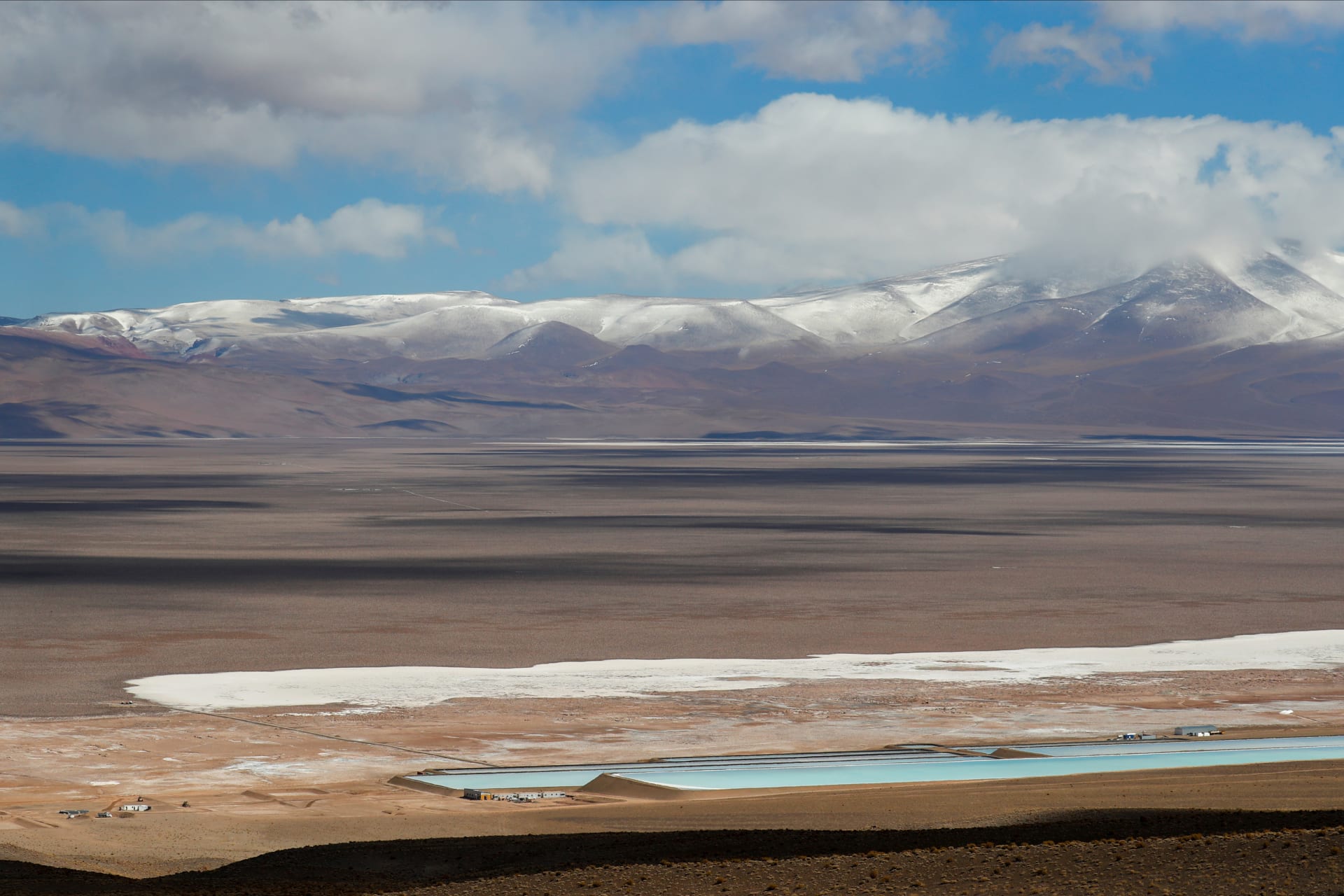
Lithium Chile Inc. announced the $175 million sale of Argentum Lithium SA to China Union Holdings Ltd., a real-estate development and operations company based in Shenzhen, China.
China and Brazil launched construction of a joint space laboratory focused on radio astronomy technology.
Chinese mining company CMOC inked a $1 billion deal to assume full ownership of Equinox Gold Corp’s operations in Brazil, including the Aurizona Mine, RDM Mine, and Bahia Complex.
Argentine President Javier Milei suspended plans to build a radio telescope with China.