How Guyana’s Oil Boom Will Reshape Energy Security
Guyana’s offshore oil discoveries have driven remarkable economic growth and transformed the South American country into a significant energy producer, with implications for regional stability and energy markets, as well as U.S. foreign policy.
By experts and staff
- Published
 Roxanna VigilInternational Affairs Fellow in National Security, sponsored by Janine and J. Tomilson Hill
- Senior Writer/Editor, Latin America
Roxanna Vigil is an international affairs fellow in national security at the Council on Foreign Relations (CFR), sponsored by Janine and J. Tomilson Hill. Diana Roy is a senior writer and editor for Latin America at CFR.
The “Americas quintet” of oil producers—the United States, Argentina, Brazil, Canada, and Guyana—is expected to reshape global oil markets by driving most of the non-Organization of the Petroleum Exporting Countries (OPEC) supply growth over the next ten years, according to the International Energy Agency. Guyana is the newcomer and the third-smallest country in South America, but its offshore oil discoveries have given it an outsize role in global energy markets.
However, Guyana’s rapid transformation also raises questions about how the country—historically one of the poorest in the region—will sustainably manage its production and revenue. A long-standing territorial dispute with Venezuela adds another layer of complexity. Despite being one of the world’s fastest-growing economies, a large portion of Guyana’s population of less than one million lives in poverty, corruption persists, and concerns abound over how the country’s oil wealth may exacerbate existing political divisions, some of which fall along ethnic lines.
For Guyana to achieve long-term growth, avoiding the so-called resource curse will be critical, particularly as its emergence as a major oil producer reshapes the regional energy landscape. Guyana’s strategic Caribbean location, democratic stability, and growing energy resources—combined with the need to counter Venezuelan aggression—make it a compelling partner for advancing U.S. regional interests.
What’s the state of Guyana’s oil sector?
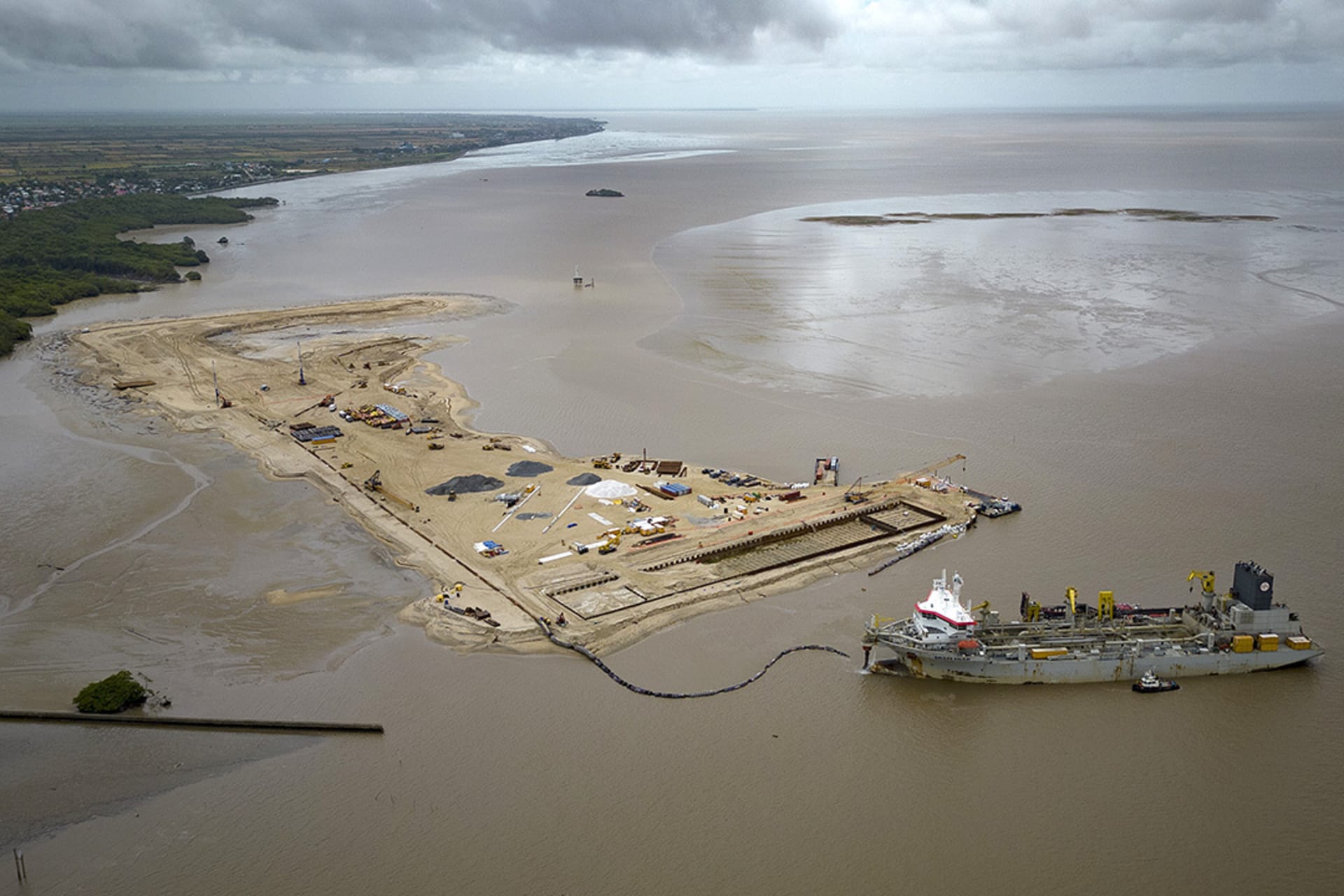
Guyana is the world’s newest petrostate, with major offshore oil discoveries by ExxonMobil and its partners in the last decade transforming the small South American country from a net energy importer into one of the fastest-growing oil producers globally. Guyana’s total—and largely recoverable—proven oil reserves are now estimated to be at about eleven billion barrels, surpassing producers like Norway and ranking it among the world’s top twenty oil reserve holders. Most of these oil reserves are in the offshore Stabroek Block, approximately 120 miles off Guyana’s coast. Other major players in the ExxonMobil-led consortium include Chevron and CNOOC, China’s largest state-owned offshore oil and gas producer.
Oil production has expanded rapidly under the consortium, and Guyana is now the world’s largest oil producer on a per capita basis. As of late 2025, Guyana was producing roughly 900,000 barrels per day, with capacity projected to reach around 1.7 million barrels per day by 2030. The country’s oil revenues—which to date exceed $8 billion—have driven exceptional economic growth, with real gross domestic product (GDP) growth averaging 47 percent per year since 2022.
What are the global and regional energy security implications of Guyana’s rise?
In 2024, Guyana’s oil exports primarily went to Europe (66 percent) and the United States (29 percent). European demand for Guyana’s crude oil surged after Russia’s 2022 invasion of Ukraine, as refiners sought alternatives to sanctioned Russian supplies. Supply increases from the United States and growing production in Brazil, Canada, and Guyana enabled Europe to impose sanctions on Russia without triggering global shortages. Together, the Americas quintet is expected to drive nearly all non-OPEC oil supply growth in the short to medium term, with output likely helping to dampen oil price volatility during future international crises.
In addition to oil, Guyana has an estimated 16 trillion cubic feet of proven natural gas reserves. Although Guyana currently has no gas pipeline infrastructure, a gas-to-energy project is expected to deliver approximately 50 million cubic feet of natural gas per day from the Stabroek Block’s Liza field to a 300-megawatt power plant and natural gas liquids plant by the end of 2026. The project aims to reduce Guyana’s dependence on fuel oil for electricity generation, cutting both carbon emissions and electricity costs.
To date, the natural gas from offshore oil production has been reinjected into wells to support production and used as on-site fuel. Longer term, ExxonMobil’s proposed Longtail project—the largest gas development in the Stabroek Block—could produce up to 1.5 billion cubic feet per day of natural gas and other petroleum products through a liquefied natural gas (LNG) facility.
These natural gas developments position Guyana to address a critical regional energy challenge. Many Caribbean countries currently spend up to 15 percent of GDP on fuel oil imports for power generation, with petroleum products representing 87 percent of the region’s primary energy consumption. The region faces an acute supply gap as Trinidad and Tobago—the Caribbean’s traditional LNG supplier with the region’s largest gas infrastructure—has seen LNG exports fall by 40 percent since the COVID-19 pandemic due to dwindling reserves.
What are the broader foreign policy implications of Guyana’s energy role?
Energy security. Guyana’s expanding production capacity diversifies global oil sources, reducing traditional dependence on the Middle East while strengthening regional energy security and potentially influencing international price dynamics over the next decade. Guyana also has among the lowest global oil production costs and is well positioned to remain competitive as global oil demand plateaus and markets contract.
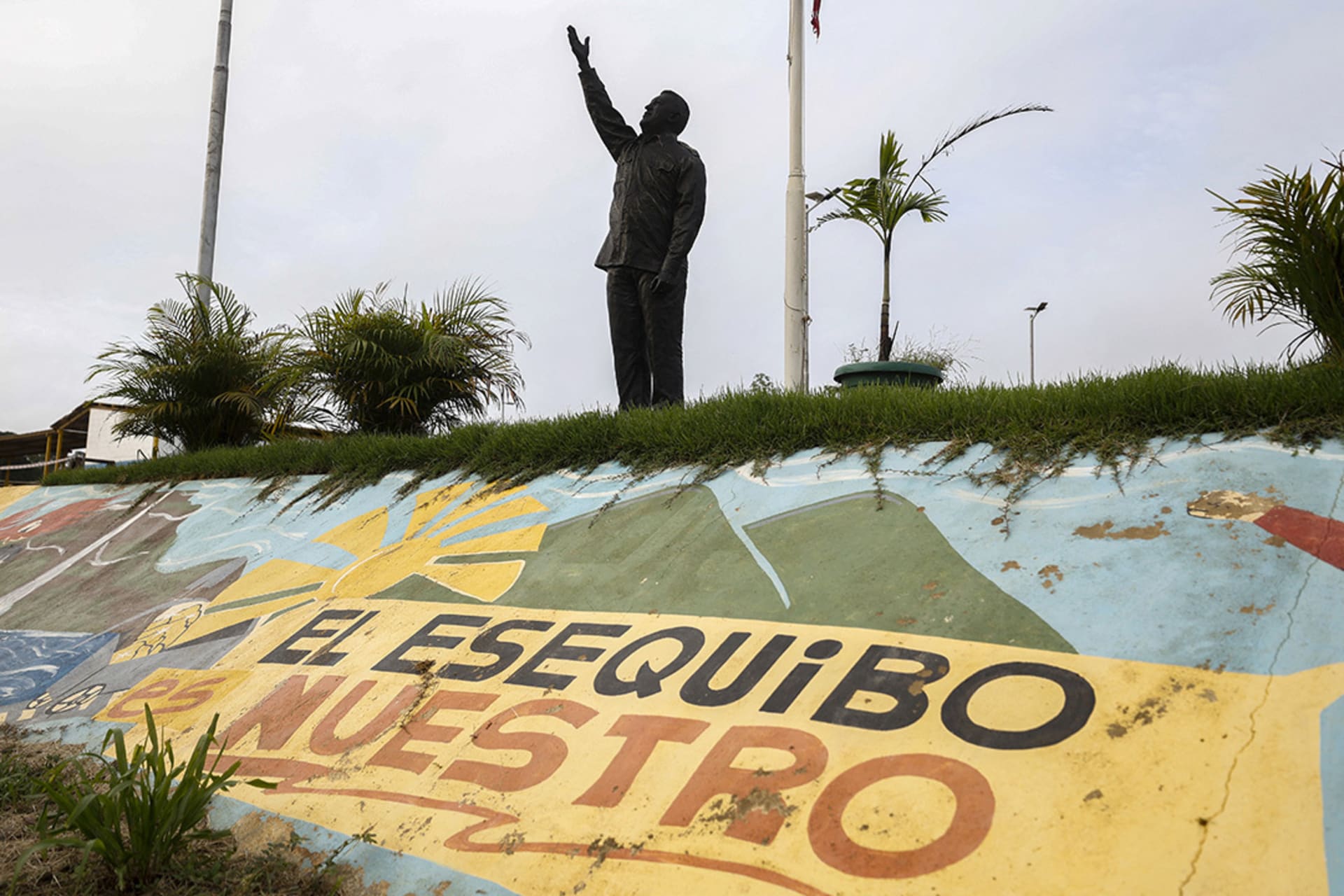
Venezuela. Guyana’s rise is also likely to further inflame tensions with Venezuela over the Essequibo region, which is situated between the two countries and has been a point of contention for more than a century. Venezuela’s territorial claims to Guyana’s Essequibo region—roughly two-thirds of its territory—is an existential threat to Guyana. In December 2023, the Nicolás Maduro regime held a controversial referendum to establish Venezuelan sovereignty over the area. While the government claimed overwhelming approval among voters, independent observers reported extremely low turnout and questioned the legitimacy of the results. After the referendum, Maduro ordered the deployment of thousands of troops to the border. Venezuela’s increasingly aggressive posture has raised international concerns about possible annexation of the territory.
Guyana has asked the International Court of Justice (ICJ) to rule on the territorial dispute, and a decision is expected in 2026. However, Venezuela doesn’t recognize the ICJ’s jurisdiction. The United States has consistently supported Guyana’s sovereignty and respected the ICJ process, while remaining open to bilateral negotiations if both parties agree. On a trip to Guyana in 2025, U.S. Secretary of State Marco Rubio reaffirmed U.S. support for Guyana’s territorial integrity and warned Venezuela against trying to forcefully take the Essequibo. Guyanese President Mohamed Irfaan Ali welcomed continued U.S. support following the U.S. military’s removal of Maduro. China, which is part of the ExxonMobil-led consortium, has refrained from taking sides in the territorial dispute, but its call for negotiations without endorsing the ICJ process was criticized by Guyana as appeasing Venezuela’s desire to bypass the court.
The Donald Trump administration’s intervention in Venezuela and its stated plan to indefinitely control oil sales introduces uncertainty about Venezuela’s future and regional stability. Complicating matters further, the Essequibo claim has broad support across Venezuela’s political spectrum, meaning the dispute is unlikely to disappear even if Venezuela eventually transitions to a democracy.
United States. Strengthening military, economic, and diplomatic support for Guyana aligns with U.S. national security interests given Guyana’s growing role as an energy producer, its strategic location, and its leadership among democratic nations in the Caribbean. However, U.S. security commitments to Guyana remain uncertain under the Trump administration’s volatile approach to alliances and its willingness to renege on prior commitments. Moreover, Guyana may be wary of deepening military ties with an administration that has embraced an expansive interpretation of the Monroe Doctrine, raising questions about whether such a partnership would genuinely respect Guyana’s sovereignty or serve primarily as a vehicle for U.S. resource access.
Despite these complications, the strategic case for supporting Guyana is compelling: preventing a Venezuela-Guyana conflict benefits broader regional stability, and a stable, democratic Guyana contributes to the Western Hemisphere’s energy security. Whether the current administration can deliver reliable, principle-based support—rather than transactional engagement driven by narrow resource interests—will likely determine the viability and sustainability of an enhanced partnership.
What are the main domestic concerns surrounding Guyana’s oil boom?
Environmental. Guyana holds roughly 3 percent of the total Amazon Rainforest, which plays a critical role in global climate health, and boasts one of the highest forest coverage rates in the region, with about 85 percent of the country covered in rain forest.
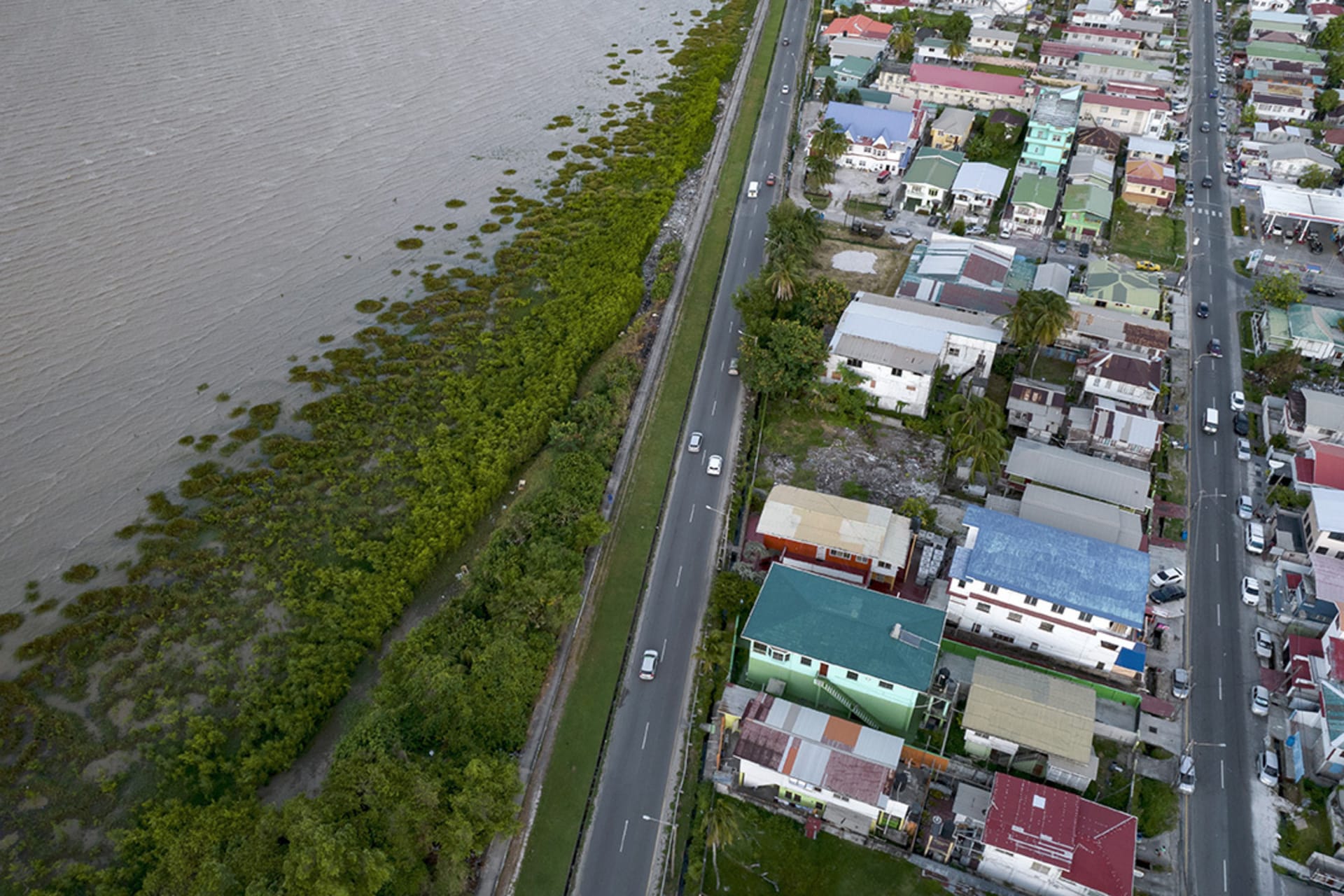
However, Guyana faces severe climate vulnerabilities. Most of the population lives on a low-lying coastal plain, protected only by a system of seawalls, extensive drainage canals, and mangrove forests. Although Guyana’s oil production represents a negligible share of global emissions, it poses direct environmental risks: spills could damage marine ecosystems, while increased industrial activity brings air and water pollution, habitat destruction, and general environmental degradation.
Despite this, oil revenues could help fund improved flood defenses and climate adaptation infrastructures. In a 2025 interview with the New York Times, President Ali said Guyana can balance climate leadership with fossil fuel exploitation, saying that oil revenue will be used to fund investments in infrastructure and the energy transition.
Economic. If its oil assets are not sustainably managed, Guyana risks falling victim to the so-called resource curse, of which neighboring Venezuela is a cautionary example. Compounding this risk, Guyana’s oil income is surging just as the world is shifting toward electrification and lower-carbon energy, threatening to lock the country into dependence on a depreciating asset and underscoring the importance of economic and energy diversification. While some analysts point to Norway as a model country [PDF] that has avoided these pitfalls, Guyana does not yet have the institutional capacity to replicate it. Guyana has created a sovereign wealth fund to help control oil revenues and fund national development, but it is too early to tell whether the country will be able to maximize the long-term social and economic benefits from its resources and strengthen its democracy.
The International Monetary Fund has commended Guyana’s strong economic growth, noting its economic outlook “remains highly favorable.” But public reactions to the government’s management of its newfound wealth have been mixed. According to the Inter-American Development Bank, approximately 58 percent of Guyana’s population lives in poverty despite the oil boom. The management of the country’s new oil wealth was a key issue in Guyana’s 2025 presidential election, with some opposition parties arguing that oil revenues benefit politically connected elites more than ordinary citizens and promising they would seek to renegotiate the contract with ExxonMobil.
Political. Guyana has long struggled with corruption, including bribery, embezzlement, and a weak rule of law. The country’s politics are also largely organized along ethnic lines, with the two major parties, the People’s Progressive Party/Civic (PPP/C) and the People’s National Congress (PNC) party, drawing primary support from the Indo-Guyanese and Afro-Guyanese populations, respectively. In 2020, Guyana held a general election after President David A. Granger’s government (led by a PNC-dominated coalition) lost a no-confidence vote in 2018. It was the first to occur since the 2015 oil discovery and was highly contested, leading to a delayed transfer of power when Granger refused to accept the results. The advent of oil revenues intensified the political stakes [PDF] surrounding the election, as it generated expectations of broad economic improvements. Additionally, a major criticism of the opposition during the campaign was the ruling coalition’s failure to secure a better oil deal with international companies. If not properly managed, the influx of oil wealth risks further undermining democratic governance, entrenching inequality in an already unequal society, and reinforcing ethnic divisions.
This work represents the views and opinions solely of the authors. The Council on Foreign Relations is an independent, nonpartisan membership organization, think tank, and publisher, and takes no institutional positions on matters of policy.