How I Got My Career in Foreign Policy: Margaret Brennan
Margaret Brennan spent her career covering everything from geopolitics to economics, before becoming the second woman ever to moderate Face the Nation. She spoke to CFR about the connection between finance and foreign policy reporting, her advice for young journalists, and an unforgettable assignment in Syria.
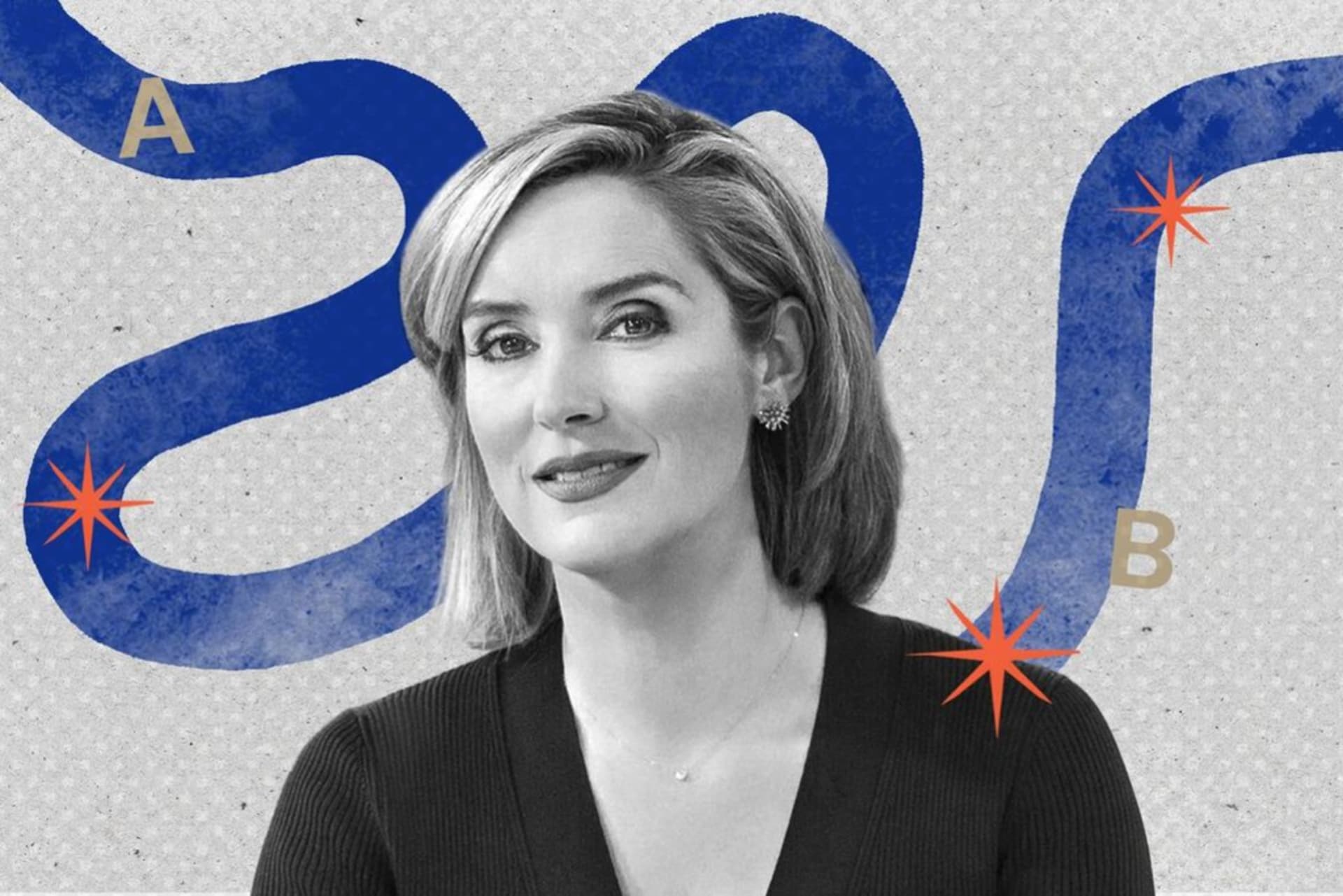
By experts and staff
- Published
- Editor
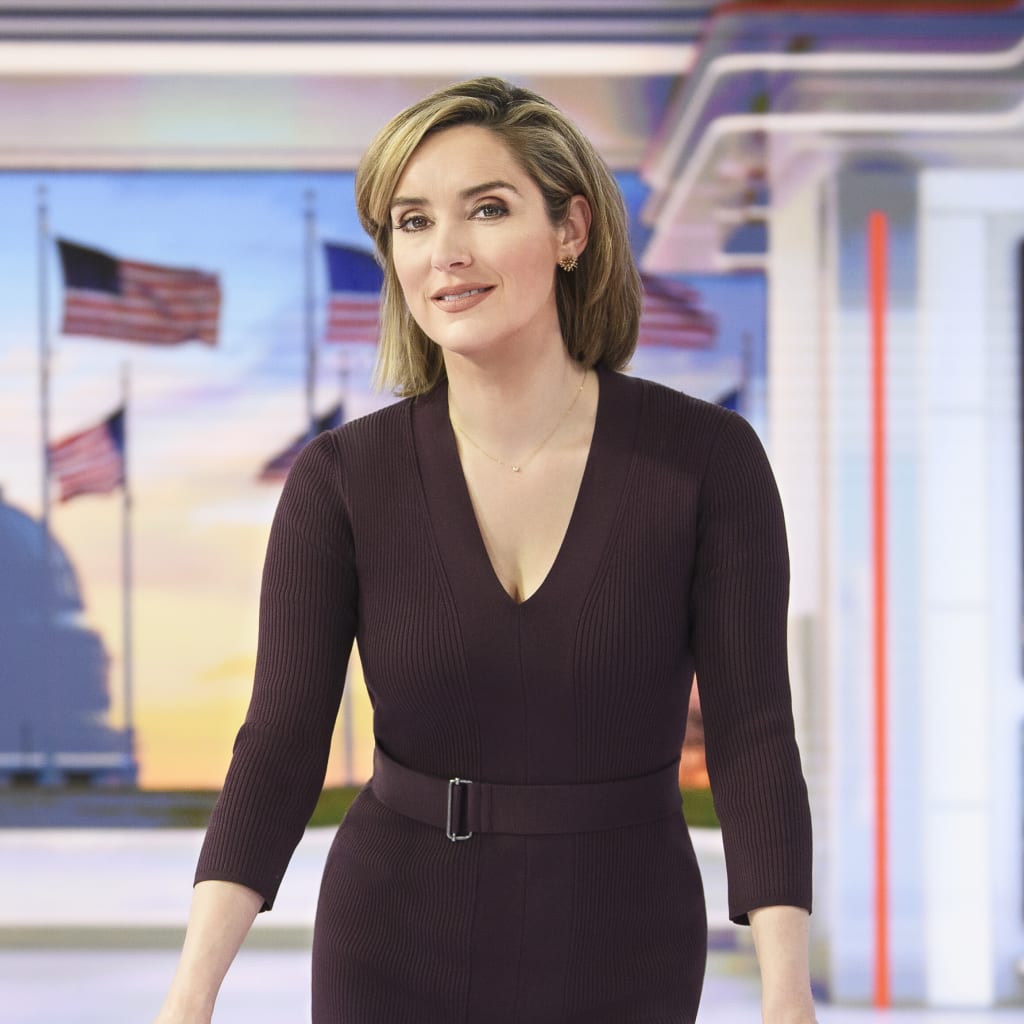 Moderator, Face the Nation; Chief Foreign Affairs Correspondent, CBS News
It wasn’t until college that Margaret Brennan decided to pursue journalism. She embarked on a career covering financial markets and geopolitics at CNBC and Bloomberg TV, before eventually joining CBS News as a correspondent. In 2018, she became only the second woman ever to anchor Face the Nation, the network’s flagship Sunday morning news program. She currently sits on CFR’s board of directors. Read more about why Brennan believes economics and geopolitics are inseparable, what drives good journalists, and her unforgettable interview with Syrian President Ahmed al-Sharaa.
Here’s how Margaret Brennan got her career in foreign policy. If you’re interested in this series, check out more editions here.
What did you want to be when you were little?
It depends on the age. When I was very little, I wanted to be a ballerina. But by high school and college, I wanted to be a diplomat. I’m not sure I fully understood what that meant, but I thought it meant working at the United Nations on important international issues—things that interested me.
Then in university, I started wanting to be Christiane Amanpour. She was amazing. She was really someone who inspired me.
You studied foreign relations but went into journalism. When did you become interested in journalism?
I studied foreign affairs and Middle East studies as double majors at the University of Virginia, and I also minored in Arabic. It wasn’t until the end of my university career that I decided to try journalism. I wasn’t sure it was for me, and honestly, I don’t think anyone can really know. But I knew what fascinated me: periods of social change and political upheaval, why they happen, those pivotal moments. It became clear that journalism was a way to study and report on all those things—and, as the cliché goes, write the first draft of history.
When I interned at CNN, it was the summer of 2001, right before 9/11.
I saw you really started out in financial journalism, at CNBC and then Bloomberg TV. How did you make your way to finance reporting from foreign affairs and the Middle East?
It’s a great question, and in hindsight it sounds like a brilliant strategy, but I assure you it wasn’t. I was graduating from the University of Virginia (UVA) in the wake of 9/11, when there was suddenly a lot of interest in my area of study—the Middle East, foreign affairs, Arabic. But a lot of that interest was driven toward government work. I felt journalism and news coverage was a unique way to convey to the world what was happening and reflect back its realities.
What really moved me toward journalism was my Fulbright-Hays grant to study Arabic in Jordan the summer of 2001. On-the-ground experience is so different from sitting in a classroom studying a language or culture. When you’re dropped into the middle of it, you feel incredibly humbled. Struggling to communicate in another language in another country for the first time was both humbling and a tremendous growth opportunity.
Coming out of that experience, I realized that first-person reporting—outside the classroom, the academic setting, or government buildings in Washington, DC—was what I wanted to do. I had an internship at CNN when I was graduating. I looked at local news jobs too, but the traditional model of working your way up by market size didn’t appeal to me. I was impatient and knew what fascinated me: moments of social and political change outside U.S. borders.
Then I stumbled into CNBC. I was doing interviews at local stations when CNBC called. They asked me to work for an anchor named Louis Rukeyser, who had a weekly financial news program. He was an icon in broadcast financial news but he had been a Mideast correspondent for decades. When he saw my resume, he talked about the Middle East and UVA the entire interview. He had even gone to Princeton, and his brother went to UVA. He was jealous about it and sang the UVA fight song during my interview.
That’s when I realized you can use your background and education to inform different roles. For financial news, it wasn’t just the closing price on the New York Stock Exchange. You have to look at oil markets. The Middle East is a huge factor in that. Asia is huge. The global economy is deeply interlinked with national security. I found my toehold in that space and learned broadcasting skills in financial news. It was like graduate school for me. I got to use the skills I had and build new ones by taking on different subject matters.
Fast forward to Bloomberg. I had my own program there for three years and traveled the world covering the European debt crisis, the Arab Spring—stories that were incredibly intertwined with global markets and the global economy.
It seems like you had this north star covering both geopolitical and economic stories. Fast forward to 2018, when you become the moderator of Face the Nation—one of the biggest programs in the country—and you’re only the second woman ever to hold that role. How did that opportunity come about, and what did it mean to you?
Lesley Stahl, my colleague whom I admire so much, broke that glass ceiling on Face the Nation in the 1980s. My hat’s off to her for doing that. I was honored to follow in her footsteps, after Bob Schieffer and John Dickerson.
I came to CBS News in 2012 to cover the State Department. I covered Secretaries Hillary Clinton and John Kerry during the Obama administration. They were trying, in many ways, to be the opposite of the Bush administration. Their first priority was diplomacy, not the Pentagon. They were also building trade deals. So I got to use all those skills here at CBS and build them further.
Then I became a White House correspondent. The first Trump administration came into office, and I knew some of those folks from my years covering Wall Street. It all seemed to come together in 2018, when my colleague John Dickerson went to New York to do the morning show after Bob had stepped away from the chair. CBS asked if I’d like to try out. They had a few of us sit in the role. I was thinking, “Well, yeah, but I’m never going to get it.” I truly didn’t believe it, but I tried my hardest and did the best job I could, really trying to understand the issues and do thoughtful, contextualized interviews.
After a few programs, I was told, “You got it.” I was just shocked. David Rhodes, who was president of CBS News at the time, and Mary Hager, who was running the show and still is the senior executive producer, believed in me. I still work with her today.
I’m curious about these two tracks of your career. Is there a special lesson you learned from finance reporting that served you well in geopolitical reporting?
I think for anything you cover, understanding why people do what they do and what’s driving their decisions is crucial. During the 2008–09 global financial crisis, I was a retail beat reporter. One of the fascinating things I saw was the impact reflected in company data. Walmart reported that people were spacing out their purchases of baby formula to coincide with paychecks. They were stretching their money. People were changing their behavior because of economic circumstances.
That lens helped me tremendously when I covered the Arab Spring at Bloomberg. I was in Egypt when President Hosni Mubarak stepped down. A lot of the coverage and analysis focused on how people coordinated protests through Facebook and social media. But part of why people were frustrated wasn’t just about human rights. It was about inflation being high. It was that they couldn’t afford food.
No matter what country or culture you look at, how you feed your family, how you care for your family, how you feel about your place in that society—that’s fundamental. It’s a basic human instinct that transcends borders.
That connective tissue is completely relevant to where we are in politics now. When I cover the midterm races and how people are feeling about affordability, or when people say “I feel bad about the economy” even though the data looks good, they’re experiencing things in a real way. Understanding what motivates people and how they think about their place in society is fundamental to all these issues.
Do you have advice for young people who want to go into journalism?
First of all, if you’re thinking of going into journalism, thank you. We need really good, fundamentally strong journalists who are analysts, not activists. People who feel the responsibility and weight of the information they convey. I fundamentally believe that the information journalists convey is part and parcel of a well-functioning democracy.
You need to feel that calling or instinct—that this is what’s driving you. If it’s just about clicks or attention or engagement, that’s entertainment. That’s content. But the fundamental question you need to feel in your gut is: am I helping to inform the electorate? Because it’s a tough industry, and you need that sense of purpose to sustain you.
Well said. Our last question is a fun one. Over the years, you’ve had so many interesting work trips and dinners. Is there a most memorable memory you could share with us?
There are so many. One “wow” moment that sticks out was last September when I went to Syria on assignment for 60 Minutes to interview President Ahmed al-Sharaa. He came to office incredibly fast after this horrifically long civil war. Suddenly, he’s in charge of the country.
He drove me to Jobar, a bombed-out area right outside the capital, Damascus. Seeing the absolute devastation of this city—not out in the hinterlands, you could see it from the highway—was staggering. Just the idea that a government could do that to its own people, bomb from the sky. Schools destroyed, mosques destroyed, rubble everywhere.
Walking through it with him—the man who had been fighting this government—and talking to him about the chemical weapons attacks I had covered when I was reporting on John Kerry and the diplomatic deal to remove chemical weapons from Syria. That flawed deal was also a way of avoiding the Obama administration carrying out strikes.
It was this moment where the past decade of my reporting came together. We talked off camera about how the world failed Syria—all these decision-makers I had covered and reported on, how difficult that diplomacy was. Just the fundamental assertion that the world failed us was so real standing in the middle of that. I can see why people became so desperate.
But there’s a major asterisk: he had been in al-Qaeda. This is not your classic hero story. He spent six years in a U.S. military prison. And he’s the guy the United States is now backing, who fought Iran and others. You couldn’t write a screenplay like that.
This interview has been edited for length and clarity.
This work represents the views solely of the author(s). The Council on Foreign Relations is an independent, nonpartisan membership organization, think tank, and publisher, and takes no institutional positions on matters of policy.