Middle East Diplomacy Continues Amid U.S. Blockade
By experts and staff
- Published
Welcome to the Daily News Brief, CFR’s flagship morning newsletter summarizing the top global news and analysis of the day.
Top of the Agenda
Middle East diplomacy inched forward yesterday as a U.S. blockade on Iranian shipping continued. Participants in Israel-Lebanon talks in Washington described them as positive, while U.S. President Donald Trump told the New York Post that additional U.S.-Iran talks could occur within the “next two days” in Pakistan. Meanwhile, the United States has tightened pressure on Tehran via a naval blockade and plans for renewed sanctions on Iranian oil, while sending additional forces to the region.
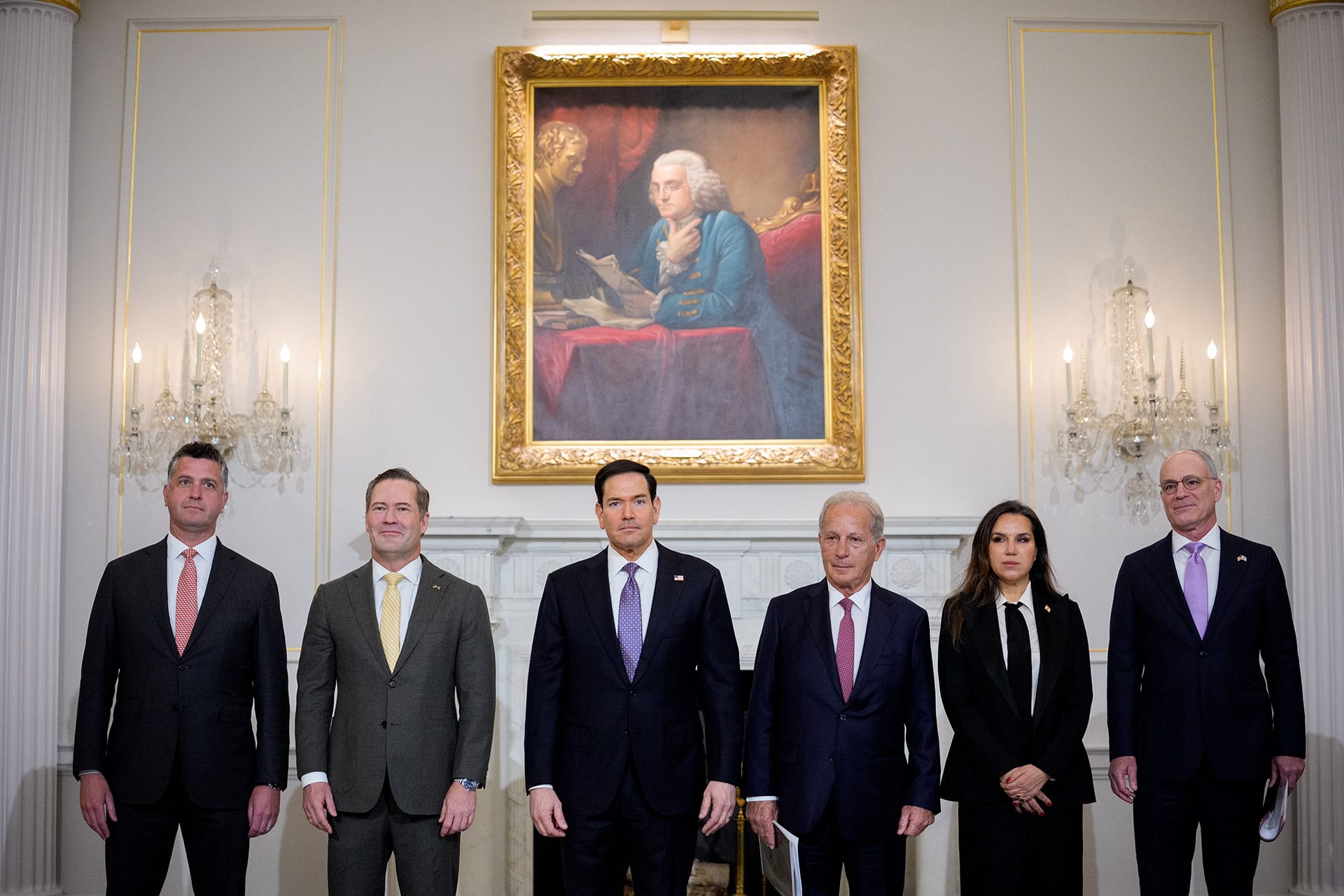
The diplomatic front. Trump doubled down on positive peace talk yesterday, telling Fox Business in an interview that aired this morning that the Iran war was “very close to over.” Envoys from Israel and Lebanon agreed yesterday on a shared goal of ridding Lebanon of Hezbollah, Israel’s U.S. ambassador said, calling the meeting “wonderful.” The two countries agreed to enter direct peace negotiations, the U.S. State Department said. Meanwhile, unnamed regional officials told the Associated Press today the United States and Iran had an “in principle agreement” to extend the ceasefire expiring next week.
The economic squeeze. The Treasury Department said yesterday that waived sanctions on Iranian oil would soon resume and that financial institutions “should be on notice” regarding potential new sanctions on actors supporting Iran. The ongoing U.S. blockade in the Strait of Hormuz is deepening financial pain for both Tehran and buyers of its oil, building on the consequences of Iran’s own move to restrict traffic in the strait following U.S. and Israeli attacks. The International Monetary Fund said yesterday that the broad economic fallout of the war includes lower global GDP growth, higher inflation, and even a risk of coming close to a global recession if energy market disruptions stretch into next year.
“Even if Iran does not hit back [against the U.S. blockade] with military force, Trump is still running a substantial gamble: namely, that Iran has a lower economic pain threshold than the United States does…Yet Iran is a dictatorship that has shown it can withstand years of harsh sanctions and brutally repress popular protests when they arise. The United States is a democracy where the rising price of gasoline is raising inflation and sabotaging the Republican Party’s chances in the upcoming midterm election.”
—CFR Senior Fellow Max Boot in an Expert Take
Across the Globe
Germany-Ukraine ties. The two countries upgraded their relationship to a strategic partnership and agreed to cooperate on defense, the German government said in a declaration published yesterday marking Ukrainian President Volodymyr Zelenskyy’s visit. The countries agreed on a $4.7 billion defense package, Ukrainian Defense Minister Mykhailo Fedorov said.
Italy-Israel tensions. Italy will not extend a military cooperation agreement with Israel that had been set to renew this month, Italian Prime Minister Giorgia Meloni said yesterday, citing “things we don’t agree with” when asked about the decision by reporters. She did not provide further details. Last week, Italy summoned the Israeli ambassador after Israel fired warning shots at Italian peacekeepers in Lebanon. Israel’s foreign ministry said the move would not affect its security as it only had a memorandum of understanding with Italy that was not “substantive.”
U.S. expands HIV drug program. The United States and the Global Fund, a multilateral health funder, will expand access to the new HIV prevention drug lenacapavir to three million people by 2028, the State Department announced. Last September, it said the drug would reach up to two million people. Despite the Trump administration’s broad cuts to foreign aid, it has maintained work on HIV/AIDS in part due congressional backing.
Canada’s fuel tax relief. Canada will suspend a federal tax on gas and diesel between April 20 and September 7, Prime Minister Mark Carney announced yesterday. The measure is expected to cost the government around $1.7 billion. The announcement came after Carney’s Liberal party won a lower house majority earlier this week.
Ireland’s fuel protests. Two members of Ireland’s governing coalition said they would defect amid widespread protests in the country over the last week due to high fuel prices. One of the lawmakers said the government’s plans to provide financial support to consumers were insufficient. The government survived a confidence vote yesterday.
Venezuela sanctions eased. The United States removed sanctions on Venezuela’s central bank and multiple other public banks, the Treasury Department announced yesterday. It had imposed the sanctions in 2019 over the banks’ support for the regime of Venezuela’s former President Nicolás Maduro. Washington is now working to reactivate the country’s oil sector following the U.S. capture and deposal of Maduro earlier this year.
Reported Kuwaiti detention of journalist. Kuwait detained U.S.-Kuwaiti journalist Ahmed Shihab-Eldin following social media posts related to the Iran war, the Committee to Protect Journalists said yesterday. Last seen on March 2, Shihab-Eldin is believed to have been charged with “spreading false information, harming national security, and misusing his mobile phone,” the watchdog group said. The Kuwaiti government did not immediately comment.
Pakistan-Saudi economic cooperation. Saudi Arabia committed $3 billion to help Pakistan meet its “external financing needs,” Pakistan’s finance ministry said today. Islamabad is expected to use the funds to repay a loan to the United Arab Emirates (UAE); earlier this month, Pakistan and the UAE failed to renew the $3 billion loan for the first time in seven years. Saudi Arabia’s support comes after it reached a mutual defense pact with Pakistan last year.
What’s Next
- Today, Zelenskyy visits Italy.
- Tomorrow, NATO Secretary-General Mark Rutte meets with European Commission President Ursula von der Leyen in Brussels.
- Tomorrow, Group of Twenty finance ministers and central bank governors meet in Washington, DC.
- Tomorrow is the last day to vote for CFR in the Webby Awards. We are nominated in the News & Politics category and would love your support.