Preliminary Assessment: Egyptians Defy the Odds
By experts and staff
- Published
 Steven A. CookCFR ExpertEni Enrico Mattei Senior Fellow for Middle East and Africa Studies
I am planning a longer piece that puts today’s polling in Egypt into a broad historical perspective, but wanted to share a few thoughts as the first stage unfolds.
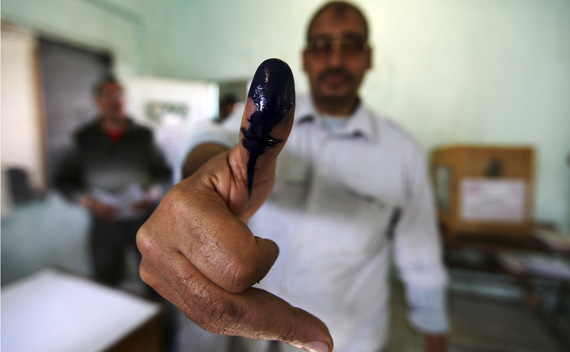
After a week of demonstrations, violence, and counterdemonstrations, Egypt’s first post-Mubarak parliamentary elections are underway. So far so good. There are sporadic reports of tension at polling places outside the big cities, but there hasn’t been any violence. As the day has gone on the Egyptian people’s enthusiasm for the election seems to have grown. My friends on the ground say that lines at polling stations are long and voting has been extended to 9:00pm (2:00pm EST). Like the national party that unfolded in Tahrir Square on February 11th and 12th, what we are observing today is the very best of Egypt.
Even at this early stage, it is possible to draw a few important conclusions:
Of course, all the good news has to do with process. After last week—which for a time put the polling in doubt—it is hard not to be inspired by the determination of Egyptians to vote.
From an American policy perspective, the outcome may not be as inspiring as the process. Word on the street is that the Muslim Brotherhood, which until last week had vowed that it would only seek 30-35 percent of the seats in the People’s Assembly, may be going for broke and seeking to accumulate as many seats in the parliament as possible.
Needless to say, a bigger than expected return for the Muslim Brotherhood in a parliament that has the legitimacy of being popularly elected is going to put pressure on the U.S.-Egypt relationship because the Brothers simply do not share Washington’s view of the region and least of all its interests. Indeed, there is likely to be a fair amount of hand-wringing around the Beltway should the Brothers do well. This is not surprising given the tenor of the commentary regarding the Brotherhood in Washington over the last nine months, but the fact remains that nothing the United States can do about it. If Washington is going to be good to its word in supporting change in Egypt, policymakers are going to have to live with an influential Muslim Brotherhood.
Regardless of what the outcome may be, the U.S.-Egypt relationship is going to change. The strategic relationship of the Mubarak era was based in large part on the Egyptian president’s willingness to define Egypt’s national interests in defiance of overwhelming public sentiment. Not only are today’s polls the first phase in what will be historic changes in Egypt’s domestic politics, but also its foreign policy.