Prospects for a U.S.-South Korea-India Triangle?
By experts and staff
- Published
- Scott A. SnyderSenior Fellow for Korea Studies and Director of the Program on U.S.-Korea Policy
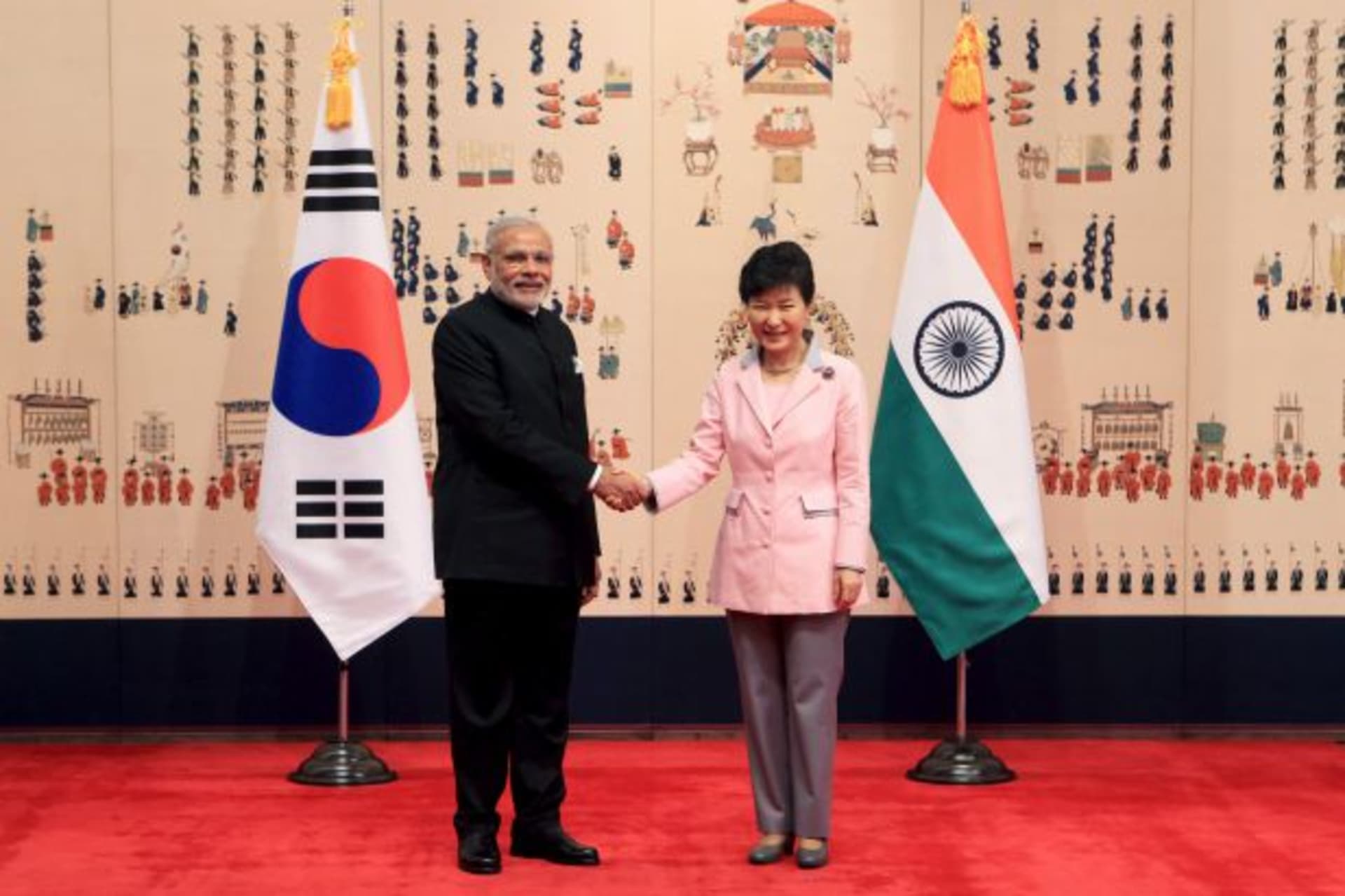
Yonsei University Professor Chung Min Lee has described prospects for relations between South Korea and India as historically hampered by “geographic distance” and “mutual disinterest.” India was South Korea’s eighth largest export destination and only the twenty-second largest source of imports in 2014, with a total trade volume of $17.9 billion. Yet during Indian Prime Minister Narendra Modi’s visit to Seoul last May, he and South Korean President Park Geun-hye signed a Special Strategic Partnership agreement reflecting mutual aspirations for broad-based cooperation. Will the two countries’ parallel universes finally converge around a broader set of interests beyond their mutual concern with the Pakistan-North Korea nuclear proliferation axis?
Ambassador Kathleen Stephens, Ashley Tellis, and I explored prospects for South Korean-Indian relations and their implications for U.S. interests last week in a roundtable moderated by Korea Economic Institute Vice President Mark Tokola, the video of which is here. Ambassador Stephens combines recent official experience serving at high levels in both New Delhi and Seoul, having recently completed a special assignment as the Acting Ambassador to India before returning to Stanford University. Ashley provided the strategic context for understanding India’s foreign policy under Prime Minister Modi. I discussed how an improved South Korea-India relationship fits with Korean aspirations to play a middle-power role in international affairs.
There were a number of notable topics worth watching that emerged from the discussion: