Tale of Two Ethiopias
Landslide victory in this month’s elections belies the country’s profound internal instability and degrading foreign relations.
By experts and staff
- Published
 Michelle GavinCFR ExpertRalph Bunche Senior Fellow for Africa Policy Studies
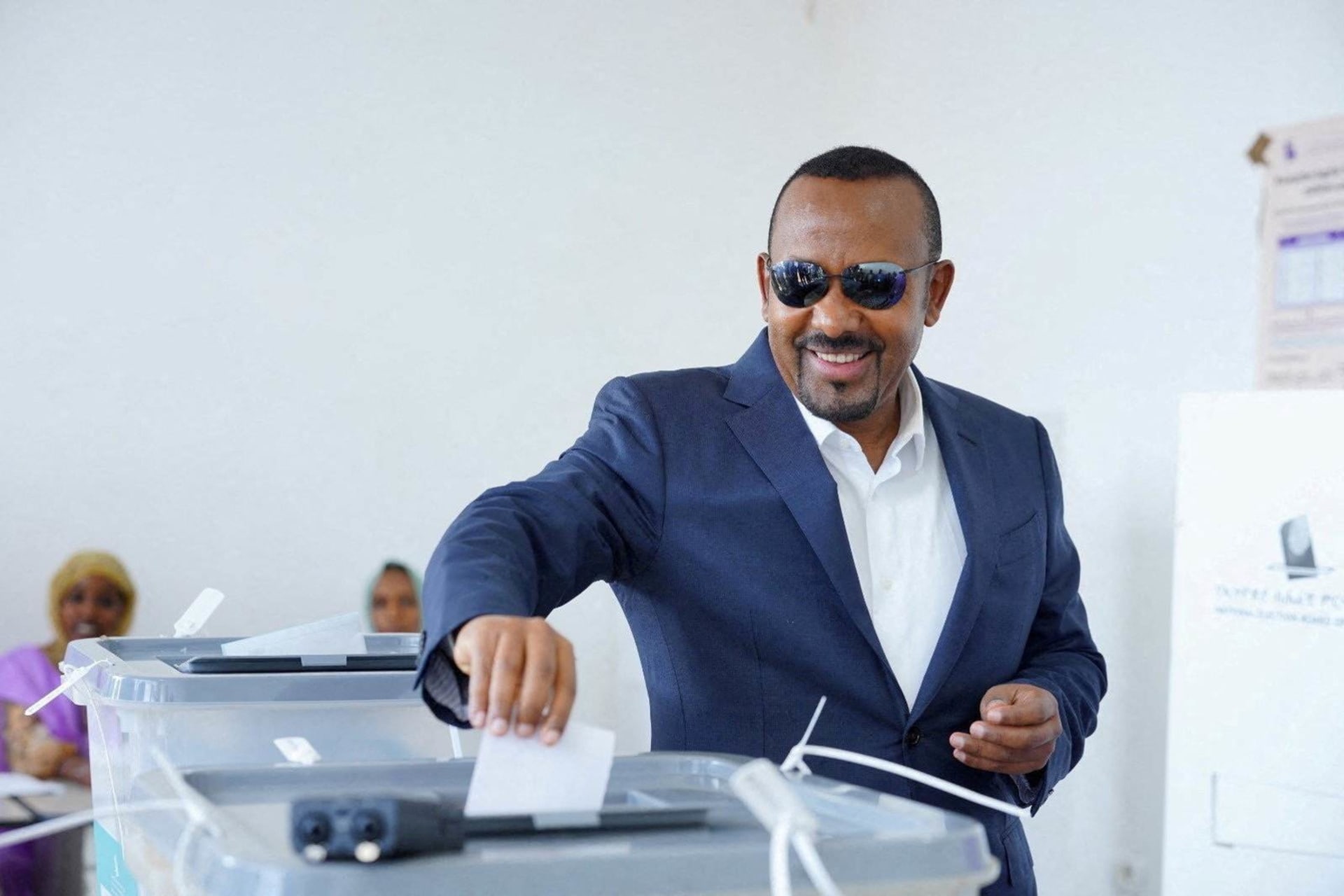
As Ethiopia’s utterly unsurprising election results come in, they will undoubtedly be digested abroad according to one of two very different narratives. One will focus on Prime Minister Abiy Ahmed and his Prosperity Party’s resounding victory and interpret the results as an encouraging sign that the country will stay the course of his reform agenda. The other will emphasize the highly constrained political space in which the elections were held, and the parts of the country in which insecurity made it impossible to hold elections at all. The former will lead to excited frontier market chatter about a full-steam-ahead drive to middle income status, the latter to dire warnings about state fragility.
Bullish investors point to Ethiopia’s high growth rates and the appealing opportunities that come with opening up long-closed sectors like telecom in the world’s tenth most populus country. Undeterred by questions around data validity that have left the World Bank unable to classify the country’s income level, they see a success story in the making, and their on-the-ground experience reinforces their optimism.
Visitors to Addis Ababa tend to come away impressed. The airport, a major continental hub, is world class. The city’s rapid transformation—which involved the displacement of tens of thousands of citizens—has delivered soaring towers; smooth, wide roads; sleek public spaces; and improved sanitation. Its impressive professional class is fluent in the language of the global economy and eager to discuss how liberalization is creating exciting investment opportunities. Add in the backdrop of a multifaceted, deeply-rooted history and culture manifest in the cuisine, fashion, and music one encounters, and Addis can be a seductive place.
What a visit to the capital does not reveal is the scope and scale of unrest in the country. The 2022 Pretoria Agreement that ended the devastating civil war in Tigray has not been implemented, leading to months of speculation about a return to war, this time with Eritrea switching sides. Insurgencies in Amhara and Oromia persist despite federal efforts to quash them. A national dialogue process that was billed as an opportunity to debate the merits of ethnic federalism and help overcome the country’s contested history has failed to earn trust and legitimacy with the public. Visitors enjoying the modernized capital are unlikely even to encounter much news coverage of these dynamics, since journalists are subject to detention without charge and independent media outlets have been shut down.
Beyond these substantial domestic rifts, Ethiopia’s relations with its neighbors are difficult at best. Prime Minister Abiy’s drive for access to the sea has been understood as a threat in Eritrea. His government’s support for Sudan’s murderous Rapid Support Forces has alienated Khartoum. Egypt continues to express dire concern about the Grand Ethiopian Renaissance Dam and control of the Nile waters. Mutual suspicion continues to characterize the country’s historically fraught relations with Somalia. There is blame to go around for this list of foreign policy woes, but there is no basis for pretending these tensions do not darken the outlook for Ethiopian development.
Considering Ethiopia’s future seriously requires one to embrace complexity. Unfortunately, the election results were a foregone conclusion and shed little light on where the country is headed. Ethiopia’s leaders and their online armies have little tolerance for considering the country’s contradictions, confusing doubt or concern with animosity. But a genuine desire to see Ethiopia’s vast potential unlocked sooner rather than later cannot erase the salience of peace and social cohesion.