The Assassination of a Peacemaker
An Islamic preacher’s brutal after-dark execution is a tragic reminder of what is at stake in the struggle to vanquish jihadism in northern Nigeria.
By experts and staff
- Published
 Ebenezer ObadareCFR ExpertDouglas Dillon Senior Fellow for Africa Studies
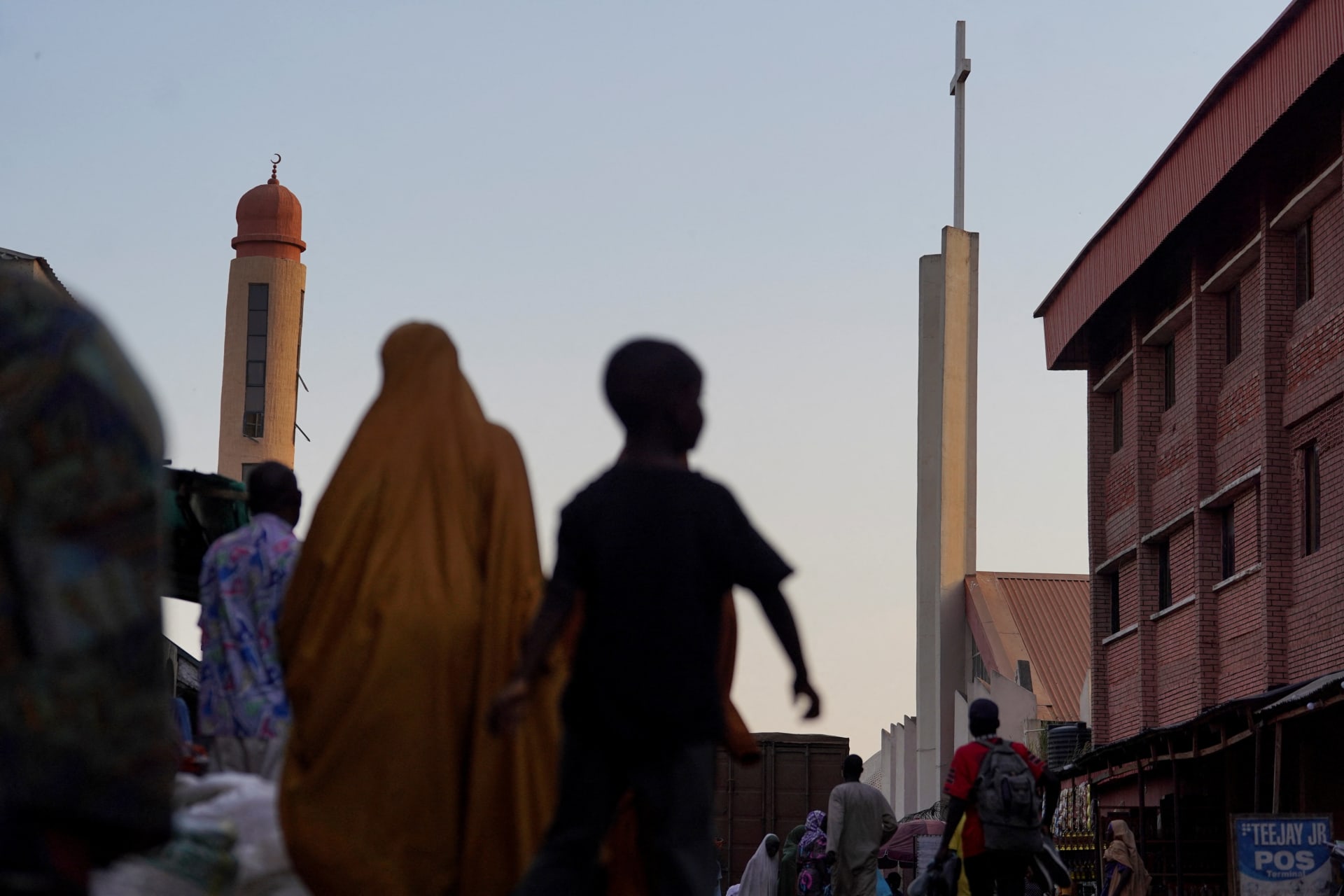
It tells you everything you need to know about the moral confusion surrounding the jihadist insurgency that has throttled vast swaths of northern Nigeria that Sheikh Yahaya Masussuka, the respected Islamic cleric who was gunned down outside his Dutsin-Ma, Katsina state residence last week by two armed men on a motorcycle, is being described by sections of the media as “controversial.” For, if Malam Masussuka was “controversial,” it raises the legitimate question of what to call his assassins.
Prior to his assassination (a friend of the cleric, one Adamu Abubakar, also lost his life), Mr. Masussuka had received numerous death threats, including on social media, from those who wanted him to stop doing what he was doing: preaching against extremism, contesting conservative interpretations of sections of the Quran and Hadith, and generally being a voice for theological moderation and peaceful coexistence between Muslims and Christians in the northern region of the country. In June 2025, Mr. Masussuka was honored for his efforts with a Peace Ambassador award by the Abuja-based Network for Good Governance and Transparency. Receiving the award, Mr. Masussuka reiterated the keynote of his advocacy as reorienting Nigerians “to embrace peace and unity” and challenging “hate speech and extremist ideologies.”
If Mr. Masussuka’s message of peace and tolerance was music to some ears, there were others who bitterly resented what he stood for and were desperate to have him removed from the scene. For example, in November 2025, just five months after he was honored for his peacemaking interventions, Mr. Masussuka received an official summons from the Katsina state government “for questioning over allegations that his sermons contravene established principles of Islamic law.” At the time, Mr. Masussuka had also complained to the government that he was being insulted by members of Jama’atu Izalatil Bid’ah wa Ikamatis Sunnah—commonly known as Izala or Ƴan Izala.
Last week, though, it wasn’t an Izala member who finished off Mr. Masussuka and his friend. Rather, it was gunmen deputized by a different extremist group, Jama’atu Ansarul Muslimina Fi Biladis-Sudan (meaning “Vanguard for the Aid of Muslims in Black Africa”), popularly known as Ansaru, who did. We know this because the group has claimed responsibility through a four-minute video obtained by Premium Times, a leading Nigerian newspaper. In the video, the terror group did not mince words about why they decided to eliminate Mr. Masussuka: because he was “an (arnai) infidel, not a Muslim. He was contracted to disrupt Islam and confuse Muslims.” While it is not clear from Ansaru’s video who or what entity they believed had “contracted” Mr. Masussuka, what is beyond dispute is the group’s bloodcurdling warning to “other infidels” who “belittle the Hadiths of the Prophet”: “You should repent. You should stop, or else we are coming for you.” Translation: Ansaru is coming for you if you dare insist that (Nigerian) Muslims and Christians should peacefully coexist.
For some time now, the origins of the decadeslong jihadist violence in northern Nigeria and much of the Sahel have been a subject of intense litigation. While some scholars and analysts have insisted that the violence has nothing to do with religion and that it is best seen as an expression of legitimate grievance against failing states, others (I belong to this group) have argued that not only is the violence mobilized by various terror groups ultimately religious in essence, neither the violence nor the totality of their praxes can be understood without recourse to this basic and inextricable religious factor. The latter position does not dispute the need for investment in good governance, or that such will not work to vitiate the appeal of terror groups to disaffected young men; the argument has always been that after all is said and done, we need to face the reality that there are those who engage in violence because they see it as a religious obligation. For such people, no amount of investment in good governance or infrastructure will do. If that were so, there would be zero extremism in societies where social opportunities are abundant, relatively speaking. As a matter of fact, part of what Islamist groups take exception to (and they could not be more transparent about this) is the very apparatus of the modern state that seeks to pacify and draw them into its fold. Their grouse, not to put too fine a point on it, is unbelief, not the poverty of good governance.
This is where the late Malam Masussuka comes in. The reader will notice that he was abused, threatened, and ultimately assassinated, not for his extremism, but because he disavowed extremism. In other words, Mr. Masussuka lost his life because he preached moderation and peaceful coexistence, and we need no further confirmation than the video message from Ansaru. How in the world this makes someone “controversial” (looking at you, BBC) is beyond me.
For context, Mr. Masussuka is not the first Islamic cleric in northern Nigeria to be silenced for good by armed gunmen. In May 2025, Islamic scholar Sheikh Mustapha Aliyu was brutally murdered by armed bandits who had earlier abducted him. Around the same time, Chief Imam Alkali Salihu Suleiman was killed by his abductors in the northwestern state of Zamfara. Sheikhs Jaafar Mahmud Adam and Auwal Albani Zaria, both respected Salafi scholars, lost their lives in similar circumstances in 2007 and 2014, respectively.
Nor, crucially, is this Ansaru’s first rodeo as far as eliminating its ideological adversaries is concerned. Since its emergence as a splinter faction of Boko Haram in 2012, the group has been linked to several high-profile attacks and kidnappings across the country. These include the 2012 prison break in Abuja, the ambush of a Nigerian military convoy in 2013, the kidnapping and subsequent execution of seven foreign construction workers during the same year, and assaults on military bases leading to the execution of dozens of Nigerian army personnel in August 2020 and April 2022.
Ansaru is officially proscribed and designated as a terrorist organization by Nigeria, the United States, the United Kingdom, and the European Union.
All of which raises an interesting question: If Ansaru and the many cognate terror groups currently active in Nigeria and across the Sahel have not been shy about their aims, why is it that many commentators continue to play the ostrich, attributing to terror groups moral and political objectives that they unambiguously deny? One reason is that many are wary of antagonizing Muslims—especially Muslim minorities in Western countries. Such people wrongly equate condemning the rampages of Islamists with taking sides with alleged Islamophobes. Nothing could be further from the truth. Indeed, refusing to back moderates like Malam Masussuka only allows religious bigots in northern Nigeria—and elsewhere—to avoid confrontation with their own demons.
Failure to decisively champion the Masussukas of this world has another regrettable consequence. It lets bigots get away with not just bad but objectively regressive arguments. Those of us who care about modernity and its amenities can ill afford not to speak up against the plague that is Islamist terror, which, drilled down to its essence, is a rejection of life, value pluralism, and the right of the individual to choose what is best for him (and vitally, change his mind) in matters of faith. What this means is that, from the standpoint of the Islamist terrorist, we should all be “infidels.” This particular point bears emphasizing because, if past experience is anything to go by, it really does not matter whether or not we are interested in Islamism. Islamists are interested in us, and there is no better antidote to their poisonous ideology than standing our argumentative ground and taking sides with and empowering moderates and peacemaking agents like the late Mr. Masussuka.
In the meantime, one would hope that this tragedy is the final nail in the coffin of the risible argument that violence in northern Nigeria has nothing to do with religion. As should be obvious by now, no amount of wishing Islamism away would make it disappear.
This work represents the views solely of the author(s). The Council on Foreign Relations is an independent, nonpartisan membership organization, think tank, and publisher, and takes no institutional positions on matters of policy.