The Opposition Is Leading in Hungary, But Winning Is the Easy Part
Voters in Hungary face a critical election on Sunday that carries political and foreign policy implications for Ukraine, Europe, and beyond. But even if Hungarian Prime Minister Viktor Orbán’s party is defeated, the path to reform is filled with challenges.
By experts and staff
- Published
 Liana FixCFR ExpertSenior Fellow for Europe
- Benjamin HarrisResearch Associate, Europe and U.S. Foreign Policy
Liana Fix is a senior fellow for Europe at the Council on Foreign Relations (CFR). Benjamin Harris is a research associate for Europe and foreign policy at CFR.
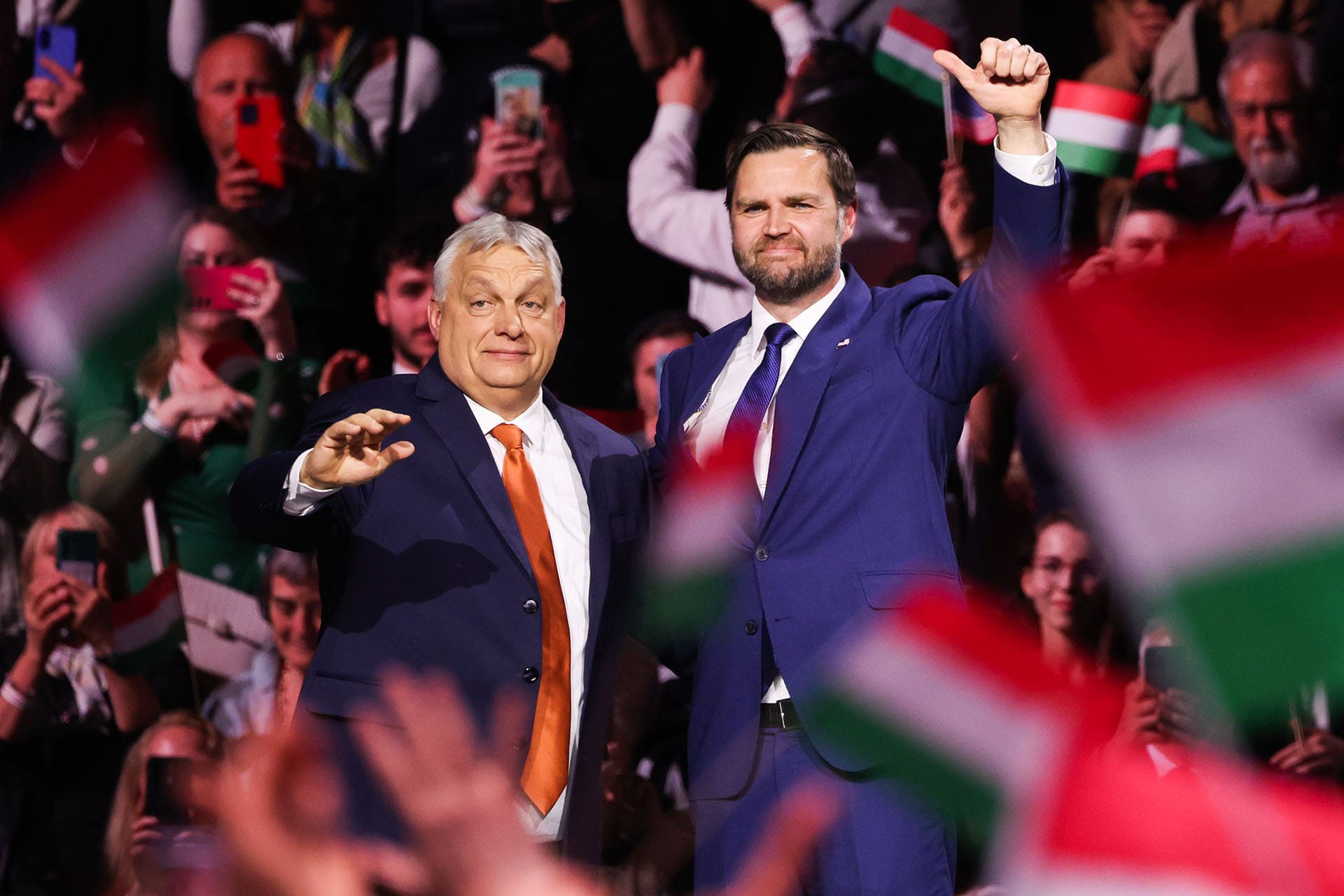
U.S. Vice President JD Vance arrived in Budapest Tuesday to support his ideological ally, Hungarian Prime Minister Viktor Orbán. Despite his status as Europe’s longest-serving head of government, Orbán faces a steep reelection bid on Sunday, April 12. The outcome could have significant implications for Europe’s support of Ukraine and for the cohesion of the European Union (EU). Under Orbán’s leadership, Hungary has repeatedly acted as a roadblock to EU integration and vetoed Ukraine support—most recently blocking a €90 billion EU loan to Kyiv.
The opposition looks closer than at any point in the last sixteen years to unseating Orbán (during that time Orbán’s Fidesz, Hungarian Civic Alliance, has had a virtually uninterrupted parliamentary supermajority). However, the race is—in reality—not yet decided. The electoral system has been designed in the ruling party’s favor, and Fidesz also dominates the media landscape. Campaigning has been aggressive and controversial, with reports of Russian interference. A narrow victory for the ruling party could, in the worst case, lead to a greater repressive and illiberal turn in the country.
The Hungarian elections will also be a valuable sign of the direction of travel of right-wing populist parties in Europe. Recent elections have shown that the trend toward far-right populism is not irreversible. In 2023, Poland ousted the far-right Law and Justice Party (PiS), a notable trend reversal for the country. In France, despite far-right gains in the 2024 legislative elections, an alliance among the left kept the far-right National Rally out of power. In Italy, Giorgia Meloni’s government suffered a significant defeat in March 2026 after voters rejected her constitutional referendum on judicial reform, which critics had argued would weaken judicial independence. And in Slovenia, the liberal Freedom Movement narrowly edged out Janez Janša’s right-wing Slovenian Democratic Party (SDS), though the right made gains and coalition talks continue.
Orbán’s opponent: From insider to insurgent
Orbán’s main opponent, Péter Magyar, was a member of Orbán’s Fidesz but publicly broke with the party in February 2024 after a presidential pardon scandal. He then formed the center-right Respect and Freedom Party (known as Tisza), which is betting that economic stagnation and corruption will prove Fidesz’s undoing. Orbán’s party is trying to reframe the election around political threats the country faces from Ukraine, its refugees, and the EU. Politico’s polling average shows Tisza ahead by roughly ten points in the election, though pro-government pollsters show a significantly tighter race.
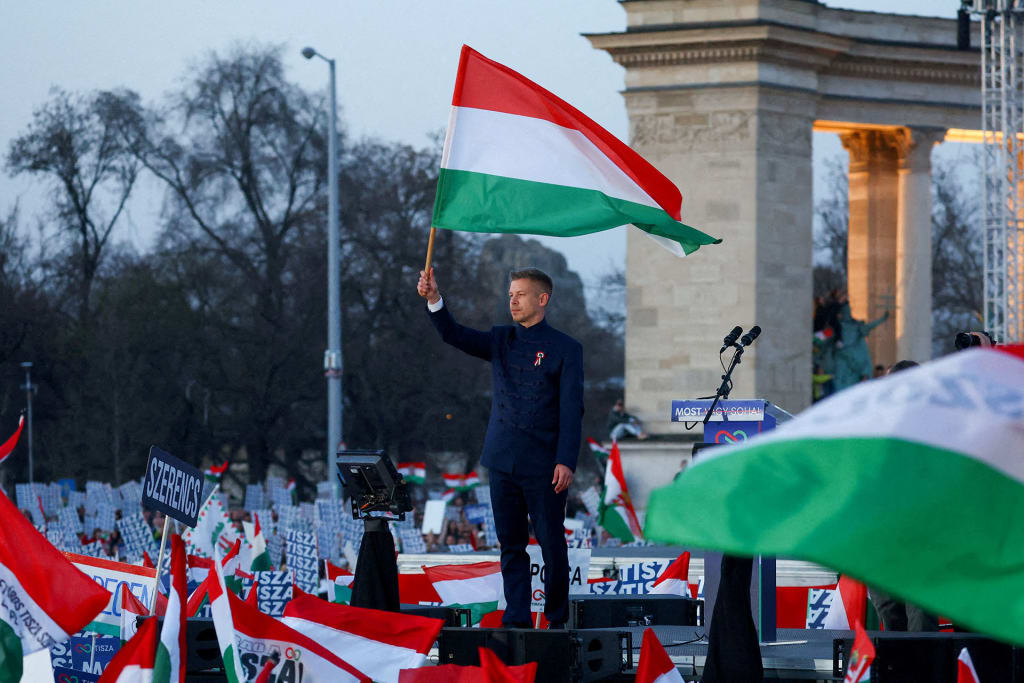
That sizeable lead, however, could ultimately be less relevant due to changes in the electoral system. Since his 2010 election, Orbán has consistently changed the rules to benefit his own party. Through a mixture of gerrymandering and altering the rules for entering parliament, Orbán has ensured that his strongholds are overrepresented and opposition parties face a greater battle for power. Orbán won only 54 percent of the popular vote in the 2022 elections but secured nearly 70 percent of the seats by increasing the proportion of single-member districts and implementing other structural advantages since 2010. To secure the supermajority needed to undo many of Orbán’s most damaging reforms, Magyar would need an unrealistically large margin.
Fidesz’s dominance of the media gives it an inherent leg up over Tisza. Orbán is once again deploying state resources to boost social benefits in a last-minute bid to win over undecided voters. Roughly a third of electoral districts are in serious contention, and among those voters a significant number remain undecided, making the ultimate outcome hinge on a relatively small group of people. An Organization for Security and Cooperation in Europe (OSCE) monitoring mission will make direct election interference difficult on election day, as will EU rules and constraints. However, if Orbán remains in power, polls suggest it will be with a much slimmer majority, which could leave him feeling threatened and drive him further to the extreme.
A difficult road ahead
Orbán’s sixteen years of supermajority rule has enabled him to substantially alter the constitution, as the rules permit such changes with any two-thirds vote in parliament. This creates several difficulties for a potential Magyar government. The president, who is closely tied to Orbán, can stall legislation by referring it to the Constitutional Court, which is filled with Fidesz loyalists, or the Budget Council, which Orbán restructured and granted veto authority over any budget. If Tisza cannot pass a budget that survives the Council, the president can dissolve parliament and force new elections. The picture that emerges, therefore, is bleaker than some might expect. For Magyar, victory is far from assured; even if he wins, he will face serious governance challenges and may not be the transformative candidate many in the EU hope for.
Yet his electoral success would still be an important signal that right-wing populism in Europe is not irreversible. A victory would also provide the EU new room to maneuver. Orbán directed Hungary to veto the crucial €90 billion EU loan for Ukraine, blaming Ukraine for failing to restore transit of Russian oil deliveries through the Druzhba pipeline—which Hungary relies on for its oil imports. Without Orbán, that loan package, and more future aid, could flow freely to Ukraine. A Magyar government could also cause Russia to lose one of its most sympathetic countries in Europe. Hungary continues to import Russian energy and to voice Russian-friendly views of the war. Reporting from the Washington Post and other outlets indicates the Kremlin is aware of this and has pursued efforts to aid Orbán’s campaign, though the Hungarian government denies all such allegations.
Europeans have feared U.S. intentions, such as those articulated by JD Vance, to support right-wing populists in Europe, but the outcome in Hungary could demonstrate that foreign endorsements will not necessarily tilt European elections. A defeat of Orbán would powerfully show that Europeans, regardless of outside interference, will decide the future of their governments domestically.
This work represents the views and opinions solely of the author. The Council on Foreign Relations is an independent, nonpartisan membership organization, think tank, and publisher, and takes no institutional positions on matters of policy.