The Self-Immolation of Thich Quang Duc
A Buddhist’s monk protest in South Vietnam shocked the world.
By experts and staff
- Published
 James M. LindsayCFR ExpertMary and David Boies Distinguished Senior Fellow in U.S. Foreign Policy
Iconic photographs have often captured critical moments in the history of U.S. foreign policy. The USS Arizona sunk at Pearl Harbor. Adlai Stevenson at a meeting of the UN Security Council documenting the Soviet deployment of missiles in Cuba. President George W. Bush on the flight deck of the USS Abraham Lincoln in front of a sign proclaiming “Mission Accomplished.”
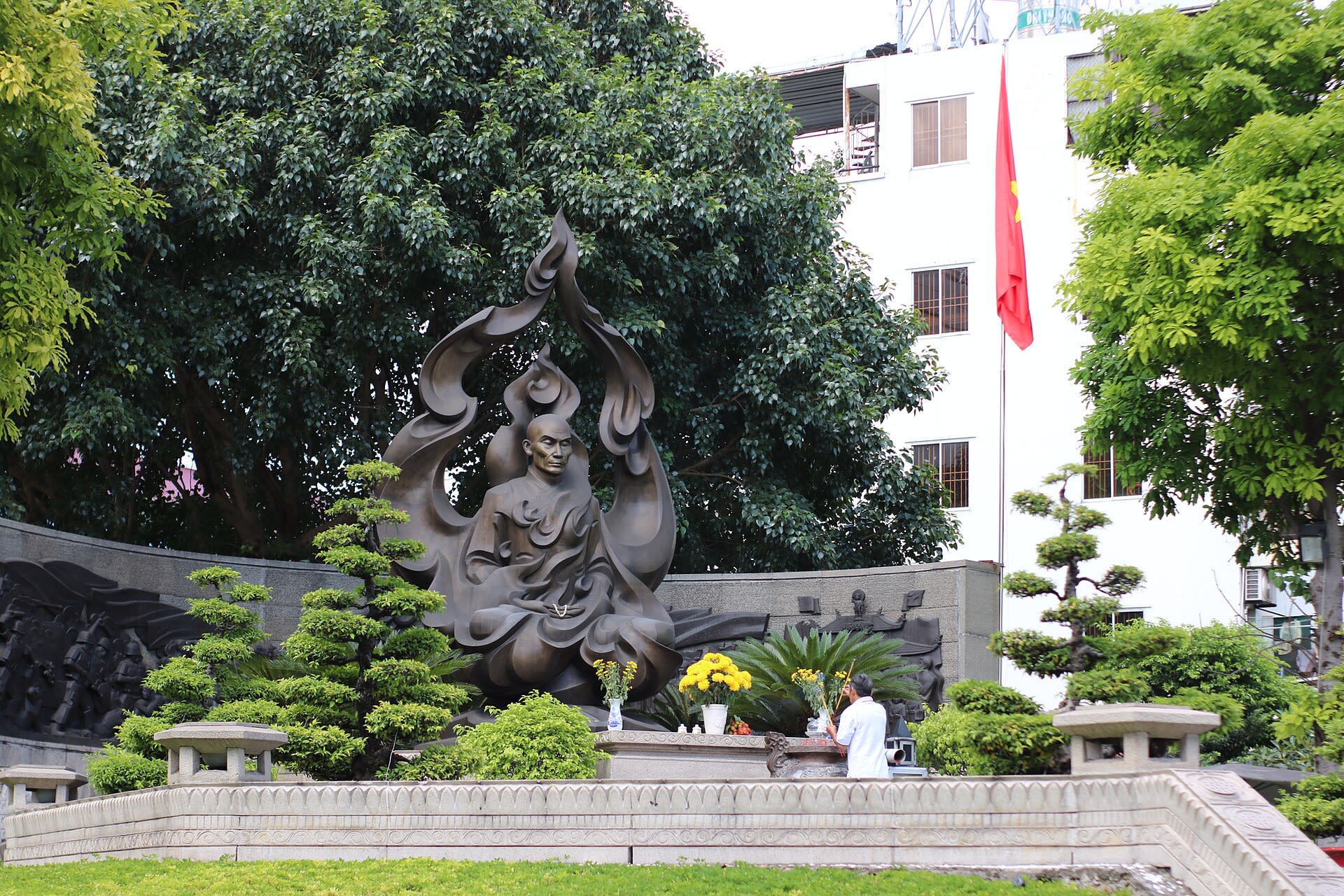
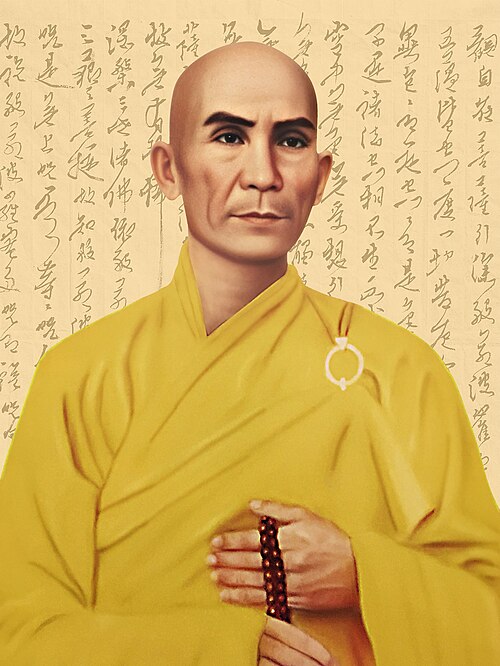
The Vietnam War generated its share of iconic photographs. One was taken on this day in 1963, when an Associated Press photographer captured the moment when a sixty-six-year-old Buddhist monk named Thich Quang Duc set himself on fire to protest the South Vietnamese government. The photo shocked people around the world and signaled the depth of the challenge the United States faced in South Vietnam. President John F. Kennedy said that “no news picture in history has generated so much emotion around the world as that one.” Thich Quang Duc’s self-sacrifice helped undermine U.S. support for South Vietnam’s president but not the U.S. commitment to the county’s defense.
Ngo Dinh Diem
To understand Thich Quang Duc’s story, it is essential to know the story of Ngo Dinh Diem, the U.S.-backed president of South Vietnam at the time. Diem came to power in 1955 in the aftermath of the Geneva Accords, which ended French colonial rule and split Vietnam along the 17th parallel. He had gained national fame when he quit a critical job working for the French before World War II and then refused to cooperate with the Japanese occupiers during it.
Despite his impeccable nationalist credentials and personal bravery, Diem was not the ideal choice to lead the new South Vietnam. He was a French-educated Catholic in a Buddhist majority country. He had spent much of the decade after World War II promoting the cause of Vietnamese independence in the United States rather than remaining in Vietnam to participate in the revolt against French rule and building a political organization. He was staunchly anti-communist but hardly a democrat. With U.S. assistance, he won a “national” referendum in South Vietnam in October 1955 with 98.2 percent of the vote, receiving 50 percent more votes in Saigon than there were registered voters.
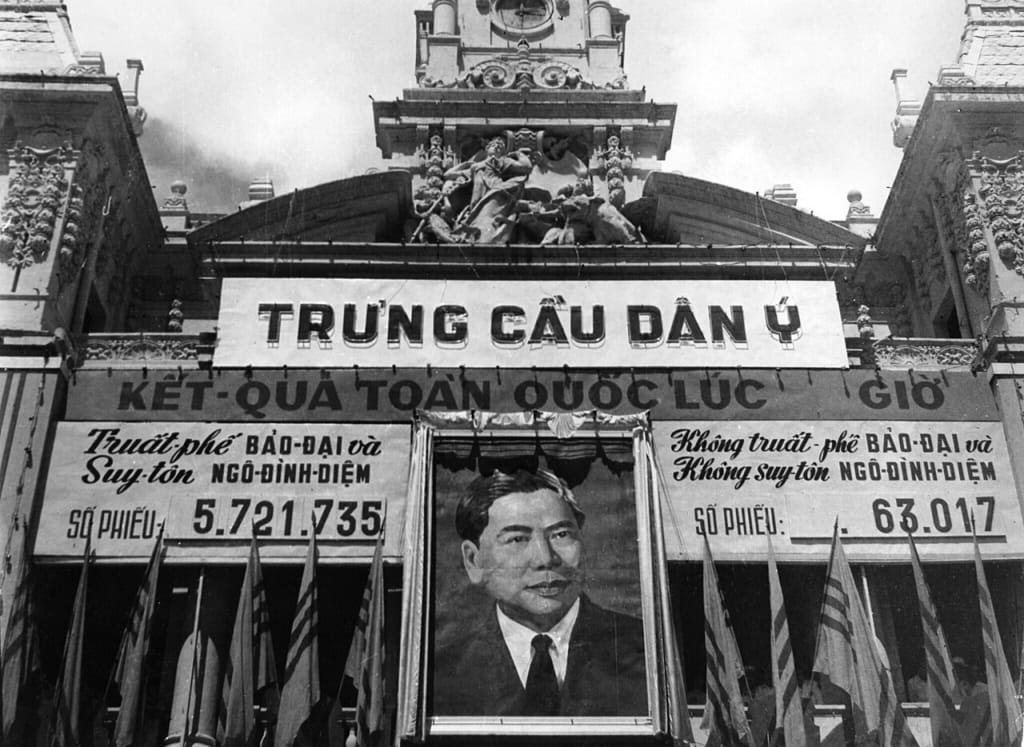
A more astute politician would have broadened his political base. Diem chose the opposite strategy. He favored his friends, family, and fellow Catholics for government jobs and military appointments while he repressed his domestic political opponents. The communist insurgency that the National Liberation Front (NLF) launched in 1959 compounded his problems. The heavy-handed policies he enacted, usually with U.S. support, to counter the NLF, better known at the time by its derogatory name the “Viet Cong,” had the opposite effect; they alienated many South Vietnamese against his government.
The Buddhist Crisis
Not surprisingly, criticism of Diem and his government grew. In the spring of 1963, public unrest reached a crisis point. On May 8, a day that South Vietnamese regarded as the Buddha’s 2,527th birthday, residents of Hue, the imperial capital of old Vietnam, organized a rally to protest a ban on flying the Buddhist flag. Police fired on the crowd, killing nine people, including several children. Hunger strikes and more demonstrations followed.
On June 11, 1963, Thich Quang Duc took the protests against Diem to a new level. He and more than 300 other Buddhist monks and nuns marched down one of Saigon’s major boulevards. Wearing a saffron robe, he sat in the lotus position on a cushion in the middle of the street. Two other monks emptied a five-gallon can of gasoline on him. Thich Quang Duc then took a match, struck it, and dropped it on himself. The journalist David Halberstam, who was present, described what happened next:
Flames were coming from a human being; his body was slowly withering and shriveling up, his head blackening and charring. In the air was the smell of burning flesh; human beings burn surprisingly quickly. Behind me I could hear the sobbing of the Vietnamese who were now gathering. I was too shocked to cry, too confused to take notes or ask questions, too bewildered even to think . . . As he burned he never moved a muscle, never uttered a sound, his outward composure in sharp contrast to the wailing people around him.
A fire engine raced to extinguish the blaze, but several monks blocked its path. The flames eventually burned out, and the monks placed Thich Quang Duc’s body in a coffin and carried him away.
Some of Thich Quang Duc’s fellow monks had tipped off Malcolm Browne, an Associated Press photographer, that “something spectacular” was about to happen. He hurried to the intersection and caught Thich Quang Duc’s death on film. The photographs stunned the millions of people around the world who saw them in June 1963, and Browne was awarded the 1963 Pulitzer Prize for International Reporting as well as World Press Photo of the Year. It. As a U.S. embassy official put it, Browne’s work “had a shock effect of incalculable value to the Buddhist cause, becoming a symbol of the state of things in Vietnam.”
The Legacy of Thich Quang Duc’s Sacrifice
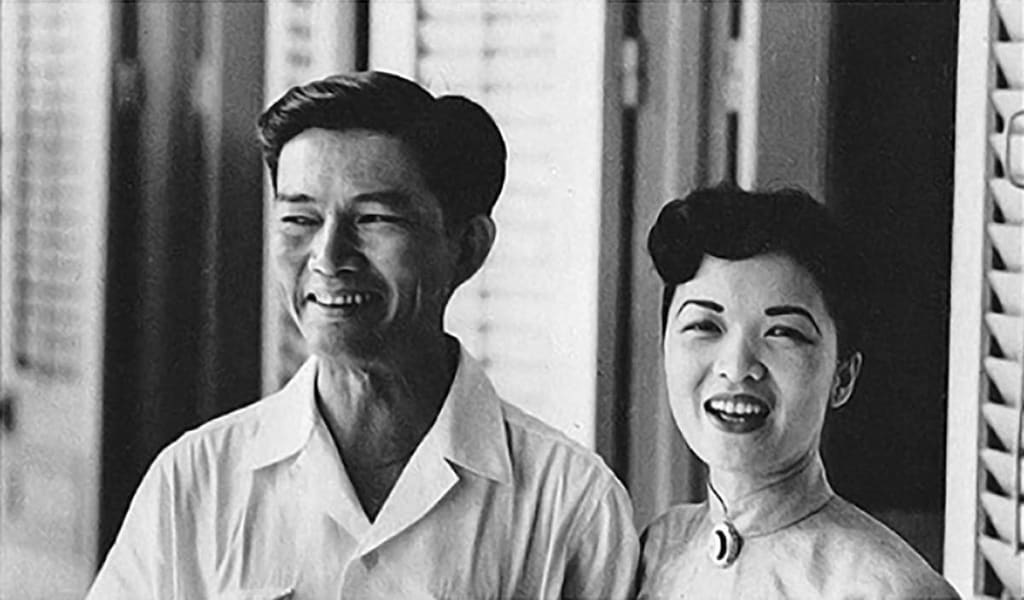
Seven other monks soon followed Thich Quang Duc’s example and set themselves afire to protest Diem’s rule. Convinced of his own rectitude, Diem did nothing to appease the growing anger being directed his way. His sister-in-law, Madame Nhu, instead stoked it. She likened Thich Quang Duc’s self-immolation to a “barbecue.” “Let them burn,” she said, “and we shall clap our hands.”
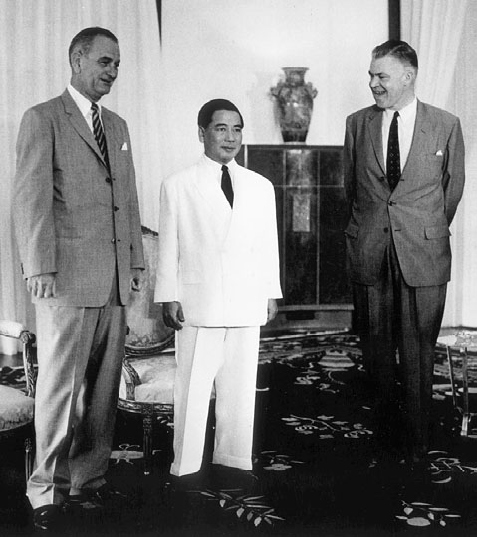
What became known as the “Buddhist Crisis” helped sour what to that point had been Kennedy’s strong support for Diem. The two had met in the early 1950s when Diem was living in the United States and Kennedy was a U.S. senator. He continued the Eisenhower administration’s policy of backing Diem when he took office in January 1961, seeing him as a bulwark against communist expansion. That year during a visit to South Vietnam, Kennedy’s vice president, Lyndon B. Johnson, called Diem the “Churchill of Asia.”
In late August 1963, Diem’s security forces ransacked Buddhist pagodas across South Vietnam and arrested more than 1,400 political opponents. The United States began to see Diem’s unpopular and ineffective rule as detrimental to the fight against communism. JFK approved a State Department cable that directed the U.S. ambassador to South Vietnam to “urgently examine all possible alternative leadership and make detailed plans as to how we might bring about Diem’s replacement if this should become necessary.” The ambassador took the instructions to heart. On November 1, 1963, Kennedy looked the other way as a group of South Vietnamese Army generals overthrew and executed Diem.
Kennedy, who was assassinated just three weeks later, had hoped the coup would bring political stability to South Vietnam. It didn’t. Over the next eighteen months, the country went through seven leadership changes.
The coup and the political crisis that Thich Quang Duc’s self-immolation highlighted also did not prompt a rethinking of the wisdom of the U.S. involvement in South Vietnam. President Lyndon Johnson instead chose to deepen the U.S. commitment to the country. In late 1963, the United States had roughly 16,000 troops in South Vietnam officially functioning in an advisory capacity. Four years later, it had half a million combat troops fighting the NLF and North Vietnamese forces. A recent survey I did of members of the Society for Historians of American Foreign Relations ranked that decision to commit U.S. combat forces to Vietnam as the second-worst decision in the history of U.S. foreign policy.
Oscar Berry assisted in the preparation of this article.
The United States celebrates its 250th anniversary in 2026. To mark that milestone, I am resurfacing essays I have written over the years about major events in U.S. foreign policy. A version of this essay was published on June 11, 2012.