Trump Should Aim to Neutralize the Iran Regime, Not Destroy It
A grassroots revolution in Iran sounds attractive, but it is far too risky. The likely outcome of dismantling the Islamic Republic is not stable democracy, but state fracture, political chaos, and radiating instability. Washington should instead aim for a defanged Islamic Republic.

Charles Kupchan is a senior fellow at the Council on Foreign Relations and professor of international affairs at Georgetown University in the Walsh School of Foreign Service and Department of Government. He is the author of the forthcoming book: “Bringing Order to Anarchy: Governing the World to Come.”
President Donald Trump’s decision to join Israel in launching a broad military campaign against Iran has produced a swirl of unanswered questions. Why did a president who has repeatedly vowed to pull the United States back from military quagmires plunge the nation into yet another risky war in the Middle East? Did Trump short shrift diplomacy and move too quickly to war? Did he do an adequate job of justifying the war to the American public and U.S. allies?
These are important questions, but they are overshadowed by the more urgent issue of strategic aims. Can Washington translate its military campaign against Iran into a desirable political outcome? The way this war ends will ultimately determine whether Trump’s decision to attack Iran goes down in history as a rash act of folly or a courageous strategic success.
Trump has two options. The less risky option is to refrain from dismantling the regime and instead aim to put in place the Islamic Republic 2.0. The institutional skeleton of the regime would remain intact, but its top leaders—a good number of whom are already dead—would be replaced by a less ideological and more pragmatic cadre. Governed by moderates and the military establishment, this new regime would be defanged through strict constraints on its nuclear program, missile capabilities, and support for regional proxies. This approach has already been dubbed the “Venezuela model”—decapitation followed by coercing the remaining government into submission.
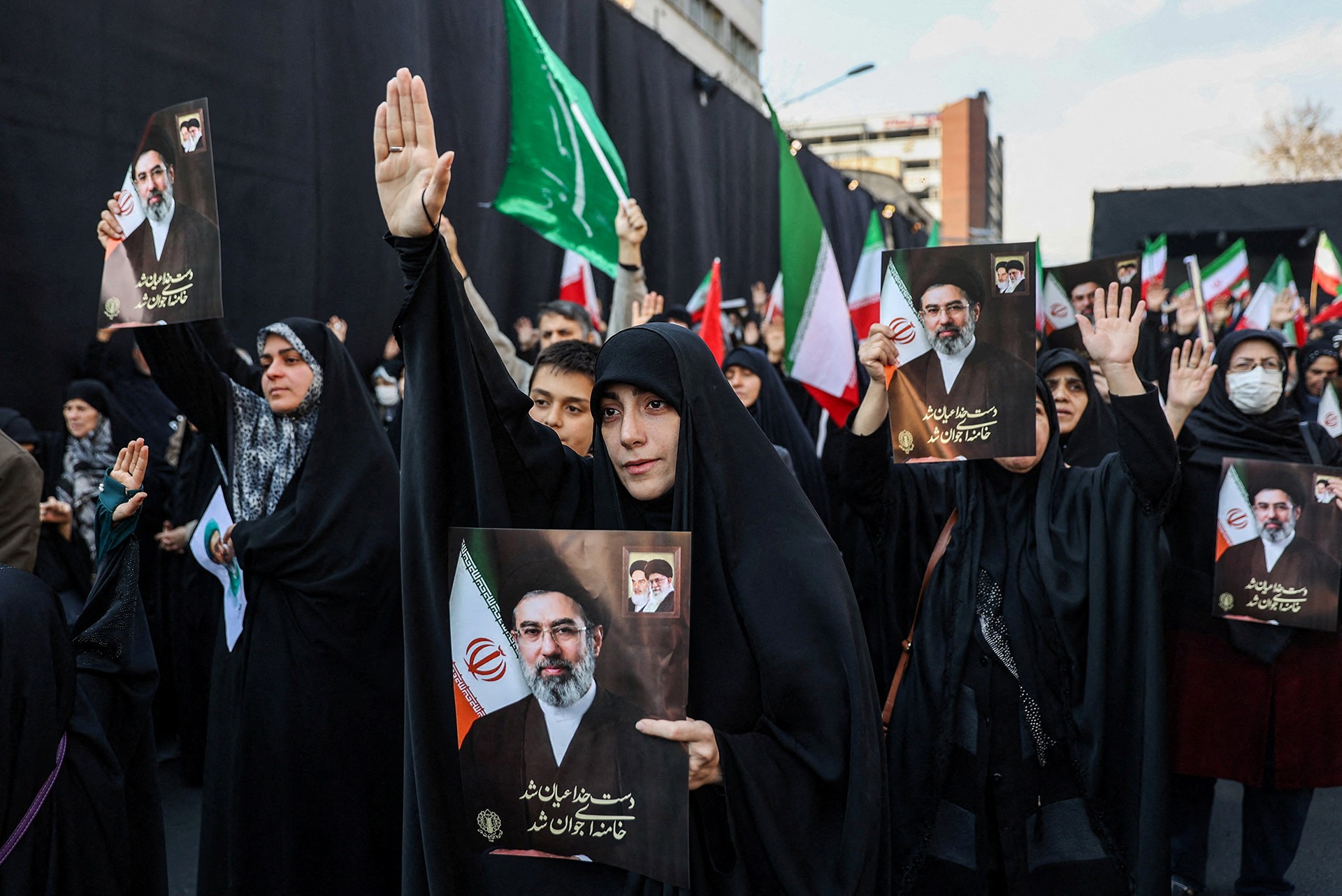
The appointment of Mojtaba Khamenei as the new supreme leader certainly presents an obstacle to this approach. He is a hard-liner who has clear ties to the Islamic Revolutionary Guard Corps (IRGC) and may well seek revenge for the loss of his father and other family members in the initial strikes. Mojtaba Khamenei would need to go if a more moderate regime is to take shape.
Trump’s other option is to attempt to topple the Iranian government. The theory is that a combination of withering attacks against the regime, arming and supporting Iranian Kurds and other potential proxies on the ground, and encouraging a popular uprising will end the long run of the theocratic regime that has been repressing its people and exporting violence and instability since taking power forty-seven years ago. The individual or group that would lead this rebellion has yet to emerge. But, the argument runs, the regime has lost its legitimacy and a popular revolt is waiting to happen.
Trump should have an easy time choosing between these two options. He should aim to neutralize the regime, not topple it. A grassroots revolution sounds attractive, but it is far too risky. The likely outcome of dismantling the Islamic Republic is not stable democracy, but state fracture, political chaos, and radiating instability.
The president needs to steady his aim
True to form, Trump launched this war without first identifying a clear strategic objective. At times, he has exhorted the Iranian people to rise up: “When we are finished, take over your government. It will be yours to take.” Trump has reached out to Kurdish leaders in Iran and neighboring Iraq to suggest that they could provide the ground forces, backed by U.S. and Israeli airpower, needed to topple the Iranian regime. A week into the war, he called for Iran’s “unconditional surrender.”
Yet at other times, Trump has embraced a quite different endgame, asserting that “It’s going to work like in Venezuela.” He has stated that he wants a say in selecting Iran’s next leader, though he has admitted that air strikes have killed most of the individuals that the White House was eyeing to be next in line. Secretary of State Marco Rubio has stated that regime change “is not the objective,” while Defense Secretary Pete Hegseth has disavowed the campaign against Iran as a nation-building war. The mixed messaging has left the U.S. public and allies mystified about the administration’s objectives as the conflict extends into its second week.
Trump’s mercurial nature notwithstanding, he should steady his aim and decisively get behind a strategy that seeks to tame the regime, not topple it. Several considerations make this an obvious call.
The United States and Israel enjoy effective control of Iran’s airspace, and air strikes are bringing to bear overwhelming firepower. But they have no ground troops with whom they can partner, a big problem given that airpower alone is a quite ineffective instrument for toppling regimes. The United States could proceed with efforts to arm Iran’s minority populations—Kurds, Azeris, and Baluchis among them—but doing so could lead to a civil war. And given the large population of Kurds, Azeris, and Baluchis in Iran’s neighboring countries, a civil war in Iran would be unlikely to stay in Iran.
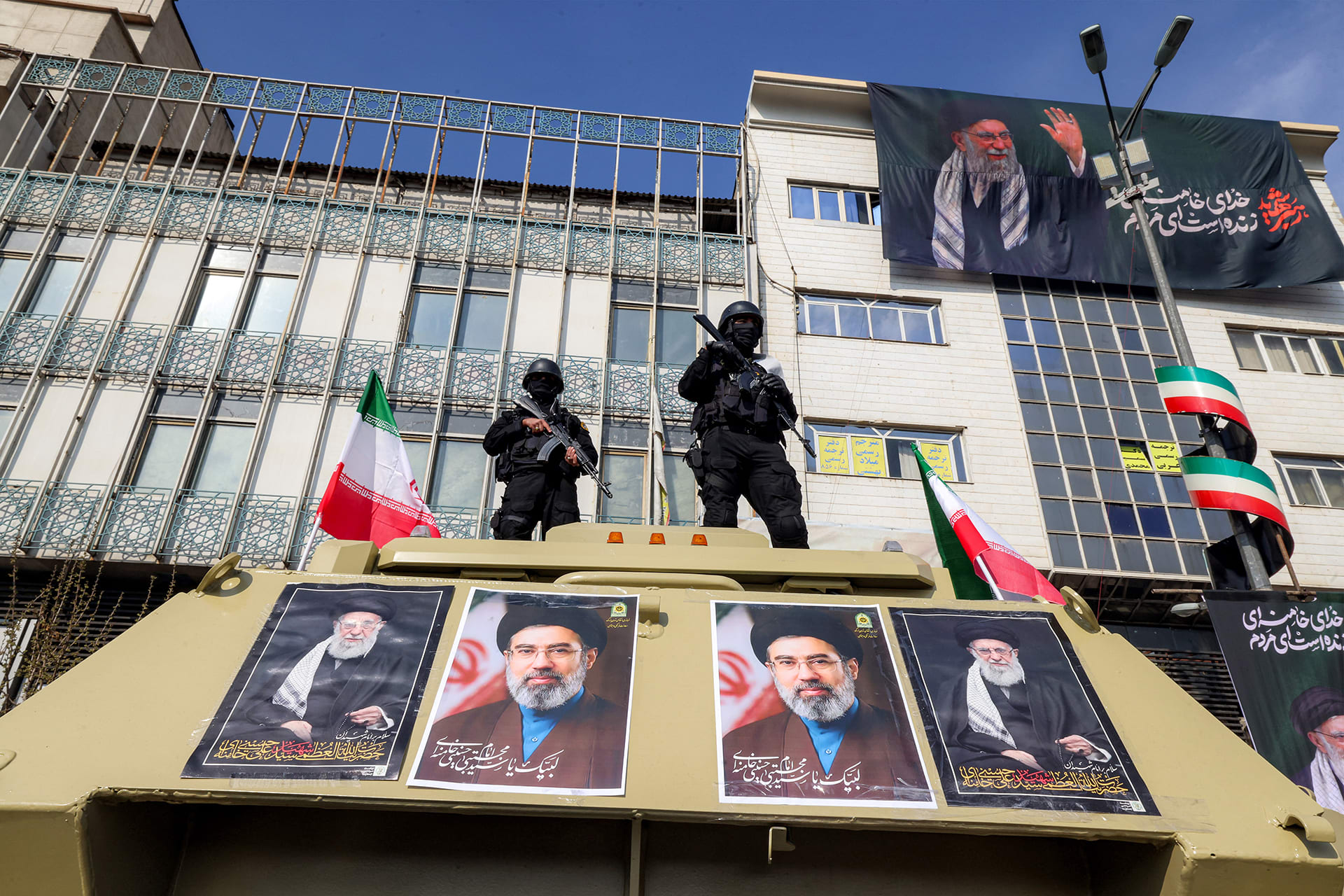
In addition, Iran’s regime runs deep and broad and would be quite hard to take down. The country has one of the largest armed forces in the Middle East, with a total strength of more than one million troops. The elite IRGC has close to two hundred thousand men and has control over the Basij, a paramilitary force that can tap over half a million volunteers. The IRGC is deeply embedded in the Iranian economy and is a powerful tool of social control. The country’s police force tops two hundred thousand personnel and works alongside the IRGC and the Basij militia to repress domestic dissent. Despite the relentless bombing campaign, Iran’s security apparatus shows no signs of cracking. On the contrary, Mojtaba Khamenei, the new supreme leader, is a favorite of the IRGC and his appointment demonstrates the corps’ continuing influence.
Many Iranians are certainly disaffected by years of economic hardship and repression. Yet the regime’s consistent readiness to use violence to snuff out domestic unrest has proved effective. Earlier this year, the Islamic Republic killed thousands of Iranians in a crackdown on protesters. An organized opposition capable of resisting the state’s security apparatus is nowhere in sight.
Lessons from a messy past in the Middle East
Even if the Islamic Republic were ousted, it is doubtful that it would lead to a stable Iranian government committed to regional stability. Recent history has repeatedly demonstrated as much. The United States expended copious amounts of blood and treasure orchestrating regime change through force in Afghanistan, Iraq, Libya, and Syria. The results were disastrous.
Afghanistan is again controlled by the Taliban. Taking down the Ba’ath regime in Iraq produced a violent insurgency that confounded the U.S. occupation and eventually led to the rise of the Islamic State. Libya after the fall of the Muammar Qaddafi regime turned into a failed state and a magnet for extremist groups. Syria was wracked by years of civil war, which enabled the Islamic State to move in and set up a caliphate. Support from Iran and Russia helped President Bashar al-Assad hang on until late 2024, when his government fell to a militia formerly linked to al-Qaeda. Not exactly a track record that should inspire enthusiasm for toppling the Islamic Republic.
To be sure, Iran is one of the Middle East’s few organic nations, with a long imperial history and deep cultural roots. Its society is not organized along tribal lines, making it less likely to fall prey to the internal fragmentation that foiled collective governance in tribal societies like Afghanistan and Libya. But Persians make up only about 60 percent of the population, with Kurds, Turkic peoples, Arabs, Circassians, and other minorities making up the rest. As has happened in many other countries in the Middle East, instability and regime change could mobilize ethnic and sectarian rivalries.
The results of the Arab Spring provide a cautionary warning on this front. Instead of birthing an Islamic Reformation and a wave of democratization, the Arab Spring produced a surge in political Islam and widespread instability. Even Tunisia, the one country in the region to emerge from the uprisings as a working democracy, reverted to autocratic rule in 2021. Instead of clearing the way for pluralism and tolerance, the overthrow of strongmen brought to the surface religious, sectarian, ethnic, and tribal cleavages that coercive rule had long held at bay. Washington should be careful what it wishes for.
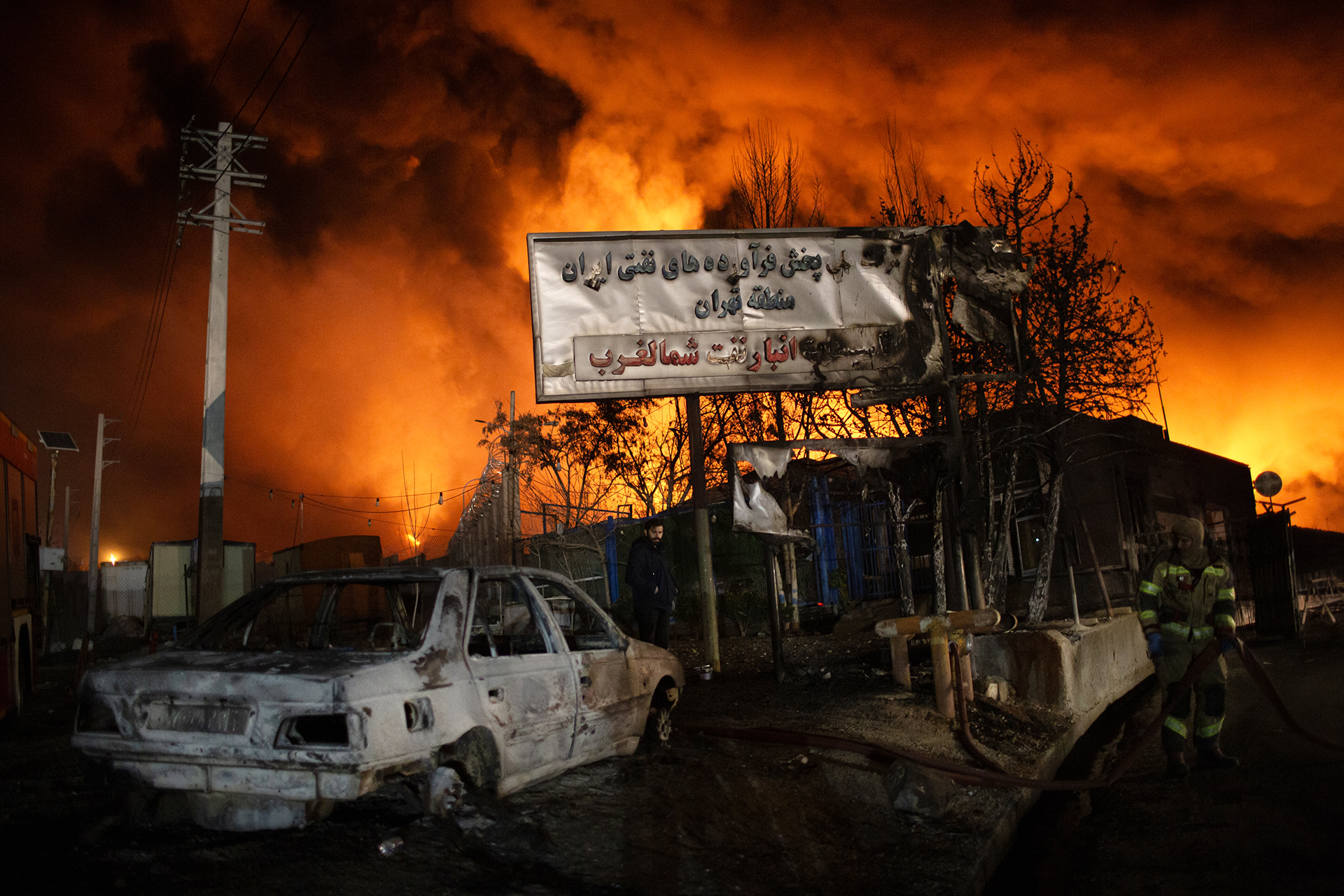
Trump has additional reasons to tread cautiously and aim for a relatively short conflict. With an eye toward his own political standing and the November midterms, he needs to avoid U.S. involvement in yet another “forever war.” A majority of Americans oppose the campaign against Iran, and Trump’s own MAGA base is uneasy. Weapons stockpiles in the United States, Israel, and neighboring states under attack are not unlimited. The military campaign against Iran has closed the Strait of Hormuz and regional airspace, producing a surge in the price of oil and in shipping costs. Iran’s retaliatory strikes are taking lives, disrupting daily life, and damaging commerce. The conflict aids and abets Russia’s war against Ukraine by increasing Russia’s energy revenues and shifting the attention and resources of the United States and its European allies to the Middle East. Trump has many good reasons to end this war sooner rather than later.
Next steps
The Trump administration should ensure that its military campaign is aligned with the goal of neutralizing the Islamic Republic. That means focusing on degrading Iran’s military capability, its ability to launch retaliatory strikes, its command-and-control infrastructure, and its remaining nuclear facilities. But this approach also means avoiding strikes aimed at destroying governing institutions and refraining from efforts to arm proxies that would seek to depose the regime. The administration would need to keep open the channels of diplomatic communication and look to establish contacts with Iranian elites ready to explore off-ramps and work with the United States.
Even in a theocracy guided by religion and ideological ambition, elites are susceptible to pragmatic compromises that preserve their political power and economic interests.
Trump’s decision to join Israel in launching a full-scale war against Iran has considerable potential to end as badly as the recent U.S. military forays in Afghanistan, Iraq, Libya, and Syria. But the administration can reduce the chances of losing control of this conflict by lowering its aim and seeking to reform rather end the Islamic Republic. Down the road, the evolution of Iranian politics may well replace the regime with a secular democracy, but that change cannot be rushed and needs to emerge organically from within.
If the current regime holds on and hard-liners stay in power—which could well happen, considering the appointment of Mojtaba Khamenei—the United States and Israel would then need to keep a close eye on the regime and contain its potential efforts to rearm. But even that outcome would be preferable to pulling down the Islamic Republic and running the accompanying risks. The United States is still suffering the consequences of Washington’s errant invasion of Iraq in 2003 and its dismantling of the regime. The White House cannot risk making that same mistake in Iran.
If this war succeeds in effectively neutralizing the military and ideological threat that Iran poses to its region, the Middle East could be transformed. Iran has been the puppet master of the axis of resistance. Alongside the effective dismantling of Hamas and Hezbollah and the emergence of a Syrian government that seems headed in the right direction, a more pliable and pacific Iran would shift the region’s political center of gravity. Depending on Israel’s own political trajectory and its readiness to make progress on Palestinian self-determination, Israel’s normalization with Saudi Arabia and other neighbors could move forward.
Something good could emerge from the ongoing violence and suffering. But to reach that outcome, Washington needs to set a steady course aimed at taming, not toppling, the Islamic Republic.
This work represents the views and opinions solely of the authors. The Council on Foreign Relations is an independent, nonpartisan membership organization, think tank, and publisher, and takes no institutional positions on matters of policy.