What Kevin Warsh’s Confirmation Hearing Revealed About the Future of the Fed
Kevin Warsh’s confirmation hearing revealed a nominee who aims to narrow the Fed’s mandate, overhaul its inflation framework, and reduce its reliance on unconventional tools. But first he will have to navigate the political pressures that have cast a shadow over his path to the Senate Banking Committee.
By experts and staff
- Published
 Roger W. Ferguson Jr.CFR ExpertSteven A. Tananbaum Distinguished Fellow for International Economics
- Research Associate, International Economics
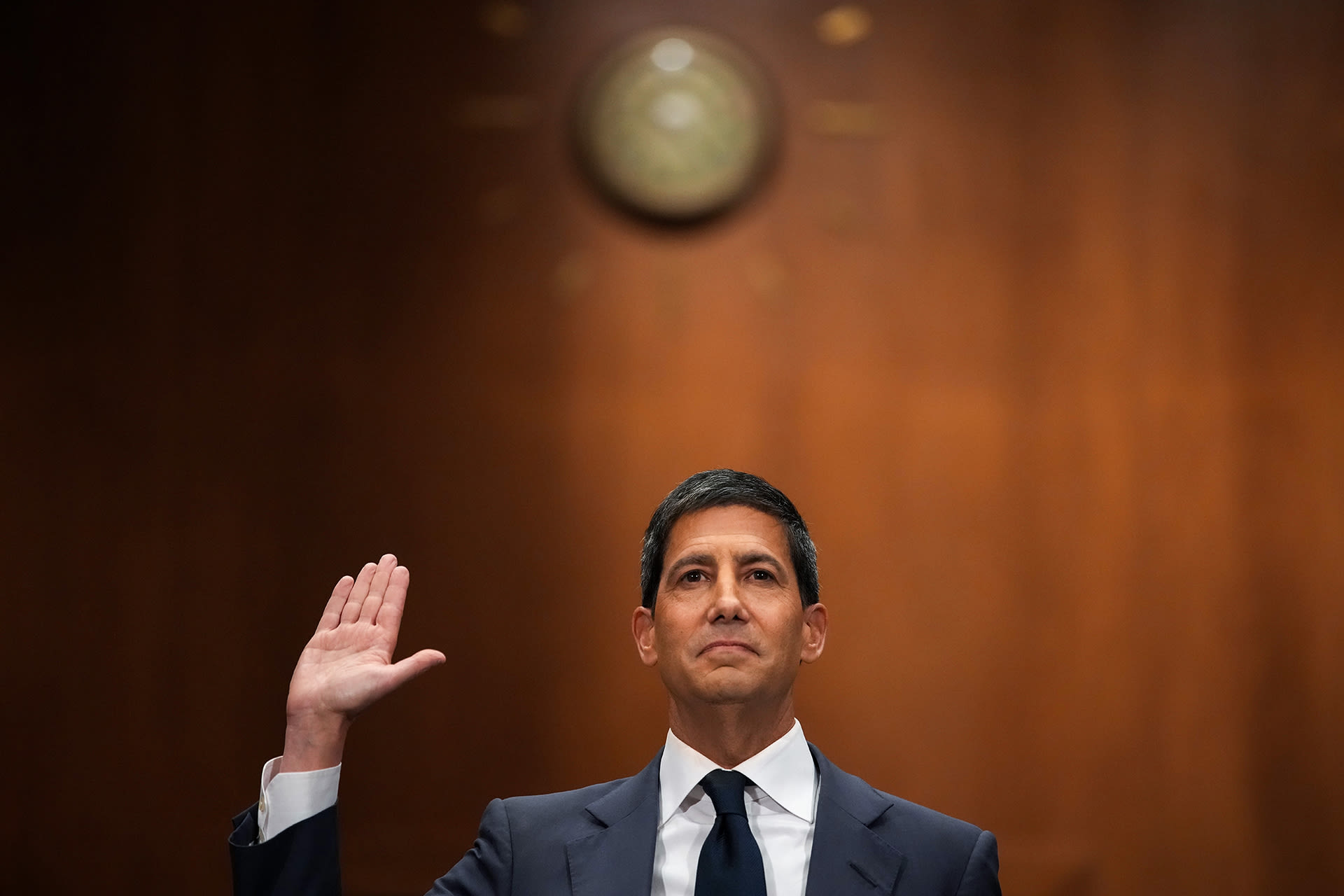
Kevin Warsh, a former member of the Federal Reserve’s Board of Governors and President Donald Trump’s nominee to succeed Chair Jerome Powell, appeared before the Senate Banking Committee for his confirmation hearing on Tuesday. The hearing was dominated in large part by questions about Fed independence and the politics surrounding his nomination.
By the hearing’s conclusion, a clearer picture had emerged of what a Federal Reserve under Warsh might look like. If confirmed, his priorities would appear to be a return to the Fed’s core mandate, a stricter approach to inflation targeting, and a reduced reliance on quantitative easing and forward guidance. Warsh’s path to confirmation, however, remains uncertain. Republican Senator Thom Tillis of North Carolina announced he would block Warsh’s confirmation vote until the Department of Justice drops its investigation into Powell and the ongoing renovation of the Fed’s Washington headquarters.
Politics looms large
Warsh was repeatedly pressed during the hearing on whether he would commit to preserving the Fed’s independence. Republican members of the committee appeared largely satisfied with his assurances, while Democrats remained skeptical. Senator Elizabeth Warren (D-MA), the ranking Democrat, was particularly critical, accusing Warsh of being the president’s “sock puppet.” Other contentious lines of questioning centered on his incomplete financial disclosure—though he has agreed to divest his assets within ninety days of confirmation—whether the president had pressured him to commit to lower interest rates, his record during the 2008 financial crisis, and past remarks suggesting interest rates had been kept too low.
That last point is perhaps the most policy-relevant of the issues raised. Those comments have led some observers to characterize Warsh as instinctively hawkish—a label that sits in some tension with his view that productivity gains driven by artificial intelligence (AI) could justify lower interest rates than would otherwise be warranted. The question of how a supply-side productivity boom should bear on monetary policy is one that policymakers have yet to fully resolve, and it points to a broader intellectual challenge that Warsh, if confirmed, would need to confront as the economic impact of the AI revolution comes into view.
Looming in the background are Trump’s broader efforts to exert influence over the central bank. Across his two terms, Trump has clashed repeatedly with the current chair, voicing his frustrations with the Fed’s interest rate policy in blunt terms. During the process of selecting a successor to Powell, Trump made clear his nominee would be expected to lower rates. These comments placed Warsh under considerable scrutiny during the hearing, even as he maintained that the president had not pressured him in their private conversations.
A new monetary toolkit
The hearing gave Americans a better sense of what a Fed under Warsh would look like. His priorities appear to fall into three broad areas.
First, Warsh wants to return the Fed to its core mandate of price stability and maximum employment. In his view, the institution has in recent years been drawn into political debates, climate policy discussions, and other areas outside its statutory remit. That critique, while politically resonant, may be somewhat overstated.
The Fed’s engagement with climate change, for instance, has largely been confined to assessing how banks price climate-related risk in their lending decisions and evaluating counterparty risk profiles—precisely the kind of scrutiny one would expect of a bank regulator, not unlike its recent focus on cybersecurity risk. Similarly, the Fed’s role in mortgage disclosure and consumer protection derives from Congressional legislation rather than self-directed mission creep. For those genuinely concerned about the Fed straying beyond its dual mandate, the more consequential remedy may lie in working with Congress to revisit the body of legislation that has expanded the Fed’s authority over time.
Warsh’s second priority is to overhaul how the Fed measures and targets inflation. A critic of the Fed’s 2020 shift to flexible average inflation targeting—which allows inflation to temporarily exceed 2 percent—Warsh favors reverting to a strict 2 percent target and has called for a broader reassessment of how inflation is measured, including the use of newer methodologies. He is also a strong proponent of interest rates as the primary tool for combating inflation, and has indicated he would seek to reduce the central bank’s reliance on quantitative easing and shrink its balance sheet, which has expanded significantly since the 2008 financial crisis.
Lastly, Warsh wants to abandon the practice of forward guidance, in which Fed officials signal their expectations for future policy moves. The dot plot—which charts each Federal Open Market Committee [FOMC] member’s projected rate path for the months ahead—could therefore become a relic of the past under his leadership.
Additional policy priorities Warsh outlined include research into how AI could affect economic output and production potential, steps to reduce the balance sheet, improvements to the Fed’s internal payment systems, and a commitment not to pursue a central bank digital currency.
Turbulent times ahead
If confirmed, Warsh would inherit a period of considerable uncertainty. The threat of large-scale AI-driven job displacement—so far largely anecdotal—raises questions about both the labor market and longer-term production potential. After five consecutive years of inflation above the Fed’s 2 percent target, with cumulative price increases approaching 25 percent, many Americans continue to feel the strain of an affordability crisis. The economic fallout from the Iran war has added further pressure, and the Fed is closely watching whether the resulting supply shock will prove transitory or filter through the broader economy, driving more persistent inflation and weighing on growth.
That last scenario could prove particularly fraught for Warsh: if inflation reaccelerates, he may find himself compelled to raise interest rates—doing precisely the opposite of what the president who nominated him had in mind.