U.S. Gun Policy: Global Comparisons
Updated
While U.S. gun deaths have fallen from an all-time high in 2021, the persistent death toll continues to provoke intense domestic and international scrutiny of the United States’ gun laws, which have much fewer controls than those of other advanced democracies.
- The debate over U.S. gun laws has raged for decades, often reigniting after high-profile mass shootings.
- Gun ownership and gun homicide rates are high in the United States compared to other advanced democracies. Gun-related deaths hit a record high in 2021 during the COVID-19 pandemic, but have since declined.
- Mass shootings in Australia, Canada, and the United Kingdom prompted those governments to tighten their gun laws.
What are backgrounders?
Authoritative, accessible, and regularly updated Backgrounders on hundreds of foreign policy topics.
Who Makes them?
The entire CFR editorial team, with regular reviews by fellows and subject matter experts.
Introduction
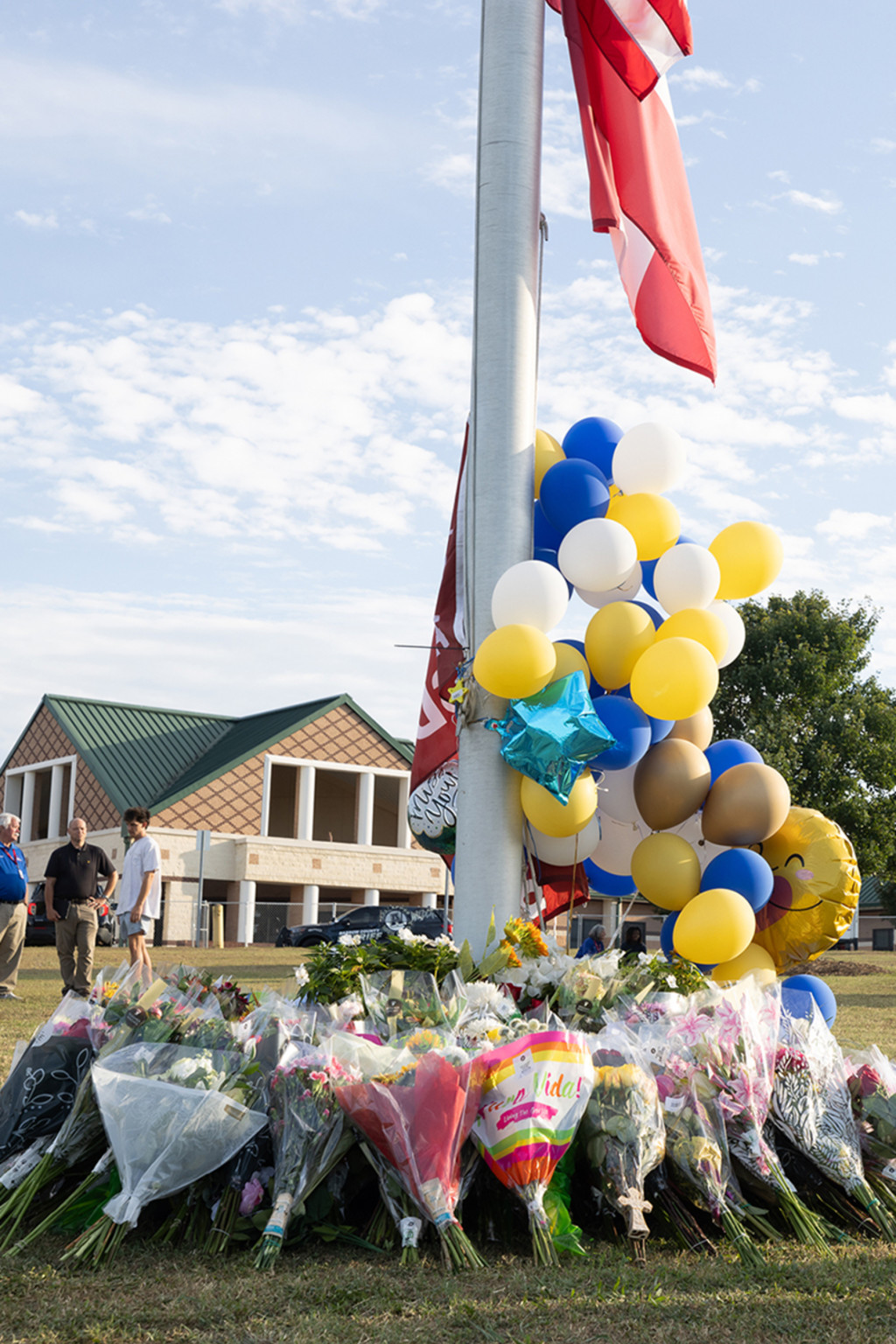
The debate over gun control in the United States has waxed and waned over the years. In particular, the ready availability of assault weapons and ammunition continues to provoke national discussion in the wake of mass shootings—particularly those involving schoolchildren, like the deadly 2022 shooting in Uvalde, Texas.
Recent years have seen some of the worst gun violence in U.S. history. During the COVID-19 pandemic, gun-related deaths spiked, hitting a record high of nearly forty-nine thousand in 2021. By 2024, gun-related deaths had declined slightly but remained above forty thousand. While supporters of gun rights argue that stricter laws infringe on constitutional freedoms, some gun control advocates contend that the United States should learn from its democratic peers, many of which saw sharp drops in mass casualty incidents after instituting stricter gun laws.
United States
Gun ownership in the United States is rooted in the Second Amendment of the Constitution: “A well regulated Militia, being necessary to the security of a free State, the right of the people to keep and bear Arms, shall not be infringed.”
The United States, with less than 5 percent of the world’s population, has the world’s highest gun ownership rate, at almost 121 firearms per 100 residents, according to 2017 data from World Population Review. And as of 2021, the United States also had the highest homicide-by-firearm rate among high-income countries and territories with populations of more than ten million—at 4.52 per 100,000 residents—according to the Institute for Health Metrics and Evaluation.
However, the right to bear arms is not unlimited. The U.S. Congress and state legislatures have authority to enact controlling legislation, and the U.S. Supreme Court has upheld some firearms restrictions, such as bans on concealed weapons and on the possession of certain types of weapons, as well as prohibitions on the sale of guns to certain categories of people. The Gun Control Act of 1968 prohibits individuals under eighteen years of age, convicted criminals, the mentally disabled, dishonorably discharged military personnel, and others from purchasing firearms. In 1993, the Brady Handgun Violence Prevention Act mandated background checks for all unlicensed individuals purchasing a firearm from a federally authorized dealer.
But some gun laws have not survived judicial review. For instance, in 2008, the Supreme Court struck down a Washington, DC, law that banned handguns, establishing that the Second Amendment protects an individual’s right to possess a firearm, particularly for purposes such as self-defense in the home. It was the court’s first major ruling on the Second Amendment in nearly seventy years.
Federal law provides the basis for firearms regulation in the United States, but states and cities can impose further restrictions. Some studies have indicated that states with more restrictive gun laws, such as California or Hawaii, have lower rates of gun deaths, although researchers say more analysis is needed.
In recent years, Congress has debated changes to existing gun laws, typically in the immediate aftermath of a high-profile mass shooting, such as the ones in Las Vegas in 2017 (sixty people killed) and at Marjory Stoneman Douglas High School in Parkland, Florida, in 2018 (seventeen killed). But in almost every instance, legislation has failed to garner enough political support. Ill-fated bills have proposed measures including assault weapons bans, expanded background checks, and firearm sales restrictions for people on federal terrorism watch lists.
As of 2025, there are no federal laws banning semiautomatic assault weapons, military-style .50 caliber rifles, handguns, or large-capacity magazines. There is also no federal requirement for those purchasing a gun to have any firearm safety training. There was a federal prohibition on assault weapons and on large-capacity magazines between 1994 and 2004—popularly known as the Federal Assault Weapons Ban—but Congress allowed these restrictions to expire.
U.S. gun violence reached an all-time high in 2021 during the COVID-19 pandemic. Congress passed a bipartisan bill in 2022 imposing tougher requirements for certain firearms purchases, marking the first significant federal gun legislation in almost three decades, but did not enact a full ban. The persistence of shooting incidents, coupled with rising political violence in recent years, continues to fuel a push among several civic activist groups for gun control legislation.
Canada
Gun ownership is also relatively high in Canada, at about thirty-five firearms per one hundred residents (ranking seventh globally), but the country does not struggle with a similar level of gun violence. As in the United States, Canada’s national government sets gun restrictions that the provinces, territories, and municipalities can supplement. And like its southern neighbor, Canada’s gun laws have often been prompted by gun violence. In 1989, a student armed with a semiautomatic rifle killed fourteen students and injured more than a dozen others at a Montreal engineering school. The incident is widely credited with driving major gun reforms that imposed a twenty-eight-day waiting period for purchases; mandatory safety training courses; more detailed background checks; bans on large-capacity magazines; and bans or greater restrictions on military-style firearms and ammunition.
Firearms in Canada are divided into three main classes: nonrestricted weapons, such as ordinary rifles and shotguns; restricted, including most handguns and certain semiautomatic rifles; and prohibited, such as full-automatic weapons. It is illegal for private citizens to own a fully automatic weapon unless it was registered before January 1, 1978; the military and police are an exception.
Changes to Canadian law in 1995 required individuals to obtain a license to buy guns and ammunition, as well as register all firearms. However, in 2012, the requirement to register nonrestricted guns was dropped, and related public records were expunged. Following another mass shooting, at a Quebec City mosque in 2017, the government passed a bill to again require nonrestricted firearms to be registered and allow background checks to consider events from more than five years in the past.
In 2020, after a gunman in Nova Scotia killed twenty-two people in Canada’s deadliest mass shooting, Prime Minister Justin Trudeau announced a ban on “assault-style” firearms. The legislation also required those who owned now-prohibited firearms to either participate in a buyback program or comply with a strict storage regime. Over the following years, the government passed additional legislation, including a 2023 bill that codified a national handgun freeze into law, as well as expanded the list of banned assault-style firearms.
Australia
The inflection point for modern gun control in Australia was the 1996 Port Arthur massacre, when a young man killed thirty-five people and wounded nearly two dozen others. The rampage, carried out with a semiautomatic rifle, is widely considered the worst single-perpetrator mass shooting in Australian history. Less than two weeks later, the conservative-led national government pushed through fundamental changes to the country’s gun laws in cooperation with the various states and territories, which regulate firearms.
The National Firearms Agreement [PDF] all but prohibited automatic and semiautomatic assault rifles, mandated licensing and registration, and instituted a temporary gun buyback program that took some 650,000 assault weapons (about one-sixth of the national stock) out of public circulation. Among other things, the law also required licensees to demonstrate a “genuine need” for a particular type of gun and take a firearm safety course. After another high-profile shooting in Melbourne in 2002, Australia’s handgun laws were tightened as well. Many analysts said these measures were highly effective, citing declines in gun-death rates and gun-related mass killings.
Recent years, however, have seen an increase in gun sales and ownership, leading Australian gun control advocates to warn against the easing of gun laws in some states and territories. National gun safety discourse was further fueled by the 2018 suspected murder-suicide of a family of seven in Western Australia, the country’s worst mass shooting in two decades, and the 2022 religiously motivated shooting in Wieambilla that resulted in six deaths. And yet, despite this dialogue, a January 2025 report by the independent think tank Australia Institute found that the country’s private gun ownership is at its highest level in nearly thirty years of data collection.
In 2024, the government introduced stricter gun licensing and safety requirements as gun ownership numbers have risen. Despite the increase in firearm ownership, however, Australia’s gun death rate is twelve times lower than that of the United States in 2025.
Israel
In Israel, where military service is compulsory, guns are a common sight. A significant portion of the population has indirect access to an assault weapon by either being a soldier or a reservist, or a relative of one. By law, most eighteen-year-olds are drafted into the military, psychologically screened, and provided at least some weapons training after high school. After serving typically two or three years in the armed forces, however, most Israelis are discharged and subject to civilian gun laws.
The country has relatively strict gun laws, including a ban on assault weapons, a requirement to register ownership with the government, and a limit of one gun per owner. To obtain a gun license, an applicant must be an Israeli citizen or permanent resident; speak at least some Hebrew, Israel’s official language; and pass a health screening. The age-minimum requirements vary: twenty-one for citizens with military or national service experience, twenty-seven for citizens without, and forty-five for permanent residents who are not citizens.
However, after Hamas’s October 7, 2023, surprise attack that killed approximately 1,200 Israelis and spurred a war with the militant group, the Israeli government has moved to loosen gun restrictions by accelerating the permitting and approval processes.
United Kingdom
Modern gun control efforts in the United Kingdom (UK) have also been precipitated by extraordinary acts of violence that sparked public outrage. In 1987, a lone gunman armed with two semiautomatic rifles and a handgun went on a six-hour shooting spree roughly seventy miles west of London, killing more than a dozen people and then himself. In the wake of the incident, known as the Hungerford massacre, Britain introduced the Firearms (Amendment) Act 1997, which expanded the list of banned weapons, including certain semiautomatic rifles, and increased registration requirements for other weapons.
A gun-related tragedy in the Scottish town of Dunblane in 1996 prompted Britain’s strictest gun laws yet. A man armed with four handguns shot and killed sixteen schoolchildren and one adult before committing suicide in the country’s worst mass shooting to date. The incident sparked a public campaign known as the Snowdrop Petition, which helped drive legislation banning handguns, with few exceptions. The government also instituted a temporary gun buyback program, which many credit with taking tens of thousands of illegal or unwanted guns out of supply.
A large majority of police officers in the UK do not carry firearms, unlike their counterparts in the United States and other countries. Guns are limited to specially trained police units that respond to particular emergencies or deploy for certain types of operations. Supporters of the policy say the unarmed officer symbolizes policing of the public by consent as opposed to by force.
Recent gun law legislation in the UK includes the Firearms Act 2023, which strengthened controls over the possession of ammunition component parts and introduced new rules for the operation of miniature rifle ranges, as well as the Firearms (Amendment) Rules 2025, which made several changes to the country’s firearms licensing process.
Norway
Gun control had rarely been much of a political issue in Norway, where gun laws are viewed as tough, but ownership rates are high. However, that changed in 2011, when a right-wing extremist killed seventy-seven people in two domestic attacks, the first in Oslo and the second at an island summer camp. Though Norway ranks sixteenth worldwide in gun ownership, gun violence in the country remains relatively limited. Most Norwegian police, like the British, do not carry firearms.
In the wake of the 2011 tragedy, some analysts in the United States cited the rampage as proof that strict gun laws—which in Norway include requiring applicants to be at least eighteen years old, specify a “valid reason” for gun ownership, and obtain a government license—are ineffective. Other gun control critics have argued that had other Norwegians, including the police, been armed, the gunman might have been stopped earlier and killed fewer victims.
After the massacre, an independent commission recommended tightening Norway’s gun restrictions in various ways, including by prohibiting pistols and semiautomatic weapons, but no changes were ultimately made. In 2018, the Norwegian parliament approved a ban on semiautomatic firearms, which took effect in 2021.
Japan
Gun control advocates regularly cite Japan’s highly restrictive firearm regulations in tandem with its extraordinarily low gun death rate. Most years, fewer than one hundred Japanese die from gun violence in a country of roughly 124 million people. Most guns are illegal in the country and ownership rates, which are quite low, reflect this. However, the assassination of Prime Minister Abe Shinzo in 2022 shocked the country, particularly because gun deaths are so rare.
Under Japan’s Firearms and Swords Control Law—one of the strictest in the world—the only guns permitted are shotguns, air guns, guns with specific research or industrial purposes, or those used for competitions. However, before access to these specialty weapons is granted, an individual must obtain formal instruction and pass a battery of written, mental, and drug tests, as well as a rigorous background check. Owners must also inform the authorities of how their weapons and ammunition are stored and provide their firearms for annual inspection.
Some analysts link Japan’s aversion to firearms with its demilitarization in the aftermath of World War II. Others say that because the overall crime rate in the country is so low, most Japanese see no need for firearms.
Recommended Resources
This Congressional Research Service report assesses major issues regarding U.S. gun policy.
This Backgrounder explores how U.S. policing compares with that of other advanced democracies.
For the Atlantic, Jamie Thompson examines the 2018 mass shooting at Marjory Stoneman Douglas High School in Parkland, Florida, through the lens of law enforcement officer Scot Peterson.
For Think Global Health, Katherine Leach-Kemon and Laurent Grosvenor write that there appears to be little connection between mental health and gun violence.
Colophon
Staff Writers
- Jonathan Masters
Additional Reporting
Ellora Onion-De, Diana Roy, Alice Hickson, and Andrew Chatzky contributed to this Backgrounder. Header image by Jessica McGowan/Getty Images.
 Backgrounder
 Backgrounder
 Backgrounder
 Backgrounder