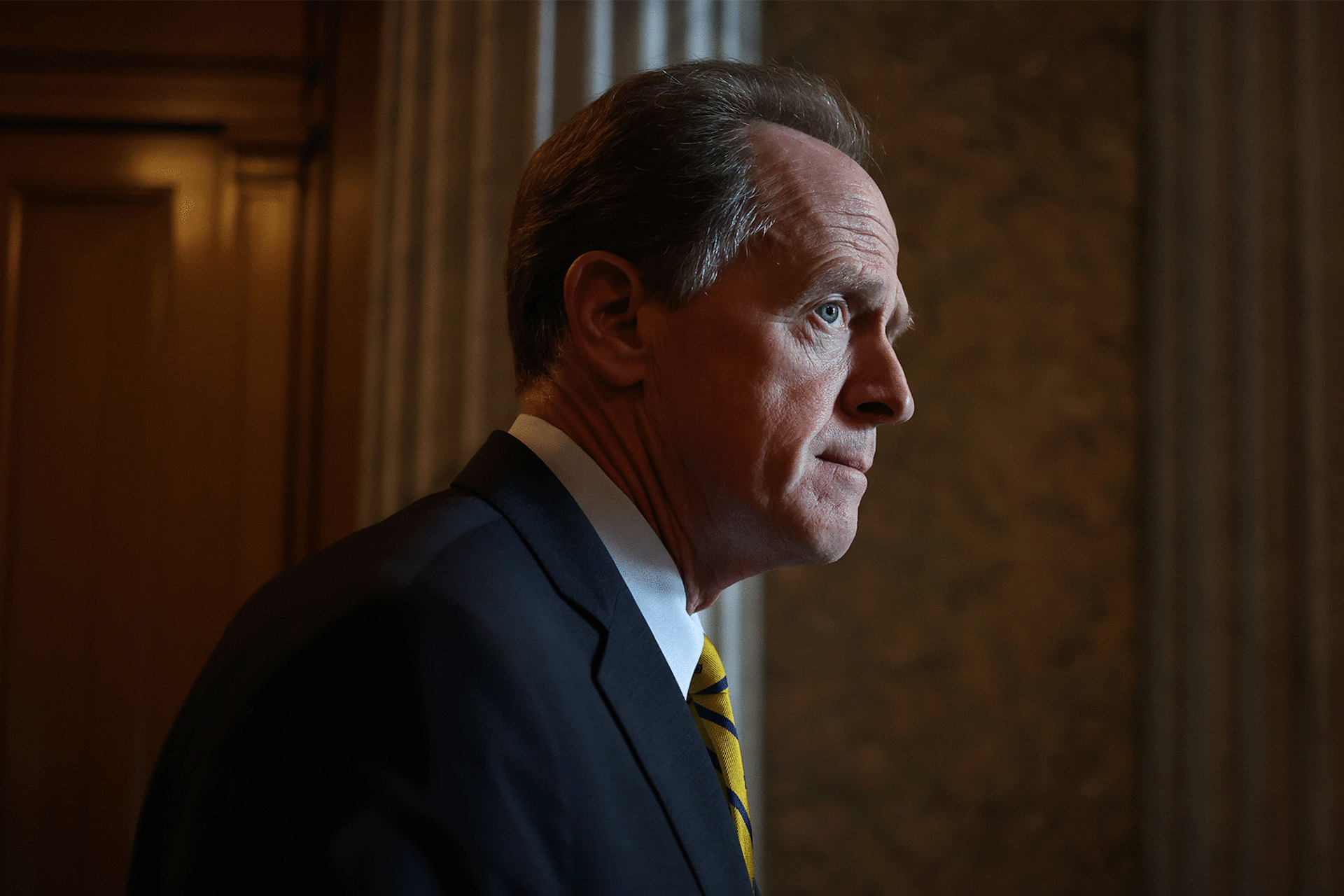
Justin G. Muzinich
Chief Executive Officer, Muzinich & Co.

Justin Muzinich is CEO of Muzinich & Co., a global credit investment firm. He served as the U.S. deputy secretary of the treasury from 2018 to 2021, with broad responsibility for U.S. economic policy. While deputy secretary, Justin was also responsible for the roles of undersecretary for terrorism and financial intelligence and undersecretary for domestic finance, managing the divisions of Treasury that oversee national security policy, financial policy, and the financing of the U.S. government. Justin played a leading role in the economic response to COVID-19 and represented the United States at Group of Seven (G7), Group of Twenty (G20), and Organization of Economic Cooperation and Development (OECD) meetings. His national security responsibilities included the Committee on Foreign Investment in the United States (CFIUS) and a wide range of National Security Council matters. From 2017 to 2018, Justin served as counselor to the secretary of the treasury and helped lead the effort to reform the U.S. tax code. From 2015 to 2016, he was policy director for Jeb Bush’s (R-FL) presidential campaign.
After leaving public service, Justin served as a distinguished fellow at the CFR from 2021 to 2023 and as a senior fellow at Harvard Kennedy School from 2022 to 2023. Before entering public service, he served as president of Muzinich & Co. and taught at Columbia Business School. Justin began his career in the mergers and acquisitions group at Morgan Stanley. He earned his AB from Harvard College, his JD from Yale Law School, and his MBA from Harvard Business School. He is a board member of New York Presbyterian Hospital and the National Bureau of Economic Research (NBER).