Some Background for the Khobragade Case
By experts and staff
- Published
 Alyssa AyresCFR ExpertAdjunct Senior Fellow for India, Pakistan, and South Asia
Since the arrest last Thursday of India’s acting consul general in New York, Devyani Khobragade, U.S.-India relations have hit turbulent waters. Dr. Khobragade has been charged in the Southern District of New York with visa fraud, specifically with falsifying a statement about wages in the contract for her domestic worker in order to successfully receive a visa to bring her to New York. This is considered a criminal matter, and U.S. attorney Preet Bharara issued a statement along with the unsealed complaint in which the allegations are detailed. Late Tuesday, press reports stated that the U.S. Marshals confirmed they had arrested her, taken her to a holding cell, and strip-searched her. She was released on bail later that day. The Government of India immediately expressed outrage, and took several steps on Tuesday to express extreme displeasure with the way Dr. Khobragade’s arrest was handled.
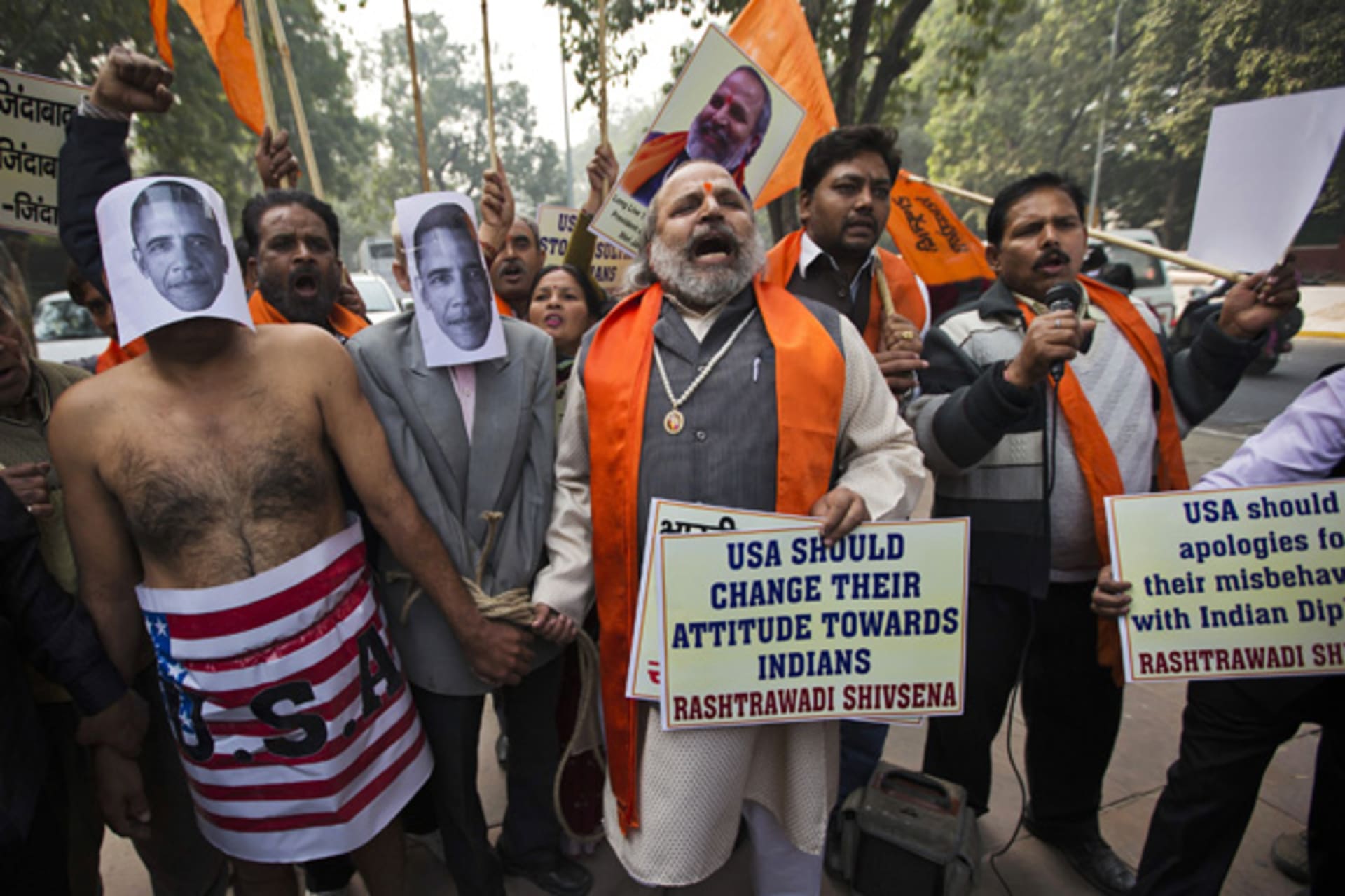
As the case became public, India’s most prominent politicians—including BJP leader Narendra Modi and Congress vice president Rahul Gandhi—refused to meet a visiting American congressional delegation in protest, as did numerous senior officials. Late Tuesday, the Delhi police removed street barricades outside the U.S. Embassy, and the government took other steps in what the diplomatic world calls reciprocity. On Wednesday, Prime Minister Manmohan Singh called Dr. Khobragade’s treatment “deplorable.” Anger and deep offense have united parties across India, and judging by the press, TV discussions, and official statements, her arrest and subsequent treatment have been felt viscerally as a wound to India’s national pride.
This is an extremely difficult moment for the relationship—some have gone so far as to call it the lowest point since 1971. Those of us who have spent years trying to build a stronger U.S.-India relationship worry that the depth of offense might have further negative fallout on the innumerable bilateral and global efforts successfully launched over the past decade. The U.S.-India partnership is too important for that to happen and there is simply too much at stake. Diplomats, already working around the clock, will be working even harder in coming days to de-escalate tensions. Assistant Secretary Nisha Desai Biswal noted in an interview Tuesday that a review of internal procedures is underway to determine whether appropriate steps were taken, and she further noted that “this incident is an isolated episode that is not indicative of the close and mutually respectful partnership” between India and the United States. On Wednesday, Secretary of State John Kerry personally called India’s national security advisor to express regret over the incident, and Under Secretary for Political Affairs Wendy Sherman spoke with Foreign Secretary Sujatha Singh today to discuss “steps to resolve the situation.”
In the meantime, the U.S. Marshals should make a formal apology to Dr. Khobragade for the way she was handled, most especially the strip search. It may have been by the book, but it has unnecessarily aggravated an already extremely sensitive and delicate situation. There is precedent for formal apology; in 2011, following a TSA screening of India’s former president, Dr. A.P.J. Abdul Kalam, TSA administrator John Pistole personally apologized to Dr. Kalam for the error. An apology at this juncture is the right thing to do, and at minimum, it would help give space on both sides for the diplomatic channel to deal with the critical—and inherently difficult—issues at stake in this case.
As events have unfolded quite publicly, various blogs and tweets have provided active real-time comment, question, and analysis of varying degrees. Some comments have focused on the intricacies of diplomatic law; others on the issue of wage laws in the United States; and others have alleged that Americans only go after Indian citizens. In the interests of providing further context with accompanying primary sources for interested readers, I offer the following: