2026 UN Secretary-General Candidates Series: A Conversation With Carolyn Rodrigues Birkett
Event date
Speaker
- Candidate for UN Secretary-General; Permanent Representative of Guyana to the United Nations; Former Minister of Foreign Affairs, Guyana (2008–15)
Presider
- Esther BrimmerCFR ExpertJames H. Binger Senior Fellow in Global Governance, Council on Foreign Relations
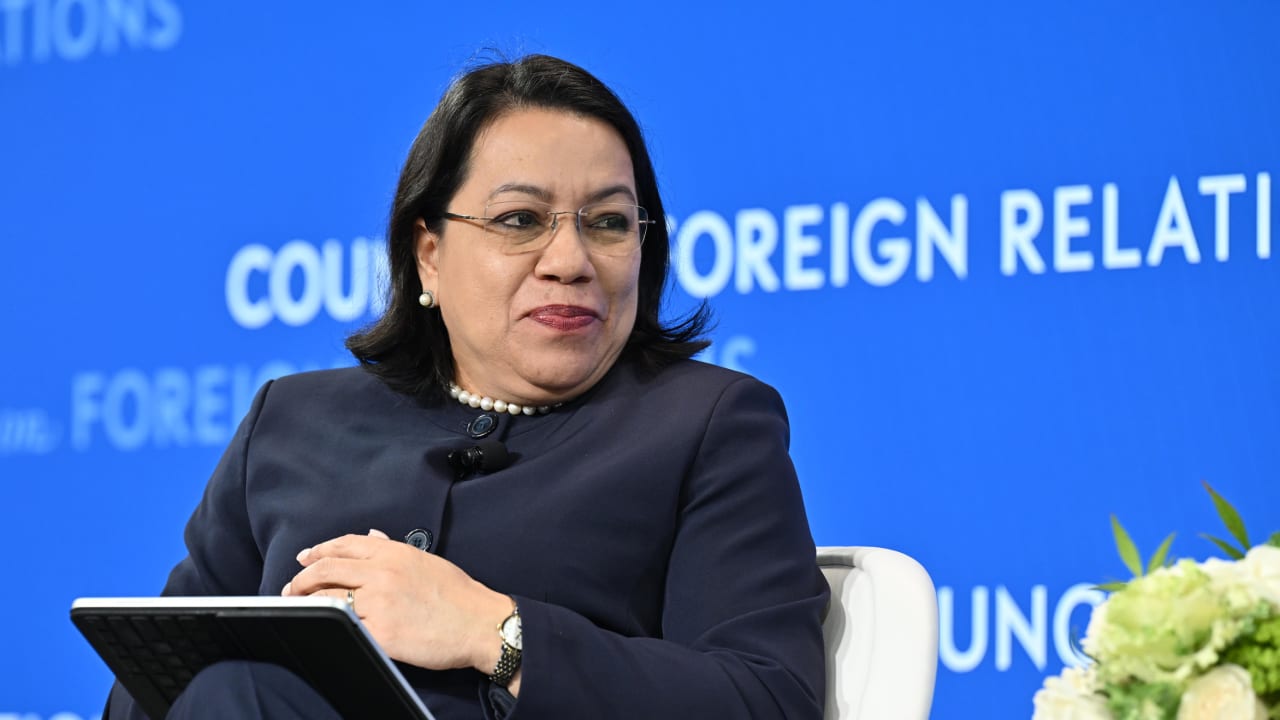
Permanent Representative of Guyana to the United Nations Carolyn Rodrigues Birkett discusses her candidacy, how she sees the role of UN Secretary-General, and her plans and priorities for the future of the United Nations.
To recognize the upcoming selection of a new UN Secretary-General, CFR has invited official candidates for the next UN Secretary-General selection to examine the major challenges facing multilateral governance and to discuss their vision for the future of the United Nations.
BRIMMER: Good afternoon and welcome to the Council on Foreign Relations. My name is Esther Brimmer. I’m the James H. Binger senior fellow in global governance here at CFR, and I will be presiding over today’s discussion.
Today’s discussion is part of the Council on Foreign Relations’ United Nations Secretary-General Candidate Series. I’m joined today by Her Excellency Ambassador Carolyn Rodrigues Birkett, who is candidate for the U.N. secretary-general. She is, as you know, the permanent representative of Guyana to the United Nations and former minister of foreign affairs of Guyana. Welcome to Washington, D.C., and to the Council on Foreign Relations.
The tenth secretary-general of the United Nations will face daunting challenges, from the expansion of violent conflicts, deterioration of respect for human rights, economic strains, and extraordinary technological revolutions. But upheavals can also open new opportunities. Multilateral cooperation could offer the sinews that help bind together a refreshed, reformulated, and reconstituted international order. We will begin today’s discussion with opening reflections by the ambassador, followed by my questions for our guest, and then we will turn to our participants both here in the room and online. Please.
BIRKETT: Thank you, Esther. And excellencies, ladies and gentlemen, all, let me begin by thanking the Council on Foreign Relations for inviting me to this dialogue, and to you for being present here, and for those online.
Let me say that we are meeting at a time when the United Nations is at a crossroads. Many challenges that we are yet to overcome. And perhaps I can start with the first one, which is the proliferation of conflicts. Some measures indicate that we are having the highest number since World War II. But not only do we have the proliferation of conflicts, what we see is conflicts are fought in different ways. Many nonstate actors, the use of technology, including drones. Just as I was on the way here I was reading that in Sudan the casualties that they have experienced, it’s largely because of drones, the high number. And so the way conflicts are fought and the way we respond to them as well would be very important. And so reasserting the United Nations’ historical role as a peacemaker is extremely important.
Secondly, and relatedly, is the ballooning humanitarian needs that we see today. By some counts, in fact OCHA says, it’s about $33 billion that’s needed for us to meet the humanitarian needs just this year alone. And of course, this is as a result of conflicts but also as a result of the disasters that we are facing today as well. As you will know, we have the Sustainable Development Goals that we are not even going to make half of the targets—meet half of the targets by 2030. At the same time, the issue of financing for development remains a bugbear for many countries. The cost of borrowing is increasing, and indebtedness as well.
And behind all of that, or beside all of that, is the climatic events that we face. In my part of the world, in the Caribbean, those countries are at the front lines. And how they adapt to climate change will depend heavily on the resources that are at their disposal as well. And then in the United Nations, we face a liquidity crisis. And on the one hand, we face that crisis. On the other hand, we are asked to deliver better and more on the ground. And how we reduce the finances that we—or, slim the U.N., because this is also a call by many, and at the same time deliver more will be, I see, a challenge that we have to overcome.
But the U.N. is not an abstract organization. The U.N., as you know, it’s an organization with a membership of 193. And so the U.N. mirrors what is happening in the world today. And you would agree with me that we are having some difficult times. But the U.N. has shown historically that even in times of deep distress, that multilateralism can work. And for those of you—and I know many of you are students of history—would know that in 1944, in the throes of World War II, that the International Civil Aviation Organization was established for us to deal with how we operate in the skies. But also in the middle of the Cold War, the IAEA was established to deal with nuclear safety.
The question is whether we can have a moment like that now to deal with the challenges over time, and can multilateralism deliver? But it’s also true that we are more interdependent than back then. And so I believe that we have no other option but for multilateralism to work. We cannot retreat inwardly when we face global challenges. But as someone that has been in New York as permanent representative for my country, and also served in the U.N. but also as a foreign minister in my country, I think this period is, what I have noticed, is one characterized by unpredictability, by mistrust, but also by greater influence by our publics in decision making, mainly because of technology and information flow.
But diplomacy—I believe in situations of mistrust, diplomacy suffers. And so we need more diplomacy, not less, even in these circumstances. As we know, there are no military solutions to conflicts. They all end with diplomacy working. And at the same time, what I’ve noticed is the space, the international space, has also expanded to include quite a number of nonstate actors, multinational corporations, even influential individuals that can send messages across countries, but also NGOs. And that footprint has increased on the ground as well. So the U.N. needs to forge deeper partnerships with nonstate actors and, at the same time, we have to address the other type of nonstate actors that are involved in armed conflicts.
So, ladies and gentlemen, this is the environment in which the U.N. has to operate. And let me end by saying that we must not lose the significance of this moment. We are just nineteen years away from the centenary of the United Nations. And what we do now will determine not only the relevance of the United Nations, the continued relevance, but also the longevity of it for the next fifty to sixty years. And the kind of secretary-general we choose now will be important in this equation because that person will have to be in the engine room working with member states in advancing reforms and creating a sustainable path for the U.N. to meet its next century.
And that requires leadership and drive. Not someone only to keep the U.N. afloat, but really to have a reformed U.N. And that secretary-general will have to also work with member states to ensure that the global moral compass is always tilted to increase peace and security, increase development, and increased human rights. And that measure will be determined by how the U.N. delivers on the ground. And so, as I look forward to the discussions and going deeper, not only in terms of description of the challenges but how we can advance and the role of the secretary-general in resolving some of what we see today. Thank you.
BRIMMER: Thank you so much for your opening comments, as well as for sharing with us the phrase “the global moral compass.” I think we’ll have to keep that in mind. I’d like to delve into some of the key sectors of the United Nations work. And let’s begin with peacekeeping and peace and security. As you’ve indicated, the complexity of the conflicts and the number of conflicts that we face is extraordinary. In your initial virtual—your initial statement about looking ahead to what your—what you bring to this position, you talked about the United Nations peacekeeping as a temporary bridge to try to solve conflicts. Can you talk a bit more about this role, particularly of United Nations peacekeeping? What needs to be strengthened, and how this mechanism can be used to deal with the complexity of conflicts that we face today?
BIRKETT: Thank you, Esther. There are two aspects to this. First, the traditional peacekeeping, which is what we have right now, was always intended to give the space for the political solutions to be worked on. So peacekeeping is not an end in itself. It’s a means to an end. What has happened, though, is in some places it has become a way of life. There are a couple of missions that are older than I am. And so we need to work on moving the needle on the political solutions. We currently spend just over 5 billion (dollars) on peacekeeping. And that is actually a reduced figure. It was about 8 billion (dollars). So on that aspect, I would say the secretary-general is very central in proposing possible solutions, of course, working with the conflict parties and others who are influential on those parties, but also with the Security Council, and putting proposals forward on that.
The second aspect of it is, as I mentioned earlier, conflicts are different now. And what we are seeing is that this peacekeeping is not necessarily the kind of deployment we need in certain situations. If we take Haiti, for example, that’s not a traditional peacekeeping force. It’s called a gang suppression force. And the difference is that peacekeeping requires you to only use force when you have to defend yourself as peacekeepers. But what we’re seeing is more and more countries are recommending that you need peace enforcement that can have kinetic action as well with it. And the U.N. is currently engaged in that, what kind of peace enforcement we will have going forward for different situations. But at the end of it, whatever we deploy, it must be towards a political solution.
BRIMMER: Well, we could continue on peace and security issues, and no doubt we’ll come back to specific aspects as we have the question and answer, I’d like to move to another pillar of the United Nations work and talk a bit about international development issues at this point. And you’ve talked about the need for structural reform. So we’re sitting in Washington, D.C. We are walking distance from the World Bank and the other international financial institutions. Can you comment on the relationship between the international financial institutions, development institutions, and the rest of the United Nations system?
BIRKETT: Discussions have been going on between the U.N. and the international financial institutions for as long as I can remember. But what I have seen is these sort of discussions, what you hear in the United Nations, it’s more moralizing of the issues that we face. And the way I see it is that we have to have discussions that are more partnership. And we call for reform of the international financial architecture all the time in the U.N. But my view is that huge reforms take time, but what can we do that will give us incremental steps? So, for example, on the cost of borrowing, can we make some incremental steps on that? On mobilizing the private sector, and I know the World Bank, for example, has been doing quite a bit of that in relation to Africa, how can we do more of this? And where does the U.N. fit in this?
And my view is that working through, for example, UNDP, we can help countries to be more prepared for private sector development. Updating legislation, the tax regimes in countries, and so on. And the U.N. has done some of this work. It’s how we multiply more of this. Because ODA and public investment alone will not give us the development we want. We have to have the private sector as well. But we also have to ensure that we have a bit more of a level playing field when it comes to borrowing, especially for countries that are indebted. They will go further in debt if borrowing cost is very high.
I come up from a country that was a heavily indebted poor country. I don’t like to remember that period at all, because you really had to, as we would say in Guyana, band your belly to be able to be fiscally solvent at some point in time. But it’s possible. And so the relations between the U.N. and the international financial institutions, should I be appointed secretary-general, will be a priority for me. But not standing on a pedestal telling them, you know, you need to do better than this, but more how we work in partnership to make small steps.
BRIMMER: You mentioned UNDP. I would like to just go one step further on your sort of thinking about different parts of the development architecture within the United Nations system. So how do you see dealing with some of the either overlap or intersections of, let’s say, the work of UNDP and the work of, let’s say, resident coordinators in different missions? How are you thinking about these different mechanisms that are within the U.N. system, but might have to be rethought as well?
BIRKETT: Yes. There are several agencies in the U.N. system dealing with development. We know UNDP, but there’s FAO, UNICEF to some extent, FAO, quite a number of our agencies. And you spoke about a resident coordinator system. What I have heard on the ground, because this campaign has taken me to several capitals but even before that, is that in some places the resident coordinator system has worked. In some places, ministers told me, it’s just another layer of bureaucracy. So we have to ensure that our development agencies are streamlined, that we remove unnecessary bureaucracies, we remove duplications, and we streamline functions as well. And do what we do best. Not everything that we think we can do but what we do best. So my idea is to look across the system, streamline what we do in development, our partnership with the IFIs—because the U.N. is not a funding agency. We have to work with others. And also, like I said, remove the duplications and the overlaps, and come out of things that we need not do.
BRIMMER: Turning to the third pillar within the United Nations system, of course, is human rights in particular. And in some of your written comments you’ve talked about prioritizing various areas, including treaty obligations and accountability. How do you prioritize all the things you listed? You also talked about human rights education and public awareness that need to be prioritized. So in terms of early steps to reinforce respect for human rights issues, where would you start?
BIRKETT: There are a few things I believe we can do. One is, whatever we do in the U.N., human rights must be streamlined throughout. Whether it’s in peace operations, whatever we’re doing on the ground, we must streamline human rights. But also, the secretary-general has an important voice in terms of promoting the adherence to the human rights treaties that we have all signed up to as countries. And so advocacy on that is extremely important. But, Esther, we know that when conflicts break out, human rights is one of the first things to go. So ending conflicts and preventing conflicts, and also making advances on development, will also pay us great human rights dividends.
But this is one of the pillars in the U.N. that member states have said to me, sometimes they wake up in the morning and they read about their country in a human rights report, that they’re doing something wrong, but they have not been consulted on this. And so I think the U.N. working in partnership with countries as well to address human rights concern is extremely important. On the special rapporteurs, those are appointed by the Human Rights Council. They’re independent. And that will continue. But I believe that the U.N. on the ground can also do important work with countries on human rights issues.
BRIMMER: As you know, the next secretary-general will, as you’ve indicated, need to continue to make additional profound reforms within the United Nations system. Can you comment a bit on what’s occurred so far in the UN80 process? And what would you keep if you were secretary-general of that particular program going forward?
BIRKETT: Well, the UN80 initiative, several aspects of it have been approved by the member states. And you have to be a very presumptuous secretary-general to believe that you can overturn what member states have approved. You have to carry out the mandates of member states. But something important happened. The General Assembly passed a resolution that deals with how we create mandates in the U.N., and how we even review them. So in the past, and this is what I’ve seen as a practitioner, so to speak, in the U.N., mandates are created, but there wasn’t a lot of thought in terms of what it costs, right, and deeper thought in the impact of it.
Now you have to do that. So cost is a factor, whether what you’re doing will be impactful, and I think that’s great progress. So, mandate creation, mandate review, that’s already approved by the General Assembly, how we deal with that, and it’s for the secretary-general and her team to implement those mandates. But there are other aspects that are still in discussion. And the one that you just mentioned, how we do more structural reforms in terms of the agencies and programs, how we make sure that they are aligned to deliver better. That discussion is still ongoing. I don’t believe it’s going to be finished by the time the next secretary-general is in place.
And should that be me, I would want to make sure member states have all the information they need to make the decisions on structural reforms. In other words, and I’ve said this before, you don’t ask the turkeys to organize Thanksgiving. But if you have a new secretary-general coming in, you would want to ensure that whatever is presented to member states to make their decisions, whether it’s on merging or function alignment, that they have all the information that they need. But, Esther, it would be remiss of me if I don’t mention the other aspect of reform, because this has been raised with me on several occasions.
And that is reforms of the organs of the U.N., whether the 1945 structures are relevant to 2026. And that’s the one with Security Council reform. And that discussion is in the—with member states. It’s something that member states will have to decide on. But as someone that has been involved in this process, I know that whatever reforms we do, we will still have our global populations calling for a more representative and accountable Security Council.
BRIMMER: I suspect those that will be voting will also have that in mind as well.
BIRKETT: Yes, yes.
BRIMMER: That suggests, as you indicate some of the things that you might do, what would you do in the first six months? Are there things that need to be done quickly by whomever is the next secretary-general?
BIRKETT: Advance reforms, for sure. Move with all of those that we can move with immediately. The secretary-general has control of the secretariat. And so that’s completely in your hands, and how you make that secretariat function more effectively, more efficiently, in lockstep with member states. And, of course, the mandates that—the mandate review and creation, that has to be advanced as well, and providing the information that I just mentioned for structural reforms.
But I would also want to take a panoramic look of the conflicts that we face in the world today, because the U.N.’s biggest criticism comes from the fact that we have not been doing too well in the peace and security arena to see where we can move the needle, to make recommendations to the Security Council, and also to the conflict parties. Because the secretary-general could only make what’s available to her in terms of tools to the conflict parties. They will also have to be willing to make things—to move forward. And so a panoramic view, and where we can move forward with that.
And then there’s a third issue that came up a lot by member states. Several—I shouldn’t say several—a large number feels that the U.N. is not geographically balanced in terms of its staffing. How we do that will be extremely important. And as secretary-general, this is something that I would like to focus on as well. But all of this, with the member states, working with member states. And also to see how we can move on the humanitarian front. Too many people are suffering in our world today. And in many places, the U.N. is the only lifeline. And so working to see where we have hiccups with getting humanitarian assistance to those most in need, not only in terms of the funding, but in terms of logistics. But ultimately, ending wars and preventing wars is the surest way to reduce the humanitarian needs. But those are four of the priorities I would like to focus on in the first six months.
BRIMMER: You know, indeed, the effects of the humanitarian conflicts are—last over generations, as well. Just let me pick up just on one of your points just now, particularly on thinking about the geographical distribution. Again, that’s something that’s in the control of the secretary-general in terms of the actual location of offices and so forth. Can you share a little bit more about how you’re thinking about that, and how does that play into the cost-effectiveness of where officers actually are?
BIRKETT: Good question, Esther, because of the liquidity crisis we also have a loss in recruitment. So how you square that circle would be important. And part of it would be based on attrition as well. But we have to look to see what is there, and where we can have a better geographical balance. The charter is very clear. It speaks about competence, first and foremost, and consideration for geographic balance. And so you actually have something in the charter to guide you with that. It will not be easy, knowing that we are cutting right now. As you know, we have cut quite a number of staff members. But in terms of future recruitment, that should be our guide. We should have some guiding principles on how we recruit to make sure we have that geographical balance.
BRIMMER: I could ask you many more questions about actually running such a large organization and how what that might look like, but I will ask you one more question here and then we will provide information for those who will be asking questions here in the room and online.
So we’ve been talking about the immediate and the urgency of many of the issues that the next secretary-general will face. But I’d also like you to share with us, what would the world look like, and what would you envision the United Nations would look like, at the end of your first or second term?
BIRKETT: Yeah. I’m always careful with looking at legacy things, because you can go into a little rabbit hole with that. But I did present a vision. And I just spoke with you about the things that I will focus on in the first six months. What I would like to see at the end—and let me say this, whether it’s me or any secretary-general—at the end of the term we should see a reduction in conflicts. It’s really too many right now. We should see a reduction in humanitarian needs and countries moving towards development, not just surviving each day. We should see a more geographically balanced U.N. in terms of its staffing. And they should also say that it’s not bad having a woman secretary-general after all.
BRIMMER: Thank you.
Now I will to open the question-and-answer phase. I would like to invite members in Washington, D.C., and online to join our conversation with their questions. I’d like to remind everyone that this meeting is on the record. We’ll take our first question here in Washington, D.C. Are there any questions? Yes, please.
Q: Thank you. Ishaan Tharoor. I’m the Murrow Fellow here at CFR and a columnist at the New Yorker. Ambassador, thank you for your time.
I just have a couple of quick questions. You would be assuming this post, with two years left of the Trump administration here in Washington. They have not hidden their skepticism about the work of the U.N. in certain arenas. And they view—their hopes for the U.N. are aligned with this idea of a very pared-down institution. How do you intend to keep them on side while also preserving some of the core work the U.N. does on climate development, gender, and so on, human rights? And secondly, you said, you know, the U.N. is mirroring the world today. Of course, the Security Council does not. To tack on to Esther’s question, ten years from now, five years from now, would you consider your tenure successful absent serious Security Council reform?
BIRKETT: So let me start with the last one first. The secretary-general does not have a role in Security Council reform. That’s for member states. The role of the secretary-general is limited to providing the kind of secretariat services that the negotiation process requires. So that would be up to member states on Security Council reform. But the calls for Security Council reform is louder now than I’ve ever known. And that is because all eyes are on the Security Council to solve some of the challenges that we face now in the peace and security arena. So I am an optimist. And I believe that we will see some movements with that by member states. I’ve listened to some of the leaders in this last debate during high level week. And several of them, including some from the permanent members, spoke about Security Council reform, and even after that. So I think that’s a good sign.
On the United States, the United States is a very important member of the United Nations. Here is where the United Nations was formed. It is the host country of the United Nations. And some of the challenges that the United States has outlined that we need to address in the U.N. in terms of reforms, I agree with them. Some of the things that we’re discussing right now, in terms of structural alignment, these are some of the issues that the U.S. has raised. So it is not a case of just criticism for criticism’s sake of the U.N. But as secretary-general, you have to work with all 193 member states. And we have to remember too that, given the formula that we have right now, the United States contributes 22 percent of the U.N.’s budget. So it is an important member. And whether it is this administration or any administration, the secretary-general must have a good relationship with the United States for more reasons than one, including because it’s also the host country of the U.N.
BRIMMER: Question? Please.
Q: Thank you so much for this conversation. I’m Xanthe Scharff. I’m CEO of the Women’s Refugee Commission.
And since you ended your comments on a note about a woman as a secretary-general, which is certainly a hope among much of civil society, and also that we have Women, Peace, and Security Week coming up, I joined a number of CEOs of human rights organizations in calling for the defense of the Women, Peace, and Security Act that was signed in 2000 to promote women’s participation. You talked about the role of the secretary-general in terms of promoting human rights. Women are facing a backlash around the world in many places. And yet it’s difficult, some countries are looking to expand rights for women. Others seem to have a different view. How would you leverage the role of secretary-general to advance human rights for women, who have been disproportionately impacted by aid cuts, and for other groups as well?
BIRKETT: Yes. Thank you. I think the ultimate test of the United Nations in terms of breaking the ceiling that exists for women in terms of equality between men and women would be if they appoint a woman secretary-general. We’ve had nine good men, but we haven’t had the benefit of the other half of humanity. And while I did not come to this candidacy, or to any of my positions, because of being a woman, I’m very much aware of the impact that will have on the global community, men and women.
Having said that, this current secretary-general has made a really big effort in ensuring that the senior staff of the U.N., that there’s gender parity. But also a lot of good work has been done in terms of encouraging more women to be involved in peace negotiations. Sadly, it’s still less than 16 percent. And what we have seen and what we know is that the more we have women involved in peace negotiations, the more sustainable the agreements for peace are. And so I would certainly want to promote more of that, more women being involved. But human rights for all everywhere, including women. And some countries have done extremely well in this, and some countries not so well, but this is a work in progress that we will have to continue to advocate for. And who better to do that than a woman secretary-general?
BRIMMER: We’ll take our next question online.
OPERATOR: We will take the next question from Peter Galbraith.
Q: Thank you for your presentation, and particularly for your emphasis on human rights. I’m a former assistant secretary-general of the United Nations, and otherwise have worked with a number of U.N. missions.
My question is about cooperation with the International Criminal Court. The United Nations has an agreement for cooperation. Would you—does your stance in favor of human rights extend to fully carrying out the 2004 agreement with the International Criminal Court, including sharing of intelligence and information, availability of U.N. officials to testify, even if it is opposed by one of the P5 members?
BIRKETT: Thank you for your question. The International Criminal Court was established to fill a gap that existed. And that was a gap to deal with perpetrators of crimes against humanity and other major crimes, genocide, and so on. That gap has not been filled with anything else. And so the International Criminal Court remains a very important part of the international criminal justice system. In terms of the cooperation, whatever is the agreement that is there between the United Nations and the International Criminal Court, that’s an agreement. I do not believe that there is an option to not abide with that agreement.
BRIMMER: Is there a question in the room? Please.
Q: Thank you, Ambassador. I’m Ana Lejava at the Georgetown Institute for Women, Peace, and Security.
So very much second all of the things that colleagues said about women’s participation in peace processes. I guess the issue that I would love for you to dive deep into is, how can U.N. be back on the table in the peace negotiations? Because in the past, U.N. guaranteed women’s participation because U.N. held the room and the table. Now we are seeing more bilateral negotiations, completely—U.N. being completely absent. So what would you do to bring U.N. back into those negotiations? Thank you.
BIRKETT: Thank you. I did indicate in my vision statement that reasserting the role of the U.N. in peace processes would be my priority. I agree with you that we are not in some of the processes where we should be, but also putting forward the U.N., being brave, and not being afraid to fail. This is the words I’ve used, because as secretary-general you cannot afford to not try. And this is certainly something that I would do.
But let me say this, even when peace agreements are negotiated bilaterally or within a group, you would see they find themselves at the U.N. for validation and for international legitimacy. We’ve seen several of these, including the recent Gaza peace plan. This came back to the U.N. It wasn’t negotiated by the U.N., but it was brought to the Security Council. We’ve also seen, for example, the Colombia peace process, where that agreement was also brought to the Security Council to give it that international validation. And so I think it’s—the U.N. also has to recognize that we have many more countries in the mediation space as well. And so working in partnership with those countries would be important. But the whole idea is that the U.N. should not be absent from these peace negotiations.
BRIMMER: We’ll take our next question online.
OPERATOR: We will take the next question from Ivan Rebolledo.
Q: Good afternoon. Thank you, Ambassador Rodrigues.
As you navigate this very competitive race for secretary-general, and in light of today’s straw poll, let me ask you about the deep divisions in the Security Council. How would you specifically assert the independence of the secretary-general’s office to mediate effectively in conflicts where major powers have diametrically opposed interests? And how do you respond to these concerns about maintaining that impartiality in a polarized global landscape? Thank you.
BIRKETT: I’m not oblivious at all to the geopolitical realities in which we live, and the challenges that the next secretary-general will face in this respect. But I’ve served on the Security Council as the head of my country’s delegation for the years 2024 and 2025. And I have seen that even in times when there are differences amongst very important council members, that there is space for the secretary-general. In fact, the secretary-general should claim that space when that exists, as the impartial voice there, as the neutral broker there. And this is what I would attempt to do should I be appointed secretary-general.
I’ve had experience on the council, but this time, of course, as a member state, where there were, in a particular case, a big difference between two members of the council. And I stepped up to be the person, the go-between, because it concerned a very important situation of life and death of people. And there are times when you might not have the discussions between those two or three countries, but the secretary-general can fit there. I did that as a member state, and this is what I think I can do even better if you’re the secretary-general, because you’re independent, you’re impartial, and you don’t even have to consider a country’s position, your country’s position, because you’re not there as that. And so I would try to do more of that. But I know that it will not be so easy. But as I said, you have sixty-five different situations. And you might not be able to make progress in some, but you might be able to make in others.
BRIMMER: Yes.
Q: Thanks. Maggie Lewis, Seton Hall University.
As a law professor, I want to thank you for your vocal support for the U.N. Charter and the role of international law. I wish it wasn’t necessary to vocalize that support, but it is under strain. So what do you see, though, as the biggest threats to the role of international law, as structuring relations among states today? And what can you do as secretary-general to fortify the importance and role of international law? Thanks.
I think that the minute we decide that the charter and international law are no longer important, we’re returning to the law of the jungle. In fact, when the charter was approved, President Truman said this was the start. We can strengthen this. We can, you know, amend this charter from time to time. But whatever we do with it, it must be to strengthen it to make sure that we have a more peaceful world. I come from a very small country, and from a region of small countries in the Caribbean. International law and the U.N. Charter, for us, it’s our only guarantee for global peace and security. But there are many countries in the U.N. that believe that as well. I think the great majority of countries in U.N. And so I think it’s the secretary-general’s role, it’s your role, it’s all of our role, I believe, to ensure that we always promote the charter and adherence to international law. It’s what keeps us together in a stable world. And that’s what I will certainly continue to do.
BRIMMER: Next question in the room. Please.
Q: Thank you. Mohammed Khaishgi from The Resource Group.
I wanted to follow up on a question that was previously asked about the relationship of, I guess, the U.N. secretary-general with the U.S. You had mentioned that some of the criticism of the U.S. and the calls for reform may well be warranted. I wanted to, I guess, push a little bit on a more fundamental question. You have a dispensation currently in the U.S. that actively looks at multilateralism and globalism with disdain, and actively sort of, you know, works against it. How do you see—do you see any common ground on that more fundamental issue, leaving aside issues of financial reform, et cetera, where you can come on the same page with the current dispensation that exists in the country? Thank you.
BIRKETT: I think that I try to look more at what is the action than sometimes what is said. And there’s no country that is leaving the United Nations. And I think that’s the good news. What I’ve also seen in recent times, when it comes to humanitarian assistance, the U.S. has made a large contribution to the humanitarian assistance recently. They’ve committed to pay a big part of their contribution to the regular fund budget. And so those are not actions that are moving you out of the U.N., I would say, even though I know that there are some agencies of the U.N. where the U.S. is no longer present. So the work of the secretary-general would be to work, like I said, with everyone. And the U.S., you have to work very closely with the United States, and with everyone else.
But let me say this, that we have a situation in the U.N. where you have two countries that pay over 40 percent of the U.N.’s budget. You have about ten countries that pay about 70 percent of the U.N. budget in total. And so this is a discussion that we’ve been having as well in the United Nations about us, all of us, paying based on our GDP per capita, or the strength that we have, but how we make that a little bit more sustainable, perhaps, would require a discussion to be had. I just wanted to mention that.
BRIMMER: Another question in the room? I’ve got a whole list of questions, but feel free to—while people are reflecting, I want to go back and pick up on how you would work with other actors in the international system, particularly we’ve talked about the role of private sector entities in various places. And in some cases we could be talking about the, you know, functional organizations and looking at maritime issues or other issues, and there are different industries that intersect with the global community. Could you comment a little bit more about the role of the private sector in whether it’s peace and security, economic development, and other aspects of international affairs?
BIRKETT: Sure. Well, I think we’re very clear that no country has had decentral, good development, without a vibrant private sector. And so working with the private sector is extremely important if we want to advance on the development pillar. And what I’ve heard from the private sector during this campaign is that we have a bit of fragmentation in terms of how we deal with the private sector. Different agencies of the U.N. deal differently with the private sector. And so how we streamline that will be important. This will certainly be something that I would want to look at closely with the agency’s funds and programs, knowing that some aspects would have to be new ones based on the agency, but working closely with the private sector is also important.
I’ve met with one of the larger tech companies, for example. And I was asking them about their controls that they have for children using their platform. And they told me, we do have, but what they would like to see the U.N. doing is working on a set, a framework, on a set of rules, because if only they have these controls then their customers might move to other platforms that don’t have them, if they so want to use a platform that don’t have those controls. So they would like to see the U.N. working more to have rules that everyone, whether you’re in one country or another. And so I see different partnerships with the private sector. But the U.N. works with the private sector right now. It’s how we streamline that, multiply what we do best with the private sector as well.
BRIMMER: Indeed, there is a factor of creating the level playing field between responsible actors and others who may be part of a given industry, in any case. Are there other questions in the room? Any additional questions? You have an additional question? OK.
Q: I have one more question.
I would love to see what your opinion is on U.N.’s role in AI governance. Especially we just saw the U.N. Security Council briefing with some of the tech sector representatives. So I would love to hear your vision about that. Thank you.
BIRKETT: Thank you. I’ve never heard before any company speaking about going too fast. And so when I heard that, I thought something had to have gone down here. And how we deal with that would be important. But let me say that I’ve heard from many young people about their fear of AI affecting their creativity, affecting their jobs, and so on. And so I believe what we have to do is to find a way where we have a balance in encouraging creativity and innovation, but also having the guardrails that are needed to address some of the fears. The U.N. has had a meeting on this in Geneva some months ago. And I think that we’re moving toward—member states are moving towards at least having the discussion started on AI governance. But I can’t think of a better place to deal with it than in the United Nations. We’re not there yet, starting that work, but I think that is where it is heading right now. But it would require the countries that are ahead in AI to be central to this as well.
Q: Hello. Paul Stares with the Wachenheim Center for Peace and Security here at the Council on Foreign Relations. Thank you for your remarks.
You started out by talking about the proliferation of conflicts around the world. Can you point to anyone in particular that is ripe for resolution with the role of—with the help of the U.N. in particular at this time, small or large, that you think where the U.N. can make a real difference? Thank you.
BIRKETT: I’ve said before that I have avoided trying to create a hierarchy of conflicts, because for the people suffering in those countries where we have active conflicts their conflict is the most important one for them. But I believe that it’s important for us to look at where—as you said, where we can move the needle. And there’s so much information that I have at this point in time, but I also believe once you’re in the post you will get the additional information that you do not have at this point in time, in terms of where the intervention can be made. And so I wouldn’t give you one at this particular point in time.
But, as I mentioned yesterday in another meeting, when you take Sudan, it is the largest humanitarian crisis in the world. And the numbers there are just staggering, in terms of the—in terms of the suffering. And so if you take it from that standpoint, of it being the largest humanitarian crisis as well, obviously that would be high on the list of priority. But I think all of the conflicts we need to look how we can and where we can move the needle.
BRIMMER: Any other questions? So going back to the—picking up, again, on the different pillars within the United Nations system, can you comment a little bit more on what you see as sort of the health of some of our structures as well? Particularly going to some to some of the human rights structures as well. We’ve talked both about the Human Rights Council itself, and other. But are there other ways you see of supporting human rights issues, even if you have not signed all of the declarations? I think the United States has not necessarily signed all—we’ve signed some civil and political rights, but not other covenants. So I just wonder how you see other ways that we can support human rights issues, even if we have not participated in ratifying all of them?
BIRKETT: Yes. Maybe you have countries that might not have ratified all of them, for different reasons. There might be one aspect of it that they have a challenge with. But they have been doing fairly well on the human rights side. But then you have others that might have ratified quite a number of them and might not be doing as well. So I think the idea is to work with everyone. And as I mentioned earlier, you know, the space has expanded, the international space, with a lot of NGOs working across countries as well. And there’s a lot of advocacy on that side. But I think us on the ground, the U.N. on the ground, will have to work with countries on human rights issues. But not of using it as a weapon, because sometimes countries complain about that, that you—that there are double standards. And so I think we have to find ways of working in partnership with countries on these issues. But if there is need for it to be called out, if it is not being addressed over and over again, then that’s also an option.
BRIMMER: The other area that I would have additional questions for you would be, of course, on managing the planet and climate change issues. And can you comment a little bit more on what you would see as some of the priorities? Again, states are at different levels of what they’ve ratified, what they’ve participated—what they’ve participated in. But, again, can you talk about some of the mechanisms, what’s needed, and what’s needed next? Because it’s, what, 80 degrees? It’s October.
BIRKETT: Yes.
BRIMMER: That’s not good news.
BIRKETT: Yeah. Yes, it’s—I think the commitments that have been made are there. The deficit is in the implementation. That’s the challenge. And what I see as the role of the secretary-general is to continue to call for those commitments that have been made to be implemented, but also for those countries that are at the front lines on the impacts of climate change, for resources to come to them to adapt, and their commitments on that as well—financing, climate finance. But we haven’t seen that yet flow to countries. And so advocacy on that will be extremely important.
What some countries have mentioned to me too is even when there are pots of resources for climate finance, that just accessing it, the process for accessing it, can be very difficult. And so how we work on that as well with the institutions responsible and the countries would be extremely important. But I think that we all see what is happening in our world with climate today. In fact, I think a few months ago meetings were canceled because it was too hot. I don’t think we need to see more than that.
BRIMMER: No, indeed. Indeed. We have two questions. We have just a couple minutes. The gentlemen here.
Q: Jimmy Kolker, formerly with the State Department.
And I just wonder how you see this playing out. The leading candidates right now all appear to be from the Western Hemisphere. The five permanent members of the Security Council agree on almost nothing these days. And are the candidates—are you as candidates talking to each other about what your goals are and which might be consistent with other candidates? Or do you think this is going to be down to the end in a very contentious kind of election for secretary-general?
BIRKETT: I would not want to answer for the voters, But, yes, I’ve had discussions with other candidates from time to time. Not necessarily to coordinate what we say, but I think if you look across the different candidates, you would be able to see some convergences on different issues. But others, of course, are different how we approach it. There’s a straw poll later this afternoon. We’ll be able to see. But I’ve also seen on the Security Council that when the permanent members decide to cooperate, they do. So we’ll see.
BRIMMER: Thank you. We have time for one last question. Yes.
Q: Thank you. I’m also just curious how your experience, of course, as a representative from Guyana, a small country but with a very unique and interesting history, how that flows into your vision for governance and global governance in the world, and what concerns that you’ve had historically now you bring to bear on the world stage. And I’m also curious if there are any previous U.N. secretary-generals from whose career and legacy you draw inspiration.
BIRKETT: Well, you’re right. I come from a country with a very interesting history, a long history but still a young country, counting from the time we became independent. And this year marks sixty years. But for Guyana and several of the countries in the Caribbean, we are built on people who came, except for the indigenous peoples who were there. But it’s from peoples who came from Africa, from Asia, from Europe, from different continents. And we had to build our own civilization, so to speak. And you can only do that if you work together to get along, to promote unity. You would not be able to do that without it.
And so we see diversity as a strength. But you have to invest in diversity for it to be a strength. And so I come from that background of learning to get along, of listening to the other, of sharing in the cultures of each other. In my country, we see the culture—I come from an indigenous background. We have, you know, people of African ancestry, Indian ancestry, mixed. But we see the culture of one group as the culture of us all. And so this is what I would bring as well, that the beauty in in diversity, the beauty in working together.
But there’s another thing. As a small state, you have to be friends with everyone. You cannot afford to have enemies. And so what we have done is try to be friends with all countries, large and small, and to try to forge partnerships where we can forge those partnerships. And I bring that with me as well. There was one prime minister in the Caribbean who said, we’re friends of all, satellites of none. And I think as a secretary-general, you want to have that impartiality as well. And where there might be friends that are not friends, or countries that are not friends, serve as that bridge builder as well. And so I would bring that with me as well.
BRIMMER: That’s an important note on which to conclude today’s conversation. I’d like to thank everyone here in the room and online for their engagement, and to thank our speaker. (Applause.)
BIRKETT: Thank you.
(END)
This is an uncorrected transcript.