2026 World Food Prize Laureate Announcement and Discussion
Event date
Speakers
- Chief Executive Officer, World Food Prize Foundation; Former U.S. Secretary of Agriculture; CFR Member
- Chief Engagement Officer, CIMMYT (International Maize and Wheat Improvement Center)
- Adjunct Professor, Georgetown University Walsh School of Foreign Service
Presider
- Michael WerzCFR ExpertSenior Fellow, Council on Foreign Relations
Introductory Remarks
- 2009 World Food Prize Laureate and Chair, Laureate Selection Committee
- President, World Food Prize Foundation
- Chief Executive Officer, World Food Prize Foundation; Former U.S. Secretary of Agriculture; CFR Member
Following the announcement of the 2026 World Food Prize Laureate(s), recipient of the prestigious $500,000 award, panelists discuss how finance, science, and geopolitics are reshaping global food security, and what policies can strengthen our resilience against climate shocks, supply disruptions, and growing strategic competition.
Awarded by the World Food Prize Foundation, the World Food Prize is the preeminent global award recognizing individuals who have enhanced human development and confronted global hunger through improving the quality, quantity or availability of food for all.
HUSAIN: Forty years ago, a seed was planted, not in soil but in conviction: A belief held by Norman Borlaug that the world could choose a different kind of future. That hunger was not inevitable. That science, courage, and compassion, when woven together, could bend the arc of history toward nourishment and dignity for all. Forty years later, that seed has grown into a movement, a global community, a promise that has endured through seasons of progress and through seasons of profound challenge. Because, the truth is, we gather at a moment that tests us—a world shadowed by conflict, displacement, and uncertainty, where supply chains fracture under pressure, where families, millions of them, face the daily uncertainty of their next meal.
And yet, even in this era of strain, there is something that calls us forward, the quiet, persistent courage of those who, like Norman Borlaug, refuse to accept hunger as inevitable. Those who innovate in the face of scarcity and adversity. Those who build bridges where there is immense division. It is in that spirit, and with both humility and hope, that we begin today’s laureate announcement. Each year we come together not simply to recognize achievement, but to reaffirm belief—belief in human ingenuity and shared responsibility, belief in partnership across borders, and belief in the power of one individual’s work to ripple across generation. This year, as we mark the fortieth anniversary of the World Food Prize we ask ourselves, what will the next forty years demand of us? And who will be there to lead us?
The answer, as it has always been, lies in individuals whose work transforms systems, whose ideas reach beyond laboratories and fields and into lives, whose solutions are as bold as the challenges we face, and whose leadership reminds us that feeding the world is not just a technical challenge, it’s a moral calling. Forty years ago, Dr. Borlaug’s belief took root in a simple but radical idea, that those who feed the world should be seen, should be honored, and should never stand alone. Together, our fifty-six World Food Prize laureates tell a powerful story of human progress. Their discoveries and innovations have lifted harvests from fragile soils, strengthened crops against drought and disease, advanced the science that nourishes billions, and turned the tide against hunger in some of the world’s most vulnerable places.
Today we honor our fifty-seventh laureate, someone whose work affirms that the fight for food is never just about production. It’s about protection, access, and dignity. Our laureate could have retired after a remarkable career at Unilever. He could have stepped back, content with the accolades and achievements enough for many lifetimes. And yet, like Norman Borlaug, he chose to step forward, to fight for safety, for fairness, for every table where a child, a family, a community waits for their next meal. He saw a world where unsafe food threatens millions, where bureaucratic hurdles delay lifesaving aid, and where inconsistency and fear too often deny families the right to eat without worry. And he decided to act.
Rather than rest, he built a movement. A movement that transforms rules into lifelines, regulation into protection, expertise into hope. He built a volunteer network spanning 113 countries, connecting thousands of scientists and policymakers and industry experts, a network called the Global Harmonization Initiative, or GHI, dedicated to making food safe, accessible, and reliable for everyone, everywhere. Through GHI he has dismantled barriers, reduced foodborne illnesses, minimized food waste, and ensured that science leads policy, not politics. Again, he could have stopped there. But instead, he spent two more decades shaping and redefining the systems that feed our world. From emergency protocols in disaster zones and international standards that protect millions, he turned knowledge into a crusade. From training thousands of professionals to creating global consensus on food safety, he turned vision into action.
And so it is with immense pride and admiration that we name the fifty-seventh World Food Prize laureate, Huub Lelieveld. (Applause.) Born in the Netherlands in the aftermath of war, in a world just rebuilding itself. Huub Lelieveld learned early that progress is not guaranteed. It is built. From his first days working in his family’s food distribution business to a lifetime of innovation, he has carried a quiet but unwavering belief that science should serve people, that knowledge should be shared, and that no one should be left behind when it comes to something as fundamental as safe food. His work is not driven by recognition, but by responsibility. He reminds us that feeding the world is not a task for one person, one nation, or one discipline. It’s a fight we must all join. And through his courage, his persistence, his humanity, he has shown us what’s possible when we refuse to look away, when we refuse to accept limits, and when we choose to fight for everyone. Congratulations, Huub Lelieveld. And we look forward to welcoming you into the World Food Prize family.
And now it is my pleasure to introduce our next speaker. In every challenge there are those who lean in, who innovate, collaborate, and persist. This prize exists because of them. Few embody that spirit more fully than Dr. Gebisa Ejeta, the 2009 World Food Prize laureate. His work in sorghum transformed a resilient crop into a lifeline for millions, advancing food security and human dignity. Now as chair of the World Food Prize Laureate Selection Committee, he carries that vision forward, reminding us that feeding humanity is not a solitary act but a tapestry of lifelong effort woven with purpose and with care, by those who see beyond what is and dare to pursue what could be. Please join me in welcoming Dr. Gebisa Ejeta. (Applause.)
EJETA: Thank you, Mashal, for that very generous introduction. And thank you too for your leadership and dedication to the work of the foundation and to the mission that Dr. Borlaug has charged us with, to ensure that all who are born into this world have sufficient and nutritious food. It has been my great honor to follow in Dr. Borlaug’s footsteps leading the World Food Prize Selection Committee, an independent panel of dedicated, distinguished individuals who are experts in the many dimensions of agriculture and food security, to choose the World Food Prize laureate every year. I believe that in our work we’re guided by the indomitable spirit of Norman Borlaug, his remarkable and above-board character, and his single-minded devotion to the mission of attaining global food security for all, and his faithful commitment and belief that someday—just someday—we may see reach this lofty goal of eradicating hunger and abject poverty from the face of the Earth.
As part of that guidance, our process gives equal weight and consideration to each nomination that is submitted. The robust discussion of the selection committee leads us to those nominees that have made the most impactful contribution to human development by improving the quality, quantity, or availability of food in the world. In forty years of the World Food Prize we have celebrated the trailblazing legacies of laurates from twenty-two countries working in many different aspects of food security, ranging from plant breeding to seed science, seed business, soil health, soil conservation, food security, food nutrition, and food policy, food processing, and public policy. Amid increasing difficult challenges, the work of these laureates continue to paint a way forward to feeding the world sustainably.
And this year the selection committee unanimously agreed to select Dr. Huub Lelieveld for this honor. Huub is the first laureate in the history of the prize to receive the award for transformative contribution in food safety. In choosing Huub, a pioneer and advocate for safe food for all, the selection committee recognizes the importance of this work to improving nutrition and human health, opening trade across borders, and reducing food loss and food waste. By awarding the prize to this distinguished laurate and spotlighting his work, it is indeed our intention to elevate the global importance of food safety to a healthful and nutritious food production system, and to inspire the world’s government and business leaders and the scientific community at large to continue to strive toward the goal of safe food for everyone.
My warmest congratulations to Huub on this much-deserved award and recognition. And it is my pleasure at this time to welcome Governor Tom Vilsack, our tireless leader as chief of the World Food Prize Foundation, to offer his remarks. (Applause.)
VILSACK: Not quite as tall as he is. (Laughter.) I used to be. Thank you. Well, you’ve had the opportunity to hear here today of the who, in terms of the Laureate Award, and the how, from Dr. Ejeta. I’m here to talk to you about the reason why we have a World Food Prize Foundation, and why this prize is so important. And I think it starts with a number, 733 million. That happens to be the number established by a number of organizations that represent those who are moderately or severely food insecure and nutrition insecure in the world today. That happens to be 28 percent of the world’s population. When we think of these numbers, there is a tendency to think of them as numbers. The fact that there are 336 million more people food and nutrition insecure today than before COVID. Or that 673 million people in the world today are facing chronic malnourishment in places like South Sudan, Gaza, Yemen. Or that 70 percent or so of the areas of conflict and war in the world today are also places where food insecurity and nutrition insecurity has taken hold.
These numbers are numbers, but behind each one of these numbers is a child, is a son, is a daughter, is a grandson or a granddaughter, a niece, a nephew, a mother, father, a grandparent, a friend, a neighbor, a coworker. It’s relevant and important for us to remember that behind these numbers there are real people who are suffering. And now we face a world where food is not only inadequate or unavailable, but is also now being used by some as a weapon of war, used in war to destroy the agricultural infrastructure of a country so it cannot feed itself, used in the sense that food aid is denied access in critical areas, or is used as a tool to recruit people to violence. It was Norman Borlaug who said that food is the moral right of all who are born to this world. That is the challenge that we, at the World Food Prize Foundation, have taken up.
We do this in a number of ways. First of all, we create a spotlight. And today is one of those spotlights. We elevate an individual whose work has made a significant difference in moving us toward that world where we are food and nutrition secure. Today our spotlight is on Huub. I think each of us should reflect today, when we sit down for whatever meal we sit down, that behind that meal are literally thousands of people who are dedicated to making sure that that food is safe. And Huub happens to be one of those individuals. We put the spotlight on these unsung heroes. We elevate them to the world’s attention, so that folks understand and appreciate the significance of the food and agriculture industry in their lives.
His work in food safety and avoiding food waste is real, when you consider that there are 420,000 people in the world who die from a foodborne illness, that there are sixty million cases of foodborne illness from thirty-one hazards across the globe, and that 30 percent of those illnesses occur to children under the age of five. We not only put the spotlight on individuals, we also elevate science. Last year’s laureate, Dr. Hungria, basically did extraordinary work with biologicals in an effort to move away from a reliance on synthetic pesticides and fertilizers—work that now has a profound impact on soybean production in Brazil and elsewhere. We have a program called Innovate for Impact, where we invite startup companies from all over the world to compete for a cash prize that’s awarded during our laureate awards ceremony week and the Borlaug Dialogues. Last year, we received over 200 applications for competition—for participating in that competition. This year, we’re at over 800.
We also—Cary Fowler is here. And I will acknowledge the work that he and others have done in establishing a letter which was a challenge to all of us, a call to action. Joining with a number of other Food Prize laureates and Nobel Prize laureates, 157 or so of those individuals, basically suggested to us that the world was facing a very serious problem. Which is, as the world population increases, the demand for food will increase. And unless we are committed to agricultural research and innovation, we may not be able to grow enough, produce enough, have enough to feed people. It was a call to action on the behalf of governments to increase research, to increase innovation, increase investment in research and innovation. So we believe science and innovation is part of our foundation’s work.
We also are a convener. And I think this is an important consideration for folks. We’re a bridge builder. We bring people together from all parts of the world, from different philosophies, from different government strategies and approaches, from different religions, and from different regions. The business and financial community has Davos, where everyone congregates and talks about what might be the cutting edge. In Munich, we have folks who are committed to our security convene to discuss how we might make the world a safer place. In Des Moines in October, we have the convening of the food and agriculture industry, an opportunity to elevate that industry in the eyes of all of us, to express appreciation for every single farmer, rancher, and producer, and all those in the food supply chain that, in fact, do provide food and nutrition security for many, but unfortunately and tragically not all.
We use this as an opportunity to focus on a subject that really should cross divides. At a time when the world is so divided, when there is so much conflict and so much disagreement, can’t we find an opportunity with food and agriculture to convene, to communicate, to collaborate, to address this fundamental challenge that we have as humankind? We don’t just convene in Des Moines. We also travel the world. Two years ago we were in Mexico. Last year we were in India. This year we’ll be in Africa, to have that same kind of conversation. And it’s not just individuals who are in this industry that we convene, it’s also our young people. We have a series of youth institutes, twenty-three states currently participate, including the State of New York and New Jersey, where we are today.
We also are in sixty-seven foreign countries, where we bring young people together and we challenge them to think about the world outside of their community, for them to understand and appreciate that there is, in fact, a serious challenge with reference to food and nutrition security at home and around the world. We ask them to be creative. We ask them to think about how they would solve these issues, how they would address them. We hope to inspire them, to encourage them to think about careers and opportunities in food and agriculture. And we hope someday one of them will be announced as a laureate. We call all of you to this mission. We call all to participate with us in this noble endeavor. You want more information about what we do as a foundation, you can find it at www.WorldFoodPrize.org, or, better yet, you can come to the Borlaug Dialogue that’s scheduled for Des Moines, Iowa, October 20 through the twenty-second.
I want to thank the Council on Foreign Relations and their staff for allowing us to use their home for this announcement today. You know, all of us have an opportunity to make a difference in this area. All of us, either at home or around the world, can impact and affect policy decisions that are made by those in power. All of us have an advocacy opportunity. All of us have a volunteer opportunity. All of us have a potential donor opportunity to participate in this collaborative effort to address a safer and better world. We challenge you today, as our laureate challenged, to make a better world, to make a commitment that this is an issue that won’t be on the back page, that will be front and center as you think about contributions that we can make to a better and safer world. Thank you all for being here today. (Applause.)
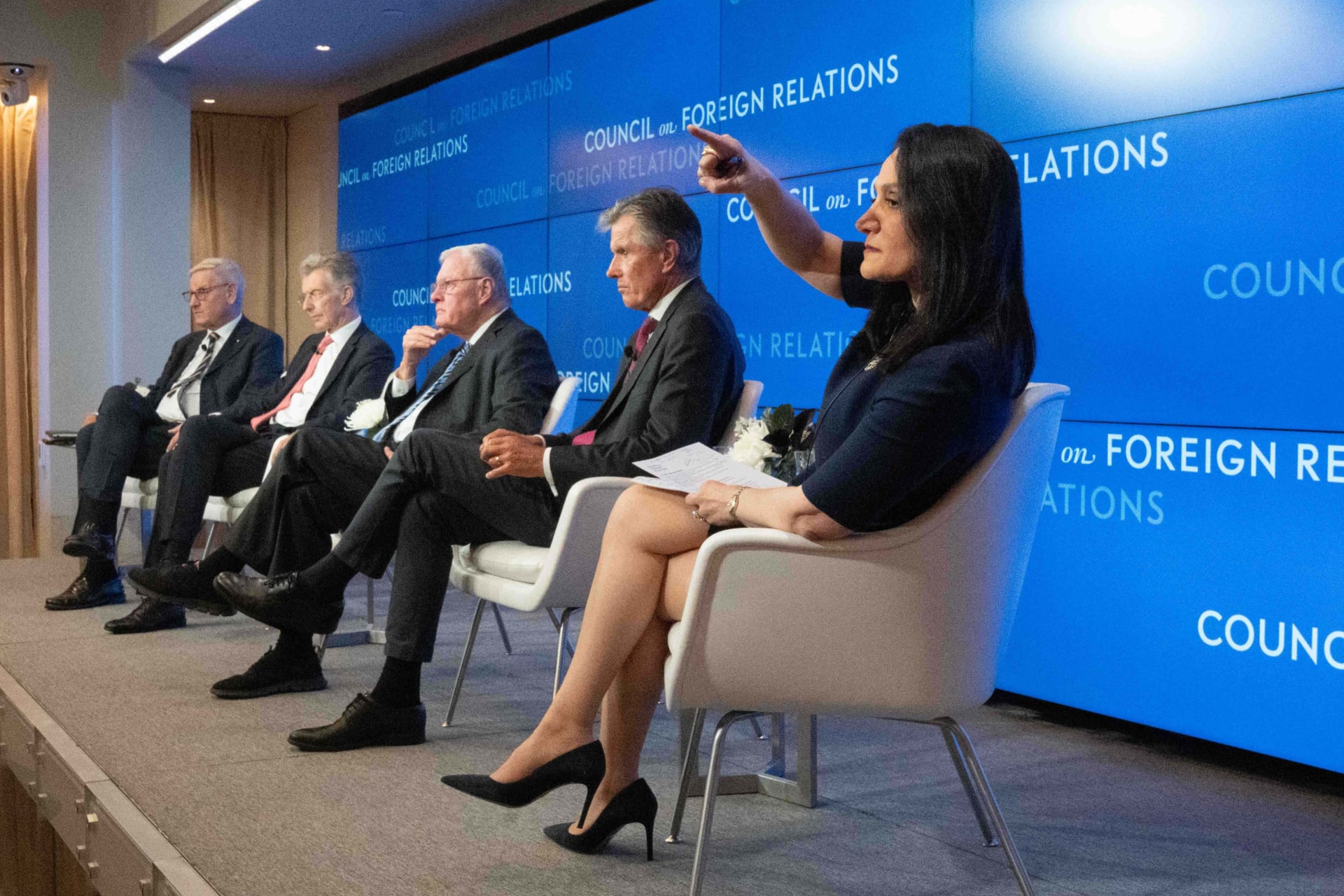
WERZ: Thank you so much. Good morning. Thank you for joining us. My name is Michael Werz. I’m a senior fellow at the Council on Foreign Relations in Washington, D.C. I’m very happy to see all of you here in New York. Let me also welcome over a hundred people that are joining us online right now. We are very pleased to not only host the World Food Prize Foundation, the secretary and his team here in New York, but we are even more interested in having a conversation today that hopefully moves the needle forward a little bit.
We have a short panel, and then we’ll open it up for questions from the audience. This is an on-the-record session. And we’d like to focus on the strategic but also the security impact of food security. We not only have the secretary here, who has been a trailblazer in this effort, but also two additional panelists. Swathi Veeravalli is an adjunct professor at Georgetown University and had a long career in government, including a leading role at the National Security Council. And Sharon Burke is the chief engagement officer at CIMMYT, the most system critical unknown organization, as I always say, in the world. And ask you to say a few words about—sing the praise of your own organization, but you also had a long career in the security community, including long stints at the Pentagon.
So, as you can tell from the people that we have invited here today to speak and to discuss with you, we want to focus on the security and geopolitical dimension of food. Secretary Vilsack, let me start with you because you’ve just outlined that the conversations that you’re hosting in Des Moines are moving into what I understand being a slightly new direction, because you have spoken about the geopolitical implications of food and food security. And if you read the newspaper today and tomorrow and in the coming weeks we’ll be unpleasantly reminded of the fact, because of the Iran war, that the cascading effects that we’ll be living, especially in the food but also in the fertilizer and water arenas, will be impacting all of us at the global level.
So, Secretary, briefly if you will, describe a little bit of how these conversations are going in what traditionally has been an almost exclusively agriculturally focused organization. Why are you moving into this new direction? And what are the responses that you receive from your stakeholders?
VILSACK: I think when the World Food Prize started forty years ago, the idea was that we would focus on production of agriculture. The theory was that we would—we would focus on production so that we would be able to grow enough food, raise enough food so people could be fed. The reality today is that we do, in fact, grow quite a bit of food. We raise quite a bit of food. Unfortunately, we waste a bit of it and we lose a lot of it. And the result is that some people go hungry as a result of that. But now what we’re seeing is a much more complicated circumstance and situation. And maybe it’s just our acknowledgement and recognition that as we created global supply chains, as we became more dependent on other countries for inputs, that anything that disrupted that supply chain, anything that made it more difficult for us to get what we need to grow that crop or raise that livestock, now has fundamental geopolitical consequences.
And so it was important for us as an organization, if we’re talking about food security for all which is our goal, that we address this issue of food as a weapon, the weaponization of food, the disruption of supply chains that are consciously and intentionally occurring in so many parts of the world that exacerbate the food insecurity numbers but also make it more difficult for us as a world to be able to produce enough to feed people. And it’s important to elevate this issue because I don’t think it’s fully recognized. You and I have had this conversation. When you talk about security today, there’s a lot of talk about missiles and a lot of talk about armaments, and a lot of talk about increasing the Defense Department’s budget. But to a certain extent, increasing the research budget that Cary Fowler has talked about is as important, because—(laughs)—if you don’t produce enough, if you don’t have enough, we’re going to continue to have conflict and continue to have an unsafe world. So, to me, it’s a part of this discussion that needs to be elevated and needs to be made part of a central part of this conversation.
WERZ: Let me follow up and ask you for a very brief question. Are you comfortable with making this argument, which will get you immediately into a very political conversation—we’ve spent $11.2 billion the first week alone in Iran. That money has to come from somewhere. We have a $200 billion appropriations bill pending for the war. Do you think that there is an ethical, political, but also strategic obligation of the food and ag community to get involved in those conversations and also talk about the financial resources?
VILSACK: I think it’s imperative for food, farm groups, organizations that represent farmers in the United States and around the world, to be engaged in this conversation, because their livelihood is directly connected to it. I also think that it’s important for them to understand that as we begin to shift the dynamics of soft power in this—in the world, as governments reduce their commitment to soft power tools, that maybe it’s important and necessary for us to take a look at ways in which the rather increased defense budgets can ultimately be allocated or reallocated or redirected into the areas, to recognize that food and agriculture issues and food as a weapon, food and national security, dictate the need for that department to be just as focused on it as the Department of Agriculture.
WERZ: Thank you very much for that clear statement. Sharon, this is the perfect entry point for you. Please talk very briefly about what CIMMYT does, and why the research and the practical work that you do out of Mexico and globally with a couple of dozen offices that your organization is running in other parts of the world—why this is a key feature of providing food security, but also in the sense of addressing potential future threats, including bioterrorism and other challenges to the global food system.
BURKE: Well, thank you, Michael. And thank you for all that you and the Council on Foreign Relations are doing to really elevate all of these connections. And we really appreciate the chance to be here with you. And as you say, I’m a former assistant secretary of defense. What am I doing working on food? And for that matter, Swathi’s whole career has been through the military and defense sector as well. But it’s because we believe this is important and it’s foundational. And for me, it’s my worlds coming together, being at CIMMYT, where we do have seventeen offices around the world and projects in eighty countries to promote food security. But it’s worth—it’s worth remembering, this is actually the anniversary of Norman Borlaug’s birth. This is his birthday. And it’s worth coming back to remembering what CIMMYT was at its founding, when he founded it.
First in 1943, during the middle of World War II. He and a group of scientists partnered with Mexico and Mexican scientists to change the face of food security. And then again in 1966, when the organization was formally established, it was in the context of the war between India and Pakistan. And he was bringing seeds, in the middle of a war, to both countries. And India in particular was on the brink of a massive famine. Pakistan was also having tremendous food security troubles. Even as the bombs are falling, the seeds are going in the ground. And within, I think, three to four years India was mostly self-sufficient in wheat. This is an extraordinary experience, but it’s always been in the backdrop of war from the very beginning. It’s our—it’s part of our origins. Today it’s no different.
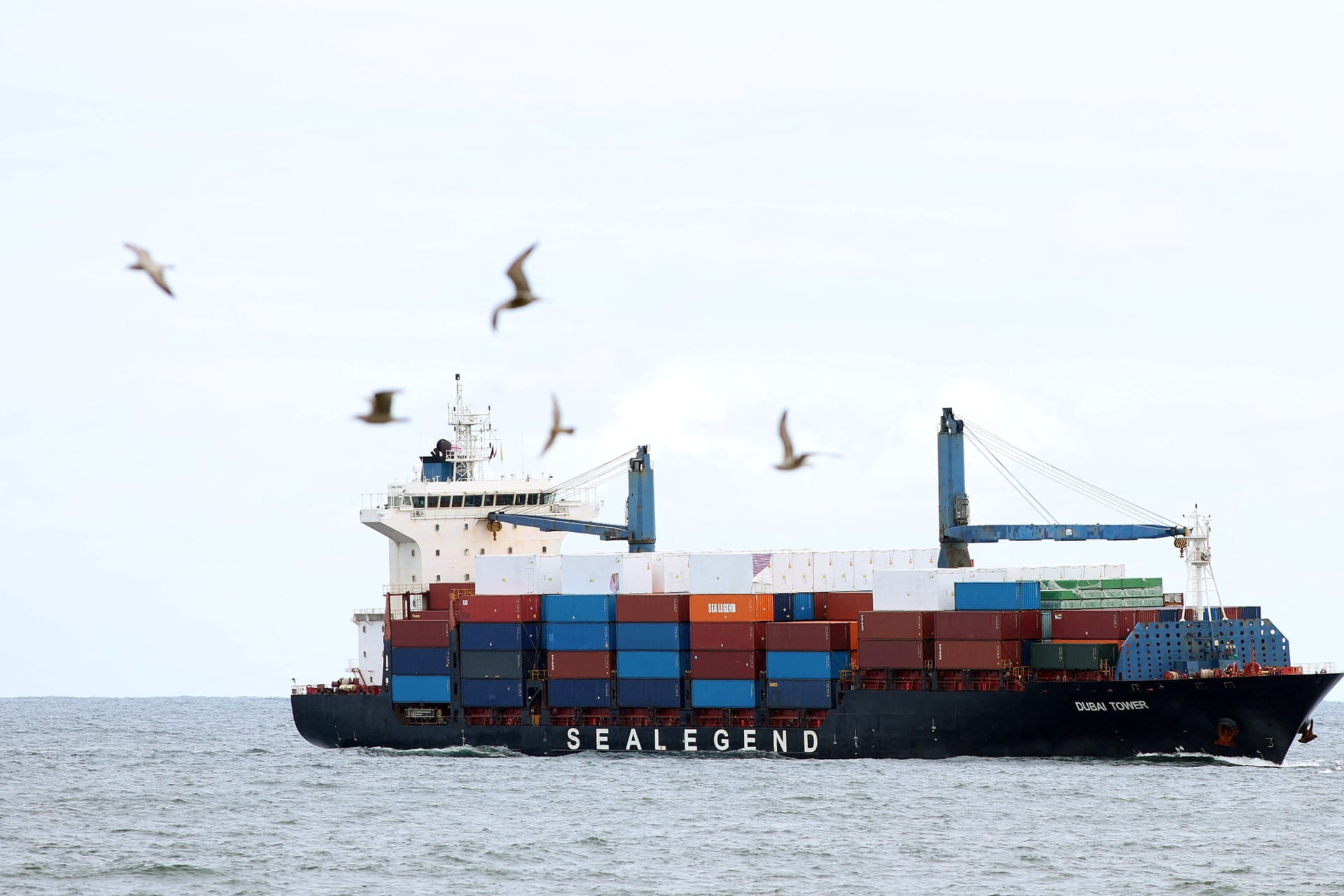
This link between food and agriculture and security is as old as humanity. You can go back—it’s the Akkadian Empire all the way up to Ukraine. It’s always been like this. However, it’s different today for three big reasons. One is that right now the global agri-food system is in a very vulnerable state. We’ve had successive food price crisis in 2008 and 2011. And then we had COVID. And then we have Russia’s invasion of Ukraine, two of the biggest grain producers in the world taken out, and particularly for the vulnerable countries that were the importers from there. And now we have Iran and the effective blockage of the Strait of Hormuz, which is affecting water, food, fertilizer in ways that are not only catastrophic, potentially, for the people in the Gulf region, but is going to reverberate across global markets. So this is different. This is a different time.
But there’s a solutions agenda here. This is about making this system more resilient. And CIMMYT is one player in this. We’re part of this. First of all, I think—you know, I brought a prop, because I have to bring a prop. First of all, it’s about innovation. Yeah, I have corn, right? (Laughter.) And this corn is legitimately in the United States. I did not smuggle it across the border from Mexico, where I live. (Laughter.) So this looks good, right? This is the kind of corn that we would see on the shelves in the United States, that you would buy in the summer and enjoy. This corn is grown right now just in Mexico, in the conditions that are pretty normal. I mean, the temperatures have certainly gone up, but it still grows like this. But in ten to twenty years if we continue to grow this corn, genetically, it’s going to look like this.
So the innovation that we have to do is figure out how to make it look like this in the conditions that we’re going to be in. So it’s sort of anticipatory adaptation. And that takes a lot of work. So this starts at the genetic level with precision genetics, which we do in our laboratories around the world. It starts there. We have a fair fight here because of the amount of innovation that’s going on right now. It starts with precision genetics. It includes the soil. It’s agronomy. It’s across the whole system there’s—you know, AI is enabling all kinds of things. We can see pathogen patterns that we couldn’t see before. Like, again, if you go back to the Akkadian Empire and the Roman Empire, rust has been, you know, the killer of governments and a cause of social unrest around the world for thousands of years. And these diseases have always been a problem. But with changing climate conditions it’s also the pests and diseases are spreading in more places. But, again, AI and other machine learning technologies give us a chance to understand better how to fight back, how to anticipate.
So we’ve got this unstable global environment. We’ve got an unstable human environment. And we’ve got an unstable natural environment. And we need this innovation, and we need this systems-level collaboration, and we need to make sure that this gets into the right hands. Which means smallholder farmers around the world. A lot of food is grown by major agri-food businesses. They’re very important part. But most of the farmers in the world are smallholder farmers. And most of them are in the Global South. And that’s what our mission is, is getting this in their hands so that we have more food security in more places globally. So it’s all of those things together. We’re going to have to try to stay ahead of the system vulnerabilities, the unstable human environment, and the unstable natural environment if there’s going to be enough food for humanity by 2050. And if we don’t do those things, there won’t be.
And then everybody will know, Governor, just how much food is part of your daily security. Right now, there’s enough food so nobody knows, unless you’re here, right? But we don’t want the first time that the global community realizes that it’s their security to be when they can’t get food anymore. So that’s our mission.
WERZ: Thank you, Sharon. I’m pretty certain this is the first time that we’re featuring corn on the stage at the Council on Foreign Relations. (Laughter.) I think the Motion—
BURKE: I can leave it here.
WERZ: No, that’s fantastic. I think the Motion Picture Association of the United States actually might be good ally, because if you have those ten-year-ahead corns, there’s not going to be popcorn and not going to be movie theaters operational. (Laughter.) But on a more—on a more earnest issue, Swathi, from what you’ve heard right now, give us the broader perspective. Again, in the national security world we see that there is more intent, interest, and willingness in the agricultural communities to get engaged in these conversations. The strategic relevance of water, fertilizer, food has been factored into a lot of wargaming and strategic outlooks at the military and intelligence levels in the United States and other parts of the world. Where do we stand? And how do we move forward quickly enough? And what are the pressure points that you would identify that we can use as anchors to have a conversation that connects the different silos that we’ve been talking about?
VEERAVALLI: Yeah. Thank you, Michael. It’s such a great question. And thank you to the Council on Foreign Relations for hosting us, as well as having this conversation, and the announcement of the World Food Prize winner, which I think is such a timely discussion, I thought that I was going to add a national security extension to what Sharon and Governor Vilsack were talking about, but I’m, in fact, repeating many of the same points, which I think is telling here.
You know, for too long I think that the national security extension of this argument is really about how stress moves through the system and about how institutions are calibrated to deal with visible crises, and not the hidden stress that propagates through the system. Which is what we’re here to talk about. And how can and institutions act before volatility becomes instability? So, first, in terms of who controls the margins, which I think is really the key to what we’re talking about, the issue is not just primarily absolute scarcity. In many cases, the word produces still enough food, right? The leverage comes from uncertainty, blocked ports, delayed shipments, tighter insurance markets, fertilizer shocks, and sudden price swings that hit import-dependent states before famine ever hits.
The real contest is over flexibility at the margins, about who controls it and who can take it away. The second aspect of my argument is that climate volatility is compressing that timeline. Flash droughts, for example, are no longer a slow decline. There are sudden onset shock that can propagate in weeks rather than within a single—within a single growing season, as opposed to across several years. And that matters strategically because, as I mentioned, institutions are calibrated to deal with visible crises, not hidden stress that propagates through systems. And, you know, to be clear and you heard the points made by Governor Vilsack and Secretary Fowler—we have the data, right? What we lack are the triggers, and the operational authority, and the financing to connect that data to action, which is being compressed by timeline, to act—compressed by climate, excuse me—to act while the problem is still manageable.
Third, the geopolitics aspect of why we’re all here today, you know, makes the food-energy linkages impossible to ignore. The war in Iran right now has heightened risks around the Straits of Hormuz. What is a maritime shock or an energy shock becomes food security very quickly, and hopefully we’ll discuss that with the audience today, because of the relationships between energy, fertilizer, as well as global food prices, I think for me, the policy implication is really straightforward. We have to treat food systems as strategic infrastructure. Which means you have to protect critical chokepoints, such as the Straits of Hormuz. You have to diversify supplies and inputs. You have to link data to preauthorized action. And finally, you have to invest in upstream resilience before the events happen, which is not charitable aftercare. It’s forward defense.
I think finally, you know, if there’s one takeaway—and this echoes much of what Governor Vilsack said, you know, the consequences and—consequential indicators of instability are no longer missile launches or troop movements. They’re escalating food crises. And, you know, I think the thinner margins of fertilizer, constraints, unreliable ports, and the cost of bread increasing in secondary cities, are all indicators of that instability. And so the question, I think, you know, I’d love to have the conversation with you all today, is how can we stop operating in hindsight and start acting and operationalizing these decisions in real time?
WERZ: Hmm. Thank you, Swathi. Let me follow this up with a quick question, because it seems, now that you’ve outlined the scenario and the fact that we are looking at these cascading effects and these impacts in the context of the Iran war, one might say that the Iran war seems to be the real first twenty-first-century conflict, right? Ukraine is still more two dimensional in the sense that it’s artillery and tanks and armed forces, mostly. There’s a cyber and drone dimension. But Iran is a completely different dynamic, because what you’ve outlined is that the conflict, along the lines of fertilizer, water, and food, is creating clear and tangible dangers, and also has a military impact. But at the same time, the responses to these challenges are unlikely to be successful if they’re only military.
So we have a gap here, so to speak, between the military threat assessment and the policy solutions that need to be, more broadly speaking, AG, mitigation, adaptation, multilateral, what have you. How do you communicate this in a national security conversation where the focus, obviously, is on the operational and kinetic side of things?
VEERAVALLI: Yeah. I mean, I think that we miss the forest for the trees too often. And by connecting the forward defense aspects of critical chokepoints and the connection to food security, I think, is really where we need to be looking at this. For example, I think Qatar is a country that does this really well. They’re using strategic grain reserves as part of national defense planning. And, you know, I think that that’s something that we should be doing much more forward lean—in a much more forward-leaning way here. And we were having a conversation before the panel discussion. And Governor Vilsack asked, you know, why are people taking—not taking this more seriously? Which is sort of echoing your question. And I think the answer is complacency, right?
We’re so used to going to the grocery store and getting what we need that we—and, yes, the prices are increasing, but it’s not yet enough for me to make a significant change in my behavior. And I think that that’s what we—but, you know, I would love to have that conversation with you all in terms of, like, how do we actually codify that behavior change, because then it becomes a national security argument.
BURKE: And, may I add?
WERZ: Please, Sharon.
BURKE: You know, I think also sometimes you—for the—for the armed forces, and this is something we’ve both worked on, they get so focused on the war that you forget that that’s—that war is about what comes after, and about the peace. And we have all the machines to fight the war, but not enough to build the peace. And that is been a consistent problem for the United States since the end of World War II, since the end of the Marshall Plan. And I would say that also strategic infrastructure has always been a target in times of war. And would say that actually there’s continuity between what’s happening in Ukraine and what’s happening in Iran. Russia has systematically targeted energy assets, food, Ukraine’s ability not only to produce grain, but to export it. This is war. This is what it looks like.
It’s just a very extreme version in Iran because the Strait of Hormuz is such a globally significant throughput. And also because if you really do effectively block the strait, which I assure you the Iranians are capable of, you have 100 million people behind the strait who no longer have access to food. And if there’s a tanker sunk in the water, don’t have access to water. And then at the same time, the world will not have access to 30 percent of the fertilizer that comes out of the strait. That becomes a global food crisis like that. So this situation—Ukraine and Russia, I mean, as a U.S. citizen with a German background you know that that war has been catastrophic for Europe, for food, and fuel, and fertilizer, and critical minerals. This is now getting brought to everybody.
WERZ: Mmm hmm. Fantastic. Governor.
VILSACK: Might I just—one point about this. I think part of the challenge, at least in Washington, D.C., in my experience, is there really is no full appreciation for the sophistication and the complexity of agriculture. I think there’s a tendency on the part of policymakers and folks in the national security part of an administration to think that it’s—that farming is relatively simple, it’s it doesn’t need to be—we don’t need to be concerned about it. It’ll take care of itself. You know, it’s really not part of our conversation. We don’t really have to talk about these guys. And it’s reflected in many aspects of decision making. CFIUS, for example, to try to get the Department of Agriculture as a member of CFIUS, is like—
WERZ: Can you please explain what CFIUS is?
VILSACK: Well, it’s an entity that basically reviews, from a national security perspective, a foreign country ownership of assets and companies and technologies.
WERZ: Thank you.
VILSACK: You know, we would come in and say, but agriculture has a piece of this innovation, or agriculture is involved in this. And they go, no it’s not. Yes, it is. Yes, it is, because you don’t understand—you don’t understand farming. You think you do. So right now, I think there’s a tendency on the part of many people to think they know more about farming than they do. And if they knew what the people on this panel know about farming and the significance of it, not just in this country but in the developing world, they would understand and appreciate that they need to take that issue very seriously.
BURKE: Governor, I got to tell you, as a defense—lifelong defense professional, I had no idea how hard it is to keep plants alive until I went to CIMMYT. So, yes, I’m with you. (Laughter.)
WERZ: But, Governor, let me challenge you on the last point, which is very well taken. Isn’t it fair to say that the ag community has also been a little late to the game? The Global Forum for Food and Agriculture in Berlin now for the third year had food security conversations as part of their main programming. The Forum for the Future of Agriculture in Brussels is going to have the first of such conversations two weeks from now. You have opened the doors of your large conference in Des Moines to these conversations. But this is all only been happening over the last three, four, or five years, at most. So how can you and how do you envision the agricultural and the global trade community more aggressively making the point that you say too often falls on deaf ears in Washington?
VILSACK: I can remember convening a series of ag leaders at the Department of Agriculture during the Obama administration, where we were basically—I was trying to explain to them that they were one-tenth of one percent of the country’s population, but the other 99 percent didn’t really understand what they did. And they needed to speak to the other 99 percent. In order to emphasize this, I just sort of—out of the blue. I said, you know, you realize that you are relative to national security. And they looked at me like, huh? What are you talking about? Just think about all the things that agriculture does in terms of meeting the food needs and providing the United States is a food secure nation, where we don’t have to depend on anybody really to feed our people? Very few countries in the world today can make that claim. And that is a national security advantage that we have, that China, for example, doesn’t necessarily.
So making sure that they understood their significance and importance can sometimes be the first step in that process. So, yes, no question the industry is late to the game. No question that the agribusiness leaders in this industry need to speak in these terms as well. And they need to speak to policymakers that they have connections to and context with about this issue. Not just about taxes and not just about regulation and not just about, you know, transportation issues, or whatever it might be, the domestic issue that they’re concerned about. They need to make sure that they also include, we need to be—you need to be putting more resources in research, for example. I mean, I used to say, why is the NIH getting all this money and we have to beg, borrow, and steal for every penny at the Department of Agriculture for research? And we’re still begging, borrowing, and stealing for every penny. Why is that? Well, it’s a lack of understanding and appreciation that that research is directly connected to our national security.
WERZ: Would you say that this should include a conversation in Europe and in the United States of possibly reallocating parts of the massive agricultural subsidy systems that we still have in place, and direct them into research and development, strategic thinking, and the issues that you’ve just outlined?
VILSACK: I would say there is a time for a—really a new farm bill that recognizes that point, but also recognizes the distinction between the top 10 percent of producers in this country, that do pretty well even under difficult circumstances, and the other 90 percent of farmers that struggle every single year, even in the best years, from a farm income perspective. They’re not making money, or the majority of money that they make doesn’t come from the farm, it comes from off-farm income. So we’re asking that 90 percent of farmers, in essence, to work multiple jobs to be able to do the one job they love to do. That is a system that I think does require a sort of new direction, and a question about where—how much resource there needs to be dedicated to this, and then how those resources are allocated. I don’t think we dedicate enough, given the importance of it. And I don’t think we allocate it in the way that it should be allocated to be able to make sure that it’s helping all farmers, not just the top 10 percent.
WERZ: Thank you very much. I’m going to ask Sharon and Swathi the kind of inverse version of the question before we open it up to the discussion with you here in New York and all our online guests. To you, Sharon and then Swathi, we have a volume of defense budget that is astronomical. We have increasing defense spending, which we are likely to see for the next decade or two. In Europe alone defense spending went from roughly 380 billion (dollars) to close to 700 (billion dollars) in the last six-and-a-half years. And obviously something’s got to give. And the cuts in development, climate, and humanitarian funding are maybe not the direct, but at least an indirect result of those increases in the budgets.
What is our best argument to make that there is a clear military and security dimension in these nonmilitary environments that we’ve been discussing here? And how likely is this argument to succeed with people understanding that, from a security perspective, it might not make sense to calculate defense euros and dollars against development euros and dollars. Sharon, you first.
BURKE: Yeah. And then I’m very interested to hear what Swathi has to say, because as a leader in the White House on the National Security Council she made really important inroads on these issues.
So for us, I’m very fortunate to work for a leader, a director general, who is very agile and figured out right away that we needed to change direction. That that’s just the way the world was going. I mean, it’s the reason I went to CIMMYT was because—well, partly because Michelle put on a great event there, and it was the best event I’ve ever been to. And, secondly, because we have a leader who said, the world is about to shift. We need to get ahead of it.
And I think one of the things that we’ve accepted is the international consensus on multilateralism is gone. Maybe it’ll come back. Maybe it won’t. But we can’t wait for that to happen, or organizations like mine that have such an important public goods mission will just break and go away, and then things will be infinitely worse. So I think we have to accept right now we—I mean, we, my organization—that this is going to be a much more transactional approach to helping people. That we have to convince Germany, and the United States, and every country that we deal with, and every company that we deal with, and every philanthropy that we deal with, that we can benefit them. And that this is about their food security. Because, like, I have a friend who’s a leader at Clingendael in the Netherlands. They’re doing a study for the Dutch government on how much they should be stockpiling food. So they are thinking about this in security terms, but in their security terms. So the route to the public good that we provide for the world is going to be through national self-interest. And we can do that. We can do both.
The thing that worries me more is that when you build an arsenal of weapons, you use it. So with Europe rearming and the United States expanding, we’re headed for a very difficult time. And war and food, war and hunger are a vicious cycle. Hunger—as Swathi said, nothing will get people in the street faster than high bread prices and being hungry. And that drives unrest. That drives conflict. Conflict drives hunger. There’s a reason that these are the horsemen of the Apocalypse. This is a cycle and we’re headed for a very difficult time. We need to be ready for that. That wasn’t very uplifting, can you do—(laughter)—
VEERAVALLI: No. I’m going to continue bringing the temperature down a little bit. (Laughter.) No, I mean, I think that, you know, efficiency has been the name of the game for so long, right? Like, we need to be more efficient logistics, we need to be more efficient in food production, delivery. And in order to do that we’ve compromised ourselves and created—painted ourselves into our corner, right? And we have critical chokepoints. And what’s happening in the Straits of Hormuz is a demonstration of that. And I think what we need to bring back to the conversation is redundancy, and why is redundancy a good thing, and why redundancy is actually part of the national security aperture because you’re creating diversification in the system so it’s able to absorb the shocks.
And so then you’re not having a system that’s hugely reliant upon a huge defense industrial base, but one that’s able to absorb destabilizing crises, critical chokepoints all over the world, as well as, you know, the price of bread increasing in secondary cities. And so it’s, can you create a system that’s resilient, that is absorbing shocks in a redundant way? But, again, it’s making the word “redundancy” a little bit cool, because I think, you know, right now that’s what we need. We need redundancy in the system, and especially in the national defense sector.
BURKE: I completely agree with that. I think that’s brilliant. Yeah, I’m with you.
WERZ: But if the response is, I’m mostly interested, as a politician, in my country. This is where I derive my political legitimacy. We might or might not be able to close our borders. We have a certain degree of self-sufficiency. I’m talking about the northern half of the world right now. What is the national security argument to say, this is not enough? Your thinking is too limited, because we are truly in a global situation. What is the security dimension that we could move forward here to be successful in that conversation?
VEERAVALLI: The world is interconnected, right? You can’t—you cannot think of yourself as existing in a silo, as much as you want to. And from a defense perspective, that’s useful. But I think, actually borrowing again from defense, like, using scenarios and, you know, war games to anticipate how the system is going to reverberate with shock, you know, is what we’re talking about here. And I think that we can do that.
WERZ: Thank you. (Laughter.) On that happy note, we’ll transition to you, hoping that there will be more uplifting statements. We have colleagues here in the audience that will supply microphones. There’s a lady here to the left, and then another one here to the further front. These are the first two. There are certain ground rules. A, let me remind you that we are on the record. Secondly, please let us know who you are. And please direct your question or statement to one of the three people here on the panel. I will not allow questions to all of them because then they will use that opportunity to speak, and no one else will be able to get their question in. We’ll start here in the room with the lady in the back, and then we have a third person here in the front. Please.
Q: Hi. Thanks so much. My name is Virginia Cutler. I’m a term member at CFR. I started my career as an officer in the Marine Corps and I now work in energy.
So, Sharon and Swathi, really appreciated your perspectives coming from a defense background. Sharon, my question is for you, given the work you’ve done on energy and national defense. So I’m curious how the energy transition plays into food security, and whether a transition to distributed renewable energy can be helpful in ensuring food security, and how the energy crisis precipitated by the Strait of Hormuz is exacerbating food insecurity.
WERZ: Thank you.
BURKE: That is a great question. And I thank you for sending me a beautiful softball—(laughter)—because my background is in energy and bringing renewable energy into the military environment. I think you answered your own question, which is right now when oil prices are so high it makes farming expensive, right? Both because fossil fuels are an input for nitrogen fertilizer and 30 percent of the world’s natural gas comes from Qatar, but also because every aspect of farming requires some kind of energy input. And we can forget when fossil fuel prices are low that that’s the case, but when they’re this high it raises the price of farming. It raises the price for consumers. And it’s a reminder that, again, the fragility in the system. So I do think that one of the things I’m seeing is that we need to see more systems thinking and more systems connections, so that as we’re looking at, how do we innovate—so, for example, we’re doing a lot of work with nitrification innovation, so that plants need less nitrogen in order to flourish. Very exciting developments. Very cutting edge.
As we’re doing that, that’s huge. It’s going to cut emissions. It’s going to cut demand. But mechanization requires a huge amount of fossil fuels. So we need to be working with mechanization. We need to be working with renewable energy providers to make that decentralized energy available and affordable for farmers. Like, agrivoltaics is one of the solutions that I know the National Laboratory of the Rockies has been—if you don’t know, it’s been renamed—has been experimenting with. I think there are a lot of solutions there. And now there’s a real impetus, with prices being so high, and really surfacing that not only can we do things, but we must do things. So it’s an important part of the picture—water, energy, land, food, plants, all of it. We have to see how it can be a mutually advantageous innovation system.
WERZ: Thank you. Please, here in the front.
Q: Mojúbàolú Olúfúnké Okome. And I teach political science at Brooklyn College. And I’m from Nigeria.
Well, I guess my question would be for Secretary Vilsack. I’m not really sure that this—that we’re thinking about this systemically as a world. Because I hear things that are relevant to developing—I mean, to Global North countries. But I’m African. And I don’t see how this includes us. In terms of—I mean, a lot of the issues that Africa faces are very severe. You know, the food insecurity, the food safety issues. To what extent can we think together as a world? And to what extent is it impossible, because the challenges are very different, and the resources that are available to address those challenges are disparate? You know, some people just don’t have as much to be able to think this significantly. Plus, are we in danger of having franken-foods because, you know, if we are engineering so much at what point does the safety of the food in that way also concern us? Thank you.
VILSACK: That’s a very good question. And it’s a complicated question. And it has multiple parts to it. Let me start by saying that I think there’s a lot of activity and work that’s being done between individuals and entities and corporations within the U.S. that is being done in Africa, that has a direct impact and effect on the ability of African farmers, smallholder farmers, to be able to be as productive or more productive. Notwithstanding the challenges they may face from a climate or an input perspective. I think there’s also tremendous activity taking place from a technology perspective.
Right now there are organizations and entities that are working on providing the ability of farmers in Africa, through their cellphones, to be able to use AI to be able to ask questions about their particular crop, to be able to take a photograph of their crop and ask AI whether or not—what’s this bug that’s currently on my—on my plant, or on my corn, on whatever I’m growing? What can I do about it? If the answer is a more sophisticated answer, you can then—you’ll be—you’ll be encouraged to ask a second question, is I don’t have access to that chemical or that pesticide. Is there some other way I could deal with this that is more relevant to me, as a smallholder farmer in Nigeria? So there is technology that’s being developed that is part of the connection between the nonprofit world, the for-profit world, and smallholder farmers.
I think one of the challenges is, how do we make up for the gulf that’s now been created by the decision to move away from government-funded assistance? So when USAID went out of business, essentially that created a fairly significant demand that is very difficult for the nonprofit world to meet. So we have to be really creative, really smart. We have to leverage our resources. It’s one of the reasons why the World Food Prize Foundation is traveling to Africa to have this kind of conversation, to bring entities and ideas and thoughts about what is happening in Africa and around the world that could have implications and impact on African farmers. We’re bringing this convening together to try to respond to your need for us to be relevant in Africa and African nations. And there’s also a recognition, I would say, there’s a tendency on the part of all of us who are not from Africa, countries in Africa, to speak of Africa as if it’s monolithic. But it’s not. There is a significant difference between what’s happening in Nigeria and what may be happening in other parts of that continent. And we need to be sensitive to that.
As far as the safety of food is concerned, I think we can have a conversation about that. I think there are multitude of studies suggesting that food is safe. But I understand and appreciate the consumers may not have—may have concerns about that. So it’s important for us to figure out ways in which we can increase the productivity of organically grown commodities. I think Africa, frankly, African nations, some African nations, have an extraordinary opportunity for exports in the organic space, because there’s a growing demand in the developed world for organically produced product, which we may or may not be able to meet domestically. So we’re going to take a look at the potential of imports. That may be an opportunity for connection and interaction between the U.S., Global North, and the Global South.
WERZ: Thank you. I think Sharon got the corncob ready for a quick intervention.
BURKE: Just a very—I got the corn out again, so. (Laughter.) So, Professor, I just wanted to say it’s an excellent point. And while 60 percent of the wheat grown in the United States came from our research, we only work in the Global South. That’s where our projects are. This is maize. This is drought-tolerant maize that we grow in Africa. And it is not GMO. So this can be done, so.
WERZ: Thank you. With the next intervention here in the front row, and then two more in the back. Please.
Q: Thank you. I’m Cynthia Rosenzweig. I’m at NASA, Columbia Climate School, and also World Food Prize. (Laughter.)
I’ll ask Swathi, since you haven’t gotten a question yet, but it was really also germane to the other two fantastic panelists also. Because, Swathi, you raised this fantastic concept of flexibility at the margins, and really brought up about the climate stresses. I work on climate change and food systems. And so, with Cary Fowler, we have done a lot of work on what we have, I think, successfully renamed the orphan crops to be opportunity crops. And these crops which have been neglected—so it’s wonderful what CIMMYT has done with maize actually in the—
BURKE: We’re working on those too.
Q: I know you are.
BURKE: He made us, the secretary.
Q: I know, exactly. Exactly. But we’ve got to do much more. How do—because they are genetically diverse, nutritious, and climate resilient, many of them. They need testing. They need all the work that’s been done at CIMMYT for maize, but now huge amounts of research, and development, and market development, et cetera. So how can we encourage this broader portfolio of the crops, as in Africa and in all—in all the regions of the Global South? And, I would say also, in the Global North. Thanks.
WERZ: Thank you.
VEERAVALLI: Yeah, I think this is such a prime opportunity to look at government research, which has done a lot in this sphere. You know, and I think that we have some homegrown talent in the civil service. And making sure that those people stay to invest, do this type of research, especially in this climate, right, is really, really particularly important. And looking at the innovation that’s being done within the government, but also partnering with, you know, other institutions in the Global South who are doing some of this innovation resilience in a much more productive way. But, as you pointed out, I think climate waits for no one. And I think that’s really the point that I wanted to make here, is that that volatility is being—is compressing—that the climate volatility is compressing that timeline.
And so we have to hurry up with this research and make it actionable for researchers, because, as we know, there’s a lag between the research and how it’s implemented in the field. And, you know, the work that Secretary Fowler did when he was at the State Department, and connecting the work that’s coming out of science and innovation to the decision makers, making that as seamless a loop as we can I think, is really critical, especially as we move forward. I think food security is a topic that has salience across the aisles, right? Nobody can argue with the importance of food security and nutrition for people, for homesteads, for countries, and so can we use that in a much more productive way? And I think then you can bring the climate extension of that argument as to why we need to be doing more on mitigation as well as adaptation.
WERZ: Let me follow this, Swathi, very briefly. In the national security community we’re used to think about conflicts in cyclical terms. Even the longest conflict eventually ends. Climate change is a linear threat that goes into the wrong direction at least for the next 2(00) or 300 years. Is the national security community intellectually, conceptually, institutionally set up to think about the linearity of the pressure points that we will be facing over the next ten, twenty, twenty-five, thirty years?
VEERAVALLI: Yes. So that would be the simple answer to that question. But I think we also have this perception that climate’s occurring over there, right? It’s over the horizon. And we’re reluctant to make a lot of arguments saying, like, what we’re experiencing right now is due to climate change. But I think that the science is there. We’re comfortable in saying that. It’s bringing the national security extension into the argument so that we can start making decisions today that bias resilience tomorrow. And that is not a concept, an argument, that has salience in the national security sector, because we’re too busy dealing with what’s urgent versus what’s important. And so the linearity of—you know, the trajectory of climate warming I think fits into that really well, because it’s both urgent and important. Yet, we’re still not making those decisions from a national security perspective. And I wish we would do better with that.
WERZ: Thank you. Next question over here, please.
Q: Hi. My name is Swati. I work at UNICEF. And Swathi and I connected over LinkedIn two years ago, and mainly because our names are the same. (Laughter.) And we both work in climate adaptation. So it’s great to see you on stage today.
My question is more about how to leverage the international scope of farmland acquisition to promoting, you know, better practices. You know, because in the U.S., you know, Canada owns U.S. farmland. I think the Netherlands own some U.S. farmland. So does Saudi Arabia. In Africa, when I was working in Zambia, a big part of the conversation was the farmland grabs that were being done by China across different countries. So right now, you know, a lot of countries don’t own their own farmland. But I’m curious if there’s a way to encourage global geopolitical powers to work together, at least. Like, if you are—if you do own farmland in Africa, like, can you promote at least better practices there, so there’s, yeah, more equity in the way that they treat these farmlands in other countries? Or is that actually a bad practice, and we shouldn’t be doing more of that?
WERZ: Thank you. I would assume this is at least in part a question for the former secretary of agriculture. (Laughter.) Then, Sharon, you were looking very attentively. Would you like to—
BURKE: She’s pointing at me. (Laughter.)
WERZ: OK, terrific. Tom.
VILSACK: I will tell you that there is—within this country, there’s a—I think, a lack of real understanding of exactly how much land is actually owned by folks other than people in the United States. There was a tendency, I think, to think that China’s influence, for example, was significantly greater than in fact it was, and is. Having said that, there is, I think, real sensitivity to the location of that farmland. I think states are now basically passing laws to restrict foreign ownership. And that’s created some issues.
It’s created issues with a seed company, for example. Syngenta would like to be able to do business in the United States. They are finding it a little bit more difficult because they are Chinese owned. And the question then is that, is that in our long-term best interest to discourage a seed company that’s potentially doing some important research? Is that in our long-term—or can we be smart enough to figure out how we can create structures and systems to ensure that our national security, our trade secrets and so forth, are protected, not stolen, but at the same time encourage and allow that company to continue to do good work in the United States?
In terms of other—you know, one of the saddest comments that have been made at this conference today is the notion that the rules-based system is gone. The notion of international rules-based systems is gone, it may come back. I think we’re going to find that we’re going to want it back. Because when you create the structure and system where it’s every country on their own, then you have a series of—multiple series of rules and regulations which create—it creates very—it creates difficulty for in terms of resilience, and it certainly creates difficulties in terms of efficiency and in terms of cost of doing business, or even being able to do business. And I think as more and more of us recognize the consequence of a more transactional, more localized decision making, the more there will be an effort on the part of some to figure out at least alliances, albeit regional or like interest alliances, that then begin to recreate the fabric of how we collaborate, how we come up with a system and process in which we all agree. Those are the rules we’re going to work by.
So right now I think we’re in the infancy of creating that kind of mechanism that focuses on alliances. And I would, you know, strongly urge the food and ag industry to recognize that. And potentially be the industry that leads that effort. I think it—because of the fact that there is consensus about the importance of food and ag within the food and agriculture industry, and that it does transcend borders, if you will. I think there is an opportunity for the food and ag industry to say to the world, here’s how it needs to be done again, or here’s how it should be done, and we’re going to—we’re going to show you that we can do this. And so that would be the challenge. That would be, I think, the response.
And in part—as part of that would be land ownership. Part of it would be companies basically providing technology. There could be incentives, for example, that our technology, our research, our technical assistance, would be provided, assuming that you are willing to grow and raise in a particular way. There are a multitude of ways in which that could be done.
WERZ: Thank you. I’ll take two more questions and then—three more questions. (Laughter.) I’ll take them as a cluster, and then give our panelists—excuse me, I got to cut it at three—our panelists a chance for a last round of thoughts, since we are running up against time. So the lady in the back first, then the gentleman here, and then the lady here in a couple of rows.
Q: Good morning. My name is Jesmine Romanelli from One Acre Fund.
So, first of all, thank you for—so One Acre Fund supports smallholder farmers across ten countries in Africa. So I just want to say thank you for bringing the smallholder voice into this room during this conversation. To zoom out a little bit, because everything is interconnected. I wanted to ask a question on that, the concept of viewing food security through a lens of national security, specifically in the United States. I’m curious how much of a priority this is. To what degree is this a priority for the Trump administration currently? Is this actively being considered? Or is this more of a concept of, like, a nice to have right now? (Laughs.) Thank you.
WERZ: Thank you The gentleman over here.
Q: Thank you. Paul Skoczylas at the World Food Programme. I had been at State Department during the 2008 and 2009 food crises and, of course, went through COVID and the recent other shocks at the World Food Programme.
Swathi, you had mentioned redundancy. And that’s often the tendency during these crises. People want to have more local production. They look at food sovereignty on a national basis, but that often costs money. And sometimes it actually doesn’t result in lower prices at the consumer level because the global trade, when it works, is quite efficient. So just wanted to ask about the concept of building a bit more slack in the system and the redundancy, and how would that work in terms of the economics behind it? Thank you.
WERZ: Thank you very much. And the last question over here.
Q: Hello. Hi. I’m Nancy Easton. I run a nonprofit—national nonprofit called Wellness in the Schools that works with the federal lunch program.
Secretary Vilsack, you mentioned the farm bill in your opening remarks, and maybe in a more hopeful note. What are your hopes and dreams for the U.S. farm bill?
WERZ: Thank you very much. So we’ll have the secretary, governor address the farm bill question. I’ll pitch the question with regard food security, nice to have, to you, Sharon. Or key issue for this administration. And, Swathi, you were addressed directly, and you would then have the last word. Tom.
VILSACK: I’m not as optimistic as I would like to be about the passage of a farm bill, in large part because the coalition that had been so critical to passing previous farm bills has been, I think, impact and affected by the reconciliation bill that was passed. When reference prices were basically financed through reductions in in the SNAP program, I think it caused some tension between those who would vote for a farm bill because they’re all for nutrition and those who would vote for it because they’re all for farm supports. So I think there’s a genuine effort on the part of Chairman Thompson in the House to try to get something done, but my question is whether or not it actually gets sixty votes in the Senate, because this coalition is so frayed. And without addressing the challenge of SNAP and the challenges of fewer people on SNAP, and the impact that that may have, I think it may be difficult, ultimately. And what may happen is individual pieces of a farm bill eventually get passed as part of a budget bill or as part of some other mechanism.
I would say that there does need to be some real thought given to the next farm bill, when we have an opportunity to have that conversation, because I do think there is a real need to address the challenges, the economic challenges, that 90 percent of our farm families face in this country. The impact of losing as many farms as we’ve lost—over a million farms have been lost since we developed a market-based system. And it’s benefited some, but not all. And until we figure this out, I think we’re going to continue to see an erosion of life, and quality of life, and challenges, and opportunities in rural places. And I think that that has a profound impact on country. I really—I think there’s a lot of thought that needs to go into the—into the next conversation. But in terms of this farm bill, the one that’s being discussed now, I hope I’m proven wrong.
WERZ: Sharon.
BURKE: I wanted to first agree with something you said, Governor, in your earlier response. Which was, you know, this old system is falling away and this—we’ll have to have a new system of mutuality, because there has to be. What worries me is between the falling away and the recreation lies the shadow. And that this is a very dangerous time. And I worry about what’s going to happen on the way to recreation.
Quickly, just to respond to our UNICEF colleague, to the other Swathi, I think the challenge now is how to turn that transactional arrangement into a win-win arrangement, so that if we’re putting a farm in Senegal, which we’re—which is where we’re doing our research on sorghum and millets and groundnut and all the opportunity crops—if we’re going to put a farm there, that Saudi Arabia is financing, that it benefits Senegalese and lifts up their farming and also provides food to the Saudis. And then secondarily, would just point out what you said about Syngenta. There is a country that gets this. And that is China. And where they were with critical minerals twenty years ago they are with food now. They’re making a strategic investment. And the rest of the world should be paying attention. I can’t blame them. They’re doing the right thing for their people. But the rest of the world should be looking at it as a strategic challenge too.
And then, One Acre Fund, thank you for all of your support and the wonderful work that you do. How much is the Trump administration paying attention to this? I saw Cary smirk at me when you asked me that, because the Trump administration has given support to my organization. It’s not enough. It’s not enough for us to continue doing the lifesaving work that we’re doing. But it is enough for us to survive for now. And they do support our work significantly, and they have announced that they’re going to resume support for the innovation labs. So as—and the support for us and for the innovation labs is bipartisan. So, as Swathi said, it crosses the aisle still, even now. So hopeful that we will be able to continue to advance global food security.
WERZ: Swathi.
VEERAVALLI: Yeah. Thank you. Yeah, so, I mean, the core takeaway for me here is how food security is so central to the stability of nations. And, Michael, you’ve written about this. And because it’s so central to stability, it is defense, right? And that is—and to see how it plays out, to Swathi’s point earlier, how other countries are approaching this from a strategic competition perspective, they’re making the argument for themselves, right? They’re seeing this as an extension of their national security, so why can’t we? And so I think that’s the question here that I’d love to answer.
In terms of how does this look, you know, redundancy—paying for redundancy today is expensive. But a dollar spent today is much, much cheaper than $10 spent in the—you know, of future dollars because of inflation, I’m not an economist, but also lives lost, right? First, we have to reduce our exposure to chokepoints, absolutely. Iran is exemplifying that over—and we’ve seen this before, right? Michael brought up Ukraine and what happened with the Black Sea grain crisis and the initiative, the subsequent initiative, that occurred to mitigate some of those global risks. So through protection, alternate routing, right? That’s how all of that looks.
Second, you have to diversify your inputs from a fertilizer perspective, from an energy perspective, looking at, you know, solar panels and how can we make our infrastructure, from a farming perspective, maybe a little bit more energy neutral, carbon neutral. The third point is, really you have to connect that early warning to action. And that’s, for me, the big failure point still. We have the data. We have the information. It’s still translating to a policy perspective. It’s only after the crisis has happened, and we’re not rewarding—we talk about resilience, but we don’t reward resilience. And rewarding resilience means that we spend those dollars today. And, yeah, I mean, I would love to have a better answer to that question, but we talk about resilience. We just don’t value it.
BURKE: Hey, Michael, you brought food and agriculture to the Munich Security Conference, which was not easy. You did that. Can you bring security to the food and agriculture community? I mean, you are. (Laughs.)
WERZ: We’re trying our best. I’m sure, with the help of Governor Vilsack and the team at the World Food Prize Foundation, we are making headway and have strong partners.
Thank you again for working with us and for bringing the announcement of the World Food Prize winner here to the Council in New York. It’s a pleasure. I hope we will continue to work. We are planning more events during World Bank week in Washington, D.C. Should you be interested, please let us know. Let me thank you for making time on a Wednesday morning for this event. Also, the people that joined us online. We are very appreciative of your interest. Let me also add thanks to the team here at CFR in New York. My colleague Dinah and other colleagues have made this event happen. You know that there’s always a lot of people involved, not only the ones that are on the stage but also the ones that actually bring things together.
Last but not least, my colleague Sam Vigersky is here. He is part of our food security work at the Council, and has joined us a few months back after a stint at the U.S. U.N. representation here in New York. And we are moving forward this agenda. We will be launching a large multimedia food weaponization analysis the first week of April. And we are also publishing flashpoint papers, Swathi has written one of them on flash droughts, in six to eight week intervals. If you’re interested in receiving those they are snapshot analysis on food security issues from different perspectives. Please let us know. We’d like to broaden our network and include you in the work that we do at CFR, and that we do with our partners.
Thank you all, again, for volunteering to—or not—(laughter)—to do this panel. It’s been a pleasure having you. Thank you all. (Applause.)
(END)
This is an uncorrected transcript.