A Conversation With Foreign Secretary Roberto Velasco of Mexico
Event date
Speaker
- Secretary of Foreign Affairs, Mexico
Presider
- Shannon K. O'NeilCFR ExpertSenior Vice President of Studies and Maurice R. Greenberg Chair, Council on Foreign Relations; CFR Member
Foreign Secretary Roberto Velasco discusses the country’s foreign policy priorities, including the future of U.S.-Mexico relations, trade and economic integration in North America, migration and regional security, and Mexico’s engagement with Latin America and other international partners.
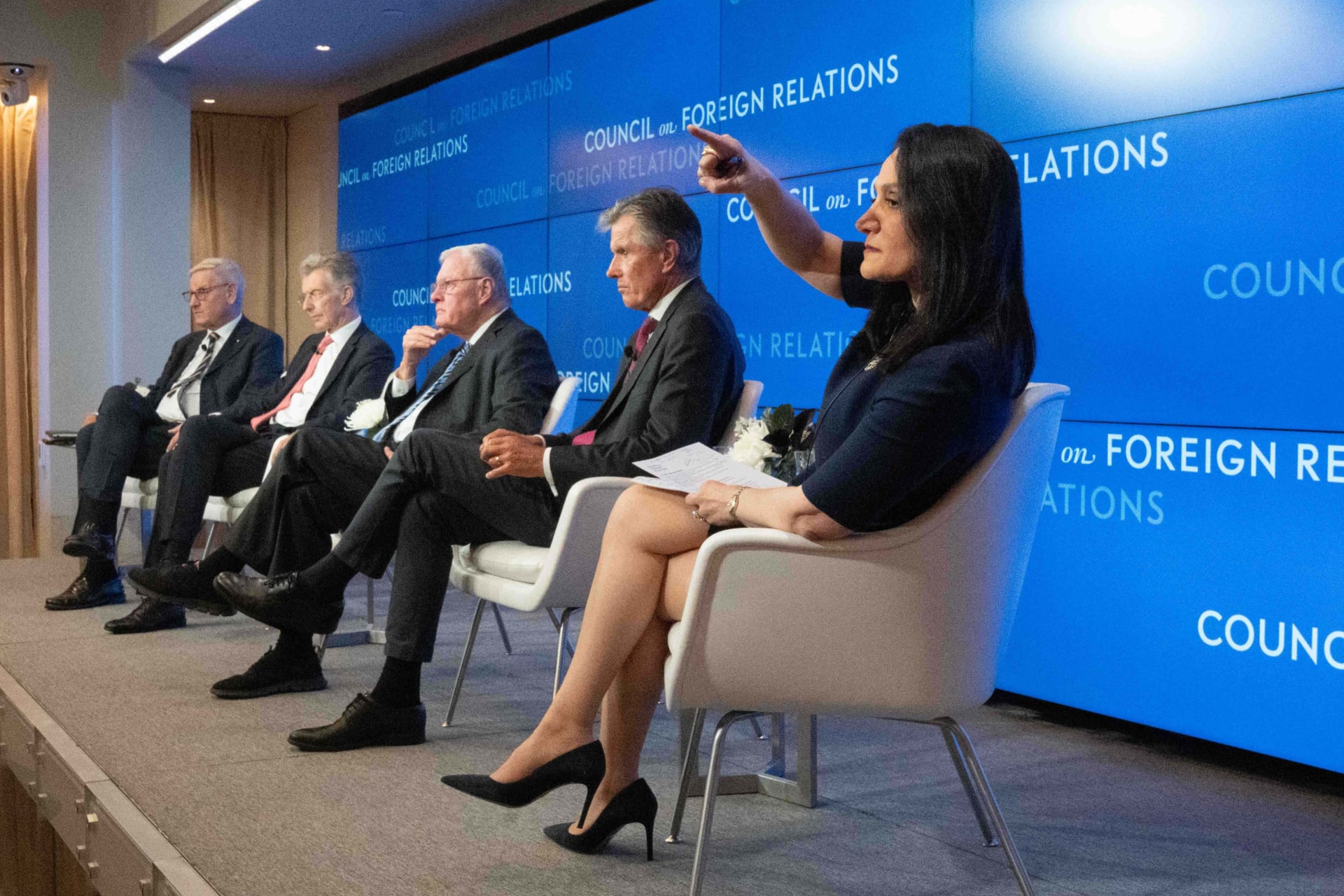
O’NEIL: Good morning, everyone. Thank you for coming. I’m Shannon O’Neil. I’m the senior vice president of studies and Maurice R. Greenberg chair here at the Council on Foreign Relations. And it’s—(off mic)—to be moderating—(off mic).
We’re joined here by members in the room. We have some members—(off mic).
(Comes on mic.) All right, can you hear me now? Perfect. OK. Restart. (Laughs.)
Hi. I’m Shannon O’Neil. I’m the senior vice president of studies and the Maruice R. Greenberg chair at CFR, and I’ll be presiding over this meeting with the foreign minister of Mexico.
This meeting is on the record and we will be joined here by people in the room as well as online. As is our custom, we will have a conversation up here for about half an hour, and then I’ll be turning to you to ask your questions. So please be ready with those.
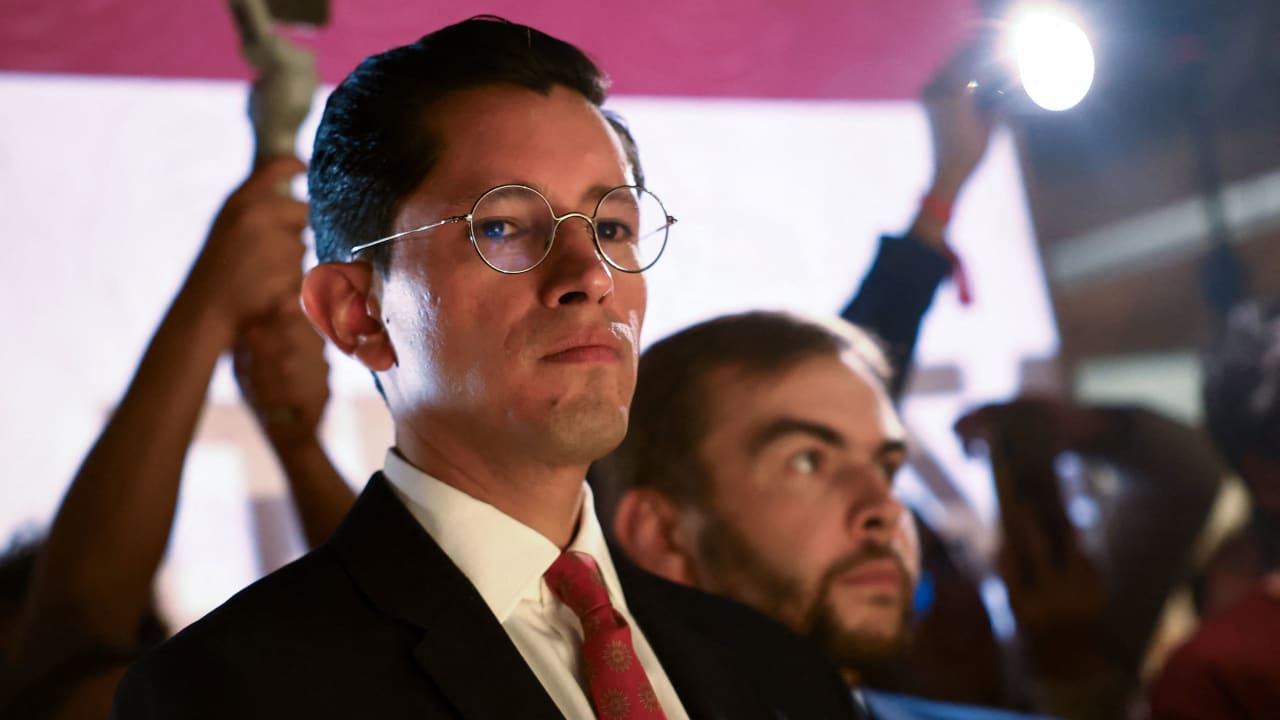
It is my great privilege to be here with Roberto Velasco Alvarez, who is the foreign minister. He is trained as a lawyer. He did his graduate work here in the United States at the University of Chicago, and then went back to Mexico and has been steeped in Mexico’s politics and policy for twenty-plus years. Much of that time, or a good portion of that time, has been at the Foreign Ministry, where he’s had a number of different positions. He has spent much time working on U.S.-Mexico and broader North American relations as the undersecretary for North America. And he has taken over in the Sheinbaum government as foreign minister. So welcome and look forward to our conversation.
VELASCO: Thank you very much, Shannon. A pleasure to be here.
O’NEIL: Great. So let’s start off. You were recently actually here in New York for Mexico Investment Week. So welcome back. Glad to have you again.
VELASCO: (Laughs.) Thank you.
O’NEIL: And so let’s start off talking a bit about the sort of economics and finance, and since that is a big focus here. And, you know, Mexico right now is in this interesting position where we have seen good amounts of foreign direct investment coming into Mexico, but at the same time we’ve seen overall investment levels falling or declining. And so let’s talk a little bit about, you know, what is it that foreign companies are seeing that domestic companies are not, or vice versa? And sort of what is holding back some of this broader investment in Mexico’s economy today?
VELASCO: Let me start by saying that we’re seeing a change in that trend. By the beginning of the administration, which is common in Mexico, we saw a decrease in national investment. And that usually has to do with the start of the government. The new governments start new projects that require time to mature. The tenders process take time. And that usually creates a little bit of a lag. But as the government has advanced, we’ve seen a recovery in private investment, in government investment, national investment in Mexico. And this year actually the investments coming from inside the country have recovered substantially. And now we’re seeing both a growth in terms of foreign direct investment and in terms of national investment. So we are seeing a strong recovery. And we’re actually having a very strong year in terms of economic growth, in terms of economic activity, which I feel also shows the resilience of the Mexican economy, given the context of challenges that we’re facing.
O’NEIL: Well, let me ask you one of those potential challenges. And that is sort of USMCA, right, the negotiations around the free trade agreement with the United States and Canada, because it really undergirds much of the sort of export promise of which Mexico has been a leader, in exports. So when you think about it for investors, you know what matters is, obviously, tariff relief, right, and the tariff exemptions that that continue under much of USMCA. But also, you know, it matters the sort of non-tariff barriers, the sort of access through other kinds of regulatory frameworks. And then also the sort of dispute settlement mechanisms, particularly as there’s changing judicial systems within Mexico. Many investors are thinking about USMCA for that reason.
So let’s talk a little bit about, if you can give us a sense sort of where negotiations are? And, you know, not just, you know, what do you think is possible now for the agreement, what might be possible in the next few years, and then, if you can also look, what might be possible longer term as you think about the trade relationship and USMCA as a basis for it?
VELASCO: Well, first, let me say that we have two sets of negotiations. We have an ongoing conversation regarding the existing tariffs that the U.S. has implemented under Section 232. Obviously, for Mexico, the tariffs on the car industry and on steel and aluminum are of particular concern. And we have been talking about that for the past couple of years with the Trump administration, year and ten months, I don’t know. And we have another conversation with the U.S. within this same channel, which has to do with what they call non-tariff barriers, which are a set of issues that they have put forward that they consider require attention from the Mexican government. And these are broad-ranging issues that have to do with different aspects of policy. We’ve made progress on this conversation, but we don’t have an agreement yet that is finalized. We continue to talk. I’m always cautiously optimistic, but also being cautiously optimistic means not creating expectations that we will reach something in the—in the very short term, until we reach such agreement.
The other conversation is the USMCA revision conversation. We have another round of formal conversations regarding the USMCA around the corner in the next few weeks. And we are discussing different things around that channel. I mean, the U.S. has put forward mainly a set of issues that have to do with rules of origin, with economic security. I think we agree in general in the objective, in having a stronger North American supply chain. And I think we agree there are some measures that we can take to produce more in North America versus what we import from other regions. We, in Mexico, have Plan Mexico, which actually aims to do that, to import less from other regions, particularly from Asia, and add more value in Mexico, produce more in Mexico. So I think in in the overall framework we agree. But, of course, there are many details that have to be discussed to lead us to that objective. And that’s what we’re doing.
And then you also have what we view as an important objective, which is creating more certainty. I mean, we would eventually like to have a longer-term certainty than having these annual revisions that obviously are not optimal for investor certainty. I mean, the USMCA is obviously still the framework that we use for most of our trade. It’s still going to be there for at least another year, with these revisions. But we would like to have longer-term certainty, instead of these constant talks.
O’NEIL: Let me pick up on one aspect of that. And, you know, you talked a bit about sort of Plan Mexico and trying to do more at home. And let me ask you, in particular, sort of about Mexico’s China strategy. So you were just recently in China. You were meeting with the foreign minister there, your counterpart. And, you know, as I look at U.S.—or, I look at Mexico-China relations, you know, on the one side you have the promise of the, you know, world’s second biggest economy, and access to that market, and access to their technologies, and the benefits it could bring to Mexico. And on the other side, you have pressures from the United States, and demands from the United States for some decoupling, and this replacement that you’re sort of talking about.
And you have Mexico’s own experience with China’s exports in the past, right? As I look at the first China shock, which we talk a lot about here in the United States and elsewhere, Mexico is one of the countries most deeply affected, negatively affected, in terms of its industries. And here we are, in the midst of another China shock that’s sort of facing the world. This is this, you know, outpouring of exports. So how do you think about balancing, as Mexico, sort of the promise and perils of China, both economically and then also geopolitically?
VELASCO: I mean, we have our own perspective, naturally. On the one hand, as I was explaining, with Plan Mexico what we want to make sure is that we’re less dependent on imports from other regions, and we produce more in Mexico, and that we add more value in Mexico. And particularly that the parts of the supply chains that we have in Mexico are not only parts of the supply chain that create low-paying jobs. We want to have good-paying jobs. We want to have parts of the supply chain that create, you know, much more value for our economy. So that’s one aspect. And, of course, that impacts our view of the trade relation, not just with China, but in general with other regions, we say, with which we don’t have a free trade agreement.
On the other hand, we have a political relation with China. That is what I discussed with Foreign Minister Wang Yi. We’ve had a history of friendly, respectful political relations with China. We’re trying to make sure that they continue to be that way. Naturally, we understand that the U.S. and China have their own set of challenges. And we are respectful of that. But Mexico and China can continue to have a political conversation and to engage in their own political channels. And that, of course, again, is independent from the economic side. But in that sense, it was a very productive conversation with Foreign Minister Wang Yi. We also opened a new consulate. And hopefully, we will continue to be able to have this positive engagement.
O’NEIL: Let me bring one other issue that has been part of, you know, U.S.-Mexico, you know, relations and thinking, and as well as USMCA. And that is the security issue, right? And we have seen a—you know, I think a real and a very welcome shift in in the Mexican government policy in terms of law enforcement and targeting, you know, organized crime groups, and leaders of those organized crime groups. We’ve seen a decline in homicide rates, so some success in that policy. But we’ve also seen, with this return to sort of a kingpin strategy and going after particular leaders, then places like in Sinaloa, rising violence as you take out, you know, El Chapo and El Mayo, and sort of challenges as cartels, or the groups, kind of fight for territory.
We just saw Secretary Rubio was in a tour around Latin America. And he said at the time that, you know, quote, “vast territories of Mexico are controlled by narcoterrorist organizations,” and that he was calling that, you know, Mexico’s efforts are not enough, are not nearly enough. So I’d love for you to sort of talk a little bit about how you see, you know, Mexico’s security strategy, and what the next steps are, building on what you’ve already done, to face and, sort of, dismantle these groups.
VELASCO: Well, in the past two years of the Sheinbaum administration we have actually seen a dramatic decrease in violent crimes in Mexico. In terms of the homicide rate, it has decreased around 50 percent—over 50 percent, which is historic. I mean, it’s the largest decrease that we’ve seen at any point in our history. We’ve seen decreases in almost every crime. And that is something that we view as extremely positive. There is no other country in the region, in Latin America, and as far as I know there is no other country in the world, that in this period of time has made so much progress in terms of security and reducing violence.
Of course, in this period, particularly since President Trump came in, we’ve had a lot of cooperation with the United States. The difference between the model that they have followed with other countries and the model of cooperation with Mexico is that we have put forward a series of principles for this cooperation. And the number one for us that is fundamental is the respect for our sovereignty and our territorial integrity. The need to have a view of shared responsibility about these issues. Obviously, to have mutual respect and trust. And what is very important for us, to have what we call cooperation without subordination. Which means that we will, of course, cooperate with the United States and other international partners, but there are things that correspond to the Mexican government to decide, correspond to Mexican authorities to act on our territory. That is what our constitution and our law says. And we intend to respect our constitution and our law.
But given those principles, we’ve had, I think, a lot of different successes. I mean, the first one is obviously the operation that led to the neutralization of Ruben Oseguera, known as El Mencho, which is probably one of the most violent and dangerous criminals that we’ve seen in modern history. And that was a success that the U.S. joined. We obviously had cooperation from the U.S. in terms of intelligence, of exchange of information. And what is part of—that is part of the model that we have proposed to the United States. We can exchange information, we can exchange intelligence, but then the Mexican government will act in its own territory against this this person.
And that is not the only case. We’ve dismantled around—or, over 2,700 laboratories that were producing drugs. We have also arrested or neutralized over 200 priority targets that have to do with organized crime. And that is obviously just a fraction of the, I think, over 60,000 arrests that have been made under the national public security strategy of the Sheinbaum administration, that has in its core, obviously, a view of social justice, of social progress, but also of strengthening the capacities of the Mexican government to investigate crime and to provide intelligence that leads to those investigations.
O’NEIL: We’ve been looking north from Mexico. Let’s look south, right? You know, obviously economically there’s a centripetal force pulling you to the United States, but culturally, linguistically you’re tied to all of Latin America. And we’ve seen a lot of changes in Latin America. Lots of new leaders coming in, lots of issues that they are facing. So, from your vantage point as you’re engaging with your counterparts across the region, you know, what do you see as sort of the main challenges, you know, throughout Latin America? And what role can Mexico play in helping alleviate some of those?
VELASCO: Well, I mean, obviously there are many, many challenges in Latin America that are common to us, in terms of different social and economic challenges that we faced throughout our history. And what we’re trying to do, and where we believe we can play a role, obviously, we have a series of governments right now in Latin America that do not think like us. But what we’re trying to do is to keep a pragmatic cooperation with those governments, to keep a positive dialogue around areas of cooperation that we see as beyond, you know, the political debate.
On public health issues, on economic integration of Latin America. That is always something that everybody in Latin America views positively. I mean, it doesn’t mean the same for everyone, but there are some areas where we can work together. Also, in terms of science and technology, that is another area where we view that we can work together to not be left behind from the rest of the world. And that is part of the dialogue that we’re having with all the different governments. We just reestablished relations with Peru, to give you an example. And we’re working with them, and with the rest of the countries of the Pacific alliance in all these issues.
O’NEIL: Let me ask you to look more globally and broadly. We’ve seen this last year Mark Carney out there with this idea of, you know, middle powers coming together to shape or reshape, sort of, the global order. How do you see his thesis, or his idea? And where might Mexico fit into that?
VELASCO: Well, let me—obviously, we have an excellent relation with Canada, with Prime Minister Carney. We respect him very much. But let me talk to you from the Mexican perspective. We don’t view ourselves as a “middle power.” We don’t view the world in terms of “powers.” But what we agree on is that it’s a moment where it’s important to make sure that we have relations with all the countries in the world, that we engage with all the different regions in the world, that we diversify our trade and our relations as much as possible.
And of course, that doesn’t mean that we’re not going to continue working, in the case of Mexico, with what is our main trading partner and our biggest neighbor, which is the United States. But working closely with the United States does not mean that we cannot also work with the rest of the world. We just, for example, updated our global agreement with the European Union. And we’ve been working with other countries in Asia. This is actually my third time in New York in the last few weeks. I came back and forth yesterday to join the president for a meeting with the president of the Republic of Korea, in Mexico City. And we’ve been working a lot with them to strengthen that relation.
O’NEIL: Excellent. So I’m going to ask one more question, and then I want to open up it to your question. So please be ready for that. And this one, I’m going to make slightly more personal than the others. So once upon a time you were the editor of the Chicago Policy Review. And when you were doing that, you know, you were bringing sort of academic policy ideas to light. Now you’re the foreign minister. So you’re on the other side of that sort of equation. And so what’s the sort of biggest connect or disconnect with academic ideas, perhaps, dare I say, think tank ideas, for those who are actually sitting in the seat and trying to come up with practical solutions?
VELASCO: Well, I mean, first of all, I mean those were good times. (Laughter.) You know, I just didn’t know how good they were when I was there. (Laughs.) But in terms of—I don’t want to call it a disconnect, you know, because each one has its role, you know? Government is—you know, has its own—its own work to do, and academia has its own role to play. But obviously, one of the big challenges, and I spent a lot of time discussing that in the University of Chicago and in the government this is also something that I always bring, is what is the political economy of economic ideas? What is the political sustainability of economic ideas?
You can have great economic ideas that look fantastic on paper in the abstract, but if you don’t have a political economy, a majority of people that are benefiting from that, a coalition that supports that, a public support for your policy—it might look great on paper, but when you try to translate that into reality it’s certainly not going to work.
O’NEIL: OK. Political basis is what we need. OK.
VELASCO: Yes, always, even in foreign policy.
O’NEIL: I invite members to ask questions. And please just remember that we are on the record. Let me start over here. And please introduce yourself.
Q: Thank you. I’m David Braunschvig.
In Mexico, the sexenio is only one term. Could you give us two specific examples of how President Sheinbaum’s presidency differentiates from her predecessor? Because otherwise some of us have the impression that these are two consecutive sexenios from an ideological and policy standpoint.
VELASCO: Yes. Well, let me first say, of course, there are continuities. I mean, these are two governments from the same party and, of course, you will see a lot of things that are similar. But one clear thing where I can tell you there’s a difference, I mean, President Sheinbaum is an environmentalist. She was part of the original IPCC. She has worked all of her life on climate change issues. She’s an engineer, a scientist. So you can see in this government there is—there is a much bigger focus on clean energy, on renewable energy, and on climate change and environmental policy. So that is one big area where we’re doing substantially more. And I think—I mean, certainly I think that’s a good idea, that’s a good policy, and certainly it’s a positive trajectory.
The other thing that I would say, I mean, the administration of President Sheinbaum gave continuity to some of the policies in terms of security. Again, the National Guard deployment, for example, was very important to have a presence throughout the entire territory of Mexico, which we had never had a federal presence in all of the country. There was also continuity in what we call attending the root causes of crime, which is preventing, for example, youth joining the ranks of crime through social programs and making sure that the social conditions do not drive people into the ranks of crime. But there is also now a big focus on two areas that are very important. One is developing capacities for investigation and intelligence gathering and making sure that the intelligence that is gathered can be used in judicial investigations.
There was a new national intelligence law. The national intelligence system law that was proposed by President Sheinbaum, and that was approved by Congress, that created this system that allows exactly to do that. And that is a big change in Mexico. And there is also a big focus on coordination between the different levels of government, which is also always a challenge in a country like Mexico when tackling crime, working with the states and with the municipal polices when necessary to tackle organized crime, and all sorts of crime.
O’NEIL: Excellent. We’ll take a question from online, then come back to the room.
OPERATOR: We will take our next question from Missy Ryan.
Q: Hi. Can you hear me?
O’NEIL: Yes.
Q: OK. Missy Ryan from the Atlantic. Thank you very much for the session today.
I wanted to ask you, going back to the words that you—that were mentioned earlier from Secretary Rubio when he was in Latin America a couple weeks ago, vis-à-vis Mexico. One of his main points throughout that tour was that there are more and more nations in Latin America joining the Trump administration in their hardline and militarized approach to crime and drugs, namely with the Shield of the Americas, and kind of touting that these countries, now including Peru and Colombia, were going to adopt this model that includes, you know, the boat strikes and more militarized raids, like we’re seeing in Ecuador and other places.
And I’m just wondering, you know, it seems like the alternative model to—you know, politically and maybe practically as well—to what you all are doing in Mexico. And there are obviously very critical of what Mexico is doing. So I’m wondering if you’re seeing—do you agree with him that there’s, like, a signal shift throughout the region, where more and more countries—like, the region is moving to the right and also towards this new approach? Would appreciate your thoughts on that.
VELASCO: Well, I mean, obviously we’re very respectful of the decisions of other governments. As I said, they have their own model of cooperation. Mexico and the U.S. have their own model of cooperation, which is based in the principles that I described. Now, naturally, there’s a movement in the region. I mean, there are more governments now that are in the right. I mean, that is not something new to say. And these governments have—these governments have different ideas.
But let me just tell you one thing. I mean, when you look at the results of these different initiatives, the results that you are seeing in Mexico are the best results that you are seeing in terms of reducing crime and violence in Latin America. You have other countries—you mentioned the case of Ecuador. As far as I can see, every indicator of crime in Ecuador is going up, whereas in Mexico every indicator shows a downward trajectory. So, again, I like to think about the effectiveness of policy. And the model that we’re following is effective.
Q: Thank you, Shannon. My name is Jeff Laurenti with the New Jersey Capital City Development Corporation.
Now, Minister Velasco, the American invasion of Venezuela in January this year triggered virtually no response from the U.N. General Assembly, in marked contrast to the elder Bush’s invasion of Panama to apprehend Manuel Noriega in 1989, which was overwhelmingly condemned by the General Assembly. The Trump administration’s increasing strangulation of Cuba has attracted, so far, no particular mobilized effort. In fact, Mexico acquiesces in it, and is no longer providing fuel, it seems. To what extent do you see a growing deference to the notion of a sphere of influence, that is openly articulated in Washington these days in the Trump era, as a natural division of the world into spheres of influence? And with the succession of right-wing election victories, to what extent is the region acquiescent now in being led and, at times, policed by the USA?
VELASCO: Well, Mexico has enshrined in its constitution since a few decades ago a principle that has led us through our history, which is the respect for self-determination of peoples. We continue to be guided by that principle, including in the case of Cuba. That is the policy that we have historically supported. That is the policy that we support now. And we also continue to provide humanitarian support for the people of Cuba. And we will continue to do so.
O’NEIL: Do you see a—what paths do you see forward on Cuba? And what is—what is a goal, from Mexico or other countries in the region, in terms of a solution to the, I mean, incredible humanitarian crisis that they’re facing?
VELASCO: Look, I mean, what I can tell you is that we hope that there is a political solution. That any solution is through dialogue. That any solution respects, again, as I said, that that is the view of Mexico, the self-determination of all the countries in the region, including Cuba. And of course, we are worried about the humanitarian situation of the people. And that is why we have continuously provided support directly to the people of Cuba.
Q: Thank you. I’m Ida Sawyer with Human Rights Watch.
I have a question about abuses against Mexican nationals here in the United States during immigration enforcement operations. And we appreciate the calls by you and other members of your government for investigations into the seventeen deaths of Mexican nationals who died in immigration detention or were killed during enforcement operations. And I’m wondering if you could speak to any reactions you’ve gotten to these calls, including from local officials, and any prospects or progress you’ve seen towards accountability. Thank you.
VELASCO: Thank you very much for the question. I mean, that is a big area of concern for the Mexican government. Of course, we have an obligation to defend the rights of our citizens wherever they are. And this is something that we find dramatic, this increase in the deaths of our citizens that are being detained or under custody of ICE. We have expressed this to the State Department. We have expressed this to the Department of Homeland Security, and to different authorities in the United States.
So far, the response of the federal and local authorities that we have reached out to in general has been that they will investigate, that they will continue to engage with us, that they understand that this is a priority for the Mexican government. But we don’t have yet any concrete result of the investigations that we can share with you. Of course, I understand that these are still ongoing in many cases. And of course, as they move forward, we will share more information.
Q: Thank you. Thank you, Mr. Foreign Secretary, for your time with us. My name is Ivan Rebolledo. I’m with TerraNova Partners.
I wanted to ask you to look to your southern neighbors. You mentioned Mexico’s reestablishment of diplomatic relations with Peru, I assume on the outset of the new government of Keiko Fujimori. But I wanted to ask you about Ecuador. Has the needle moved in terms of reestablishing relations with Ecuador? I realize that the rift is much greater, but I wanted to get your thoughts. Thank you.
VELASCO: Well, the short answer is, no. The fact is that Ecuador violated international law, invaded our embassy, attacked, physically assaulted, our personnel. So we view that as a grave violation of international law. And that obviously is not something that we can overlook. We have initiated that process in front of the International Court of Justice. And we will follow that process. But naturally, there is not any dialogue or any conversation with the Ecuadorian government given the gravity of these violations, of these—what we see as really attacks on the Mexican embassy, and, of course, against Mexico.
O’NEIL: Questions, Alex.
Q: Thank you. I’m Alexandra Starr with International Crisis Group.
Over the course of this week, both at the Council and some outside institutions, we’ve heard from the leaders of like Ecuador, Chile, Colombia. And when they’re asked about the Shield of the Americas and the benefits they in fact derive from it, they don’t talk about economic support. And, in fact, Noboa made a joke about getting a lot of, quote, “moral support,” but not economic support. (Laughs.) So I’m wondering, what benefit do you think these countries derive from this so-called alliance? And do you think it’s going to persist over the long term, particularly given that there may be changes, certainly at the congressional level going forward, but then also at the presidential level two years hence, in the United States?
VELASCO: Look, I mean, it’s very difficult to give you an opinion about other countries’ relation and other countries’ strategies with the United States. We, again, try to be respectful about their engagement. Mexico has its own engagement with the United States. We’re not part of the Shield of the Americas. We have our own view, as I described earlier. But I cannot really talk for other governments in the region.
O’NEIL: Back there, please.
Q: Good morning. It’s Olga with ONEST Network.
I have a question. What are the key priorities you aim to advance during UNGA this week? And which of those will remain central to Mexico’s foreign policy long term?
VELASCO: Thank you very much. Well, I would mention a few. The first one, and I think we agree on this with several countries, is strengthening the U.N., and its role in mediating and helping to resolve international conflicts. We had a meeting this week with Qatar, with Norway, with Switzerland, which are countries with a history of mediation and facilitation for conflict resolution, like Mexico, to talk about how we can help the U.N. strengthen its own capacities. And, of course, this is not the only initiative like that that we’re a part of. We also chair UN80 Global, which is an initiative with Norway to support the UN80 process of reform of the U.N.
In general, of course, we believe that the U.N. needs reform to make it less expensive, more responsive to its central mandates, to make sure that it is really responding to the challenges that we’re seeing right now in terms of international conflicts, in terms of the current challenges of the world. And that is something that we will continue to work on. Naturally, for Mexico, always bringing the defense of the principles that we believe in—international law, as I mentioned, the self-determination of peoples, the peaceful resolution of conflicts, and the different principles that are enshrined in our constitution, and that are also a part of the U.N. Charter, is always a priority. And also something that we’ve been doing during the Sheinbaum administration is make sure that we continue to build and maintain bridges with all the countries in the world. And that is part of what we’re trying to do here this week.
O’NEIL: As you and the government talk with the candidates for the new U.N. secretary-general, do you find that most of them share those views? Are there particular ones that that are very aligned with Mexico?
VELASCO: Well, as you know, we have our own candidate that we had proposed, Michelle Bachelet. She retired a few days ago. We respect her decision. We think she was a candidate with all the credentials to occupy that position, and that shared our view. And now we will continue to analyze the rest of the candidates’ proposals and to define our position in the coming months.
O’NEIL: Excellent. OK.
Q: Arthur Rubin with Sumitomo Mitsui Bank.
Under President Sheinbaum, there have been some modest changes permitting greater foreign investment in the energy sector, but in a sector that’s still dominated by Pemex. Have you been satisfied with the progress, the impact that that’s had thus far? And do you see any further room to tweak the policy environment for foreign investment in the energy sector?
VELASCO: Well, I mean, yes, there have been a series of legal and policy changes to put forward what we call mixed investments, both in the oil and gas sector, given our constitutional limitations, and also in the electricity sector. There are a series of ongoing processes, tenders, and projects that have already been adjudicated. And we think that it’s a process that is going generally in a positive direction. Of course, we continue to talk and engage with all the companies that are participating to make sure that the conditions of all these different processes are adequate, to make sure that we get the results that we want.
Q: Thank you very much. Paul Sheard, economist.
Minister—or, Secretary, the flow of economic immigrants or asylum seekers across the southern border into the U.S. has fallen dramatically from the Biden to the Trump administration. Could you say a little bit about what has changed on the Mexican side? What sort of initiatives have you taken? And also, perhaps more broadly, how the whole immigration issue is viewed from a Mexican perspective.
VELASCO: Sure. I mean, you’re right. There has been a very steep decrease in the numbers that we’re seeing, both in the Mexico-U.S. border and in our own southern border. I think we are in the lowest point in decades in terms of irregular migration coming towards the United States. And that is in part because of the cooperation between Mexico and the United States. We have our own series of measures around that. We have a view that incorporates not only enforcement measures, which enforcing migratory laws is obviously something that every country does, but we also try to give migrants opportunities to integrate in Mexico when they are fleeing a situation in their home countries that is something that our laws view as a case for refugee in Mexico. We also try to provide resources for those immigrants who are in Mexico, together with partners in international organizations. And, of course, we try—we try to make sure that the conditions in the different parts of this process are respectful of human rights.
We also have a program that is aimed at Mexican migrants that have returned from the U.S. to Mexico. It’s called Mexico Te Abraza, which is a program that aims to provide social programs and basic resources to Mexicans that are returned to our country, in order for them to restart in Mexico and to reintegrate to the Mexican society, get a job, get access to healthcare, and all the different issues that they might face in Mexico. The main thing that I could tell you from the Mexican perspective is that, for us, migration should not be a crime. For us, there should always be respect for human rights in all the process of enforcing migration laws.
Q: Thank you very much. Chris Stockel, retired government official.
Recently with the visit of South Korean president, how do you see the seventeen memorandums of understanding working out, and the joint action plan? It’s been quite a while since the South Korean president has visited.
VELASCO: Yes. We’re very happy about that visit. It has been, I think, sixteen years since the last state visit from a Korean president to Mexico. And it’s a partnership that we certainly value very much. And we’re fostering different areas. Obviously, deepening our economic ties. We have a big presence of Korean companies in Mexico. And we want to keep it that way, and to continue to see them grow in Mexico. We also want to see, obviously, growth in our exports to Korea. That is part of our objectives. We want to see closer collaboration on science and technology, on education. There is a huge interest in Mexico now on Korean culture. I can’t tell you how big. (Laughs.) So culture has become another big area of work for the two governments.
The presidents announced yesterday the intention to open a K-pop or a K-culture center in Mexico City, and a Mexican cultural center in Korea. That is certainly going to be very interesting. And we also are working on very concrete areas, like the aerospace industry. We’re working also on artificial intelligence. We’re working as well on customs, to share more information, and a big set of different issues that we discussed yesterday. But it’s a partnership that is going, I think, really, really well. And we’re very excited about the prospects.
O’NEIL: I know the minister has to wrap up his time because he has a full schedule, but we want to thank him for coming. And we look forward to having you back. So thank you very much. (Applause.)
VELASCO: Thank you very much.
(END)
This is an uncorrected transcript.