A Conversation With Vice President José Manuel Restrepo of Colombia
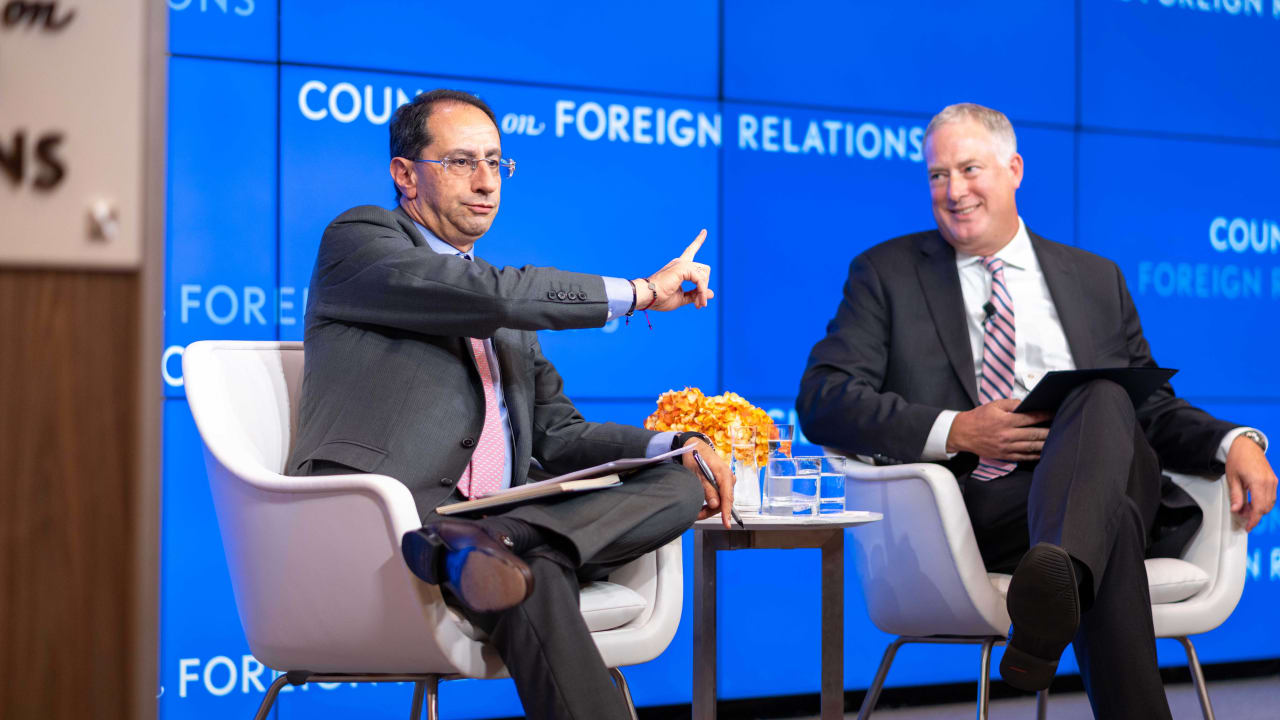
Event date
Speaker
- Vice President, Colombia
Vice President José Manuel Restrepo discusses Colombia’s new foreign policy, including its approach to U.S. bilateral relations, regional repositioning, and evolving views on security and prosperity.
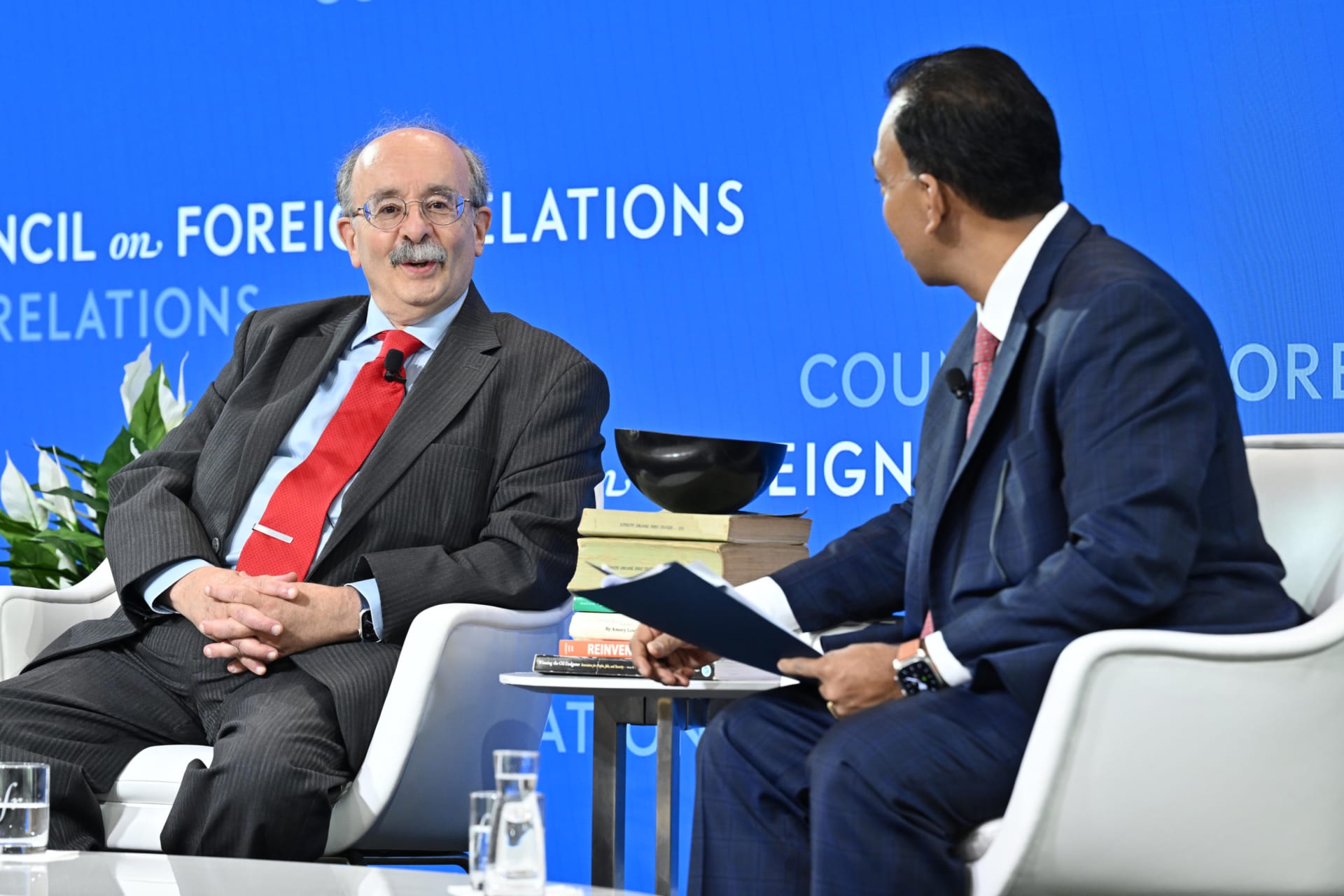
ERIKSON: Good afternoon, everybody. It’s really a pleasure to see everyone here. My name is Dan Erikson. I will be moderating this session.
I want to begin by welcoming you to today’s Council on Foreign Relations meeting with Vice President José Manuel Restrepo of Colombia. And we’re really delighted as well that the vice president is joined by his minister of finance, Minister Gomez, and Colombia’s ambassador to the United States, Ambassador Araújo.
I am a senior advisor at Covington and Burling, former senior director for Western Hemisphere affairs at the National Security Council, as well as a former deputy assistant secretary of defense for the Western Hemisphere, and I will be chairing the discussion today. I think everyone knows this, but today’s discussion will be on the record. And without further ado, I would like to say a few brief words about Vice President Restrepo.
On August 7, 2026, José Manuel Restrepo Abondano was sworn in as the vice president of Colombia, a term he will hold from 2026 to 2030. He is an economist, an academic, and public servant with more than three decades of experience in the public, private, and higher-education sectors. I know everyone has his bio in your packet; I would just like to highlight a few elements.
The first is he’s an extremely distinguished academic. With four different appointments in Colombia, he’s one of the few Colombians to have led four institutions of higher education, building a career devoted to talent.
In public service, he has served as the minister of commerce, industry, and tourism, a post he held from 2018 to 2021. He later served as minister of finance and public credit. In that role, he led the country’s economic recovery following the COVID-19 pandemic. His leadership was recognized internationally in 2021, when LatinFinance magazine named him Latin America’s best finance minister. And for all of us who know finance ministers in Latin America, that’s a competitive competition. So, congratulations!
This year, Vice President Restrepo was chosen by Colombia’s president, Abelardo de la Espriella, as the vice presidential running mate, and he was elected vice president of the Republic of Colombia with 12.9 million votes. From the vice presidency, he has been trusted by President De la Espriella with coordinating the government’s economic growth agenda and driving the engines that are required to raise investment, productivity, and competitiveness.
With that, Vice President Restrepo, the floor is yours. (Applause.)
RESTREPO: Thank you, Dan. Thank you for that presentation. I don’t deserve it.
And let me say hello to all of the members of the Council on Foreign Affairs. It is a pleasure—of Foreign Relations. It is a pleasure to be with you this afternoon here. And let me say also hello to the ambassador; to the minister of industry, trade, and tourism from Colombia.
So they told me that I only have five minutes. (Laughter.) So I’m going to check it. Five minutes. In five minutes, I would say that Colombia is now in a new moment, a moment of hope. Wherever you go, you see Colombians—actually, it was in the United Nations, and the lady—the lady who was serving us over there told me: You are a different people than we had before and we believe in you. We believe something is changing in Colombia nowadays.
So, why do we have hope? Because President Abelardo de la Espriella is answering to maybe the main things that we are suffering now.
One is insecurity, but that’s not the only one. Security means how to control again territories that were, I mean, in difficulties because of the terrorism, because of criminal groups, and so on.
But the second thing is that he’s again attaining integrity in the way to manage the public policy, to manage the country itself. So that means confronting corruption.
And the third one is because we are building the idea of our democracy. Colombia has had since the past the tradition of being the most powerful and historical democracy in Latin America. Well, he’s building on that idea, respecting institutions, respecting independence in Colombia.
Those are the three pillars based on which what we’re doing is getting more prosperity. But prosperity for whom? Prosperity for those who are suffering, for the most vulnerable people. So we think that in the last election we were deciding between no democracy or democracy. We don’t want that to be repeated in 2030. The idea is we want to preserve democracy. And the only way to do it is responding to social needs—social needs on health, social needs on education, social needs on public—on access to public services, responding to those needs of the most vulnerable people.
Saying that, we know that in order to preserve democracy we need to grow more. How to do it?
First, by attaining the idea of fiscal responsibility; so responding to one of the main problems in Colombia nowadays, which is again getting macroprudence in how we manage the public finances of Colombia.
And then, how to grow more. So what we’re doing now is a mission, a mission that was commanded by Abelardo de la Espriella to all the government on how to grow more. And how to do it? Just two ways.
One, turning on those sectors which in the past were turned off: infrastructure, mining, construction, oil and gas. And also, working on other sectors which could be a source of growth. That includes agro industry, industry, tourism, energy, and services based on knowledge. So nowadays we’re doing that.
At the end, the idea is to build this concept of a miracle nation. We have the idea that Colombia has a lot of opportunities. Maybe we have three extraordinary assets. Human talent is one, the other one is biodiversity, and the other one is different regions with a lot of possibilities. So what we’re doing now is taking advantage on that and building this miracle nation. And we are here in the United States with you saying that in order to actually be successful in this miracle nation, we need three things.
First of all, believe in Colombia, because this is a resilient country, and we want to do many things, and we know how to do it, and we have the possibility to do it.
Secondly, believe in the new government, which is believing in the private initiative, which is believing in democracy, which is believing in freedom in our country.
And then let’s work together, because the only way to attain a miracle nation is by working together.
Five minutes. Thank you very much. (Laughter, applause.)
ERIKSON: For those CFR members who didn’t believe in miracles, I think now we have one; we had a five-minute presentation at UNGA. Applaud for that. (Applause.)
RESTREPO: (Laughs.)
ERIKSON: But thank you. It really encapsulated, I think, a lot of the messages that you and the other members of your administration and President De la Espriella’s administration have set out since taking office on August 7.
I also want to acknowledge the earthquake that took place in Colombia very shortly after you took office. I know that created tremendous strain on your—on your government.
One question I did have for you—
RESTREPO: But, based on that, let me say something, because I want to express, I mean, how grateful we are with different people from around the world, and even the private sector in Colombia and around the world too, because we have received a lot of solidarity from the world, including the United States. Just from the United States, we have received more than $26 million and thousands of tons of humanitarian aid. Also, we received from the United States help in terms of rescue teams, rescue teams that saved lives in Colombia.
And this earthquake has been a disaster for the country. More than fifteen states of Colombia are in difficulties. More than 500 towns, which means almost half of all the towns in Colombia, have suffered. But we, as Colombians, as I said, we are resilient. We have the R in our front head. That R, that means that in the middle of difficult situations we always solve that and we always think about the future.
So, based on your support, we have done that. And we’re going to continue solving that problems and many other problems in our country. So thank you very much for that.
ERIKSON: Thank you. Thank you for that acknowledgement for the stakeholders that have participated and are participating in earthquake relief.
One question I had for you to start is the election in Colombia was actually quite close.
RESTREPO: Not so close, because—(laughter)—no, really. No, no, no.
ERIKSON: One percentage point.
RESTREPO: No, not really. And I’m going to tell you why, because those numbers could be seen as very close, but within those numbers there are two things that we have to say.
One is that in many places of Colombia votes were bought, which means that the people didn’t go to the election freely. They went because they received money, and we have shown that in many regions of Colombia. Let me give you one example, the Caribbean coast. In many towns over there, there was a problem.
And the other one, in the southern part of Colombia and in the Pacific of Colombia, we have seen—not myself; I mean the media, international media—they have seen a kind of a pressure from criminal groups to vote to the other candidate. So, in that way, at the end I would say that maybe the results are not reflecting the real results on the situation of democracy of Colombia.
But in any case—in any case, we, as a government, as a president and a vice president, we know that we have a constitutional mandate, which means that we are symbols of the national unity. And we will preserve that and we will respect that, because we—myself as (vice) president and President Abelardo de la Espriella, we’re democrats, which means that we respect democracy and we respect what the constitution says, being, as I said, symbols of the national unity. So we are going to work for those who voted for us and those who didn’t vote for us.
ERIKSON: And are there initiatives the government’s undertaking where you’ve been able to win or bring in support from members of the political opposition in Colombia?
RESTREPO: You know that nowadays in the Congress, which is, I mean, the place in which you need to build majority, we have a big majority, and that means that we have discussed with different political groups to actually attain a majority. Here the minister of trade knows about that, but it’s around 60 to 70 percent of the total members of the Senate and around 60 percent also of all the members of the Cámara de Representantes, which means that nowadays we have the majority in the Congress to govern. That is important, because it is not only to be part of the executive but it also means that even in the legislative we have the majority.
At the end, why? Well, because all of the people of Colombia are feeling the same thing. All the people of Colombia feels that we need security. I mean, that’s part of the story. When you—when you have situations like extortion in many cities of Colombia, you have a problem. When you have criminality on mining, narcotraffic, you don’t have the territory control of all the country, people don’t think like that because at the end they are not free. And at the same time, well, people in Colombia, in the majority, they thought that at the end the previous government didn’t give the answer to all their needs. So, in a way, they were expecting change, and now we represent that change.
ERIKSON: And you mentioned security now and in your opening remarks. I know you participated in the Shield of the Americas meeting yesterday with President Trump and other leaders from the region. What were your main takeaways from that meeting?
RESTREPO: First of all, that something has changed in Latin America and the Caribbean. And that means that there is a group of countries, of presidents, that share some kind of common values—values on the defense of freedom, values on the importance of the private initiative, values on respecting democracy and institutions. That’s something that hasn’t happened in the past. And if we don’t take advantage on that, we’re going to lose at least thirty years because that’s only going to happen maybe in thirty years. So, first of all, I feel that there is an important opportunity for the region. We are sharing the same values.
Secondly, that this idea of the Shield of the Americas is actually devoted to three things that we need to work on.
One is security. Why? Because criminality is becoming a transnational problem. It’s not a problem of Colombia, not anymore. Narcotraffic is not the problem of Colombia anymore. It’s the problem of Colombia. It’s the problem of Bolivia. It’s the problem of Ecuador. It’s the problem. in the frontier with Peru. It’s the problem with many other countries. It is related to criminality on migration, too. So I think that there is a common problem on security.
The second one is how to build this idea of multilateral cooperation. How are we going to work together in this new idea of multilateralism—on this multilateralism with results, not only speeches? It’s all results.
And then we are sharing also the idea on how are we going to work together on prosperity. All the region needs prosperity. All the region needs to increase productivity, to increase growth. And the region has to talk, for example, about common supply chains. So, how are we going to build together supply chains, which sectors?
Critical mining, for example. We all in the region, we have possibilities on copper, lithium, nickel, rare earth materials. And those are supply chains or products related to supply chains that actually, for example, the United States need. Why don’t we all create industries related to that? Why don’t we could be providers of those supply chains for the future of the region? We can—we can have a conversation on that because it’s going to be important for all. It’s a win-win-win-win relationship.
We are also discussing about the possibilities on technology. Why don’t we create datacenters of hyperscale? And we can create that. And through that way, we’re going to work also on energy. And through that way, we’re exporting; why not artificial intelligence in a—I mean, in a way, in abstract?
So the idea is how we can take advantage on opportunities that we do have, how to work together on the idea that security has to be the base for prosperity.
So, in my opinion, the Shield of the Americas is more than a group of countries together; it’s a group of countries that they all share similar values. They all believe in prosperity. They all believe in democracy. They all believe in security as a base for prosperity. And they all believe that they can work together in this new multilateral scenario in the world.
ERIKSON: Thank you.
I have one more question and then we’ll open it up to the audience for questions. But I did want to ask you about U.S.-Colombia security cooperation, knowing that myself and many in the room are familiar with Plan Colombia, which was initiated twenty years ago. It’s evolved over time. I think it’s had a lot of security benefits for the two, for the United States and Colombia, in working together. But the issue of reducing coca and cocaine production in Colombia has been an ongoing challenge, and the numbers are certainly up historically from where they were ten or twenty years ago. Does your government have a concrete plan to reduce coca production in Colombia?
RESTREPO: We don’t only have a plan; we have started. President Abelardo de la Espriella has started since the first day.
When someone asks me about narcotraffic in Colombia, my answer is you have to deal with that problem in many ways. First of all, how are you going to strengthen our public forces? To do what? To have again territory control. Because if you don’t have territory control, you have coca production in different regions of Colombia. That’s the case of Catatumbo. That’s the case in the southern part of Colombia.
So, how to deal with that? First of all, giving dignity to public forces. Then, giving capacities/capabilities to that public force in terms of technology, in terms of how are we going to strengthen their possibilities to respond.
And then you have—you need intelligence. That means information. But you also need to control the assets, the capital from drug dealers. And if you don’t have information, if you’re out from Egmont Group, for example—what happened during the last government—it is going to be impossible to have information.
And then you also have to apply extradition. Do you know that in the last forty-five days Abelardo de la Espriella has sent or has done more than eighty-five extraditions? It could be more than three times the number of extraditions that the previous government did in four years. And he has done that in forty-five days, which means that he is working on that. He is working in the control of territories of Colombia. Today he is facing a problem in Santa Marta, but he is there. He is pushing the public force to be there in Santa Marta to have the control of the city to avoid the problem. So that means that he has the authority, and he has the power, and he has the decision to actually confront those criminal groups. When you have—when you have done all of that, you are dealing with the problem. That’s the kind of thing that we’re doing, actually, now in order to confront this insecurity.
But also, insecurity is related to other things. It’s related to extortion. Where is the root of the extortion nowadays in Colombia? Incredibly, on jails. So what he is doing is moving prisoners from one jail to the other jail. To do what? To avoid the possibility of extortion to grow more.
And then we have the other problem, which is criminality related to illegal mining. That’s another problem. So what he’s doing, also again taking action in those places in which we find that kind of criminality.
ERIKSON: Great. Thank you.
Let’s open it up here. And we’ll start—all right. We will go to Alexandra. Please introduce yourself. I will also remind everyone that these questions in this meeting are on the record.
Q: Thank you.
ERIKSON: To you.
Q: Thanks, Dan. I’m Alexandra Starr with International—
RESTREPO: Can you—can you pull up your mic—
ERIKSON: Move your mic closer.
Q: I’m Alexandra Starr with International Crisis Group.
I wanted to ask you about the announcement yesterday on the Shield of the Americas, and in particular the statement that—sorry; there’s, like, an echo—(laughs)—the statement that criminal groups were now going to be designated as terrorist organizations. What specifically does Colombia get out of that move?
RESTREPO: I think it is very important, because you have to recognize those groups as they are. They are terrorists. What we are feeling in Colombia is that those groups act as terrorists. If they are terrorists, you have to call them in the way they are. They are terrorists. And that’s important, because that’s a way to confront that in this idea of transnational way to deal with criminality. If they—if they are not called on what they are, it is going to be difficult to control from other countries.
And when you have terrorism in, for example, Ecuador, and if you think that those groups are terrorists in Ecuador, if they are in the frontier and they move to Colombia they have to be controlled as terrorists. If you call them in the same way in Ecuador or Peru or Colombia, you are going to be able to confront that problem in the region. So, in my opinion, there is no other way to call them.
ERIKSON: Let’s have another question. We’ll start here, this gentleman. Ivan.
Q: Good afternoon. My name is Ivan Rebolledo. I’m with TerraNova Partner and proud Caleño de raíces.
RESTREPO: Ivan.
Q: Let me just echo what Dan said earlier. I want to congratulate your government. The reaction to the earthquake, particularly to the poorest state in Colombia, the Chocó, and your reaction and your intervention in that state has been quite impressive.
Mr. Vice President, I want to turn to multilateralism. Colombia sits on the Security Council until the end of this year. I’d like to get your impressions on your government’s analysis of the candidates that are running for secretary-general.
And then also, regarding the U.N. verification mission, do you expect your government to support a potential extension of that verification mission? And will you continue to support the 2016 final peace accords? Thank you.
RESTREPO: First of all, I’m not going to give you which is going to be candidate for Colombia for that, for the United Nations general secretary. Why? Because we are just discussing that, which is the best candidate in this moment. So we haven’t taken a decision up to now. That’s a role that is taking the minister of foreign affairs.
And talking about the mission, the verification mission, what are we thinking? And we have just had a meeting with the general secretary of the United Nations. And what we told them is there is a new government which has a different view on the idea that we need—and we have seen that it has to be done in a different way. So we’re going to take maybe a couple of days in which we are going to tell the Security Council on what are we expecting on this verification mission, and in what way we think that that verification has to be done.
But a point that we have raised during campaign is that any peace process in Colombia has to actually attain truth, justice, reparation, and non-repetition. Those are key principles in any peace process. So we have to allow any possibility of a peace process to actually attain those four things.
The other thing that we have said is, as I said before, this is a transnational problem. All of these criminal things are transnational, and we need a different way to measure the impact on what we are expecting with this verification mission.
And the other thing that I said to the general secretary—and that doesn’t correspond to the verification mission—is in the case of the other peace processes that we have—that we had, because it’s past—we are not—we are not going to continue in that. So that means that those other total peace processes that were developed by the previous government, they are not going to continue. Why? Because they don’t—they don’t have any vision. They don’t have any unity. They don’t have any order. They don’t have any purpose. So, based on that, what we are feeling—the people of Colombia is feeling—is that there is some kind of not the idea of justice—impunity, in a way—and we are not going to allow impunity in Colombia. And we are not going to allow these ideas that those criminals, who actually are criminals, were almost as seen as representative people from Colombia, and they were presented in the main squares of different cities, like in Alpujarra, in Medellin, almost like heroes. We don’t allow that, because that, again, is showing impunity in Colombia. We are not going to allow that.
ERIKSON: Mr. Vice President, as you know, this is a hybrid meeting, and so we have some people who are also watching online. And so we have one question from our virtual audience.
OPERATOR: We will take the next question from Michael Skol.
Q: Thank you very much. Excellent presentation. All the best of luck in what you’re trying to do in Colombia.
May I ask you about what you’re going to do and what you think is going to happen in Venezuela?
RESTREPO: That’s a good question—(laughs)—and let me—let me answer in this way. We hope that the reestablishment of democracy in Venezuela has to be done quickly, and we’re thinking that the things that happened with the United States when Maduro was removed was very important for the reestablishment of democracy in Venezuela. We also think that there we have a huge, an extraordinary opportunity for Colombia, because Venezuela has suffered during the last twenty-six years.
The GDP of Venezuela today is 25 percent on the one that they used to have twenty-six years ago. Based on that, where are they going to get food, medicines, basic goods for survival? Well, from Colombia. Who are going to invest in Venezuela? Who are going to send those goods to Venezuela? The easiest way is Colombia. It can come from American companies placed in Colombia. It can come from Colombian companies who are exporting. It can come from investors coming from the United States in Colombia, or from investors from Colombia.
So I think that we have a great opportunity for growth in Colombia. In my opinion, that could represent at least one percentage point in addition of growth for our country. But also, why not? There’s going to be the possibility to have access to gas, and this is a moment in which gas is scarce in Colombia. So there you could find a win-win-win relationship. It’s a win relationship for the United States. It’s a win relation for Venezuela. And it’s a win relation for Colombia. Let’s build in that way the future in this relationship. But, as I said before, we hope that the reestablishment of democracy could move faster.
ERIKSON: Thank you. We have a question in the front.
Q: Hi. Shannon O’Neil from the Council on Foreign Relations.
Let me just pick up a bit where you were just. We started off talking a lot about security issues, and rightly so, the first set of questions. But could we turn a bit more to economic issues for Colombia? You know, we’re seeing a global environment where there are a lot of economic headwinds for all kinds of countries, including Colombia. Whether it’s, you know, energy prices, whether it’s geopolitical sensitivities around foreign direct investment and the like. And we see a Colombia that has significant fiscal and other challenges. So, if you could talk a bit more about the economic plans for the government.
RESTREPO: That’s a good question. Let me answer in this way. The first thing that we have to do is to establish, as I said there, macroprudence. And macroprudence means how to deal with the fiscal adjustment that we need. When we arrive to the government, we receive a project of a budget for 2027 and the numbers for 2026. Those numbers were not correct. They were a kind of lies done by the previous government. The previous government didn’t include in the budget for 2027 salaries for public offices. They didn’t include, for example, expenses on education, on higher education. They didn’t include expenses on pension on the pension system. They didn’t include other kind of costs on health and many other topics. They didn’t include costs on interest on public debt. So at the end, what we wanted to do, and what we did, was to reveal the truth budget, the budget with the truth, which was true. And that’s what we did.
Of course, it was higher than the previous government. But in order to do that we also did two things. One, reduce expenses for this year. And in, pesos, this year we reduce more than twenty trillion pesos. It’s around $7 billion. And then we also reduce the budget for 2027 in more than 45 trillion pesos. That means around $14 billion, even though we still have a high fiscal deficit. What are we doing? Designing a path in order to reduce the fiscal deficit in the next four years. Which means that by 2029 we are going to attain again fiscal primary surplus. That’s the only way to avoid the possibility of an explosion of public debt. That’s what we’re doing now.
But, as I said before, austerity and fiscal adjustment cannot be the only way to develop a country. We have to grow. That’s why Abelardo de la Espriella built this idea of Mision Crecer, the growth mission. How to grow? As I said before, turning on those sectors which were turned off by the government—infrastructure, the sector of mining, the sector on construction, the sector on oil and gas. And work on other sectors—agriculture, by building this idea of clusters, like Altillanura cluster. We call it the Mato Grosso of Colombia. Doing something similar in services-based knowledge—knowledge-based services, tourism, and also on industry and energy. If we do this trying to attain 6 percent of growth, we are going to do something different.
You could say that is not possible. Well, there is a work by Michael Spence which shows that countries can get that. So that’s the idea of a miracle country. And there are a group of around ten countries that did it, including one Latin American, between 1950 and 1980, which is the case of Brazil. So it is possible. But to do that, of course, we need willingness. We need the tools. We’re designing the tools, including incentive for investment, including stability programs for that investment. Including, as I said, security, integrity, preserving democracy. So we’re working on that track, defining a kind of a portfolio of projects already structured to sell those projects to the world to potential investors.
And we’re also working in the modernization of the state. That’s the only way in which we can cut the red tape, those regulations that make difficult life for investors. And we’re also working how to develop the human talent, to produce a new kind of human talent in which that human talent is prepared on technologies from the fourth industrial revolution, including artificial intelligence—as President Trump says, superintelligence.
ERIKSON: Hmm. And, well, so President De la Espriella has a four-year term. And so are you trying to achieve the 6 percent growth between now and 2030?
RESTREPO: That is correct, yes.
ERIKSON: OK. Well, we look forward to inviting you back to see how that’s going, but definitely wish you—
RESTREPO: And we want you to go there, because the only way to do it is through investment. Today we have the worst number on investment to GDP in more than fifty years—fifty-one years. The last year in which we have had such a low rate on investment to GDP was with Alfonso Michelsen, many, many years ago. So we think that if we attract more investment internally and externally, that’s going to be the main driver for growth.
ERIKSON: Great. Let’s do—a lot of questions. I want to get to some people in the back. We’ll start over here on the left, and we’ll take two.
Q: Hey. Thanks for doing this today. I appreciate it. My name is Jason Asenso. I’m with Inside U.S. Trade.
And I also wanted to know a little bit more about Colombia’s economic plans, specifically the president in the aftermath of the earthquake called for temporary relief from the Trump administration’s tariffs. So, I wanted to know what Colombia’s heard from their U.S. counterparts on that offer. As well as if you could describe a little bit more the critical mineral investments that Colombia hopes to cooperate with Washington on.
ERIKSON: Let’s take one on this side as well.
RESTREPO: So that’s about tariffs?
ERIKSON: Yes, please.
RESTREPO: Tariffs and mining, yes?
ERIKSON: Yes, tariffs and critical minerals. OK, and then—yes, please.
Q: Hi. Michelle Caruso-Cabrera, longtime business journalist.
You reference the lack of productivity growth in Latin America generally. Could you talk more about how you hope to improve productivity in Colombia? Is it through all the efforts that you’ve already described, or are there other ways to improve it?
ERIKSON: Good. We’ll just—not to overload it, we’ll do tariffs, critical minerals, and productivity.
RESTREPO: OK. Of course, for any country, tariffs is—it could be a problem, especially if they are not allowing you to be competitive. So what we’re discussing with the United States is the possibility of having a kind of a deal in which—or, by which we can reduce those tariffs. That’s something that is today in discussion with the United States. We will see how it is possible, or not. Of course, if you have types on 12.5 percent, that is affecting sectors, important sectors of Colombia, like flowers, coffee production, for example, fruits production, including avocado, and many other fruits. And that’s affecting different regions of Colombia. And it’s affecting Colombia because other countries in the region have different types. Is the case of Ecuador, for example. So what we need is something by which Colombia could be a more competitive country. The minister of trade is working on that. So I think that we depend on that discussion with the United States government.
Secondly, critical mining. First of all, for the government of Abelardo de la Espriella, we don’t believe in that idea that has been raised by the last government of degrowth. We believe in growth, not in degrowth. We think that degrowth is a little bit stupid policy. In our opinion, that means that we have to grow through different sectors. You cannot attack those sectors. And that includes especially mining. So for the government of Abelardo de la Espriella, that’s a key sector that has to grow. That’s why, since the beginning of our government, we have issued approval on at least ten new mines in Colombia. And in our opinion, that’s the only way to deal with sustainability.
The previous government attacked this sector and illegal mining grew. When you go, for example, from Choco to Bogota, you see all the rivers with problems on illegal mining which, as I said, is connected with criminality. So what has happened? That the previous government has been the worst government in the recent history in terms of deforestation. We are not going to do the same thing. We are going to actually attract formal mining, the only way to deal with deforestation and the only way to build the idea of sustainability. In which sectors? Gold, copper, nickel, lithium, rare earth materials, products that could be part of this idea of building relevant supply chains in the region. That’s where shield of the Americas is proposing too. So that’s the idea that we have in the next future in that sector.
Productivity. Productivity is an issue. It’s an issue for all Latin America. There is a study done by McKinsey which shows that during the last fifteen years developed countries grew two-thirds on productivity, one-third on the increasing of human talent. In our case, in those fifteen years we grew two-thirds on human talent, one-third on productivity. If we want to continue preserving a sustainable growth and the potential growth to grow, that is not possible anymore. Why? Because it’s a change, a demographic change in our countries. You know that the replace rate of natality, yes, in Bogota is 0.8. In Medellin, 0.9. Less than the fertility rate in Japan, which is one of the lowest fertility rates in the world.
So what are we doing? The only way to grow more and not reduce the potential growth of the country is by increasing productivity. How to do it? Working on infrastructure. Working on new technologies. Developing new ways to educate and train the human talent of Colombia. Improving the modernization—or, doing the modernization of the state. Reducing the red tape in the economy. So working on all those issues related to competitiveness. Facilitation of trade, for example. Those are the kind of things that we’re doing to actually increase productivity. And that idea is included in our new decree for the vice presidency. It’s not because I am going to do that. It’s because in my leadership I have to work with different ministers, different national agencies, to actually attain those things that can allow us to increase productivity in Colombia.
ERIKSON: Excellent. Thank you. I know we’ve got one question from our hybrid audience.
OPERATOR: We will take the next question from Sophal Ear.
Q: Thank you, Vice President Restrepo. I’m at the Thunderbird School of Global Management.
And my question is, since your administration claims the previous fiscal deficits were masked by omitted structural obligations, like public sector salaries and pensions, how do you plan to reconcile these massive budgetary shortfalls without triggering severe social unrest through deep spending cuts or abandoning your campaign promises against raising taxes?
RESTREPO: It is important to say something, that the majority of that expense comes from difficult decisions of the previous government. One is increasing public debt, increasing the risk of the country. And by that way, there are less space for social expenditure and more on expenses on interests. That’s why the relationship on the interest to the budget has increased. So if you send the message of trust, send the message of confidence, you can reduce that cost by reducing the premium risk of Colombia. And how to do that? Actually, with the stability fiscal adjustment plan. We are doing that.
Secondly, we have to reduce costs in many of those contracts for people who actually don’t work in the ministries. They don’t work in the agencies. They didn’t go there. You don’t see them because it’s just to get votes politically. So at the end, it’s not something that you need, actually. Secondly. Third, you have to be more efficient in some of the expenses that you have. And by being more efficient, that means that you can get more productivity on the amount of expense—of the public expense that you have. And you have to expect more accountability, for example, on the investment costs that you have.
It’s not spending and spending that you are going to grow. So, in my opinion, maybe it’s the contrary, by being more efficient on public expenditure you can grow more, and you can create more employment, and you can do more investment for the social needs of the country. Which means that we are not going to reduce that social expenditure which is needed for the most vulnerable people.
ERIKSON: Mr. Vice President, we have a lot of questions left. We’ll go—I see two here, and then I’m going to take the privilege of adding a third, and then we can have a roundup. We’ll start here, please.
Q: Hello, Mr. Vice President. Nelson Cunningham, formerly with the State Department. Before that, McClarty Associates. Mi hermana minor es Caleño. (Laughter.)
In the recent months, the U.S. Navy has been firing at ships and boats coming off of the Colombian coast. And it appears that Colombian citizens have been killed in those actions. What is the position of your government with respect to those boat strikes?
ERIKSON: Thank you. Then we had one other question right over there. Thank you.
Q: Hi. Thank you. Sergio Botero with Pfizer. Also Colombian.
RESTREPO: Sorry?
Q: Colombian.
My question is around health care. We had a system that was talked about in the world as exemplar in the partnership that it had, public-private. And it was dismantled, essentially. Would love to hear what the plan is to rebuild and evolve, perhaps, that system.
ERIKSON: Great. And then, just as an effort to keep us on time, I’m just going to toss my question in with this as well.
So I’ve had the opportunity to work for vice presidents, and also the opportunity to work for presidents. And I know the presidential-vice presidential relationship can be very unique. And it seems to me that you have already a somewhat unusual arrangement with President De la Espriella. I understand he’s planning to remain in Colombia during his term, so you will be traveling internationally, be the international face of Colombia, as you are here at the United Nations General Assembly. And of course, you have got a big portfolio, largely economic but extending to other areas. Could you characterize for us what your relationship is with President De la Espriella? And maybe start with that, and we can go to the other two questions.
RESTREPO: No, let’s—
ERIKSON: Or go in order. OK, fair enough. Let’s start with the Caribbean then.
RESTREPO: (Laughs.) Just about the Caribbean. I mean, the decision that we have is, any kind of control to avoid the possibility of having drug production and drug commercialization in Colombia, we have to do as much as possible, respecting constitution and respecting the law. And we’re going to do that. That’s maybe the main point, is confronting narcotraffic, according to the constitution and according to the law. That’s our decision, the Colombian decision.
Talking about the health case, yes, it’s a big problem. Actually, the President Abelardo de la Espriella has said something about that during the last Cabinet of ministers. He has announced the short-term plan for the health sector. And that plan includes how to get more money to send that money to the system. Because at the end, the system is suffering from liquidity, lack of liquidity. That money has to go actually to attain the possibility to reduce that problem that 90 percent of the population in Colombia are not getting access, full access, to medicines nowadays. Which is something complicated, because that costs lives.
At the same time, we have to give that money to pay wages and salaries from medical—from the health personnel that we have in the system. They are not receiving the money on what they work. And that’s something that we cannot allow in the system. So at the end, it’s giving liquidity to the system. But, of course, we have to deal with the medium-term and long-term problem. That’s what the minister of health is doing. By the way, she’s an expert on this sector because she has worked for many years on the sector. And what she’s doing is checking again, revising how is the UPC, Unidad de Pago por Capitación, which is the way in which we pay the system, pay the hospitals.
Then she’s also working on how to deal with corruption in the system, how to deal with the lack of technology, because of that lack of technology the minister of finance not always knows how much to pay to the system. And then there are debts that are coming from the past that have to be paid. So the minister of finance and the minister of health are designing which is going to be the method to pay for that. It’s more than that, but those are key things in the development of this plan.
And finally, then, I think that this vice presidency maybe is different to the other vice presidencies. And in my opinion, I don’t want to be as other vice presidents in Colombia. None of them. I want to be a different vice presidency. So in the discussion with President Abelardo, once he told me—or, he asked me which minister do you want to have? And I said no one. I’ve been minister of finance. I’ve been minister of trade. I don’t want another minister. What I wanted to do is to use two powers that the vice presidency has. One is the power of articulation and the other one is the power of service.
The power of service means to be with the people, means to be with the private sector, means being with the academia. And the power of articulation means that we, as a vice presidency, we can work together with all the ministers, with all the agencies, with the private sector, with external sector, working together. That power is very important in public management. Maybe at the beginning, no. But at the end, the ministers work on their problems, and sometimes they don’t know how to do it with problems which connect the minister with the other minister. So that’s the power of articulation. That’s what I’m doing. That’s what Decree 1373 is doing in my vice presidency.
But he gave me a mission, work on growth and productivity. Why? Because growth and productivity requires to work together with all the agencies and ministers, with the private sector, with the academia, and many other—even the external actors. That’s what we are doing now in Colombia with the vice presidency. Of course, this relationship is based on the idea of respect. I respect that he is the president. I am the vice president. But he is the president. He is the one which has been elected to be the president. And I respect that. And I work on that idea. And I know my role. And I know what is the kind of thing that I can do. And there is one thing that he’s giving me the opportunity, for example, to be here today. Because, yes, he has pledged to be in Colombia during all his period of time—period of time of presidency.
Why? Because of the dimension of the problems that we’re facing in Colombia. Because he wanted to be with the people of Colombia, with the people which is suffering in Colombia, solving those problems on insecurity, health, education, fiscal things, et cetera. So he’s doing that. And that’s why I’m here in this moment representing him. Which means that I am not here as the president. I am here as the vice president of the country, believing that he has, I mean, this possibility to build the miracle nation. And I am working with all ministers on the idea of building Colombia as a miracle nation.
ERIKSON: Well, Mr. Vice President, the Council on Foreign Relations has a long and storied history of engagement with Colombia, but I think tonight’s conversation has certainly been a highlight. We certainly do hope that we can welcome you back to CFR in the future. But thank you for your comments. And thank you to our in-person and our virtual audience. (Applause.)
(END)This is an uncorrected transcript.