Religion and Foreign Policy Webinar: Faith-Based Humanitarian Aid and U.S. Foreign Policy
Event date
Speakers
- Senior Vice President and Chief Impact Officer, World Vision
- Former Deputy Assistant Secretary of Defense for Global Partnerships, United States Department of War
- Chief Executive Officer, Malaria No More
Presider
- Fellow, Council on Foreign Relations
From RFP Calls.
FASKIANOS: Welcome to the Council on Foreign Relations Religion and Foreign Policy Webinar Series. I’m Irina Faskianos, vice president of the National Program and Outreach here at CFR.
As a reminder, today’s webinar is on the record, and the video and transcript will be available on CFR’s website, CFR.org. As always, CFR takes no institutional positions on matters of policy.
We are grateful to have Margaret Schuler, Bill Steiger, and Michelle Strucke here with us to discuss the current outlook of faith-based humanitarian aid and U.S. foreign policy.”
Sam Vigersky will moderate today’s discussion. Mr. Vigersky is a fellow at CFR where he focuses on humanitarian interventions, UN reform, and public-private partnership in crisis response. Previously, he was the senior humanitarian advisor to the U.S. ambassador to the UN, where he led humanitarian policy and resolution negotiations in the UN Security Council and General Assembly. He also worked in the U.S. Agency for International Development’s office of foreign disaster assistance from 2014 to 2019, developing and managing programs across two dozen countries.
I will now turn it over to you, Sam, to introduce our distinguished panel and engage them in conversation for twenty to twenty-five minutes, and then we will turn to all of you for your questions and comments. So we look forward to hearing from you once we get to that point. So, Sam, over to you.
VIGERSKY: Thank you so much, Irina. Welcome to all those joining from the United States and around the world this afternoon. It is great to be with you. We have an extraordinary panel to discuss a topic that is really of the utmost importance at this moment and that is the role of faith-based organizations in delivering U.S. foreign assistance.
Before I introduce the panel, let me just quickly scene-set where we are today. After the dismantling of USAID, the Trump administration has slowly and quite intentionally set forward a series of policies that rebuilt global health and humanitarian assistance.
The first started in September 2025 with the America First Global Health initiative that has set up over two dozen memorandum of understanding between the State Department and recipient governments about how U.S. global health will be delivered.
In December of last year, they set a new grant to the UN Office for the Coordination of Humanitarian Affairs—UN OCHA—that is being implemented across twenty-one countries for lifesaving humanitarian aid.
And in August, a new initiative was launched by the State Department for faith-based organizations. This was $2 billion—1.4 billion (dollars) of it went directly for global health and the other 600 million (dollars) went to lifesaving humanitarian aid.
There is so much to unpack about this, and we are very fortunate that the three panelists can come at it from many different angles, so let me just introduce them.
Dr. Bill Steiger is the CEO of Malaria No More. He formerly served as chief of staff at USAID under the first Trump administration from 2017 to 2021.
Margaret Schuler is senior vice president and chief impact officer at World Vision, a Christian humanitarian organization operating for over seventy-five years in nearly one hundred countries.
And Michelle Strucke is a senior fellow at the Truman National Security Project and former deputy assistant secretary of defense for global programs.
Bill, I’m going to start with you, given your background as a bridge between past and present. I wonder if you can just help us unpack what the Trump administration is doing when it relates to faith-based organizations, how do they see their role in delivering global health and humanitarian aid, and if you can tell us, you know, what makes faith-based organizations, from where you sit, different than secular organizations that have also done this exact type of work?
STEIGER: Great. Thanks, Sam, and thanks to the Council on Foreign Relations for including me, and for doing this series and this particular webinar. It’s a really, really important topic.
I’m going to work backwards, if that’s OK, on your question, Sam. I’ll start by saying that faith-based institutions of all sects have been an integral part of American foreign assistance, particularly American international assistance on health and humanitarian response for decades. There is nothing new about what you just outlined.
And the reasons for that are pretty simple. There are two primary ones. One is that faith institutions all around the world, in many countries, have the trust of the people they serve to a greater degree in many cases than private or governmental institutions or secular institutions have.
They are rooted in community across generations, and that connection with people, families, larger communities, means that they’re often more effective in introducing new innovations and new interventions and getting people to come in for care and following people up for care and in transmitting information to them that they’re willing and able to receive.
The second is geographic scope. In many places, faith institutions represent from 30 to 50 or more percent of the delivery of health care in normal times that’s often surged in times of crisis, and if you look at the American—America First Global Health Strategy, there’s a table in the strategy that lays out for sub-Saharan African countries those very high percentages of care delivered by faith-based institutions.
And those institutions, particularly mission hospitals and clinics, are often very far out into the countryside. They’re out where people live, far away from cities, and in many cases are the only opportunities, the only avenues, of care that people have.
In a number of places, governments have been wise and are integrating those faith-based institutions into networks of referrals, into the public health systems—public sector health system in a way that provides both funding to those faith institutions in exchange for the services they provide in some cases, but also clear referral pathways if patients need to move up the chain to secondary and tertiary hospitals.
So what is this administration doing? As you noted, the America First Global Health Strategy has a special section on faith institutions as part of the delivery of care and prevention, which is wonderful, and they have put money behind that rhetoric.
So we saw, as you noted, several awards go out in the last few months. We’re going to hear about one particular very large one to World Vision, which is a fantastic organization working many places around the world, and others are through Catholic Relief Services, and there’s a pot of about 500 million (dollars) yet to be determined meant for faith-based health care, and that’s both for humanitarian and what we might call regular order of business health care.
So the idea is to leverage these relationships that these faith institutions have, connect them into the funding that is going through governments and other institutions in the memorandum of understanding you mentioned, to try and provide a better integrated, more networked response, but one in which the United States is no longer the primary funder.
So all of this is meant to be part of a larger transition that I know we’ll talk about away from donor dependency towards self-sufficiency, and I agree with the administration that faith-based institutions are part of—a key part of that transition to national health sovereignty.
VIGERSKY: Great. Thank you, Bill.
So, OK, Margaret, Bill’s talking about the trust that faith-based organizations like World Vision have, the geographic reach. I think I’ve read something between 30 (percent) to 40 percent of hospitals in sub-Saharan Africa are being managed by faith-based organizations. To the extent that you can, talk to us about what World Vision has agreed to with the Trump administration on both the global health side and the humanitarian side. What are these awards that you’ve accepted money for? How are they rolling out? You know, where are they geographically? And how is it going so far in the first few months?
SCHULER: Great. Thank you so much, and thank you, Sam, and the Council on Foreign Relations for having me on this panel. And thanks, Bill, for setting the stage so well.
If I go back to 2025 when USAID was dissolved and many, many of our programs and other partner programs were canceled, there was a real concern by humanitarians that the people that needed the services the most in global health, for example, and in humanitarian response were now not receiving services that were so desperately needed.
And so World Vision and many organizations engaged with the new U.S. administration, engaged with the new State Department offices, especially the Global Health Office, the Bureau of Global Health, Security, and Diplomacy, and the DHR, the Bureau of Disaster and Humanitarian Response, to try to figure out how we could help resolve the issue and get resources back out to the people who needed it the most.
And so one of the—one of the ideas that some of us had, especially given that a number of the human capacity and a number of staff had been let go and there was a capacity gap, we went to the U.S. government and talked about the need for maybe a consortium approach, a consortium approach that allowed some of that management burden to be taken on by experienced organizations like World Vision.
As you said, we’ve been operational for seventy-five years in some of the hardest places to reach around the globe, and we believe that we could bring that capacity, experience, and boots on the ground to the table to help.
But the other way we felt we could help was by mobilizing faith-based organizations both in the U.S. and across the globe at the community level, and being able to tap into those networks and that trust that Bill mentioned and being able to leverage that so that we could respond quickly to global health and humanitarian needs around the world.
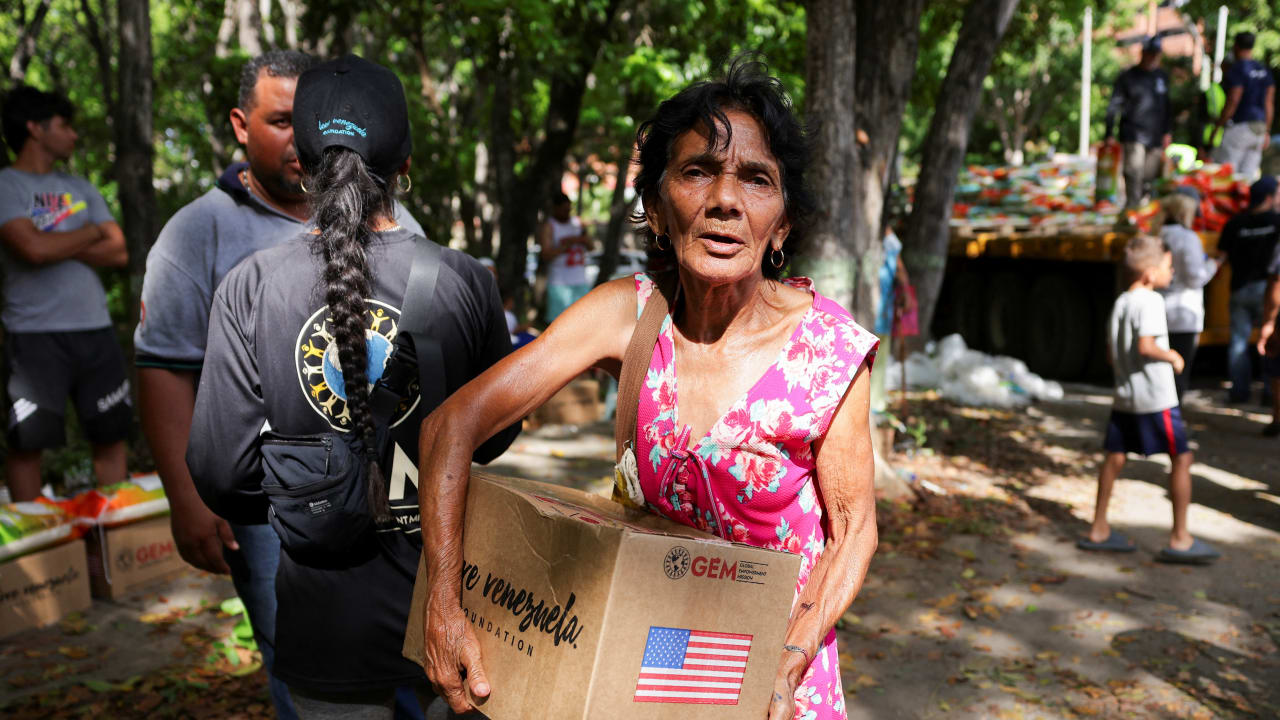
And so what World Vision did in cooperation with these two bureaus is put together a consortium. So there were two grants awarded—now to get a little bit specific, there were two grants awarded. One was called the Faith and Community Initiative that’s been funded by the Bureau of Global Health, and it’s a $250 million award for the first year, and we’ve just started implementing.
We also heard about these memorandums of understanding that were signed with certain governments for health services, and this program is kind of a complement to that but at the community level.
So it’s very exciting that we’ve been able to put this grant together. It’s focused on sixteen African countries plus the Philippines at the moment as it kicks off. We have eight primary implementing partners and we aim to reach 22 million people annually, and the exciting part of this grant is really that local ownership that we’re trying to build, and a planned transition to durable local leadership over time.
So that’s the Faith and Community Initiative, which we can talk more about some of the specifics.
The other consortia that World Vision is leading is the RISE consortium, which is a humanitarian response consortium in partnership with Accord Network members, a faith-based consortium of humanitarian organizations with two of our primary partners being Compassion International and World Relief, and that’s a 238 million (dollars) one-year award, and we aim to reach about 7.5 million people in the first year, and we hope to leverage, again, that network of local institutions on the ground that we can immediately engage to respond to emergencies when they hit.
The initiative will foster preparedness in countries and rapid response as well as support more sustained humanitarian crises in key countries.
So those are the two awards that World Vision and its partners have been provided. One point I’ll just add on the local partnerships for the Faith and Community Initiative—the global health initiative—is that we’re currently in co-creation mode in those seventeen countries in partnership with governments and local partners.
So through that process, we’ll be able to identify partners that we can fund, going forward. So those are the two grants, in a nutshell.
VIGERSKY: All right. Thank you, Margaret.
So the Faith and Community Initiative, the RISE initiative, these are consortiums where you’re essentially a prime taking this money on. You’re working with local organizations. When I hear that, I think about what the State Department did on the humanitarian side last December with UN OCHA. They’re putting money into a large pool fund. And essentially, this is an offshoring, in some ways, of the responsibilities hundreds of people used to do at USAID as grant managers into NGO consortiums. What I’ve heard from the State Department over the last year-plus is that the prior model was wasteful and inefficient and this new model is more efficient and quicker. So, Michelle, I’d love your take on how you compare what happened before with the old way and the old model at USAID where most of this was being managed in house to this moving of grants offshore, and whether you think that this is a more efficient and effective model to deliver both global health and humanitarian aid.
STRUCKE: Well, thank you so much, Sam, and thank you, Bill, and thank you, Margaret. You’ve both made really important comments, and I’m really glad to be here today.
One thing, I think—a couple of points. The devastation that happened in terms of a kind of human brain drain that Margaret was briefly mentioning that happened last year in 2025 when USAID was dissolved is really important.
That’s not to say that the U.S. government had all the answers when it came to delivering humanitarian aid or lifesaving aid. It’s not to say that any institution was perfect before. I think many people like myself that worked on aid reform for many years have always wanted it to be the most efficient and effective and dignified as possible for the recipients that are receiving aid because that is something that is of utmost strategic and moral importance to the United States and to our partners and allies around the world.
That being said, the fact that so many people who had, you know, these professional backgrounds in delivering professionalized humanitarian aid were let go and cannot be rehired, and those functions were then, you know, redistributed to people at the State Department who, granted, I, you know, have the utmost respect for my colleagues at the State Department, former colleagues as well. But they were not specialized in these topics.
That has caused, you know, issues with professionalization that I think are worth noting because no NGO, no matter how large—and I sit here humbly with World Vision as, you know, one of the world’s largest NGOs—no matter how large, they will not be able to meet the capacity gap that is lost by that dissolution.
So, you know, a few points on that. The global humanitarian ecosystem—this is something I’ve spoken and written about in the past—is incredibly fragile. It’s one where, just given the models, they’re lean organizations that are working to deliver humanitarian aid.
That means they try not to spend too much on overhead, on salaries for their people. People are often wearing multiple hats. They are, again, highly professionalized. But the ecosystem itself just doesn’t add up to the gap that is lost.
And so one thing I experienced when I served in government—as you mentioned, Sam, I was the deputy assistant secretary of defense for global partnerships under the Biden administration. That was a defense role that was the lead policy person for humanitarian assistance, and we had some incredibly historic crises that I worked with USAID in partnership on in that role.
One point that I think was always really important that I would make in the Defense Department was that humanitarian aid delivery, in order to be dignified and to meet the incredibly high standards that we have as a community developed over the years, there are real consequences if people with the wrong—not wrong, but who don’t have that specific training are the ones that are delivering assistance.
So, for example, if a person was, as happened with DOD, working to set up an area for, you know, refugees to come in a building, it was really important that they understood the impact that would have on families and women, men, children, as opposed to what that impact would have when they were just setting up a room to be able to fit military-age men. That’s one example.
Obviously, State Department folks are trained generalists in other areas, but the real-life consequences to people that are receiving aid if they don’t have that expertise are dire.
So I certainly welcome all funding that has been given and, as Bill said, faith-based organizations are some of the top professionals in this field that I certainly look up to. There are no strangers to how to deliver principled assistance, but they—and, of course, that aid is not new. It happened under the Obama administration. They were partners in really every administration that’s delivered aid, the Biden administration as well.
So Democrats and Republicans have both all had these incredible bedrock partners. But the aid cuts that we haven’t gone back to have had a really big impact. Having an organization like World Vision or others have to stop their partnerships and then start them up again, that has a cost on the organization.
It has a cost on the recipients, and that kind of monetary gap also, the shortfall in aid funding that we’re seeing right now, is something that has impacts on real people’s lives who are in, you know, historically dire circumstances right now with more than a hundred international conflicts happening right now and record numbers of humanitarian people in need of humanitarian aid.
So important partners, important progress, but I would just say all of us, I think, what impresses me in our field is we know this is not enough. Anything we do in the humanitarian aid space is not enough for the needs that everyone is seeing.
I think those overall shortfalls are also really important to emphasize as the Trump administration thinks about how they continue to make these types of investments and who they partner with and how.
VIGERSKY: Yeah, I think, Bill, that’s a good segue maybe to a point you’re bringing up about some of the transitions that the Trump administration is looking to make long term to wean countries off what is being described as aid dependency.
Obviously, there’s no shortage of needs right now. But one thing we heard in the America First Global Health Strategy from the Trump administration was there had to be matching—not matching dollar for dollar but some sort of money put up by recipient countries. There had to be sunsets in there.
So looking out into the next year or two, what are the metrics or benchmarks you would be looking to for those transitions to start taking shape in some of the recipient countries, and how do we know those countries are successful in taking on these types of global health programs that the U.S. has been supporting for so long?
STEIGER: Thanks, Sam. I’ll touch on that from two angles. One is a programmatic one and one is a financial one.
So our contention is that we will be able to judge the success of the America First Global Health Strategy first based on malaria, that this is the disease area that will respond most quickly to interventions on the positive side and also the one that can most easily quickly get out of control when we are not attentive or are distracted, or fail to deliver money and supplies on time. So we think 2027 will be a key year for us to check whether things are working and on track by whether malaria sees resurgence in a number of sub-Saharan African countries.
The financial part is also very important. Next year, beginning in the first part of the year, actually into the middle of the year, we should begin to see whether national governments are actually starting to comply with and meet their financial commitments made under the MOUs. Are they, in fact, participating as co-funders in the purchasing of, say, bed nets or antiretrovirals through now the Global Fund as the primary U.S. government procurement channel? Are we seeing them increase their ability to bring on community health workers and other health staff onto public rolls as promised under the plans? Are we seeing extension of coverage in a way that follows the plans that are laid out in the MOUs and their implementation documents afterwards?
So yes, it is—it is partially about money, and that co-financing requirement is really crucial under the—under the MOUs. It is not as hard and fast a requirement as under the Millennium Challenge Corporation compacts, for example, but it is a commitment by national governments to meet these increasing funding thresholds over time.
And then there’s also a programmatic way of measuring success, and our contention is the first way we’re going to tell success or failure under the strategy will be malaria.
VIGERSKY: Well, it’s quite convenient that you happen to be working at a malaria organization—(laughs)—that you can make the case for that next year. I like it.
So, Margaret, you’re—I feel you must be a bit on the hot seat at World Vision. You’re taking all this money. There’s a lot of pressure to deliver in the coming year, and as Michelle said, there are no shortage of needs to deliver on.
So what are, if you can, some of the reporting benchmarks and requirements that you’re looking at, let’s say, in ’27, that you’ll be talking back to the State Department about your own performance, about these coalitions you’re building to deliver?
You know, how will we know you’re successful?
SCHULER: Yeah, great question, and, you know, it’s important to recognize that these—the expectation of these grants is that they move very quickly, right, so and we have—we have large targets to meet, so 30,000 community health workers, strengthened systems at health facilities at the local level, and for the humanitarian grant, new partners, capabilities built. And so there’s a lot of focus on rapid response and how fast we can get the funds out the door and to reach the most vulnerable.
There’s also a requirement related to overhead, eighty/twenty, for example, with the global health initiative, and so the intent is to get the most resources out to the people who need it the fastest.
And so, you know, there’s a cost share required, so when we’re designing—when we’re co-designing these programs in the field with the health departments and the government departments, we’re looking at which share each can take, and so the targets are set together.
And when we talk about the global health program, the transition and the vision for that transition starts from the beginning of the design of the program in countries. So that transition to more local ownership, strengthened health facilities at the community level, linkages to one plan within a country, not developing a parallel program, all those things are written into the initial plan and we’re going to be held accountable for that.
The other thing we’re held accountable for is building capacity of local partners both in the global health program as well as the humanitarian program. And so, you know, I like this focus on capacity building, strengthening systems, ensuring that the partners who—some of these partners have never had or never overseen a U.S. government grant, and so we’re working a lot on strengthening their—strengthening their capabilities in things like financial accountability, safeguarding.
And so at the end of these programs, I think we’re going to have a strong cadre of faith-based organizations that can deliver into the future, and we’re being held accountable for numbers of partners, the rapidity of which they can get mobilized, their capacity, and that we’re able to hold them accountable for delivering those results on the ground.
Going directly to local partners and expecting them to—understanding that that would have some risk without building their capacity first, I like to focus on taking time to build capacity and have some oversight and accountability mechanisms in place to deliver strong results in the first year.
VIGERSKY: Really important point. I know that the localization debate has been live for not just the last few years but, obviously, going back decades.
Michelle, what do you think about that particular argument of this type of funding channeling to build capacity? Are there certain benchmarks that you’re going to be looking at for localization?
You know, 15 percent local actors taking on some of this money? Twenty percent? How do you see the path forward in terms of doing more local work, mostly on the humanitarian side where that’s been focused but also in the development public-health side?
STRUCKE: Yeah, and thank you for that question.
This localization is something that is so absolutely critical in both global health and humanitarian because I think probably all of us in this conversation just understand how detrimental the parallel systems’ effects can be on a country when people—I think of it like this.
The—if you are investing in a local system, those are the people that are there to stay. They’re the ones who a local person who is in need of assistance will trust. Their people—their expertise that will stay—ideally, usually anyway, will stay in a country long after internationals have left.
And that is so critical to being able to build the resilience that it’s clear from these type of policy, you know, requirements that are in the program that World Vision is implementing have been things that have been talked about for years as best practice. So I think that the, you know, capacity building as a requirement is really important. The accountability for results is something that’s really important, and system strengthening.
One thing, though, about capacity that I think is important for people to think about is that there have been models in the past that organizations like Save the Children were piloting where essentially they were kind of switching their model from being a—taking on an oversight role and really, like, making the decisions on the implementation of a grant and having their implementing partner be the one that, you know, executes it in the field, and that’s their primary function.
They were switching to be more like a back-end support, and I think that that is something that the examples that Margaret gave I think were really helpful because those functions of building capacity for organizations through using the really targeted expertise that a long-time partner of the U.S. government has in contracting and grants management and the kind of back-end work is a really appropriate role, whereas the—and I think that one thing that’s important to emphasize is that any—when you’re looking at localization, to me, it’s really essential to ask people, has their input—local actors—has their input in decisions actually led to a change in the priority of the program or not.
I actually think that’s one of the most important questions in all of aid with the U.S. government, just considering the many, many requirements that come bureaucratically from everywhere from the appropriation of funds by Congress and authorization of what the money can be used for all the way to the prime grantee who is—has an accountable role to call the shots for what that program does.
None of that centers the actual person on the receiving end. I saw this firsthand in Ghana when I was looking at a USAID program that was specifically localization focused, and yet one of the implementing kind of leads on the grant that was a U.S.-based organization thought that a local council was being difficult because they were sharing their opinion about their own people’s needs.
And so, to me, that’s the opposite of what we should be looking for. When building capacity, the metric should be focused on whether local actors are gaining a decision-making foothold, not just whether they’re more active or more—you know, maybe a bigger organization, or they mirror U.S.-based organizations, because that can be dangerous, too, as no cookie cutter approach really exists in these circumstances. If you try to compare aid in Mali to aid in Egypt, you’re going to see something very, very different.
So it’s very important that that really subtle difference of if you’re attempting to build a pipeline, are you helping an organization get a decision-making role in their own people’s future, and number two, are you helping them with financial sustainability?
Because at the end of the day, the power dynamics in the aid system are such that you have people who are in need, which puts them in a vulnerable position, which means they have to ask for funding, and they have to, in many cases, subordinate themselves to those who have the money—and I apologize for sounding crass, but I think that’s the easiest way to explain it to the listeners—that means that they are always going to seek ways to please the donor as opposed to putting their people first, and ensuring that they have—you know, the burden sharing is helpful, cost sharing, having all of that be part of the plan makes sense, but is there any kind of, you know, off ramp and replacement for the funding that they are getting built in.
And that’s why the administration in the past, people working on localization started working on tax mobilization, on domestic revenue mobilization. That might sound to the listeners like something totally outside of the scope of humanitarian aid. Why would you talk about taxes?
But the reason is because if you really want a local system to function and provide services, it needs to have independent—its own sources of revenue to be able to support that, even in emergencies.
So I’ll stop there, but I think this is a rich question that we could probably talk about for hours.
VIGERSKY: Absolutely, and will remain a live one, I’m sure.
I think we are at the moment where we can open up the line to some questions so I’ll hand it over to Sam Chang.
OPERATOR: Thank you, all. Let’s open it up to questions.
(Gives queueing instructions.)
We will take our first raised hand from Dr. Azza Karam.
Q: Thank you very much indeed, Sam, and thank you very much to the Council on Foreign Relations, Irina, and this remarkable, remarkable panel. I think you are all, each and all, brilliant, and I just want to give special kudos.
Also grateful to Michelle for banging several nails on the heads—on several heads, on a lot of her points. And I don’t think it’s crass. I just think it’s being very pragmatic and very, very good, to be honest.
Just a wee point to that faith-based engagement in sustainable human development, in humanitarian, is actually one of the oldest traditions that we know, because long before there were governments there have always been religious institutions and organizations within communities—so talk about localization—the most embedded and the most widely serving.
So it’s actually the oldest ways of service in the book. So I understand that we can be very concerned about some of the expertise that’s there now, that is now being handed this responsibility, but I also think that it’s really smart to work with the faith-based actors who can and have a great deal of that knowledge inherent for generations, not just decades.
I do want to point to two questions for you, and they’re kind of questions kind of comments. The first is, and speaking as somebody who’s a veteran of the United Nations and having opened the doors at the UN to faith-based actors of many, many types and sorts, I’m missing a little bit the view of working internationally, because you have to—localization, localization with which actors exactly? Is it with other religious actors? If so, is it, Margaret, building the capacities of non-Christian actors in country? And in that case, what would it be like, given that we have had reams of criticisms about American aid abroad? Now, this is American Christian religious aid abroad, and surely in these days and times, those dynamics, those nuances, would and should matter. So one question about are non-Christian actors going to be involved? And if so, how is that decision going to be made?
And the second question is what would the implications potentially be? Because there must definitely be some for engaging as Christian Americans in humanitarian spaces. Thank you so much.
VIGERSKY: Thank you, Dr. Karam.
OK. Well, Margaret, let me ask you that question or just redirect it a little bit because I think it’s a pointed one. These faith-based awards have all gone to Christian charities; there are no other faiths that are represented. So, you know, how does World Vision see that as a paradigm for what the State Department is doing? Do you think there is an intention long term to expand this to other faiths? And for you as the recipient at this point, as Dr. Karam says, what is the relationship that you all will have in countries that have other faiths that you’ll be working with?
SCHULER: Yeah, thank you so much for that excellent question. So World Vision operates in almost a hundred countries around the world. We operate in Christian, non-Christian, mixed-faith contexts. We serve all people. So that doesn’t change.
We serve all people based on need both in the humanitarian space and in the global health space, which is the two grants that we’re talking about. The partnership that we’ve put together initially is really just that, from my perspective. It is an initial partnership, and both in the—both in the global health grant and the humanitarian grant we have been asked if we could work with Muslim organizations and other faith-based organizations across the globe if needed.
So I have every—I have a lot of hope that this program can expand. One could expand to a lot more partnerships. In fact, in both grants some of the places that we’re operating we have not defined the partners yet. For example, in the global health one, as I said, we’re doing the co-creation work right now, trying to identify the best partners to deliver programs on the ground.
As many of you know, 30 (percent) to 40 percent of health services in Africa are provided by faith-based institutions, not only Christian but of all faiths, and so we want to tap into that. In the humanitarian response space, we hope that that also will—we’ll be able to expand that partnership over time to have organizations that are on the ground respond quickly, and sometimes those are Christian organizations and sometimes they’re non-Christian organizations.
So that’s how World Vision is thinking about it, and we want to work with the best partners on the ground who can deliver the most rapidly to the people in need.
VIGERSKY: Great.
I’m just going to take a moderator privilege and ask Bill this question, because you have been an architect in USAID of faith-based aid: Is the Trump administration, in your opinion, missing a complete faith-based aid package here, or is this not faith-based aid, it’s Christian aid from the United States?
STEIGER: Well, thanks, Sam, for pointing that out, and I appreciate Dr. Karam’s question.
I have every expectation that at the end of the next few months we’re going to see a constellation of multi-faith organizations as implementers underneath the World Vision grant, underneath Catholic Relief Services, in the other package that’s yet to be defined for faith implementers in health.
The realities of societies—and let’s just take sub-Saharan Africa—are that they are multi-faith, particularly as we get into parts of eastern and western Africa with majority-Muslim populations. It will be impossible to deliver the kind of assistance that we’re talking about at the community level without involving Islamic organizations, individual imams and mosques and community groups.
So the demographic realities and cultural realities of the places in which the World Vision grant and lots of these other initiatives the administration has started are going to be working automatically mean that the constellation of implementers will be multi-faith.
VIGERSKY: Great. Thanks, Bill.
OPERATOR: We will take the next raised hand from Anwar Khan. Please accept the unmute prompt and say your name and affiliation.
Q: Hi. Salaam alaikum, everyone. This is Anwar Khan, the CEO of Muslim Aid USA.
My question is to you, Bill. If I accept what you’re saying, why wasn’t that the case at the beginning? We know that the Sahel, we know East Africa, has a lot of Muslim organizations, populations, doctors, health clinics here. Why do we have to wait a few months? Why wasn’t this initially at the beginning?
And the second part is does that mean the establishment clause is time limited? Because the establishment clause says that the government cannot take one religion over the other. And you’re accepting that there needs to be a multi-faith approach, but it’s going to be done later on. Why would—why did we not enact the establishment clause at the beginning? Why are we waiting to enact that?
STEIGER: So, Sam, I’ll try. I have to say I don’t speak for the administration. I’m not a member of the administration. I wasn’t in the room when these decisions happened and the program was designed.
I will say this. I think there’s clearly a great premium at the moment in moving fast in an environment in which there are staffing constraints—everyone recognizes that—and the administration has left itself with relatively few ways to move money in large amounts in the short term.
So that’s, I think, an explanation, not an excuse. As I say, my expectation is we will see a multi-faith coalition emerge out of these awards very, very quickly in the next few months. And if that does not happen, we should all hold the administration accountable for that. I’m optimistic and confident that this is going to be the case.
I’m also optimistic that you will see lots of local—smaller local indigenous organizations become recipients of funding under these awards and, I hope, transition into being prime recipients over time in a sustainable way.
I think you know, Sam, and others, that I’ve been a great advocate of exactly what Michelle is saying, which is we should be moving much more quickly as a sector towards empowering and funding true local organizations to take over both health care and humanitarian response, and I’m hoping that what we’re seeing is some of the building blocks to get us there, although we’re going to have to go through a phase in the short term of having some umbrella grants as the delivery vehicle for that.
That’s always been part of the U.S. government strategy. There’s really nothing new in what the administration is doing. But I am looking forward to an acceleration of true empowerment of local organizations of all faiths over the course of the implementation of the America First Global Health Strategy.
VIGERSKY: Thanks, Bill.
OPERATOR: We will take—we will take the next question from Galen Carey. Please accept the unmute prompt. State your name and affiliation.
Q: Hi. I’m Galen Carey with the National Association of Evangelicals.
I have a question about the country compacts that Margaret mentioned. So, conceptually, it makes a lot of sense that you want to have local governments as partners and taking more and more ownership. From the actual experience on the ground, from what I understand, we’re seeing a lot of cases where the governments are not really doing what we would want them to do, and there’s a push for expanding the workforce and community health workers. But instead, many governments prefer having commodities and equipment, things that are more easily monetized in a setting of corruption.
So I guess the question is what kind of actual accountability does the State Department have in place to actually make the compacts work transparently and effectively, and according to the design.
VIGERSKY: Margaret, I’ll let you take that.
SCHULER: Yeah. I don’t have visibility to the actual accountability measures and reporting requirements for those MOUs or framework agreements.
But what I can say, just from what we understand, is that these—the FCI grant is meant to be a complement and other grants are meant to kind of fill in the puzzle pieces for what a national health strategy from the U.S. government would look like.
And so I do like the idea that they’ve targeted some funding at the governments but also allowed for funding to go to local institutions to complement that, and we hope that through these co-design workshops where we’re actually sitting in a room with the governments and with local partners, and going—talking about each individual piece of the program—geographic targeting so we don’t duplicate efforts, who’s paying for what, how longer term we’re going to make payment for community health workers more sustainable, where else could we bring in resources from private donors.
And so, you know, working together, I’m hoping that that vision will be defined and that we’ll all be held accountable for delivering on that—on that plan—that kind of a co-design plan.
Now, there are areas where an organization like World Vision and our partners do not have line of sight to what the government has promised the Department of State. But wherever we can or other partners who are involved in the global health work in individual countries can be engaged, we will—we will all be holding each other, hopefully, mutually accountable for those results.
OPERATOR: We will take the next question from Sophal Ear with a written question. Sophal is an associate professor at Arizona State University: Given the tension between immediate lifesaving demands in active conflict zones and the administration’s emphasis on financial co-financing and national self-sufficiency, how will faith-based consortia maintain rapid response capabilities in fragile contexts where local governments lack the fiscal capacity to meet required contribution thresholds?
VIGERSKY: Great question. Maybe, Margaret, before—I don’t want to direct everything to you, but—(laughs)—I’ll just say that of some of these grants for the humanitarian that the State Department has apportioned the money into three buckets—first is on preparedness, the second, and the majority—usually, I think it’s around 80 percent—is for lifesaving aid in complex emergencies, and then the remaining is for sudden onset disasters with governments that have capacity or don’t to support it. I know that applies to these grants, but to others. But, Margaret, I don’t know if there’s some part of World Vision’s grant on the humanitarian side that speaks to this specifically.
SCHULER: Yeah. I mean, we’ve already activated in Nepal. Since the grant was signed, we’ve already activated in Nepal, in Cambodia, and are looking at activating the grant in Panama. So it’s a very rapid response type of mechanism, and to date, we’ve seen, you know, clear support from local governments and local partners.
So—but ours isn’t the only grant. There’s a number of what are called now global awards with CRS and some—you know, and World Vision, and also we’ve talked about the OCHA funding.
So I think through these grants so far we’re seeing a positive response, and I think, you know, over time we’ll get more efficient at activating those responses in various contexts, including in the most fragile contexts.
OPERATOR: We will take the next raised hand from David Adams. Please accept the unmute prompt. State your name and affiliation.
Q: Hello. Can you hear me?
OPERATOR: Yes.
Q: OK. Good afternoon. Thank you so much to our—to our speakers.
You’ve all said a number of things that are really on the mark. From my experience, I’ve had many years working with USAID, as mission director in Haiti, for example, as well as with Cross Catholic Outreach. I was on the board of the Accord Network for several years and currently involved with—as a consultant with the 2030 Collaborative that advocates on behalf of the Global Fund and PEPFAR.
I just mention that because I wanted to pick up on some things both Margaret and Michelle said about the reality on the ground in the field. Michelle mentioned what happened or alluded to what happened to the USAID staff, especially the Foreign Service staff, and the way they were basically dismissed and now prohibited from being rehired.
I, by the way, was retired many years ago so I wasn’t involved in all of that. But you also had an even more devastating effect in—with the locally-employed staff in quite a few countries. They were—they were the heart and soul of the—of the work on the ground in many countries and they also were just, you know, wiped off the map, if you will.
I mention that not just from the perspective looking backward but looking forward that there is a resource there and, you know, groups like World Vision, Catholic Relief Service, and others are aware of the—generally speaking, of the expertise of these folks in the various countries where World Vision, Catholic Relief, and others are involved. But I would just argue strenuously that that resource needs to be—needs to be taken advantage of, and as many of these people as possible should be re-involved in the work of assisting those in the greatest need. Thank you.
VIGERSKY: Great. Thanks, David.
Michelle, do you want to pick that up?
STRUCKE: Sure, and thank you so much for bringing that up.
I mean, one of the—one of the great challenges of the situation is seeing how many tens of thousands of people that were—devoted their lives and careers to this work locally and in the U.S. have not only lost their jobs but now are just moving out of the sector completely. So that’s what I referred to earlier as brain drain.
I think there’s an opportunity. Looking at the Trump administration’s desire to, you know, make a difference in the countries that they’re allocating funding toward, partner with strong organizations to do that, they do have an opportunity to revisit that decision about prohibiting people with expertise.
They also have an opportunity to—something that I posed with my co-author Marc Cohen in a paper last year—to think about what the kind of—the surge capacity looks like for the U.S. government.
Already the U.S. has faced humanitarian disasters that involved having to activate organizations and, you know, ask them to do things they hadn’t done before in terms of quickly getting aid on the ground in places with unprecedented amounts of resources to do it. This happened, you know, with the Afghanistan crisis. This happened with the—with Ebola, when suddenly organizations had to be stretched in ways that they couldn’t before.
So that surge capacity will be needed regardless of your politics. But the opportunity to think about if there could be a reserve core that they could look into creating, or another more flexible mechanism to try to take on some of the expertise of the people that are out of the system.
But the bottom line is no person with, you know, lifesaving expertise should be prohibited for—from participating in it again. That is something that I think—it’s hard not to read that as a political litmus test, and this is—I think one of the great strengths of the aid work that the United States has led is that it’s been very bipartisan over the years.
So it’s—I think it’s quite foreign to the aid environment to see something that looks so partisan to say, you know, people that were—even if you critiqued what they did before, you could, you know, have a ban on letting them work under your terms to do it again.
I would also say too that just on the point on diversity, I am never a person to try to ascribe motivations I don’t know about. As Bill said, you know, I haven’t also been in the rooms where decisions are made. But it does send a particular message to partners when you have an initiative that’s called faith-based and you—and you pick between them in a way that is exclusionary.
And so, again, this is an environment where I’ve seen, and I know those on the screen here too have worked with amazing organizations that are, you know, Christian and amazing organizations that are not—Muslim organizations, Jewish organizations, organizations that are coming from Latter-day Saints.
There’s so many that are professional in this field and have been doing it for a long time that I do think that Dr. Karam’s question is really fair. So I just wanted to go back to that because as we look forward to what the choices the administration can make, you know, they have the ability to open the tent.
They have the ability to think more strategically about the threats the United States will essentially face from disasters in the world getting out of hand or health crises in a way that hits American shores. So they could still change course.
So I just wanted to say that I think they could look at some mechanisms to get some of those people back and it’s a great, important point to make.
OPERATOR: We will take the next written question from Reverend Dr. Claudia Ramisch, who’s a minister at the Unitarian Universalist Congregation: I’m wondering how much folks are going to trust us. I do lots of coalition building locally and have never seen groups build capacity as fast as you’re describing, especially when under the stress of conflict or disaster. Are we setting lots of people up for another quick cutoff of assistance before they can build sustainable long-term capacity?
VIGERSKY: Great. I think any of you are welcome to fire away on that one.
SCHULER: Well, I’ll just start quickly. So we have to try to design programs that don’t do what you described, and I think there is some—there seems to be a little bit of a bright light on foreign assistance, and we’re hoping that these new grants that have just been awarded, that it’s—that they’re kind of a catalyst for what we’ll see in the future in terms of greater levels of funding appropriated, more effective ways of delivering those programs out through local partners.
And so, you know, it’s all to be seen in the future, but I see this as a good first step in what could, hopefully, be a more efficient use of resources, getting out to local partners, kind of forcing people to think a little bit differently about not relying only on funding from, you know, certain funding streams, but also to look at different ways to fund programming in the field and to continue to support local entities.
I talked about as U.S. government funding transitions out with the global health programs over time or transitions to lower levels of funding how can we be creative in helping to raise private resources as well to be able to continue to sustain programs and build capacity of local entities longer term.
That’s our vision, and I hope that it plays out.
VIGERSKY: Bill, you want to, I think, get the final word here? We got two minutes left.
STEIGER: Sure. I’ll give you less than a minute, and that is it’s important to remember that already most of the faith-based local partners we’re talking about are incredibly efficient with resources. So they’re inherently more sustainable than a lot of other organizations are. They do more with less than any organizations I’ve ever seen.
And I know, Margaret, you’ve seen these kind of groups on the ground in many, many different countries where you’re talking about incredibly they’re running—they’re running programs on a shoestring already.
So what they actually need from us is not necessarily the capacity to do that; it’s the capacity to be able to integrate with what the government is providing, to be able to take on new technologies and new techniques and innovations.
It’s not necessarily to learn how to run a program efficiently. They’re already doing that every day.
VIGERSKY: Great point.
Bill, Margaret, Michelle, I’m so grateful to the three of you for this rich conversation. I think I’ve taken away quite a bit, and I’m going to turn it back over to Irina.
FASKIANOS: I second that. Thank you all.
This was a great conversation, and thank you for the terrific questions. We will be circulating the video and transcript if you’d like to share with your colleagues.
And just to say that we will be—I and Sam Vigersky and the Religion and Foreign Policy team will be at the G-20 Interfaith Forum later this week in Salt Lake City. So if you’re going to be there, we are hosting a roundtable lunch that Sam Vigersky is speaking on that we’re co-sponsoring with the Church of Jesus Christ of Latter-Day Saints. So if you’re there, please email us, [email protected], and we’d be happy to include you in that discussion on Thursday.
Again, thanks to Bill, Margaret, Michelle, and Sam, and to all of you, and we look forward to your continued participation in these important discussions.
(END)
This is an uncorrected transcript.
 Conference