Insights on Geopolitics Around the World
Event date
Speaker
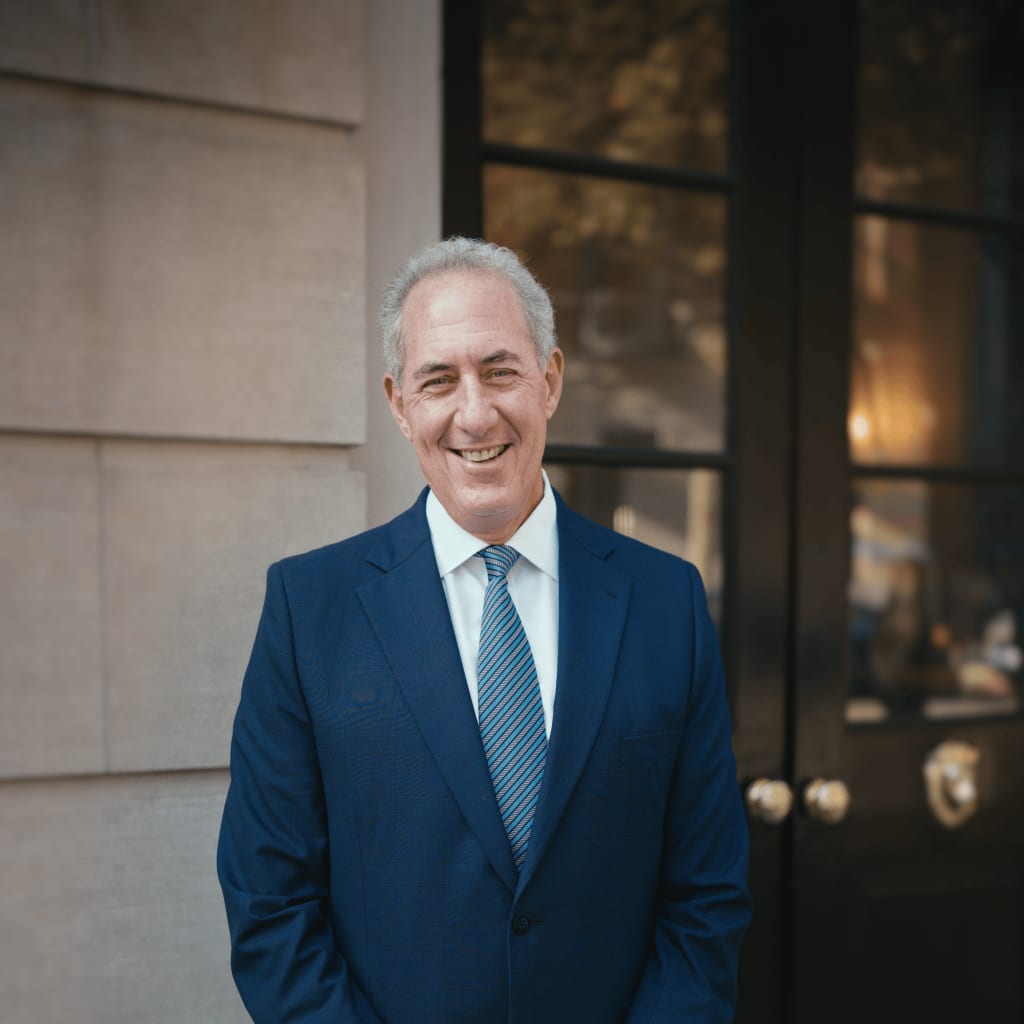 Michael FromanCFR ExpertPresident, Council on Foreign Relations
Presider
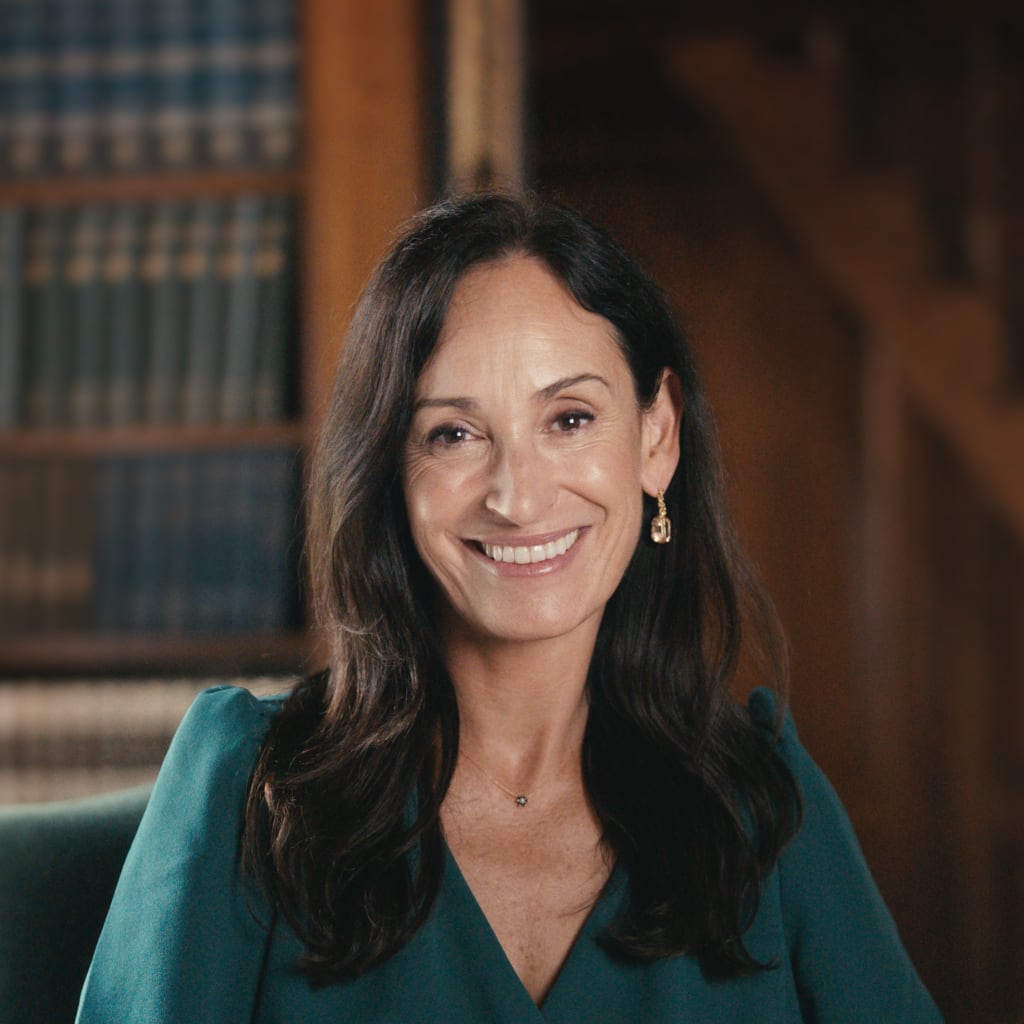 Shannon K. O'NeilCFR ExpertSenior Vice President of Studies and Maurice R. Greenberg Chair, Council on Foreign Relations
Introductory Remarks
- Melinda WhitePresident, Women’s Forum of New York
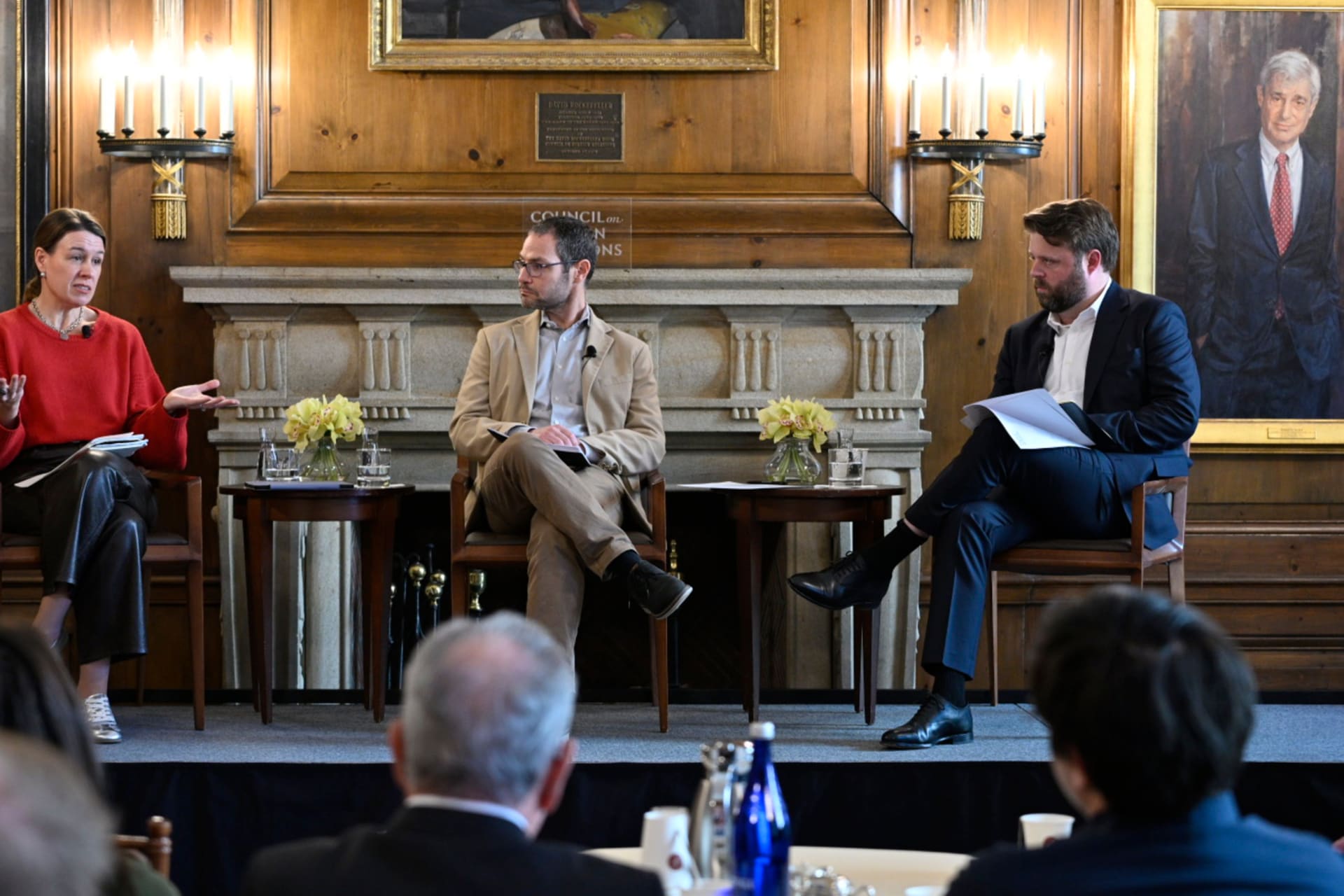
You are invited to join this special event in collaboration with The Women’s Forum of New York. Members of the Women’s Forum will be in attendance alongside a select group of CFR members.
Michael Froman and Shannon O’Neil discuss the most consequential geopolitical questions of today, from the shifting dynamics of international trade policy to global economic realignment.
WHITE: Hello, everyone. I’m Melinda White, and I’m the president of the Women’s Forum of New York. And I’m thrilled to be here this evening for this incredible conversation that we are about to participate in. This is an important conversation, “Insights on Geopolitics Around the World.” And if I may, I just tell you a brief about the Women’s Forum of New York. We have several members here this evening.
The Women’s Forum of New York is a member organization. And we focus on leadership amongst women—supporting one another, providing programs and services, providing opportunities to women in the community who need extra support through our education program.
We’re very proud of the fact that we are the founding forum of the International Women’s Forum. International Women’s Forum is across thirty-six countries, six continents, seventy-nine forums, and New York is the first and the largest.
We also are celebrating our fifty-third birthday this year, and I mention that because the Council on Foreign Relations is celebrating their 105th birthday this year. So you’re a little older. (Laughter.) We decided before we came up to this podium that we’ll just split it by three and that’s how old each of us are. So we’re good with that, a hundred and five divided by three. We’re thrilled, again, to be a part of this Council on Foreign Relations event.
I have the privilege this evening of introducing two fantastic executives and leaders: Michael Froman, who’s the president of CFR—and, excuse me, I should have said Ambassador Michael Froman; and Dr. Shannon O’Neil, the senior vice president of Studies and Maurice R. Greenberg chair.
O’NEIL: Great. Well, welcome, everybody, to the Council on Foreign Relations. It’s great to have this group here and some familiar faces; some CFR members, and many not. So it’s wonderful to have you here with us today.
And it is my great privilege to take you on a tour of the world asking questions of Mike Froman. I’m going to do this for about half an hour, and then I’m going to open it up to all of you for your questions. So please be ready for those.
So, so many places to start, but let’s start with China.
FROMAN: Oh, something easy.
O’NEIL: Something easy, right. (Laughter.) We’re going to knock this one off the list.
FROMAN: Yes.
O’NEIL: So, OK. So you recently wrote an article for Foreign Affairs on China, and you talked about the sort of unsustainable growth model there, right? And China right now seems like the ultimate K-shaped economy. You have one side that is, you know, advanced manufacturing; it’s shipping trillions of dollars out into the world; it’s undermining, you know, industrial bases across advanced manufacturing economies and emerging economies alike. It’s sort of this juggernaut. And then you have the other side of the K, which is, you know, hundreds of millions of people who are sort of barely hanging on. You have very high youth unemployment. You have a collapsing real estate market. You have perhaps 30 percent of the companies that are actually not profitable in China. And so, as you say in this article, right, it’s sort of an unsustainable model, and at the same time it seems to keep going.
And you look at sort of the global response, and you know, you had a meeting with Trump and Xi, and it didn’t really lead to many changes at all. You’ve had a meeting between Europe and China. And, yes, they have sort of a quota on EVs, but that quota is higher than China’s—imports from China on EVs last year, so it’s not really much of a cap.
How do we get to—what happens with this unsustainable model? Is this something—are we going to see a global pushback to sort of end this situation? Is China going to implode on its own? Or are we just going to see sort of a continuation, even though it’s, quote/unquote, “unsustainable”? Where does China go?
FROMAN: Great. Well, first of all, thank you, Shannon, for doing this, and thank you all for being here. And I’m delighted to learn more about the Women’s Forum, and great to have you at Pratt House.
So, really, those two parts of the K economy that you describe really are two sides of the same coin, which is that China—and I have great respect for the way China has pursued with great discipline its interests, national interests, usually narrowly defined, and which has been defined largely through investing in export-led growth. And it’s been very successful in doing that. It started with textiles, and toys, and clothes, and shoes, and worked its way up the value-added chain and is now one of the most advanced producers of really some of the major technologies, whether it’s in the electronics area, in AI, and any number of other areas, as well as EVs as you mentioned, solar and the like. And the challenge of it is, it’s done so in the context of a benign international environment, an environment that the U.S. helped create: this whole idea of the multilateral rules-based system, open markets, relatively free trade, rules-based system.
That allowed China to enter the global economy and export its way towards really tremendous poverty alleviation in China, high growth up to a point. And the problem is it’s done that at the expense of the industrial economies around the world. We saw it here in the U.S., where China was—is attributed the decline of U.S. manufacturing in the early 2000s. We now see it in Europe, where Europe—Germany, which has been a manufacturing leader of the world—nobody could ever question Germany’s capability to manufacture and export—it’s losing 10,000 manufacturing jobs a month. It’s lost over 300,000 auto jobs, Europe has, over the last couple of years because of the huge influx of China’s exports precisely because, as you said, Shannon, the biggest subsidy that China provides is that its companies don’t have to make a profit. They’re highly competitive—highly competitive with each other—and they operate at zero margins or negative margins, and there’s no holding them to account. The banks just keep on rolling over the loans. There’s no shareholder activism or anything of that sort. And so you’ve got companies that are competing on a zero cost of capital with the rest of the world, which of course can’t compete on that basis. And that’s, I think, the biggest problem.
The question of sustainability is the hardest question, because economists will say the U.S. deficit is unsustainable, the U.S. debt is unsustainable, the current valuation in the market is unsustainable without any regard to, like, what’s going to happen that’s going to make it fall off the cliff. And it’s hard to know what it is that’s going to make China fall off the cliff, except that we’re beginning to see the seeds of that, which is that that benign international environment is changing. The U.S. is closing its market to Chinese imports, at least in these critical areas like electric vehicles. Europe, which is traditionally more free trade in their ideological orientation, it’s beginning to close its markets to China. And you can only export so many EVs to Brazil, or India, or Indonesia. At some point China’s going to be producing more EVs than the entire global demand for them. At that point, if markets close, this is going to come back and fold back on China, and they’re going to have to go through a very painful restructuring—which is not in any of our interests, you know. China hits a big crisis, it’s going to affect the rest of the world.
We travel around the world. Shannon focuses on Latin America. And on trade, among other things, you travel around Latin America, every Latin American country will tell you China’s their number-one trading partner, not the U.S. They say it like, bad, bad U.S.; we used to be your number-one trading partner, now it’s China. Well, when China has a big recession, you just wait and see what happens to Latin American debt. They’re no longer going to be able to pay their debts back. I mean, that’s something that we’re going to end up—we, the U.S., because it’s our institutions, the IMF, the World Bank—we’re likely to end up footing the bill.
And so it’s a—it’s a crisis in the making. You can’t tell what precise date or what precise precipitative action is going to—is going to create it, but it is something I think we should worry about. I think the Chinese should worry about it and begin to do those kinds of reforms that they know they need to do, including all those things like support a social safety net that helps people get by, and do all the investments in a domestic demand-led, consumer-led economy, not just one that’s focused on a property bubble, or infrastructure, or exports.
O’NEIL: OK.
FROMAN: That was a long answer.
O’NEIL: That’s great.
FROMAN: But it’s a big country, you know, so. (Laughter.)
O’NEIL: So let’s take you to another part of the world that maybe is a stabilizer, maybe isn’t a crisis. Let’s go to Europe.
FROMAN: Europe. (Laughter.) Spends some—what time is it?
O’NEIL: Yes. (Laughter.)
So Europe right now, you see Europe taking a lead in some areas. They are sort of taking the lead and pushing back vis-à-vis Russia and sort of Ukraine. They’re facing lots of their own kind of gray zone incursions—drones, and cyberattacks, and the rest—from Russia. You see a Europe that is investing much more in its own defense, and building up its own defense industrial base, and spending much more, as you know, per capita and GDP and the like. You see a Europe that has been out there fairly aggressively, I would say, negotiating free trade agreements or finishing the ones that they’ve been negotiating for a very long time, but out there trying to stabilize sort of the old order, and put back and keep the sort of World Trade Organization and other rules in place. And you see a Europe with riots in Paris streets. You see a chancellor in Germany who’s on the ropes. You see, you know, the rise of the far right in many of these places. And so, as you look at Europe today, and you look at kind of the global order that Europe is trying to kind of stabilize, how successful will it be? Where might it be successful? And how do you see the challenges to that from their own domestic politics?
FROMAN: Look, I think we all want and need Europe to be successful. The challenge is, as you pointed out, that they’ve got some fundamental tensions in their system. They’ve got a very robust social safety net society and they can’t afford to make those payments anymore, right? They need to adjust those payments, but making those decisions are politically impossible. And their political system is sclerotic. It’s dysfunctional, as dysfunctional as ours is. I think Britain has had six prime ministers in ten years. France has had, I think, seven prime ministers under President Macron. And so, you know, we think we’re messed up around here sometimes, but you know, they’ve got more than their share of challenges there.
And it’s all happening in the context, as you said, of a Russia that is newly aggressive again towards Ukraine, maybe towards the Baltics, through gray zone kinds of operations elsewhere in in Europe. So, geopolitically, they have to invest more in defense, both because of U.S. pressure, the Russian pressure. They’re doing so at a time when they can’t really afford to do it, and they don’t have the political will to make the hard decisions and the hard tradeoffs. And that’s what leads, in part, people to go to the streets.
Every country’s a little different with the—there was a big—you know, several hundred thousand people showed up for demonstrations in Serbia that had more to do with corruption and pushing back against the current regime than about the social safety net. In Albania, actually where I used to live once upon a time, it’s a combination of corruption and concern about the social safety net and the social contract. In France, it really is this—the fundamental tension where you’ve got 20 percent youth unemployment, you’ve got people looking and saying we’re not growing, we’re not increasing productivity, we don’t see a positive future for ourselves, we don’t think our social safety net’s going to be there for us when we’re getting old, we don’t—but we’re not willing to raise retirement age. You know, there’s just—there are a bunch of binding constraints. You have to make tradeoffs. And if you don’t, then the markets punish you when they see what happens to French debt, and that may ultimately force them to make those difficult decisions.
On the other hand, as you said, on Ukraine they have been totally stand up. Even as the U.S. has pulled back from supporting Ukraine directly, they have—they’ve taken the step forward. Their security is very much at risk, and they recognize that, and thus far have been really quite unified and quite brave, I think, in that regard.
They do negotiate free trade agreements with Mercosur. How long had that negotiation been going on?
O’NEIL: Twenty years.
FROMAN: Twenty years. You know, everything in its time. India was only eighteen years, so it was pretty quick. You know, but they have moved forward. Even as the U.S. has pulled back from free trade, the EU and other countries have moved—have moved forward with such trade agreements. So there’s hope there.
I think the interesting thing right now when I talk to my European friends, Mark Carney, the prime minister of Canada, talked about middle powers and the role of middle powers. And in some ways, Europe is the consummate middle power. Now, that’s not their self-image. I mean, their image is—(laughter)—we’re the largest economy in the world; like, we’re the most important power. But you know, notice they’re not at the table on Ukraine, right? It’s the U.S. and Russia, maybe China, maybe Ukraine. They’re not at the table, really, in the Middle East. It’s others who are playing a role there. And so they’re having to play this kind of regional role, which is let’s focus on regional security. And the question will be, in this context with all of these pressures, will they finally do the things that they know that they need to do?
You know, Mario Draghi put out a report. Prime Minister Letta from Italy put out a report. Everyone knows what they need to do in terms of economic reforms to become more productive, to grow further, to deal with some of these problems. But they all take challenging political decisions, and you don’t see a lot of political leadership there. And when people are in the—in the streets marching, it’s hard for leaders to grow the spine they need to grow to make those difficult decisions.
O’NEIL: Yeah.
All right. We’ve handled the easy countries. (Laughter.)
FROMAN: OK, those are easy.
O’NEIL: So let’s—(laughs)—let’s turn to the literal hotspots. So let’s turn to the Middle East. So which will end first, Trump’s term or the Iran war? (Laughter.) And—
FROMAN: There are so many assumptions embedded in that question which we could explore, but I won’t go there.
O’NEIL: Which you can—which you can elaborate on. And if you see a scenario to peace, what does that new Middle East look like?
FROMAN: Yeah. Look, I think—I think we’re in the world where we’re likely to see at some point no real permanent peace, no real permanent war, just no end to what’s going on. Like, I think we’ve now opened a Pandora’s box where Iran realizes—they always knew this, but they had never exercised it, really—that they have this chokehold over the rest of the global economy, and any time the U.S., or Israel, or its neighbors are doing things that it finds against its interests, that it can close that chokehold and get the attention of the global economy. And I think that’s not going to end. And since we stand for the free flow of commerce, or at least we want to see oil and other products exported from the Gulf to the rest of the world, that means we’re going to be involved in trying to push back against that.
So, yeah, I think the best-case scenario, and maybe the most likely—the most likely case, is sort of this intermittent escalation/deescalation. Now we seem to be on the verge of an escalation, right? Everyone’s talking about it, which means it’s the worst-kept secret, you know, between national security agencies, I guess. But once we get past the midterms, it feels like, unless Iran does something dramatically different—and I don’t see any reason for them to do so—that we’re going to see another escalation of the war.
But one thing this war has demonstrated is you can have overwhelming military superiority, as we together with our allies do in the region—we can be incredibly successful militarily in terms of sinking their navy, wiping out their air defense systems, decapitating their government, reducing their missile-launching capabilities—and still Iran, with relatively few missiles, drones, and mines, can wreak havoc on the global economy. And they’ve demonstrated that, at least through their—what we’re hearing from intelligence, they can get the U.S. to pull twelve B-1 bombers out of the U.K. because they’re worried about an attack on a British NATO base, or they can force the U.S. to withdraw diplomats from the Middle East because we’re worried about an Iranian terrorist attack. And I think that’s kind of amazing. I mean, this is—we talk about the laws of asymmetry. They’ve really proven that asymmetric warfare is the new—is the new normal, where smaller countries, countries with fewer military capabilities—we should have learned this from Vietnam. We could have learned it from the Taliban and Afghanistan, where we had overwhelming military superiority but they basically still won. And we’re seeing now again it play out with Iran.
O’NEIL: Mmm hmm.
A year ago, if we were having this conversation about the Middle East, we probably would have been focused on the Gulf, right? Like, many of the people in this room would have been going to FII, the conference in Riyadh, which just was postponed. You know, you would have been investing, if you’re, you know, an investor, in Abu Dhabi, or you would have been going there. If you’re in datacenters, you would have been talking and negotiating about putting datacenters there. All of this would be happening. What about that positive future for the Gulf? Is that still there? Or what is the path—how do—how do you see that path evolving?
FROMAN: You know, I think it was amazing that it evolved that way, right? Because if we were here ten years ago—
O’NEIL: Right.
FROMAN: —we would have been, who’s going to call Egypt and Syria and sort of work out the thing? Nobody calls Egypt and Syria now, right? You call Saudi Arabia, the UAE, Qatar, you know, and those are the power players now in the region.
This has got to make MBS in Saudi Arabia or MBZ in UAE rethink their strategies a bit. I think at the end of the day, you know, they’re likely to cut their own deals with Iran and try and come up with some modus vivendi with Iran that allows them to continue on the path that they’ve been on to diversify their economies, to hopefully attract investment. And the question will be, will investment go there? You know, will investment go there?
You know, there was this huge influx of people and activity when the Saudis and the Emiratis were investing money elsewhere around the world. Every fund needed to go to the region to raise money to invest. About a year ago it sort of changed, and these countries were saying: We’re not going to invest so much around the world. We’re going to invest in the region. So if you want to come and do things here—build datacenters, you know, and the like—then they’re willing to partner. And the question will be, are people willing to build datacenters? Datacenters are awfully good targets. They’re big. They’re flat. You know, you can see them from, you know, a mile away, so to speak. So it’s hard to imagine until—unless and until they can cut some sort of deal with the Iranians to leave them alone-and by the way, it’s not just the Iranians, right? It’s the Houthis, who are Iranian-supported proxies but who seem to have a fair degree of independent capabilities and independent decision-making even beyond Iran to wreak havoc on these countries.
So I think the Gulf is very much in question. My guess is over time they’ll get back on track. It may not be the euphoria. Remember a few years ago when MBS in Saudi Arabia was going to build a building that was a hundred miles long?
O’NEIL: The Neom project, yes. Yeah.
FROMAN: The Neom project and the Line.
O’NEIL: And the Line, yeah.
FROMAN: The Line was a building—
O’NEIL: The upside down toilets, and—yeah, it’s like—(laughs)—true.
FROMAN: Yeah, for—even before the war, the Line, which I think was going to be either a hundred miles or a hundred kilometers long, was shortened to about ten kilometers. That’s still a pretty big building, by the way, ten kilometers, a six-mile-long building. You know, my guess is that building may not get built. But they’re still going to want to diversify their economy.
O’NEIL: Yeah.
OK, another hotspot. You touched on it briefly, but let’s come back to Russia-Ukraine. You see big divisions between the U.S. and Europe on sort of the path forward. You see big divisions between the executive and the legislative branch. You know, sanctions that were put in place were being waived by President Trump. As you go forward, you know, what are the likely scenarios? It’s hard to see on the battlefield. It doesn’t seem like the Russians are advancing, and perhaps Ukraine has at least stopped them if not advancing in some places. But we’ve also seen Ukraine’s dependence on the U.S., and Starlink, and sort of access to information and the like. So, as you look at this, I mean, another one: Does the Russia-Ukraine war—which ends first, the Trump term or the Russia-Ukraine war? And in what way?
FROMAN: Yeah. Look, I think that one could end sooner. Probably not on great terms, right, because I think it would end by the U.S. basically withdrawing intelligence support and not allowing the Europeans to buy U.S. weapons to provide to the Ukrainians. And I think that would make it much more difficult for the Ukrainians to sustain themselves.
I mean, if I were Europe right now—to go back to your Europe question—I would focus on the things that the U.S. right now can uniquely provide, like intel support or interceptors, and figure out how close to a U.S. capability can Europe provide. I’d invest in those things that are absolutely critical. And it may be that they can only do 80 percent as well as the U.S., but that’s better than nothing, and it would be good for the Ukrainians to have at least 80 percent of that capability over time.
So I think—I think it’s a little—it’s inexplicable to a lot of people why President Trump and the administration is as sympathetic to President Putin and his positions on these issues as they are. But you know, that is what it is, and he is the president of the United States, and if he decides to cut off intel support and cut off access to our interceptors that is going to change the dynamic on the ground.
The Ukrainians have done a remarkable job on their own and with European support of stopping the Russian advance, actually regaining territory in certain areas, and bringing the pain of the war to the Russian territory by having drone attacks and missile attacks, even in St. Petersburg and Moscow, you know, along energy infrastructure and the like. And the more they can do that to change the dynamic for Putin domestically, the more there’s a real chance of having a real peace. I’m afraid we’re going to end up with a ceasefire, a very unsatisfactory outcome where Ukraine will de facto have to give up its claims to territory. And the question will be, what is the security guarantee that goes along with that, and does it—is it worth the paper it’s written on?
And there, too, is a role for Europe. You know, again, if Europe wants to—and they are doing this. They have got this coalition of the willing of a series of European countries that are already preparing to go into Ukraine, support Ukraine, deploy troops, deploy materiel, some degree of support for Ukraine going forward. It’s not NATO, but maybe it’s a tripwire that would prevent the Russians from going in again if they—if they fear killing French troops, or German troops, or British troops. That could help. That could help. It’s not everything the Ukrainians want. It’s not NATO membership. But it could help.
In the meantime, I’ll do one more swipe at the Europeans since that seems to be our favorite whipping boy these days. (Laughter.)
O’NEIL: We’ll get to Canada next, so just know—
FROMAN: We’ll do Canada next.
You know, and then you go to the issue of EU membership and the Europeans are like, oh, no, no, no, no, that’s got to take ten years. Like, we don’t want—I mean, if Europe really wanted to show leadership, it would find a way of getting Ukraine into the EU in a year’s time. And that would be great. That in itself—I don’t want to underestimate the challenge of that, absorbing Ukraine and its agricultural sector, which is so much more efficient than most of the West European agricultural sector. All of that very difficult to do, but you know, hard things are hard, and you got to make hard choices. And if Europe really, really cares about this, that’s what I would focus on.
O’NEIL: OK.
Let me ask you about one potential hotspot, and that is Taiwan, right? If you look, the latest numbers I saw from Bloomberg Economics is that if you took Taiwan offline it would be a 10 trillion (dollar) hit to the global economy, so a huge issue. We have seen over the last year especially stepped-up kind of gray zone activities, right? We’ve seen stepped up, you know, fighter jets from China flying by. We’ve seen simulations for invasions going by. We’ve seen more naval destroyers from China going into waters closer and closer to Taiwan. At the same time, we’ve seen President Xi purge many of the leading military leaders. We see him sort of circling the wagons before next year, when he presumably would like to be chosen again for his fourth term. So he’s got his own internal politics that he’s dealing with. And we see him, or we see China, it seems, delving into domestic politics in Taiwan—supporting, you know, pro-China policies, thinking about sort of the next election.
As you play out the various scenarios, I mean—and again here, not to put everything on the next two years, but you know, as we look at the rest of this particular administration in the U.S., is it more or less likely that we see a China incursion in Taiwan over the next couple of years, or what’s the—what’s the timeline? And what would deter or what would incentivize China to go into Taiwan?
FROMAN: So President Xi has made clear that he wants to resolve the Taiwan issue on his watch, doesn’t want to leave it to his successor. That’s kind of the bad news. The good news is his watch seems to be interminable. So he’s going to be elected most likely again for another five-year term next year, and no one knows what health he’s in. But you know, he’s planning on being there for a very long time.
He evidently gave his military—although the origins of this story are a little mixed; there’s a little bit of confusion over what was actually said to his military—to be ready by 2027 to take action against Taiwan. That did not mean he expects to take action in 2027, but it’s more like anybody does who’s managing an organization. You set out some audacious goal, and you sort of push everybody towards that with as much pressure as possible. And as you said, he’s purged many of his military leaders, including the ones that he himself appointed, over time.
My sense is China doesn’t want to invade Taiwan. They would—they would like to absorb Taiwan into China. But if they could do it short of an invasion, they would, whether it’s through cyberattack, or other pressure, or quarantine, intervening in the shipping, any number of other things short of an invasion. And I think part of that is an invasion—they’re looking at Ukraine and Russia, and there are a lot of lessons to be learned. You can learn lessons that could point you in either direction, but you know, one lesson is even if you have overwhelming force it’s not necessarily a cakewalk to achieve all your military objectives. And the one thing President Xi cannot afford to do is to try and lose, or to try and not succeed. That would be the end of him. It would probably be the end of the Communist Party in China. They’d lose all credibility and legitimacy.
So our job—the West, the rest of the world—is to create enough uncertainty about whether he can achieve his objectives that he takes a second breath and tries to operate in some other way. And that means everything from just—it’s deterrence, just raising the prospect that he won’t be 100 percent successful, whether that’s what we do with military; what we do with cyber; what we do with other mechanisms; whether it’s how we arm the Taiwanese; whether it’s building the coalition of Japan, Korea, Australia, Thailand, the Philippines.
I mean, the one thing the U.S. has which China has none of is alliances. You know, NATO, most successful alliance in history. And these other alliances in the Asia Pacific, formal treaty alliances, are incredibly powerful ways of leveraging our strength with the presence of others.
So I think that is our goal, is to deter an all-out attack. That may not deter these half measures—you know, a quarantine, cyberattacks. And I think the Chinese will push the envelope to see, OK, what can we do without eliciting a U.S. response? And you know, they could be quite successful. I mean, is an American president going to send U.S. troops into harm’s way because there’s been a cyberattack on the—on the Taiwanese government’s buildings or their network? Probably not. You know, is he going to send them in harm’s way if Taiwanese ships or ships heading to Taiwan are inspected on their way there or required to go into a Chinese port before they go into a Taiwanese port for inspection? Maybe, but probably not. And so I think those are all the things that that we have to think about and worry about, that we’re going to—the envelope is going to be pushed consistently, and how we respond the Chinese will take as an important set of messages.
I think in terms of the incentive to move more quickly, is I think if you’re President Xi—and this is not a partisan comment—I think you feel like you’ve got the situation about as good as you can get it under President Trump. You know, President Trump is the least China hawk in his whole administration. Secretary Rubio is known as a China hawk. There’s a guy at the Department of War named Bridge Colby; he made his whole career as being a China hawk. The president believes he’s got a strong relationship with President Xi; he just needs to sit down and have a chat, and everything’s going to be fine. And he view(s) things largely through a transactional, commercial means, and so I think he feels like something could be worked out, a deal. We can reach a deal. And so I think if you’re President Xi, you feel like if we’re going to—if we’re going to get to the threshold, if we’re going to take some action, better to take it in the next two years than take our chance on who comes next, who might not be so reluctant to provide Taiwan with more arms, or send the fleet in, or take other action against China.
O’NEIL: So I’m going to ask one more question and then I’m going to open it up to all of you, so be ready with your questions.
So, U.S. midterm elections coming up.
FROMAN: That’s what I heard, yeah. (Laughter.)
O’NEIL: If you follow the polls, looks like the Democrats may take the House, unclear what’s going to happen in the Senate. But you will get divided government. Does this, and how does it matter for foreign policy or for U.S. role in the world?
FROMAN: I don’t think it matters a lot for U.S. foreign policy.
First of all, the president has already achieved much of what he wants to achieve in his legislative agenda, right—the Big Beautiful Bill, et cetera—and he rules largely through executive action. And the constraint on him up to now has not been Congress acting, but more the courts here and there pushing back on certain things he’s done but largely deferring to executive authority. So I think, assuming the conventional wisdom is right and the Democrats take at least one house, there’ll be noise in the system. There’ll be hearings. If they take the Senate, that’ll be interesting in terms of confirmations, whether anybody gets confirmed for the next two years. But when it comes to the conduct of foreign policy, I think the president basically will rely on executive authority and presidential authority.
And you know, even if Congress acts and has, you know, strong capability of legislating, which has not really been the case up to now because it’s likely to be a narrow majority in either direction, the president can always veto the bills. They don’t—they’re unlikely to have a veto-proof majority in the Congress. And that means we can count on Congress to make noise, but I don’t think actually to change policy.
O’NEIL: OK. Great.
Well, I now invite members—CFR members, Women Forum members—to join with questions. And just remember that the meeting is on the record. So, Tara, let me start with you.
Q: Thank you both so much. Thank you so much.
O’NEIL: Oh, and please introduce yourself. Yes.
Q: Yes, of course. My name is Tara Hariharan. I work at a hedge fund here in New York called NWI, and I’m a very proud CFR member. It’s so nice to have you all here as well.
Shannon, one part of the world you did miss out in your tour of the world, which is of course also your area of expertise—(laughter)—
FROMAN: I was going to ask her about that, right? She’s the Latin America expert.
Q: Exactly. But I’d love to hear from both of you because it mixes in a whole bunch of things. Latin America, we now—just overnight we had an unprecedented election. Lula got reelected, one of the few incumbents and, you know, left governments remaining in Latin America. We’ve heard a lot about President Trump’s Donroe Doctrine and all of the actions earlier—Venezuela, Cuba, and such. Just would love your views on how this will—how the Trump administration views on LATAM will evolve. And bringing in China as well, because U.S. and China are very much in competition for critical minerals and the commodity resources that LATAM has to offer. Thank you.
O’NEIL: Just a few issues. Yeah.
So, yeah, so Lula won, and you know, interestingly, Brazil has always been a country where incumbents are strong, and we saw that last night where he won. So I think that was more about incumbents winning than a sort of left/right.
What you did see, though, in Brazil in the congressional election, which happened in the first round, is Brazil did go to the right, and probably the most right it’s gone in in decades. So you will have a Congress dominated with majority of right in both houses who—and so Lula will be trying to work with them. And there’s a big reform agenda. He needs to—you know, Brazil has high debt levels. It has high deficit levels. It has a lot of economic and fiscal challenges. And he’s going to be working with a somewhat hostile Congress. So we’ll see. Lula is known, and rightly so, as a master politician, but we’ll see if he’s able to sort of manage that.
You know, also what happened yesterday, in addition to Lula winning, is Maria Corina Machado went back to Venezuela. And I think that her returning to Venezuela potentially changes a bit the game there. Before she went back, I would have bet that the current Delcy Rodriguez government would be in place until the end of the Trump administration, that we would not see elections. I think that may have changed. The negotiations with the opposition before yesterday did not include her. Now that she’s back in the country, I think it may include her, and she has called for elections in July 2027.
She has also, in her open remarks, referred to the Trump deal with Alejandro Betancourt, who runs this, you know, Blue Energy, where there’s a contract with the U.S. government—she has not spoken highly of him, and that that deal needs to be looked at. So I think, you know, back to do the midterms matter, they may not matter broadly but I think you could see, let’s say, a Democratic House looking at that particular deal and asking for the details on it on this side, and perhaps you could see a Venezuelan opposition asking on the other side.
You know, the Shield of the Americas is both the security aspect, which, you know, you bring up, sort of, you know, going after drug cartels, but there’s economic sides to it. And in fact, critical minerals is a big part of that. Brazil will not be joining that. But one thing as I watch Latin America—and I’ll wrap up now. One thing as I watch Latin America, you have so many governments that are very closely associated with the Trump administration, and the Trump administration is very closely associated with them. Many of them are anti-incumbents that were brought in because people were upset about security, about corruption, about provision of basic services, about economic growth, about inequality, the issues that you care about. Many are populists that don’t have a strong congressional base to be able to sort of push things through, you know, and make changes in their—in their legislatures. And so, you know, if these governments fail to sort of deliver to their people, one, they will become less popular—and indeed many, of them already are, in Chile and even in Argentina and other places—but the U.S. will be closely associated with those governments as well. So I think as we go forward, you know, there are benefits to these leaders to aligning with Trump, you know, in terms of sort of support that they’ve gotten, whether in the electoral campaigns or on the security side, but there are also risks. Because if they are sort of—you know, their numbers go south, so, too, may kind of the role of the United States in the region.
Other questions? Back there.
Q: Thanks. Thanks so much for doing this. Gosh. Minh-Thu Pham. I run the Starling Institute, a think tank based here in New York working on multilateral cooperation.
This is a CFR day for me today. At noon there was a really great event in Washington which some of us could watch virtually. And Andy Baker, the former national security advisor, essentially said the U.S. seems to be even a more powerful hegemon than it has over the last twenty-five years in that the multipolar order hasn’t quite played out. And then he sort of talked about global agreements, especially Article 5 and NATO, and sort of U.S. commitment to that. How confident are you, given that right now we have more conflicts—interstate conflicts in the world than we have since essentially 1945, that this administration and U.S. foreign policy is able to navigate these big challenges, including the issues that you’ve just addressed? And then, what can those of us—I mean, regardless of what happens in the in the midterms—who care about the direction of, I think, global stability, what might we sort of say or do publicly to kind of help navigate this? Thanks.
FROMAN: So I’ll take a shot, but please.
So, first, I think—regardless of whether you agree or disagree with what they have tried to achieve, I think the Trump administration has demonstrated use of American power in the short run in novel ways, and to some effect. You know, I take the NATO piece of this. Now, some of this was Putin, of course, invading Ukraine, which certainly put pressure on Europe, but several presidents had argued with the Europeans about their need to put more towards defense. I think it goes back to George Bush. Certainly, Obama did. Certainly, Biden did. You know, it took Trump coming in to say, OK, we’re just going to pull out our troops to get them to go to 5 percent. Now, we’ll see. Some of them will get there, some of them won’t.
On the trade side, which sort of is more in my former bailiwick, you know, the use of tariffs. We would have said—the Europeans would have said we will never negotiate with the U.S. under the threat of tariffs. Trump imposed tariffs; they were on the first plane to Washington to negotiate, you know, and then were begging to have a(n) opportunity to negotiate.
So I think, again, we may like it, we may dislike it, it may have long-term consequences in terms of our long-term capability to exercise influence, but in the short run I think one has to recognize he has used power and gotten countries to do things. We now have a trading system where, like, we have zero tariffs into a lot of countries and they have 19 percent tariffs coming into the U.S. As a former trade negotiator, I would have said that’s never going to happen, right? That’s what they’ve achieved, good or for bad. But that was what they set out to achieve, and they used the power of the access to American market in ways that we probably did not fully imagine before.
I do worry what the long-term consequences are and I do worry about the tradeoffs involved. You do that to a country, and then you go back to them a week later and say, oh, by the way, we need you to send, you know, minesweepers to the Middle East, and they’re like, well, we’re kind of busy, you know? We’re busy dealing with those tariff issues that you imposed on us last week. So, you know, people do there are consequences to these actions that need to be taken into account, both in the immediate term and certainly in the longer term. But I think we do need to recognize that the U.S. is exercising power.
You know, we had a—you know, if you think about when President Trump was first elected for the—for the second term, there was a lot of concern about isolationism. Well, he is certainly not isolationist, right? You can’t be an isolationist and talk about acquiring Canada, Greenland, renaming oceans. And you know, he is not an isolationist. He is an expansionist. He’s talking about the Donroe Doctrine. And so he’s demonstrating a different way of the U.S. engaging with the world.
We’ve engaged with the world for eighty years, more or less along the same ways between Republican and Democratic administrations. For the last ten years, we’ve been involved in a big experiment to see, OK, this is a new way of engaging with the world. We’re going to see what the long-term consequences are of it. In the short run, though, the entire world is talking about Donald Trump every day, every hour. The U.S. is not irrelevant. It’s not that declining power. It is in some ways exercising even more influence over what’s going on around the world than ever before—maybe a positive way or a negative way depending on your perspective, but it is certainly relevant.
O’NEIL: I guess the only thing I’d add to that on the sort of multilateral side, I think, you know, so many of the institutions that were created—the Bretton Woods institutions and the others that were created in the post-World War II period—were not set up to incorporate and encapsulate great-power competition, right? The Soviet Union stood outside of them. They were in contrast to the Soviet Union, and they brought together allies or potential partners and the like. And now these institutions are trying to incorporate and deal with inside of them great-power competition, and they’re just not fit for that purpose.
And so I think part of the challenge of, you know, how you do it, is it elegant, is it not elegant, is it this or is it that, but it just—you know these were—they had a good run, and maybe they can evolve into something else. But they—given sort of the state of the world, the conflicts that you mentioned, I’m not sure they are the ones that can—that can handle and contain what’s happening in the world and the great-power competition that we’re facing today.
Questions? Edie.
Q: Hi. Sorry Edie Weiner. I’m a futurist.
And because of that, I keep looking at two years ahead to see the disruptions in all of the straight-line extrapolations. And knowing that things like cyberattacks and drones were not in the discussion twenty years ago, I’m thinking about what’s going to be in the discussion as we compress time two years from now, one of the things clearly being severe climate change, which I think is going to affect relationships and securities all around the world, including everything from shipping lanes in Antarctica—in the Arctic, excuse me, to 500 million people starving in the north of China. But I also think about quantum computing coming along and affecting all of the intelligence systems that we’re talking about, because it basically outdates encryption and interrupts them. So, in thinking about these things that are disruptors, what do you think are the—like, the critical disruptors over the next two years that are going to be things that we’re just not thinking about today?
FROMAN: Where to begin? Look, I think climate change is certainly an underlying disruptor. I’m not sure the next two years are going to be that much more significant than the last two years. It’s always significant, and I think we’re evolving in that direction.
I think quantum is interesting, although I think most of the intelligence community, others, they have already sort of developed post-quantum encryption, and so they’ve prepared for it. It’s not going to be as much of an issue, I think, on the encryption side or the intelligence side as it is what does it mean for computing generally, and what kinds of problems are we going to be able to solve with quantum computing that we weren’t able to think through with classical computing. We thought classical computing was pretty powerful with these latest chips and all the rest. Quantum is a very different way of computing. And so, well, we’re not sure what it means in terms of the kinds of questions it’s going to be able to answer or new questions it’s going to—it’s going to pose.
And I guess that’s one of the things I’d put on the table, which is you look at the technology developments that are happening—you know, the most frightening comment I ever heard about AI was by one of the leading developers of AI, who said—this was now two or three years ago, and it’s becoming sort of common now—we don’t know how it works. And I thought, well, if he doesn’t know how it works—(laughter)—what are the prospects not that I, but that members of Congress, folks in the executive responsible for trying to think about guardrails, or regulation, or truth and safety issues, what are the prospects that they’re going to know how it works and be able to act accordingly?
And again, quantum, I mean, the little bit I’ve learned about it is that it’s just—it’s not faster computing; it’s different computing. And so we don’t know what’s going to be different in a—in a quantum world. I think it’s the uncertainty about where technology is leading. In some ways it could be an incredibly positive direction, and then it could come with it some incredible risks.
O’NEIL: This morning I read the U.K. just updated their sort of guidelines on citizens prepping, so what all citizens should have, like, in their basement. And so, one, I don’t have those things in my basement, so I need to work on that. But, two, just the fact that governments—and there was nothing in this—in this sort of notice about why one might need this. But I think, you know, back to, like, are people thinking about it, someone’s thinking about it, right, and sort of the way the new technologies—I do worry. I mean, just the technologies—we’re here, you know, trying to set an AI policy at CFR, and what can you write, and what can you use it for, and the like to make sure, you know, credibility and authenticity, and expertise, and the like. And as we do this, which is a great exercise, I also wonder: Six months, a year from now, will it just be so surpassed by the technology and the like? And what will that mean not just for, you know, the people in here in our jobs, but what will that just mean for society? And what will it mean not to society here in New York or in the U.S., but in other countries, right? And when we’ve seen previous industrial revolutions, in a fair number of countries it also led to revolution revolutions. And hopefully it doesn’t in this case, but check out the U.K. list in case what you need to keep in your basement. (Laughs.)
FROMAN: I think I need to get a basement first, right?
O’NEIL: Yes. (Laughter.)
FROMAN: I don’t even have a basement.
O’NEIL: Or your attic, I guess. Yeah.
Other questions? Right here.
Q: Thanks so much for this. I’m Hilary Link, the president of Drew University in New Jersey.
One of the areas—one of the sectors that has been very negatively impacted during especially Trump’s second term has been higher education and graduate education. I’m curious, from each of your perspectives, do you see the U.S. ever returning to the heights of being a true magnet for scholars and younger students, or do you think we’ve kind of lost that moment and it is shifting permanently?
FROMAN: I’m relatively optimistic on that one. I do think a different administration with a different set of priorities on research and development, on high-skilled immigration, on graduate students could—that’s one of those policies that could be changed relatively quickly. Now, the question will be, what’s the reaction of the rest of the world? And will the rest of the world say, well, I’m just not—I’m not sure, is it permanent? Am I going to have a grant to do my research five years from now when I need it, or is it going to get interrupted? Would I rather take the chance and go to the—to the U.K., or go to Canada—until it becomes part of the United States—(laughter)—or otherwise? But I do think it from a policy level.
And I’m even optimistic on the—on the doubts that I raise, because I think, ultimately, the U.S. has so many strengths, including as a(n) innovative ecosystem that no other country could fully replicate—you know, that combination of great universities, risk capital, rule of law, the capability of failing and starting over again. I mean, every—I remember when various presidents of other countries said: We’re going to create Silicon Valley, and here I’m giving thirty acres. This is Silicon Valley. (Laughter.) Like, Silicon Valley’s not a piece of territory, right, it’s a state of mind, and that is very hard to replicate. And so I feel reasonably confident that if the policy shifted we would see high-skilled talent from around the world wanting to come back, go to school here, build their companies here, you know, contribute to the U.S. economy.
O’NEIL: Yeah. OK. Next question.
FROMAN: Pamela.
Q: Hello. Pamela Passman with APCO Worldwide, and I’m a member of the Women’s Forum and the Council. And I’ve had the pleasure of being a member in Seattle, in Washington, D.C., and New York City of both, and they’re great national institutions with a global impact.
But my question is about artificial intelligence. And clearly, it’s a commercial technology. It’s a national security capability. It’s a(n) instrument of geopolitical influence. Do you see the emerging AI global order being shaped by governments, being shaped by a few companies, or some alliance or alliances between the two? And how important is it that the U.S. and China agree on some rules of the road, and how realistic is it that they will?
FROMAN: You want to start off?
O’NEIL: Important that they agree; not realistic that they will. (Laughs.)
While this starts in the private sector, and there’s so much power in the private sector with these companies that are worth trillions of dollars and individuals that, you know, have close to that, I think we are edging towards a situation where there will just be a public-private partnership, and in part because of the—just the influence and the fundamental aspect of the technology, in part because of some of the societal upheaval that that may happen, and also upheaval in our tax structure and how, we know, bring—you know, provide public goods. And frankly, you know many of the leaders, whether it’s Sam Altman, or Dario Amodei, or all those people, have said, like, why don’t you take a percentage of my company, right? I think there is a space. I don’t know—you know, we may get there in a—in a different path, but I think there will be a public-private aspect, and there will be—whether it’s regulation, whether it is a percent—you know, whether it is a buy-in of some sort of sense, I think we will get there for financial reasons, for security reasons, for safety reasons, and the like.
That doesn’t, though, deal with the sort of U.S.-China side of things, and the very different models that are set up there, and the very different sort of ambitions, right? The U.S. is on this frontier model and, you know, thinking about this sort of ideas, and the compute, and the like. And China is all about the physical AI, right, and so all the things that we will do in the world, sort of how people will use the AI. And I—you know, that race is on, and I don’t yet quite see the West, let me say more broadly—there are some aspects, right? You know, South Korea and Japan and others have technologies. Germany has some technologies. There’s some. But I don’t see us scaling up to compete on that side as we go forward.
I mean, back to sort of Edie’s question of, like, what are we—what are you worried about down, you know, two years from now or what have you, where are we going on this and where are, you know, agents going? And you know, whether it’s agents individually, like the sort of Hugging Face sort of, you know, making it up as they go, or, you know, maybe it’s just old-fashioned, you know, bad people taking agents and doing bad things, right? And we just saw that with this, you know, holes in our PHP, which underlies, you know, 70 percent of the internet, you know, the millions of people trying to get in—get into people’s bank accounts or mess with people’s websites or companies and the like. We’re just going to see more and more of that.
So maybe you get the U.S. and China to come to—as one of our fellows here said who follows cybersecurity especially, he said, you know, the Goldilocks solution for us to bring China and the U.S. together is we have a crisis that, you know, maybe turns off all the lights in Seattle or in in Washington, but it doesn’t go so far to kill hundreds of thousands of people. We need enough crisis to scare people straight, but not so much that it—you know, it kind of destroys part of our society. I’m not sure we’re going to—we’re going to have a choice, and that those who are trying to do that are going to go for that Goldilocks solution. But I personally don’t see the U.S. and China coming together and really setting up any kind of governing body for this unless we get to a real crisis situation.
Maybe you’re more optimistic than I am.
FROMAN: No, I think that’s a very good way of looking at it. I mean, the Biden administration pushed hard to get a dialogue on AI going with China. I’m told it was like pulling teeth getting them to come to the table, and when they did all they could agree on was the issue that we shouldn’t take humans out of the loop on the launch of nuclear weapons, which seems like pretty low-hanging fruit. (Laughter.) But go from there to thinking about broader guardrails on innovation and common approach. You know, in the arms control world we’ve tried to get China to come to the table to talk about nuclear arms control, and their answer has been once we reach parity we’re willing to start talking but not until then. And so it’s a little bit of the same here. We’re in this race. I’m not sure we’re ever going to know if we’ve reached parity. But it may take a crisis, as Shannon said, to get people’s attention. But in the meantime, I don’t see much prospect for that much international cooperation.
O’NEIL: Yeah. Next question. Go ahead.
Q: Hi. Emérita Torres. I’m a member of the New York state legislature, also a CFR member and an IWF alum with the fellowship. So a pleasure to be here.
I attended a really interesting panel on the space race and particularly the commercialization of space, and wondering if you can comment on sort of what you think about it in terms of access. We’ve had a lot of wealthy individuals travel to space. What do you think about that in terms of exploration, discovery, and its impact on our foreign policy, and also broadly speaking foreign policy in general? Thanks.
O’NEIL: OK. So we actually have been doing some work here with some great fellows who are thinking about this, and this does seem, you know, sort of the next frontier, right? Yes, the Arctic is opening up with—you know, sort of with climate change and the like, but space is already open, right? And there is here—you know, Russia is obviously there, but China is launching thousands and thousands of satellites all around, you know, into space. Fun fact: Outside of China, they launch the most satellites, China, from Latin America up into space. So they are—you know, part of their relationship—which, Tara, you were asking about that. Part of the relationship is commercial. Part of it is also strategic in space.
I mean, this is important, as we all know, for communications. It’s important for national security. If some of our, you know, billionaires believe it’s important for the next place we’re all going to live is somewhere up there on Mars and the like. But I do think, you know, to add to the list of things that we need to work on with China which maybe we will or won’t be able to address in any sort of governance way, how you—how you govern space. And I think it is, you know, everything from, you know, as one of our fellows likes to talk about space junk, right—you know, you have stuff that’s floating around there that will take out satellites by mistake because it’s just detritus that that hits them—but also to making sure we don’t put nuclear weapons up in space and other kinds of, you know, tactical equipment that would be, you know, dangerous not just for those up there but also for those down here. So I think yet another opening front is the technology and the ability to launch satellites and even bigger types of, you know, people and rockets and other sorts of things, how we govern that space. Like the way we govern the seas, how do we govern that space is going to be crucial.
And the last thing I’ll say is, you know, more and more players. It’s not just the U.S. and China. Like, the UAE launches satellites. I mean, there’s a whole host of other folks and other countries that have ambitions and actually have capabilities to do this as well.
FROMAN: I just have a little more optimistic about progress here with China, in part because other countries are involved, that there is so much common interest. Was it called the Kessler effect, is that what it is, when junk begins to hit other pieces of equipment, and then it becomes a chain reaction? You can end up taking out thousands of satellites. So there’s a common interest in trying to manage junk.
You know, there’s issues around that we have rules on, Law of the Sea for saving a sailor. We don’t have anything about saving a spaceman. And yet we’ve had people stuck, you know, on the space station.
And so, to me, there’s more opportunity here because it’s a little bit less clear who’s winning the race or what the race actually is, and there’s more common interests. So maybe that’s a role for the multilateral world of some sort, or a plurilateral world, some coalitions of the willing. There are enough countries there. India is a big player, UAE, others. Ukraine used to be a place where so many of the rockets were shot from into space. So, you know, maybe there’s more opportunity there. We have to end on a positive note.
O’NEIL: Exactly. (Laughter.) Space will be the place we come together. Excellent.
FROMAN: Yes, exactly. (Laughter.) Not on this planet, but somewhere else in the universe—(laughter)—we can make progress.
O’NEIL: Well, thank you all for coming. We’ve reached the end of our hour. Thank you, Mike, for all of your thoughts.
FROMAN: My pleasure.
O’NEIL: And please enjoy the cocktail hour. (Applause.)
(END)
This is an uncorrected transcript.