Open to Debate: Does the U.S.-Saudi Civil Nuclear Agreement Serve America’s Interests?
Event date
Speakers
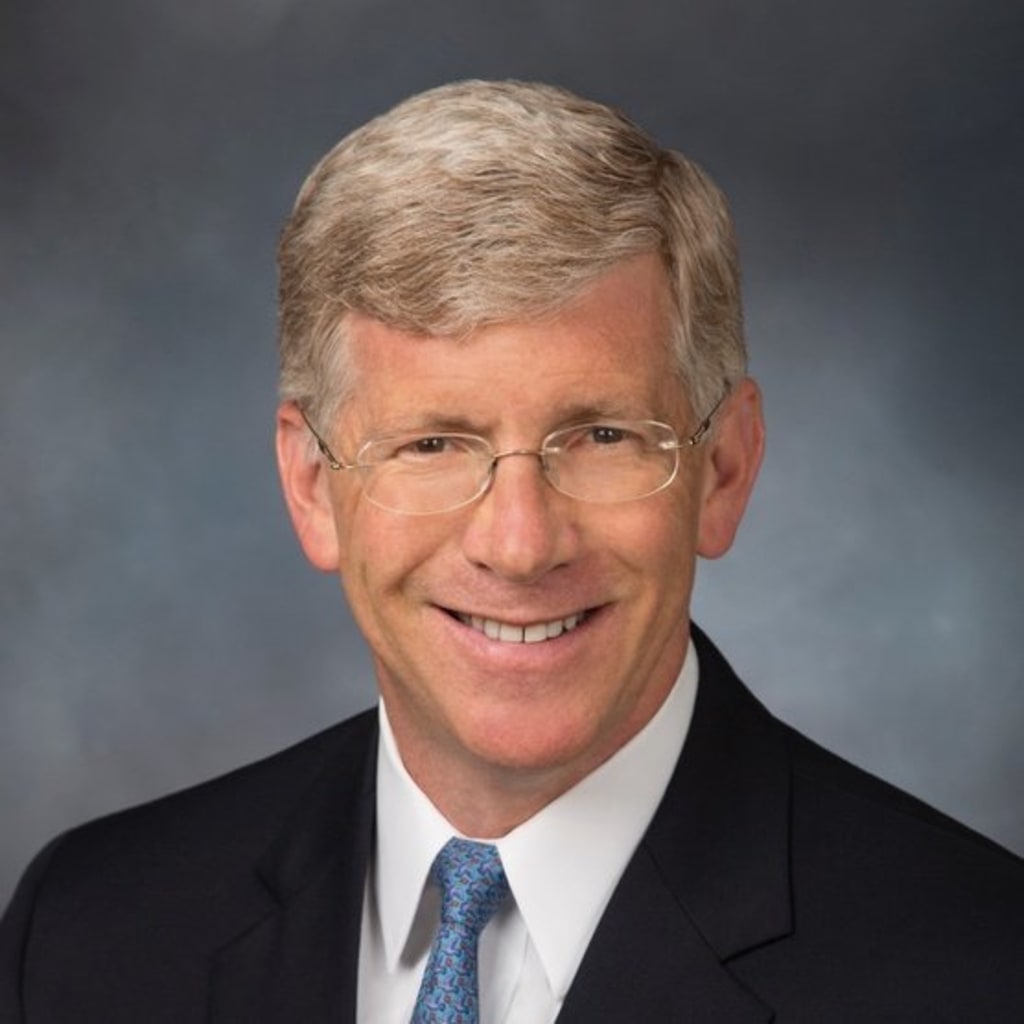 Former Deputy Secretary, U.S. Department of Energy (2009-14); President and Chief Executive Officer, Poneman Strategies LLC; Member, Board of Directors, Council on Foreign Relations (arguing yes) (speaking virtually)
- Research Professor of International Affairs, Elliott School of International Affairs, George Washington University (arguing no)
- Former President, Ploughshares Fund; Former Senior Vice President for National Security, Center for American Progress; CFR Member (arguing no)
- Managing Partner, TWG Global; Former Deputy Assistant to the President and Senior Advisor for Energy and Investment (2024–25) (arguing yes)
Presider
- Moderator-in-Chief, Open to Debate
Open to Debate is the nation’s only nonpartisan, debate-driven media organization dedicated to bringing multiple viewpoints together for a constructive, balanced, respectful exchange of ideas. Open to Debate is a platform for intellectually curious and open-minded people to engage with others holding opposing views on complex issues.
The recording of this debate will be posted on the CFR and Open to Debate websites and broadcast on NPR stations nationwide.
HOCHSTEIN: Do you want a nuclear enrichment program in Saudi Arabia that is U.S.-based, or do you want it with someone else? Because having it with no one, that’s not one of the options on the menu.
SQUASSONI: The real American national interest is a stable nuclear order, and you achieve that through rules and principles, and not spreading enrichment and reprocessing.
PONEMAN: We used to own the global enrichment market. Now Russia has 45 percent of that market. China built thirty-seven nuclear power plants in the last ten years; we built three in the last thirty.
CIRINCIONE: If we do this, we will be sacrificing core American national security interests, for what? So that a few people can make a lot of money.
DONVAN: Before we get started I’m going to come in with just a few notes right here because this debate gets a little technical, and there’s some terminology that’s used throughout the debate by all of the debaters, start to finish, that are really key to their arguments and that it’s important that you understand, and they’re not terms all of us are necessarily familiar with. OK.
So the first one is “uranium enrichment.” And to put it very simply, enrichment is the process that concentrates the part of uranium ore that can be used to make a nuclear reaction, and eventually making it potent enough to produce nuclear energy. But if it becomes even more concentrated—if you keep going with this concentration process—then it becomes highly enriched uranium. And if it’s very highly enriched, nuclear weapons can be made from it. That is an important point. OK.
Another term, “Additional Protocol.” Additional Protocol is the name of a specific legal document that grants permission for an international agency to expand inspections and monitoring of nuclear facilities beyond a standard “comprehensive safeguards agreement”—that’s the other term—and it’s basically more inspection power. So that is also important.
And, finally, the International Atomic Energy Agency, sometimes referred to as the IAEA. You’ll hear that referred to repeatedly. That is an organization that works with the United Nations, and monitors and safeguards nuclear energy use throughout the world, including doing those inspections for the Additional Protocol. So it all ties together.
Let’s get to the arguments.
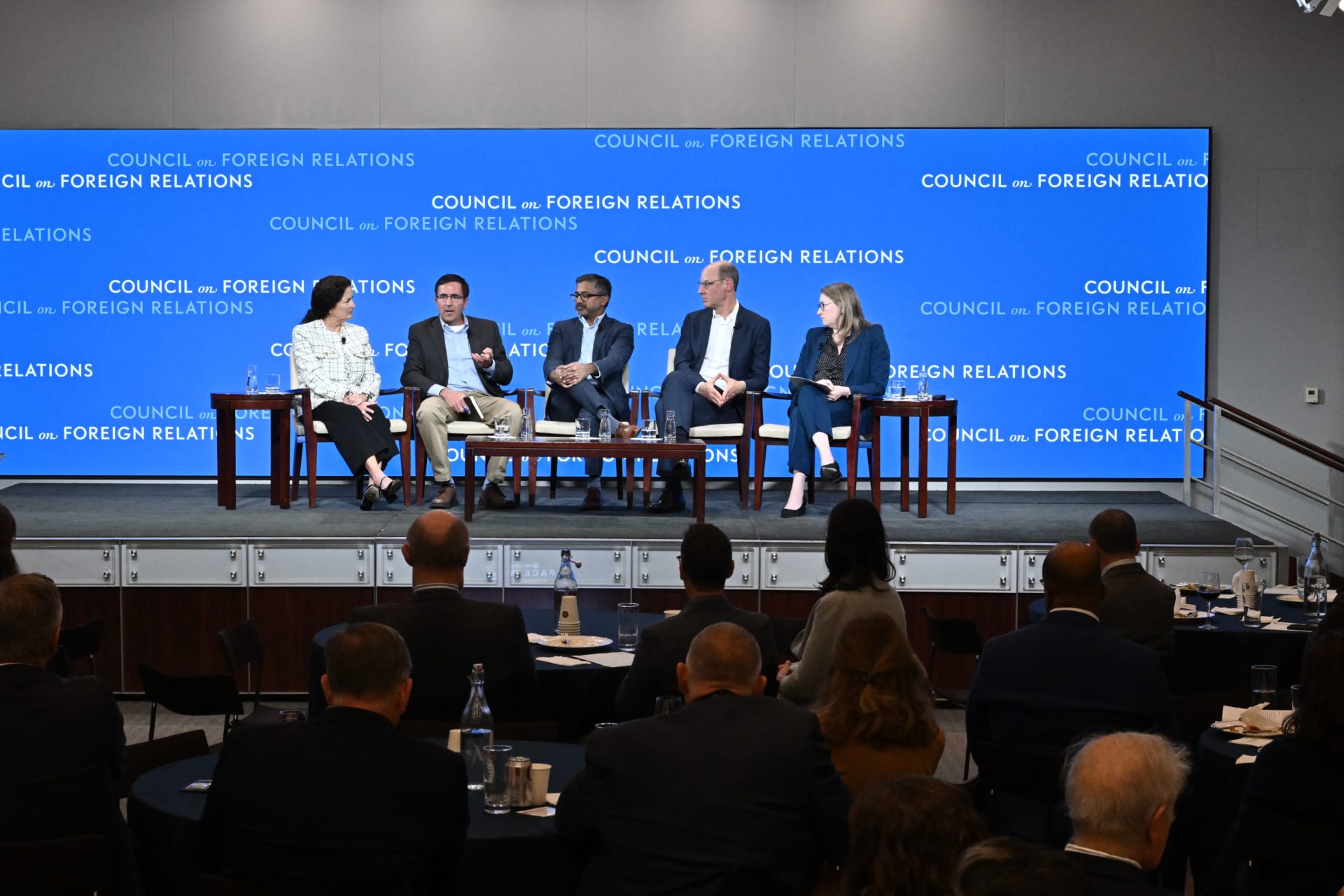
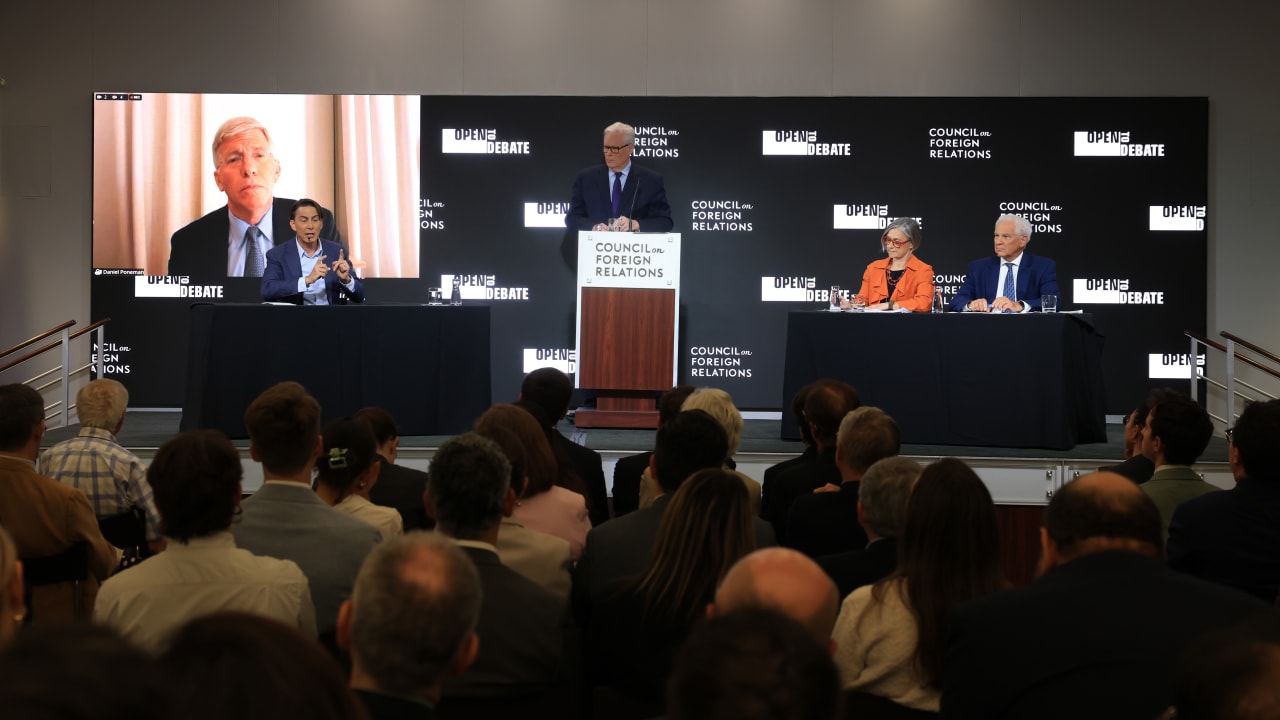
(Applause.) Saudi Arabia made its fortune with oil, but now it aims to go nuclear—and the United States aims to be the outside power that helps them get there. Smart move, or something we will all live to regret? That’s what we are here to debate, in partnership with the Council on Foreign Relations. We’re on their stage in Washington, D.C.
I’m John Donvan. This is Open to Debate. Let’s meet our debaters first.
Please welcome Amos Hochstein. (Applause.) Amos, you are a managing partner at TWG Global. You were the Biden administration’s negotiator on many, many topics in the Middle East, including some of the topic that we’re getting to tonight, working to bring nuclear power to Saudi Arabia. You were, as they say, in the room where it happened many, many times. How do you feel now that this deal might be coming into sight?
HOCHSTEIN: Well, John, I was negotiating the broader agreement of Saudi-Israel normalization. I wish we were at the end of that process.
DONVAN: Uh-huh. Understood. Understood.
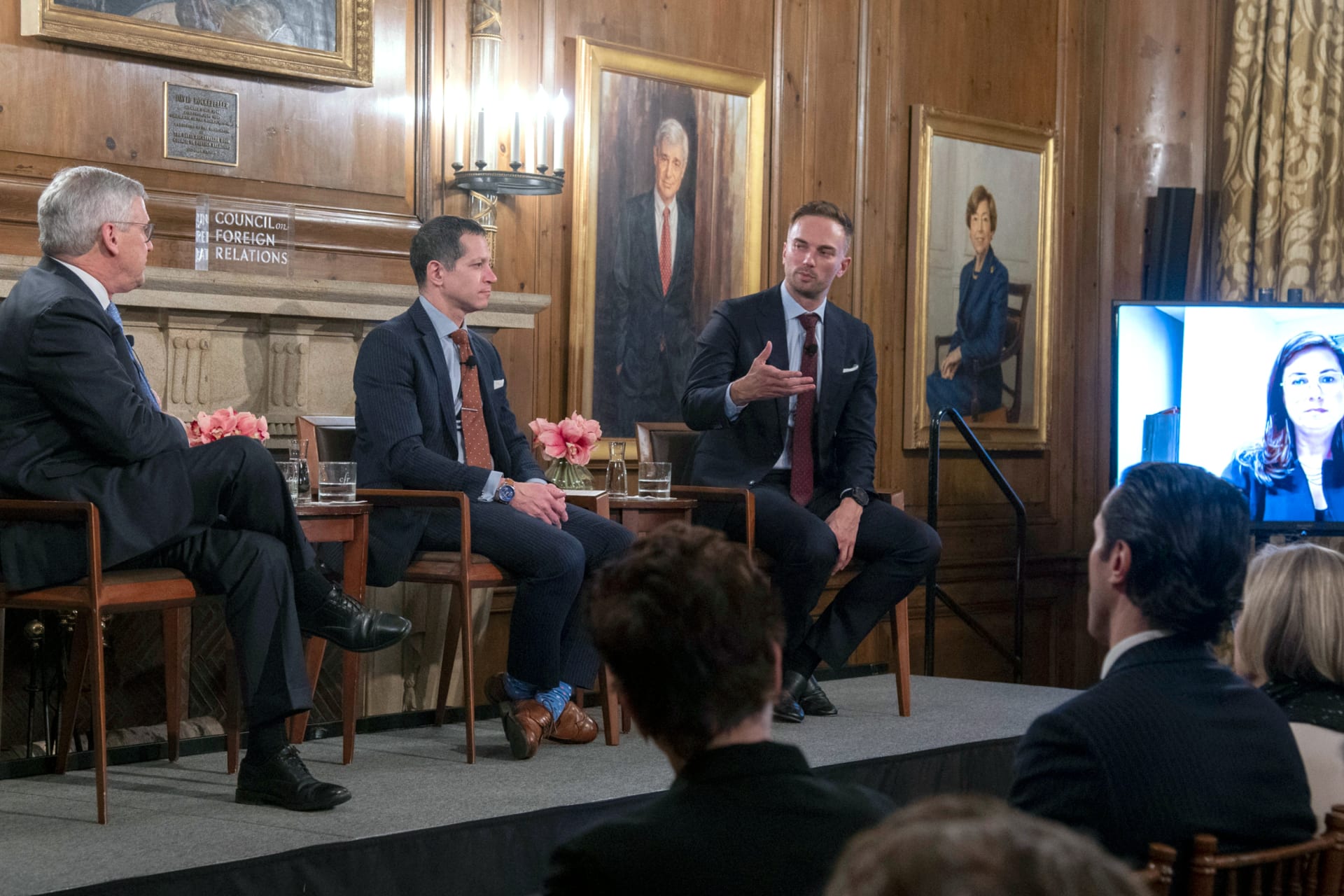
Your partner I want to welcome is, ladies and gentlemen, Daniel Poneman. (Applause.) Daniel, thanks for joining us remotely from Paris. For people who cannot see, I want to explain that you are on a video screen as you are overseas. But you’re hooked up, and taking—and able to hear and be heard. You were on the National Security Council under Presidents Bush and Presidents Clinton. You served as deputy secretary of energy for six years. You actually led some nuclear negotiations. Those ones involved Iran. You were also in the private sector as the CEO of Centrus Energy. And I’m also interested to hear that you are the only member of the panel on the stage tonight who also participated in a televised contest known as Jeopardy—(laughter)—and you won ten grand. (Laughter.) So is today’s debate a piece of cake compared to that?
PONEMAN: I’ll take “rock and roll” for a hundred. (Laughter.)
DONVAN: All right, let’s meet your opponents. On the other side of the debate I want to welcome, please, Sharon Squassoni. (Applause.) Welcome, Sharon. You’re a nuclear energy and security expert. You worked at State, at the Library of Congress. You’ve been in the think-tank world. You’re currently a professor at George Washington University. Some of your students are actually here today in the front row. And I want to ask them, will they find you a tough grader?
SQUASSONI: It’s really early in the semester, but if they give me a good grade on the debate tonight I might be a little more lenient. (Laughter.)
DONVAN: All right. I’m assuming this is all voluntary, all of your participation here, right? OK. All the students are here on a voluntary basis. Thanks, Sharon.
And your partner is Joe Cirincione. (Applause.) Joe, you’ve been working in D.C. for forty years. I know you from many, many appearances you made on the Nightline program, where I used to work. You were almost a regular there. You advised Hillary Clinton and John Kerry when they were both secretaries of state. You’re the author of seven books, including one titled Nuclear Nightmares. Joe, did you have a debate nightmare last night about this debate?
CIRINCIONE: (Laughs.) I had a nightmare that we lost this debate and we actually sold Saudi Arabia the starter kit for nuclear bombs. (Laughter.)
DONVAN: All right. I think we see where you’re going with the arguments to come. (Laughter.)
CIRINCIONE: Did I telegraph too much there? (Laughter.)
DONVAN: All right, it’s time to get to opening arguments. And first, on the screen coming in from Paris, Daniel Poneman is arguing that the U.S.-Saudi—U.S.-Saudi Civil Nuclear Agreement does serve America’s interests. Dan, the floor is yours.
PONEMAN: John, thank you for hosting. Thanks to the Council on Foreign Relations. It’s great to be with you, albeit virtually. And I’ll try not to fall asleep even though I’m six hours ahead of you all.
I’m going to make three points: Number one, it is strongly in the United States’ national interest to lead on nonproliferation and to have a strong relationship with Saudi Arabia for a variety of reasons. Secondly, that this agreement is actually quite strong in nonproliferation terms. And, third, that in the absence of this agreement we’re going to suffer a much greater fate in terms of loss of nonproliferation influence and nonproliferation standards, not only in the region but globally. So let’s just take those one at a time.
Number one, we are about to witness a vertiginous increase in energy demand globally. It’s happening in this country, driven largely by AI and datacenters. It’s driven globally by air conditioning and economic development. We’re talking about a doubling of electricity by 2050 in terms of demand, and you’ve got almost forty countries having said they’re going to triple their nuclear capacity by that time. It is therefore really important that the United States not just write the nonproliferation rules, but also get them implemented. And with no exports, you get no influence. And the sad fact is, we have lost ground over decades. The nuclear sales to Egypt, to Turkey, to UAE all went to other countries. The Russian order book globally is $200 billion, and the United States just got back onto the field with a $15 billion deal to Canada. We’ve got to do better. We used to own the global enrichment market. Now Russia has 45 percent of that market. China built thirty nuclear power plants in the last ten years; we built three in the last thirty. So we really have to get back. And this is an opportunity to get back with Saudi Arabia, which is a very important partner in terms of regional security, in terms of energy security, and it should be in terms of nonproliferation.
Second, this particular deal is strong. It’s important to remember that this is what’s called a peaceful cooperation agreement, a so-called 123 Agreement. It is not a license. It’s not an approval. It will not send any enrichment technology to the Kingdom of Saudi Arabia. It establishes the ground rules for a long-term, century-long relationship, which includes nine really strong conditions that came out of the Non-Proliferation Act of 1978: no explosive pledges, prior consent to any subsequent activities by Saudi Arabia, prior consent to enrichment and reprocessing, and so forth. It also includes on top of that a bilateral safeguards agreement with additional protections which the head of the International Atomic Energy Agency, Rafael Grossi, has called very strong in helping him with monitoring and verification, and, as he put it, very, very similar to the provisions of the so-called Additional Protocol, about which we’ll hear a lot more. And so that’s very important. And on top of those two aspects, the overall nonproliferation conditions and the special conditions of this bilateral safeguards agreement, you have certain provisions that provide exclusivity to American suppliers, that provide for a moratorium if there is a decision not to proceed down the path of enrichment for ten years, and a number of other provisions. So this particular agreement, while not perfect as no agreement is perfect, has a lot to commend it.
And the third point is this is not a multiple-choice exam in which none of the above is an option. If this deal does not go to us, it’s going to go to someone else. And I very confidently tell you that no other seller of nuclear technology is going to demand as much as we already got in this deal. And if we cede our influence to countries like China and Russia in the Middle East, we will have lost a century of global influence. And I can assure you that the chances of Additional Protocol and other measures coming into force will be far more likely if we engage with nuclear cooperation with the Kingdom of Saudi Arabia than if we leave this to someone else.
DONVAN: Thanks, Dan Poneman. (Applause.)
Next up is Joe Cirincione. He comes from the opposing side. He will argue that this agreement does not serve America’s interests. Joe, the floor is yours.
CIRINCIONE: Thank you very much and thank you for the Council for having me here.
I think we have to approach this question the same way we should approach every serious policy proposal, especially national security and foreign policy issues. We have to ask the question: Cui bono? Who benefits from this? In this case, you have a handful of companies that are going to make billions of dollars selling sensitive nuclear technology to a dictatorial Middle East theocracy. If they do this, they will be breaking a precedent with the entire history of American behavior over the eighty years of the nuclear age. We have never sold this kind of technology to another country. Not reactors: If what Saudi Arabia wants is the ability to make the uranium and reprocess the spent fuel rods and make the plutonium, the two key ingredients for nuclear weapons, this is not an energy deal; this is a Saudi nuclear bomb program. If we do this, we will be sacrificing core American national security interests, for what? So that a few people can make a lot of money.
We know from the reporting of the New York Times that one of Trump’s megadonors lobbied him personally to get this deal, to make this deal, because his companies would benefit financially. We know without even doing any further research that the Trump family has billions of dollars in financial deals with the Saudi monarchy. If Donald Trump was any other government employee, he’d be banned from anything to do with this deal because of the obvious conflicts of interest. If Jared Kushner was actually a government employee, he’d be banned from doing anything with this deal because of his glaring conflict of interest.
But let’s put that aside. I know polite company in Washington doesn’t really like questioning the interests and whether there’s a conflict here, so let’s talk about the policy. Is this really about nuclear energy? Nuclear reactors are the most expensive way to make electricity in the world today. Saudi Arabia, for one-tenth the cost of what this deal would be, can make ample electricity from the solar, wind, and natural gas resources for which they have plenty.
But let’s say they want nuclear reactors for prestige, or for some other reason they just want them. Why do they need the fuel cycle? Why do they need the ability to enrich uranium and reprocess plutonium? Remember, the same centrifuges that can spin the gas up to low levels for fuel rods can spin it up to high levels needed for nuclear bombs. The same facilities that can split up those spent fuel rods for waste disposal can extract the plutonium for the core of nuclear weapons—Hiroshima, uranium; Nagasaki, plutonium. Don’t kid yourselves; the lights are blinking red. This is to give Saudi Arabia a threshold nuclear capability. In other words, they would be a screwdriver’s turn away from making the nuclear bombs that the crown prince has repeatedly said they would make if Iran got the bomb.
If we go ahead with this deal, we may be dealing a fatal blow to what remains of the nuclear nonproliferation regime—a regime the United States created and has worked for seventy years to maintain—because if Saudi Arabia gets this, you think it stops there? If that dictatorship gets this material, gets this equipment, other people are going to demand it, other countries in the region and beyond. Don’t be a chump. Don’t fall for this nuclear energy scam. You have to vote no on this deal.
DONVAN: Thank you, Joe. (Applause.)
Next up, Amos Hochstein will be giving his opening statement. He’s arguing, again, that the U.S.-Saudi agreement serves America’s interests.
HOCHSTEIN: Good evening. (Applause.) I have to redo everything I was thinking about saying after listening to Joe, but—
DONVAN: Hey—
HOCHSTEIN: —this is—
DONVAN: I just want to ask you to stay on that side. Thanks. (Laughter.) Rules are the rules.
HOCHSTEIN: Yeah.
I was a negotiator, as John said before, under the Biden administration for a U.S.-Saudi Civil—Civil—Nuclear Power Agreement, including establishing a—what we called at the time a black-box enrichment facility, meaning a U.S.-owned facility on Saudi territory. And we—by the end of 2024, we were basically at an agreement. We had negotiated with the Saudis almost all the conditions in the collaboration—I was leading it, but in the collaboration with the Department of Energy, our labs, the intelligence community, the Department of Defense, the Department of State, and with the authorization of the president. I briefed Congress on it, both parties, in both open and in classified sessions, and people understood what we were trying to achieve. So, yes, there’s a few big differences.
One, we were doing it under the umbrella of a(n) Israel-Saudi normalization, and this was part of that agreement. And people could say, well, that’s the big difference. But all the things that Joe just said about it being this big, scary thing would have been true then too. So what is this—what is this agreement about?
First, this agreement doesn’t go nearly as far as what we were actually contemplating, because, let’s be clear, what Congress has before it now is not an authorization to build an enrichment facility; it is a(n) agreement to authorize a two-year study on commerciality and onto making sure that we can get the kind of verifications and standards in place. At the end of that study, up to two years, there will have to be an agreement to actually authorize the enrichment. So let’s be clear on what this agreement is.
Now, this agreement also is—does not have the Additional Protocol, which is what is traditionally what the IAEA, the U.N. agency that supervises nuclear agreement(s), wants to have. But the head of that agency said, yes, it is not the Additional Protocol, which is the ideal, but it does have—it is very, very similar because it does have what it needs to have to move forward.
And why? What’s the context? Why are we doing it, to Joe’s question? Because the world that we used to live in in the Cold War in the 1990s and even into ten, fifteen years ago is not there anymore. We don’t get to say to countries: Unless you do everything that I say, you don’t get to have it. They now have options. They can go to the Russians. They can go to the Chinese. They can go to others. They haven’t so far, but they can if they so choose. In fact, during the negotiations with the Saudis, we had other countries—one even an ally—that quietly, secretly told the Saudis: Don’t do the deal with the Americans. We’ll do the deal, and we’ll give you an easier time on verification.
So, when you decide how to vote, think about it this way. Do you want a nuclear enrichment program in Saudi Arabia that is U.S.-based—U.S. technology, U.S. verifications, U.S. control—or do you want it with someone else? Because having it with no one, that’s not one of the options on the menu. That’s why I would say you should vote yes.
DONVAN: Thank you, Amos. (Applause.)
And, finally, please welcome to the stage Sharon Squassoni, who’s arguing this agreement does not serve America’s interests.
SQUASSONI: Thank you. (Applause.) I need some notes here.
So I believe that nuclear energy cooperation can serve American interests, but that this deal does not, because this is a special deal for a special ally that serves special interests. So what do I mean by special? We are creating a pathway to share enrichment and reprocessing technology with a country that doesn’t have it. We have never done this before. In fact, we created a nuclear suppliers cartel specifically to limit the spread of enrichment and reprocessing technology because it is so risky. This deal, if we share E&R, would not meet the requirements of the Nuclear Suppliers Group for sharing enrichment and reprocessing because Saudi Arabia won’t sign the Additional Protocol, unlike 144 other states in the world. All but two of U.S. nuclear cooperation partners have the Additional Protocol. It has been the de-facto standard for nuclear cooperation since it debuted in 1997. And since 2020, we have a legal requirement under the National Defense Authorization Act that our new partners need to have the Additional Protocol, and this is why President Trump had to waive that requirement for Saudi Arabia.
Do the novel fixes in the agreement—like the bilateral safeguards agreement, black-boxing enrichment, and exclusivity contracts—outweigh those risks? I don’t think so. I don’t have time right now to go into that, but I hope we will in the discussion.
OK. How special is Saudi Arabia as an ally? It’s not because of the usual ties like defense commitments and cultures; it’s very transactional. Saudi Arabia was named a major non-NATO ally in January, just hours after Mohammed bin Salman announced that he would nearly double his investment in the United States from 600 billion (dollars) to $1 trillion, and civil nuclear energy was part of that. It’s also special because we’ve been negotiating with the Saudis for twenty years on this, mostly trying to get them to—(laughs)—to agree to the Additional Protocol. And it’s special because, as my partner mentioned, Mohammed bin Salman has been loud and clear about his nuclear intentions. He will match Iran in capability, including nuclear weapons.
So what about special interests versus America’s interests? The proponents of this deal would have you believe that the nuclear industry is a national interest because it’s strategic. Nuclear energy is important, and the U.S. is spending a lot of money on it, just $20 billion alone in DOE loans this year for the domestic supply chain and enrichment projects. But that will be nothing compared to what the USG will spend to limit the damage from a clandestine Saudi nuclear program. We’ve already spent 34 billion (dollars) bombing Iran.
I would suggest that the real American national interest when it comes to nuclear energy is a stable nuclear order where you reduce the risks of nuclear weapons proliferation. And you achieve that through rules and principles, through global standards like the Additional Protocol, and not spreading enrichment and reprocessing.
I think that if we are concerned that other suppliers truly intend to share enrichment and reprocessing with Saudi Arabia we should be negotiating with them to stop, not trying to beat them to the punch. The stable nuclear order requires U.S. leadership and not abdication.
And I’ll stop there. Thank you. (Applause.)
DONVAN: Thank you. All right, that concludes our first round, and now we move into round two. And round two is where the debaters have much more of a freewheeling conversation with one another. But I just want to share what I think I heard in the opening statement.
So we heard Dan Poneman and Amos Hochstein—who are answering yes, it does serve American interests—make a very strongly phrased argument arguing that the world has changed; that the days when the United States could call the shots in the—in the realm of nonproliferation were the days when the U.S. held a monopoly on things like enrichment and a great deal of the technology. Those days are over. There are competitors now. The Saudis have other places to turn. They also say that without trade there will not be influence, and pulling out of this would, again, hand a gift to rivals like Russia and especially China.
The opponents, Sharon Squassoni and Joe Cirincione, very, very strongly saying this is a bomb program, that the intentions of the Saudis are ultimately to get themselves to be a key turn away from having a nuclear weapon, that that’s the whole purpose; that there’s no real economic case to be made for their need to have these, and that in the—in the longer run this will be creating a pathway to enrichment that will risk breaking the long tradition of nonproliferation led by the United States and an effective nonproliferation regime led by the United States, all of that falling apart.
So there’s a lot to talk through there, and I want to go through some of it piece by piece. But we’ve heard the term Additional—the Additional Protocol.
SQUASSONI: We have 144 countries that have signed the Additional Protocol, including us and the nuclear weapons states. So it was designed specifically to detect undeclared activities, as Dan mentioned. It arose out of the first invasion in Iraq in 1991, where the Iraqis were duping IAEA inspectors. They would say, look over here but not here. And so the point about the Additional Protocol is that—or, the bilateral safeguards agreement—is that it is only going to apply to U.S.-Saudi cooperative facilities. It won’t cover the entire rest of the country.
DONVAN: So in what way, then, are you arguing that the Saudis are being cut a break on the Additional Protocol?
SQUASSONI: They’re not signing it.
DONVAN: OK, let’s take that to the other side. And a concern to that.
HOCHSTEIN: So the Saudis have been clear that they’re not going to sign the Additional Protocol. I’ve spent hours and hours with Saudi officials at the highest levels on this issue, and part of it is the level of intrusiveness of—it’s not that—I mean, can you go to someone’s bedroom and look for it? Can you go to certain residences and look for it? And of course what we want to have as the ideal is the Additional Protocol. But as the head of the IAEA himself says—who’s, by the way, someone that the U.S. government in successive administrations has praised as probably one of the best IAEA administrators, and whom we trust in many different areas for negotiations—has said, yes, it’s not the ideal, but if you take this agreement of what it does provide, including some of, probably, the annexes that we can’t see, there is enough there to satisfy our security.
Now, we also have the time. As Dan said, this agreement is not actually authorizing an enrichment agreement. I just want—(laughs)—to be very, very clear. This agreement says we have a study to see if we can do this and if it works. And then the administration, if they do, would have to come back and say, we want to authorize actual enrichment.
At the end of the day, you have to look at not something that is the ideal. And, yes, in UAE we did it differently in 2010 or 2011, and that’s fifteen years ago. But, folks, the world has changed. Not every country that today we accept as having nuclear capability is one that we wanted them to have nuclear capability. But guess what? Some of them figured it out. And the idea that they will not figure—that the Saudis will never figure this out or will not be able to work with those to enable them to figure this out is a mistake.
So the—this is a very important ally of ours. And we can describe them in pejorative terms, and we clearly don’t support their form of government, but they are a very important ally, and that is a bipartisan issue of every president that we have had going back to Roosevelt.
CIRINCIONE: What this deal does is weaken even those standards. There’s a reason Saudi Arabia wants to keep its activity secret. I mean, how many blinking red lights do you need before you understand what’s going on here? And we can’t accept that secrecy.
DONVAN: All right. I need to let Dan into the conversation.
PONEMAN: I’m not sure the secrecy part comes through. I invite people to read the statement of the Saudi minister at the International Atomic Energy Agency conference this week. They have committed to more transparency than is required by any other entity that I know. So that’s one thing.
The other thing is don’t forget Rafael Grossi also said in recent days he would not bring anything to the Board of Governors of the International Atomic Energy Agency that he did not believe adequately protected against proliferation. It would be against their mandate. It would be against their ethics. And that would apply to enrichment and reprocessing. And as Amos said, he has said that this is very, very similar in functionality, if not in name, to the Additional Protocol. So I think we ought not to get hung up on a word when it might be actually functioning quite strong to have the measures that that Grossi has referred to.
DONVAN: Sharon?
SQUASSONI: I would just add that Rafael Grossi did not say—(laughs)—that he would be able to draw the conclusion that he can draw for many, many other countries, the broader conclusion that there are no undeclared activities in Saudi Arabia. You can’t do that without an Additional Protocol. So I agree entirely that there are—that the bilateral safeguards agreement would provide additional verification, but it is not a substitute for the Additional Protocol.
And we want—(laughs)—we strove so, so hard to get Iran to sign that Additional Protocol because we needed those inspections. If we give a pass for Saudi Arabia—
CIRINCIONE: That’s it.
SQUASSONI: —we’ll never get that again for Iran.
HOCHSTEIN: Wait. Iran is literally an enemy of the United States, an adversary of the United States who we have been at war with. And we did reach a JCPOA agreement, the Joint Comprehensive Agreement, that allowed them enrichment to 3.67 percent. This says maybe we’ll get to 5 percent. I don’t think we should bring Iran into this question. Saudi Arabia is not Iran. It is a critical ally of the United States. We have U.S. military bases there. We have intelligence sharing with Saudi Arabia. They are an investor. Their key investments are in the United States.
I think this is the problem that we have with time moving forward. We get stale. We agree to something, and decades later we say if we don’t do it exactly this way we’re not going to do it at all; this is the way it is. And this is how technology after technology moves away from the United States’ control. I can give you a list of all the things that we thought we’d control forever. We don’t. China controls many of those technologies today. They are the main exporter of those technology.
We were the first to small modular reactors—really, really small nuclear power plants—but China will be first of the market with them and the largest. We, by insisting on these standards with no flexibility—and again, not undermining U.S. national security interests; that is critical. But if we insist on it being in the exact same square and not going to the experts who say this is very, very similar, and let’s have a study about it, and at the end of the two years if that study shows that it can work then we should authorize it—again, we’re not authorizing it today.
And you—last sentence. If you—you can be for this and be totally against President Trump. You can be totally against corruption and recognize there is corruption in this system today in the United States and still be for it. We cannot take a position that everything that they do is therefore I’m immediately against it.
DONVAN: Joe, your response, then, to Amos’ last point.
CIRINCIONE: So why are we jumping through all these hoops? Why are we trying to find some special way for our special friend to have this special inspection process? Why are we agreeing, well, we’re not going to actually sell you the uranium enrichment now; we’re going to, you know, make a special deal, and then we’ll get to it later? Because it’s clear that if you did those things this would be obviously a bomb program. This is what this is.
So now we’re saying, well, we’re not going to—we’re going to sell them the gun, but the ammunition is going to be over here in a box, and they’re not going to get to it until we have a special meeting, and then we agree on whether they can open the box or not. So you’re going to trust the Trump administration and a Saudi monarchy that we know lies repeatedly about its intentions. You’re going to trust them to take a deal—
HOCHSTEIN: But we know—but, Joe, is there—
CIRINCIONE: —that they’re not going to get nuclear weapons from the technology we’re selling them?
HOCHSTEIN: Will there be an enrichment when Trump is in office? You’re saying this as though this will be built—he gives approval; it gets built six months later. We’re talking about, what, ten years, fifteen years later?
CIRINCIONE: Right. So you want us to start down this slippery slope in the hopes that the business industry that’s going to make money off of this can lobby any administration into doing it, and for what?
HOCHSTEIN: Yes, nuclear power is business. It is a business—
CIRINCIONE: How are we—so we can block China from doing it?
DONVAN: I’m making room for Dan.
PONEMAN: This is not how countries build bombs.
CIRINCIONE: Yes, it is.
PONEMAN: I beg your pardon. When a country wants a bomb, they have a covert program. They steal blueprints from A.Q. Khan and they build it that way. If the notion is if you stipulate for a moment that this thing were actually built, and you think that some ninja-clad Saudis are going to take over the plant and then convert it, and you think they can get to a bomb faster than the United States or Israel or somebody can stop them, that’s not reality. This would enlace and embrace Saudi in a set of transparent arrangements.
And one important thing that has to be added. In addition to these special bilateral safeguards, which are beyond anything that others would insist on, the Saudis already have a Comprehensive Safeguards Agreement with the International Atomic Energy Agency. So if there is intelligence—and, boy, people will be looking—of a clandestine program, they have a right to ask for a special inspection. Sharon and Joe will remember we did that with North Korea many years ago. So it’s not as if we are without recourse if we find the Saudis are, in fact, moving down this path.
The other thing we have to keep in mind—and Amos just made the point—this is an agreement to build reactors. There is a process under the same kind of constraints that exist in other 123 Agreements for prior consent after this two-year study. But if we take ourselves out of the field of play now, just like we lost Egypt, just like we lost Turkey, just like we lost the UAE, actually, we’re going to lose this, and then you have no exports and you have no influence. To me, this is not about companies making money; this is about—
CIRINCIONE: So—
PONEMAN: —forgive me—this is about the United States having a role and the leverage to implement our own nonproliferation standards.
DONVAN: So Dan’s point is one that—and Amos has made it as well—is one that you have not responded to, which is the if the U.S. steps out somebody else will step in, and the U.S. will lose influence, and the Saudis will get what they want anyway under a regime that would be more threatening to the United States. What is your response to that? Either of you.
CIRINCIONE: Let me start.
SQUASSONI: Sure.
CIRINCIONE: Aren’t you tired of this argument: The Chinese are coming, the Chinese are coming? The Chinese are building new nuclear missiles; oh, we have to race and build more nuclear missiles. The Chinese are racing on AI; oh, we have to race on AI. The Chinese have never sold uranium enrichment or plutonium reprocessing equipment to anybody else. Why do you think they would do this? And more importantly, as Sharon said, if we set the standard, if we say this is not allowable, no one should sell this technology, and then China tries to do it, we should build an international coalition to convince them otherwise. This is a false argument that’s trying to scare us into making a deal that’s going to make a very few people a whole lot of money.
Sharon, did I miss anything?
SQUASSONI: No. I would say just in the nonproliferation assessment statement, the unclassified version that accompanied the agreement to Congress, it does mention that, you know, Saudi has—they’ve courted many nuclear suitors, but I didn’t see anything in there that the Chinese or Russians were going to sell them enrichment. And actually—but maybe there’s something classified I don’t know about. This is one of the few areas where we’ve agreed with the Chinese and Russians for a long, long time, that it was not a good idea to spread enrichment and reprocessing technology to additional countries.
HOCHSTEIN: I think we also agree with the Russians not to invade other countries—(laughter)—and not to bomb civil infrastructure. We agreed with them not to bomb near a nuclear power plant, in fact. They’ve done all those things.
Yes, you can feel good about yourselves. We can say, oh, the bogeyman, we’re threatening the bogeyman. But they are, guys. (Laughs.) They are actually competing with us. They would like to dethrone us from many parts of our leadership position in the global economy. They do. Remember, it was just fifteen years ago that we were the world’s leader in renewable energy manufacturing. We’re, what, 3 percent today? Guess where the other 97 percent is. Oh, it was novel when we were the absolute leader in EVs. We will probably not sell many EVs around the world as time goes by. Look at the sales. The Chinese control the technology, and they have the components, and they have control of other things. If we think—if we want to just sit here and say, look, I don’t believe the Chinese will ever want to, or I don’t think the Russians will, or other countries, and if I find out that they do I’ll try to convince them not to, but remember, that’s in a world where we’ve already told the Saudis we’re not doing this with you unless you do it exactly as we say under all conditions.
The question, therefore, becomes: What exactly is this agreement? This agreement is reactors. It is not enrichment yet. And we’re not giving them guns. And it’s not that simple to simply say that every civil program can just with a turn of a—of a—what is it, the turn of a—of a—
CIRINCIONE: Screwdriver.
HOCHSTEIN: —screwdriver can just become a weapons program. I think it’s a little bit more complicated. I think you don’t have to be an expert in this room to know that.
So I do—I do worry for our national security. I worry about stacks that are in—entirely with other countries’ technology stack, equipment, knowhow, expertise. Many of our negotiations around the world are exactly about that. When we—when we think there’s a risk, we go in and say: What can we offer you to do this with us? And so to hear—I wish I lived in the 1990s. I wish I lived in the 2010s. There were a lot of things that were great about the fact that the United States was a single power, and we had everything on our side, and nobody else did. I can’t sit back and allow the chance that another region and other countries will develop this expertise/knowhow without us.
SQUASSONI: I’d like to just respond to one point on the competitiveness of the U.S. nuclear industry. The first time Turkey put out a bid for proposals, it got zero response from anyone—(laughs)—not from the American vendors, not from anyone. Russia was able to move in and sell a reactor because it provided all the financing, right? And it’s a kind of build, don’t operate kind of thing. I think we’re pretty lucky that Russia is not out there trying to sell enrichment—(laughs)—to get—to get contracts around the world. So I don’t think the competitiveness—I don’t think we should be undergirding U.S. nuclear industry competitiveness by, again, offering special deals.
PONEMAN: May I just make a point here, John? It keeps coming back, but it’s a bit of a red herring, candidly. There’s going to be a two-year study. The two-year study itself will end after this current presidential administration. If a decision were taken to actually provide enrichment technology, as our worthy opponents suggest, that would require an amendment to this agreement, which specifically bans sending enrichment technology. That’s got to go to the U.S. Congress again for a full ninety-day review. There is no reason to buy a pig in a poke here. It’s not the fast track that people think. And even if it’s a mere black box, that also has got to go to the congressional committees of the Senate Foreign Relations Committee and the House Foreign Affairs Committee as a so-called subsequent arrangement.
So this is—as Amos said, this is to get us in the game. This is not going all the way to sending a program. And there’s going to be a study, and we have—we’ve got to concur with the outcome of the study. And by the way, if we then decide we do not wish to proceed after this two-year study, the Saudis cannot do any enrichment deal with anyone else for another ten years.
DONVAN: Does it concern you, as your opponent said, that the Saudi leadership has said that if Iran gets close to a nuclear weapon they will proceed in the same direction?
PONEMAN: Of course. Anyone has to be concerned about that. I’ve spent fifty years, as has Joe and others, trying to fight against proliferation. But as I said, a big civil U.S. nuclear program is not how they’re going to get weapons. That’s how we prevent them from getting weapons, by having the transparency, by having the equities with the regime that will lead them to refrain from that outcome. And by the way, if one were to worry about that result—and I think we all should—again, the vector that the Saudis are likely to go down, they’ve just signed a strategic partnership with Pakistan and Turkey. I’m not praising it, but I’m just saying to be realistic the way that we keep them away from the bomb is by embracing them in a long-term strategic relationship, not leaving the field to the Russians and the Chinese.
DONVAN: All right. I would like to go to the audience for questions now. In the very far back, if you could stand up. You see me—the mic is—a microphone is going to come to you if you can stand by.
Q: Yes. Thank you for taking the time to speak with us this evening and enlighten us on this important topic.
What was interesting to me is that only once the JCPOA came up during the entirety of this debate. And so I’m curious to know if I supported that agreement with a belligerent theocratic regime in the region, why shouldn’t I support one, especially if it concerns a two-year study, with a country that ostensibly seeks to play by the rules?
DONVAN: That was a great question. Well done. I think that question goes to this side.
CIRINCIONE: Sure.
DONVAN: Start us.
CIRINCIONE: The JCPOA rolled back a program that was already existing. It slashed the Iranian enrichment program to a fraction of its size. We tried to eliminate it completely. We couldn’t quite get that deal, but we set up an arrangement that would put us on the path to the eventual elimination of that program.
In Saudi Arabia’s case—this brutal, theocratic, feudal system—we’re trying to stop a program from beginning in the first place. Worse, we’re trying to stop our own government from selling them the nuclear rope they will use to hang us.
It’s a completely different situation. One, you’ve got a serious problem, you’re reining it in. And the other is you’re trying to stop your own government from making a stupid deal that will create the problem.
HOCHSTEIN: So is the lesson for countries, based on your answer, Joe, go get a nefarious agreement, make it big, so that then you can still have one, but if you want to build one with the United States that is under control and measured that we’re not going to—because we’re not let you do that, so the only way you get it—
CIRINCIONE: No.
HOCHSTEIN: —is if you get a really bad one and then we can pare it back?
CIRINCIONE: No, of course not.
HOCHSTEIN: And Iran was not going towards zero; it was to 3.67 (percent). And this is just a study.
Q: Thank you.
As a former college debater myself, I want to ask a question, kind of out of left field. To play devil’s advocate, would it be so bad for U.S. interests—and this does not reflect my own personal opinions, but I’m curious for those onstage—would it be so bad if Saudi Arabia did get a nuclear weapon?
CIRINCIONE: Well, President Trump, interestingly, doesn’t think it would be bad. When he was asked this question by Anderson Cooper, he said he thought it would be a pretty good idea for South Korea and Japan to get nuclear weapons, and particularly Saudi Arabia, which—whom he already had a longstanding business relationship, to get a nuclear bomb. This, of course, is a point of view that some proliferation experts or some nuclear experts have promulgated, like Ken Waltz.
It’s a crazy idea, the idea that we’d be safer in a world where twenty, thirty countries with nuclear weapons—small, large, responsible, and irresponsible. That’s why we created the nonproliferation regime in the first place, to prevent that terrifying world from materializing. It hasn’t worked perfectly, but there’s only nine countries that have nuclear weapons. And we should be working to keep it there and roll it back, not spread the technology that creates more nuclear weapons states.
DONVAN: Dan wants some of this as well. Dan, you’re on.
PONEMAN: I’ll just answer that question straightforward: It’s against our interest, right? As Joe just said—I’m going to agree with him on this point—eighty years after Hiroshima, there’s nine nuclear weapons states. President Kennedy said there’d be twenty to twenty-five by the early 1970s. How did we get there? Because the United States was the leader. We drafted the legislation. We got the International Atomic Energy into existence because of Eisenhower’s Atoms for Peace. We promoted the Non-Proliferation Treaty.
The problem is now we are hanging on, right? And if we don’t reestablish the leadership that we once had unchallenged, the things that have happened with BYD, and electric vehicles and silicon—solar and so forth, and China taking over and Russia taking over—they’ve got a $200 billion order book; we got 15 (billion dollars). If we don’t get back, we’re going to lose our leadership, including on nonproliferation. No exports, no influence.
DONVAN: OK. I’m going to—by the way, you were the debate expert. You got everybody to agree onstage. (Laughter.)
All right, in the center. If you could stand up, a mic’s coming up behind you. Barbara, I’ll come to you next.
Q: Hi. Laura Holgate, former U.S. ambassador to the International Atomic Energy Agency. (Applause, laughs.) Why, thank you. (Laughs.)
I agree that it would be great for the U.S. to sell—to be the vendor of choice for nuclear reactors, nothing else, to Saudi Arabia. What I worry about, however, and what is not under debate by either side, is that Saudi Arabia has said at the top level that they will violate the Non-Proliferation Treaty. They’re going to violate that treaty.
DONVAN: Ambassador, I need you get—to get to a question.
Q: The question is, the 123 Agreement has the most piddly-squit sanctions.
DONVAN: That’s a technical term?
Q: That’s a technical term. We use it in diplomacy. That’s a technical term for if they violate that treaty they’ll violate the 123 Agreement. What do we get to do? We have to go—
DONVAN: What’s the question?
Q: —take it back.
DONVAN: What’s the question?
Q: How can we take back material and capability that we have already transferred, that’s already functioning in Saudi Arabia, if they do actually go for the bomb?
DONVAN: Amos, that’s a challenge to your side.
HOCHSTEIN: They said that if Iran got nuclear weapons—I am against that too, and I agree with Joe. Like, I just want to say, you got me to say I agree with Joe, and that doesn’t happen often. (Laughs.)
CIRINCIONE: Come on over. Come on. Come on.
HOCHSTEIN: So, look, there is a—they have agreed to in this agreement—we’re in an agreement with them to be able to have a—again, the study, and we’ll give them the—on the reactors. And if we get to this facility that we would build, are there ways for us—as your question is, can—how can we turn the clock back if something goes wrong? And I’m not going to get into it tonight, but I can tell you that for months of negotiations with the entirety of the U.S. government we addressed these kinds of questions. And first, I believe that there are mitigation efforts.
Second, I think that what we’re referring to here is building out a facility that will take over a decade to build, in which we will be in a position to review, use our—all our capacities and capabilities that you know well to look at what—kind of if there is a nefarious project that is—that the Saudis or anyone else is trying to do to undermine the civilian nature of this agreement, and we can take action to it. And there are many, many ways for us to take action on this kind of a program. I’m not going to spell it out here, and you know that I’m not going to spell it out here, but there are many ways for us to be able to do this in a potential hypothetical facility in Saudi as well as in other places around the world.
DONVAN: Barbara Slavin in the front row, three-time debater with us. (Applause.) Barbara, I really like to give preference to the civilians in the audience, which you’re not one of as a former debater, so I’m indulging this because you were very persistent.
Q: No, I appreciate it.
First, my understanding is it’s up to two years study, which means if Trump decides tomorrow he wants to give them enrichment he can do it. And given that he may tear down the Kennedy Center tomorrow, I would not count on up to two years.
My question is this, for Amos and for Dan. I’m old enough to remember the shah of Iran. We didn’t sell him enrichment technology. We offered him reactors because even though he was such a close ally of the United States, the U.S. policeman in the Persian Gulf, we didn’t want him to have enrichment or reprocessing technology. Why should we trust a regime led by a man who chopped up my good friend Jamal Khashoggi—(applause)—who kills and imprisons his opponents, and whose ass is currently being kicked by Yemeni tribesmen called the Houthis? How do we know he’ll still be in power? Why should we take the risk?
DONVAN: OK. Dan, do you want take the—
PONEMAN: If this were to go—I’ll make two points. If this were to go to sending enrichment technology, that is a new agreement. That is not this agreement. We’re not debating that. And that would require a whole new congressional ninety-day review. So that’s not really—that’s not germane to today’s debate.
The second thing, to amplify Amos’ comment, the solutions—and this goes to Ambassador Holgate’s question—the solutions that we would have in the case of a violation are much faster than any route they’re going to get to the nuclear weapon based on some expected technology path provided by us years down the pike.
So I think we need to focus—not be like the drunk who looks for his keys under the lamppost, but let’s look at where the problem—where the problem is, which is addressing the demand side of the equation and making the Saudis our strategic allies so that they don’t feel the need to go down that path.
Q: Hi. I’m Tim Persons, the former chief scientist of the GAO. So thank you to the discussants here.
The word “reprocessing” has come up a couple times, so I just wanted to ask both the pro and the con to talk about the reprocessing potential of this particular agreement and what that might be.
DONVAN: OK. Can you—can you define it? Could you help us define that term?
Q: Reprocessing. So this is about how plutonium is a manmade substance that’s created only in reactors. It can be harvested. Actually, by the way, reprocessing technology was one of these American inventions, and now the French have perfected it, and they’re the—sort of the world leaders on doing that. So how you harvest out of spent nuclear fuel—
DONVAN: All right. So every civilian nuclear reactor produces plutonium. Something has to happen to it.
Q: Can produce weapons-grade plutonium.
DONVAN: And it can be used for weapons. And what do—what do you do about that?
Q: And I was just wondering about the potential—(inaudible). Thank you.
DONVAN: Let’s take it to—let’s take it to Joe, please.
CIRINCIONE: Most countries that have nuclear reactors don’t make their own fuel. The reason is it’s extremely expensive. It takes a decade or more to build the facilities, billions of dollars. They—usually countries buy it from the half-dozen or so countries or consortium that do make it, and that’s what we prefer. That’s the arrangement we made with the United Arab Emirates, who also wanted to buy nuclear technology from the United States. And we made a great deal with them. We helped them build a reactor. They have an operating nuclear reactor today. But we explicitly excluded uranium enrichment or plutonium reprocessing equipment from there. We called it the gold standard.
This is what the Saudi deal would kill. It would just shatter that gold standard and we set up a path in the name of nuclear reactor contracts to skirt the verification mechanism, to go down the path of building uranium enrichment, for what? It makes no economic sense for Saudi Arabia to do this unless they have—
DONVAN: All right. Joe, I’m going to—Joe, I’m going to jump in because the question is—you’ve moved passed the plutonium question.
HOCHSTEIN: Well, reprocessing is not allowed under the agreement.
DONVAN: Say again, please?
HOCHSTEIN: Reprocessing is actually not permitted under this agreement. If we got to a point of—at the end of the study of doing—of doing enrichment, there would not be allowed reprocessing. So I think everybody here agrees. And I know that in my negotiations with the Saudis—and I can tell you that I negotiated this directly with the senior leadership—there was not going to be reprocessing. They wanted a commitment to have that conversation again in thirty years and we were open to having a conversation again thirty years after the enrichment began, if we got to the point of enrichment. So you’re talking about in fifty years from now.
DONVAN: Sharon, does that response reassure you?
SQUASSONI: No, because it says—(laughs)—the parties shall not reprocess unless the parties agree in writing. So this is the same refrain we keep—we keep hearing, we’re not giving you this stuff unless we agree in writing. I know that this is language that we see in many, many nuclear cooperation agreements, but those agreements don’t have all this extra stuff which is promising—(laughs)—enrichment and, you know, the full fuel cycle.
I am shocked that Saudi Arabia, which now does not have any commercial nuclear power plants, wants the full range of fuel-cycle capabilities. There’s got to be a reason why reprocessing was left in there, and I think it’s because they want the option open in the future. And make no mistake, it’s the second path to the bomb.
DONVAN: Dan?
PONEMAN: Plutonium bombs are much, much harder to build, right? That’s why we have to test it at Alamogordo first. It is—it’s in the same category, as Amos said. It’s not permitted. It would require U.S. prior consent.
And so I think one thing have to remember—and it came out of both Sharon and Joe’s comments—it is not for the United States to tell another sovereign country what their smart policy is. You know, there’s a long history of countries that have natural resources not wishing to be stuck at the low end of the value-add chain, and there’s been a very explicit set of arguments that the Saudis have made just as they went up the oil chain that they wanted to get into other aspects of uranium, which they happen to have resources in their country. So I think we need to be mindful and respectful.
And don’t forget, also, we’re looking at a world where it’s not like the 1950s. It’s not like we’re the alpha and omega. We’re talking about adding maybe 800, maybe a thousand gigawatts. The notion that it’s going to stay within these few hands for all eternity is just not realistic. So I think we have got to acknowledge that if we’re going to see a world in which there’s a lot more nuclear energy to keep climate change, for example, from taking us all down, we’re going to have to make some changes to acknowledge the new realities.
DONVAN: We’ve hit time on the question and answer, but I see so many hands I just want to give one more crack at it, one more question, if it can really be short and amazing. Front row.
Q: Michael Gordon, Wall Street Journal.
Amos, it’s a very specific question. A lot’s been made of the two-year agreement, but I’ve never—a two-year study before enrichment is to occur, but I’ve never heard the administration say—and I’ve tracked them closely—that they intend to go back to Congress after the two-year study is completed and seek further approval; in other words, that any enrichment wouldn’t be carried out under the umbrella of the original consideration by Congress.
PONEMAN: I’m sorry, Michael, and a great journalist and known for decades. RD is banned under this agreement. It’s in the letter of the agreement. And if you have to have—this is the enrichment technology itself go—it must go before the Congress. And even if it’s black-boxed, Michael, it’s got to be a so-called subsequent arrangement, and that’s got to go to the cognizant committees. So it’s just in the letter of the agreements that that’s provided for.
HOCHSTEIN: And we keep saying we were—well, this language is exactly what is in other agreements, but because it’s in Saudi we don’t like this agreement and that language it’s not enough. But in other places where it’s a little bit different, we say, well, it can’t be different; it has to be exactly the same as the other on reprocessing, on some of the others. We are saying—just like, Sharon, as you said—that it’s subject to an agreement in the future if both sides would agree to it. But both sides have stipulated that it is not agreed to at the moment. So we can have this debate on some of these things when those things actually happen.
And again, Barbara, we’re not in the 1970s. The examples that we keep giving is of a world where we made decisions when we were the only power. And I got—I got news for you, that’s not—that’s not the world we live in today. There are other rising powers, one very big one, and they’re beating us at certain things. As Dan said earlier, it is incumbent upon us to recognize that, and to be the supplier of choice, and to do what we need to do to maintain our national security guidelines and guardrails, while also being part of this—the leaders; not part of, but the leaders—in every sector that we can be.
DONVAN: Sharon, I can give you the last word on this portion.
SQUASSONI: Well, I’m now really curious, Dan. If you think the agreement has to go back to Congress, that would suggest that we would be sharing restricted—we would have to amend the agreement to include restricted data, which would mean that we would be sharing some kind of technology or the Saudis would be operating the centrifuge plant. That’s really interesting. Do I understand that correctly?
PONEMAN: I’m just reading the text, Sharon. It says no RD. And therefore, if you want RD—I’m not saying I’m advocating it. I was answering Michael’s question. If you want RD, you’ve got to go back to Congress for a full ninety-day review. I was not making an advocacy point at all.
SQUASSONI: But we could build a centrifuge plant in Saudi Arabia, owned and operated by us, within this black box without going back to Congress. Is that correct? Except you’d need an export license.
PONEMAN: No, no. You need a subsequent arrangement, and that’s got to—
SQUASSONI: Which is—let’s, for the audience, explain that it requires Congress to respond in fifteen days, which I think we all know is not going to happen.
DONVAN: Wait a second. We are now seriously over time, so all of that’s going to have to stand as a rhetorical question pending further research by the listener.
We’re going to move on to our closing round. And in our closing round, each of the debaters takes the floor one more time to more briefly make their case for or against the—yes or no on the question that we’re asking. And, Dan, you are first up. You have two minutes to make the case that the U.S.-Saudi agreement serves America’s interests.
PONEMAN: John encouraged us to start with an anecdote, but I am so into this debate it’s hard. So I’ll go back to the Jeopardy analogy on the “rock and roll” for one hundred: You can’t always get what you want, but if you try sometimes you just might find you get what you need. Like, if—(laughter)—oh, good, I got a laugh. Look—(applause)—
SQUASSONI: I have to applaud.
PONEMAN: —would I like to see—would I—thank you. Would I like to see the Additional Protocol? I would. Would I like if everyone just did what we wanted as they sort of had to in the 1950s? I would. That is not the world in which we inhabit. We are in a situation—life is full of compared-to-whats, and if I compare an ideal in which everybody did every jot and tittle of what we wanted or they had nothing else to do, I’d go with it for all day long. But we don’t. They have choices. This is not a multiple-choice exam in which the correct answer is none of the above. They’re going to go with somebody. I’d rather have them go with us.
You got the nine nonproliferation conditions, no explosion. We have alternatives. We could suspend defense cooperation. There are Midnight Hammer-like options if really—things got really bad. There’s a bilateral safeguards agreement in which the IAEA director general, who’s highly respected, says it’s very, very close to the Additional Protocol. And you have these provisions of studies and need for prior consent.
If we don’t take this opportunity, we are going to sacrifice our leadership in the region and a century-long relationship. We don’t have the leverage now that we will have to get the nonproliferation objectives we want until we get them tied in with us in the exclusive economic relationship that this agreement would provide. I strongly believe this is in our long-term national interest and nonproliferation interest, and that’s why I hope you vote with the affirmative.
DONVAN: Thank you.
Sharon, the floor is yours. You are arguing the other side.
SQUASSONI: So, Amos, I hope you won’t get on my case for living in the past—(laughter)—but I’m going to share two anecdotes from my time in government trying to halt nuclear weapons proliferation.
The first one has to do with Russia and Iran. In the 1990s, we were really struggling to get a grip on what Iran was hiding. Russia had signed a contract to finish the Bushehr reactor in 1995, and a couple years later we heard some inklings that there was some enrichment technology transfers. We were able to convince the Russians not to ship it, but I really clearly recall Russian officials telling me: Don’t worry about our collaboration; we have it under control. Today, we know that Russia could not control Iran or what outside actors chose to sell to Iran.
So the second anecdote concerns India. In 2005, the U.S. government argued to overturn the longstanding ban on nuclear trade with India, a non-NPT state, on three counts: It was a strategic ally. We needed India to counter China. And we needed this deal to promote U.S. nuclear exports. We weren’t worried about India getting the bomb because, after all, they already had it. Well, twenty years later, we are a little closer diplomatically to India than we were, but we have zero contracts to sell nuclear power reactors; and India follows its own foreign, defense, and trade policy vis-à-vis China. Meanwhile, China used the precedent to expand its nuclear cooperation with Pakistan, a known source of proliferation. So, like this deal, the risks were clear while the benefits were murky.
If you believe that we can control a determined proliferator like Russia thought with Iran or bend a sovereign ally to our will like we thought we could with India, then you should vote for the affirmative. If not, I think you’ll agree that this deal is not in America’s interests. (Applause.)
DONVAN: Amos, the floor is yours.
HOCHSTEIN: I’ll stay on my side.
DONVAN: Yes, please. (Laughter.)
HOCHSTEIN: The choice that we had in the 1990s, in the 1970s, and Russia of the 1990s—think about Russia of the 1990s with the power of the United States and the decline of the Soviet Union, or China in the 1990s. That’s not that long ago. It ain’t the world we live in today. That’s not who we’re up against.
The collaboration between Russia and Iran is evident every day in their weapons program. What China is willing or not willing to do I don’t know. I know I don’t trust them. I know I don’t trust when they say, well, we won’t sell, or we won’t help someone else develop. And I’m not willing to take that bet that I’ll wake up one morning and find out that I missed the boat, I missed the train, and Saudi does have or another country does have, and I don’t have that capacity.
Dan talked about an order book. It sounds so mundane and so business, as Joe says. Guess what? The government dollars that you heard that we’re investing in nuclear, it’s pittance in that industry. It’s nothing. It’s pennies. Without the private sector, we have no nuclear power—the cleanest power that we have, that we rely on, and that other countries are going to rely on.
Do I want to do this deal? No. Do I feel that the American national security interest is that we must do this deal? A hundred percent, because the alternative is a lot worse. Keeping them in an exclusive relationship with the United States is critical and is good for us. And maybe we’ll get to an enrichment facility and maybe we won’t. But if we do—and that’s a big if—it will be under our terms. And we have the ability to verify, and to see what’s happening, and to address it if something goes wrong. But the best chance of doing that is keeping Saudi Arabia on our side. That’s why I think you should vote yes. (Applause.)
DONVAN: Joe Cirincione, you have the last word.
CIRINCIONE: This deal is one of the most corrupt, ill-considered deals I have ever seen. It is by far the worst nuclear deal the United States has ever proposed in its history. And I know that there’s a lot of money in Washington. There’s a lot of money behind this. There’s a lot of lobbyists engaged in this. I want you to know that Sharon and I have no financial interest in this deal. (Laughter.) We don’t make money if it passes. We don’t make money if it doesn’t pass. We’re just looking at the national security interests. And the nuclear industry wants to convince us that their interests are the national interest; that they will profit, but we will all profit.
Our opponents say that we don’t want to sacrifice U.S. leadership in the Middle East. Too late. (Laughter.) We have—we have sacrificed U.S. leadership, and this deal is not going to get it back for us. It is not going to get it back. (Applause.) It’s going to make us look worse. If you want to start a nuclear bomb program in Saudi Arabia, if you want to start a nuclear arms race in the Middle East, this is how you do it.
Brad Sherman summed it up, Congressman Brad Sherman: A president waging a war to prevent nuclear proliferation in the Middle East should not facilitate proliferation just because U.S. companies stand to make a profit.
There is a bipartisan spectrum of experts who oppose this on the right and the left. Foundation for the Defense of Democracies, one of the most virulent opponents of this deal, as they were an opponent when the Biden administration proposed it. I am a virulent opponent of this deal, as I was when the Biden administration opposed (sic) it. It’s terrible policy. It’s dangerous policy. Don’t be bamboozled into this. Use your common sense: Vote no. (Applause.)
DONVAN: All right. That is a wrap on the argumentation portion of the evening.
I do want to comment that I was amazed by the steady eye contact of almost everybody here through the entire debate. I only saw three people go to their phones. I’m not going to call you out. You know who you are. But I do want you to go to your phones now because we’d like to have you vote a second time. And I’m just curious, as we’re waiting for the vote to come, the students that you brought, can you raise your hands again, from—what year are you in school and what program is this? I’m looking right at you. So you’re—
Q: Yeah. Second year in the Security Policy Studies Program.
DONVAN: Would you have asked a question if you had more time to think about it? I’m just curious. What would you have asked?
Q: Hi. Thank you. I was thinking if the U.S. is not—we’re not in a unipolar world anymore, as he said, and the U.S. is not in a strong power anymore to say no because you have China and you have Russia, that they might sell the nuclear reactors, then how can you not start—how can you not open a Pandora box in the Middle East? How can—after saying yes to Saudi, then how can you stop, I don’t know, Turkey or Egypt or the Emirates, especially in this context of war in the Middle East? (Applause.)
DONVAN: You don’t—you don’t have to answer the question, but if you would like to, go for it. And by the way, Dan, before you say anything else, it’s two in the morning where you are. (Laughter.) I want to thank you. (Applause.) You look great. I just want to—(laughter)—thank you for staying up.
PONEMAN: I have a breakfast at 7:30. (Laughter.)
SQUASSONI: Poor guy.
PONEMAN: So, to that question, look, these programs are very, very expensive, and generally people want them for the reasons that they say. If they want to get a bomb, there’s a lot cheaper, sneakier ways to get at it. And this has got all kinds of transparency. You know, Ernie Moniz and I wrote a proposal that we should have a few companies—a few countries providing these services so that anybody could have nuclear energy without the burden of a multibillion-dollar investment in enrichment. Saudi is not fitting that fact pattern.
I don’t actually think it’s going to lead to a whole snowball of other cases, and I don’t think this one is a snowball in its own four corners. So I think—you know, I think that the weight of a capital investment that’s massive has got a lot of deterrent value.
HOCHSTEIN: Saudi also believes that they have a lot of uranium. We can challenge that. We can challenge that.
SQUASSONI: It’s been called severely uneconomic by the uranium experts. (Laughs.)
HOCHSTEIN: Correct. I agree, and they made their statement yesterday that they found more. I think two days ago or so—
SQUASSONI: Right. Yeah.
HOCHSTEIN: —they made another statement. I’m not here to validate that statement.
I also know if that statement’s not validated, and Sharon’s right, and as many experts around the world believe that that statement may be a bit ambitious or optimistic, they won’t do this. That’s what actually they’ve said in the negotiations.
CIRINCIONE: Uh-huh.
HOCHSTEIN: There’s—now, they may still want to do it, and we’ll have to decide whether we’re going to authorize a program or not. But it’s not a clear—it’s not as clear-cut. And as Dan said, not everybody has the wherewithal to do this. Egypt—
CIRINCIONE: I just don’t think you’re that naïve. I mean, why do you think they want this technology? Why? Why do they want it?
HOCHSTEIN: Joe, I think that what you miss about Saudi Arabia—and I know you say a lot of nefarious—
CIRINCIONE: Oh. Explain it to me.
HOCHSTEIN: Yeah, I will.
CIRINCIONE: Go ahead.
HOCHSTEIN: They have their own interest of pride in how they see themselves as a—as a G-20 leader, and they have their own interest of what they want to do. It is my job not to tell them what they want and why, but rather to address what they come to the table and say: This is what I want. Can I do this under the guidelines that support my national security interests?
CIRINCIONE: But why do you think they want it?
HOCHSTEIN: Oh, stop, Joe. It’s like for you everything is a weapon program, so it’s like—
DONVAN: Folks? I’m jumping in because I have the debate results. I have the voting results, and I—and we can continue this conversation afterwards.
PONEMAN: Can I say one thing first, just on that?
DONVAN: Yes, because you won’t be here. Yes, go ahead. (Laughter.)
PONEMAN: OK, because this is the anecdote, OK? We had agreed on a case-by-case approach. So it was not the so-called gold standard, which we did not debate. And the New York Times wrote an article, “maybe we should call it the bronze standard,” and it was killed. I was the individual instructed by my government to hand over this so-called misbegotten gold standard to the people from the King Abdullah Center for Atomic and Renewable Energy, and they looked up and they said, why did you do this? We weren’t going to do it, but now you’ve just taken this issue and you gave it to the Foreign Ministry; I won’t see it. If we do what we did with the UAE, which is take their voluntary statement, convert it into, a-ha, you’ve knuckled under to Uncle Sam, nobody’s going to want to do it. So there are matters of national sovereignty and pride, and we have to be respectful of that because it does motivate other countries’ behavior.
DONVAN: All right. I’d like to ask the debaters to stand up in the front.
I want to thank the Council for this event. It’s yet another one in a series of great events we’ve had, and it’s fantastic to be here in Washington. So thank you again to the Council on Foreign Relations. (Applause.)
Thank you to our debaters—Amos, and Dan, and Sharon, and Joe. You really brought to this event the thing that we like to demonstrate, which is people can disagree vociferously and passionately but they can do so with respect for one another. And you all demonstrated that so, so very, very well. So thank you for that.
And we like to—we like to have a little handshake moment. (Laughter.) So why don’t you go ahead and shake hands ahead of time? (Applause.)
All right. Here are the results. (Laughter.) Here are the results on the question, “Does the U.S.-Saudi Civil Nuclear Agreement serve America’s interests?” Before the debate, 13.8 percent said yes; 47.7 percent said no; and 38.5 percent were undecided. After the debate, the yes side moved from 13.8 (percent) up to 34.7 (percent). They gained 20.9 percent The no side went from 47.7 (percent) up to 56.9 (percent). They gained 9.2 percent. That means the side arguing yes moved most people in percentage-point terms, so we declare them our winner in this debate. Our congratulations to them.
Thank you, everybody. And again, thank you to the Council on Foreign Relations. I’m John Donvan. We’ll see you next time. (Applause.)
(END)
This is an uncorrected transcript.