The First MAGA National Security Strategy
Trump’s ideologically driven statement of strategic intent indicates that the United States could be willing to interfere abroad to promote an illiberal world—a stunning victory for the MAGA wing of the Republican Party.
By experts and staff
- Published
 Rebecca LissnerCFR ExpertSenior Fellow for U.S. Foreign Policy and Director of the Future of American Strategy Initiative
Rebecca Lissner is a senior fellow for U.S. foreign policy at the Council on Foreign Relations. She most recently served as deputy assistant to the president and principal deputy national security advisor to the vice president in the Biden-Harris administration.
It would be a mistake for allies or adversaries to read President Donald Trump’s National Security Strategy (NSS), released late at night on December 4, as a guide to Washington’s moves over the next three years. But it is significant for a different reason: the first MAGA national security strategy previews a new vision of the United States as an illiberal superpower. The United States’ democratic allies around the world, and especially in Europe, should take notice.
Elevating once-fringe views into the United States’ most authoritative statement of strategic intent is a stunning victory for the MAGA wing of the Republican Party, which is represented most prominently by Vice President JD Vance. It constitutes a sea change in U.S. foreign policy.
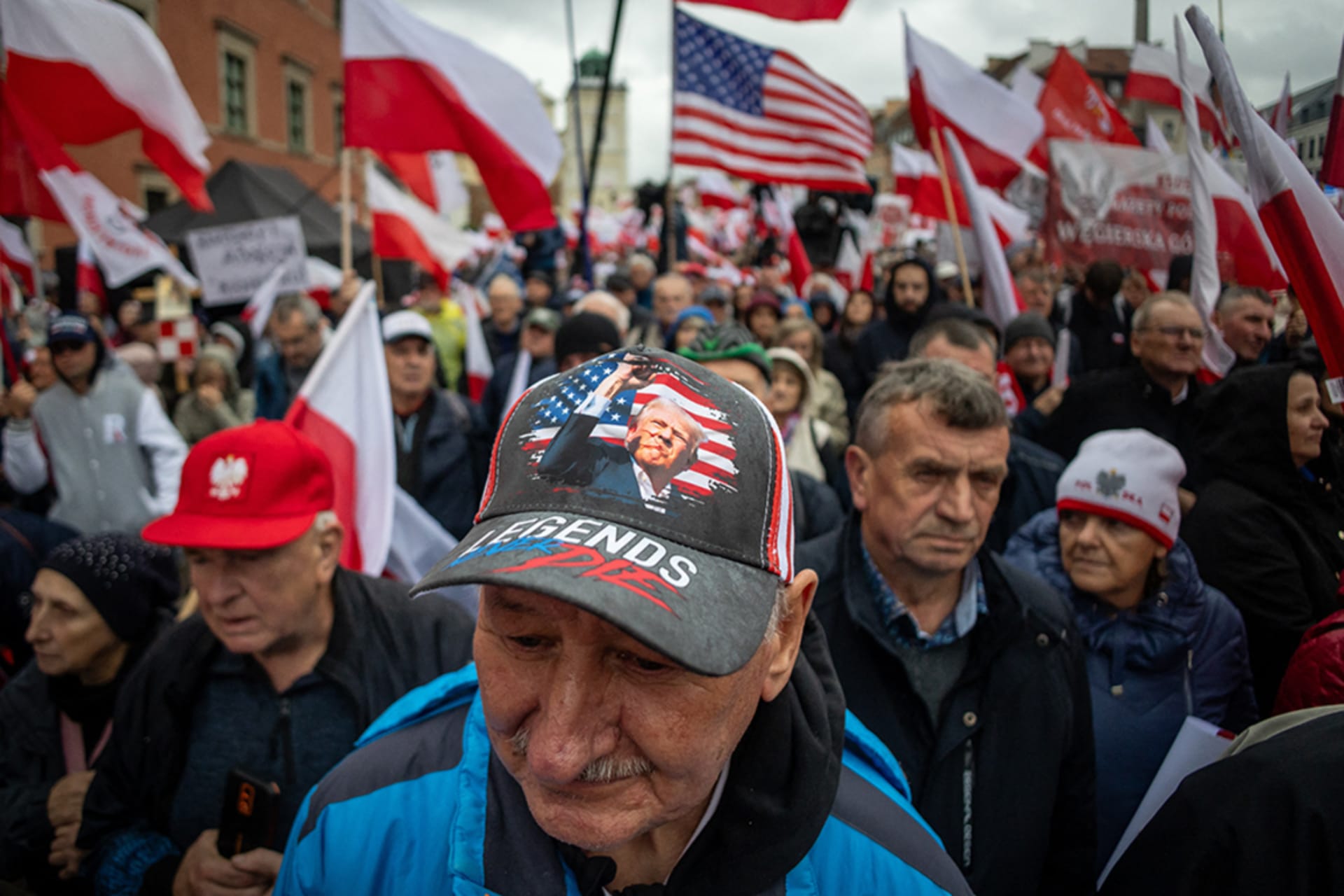
Perhaps most illustrative of this remarkable shift is that the strategy marks “correcting” the political trajectory of Europe as an explicit goal of American foreign policy. That includes encouragement of “the growing influence of patriotic European parties.” And, in a stark statement, it calls for U.S. policy to prioritize “cultivating resistance to Europe’s current trajectory within European nations.”
The ideological roots of this turn have been spreading for years. As the analysts Sophia Besch and Tara Varma haveshown, MAGA has a dense network of ties with revisionist parties on the European far right. Trump’s own affection for Hungarian Prime Minister Viktor Orbán and Italian Prime Minister Giorgia Meloni is well known. And Vance has been outspoken, defending far-right parties and meeting with the Alternative for Germany (AfD) party in February on the eve of their national elections.
What is new, however, is the mandate for interference. The strategy and recent policy decisions suggest that Trump is developing a toolkit to help his illiberal political allies around the world.
Ahead of Argentina’s midterm elections in October, the president offered a $20 billion currency swap and a further $20 billion in economic support—contingent on the electoral success of Trump ally Javier Milei’s party. The gambit paid off and Milei’s party exceeded expectations with 41 percent of the vote. In Brazil, Trump threatened 50 percent tariffs until charges were dropped against former right-wing President Jair Bolsonaro—a ploy that fell flat, with Bolsonaro now in prison. And in Honduras, Trump took sweeping steps on the eve of the presidential election, throwing support behind one candidate and denouncing the others, claiming election fraud, and pardoning a former president. To date, Trump’s preferred candidate, Nasry Asfura, has a narrow lead—which some attribute to U.S. support.
This ideological twist of the National Security Strategy, which is mandated by Congress and typically revised once per term to codify the president’s foreign policy vision, extends further by remaining oddly silent about longtime rivals and adversaries.
When Trump last released a National Security Strategy in 2017, it was a sober document that helped solidify a new, bipartisan consensus around the idea of great-power competition with China and Russia. It warned of Beijing and Moscow’s challenges to U.S. power and attempts to erode American security and prosperity.
This new strategy does nothing of the sort. Rather than diagnose the strategic threats emanating from China or Russia, it makes clear that a “mutually advantageous economic relationship with Beijing” is the lodestar of U.S.-China policy and remains muted about its views of Russia, which it characterizes critically as an existential threat only in the eyes of Europe.
In place of Chinese President Xi Jinping or Russian President Vladimir Putin, the strategy reserves its greatest vitriol for globalist elites in the United States and, above all, in Europe. Echoing comments made by Vance at the Munich Security Conference earlier this year, Trump’s strategy codifies the view that Europe’s greatest risk is “civilizational erasure” at the hands of the European Union and other bodies that threaten liberty and sovereignty, enable migration, and suppress political opposition and free speech. It questions the democratic legitimacy of European leaders “perched in unstable minority governments.”
This rhetorical challenge to U.S. allies could open the door for greater foreign interference efforts that promote the MAGA worldview. After initial experiments in the Western Hemisphere, this playbook could go global, with financial statecraft and vociferous election interference part of a broader diplomatic strategy that uses American power to build a global, illiberal coalition. Elon Musk’s support for European right-wing movements indicates the possibility of a private sector complement to these efforts.
Such efforts may collapse under their own weight. Some foreign publics could reject Trump’s attempt to influence their politics and there is an inherent contradiction in the notion of a global coalition of nationalist parties. But European leaders should prepare themselves for such an outcome. Trump’s NSS makes clear that their countries will be a prime target of this campaign.
Unlike other features of Trump’s foreign policy, this strategic pivot is unlikely to end with his presidency. To the contrary, its most energetic advocate in the administration has been Vance, who aspires to inherit the MAGA movement. As the world contemplates the United States’ evolving role, allies and partners should consider a future that inverts Washington’s post-Cold War quest to spread democracy—and instead uses the United States’ considerable might to make the world safer for illiberalism.
This work represents the views and opinions solely of the author. The Council on Foreign Relations is an independent, nonpartisan membership organization, think tank, and publisher, and takes no institutional positions on matters of policy.