A Smarter U.S. Response to China’s Electric Vehicle Revolution
If the United States waits too long to respond more fully and constructively, it could become an isolated island of gas-powered vehicles in an electric vehicle world driven by China.

David M. Hart is a senior fellow for climate and energy at the Council on Foreign Relations.
While China drives an electric revolution in the global auto industry, the United States has retreated, doubling down on old technologies and shunning competition in new ones that are quickly conquering the rest of the world. As I argue in a new report for CFR’s Climate Realism Initiative, a smarter strategy would be to take on the challenge, rather than cede the future of the world’s largest manufacturing sector to China.
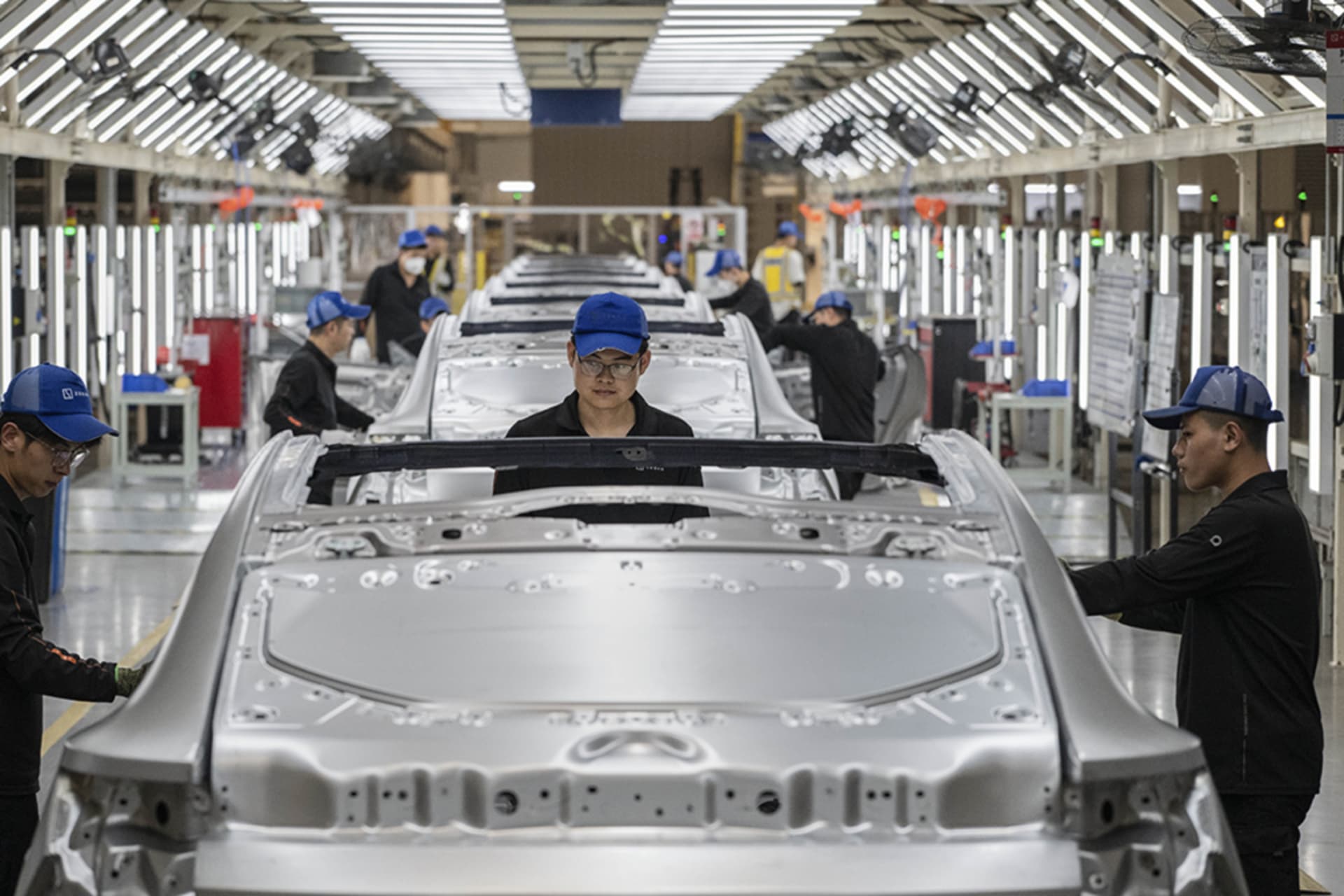
Chinese carmakers have struggled for decades to build internationally competitive internal combustion engine (ICE) vehicles. But, with support and encouragement from all levels of the Chinese government, they have changed the game. These manufacturers have developed and learned to efficiently produce electricity-powered, internet-connected vehicles that can increasingly operate autonomously—often referred to as autonomous, connected, and electric vehicles, or ACE vehicles.
The vehicles’ rapidly improving performance, novel features, and societal benefits caused global sales of ICE vehicles to peak in 2018 and drop by about one-quarter since.
The surge was initially centered in China, where ACE vehicles are now less expensive than ICE vehicles and electric vehicle purchases have surpassed 50 percent of car sales. But this trend is rapidly spreading to the rest of the world. Chinese exports of batteries and electric vehicles grew eightfold in value during the first half of this decade.
In Brazil, the share of electric vehicles in total car sales shot up from 0.2 percent in 2020 to 6.4 percent in 2025; in Turkey, from 0.2 percent to 11 percent; in Thailand, from 1.1 percent to 13 percent. Most analysts expect ACE to continue to eat into ICE’s market share in the coming years.
The drivers of this paradigm shift are manifold. Many nations have encouraged ACE adoption, as they hope to lessen dependence on imported oil, reduce local air pollution, and cut greenhouse gas emissions. Meanwhile, many buyers have found that ACE vehicles are more affordable and perform better than ICE vehicles. Price reductions and performance improvements that are encouraging this trend are likely to continue, strengthening the ACE value proposition in the future.
Although the U.S. automotive company Tesla pioneered the ACE vehicle vision, its adoption has been more gradual in the United States. Consumer preferences, limited choices, and charging infrastructure shortfalls help explain the lagging adoption rate. Policy support for a transition from ICE to ACE has been inconsistent as well, marked most recently by the Donald Trump administration’s policy about-face, removing tax incentives for vehicle purchases and support for manufacturing. The only consistent bipartisan theme has been protection of the U.S. market from Chinese imports through tariffs and regulation.
Such protection is necessary and appropriate as a temporary measure. However, keeping it in place indefinitely risks isolating the United States from the rest of the world. American drivers and the nation’s transportation system would miss out on features enjoyed by their counterparts abroad, U.S. producers would become increasingly uncompetitive in international markets, and domestic greenhouse gas emissions reductions would stagnate.
A smarter response would be to compete with China globally, rather than retreat. That doesn’t mean opening the floodgates to Chinese imports or forcing Americans to buy cars that they don’t want. Domestic manufacturers need time and assistance to build their capabilities and diversify supply chains now dominated by Chinese interests. Federal agencies need time to refine regulations that ensure privacy and security as cars continue to collect more data about their passengers and surroundings. And American drivers need to get used to plugging in, rather than filling up.
But the clock to implement such policies is ticking. Change is accelerating in the rest of the world. If Washington waits too long to respond more fully and constructively, the United States could become an isolated island of ICE vehicles in a world driven by Chinese electric vehicles.
This work represents the views and opinions solely of the author. The Council on Foreign Relations is an independent, nonpartisan membership organization, think tank, and publisher, and takes no institutional positions on matters of policy.