Joseph Torigian is senior fellow for Asia studies at the Council on Foreign Relations. He is also an associate professor at American University’s School of International Service and a center associate of the University of Michigan’s Lieberthal-Rogel Center for Chinese Studies. Torigian studies the politics of authoritarian regimes with a specific focus on elite power struggles, civil-military relations, and grand strategy. He uses primary sources, rare books, and interviews to provide new accounts of historical milestones in two nations of crucial geopolitical importance: China and Russia. In particular, he investigates how leaders in those nations secure themselves against threats at home and abroad. Torigian’s research agenda contributes to several fields and disciplines: international relations, comparative politics, security studies, history, and Chinese and Russian studies.
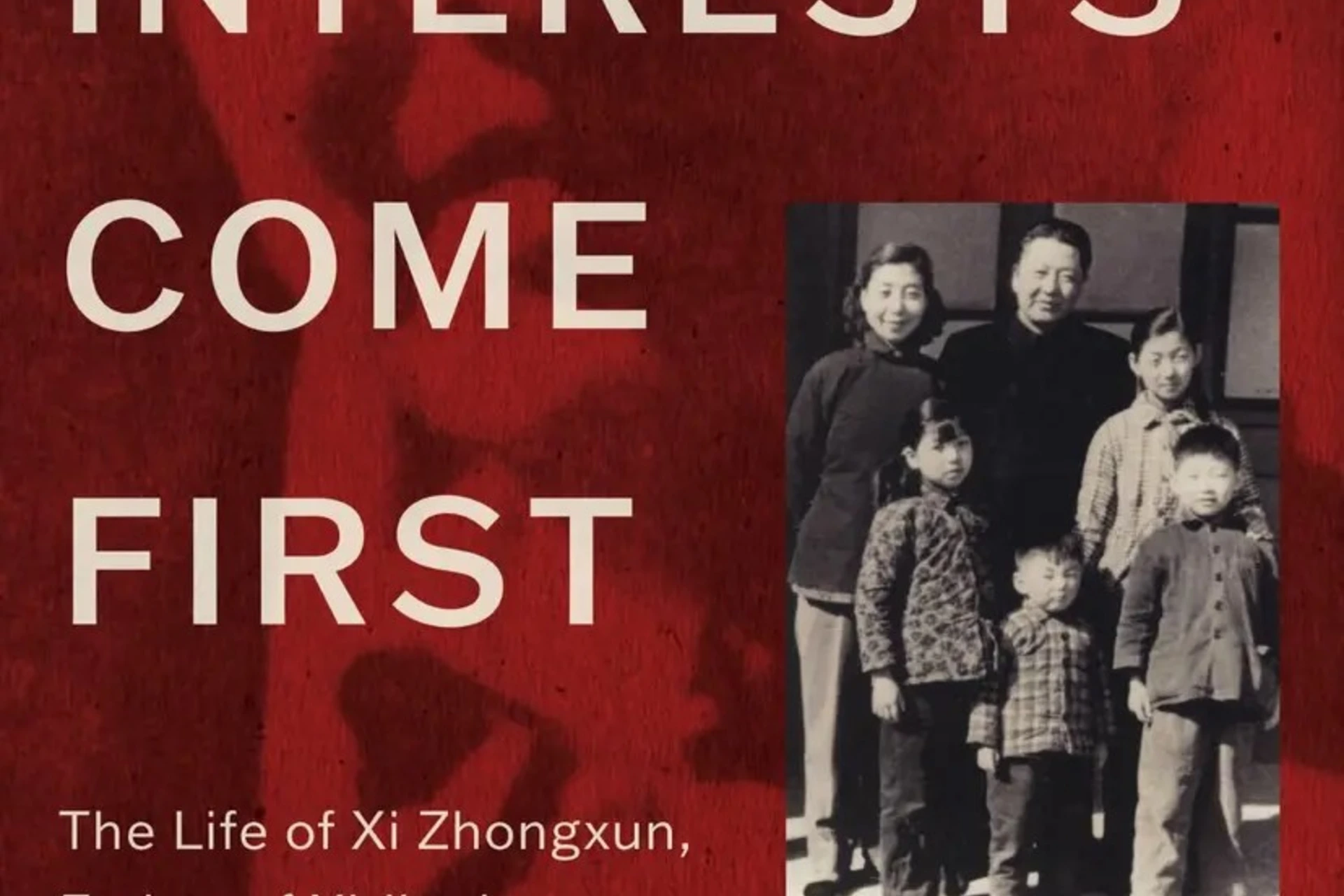
His first book, Prestige, Manipulation, and Coercion: Elite Power Struggles in the Soviet Union and China After Stalin and Mao was published in 2022, and his second book, The Party’s Interests Come First: The Life of Xi Zhongxun, Father of Xi Jinping was published in 2025. Torigian’s current research agenda looks at nuclear weapons and the military-industrial complex in China and the Soviet Union during the Cold War.
Previously, he was a research fellow at Stanford University’s Hoover History Lab, a Stanton nuclear security fellow at CFR, postdoctoral fellow at Princeton-Harvard’s China and the World Program, a postdoctoral (and predoctoral) fellow at Stanford’s Center for International Security and Cooperation, a predoctoral fellow at George Washington University’s Institute for Security and Conflict Studies, an IREX scholar affiliated with the Higher School of Economics in Moscow, a Fulbright scholar at Fudan University in Shanghai, and a research associate at CFR. His research has also been supported by the Stanford Center on International Conflict and Negotiation, the Massachusetts Institute of Technology’s Center for International Studies and International Science and Technology Initiatives, the Critical Language Scholarship program, and Foreign Language and Area Studies.
His views on Chinese and Russian politics and history have appeared in media outlets such as the BBC, the Washington Post, Bloomberg, the Economist, the Financial Times, the New York Times, the New Yorker, NPR, the Wall Street Journal, CNN, and others. He has also published in general interest journals like Foreign Affairs and Foreign Policy.