• Algeria
    Weekend Reading: Algeria’s Police Protest, Yemen’s Houthis Move In, and Egypt’s Liberals Explained
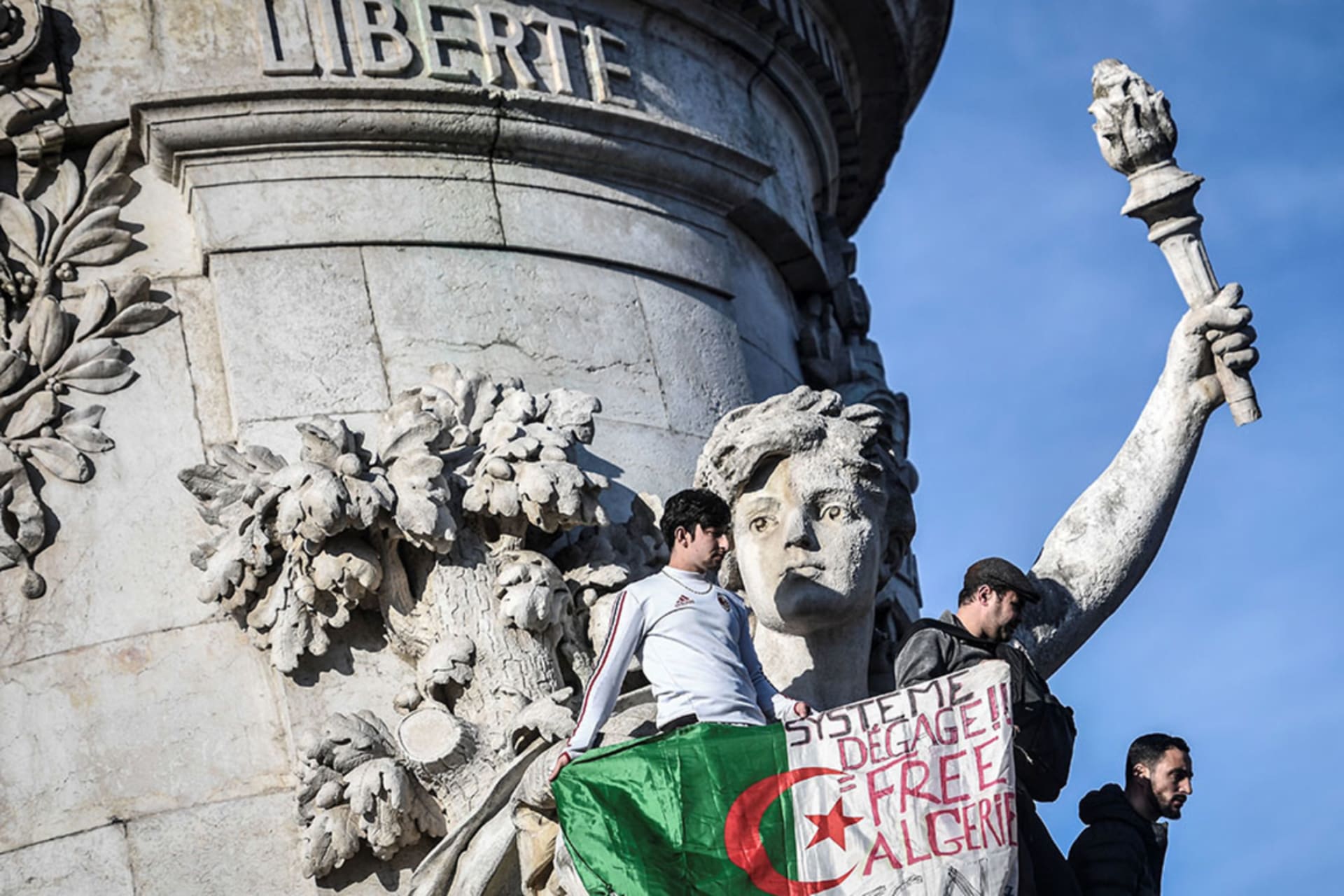
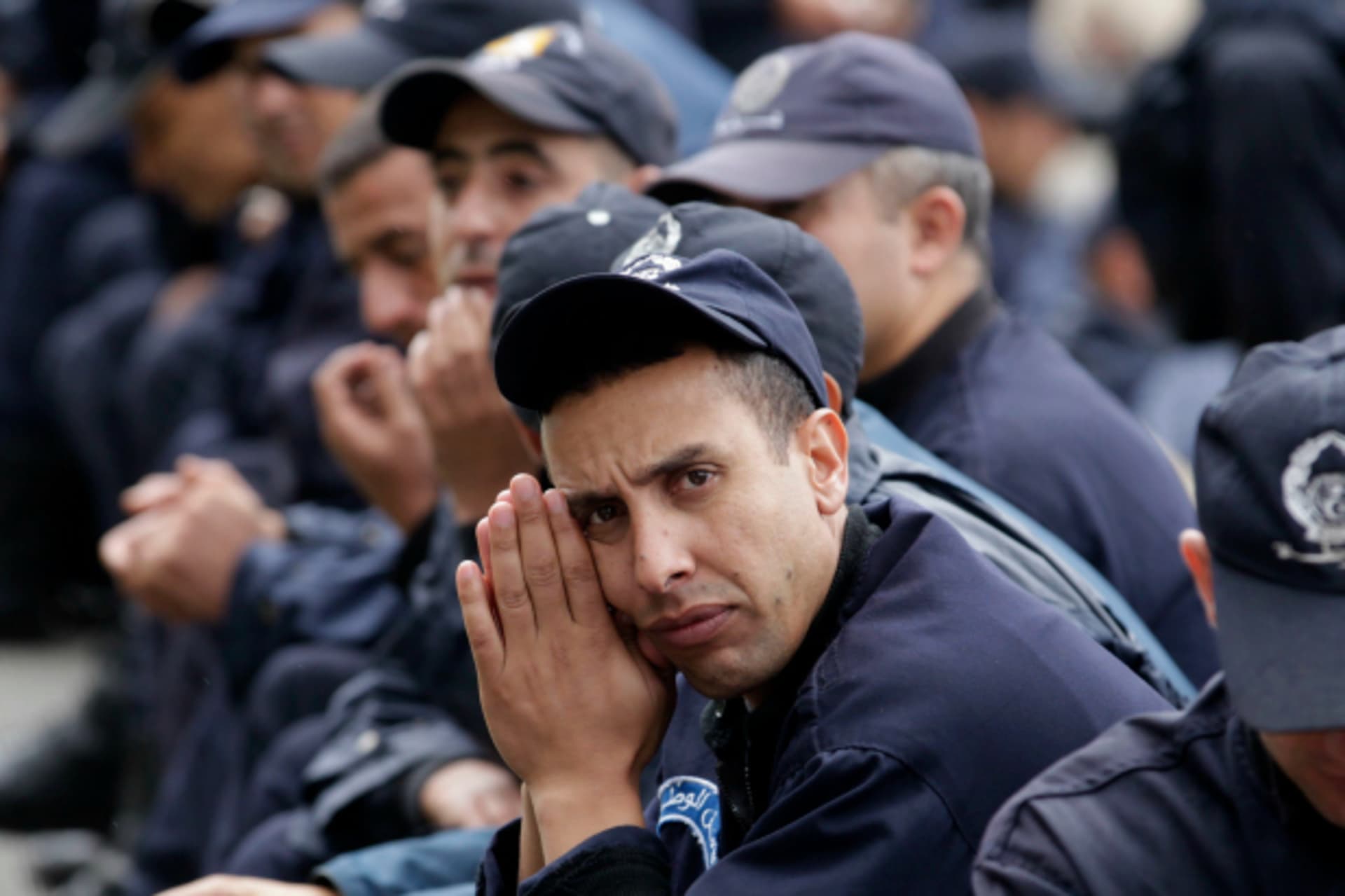
    Thomas Serres suggests that the recent police protests in Algeria demonstrate how Abdelaziz Bouteflika’s regime is “being inundated from all sides.” Fernando Carvajal reflects on the new power balance established by the Houthi rebels in Yemen. Nervana Mahmoud explores what makes Egypt’s liberals so seemingly illiberal.
  • Algeria
    Bouteflika’s Last Election
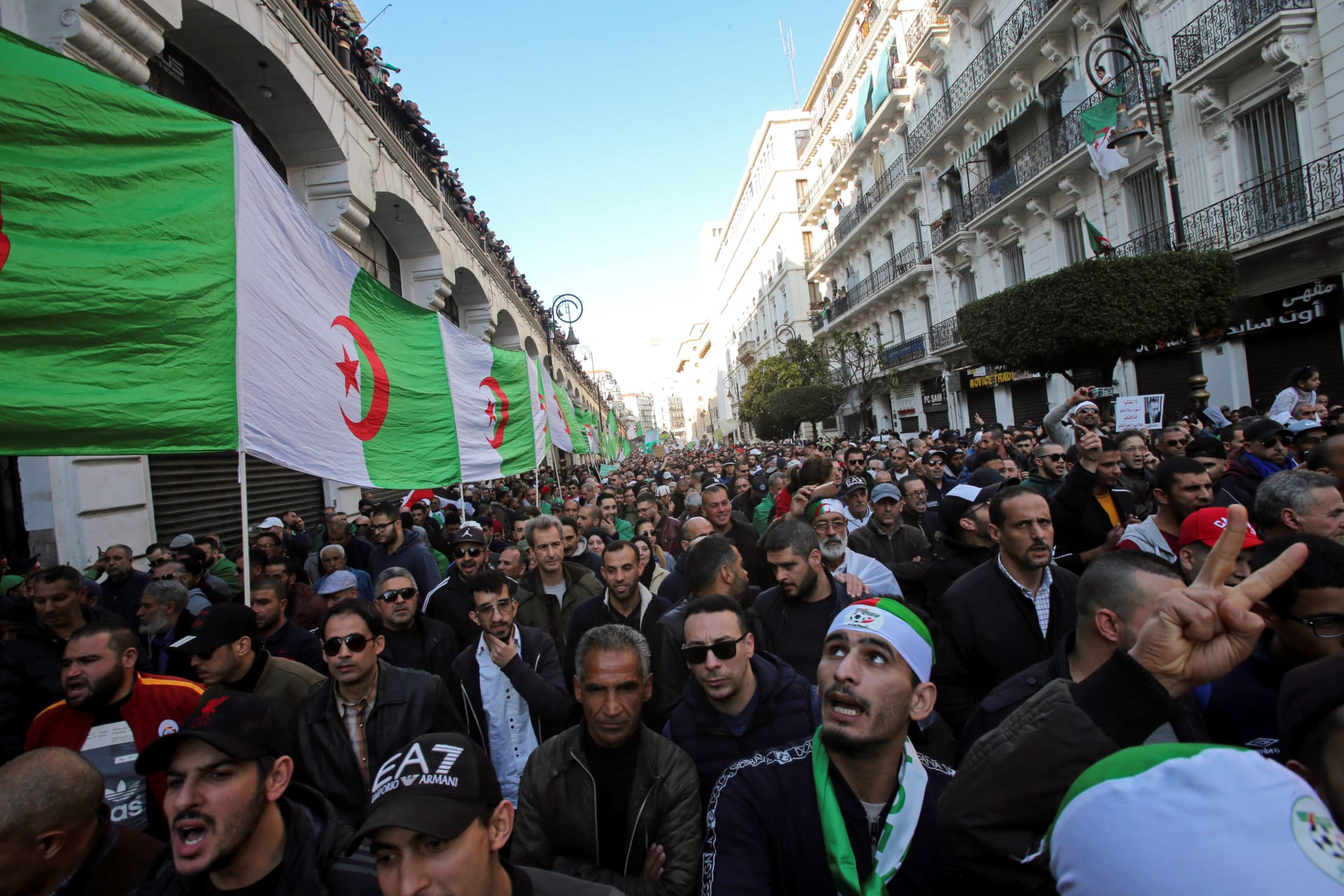
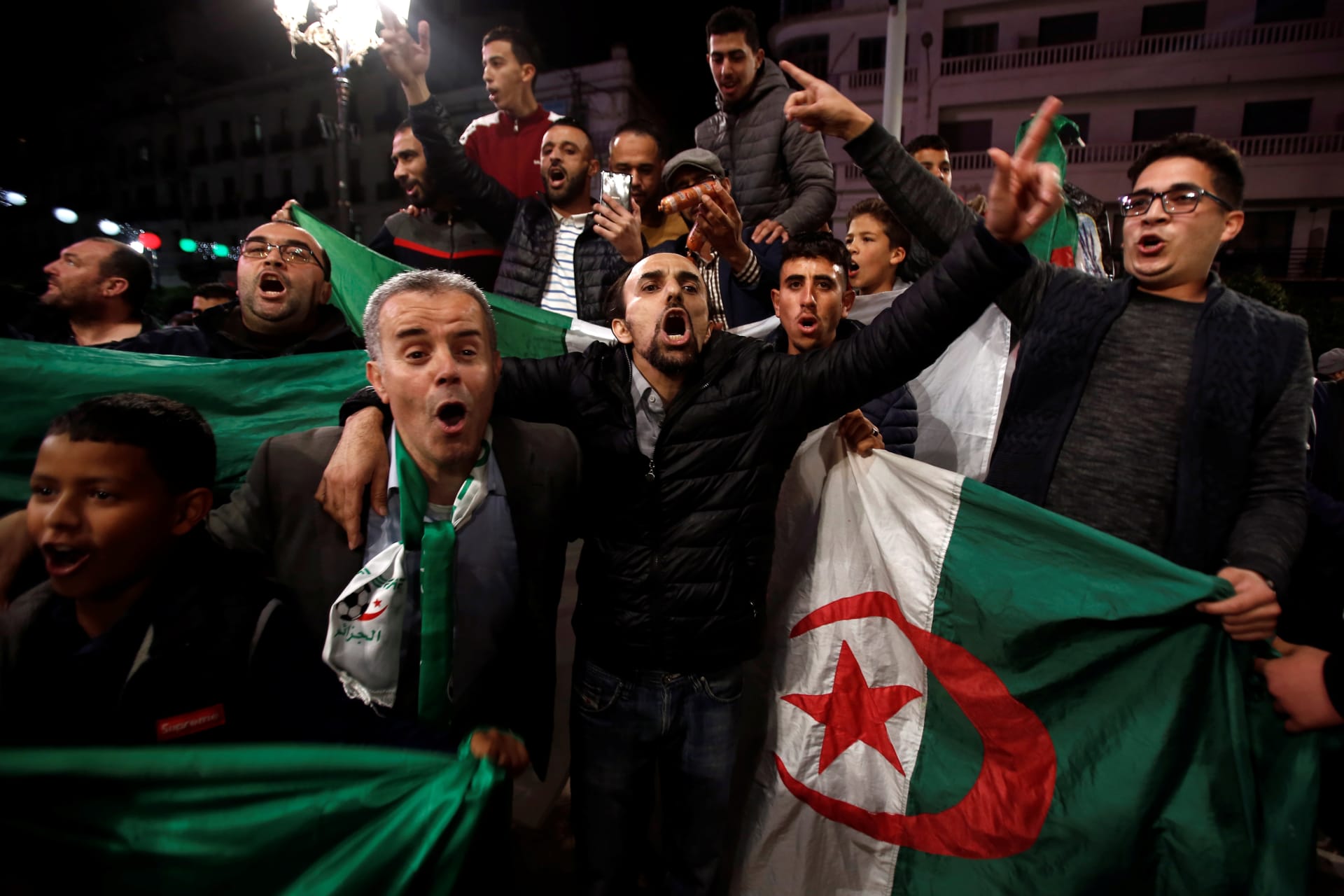
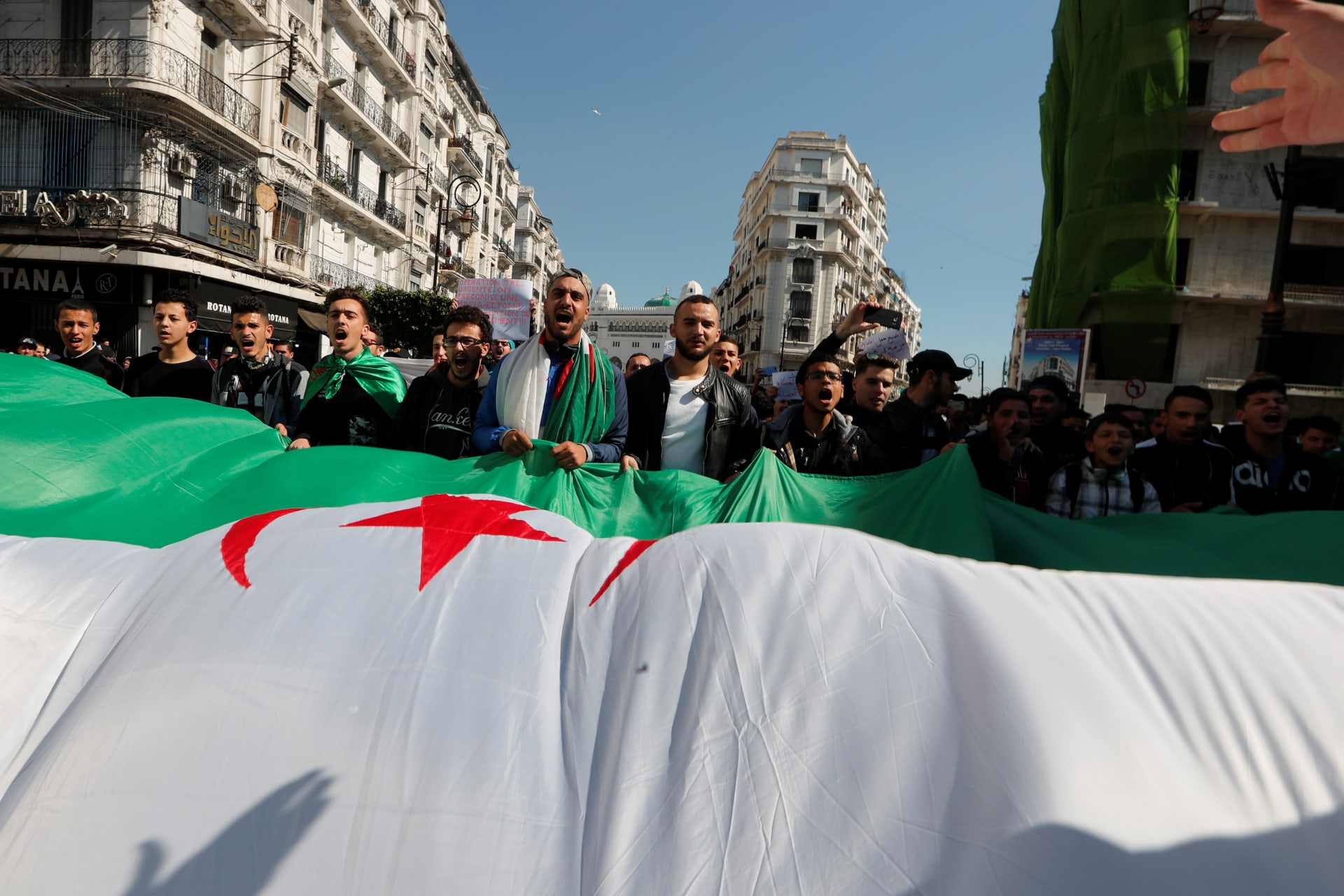
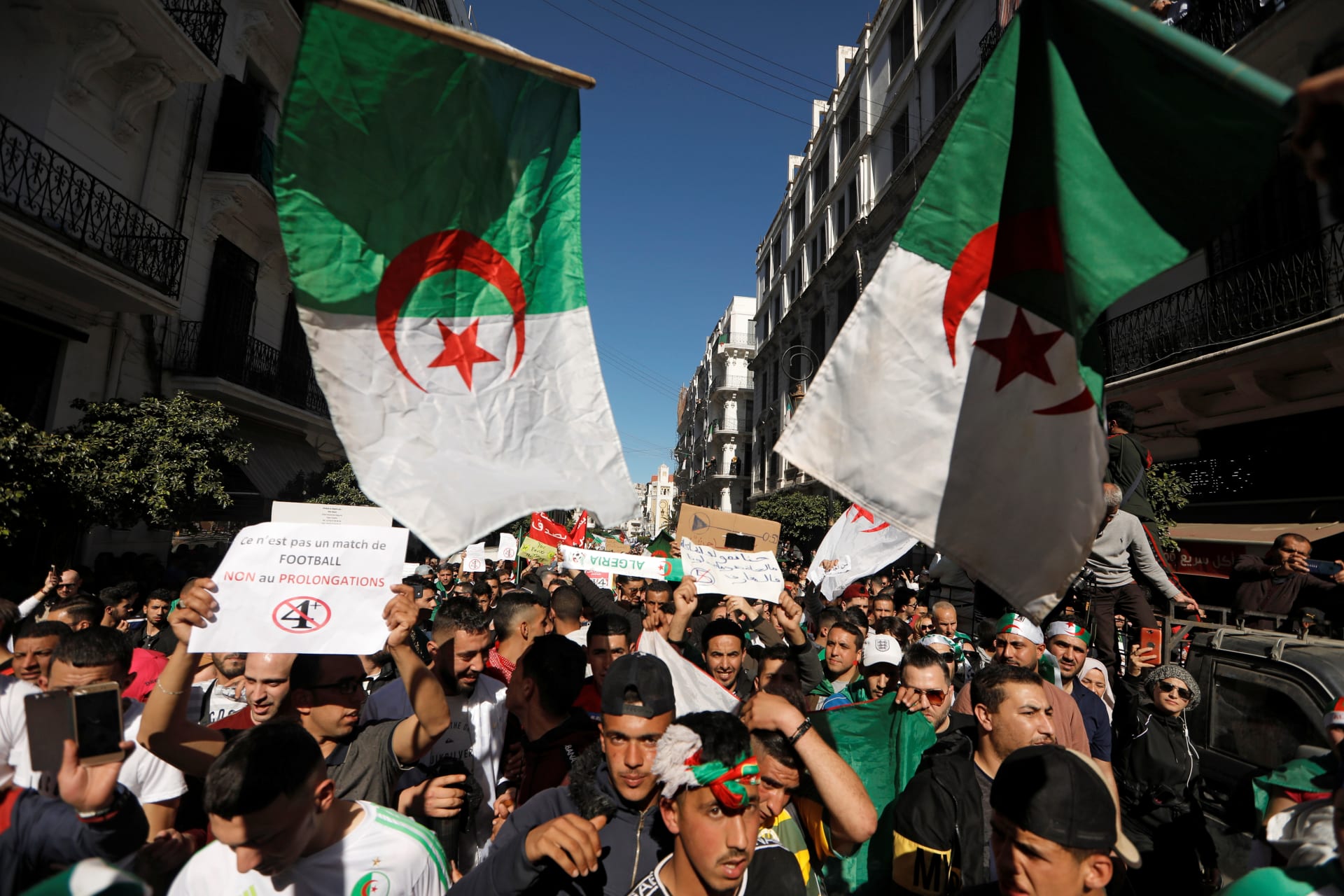
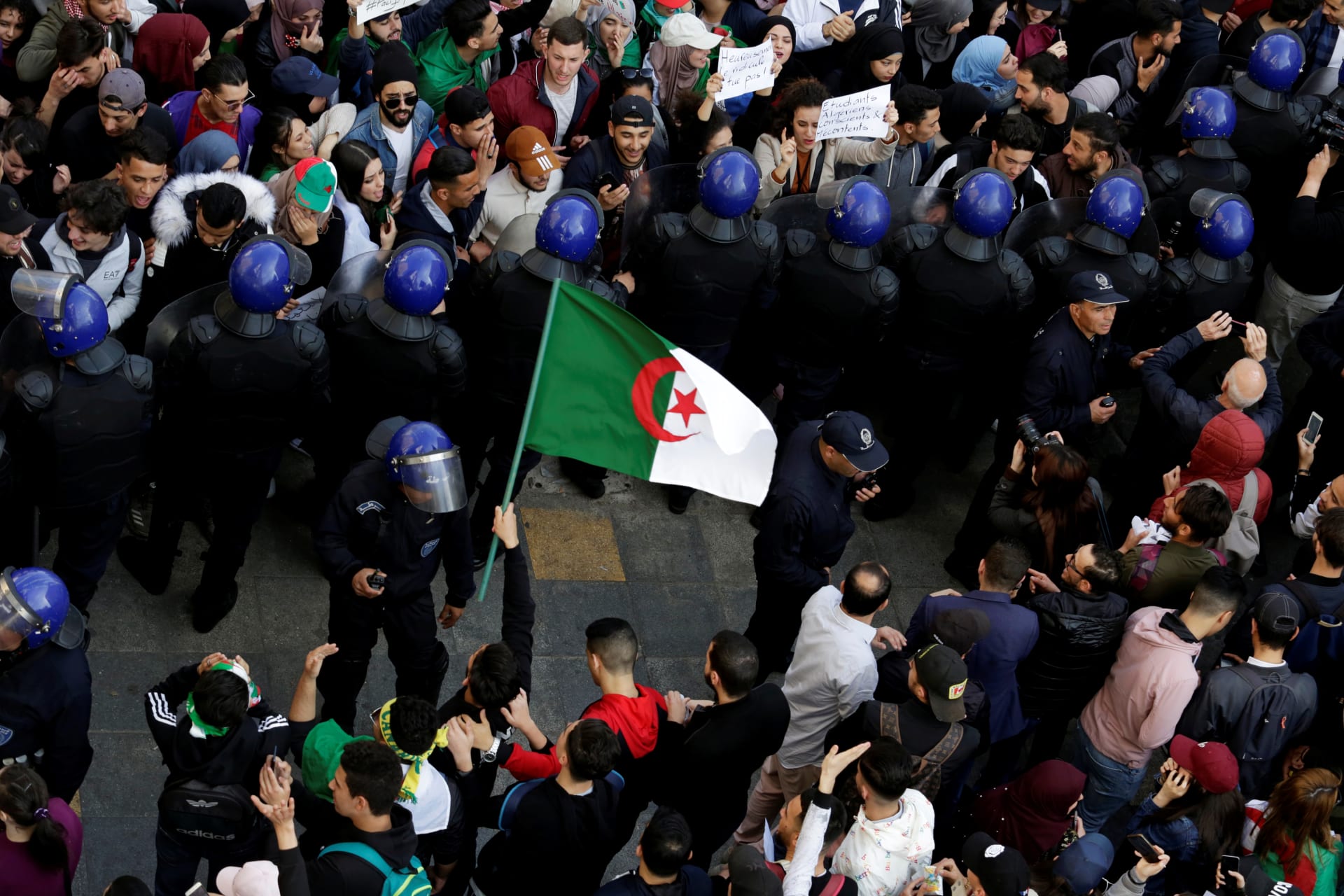
    Yesterday was election day in Algeria, and President Bouteflika of course won re-election. Unfortunately, it is almost unheard of for an Arab president to run and be defeated-- one of the reasons the "Arab Spring" uprisings took place. Opponents of the regime are alleging irregularities in the election, which is of course accurate: it was anything but a level playing field. In any free society, with open multi-party political competition, a very sick 77-year-old would not be running for and winning re-election. Bouteflika has not recovered from a stroke last year that caused him to spend months out of the country under medical care and left him unable to campaign. The Bouteflika era is ending. We will soon find out whether that stroke also left him entirely unable to govern, and how long his declining health will permit him to serve as president. News stories suggest that very soon parliament will create the post of vice president, so that a smooth succession is in place should Bouteflika have to resign or should he die in office. But who will choose his successor? "Le Pouvoir," the powerful group of military and intelligence officials who have run Algeria for decades. This year’s election did not move the country any closer to democracy; it did not give the citizens any role in the governing of the country. The question now is whether the political and economic protests occurring in Algeria, including widespread labor unrest, continue to mount or are contained by the government. Can the current system last, when the military refuses any serious political or economic reform? The electoral charade this week suggests that "Le Pouvoir" has decided not to give an inch. As I noted in this blog in February, Algeria is a rich country with a poor population; almost half the population is under the age of 24, youth unemployment is high, and so is poverty. This is not a formula for long-term stability.
  • Politics and Government
    Weekend Reading: Boutef Again, Bringing Democracy Back to Turkey, and Hep-C in Egypt
    Alexis Artaud de La Ferrière examines how Algeria’s elections will influence regional politics, especially those in Tunisia. The Turkish citizen journalism group "140journos" is trying to use technology to bring democracy back to Turkey, writes Burcu Baykurt for Jadaliyya. Maria Golia discusses the issue of fighting Hepatitis C in Egypt.  
  • Global
    The World Next Week: April 10, 2014
    Podcast
    Algeria holds presidential elections; U.S. taxpayers mark Tax Day; and Ukraine prepares for talks with Russia, the United States, and the EU.
  • Middle East and North Africa
    Algeria, Young and Old
    The median age of the Algerian population is 27 years, and 46 percent of the population is under the age of 24. But its president, Abdelaziz Bouteflika, is 76 years old, and is now set to take another five-year term that will have him in office at age 80. And Mr. Bouteflika is already suffering from poor health that has led him to spend months on end in France for medical treatment. So another term for him would be odd but acceptable if he were the free choice of the Algerian people. But he isn’t; opposition to his re-election is being crushed by the authorities, the infamous and secretive  "Pouvoir" (French for "power") that runs the country (and is usually thought to consist mainly of the Army and especially the military intelligence services). As an article in the Financial Times put it, no opponent has a real chance: But just in case, the president’s allies have so stacked the decks in his favour that most credible opposition parties say they will not field candidates and called instead for a boycott. Several issued a statement on Monday calling the April 17 elections a “farce whose outcome is already known in the absence of the conditions of fairness and neutrality”. After deciding to run, financial consultant Kamal Benkoussa found long-scheduled meetings with civil society groups were suddenly cancelled. He says they were threatened at the last-minute with the loss of state funding if they met him. Newspapers suddenly refused to publish stories after long interviews or reversed course on letters of his they had agreed to print. Algerian broadcast channels have all but blacklisted him, though he is welcomed on foreign pan-Arab channels. Mr. Benkoussa, whom I’ve met in Washington, is 41, and talks a great deal about Algeria’s terrible problem of youth unemployment. His main goal is to get the economy moving, but of course he can’t get his message out when the regime imposes a media blackout. Algeria is a rich country with a poor population. Youth unemployment is high, and so is poverty, while hydrocarbon exports mean there are sizable financial reserves and almost no foreign debt. The problem is the heavy hand of the state, as the CIA World Factbook summarizes: Algeria’s economy remains dominated by the state, a legacy of the country’s socialist post-independence development model. In recent years the Algerian Government has halted the privatization of state-owned industries and imposed restrictions on imports and foreign involvement in its economy....Algeria has the 10th-largest reserves of natural gas in the world and is the sixth-largest gas exporter. It ranks 16th in oil reserves. Strong revenues from hydrocarbon exports have brought Algeria relative macroeconomic stability, with foreign currency reserves approaching $200 billion and a large budget stabilization fund available for tapping. In addition, Algeria’s external debt is extremely low at about 2% of GDP. However, Algeria has struggled to develop non-hydrocarbon industries because of heavy regulation and an emphasis on state-driven growth. Of course that heavy hand extends beyond the economy; the regime refuses to allow free elections or a free debate over Algeria’s future. And by tapping Bouteflika for yet another term (his fourth) at age 76 and despite his illness, Algeria’s rulers are making it clear that change will not be permitted. Can it last? The disorder in Libya, Egypt, and Syria as well as the violence in Algeria’s own history will surely make any Algerian prize calm. But the refusal to allow reform and the insistence on shutting up those who seek moderate change put the country’s future at risk.
  • Sub-Saharan Africa
    Is AQIM’s Influence Growing in Nigeria’s Boko Haram?
    In a recent article in African Arguments, Jonathan Hill, a senior lecturer at King’s College London and author of Nigeria Since Independence: Forever Fragile?, provides a thoughtful, if grim, analysis of the latest round of Boko Haram killings in northern Nigeria. He makes the important point that the recent murder of students while they slept at the agricultural college in Yobe state was only one in a series of assaults. He cites the raids on the secondary school in Mamudo in July, Dumba village in August, and Benisheik in September. He notes that these attacks took place during the state of emergency with a greatly augmented security presence that failed to prevent them. From these attacks, he concludes that “Boko Haram appears unbowed and its campaign undimmed.” He suggests this recent round of attacks may mark a new stage in Boko Haram’s evolution. Specifically, he suggests that the style, the victims, and the brutality of the attacks resemble al-Qaeda in the Islamic Maghreb (AQIM) operations in Algeria. These similarities, he suggests, may indicate growing AQIM influence over Boko Haram. Hill characterizes this evolution as “devastating,” citing the degradation of education in the North, already the least literate part of the country, the likely spread of inter-communal tensions toward the south, and Southern impatience with the costs of the counter terrorism campaign. Hill’s stark bottom line: “That Nigeria is now a failed state is beyond question. Whether it can avoid breaking apart remains to be seen.” That conclusion, alone, is food for thought.
  • Turkey
    Weekend Reading: Egypt’s Pharaoh, Algerian Foreign Policy, and Democracy in Turkey
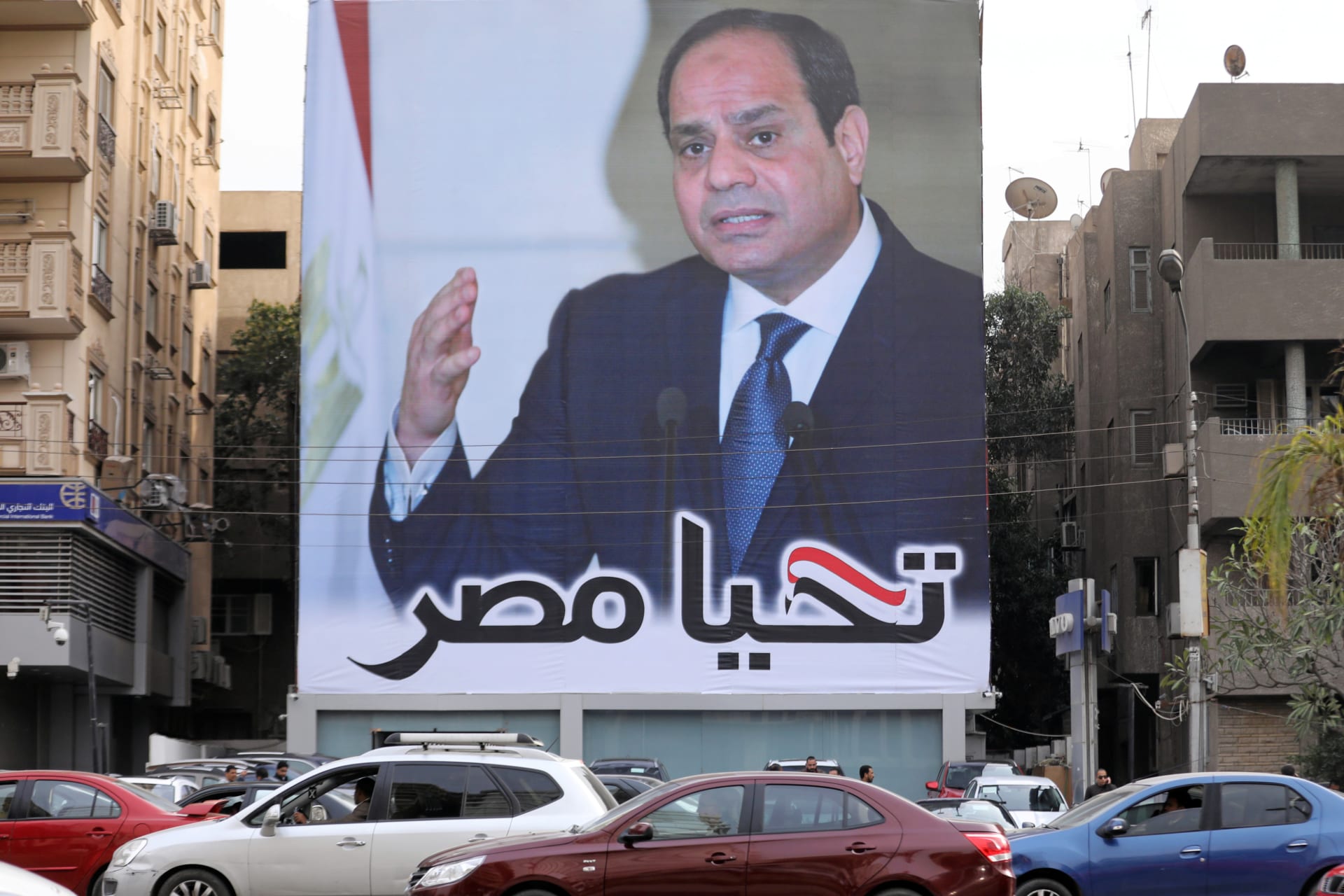
    Zeinobia from the Egyptian Chronicles argues that Sisi is the new Pharaoh. Hamza Hamouchene asks, “Is Algeria an Anti-Imperialist State?” Nuray Mert gives her opinion on the reasons for lack of democracy in Turkey.
  • Algeria
    Middle Eastern Mad Libs: “Egypt is ____________”
    After the January 25 uprising, uninformed observers asked “Is Turkey the ‘model’ for Egypt?” or “Will Egypt follow Indonesia’s path?”  Comparisons are always useful in the effort to explain how the world works, but under the circumstances it seemed that people were flailing away looking for something, anything to make sense of a new vastly more complicated Middle East.  If Egypt was Turkey—which at the time looked more liberal and prosperous than it does now—then perhaps for the many challenges that lay ahead for Egyptians (and U.S. interests), all would end well. The military’s July 3rd intervention has provided another opportunity to play the Egypt analogy game.  This time there was, however, a doomsday quality to the discussion.  Instead of an Egyptian Copenhagen criteria or Reformasi on the Nile, Egypt is now Algeria. Specifically, Algeria of the 1990s when more than 100,000 people were killed in a brutal civil conflict. The problem is: Egypt is Egypt and if analysts want to gain some traction on what might happen there, they should pay attention to Egypt rather than reacquainting themselves with le Pouvoir, Abbas Madani, the Front Islamique du Salut (Islamic Salvation Front, FIS)and Chadli Benjedid. Here is what happened in Algeria:  In mid-January 1992, the Algerian officer corps pushed President Chadli Benjedid from office and nullified the national legislative elections that would have given the FIS a parliamentary majority. Even before the balloting took place, the President indicated that in the event of an Islamist victory he would come to terms with the Front.  Although Chadli may have believed that cohabitation was the best way for him to survive politically, the military was clearly unnerved at the prospect of cooperation between the president and the FIS.  In his memoirs, Major General Khaled Nezzar, who was Minister of Defense, indicates that the officers had resolved not to allow the Front to attain a parliamentary majority and thus consummate a deal with Chadli. Observers tend to focus on the potential for a FIS majority in the National People’s Assembly as the threat to Algeria’s political order and a step toward the establishment as an Islamic state, but it was an apparent deal between the president and the FIS that was more relevant. Regardless of the FIS’s representation in the legislature, Algeria’s 1989 constitution vested the power to initiate constitutional changes with the presidency. Given Chadli’s flirtation with the FIS, the officers could not trust that he would be a firewall between the Front and the constitution so they struck before a second round of voting could begin. The army enjoyed the support of large segments of Algerian society including women’s groups, trade unions, and the secular-oriented Francophone elites.  In recalling the events of early 1992, Nezzar has written: “Certain leaders believed that halting the electoral process was a blow to the democratic process.  In reality it was precisely the contrary; stopping the elections assured the survival of the democratic process.” Some of this sounds vaguely familiar to contemporary events in Egypt, but it is what happened next in Algeria that has people in Washington all spun up:  The Algerian military’s intervention radicalized the political arena, setting off a chain of events that plunged the country into almost a decade of violence.  The FIS itself did not immediately take up arms against the Algerian state, but ultimately created the Islamic Salvation Army, fearing that the militancy of other groups might undermine the Front’s support.   Even after the military was able to bring the violence to relatively manageable levels through a 1999 amnesty, radical off-shoots of the FIS and other groups continued to wage war against the Algerian state.  For example, the Salafist Group for Preaching and Combat, which had broken from another extremist group called the Armed Islamic Group, became al Qa’ida of the Islamic Maghreb in 2007. One can certainly imagine the potential for radicalized politics in Egypt as a result of the military’s intervention, its crackdown on the Muslim Brotherhood, and the officers’ efforts to stabilize the Sinai. Yet one need not look 2,000 miles to the West for the scenario.  The insurrection in Algeria seems unlikely to be replicated in Egypt and it is not because as one Egyptian friend once told me, “We are the people of the valley, and they are the people of mountains and sand.”   Defense Minister Abdelfattah al Sisi may be applying significant pressure on the Muslim Brotherhood, but he does not seem to be the Egyptian analogue of Algeria’s eradicatuers—officers whose preferred policy was to wipe out the insurgency through force.  In keeping with a strategy they have employed since the January 25 uprising, the Egyptian military is more likely to try to manage the present conflict with the Brothers with a combination of arrests, some violence, and bare-knuckled negotiations. The officers and the Brothers may ultimately miscalculate, but again the best “model” for Egypt is Egypt.  The low-level violence of the 1990s during which extremist groups took up arms against the state while the Brotherhood agitated against a regime that used the violence to justify closing whatever “political space” that had existed may be in store for Egypt.  Certainly present political dynamics make “back to the future” a more likely outcome than an Algeria-like conflagration, even taking into account the major differences between the Egypt of 1992 and the Egypt of 2013. There is  no way of knowing for sure what will happen in Egypt.  And while comparing and contrasting cases are critical to understanding political phenomena, it is equally important to guard against facile analogy building because someone, somewhere wondered aloud if Egypt is Algeria.  It’s not; it is Egypt.
  • Algeria
    Is Algeria the Next Crisis?
    As the "Arab Spring" swept the fake republics of North Africa--Tunisia, Libya, and Egypt--Algeria seemed immune. Media reports dwelled on its stability (see this 2011 BBC and this 2012 Deutsche Welle story). The question now is whether that perception is correct. There was one burst of violence this year, the January 16 terrorist seizure of a natural gas facility that ultimately left at least 38 civilians and 29 terrorists dead after a four-day siege. But now there is more trouble: President Bouteflika appears to have had a stroke and has not been seen in public in over a month. The government claims he is recovering well, but there is no evidence to support that claim. As France 24 put it, "When he was appointed foreign minister in 1963 after Algeria won its independence from France, the 26-year-old Bouteflika cut a dashing, energetic picture as the world’s youngest foreign minister. Half-a-century later, the Algerian president is in frail health as he enters the final year of his third consecutive term in office." The country has long been run by the opaque group of military and intelligence officials known as "le pouvoir," but can that system really hold? The nation is rich due to gas revenues, but the people are poor: foreign reserves are said to be $200 billion, but there is widespread rural poverty and high unemployment. A persuasive analysis just published by the Atlantic Council is entitled "Algeria: A Powder Keg Ready To Explode?" Karim Mezran, the author and a senior fellow at the Council, says this: Algeria may be teetering on the brink of a crisis, with the three pillars of the regime’s stability—its powerful military, abundant revenues from hydrocarbons, and the façade of a democratic political system—beginning to crumble. First, the terrorist and security challenge is greater than it has been in years, as Algeria’s border with Mali reminds us. Second, "From a socioeconomic point of view, despite Algeria’s enormous wealth in oil and gas, the population suffers from poverty, unemployment, and citizen discontent." Then comes "a political crisis at the top of the state apparatus. The illness of Abdulaziz Bouteflika, President of Algeria since 1999, makes it highly unlikely that he will be able to run for another term with upcoming presidential elections in 2014. No clear procedure exists for the appointment of his successor, which leaves a vacuum at the pinnacle of political authority." As Mezran notes, "It is hard to predict the outcome of the myriad of tensions that are boiling in the country. It is possible that the Algerian people, still fatigued from the bloody civil war of the 1990’s and conscious of the repressive power of the state choose not to confront the regime in any sustained or systematic way." Right--perhaps. As we’ve seen across the region, things are often far less stable than they appear. A recent Carnegie study notes this: At first glance, Algeria gives the impression of a country that has succeeded in bypassing the turmoil of the Arab Awakening that has rocked the Middle East over the last two years. Social unrest appears to be largely under control. The country is enjoying a large current account surplus, a limited budget deficit, and very low external debt. Recent parliamentary elections were conducted without interruption and were officially open to participation by all political parties. But despite this reassuring veneer, many of the social, economic, and political challenges that triggered uprisings in neighboring North African countries fester just beneath the surface in Algeria. The author, Lahcen Achy, concludes starkly that: The clock is ticking. If the regime does not start down the road of managed political and economic reform soon, while it retains the cushion of high hydrocarbon rents, it will quickly become too late. Algeria is faced with a stark choice: reform now or collapse later. But Le Pouvoir has never been inclined toward such reforms, especially not at a moment of political uncertainty--Bouteflika apparently quite sick, and an election next year without him on the ballot for the first time since 1999. So Algeria is worth more attention than it is getting. Its immunity to change may be wearing thin.