SPECIAL EPISODE | Trump Chooses War With Iran, With Dalia Dassa Kaye
This episode unpacks President Donald Trump’s decision to launch a war against Iran.
Published
Host
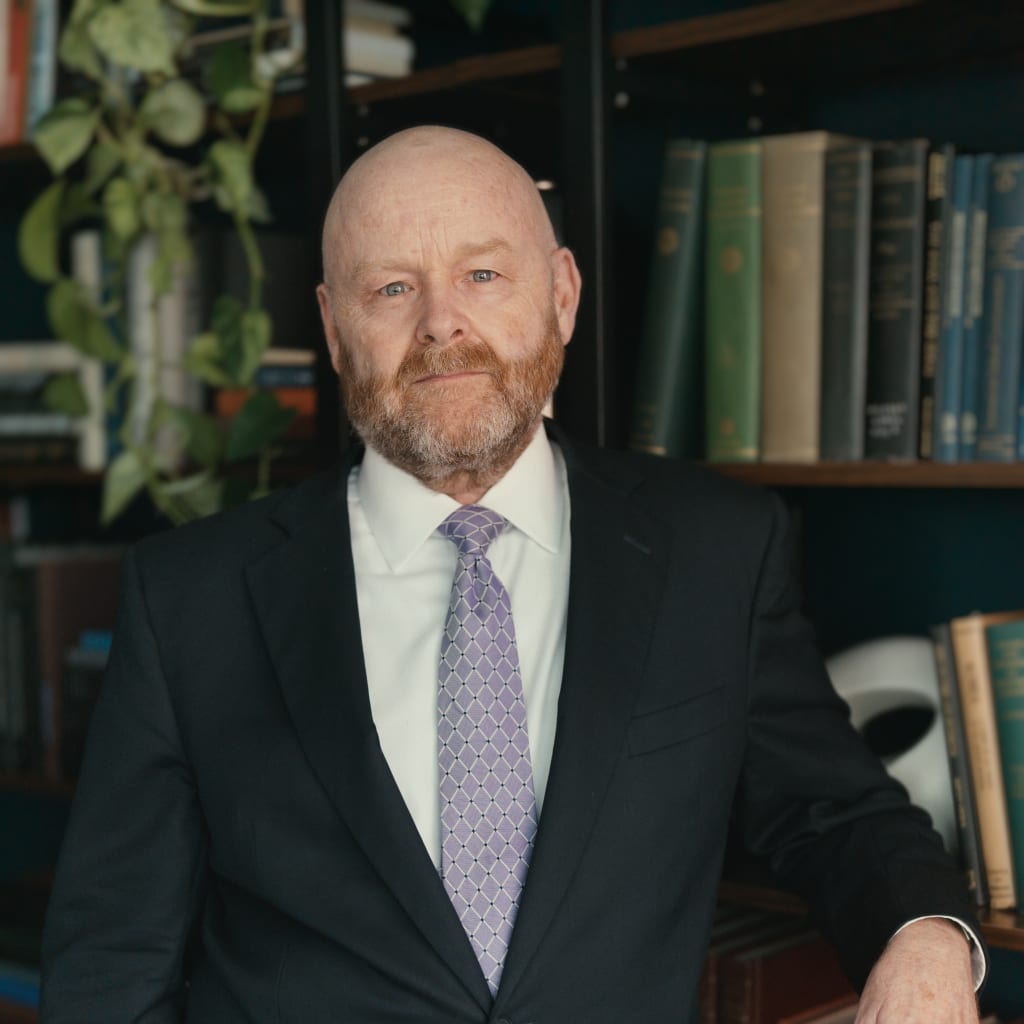 James M. LindsayCFR ExpertMary and David Boies Distinguished Senior Fellow in U.S. Foreign Policy
Guest
- Dalia Dassa KayeSenior Fellow, University of California, Los Angeles Burkle Center for International Relations
[Video: https://youtu.be/MRxPedsZQhc?si=Ggx3mUsymVbqgA9T]

Dalia Dassa Kaye, senior fellow at the University of California, Los Angeles Burkle Center for International Relations, sits down with James M. Lindsay to discuss President Donald Trump’s decision to launch a war against Iran, the prospects for regime change, and the consequences for the region.
Transcript
DASSA KAYE:
In asymmetric warfare, survival is victory and it is clear in this existential moment, the main goal the Iranians are trying to achieve is to survive in some form or fashion.
LINDSAY:
As Saturday morning unfolds in Tehran, unease quickly escalates to panic. Explosions reported throughout the city and across Iran. The United States and Israel have launched airstrikes on the country. After hours of unconfirmed reports, rumors become reality. Iran’s Supreme leader, Ayatollah Ali Khamenei, has been killed.
DONALD TRUMP:
When we are finished, take over your government. It will be yours to take.
LINDSAY:
Why did President Trump order the attack on Iran? How long will the fighting last? And if the Iranian regime falls, what will come next? From the Council on Foreign Relations, welcome to The President’s Inbox. I’m Jim Lindsay. Today, I’m joined by Dalia Dassa Kaye, senior fellow at the UCLA Burkle Center for International Relations and author of Enduring Hostility: The Making of America’s Iran Policy. Dalia, thank you for joining me.
DASSA KAYE:
Pleasure to be with you, Jim.
LINDSAY:
I want to jump right into the conversation, Dalia, and I will note that last summer, the United States and Israel hit Iranian nuclear sites in Operation Midnight Hammer. On Saturday, the United States and Israel began a large scale bombing campaign that is targeting a wide range of military and command assets, as well as nuclear and ballistic missile facilities in Iran. How do we get from last summer’s success to the ongoing attacks?
DASSA KAYE:
Well, it’s a great question, given that President Trump said Iran’s nuclear program was obliterated from the June attacks. So I think the big dilemma right now is it’s very unclear what the goals are. Originally, there was a sense that maybe it was about trying to finish the job on the nuclear issue, but really what I think changed the equation was the protest in Iran erupted. Massive protest. Unprecedented killing of protestors in mid-January.
And right out of the gate, Trump came out with a social media posting saying help was on the way, and it really put the president in a box. And since that time, there’s been this massive military buildup, a buildup we haven’t seen for over twenty years. And so I think it was in the midst of this, there were negotiations. This happened in June. Negotiations literally blown up by the attacks. Same pattern this time. What’s unclear now is how long this will go and how it will end. But the president’s statements are suggesting much more expansive aims than June. This seems to be a regime change war, which is something entirely new.
LINDSAY:
Okay. I want to get into all of those questions, but before we do that, I really want to drill down on this question of how we got to where we are today, because in the days and weeks preceding Saturday’s attack, there had been negotiations ongoing. Oman was serving as a mediator or facilitator for those conversations. Can you give me a sense of what the negotiations were about? What was the United States asking for? What did the Iranians indicate, if at all, that they were willing to give up?
DASSA KAYE:
It was very similar, actually, demands that we saw before the June war and the gaps were very similar. The U.S. was basically looking for a complete stop to uranium enrichment, which de facto has happened since the June war, wanted indefinite suspension of these activities. And it’s unclear, but possibly focus on the ballistic missiles. These were non-starters for the Iranians. The Iranians look at their missiles, as we’re seeing unfortunately play out right now in the region, as a key element of their deterrence and defense. The Iranian leadership did not seem ready to indefinitely suspend nuclear enrichment, although there were interesting compromises possible.
I think really the fundamental question is, how serious were these negotiations? I don’t want to say they were charade, but there is some question about when you do planning like this, and the Omani seemed quite surprised. They came out saying, “We thought there was progress and all of a sudden our diplomacy was once again undermined.” There are real questions about whether because of Iran’s weakened state, and that’s what’s really changed from June until now, but frankly, you have to go back before June, the last two years of degrading Iran and its proxies in the region after the October 7th Hamas-Israel war.
And I think there was a sense that Iran was so weakened, this was the moment. And you could argue President Trump might’ve gone for a deal. We don’t know if it was he could claim it was a better deal than Obama. There’s a very personalized administration, erratic decision-making, but I think there’s a good case to be made … he was convinced that actually Iran was weakened … this was an opportune moment that I could be the president when the Islamic Republic falls. And this extensive, expansive kind of goal set, that seems to be in place about regime change, indicates a possibility why he fell into the latter category.
LINDSAY:
So help me work through the argument about what the United States is seeking to accomplish with these attacks. I take your point that the president’s done a number of things that seem to indicate that the goal is regime change, particularly putting out Truth Social posts, urging people of Iran to rise up. This is their chance. But I will note that Secretary of Defense, Pete Hegseth this morning, gave a press conference at the Pentagon. He was quite explicit that this is not a war for regime change, though it did change the regime. I think that’s more or less what he said.
At the same time, President Trump gave an interview to a reporter for The Atlantic in which he said that he’d been contacted by new members of the leadership regime in Iran, and he was open to having talks. So, again, are we talking about regime change? Are we talking something similar to what seems to be the case in Venezuela where the United States sought leadership change, coupled with regime management, or something else entirely?
DASSA KAYE:
There are a lot of mixed messages out there. The president gave unusually a large number of interviews to multiple outlets saying very different things with different goals and different timelines. As you said, the Secretary of Defense added another goal to the mix, just specifically focusing on the missiles, defense capabilities. I think we have to look beyond just the messaging because it is mixed and confusing and it’s kind of alarming that we have such confusion when we’re talking about such a massive military deployment. And at this stage, I think there’s four U.S. personnel who have been killed. The cost of this war is rising. It’s now a region war within two days.
So we have to look at what are the target sets? If it’s just about the nuclear, if it’s just about the ballistic missiles, why is the United States and Israel knocking out all of Iran’s top leadership, including the supreme leader? I think this goes well beyond goals that would just be limited … what would’ve been expected to be achieved through a limited strike. So I think whether or not that is the indication the Iranians are certainly reacting in a way to suggest they believe this is existential, that they’re going for broke. And their response is suggesting that they believe that regardless of what they would do or not do in negotiations, they will be targeted.
I think the Venezuela model, which President Trump talked to at length about … well, not at length because I think it was a six-minute interview with The New York Times, but was essentially suggesting that, isn’t that great? Venezuela, that could be the right model. Iran is not Venezuela. We did not kill all of the top Venezuela leadership and political. They took two people out of the country, Maduro and his wife. I think the only ones killed were the bodyguards. This is a very different situation, and it’s hard to imagine when everyone around you is getting killed that these guys are going to come to the table and try to strike a deal. Maybe there’s something happening behind the scenes we don’t know about, but any logic would suggest it’s just really fantastical assumptions.
LINDSAY:
Dalia, help me understand what the nature of the target set is for the United States right now. You alluded to the fact it’s just not nuclear or ballistic missile facilities. And I understand the so-called fog of war and we’re relying on news reports, which could be accurate, could be wrong, could be stressing one thing and missing something else, and so all of this is fluid with that caveat. Can you give me a sense of the nature of the American and Israeli campaign? And it clearly doesn’t involve having boots on the ground, correct?
DASSA KAYE:
Absolutely. And that is a major distinction from the 2003 Iraq war. So while we have significant air power, naval power, there’s no indication that this will be a ground invasion, which is raising questions about the whole regime change goal. How does that happen from the air? It’s never happened historically that way.
It looks, and again, as you say, it’s a real fog of war. We’re 48 hours into this about plus. It’s, I think, about over 2000 targets at this stage have been hit between the U.S. and Israel combined. Actually, interestingly, I think until today, if I’m correct, no nuclear sites were targeted. I think Isfahan was targeted today. That is the site where it is believed there is still about 400 kilograms, close to 1000 pounds of 60 percent enriched uranium, which is the very dangerous levels that could more quickly be increased to produce weapons grade uranium. So that is of high interest. So they’re probably looking at that, but that didn’t happen until today.
Out of the gate, the main targets were regime leadership. It was a sense of … I think the main …it is suggesting, the targets are suggesting the main goal was destabilizing the leadership. The secondary, now, set of attacks seems to be focusing on the missiles, the missile launchers. Trying to not just degrade Iran’s capabilities for the future, but also prevent Iran’s ability to continue retaliating. Unfortunately, so far, Iran has been able to put up a fight in response. It is still not as catastrophic as it could be, but the costs, as I said, are increasing.
LINDSAY:
Dalia, I want to ask you about Iranian retaliation because obviously it was not lost on the Iranian leadership that the United States was amassing a very large military force in the region. If you look at your history, it suggests that when the United States puts up very large military forces like that, it generally goes ahead and uses military force. So the Iranians were threatening basically a devastating retaliation.
Now, they have hit, by last count, nine different countries. There’s been some loss of life, but it hasn’t yet been to the level that the Iranians seemed to suggest they were capable of doing. Is that because the United States and Israel have succeeded in significantly diminishing Iran’s ability to act? Or is this some sort of strategy where perhaps Iranians are hoping to see the United States exhaust its supply of interceptors and then hit targets in the region?
DASSA KAYE:
Well, a few things to unpack here. I think the most important point is that in asymmetric conflicts, and Iran is significantly, obviously, weaker than either the Israel or the U.S. and certainly combined. In asymmetric warfare, survival is victory, and it is clear in this existential moment, the main goal the Iranians are trying to achieve is to survive in some form or fashion.
LINDSAY:
So simply not to lose.
DASSA KAYE:
Simply not to lose. So, yes, a war of attrition. They are, I’m sure, quite aware that there are not an unlimited supply of interceptors to be protecting U.S. forces, to protect Israel, to protect others across the region. Iran is even retaliated as far as Cyprus, so a European country, bringing Europe into the mix.
So it will be kind of a war of attrition in the sense that Iran is weaker, but if they can still lob things and we’re still putting assets there, those are assets that are being taken potentially away from other theaters. And they’re trying to inflict enough cost to basically push the United States, to push Trump to say, “Enough is enough. Let’s declare victory.” I do think that while we’re only two days into this, it’s really hard to say mission accomplished yet. I think it’s all a question of how we measure cost. And it’s going to be a political question as much as an objective question. How many American lives would it take? How much disruption of global commerce and how much increase in oil supplies? How far does the stock market have to go down?
The longer this war goes on, it’s actually very difficult for both sides. Obviously, the Iranians are very much on the ropes. They’re worried about probably regime fracturing, more killings of their top leadership, disarray. This is a very serious threat for the regime itself. The closest they’ve ever been to collapse. And then for the Americans, how long can they go? How long can Trump go with continuing a war? What kind of result would he need to see to say, “This is victory.” So I think these … I have more questions than I have answers yet when it comes to how do we know that who’s won and who’s lost?
LINDSAY:
I should note, Dalia, that one of the things that didn’t happen or hasn’t happened in the first 48 hours of the war is that Iran has not succeeded in shutting down the strait of Hormuz. And that likely has to do with the fact the United States military, as I understand it, has wreaked a havoc on the Iranian Navy. But the other thing that we really haven’t heard is the activation of what was called the axis of resistance. I do believe that sometime today, the Israelis have begun striking at Hezbollah targets in Lebanon, but for the most part, this notion that Iran could deter attacks by using its proxies across the Middle East as a threat doesn’t seem to have come to fruition. Is that a fair reading?
DASSA KAYE:
I think it is. And getting back to your very first question, what’s different between June or, for that matter, from two years ago to now? Is this degradation of this proxy network? Hezbollah, in particular, was Iran’s most important deterrent against this kind of existential threat, and they are a shell of their former self. They are not capable.
Now, they did enter the fight today. We’ll see how far they can go. They are not in the south of Lebanon anymore in any significant form or fashion. So they’re going to be very pressed. They’re going to have to use longer range missiles to hit any significant sites in Israel. Israel is prepared. Israel is looking to use this opportunity of this war to further degrade Hezbollah. They’re worried about their own missile development. So I think this is a very much a difficult … The Iranians, I’m sure, understand what a difficult position they’re in.
That does not mean because they’re very much weakened that they can still not be dangerous. And I think I just want to caution listeners. This idea that because they’re weakened, very bad catastrophic things can still happen. And our threshold for pain may not be as high as what another countries would be. So I do think … and of course, accidents and miscalculations can happen. We already had three fighter jets struck down by friendly fire in Kuwait. We had a school hit in Iran. You have 500 casualties so far. I don’t know if that’s including the leadership and so forth, but civilians are dying. And so in the Gulf, yes, so far it’s manageable, but shutting down these international airports, the effect on the global oil markets, if this goes on, there’s a lot of resentment of the United States.
Yes, a lot of antipathy toward Iran. They’re not happy Iran is hitting them. They’re neighbors who were trying to stop this war, but they’re also not happy with the United States bringing this on. They very much tried to dissuade Trump from doing this.
LINDSAY:
Well, tell me a little bit about that. What have the early reactions been in the Gulf? The Omanis have made it very clear that they’re unhappy because they believe they were nearing a possible diplomatic breakthrough. The Omani foreign minister, I think, has been very vocal about that. But what are we hearing out of Riyadh, Abu Dhabi, Kuwait City, other parts of the region?
DASSA KAYE:
Well, they’re closing ranks in unity in terms of condemning the attacks, of course. I think what … it’s something to keep an eye out for is what the Saudis will do. Will they actually join the fight or not? I think there are some oil facilities were attacked today or maybe late yesterday. So this would be a little bit of a replay of 2019 when Iran lashed out after Trump left the nuclear deal in 2018 and started hitting oil targets. Interestingly, in that time, that led the Saudis not to distance themselves to Iran. That led to a path of reconciliation with the Iranians. We don’t know how it will play out this time, but so far there’s been this condemnation.
But there’s also strong denials that came out. For example, there were press reports suggesting the Saudis were actually, like the Israelis … of course, the Israelis are our key ally in this mission. They were suggesting that the Saudis actually were encouraging Trump to do this. The Saudis came out very explicitly denying that report. That they were trying very much to promote diplomacy, to prevent this. For the very reason that all these Gulf States understood and predicted that this could be the fallout.
It is interesting that it is going a little further than some predicted because there was an expectation the Iranians would do what they say if they face this moment. They would hit across the region and they would particularly try to target U.S. bases across the region. But hitting the infrastructure does seem to be a bit of a miscalculation on the Iranian side because this is definitely going to provoke resentment and move Gulf states, that were fracturing for other reasons, into a more cohesive response in the anti-Iranian direction.
But again, I think there’s a lot of resentment toward the Americans as well for bringing this on the region and certainly people in the region. They’re not … In Israel, unfortunately, they’re used to sitting in bomb shelters. But when you’re in Doha, you’re not used to sleeping in your hotel, your apartment hallway for twenty-four hours. This is something new. This is not something that they’re used to. And this does not work very well for the business model in that part of the world.
LINDSAY:
One of the things you raised, Dalia, was the notion that the Iranians are likely to pursue asymmetric warfare. Asymmetric warfare would include things like terrorism. We’ve seen what appear to be some lone wolf kinds of attacks, but nothing that is orchestrated. But I think for people in the national security space, one of their great fears would be an attack that would involve radioactive material. And that leads to the question of, do we have an idea of where Iran’s radioactive material is? Are we going to be able to secure it? Particularly since there are not going to be boots on the ground. Maybe there are special ops you’re not aware about. But how do we think about that aspect of it of, in essence, if you break a regime, you could potentially also break its control of materials that you do not want widely distributed?
DASSA KAYE:
I would actually break that into two separate categories. I don’t think that terrorism would likely represent itself through radioactive or nuclear related. That’s not probably in the cards. Those strikes are incredibly-
LINDSAY:
So you would put aside, let’s say the dirty bomb proposition.
DASSA KAYE:
Yeah. I think those are overplayed based on expert analysis that I’ve seen, at least in this timeframe and given the kind of degradation that’s happened, as we just discussed to this point. To access that material, you are going to need somebody on the ground. Now, ideally that would be the IAEA, and we do this through a controlled process, but if there’s chaos and regime can collapse, there is the possibility down the road those could get into the wrong hands and then who knows what will happen, but that’s not likely to happen quickly.
I would be much more worried and I would separate out terrorism of the conventional traditional sort. You don’t have to be that creative to figure out what would happen. Soft targets. There’s a lot … This is a tool, unfortunately, that’s been in the toolbox of the Iranians for many years. We haven’t seen it as much lately. In the 80s and 90s, it was a very common tool. It was a tool of Hezbollah in particular. Again, this was often done by the proxies.
But one point you mentioned that’s, I think, critical and something that we just don’t have a full handle on, because things are so opaque right now, is that there could be a decentralization in terms of operations that are happening right now on the ground and how Iran is responding, which could suggest some reasons why you see, let’s say, Oman targeted. That would be the last country Iran should be targeting. They tried to mediate this out of the Gulf. They’re probably closest to the Iranians. So this could be a very frantic fear and just attempt of survival. And you could have a decentralized system that maybe the supreme leader set in place. He wasn’t particularly protected, and we think it happened in the early hours, the Israelis are saying it because he was exposed.
But there is an argument, maybe this wasn’t … I don’t want to say … he probably wanted to survive, but on the other hand, getting killed by the Israelis, I mean, look at the symbolism of that in terms of energizing the real ideologues that are committed to the Islamic Revolution and might have set in stage a very decentralized plan that will look quite chaotic to us. And so that is very worrying when it comes to things like terrorism. And this could take place throughout the region. It could take place in Europe, hopefully not in the United States, but I think it certainly is in the realm of possibility of something we need to be worried about.
LINDSAY:
You mentioned the fact that the Iranians, either directly or through their proxies have used terrorism to attack Americans across the Middle East and indeed attack Americans and Israelis across the world. And I will note that Trump administration officials in some of their public remarks have in essence pointed to that as a justification for Operation Epic Fury, as it is called. In essence, Iran has started this war, been fighting it for a long time, and now we’re going to pursue it to its conclusion.
I want to ask you about the fact that the Ayatollah has been killed. What does that mean, Dalia, for the future of the regime? Do we have a sense of whether there is a, basically, replacement plan that gets operated in this situation? Has anyone emerged as a spokesperson? Are we looking at the potential shift from theocratic government to military government?
DASSA KAYE:
All of the above are possible, I think is fair to say. At the moment, there is a-
LINDSAY:
Well, let me ask you about the first possibility, which I think President Trump indicated in his taped remarks, which is we’ve created an opportunity for the Iranian people to rise up, take control of their country, and I presume he means bring forth a democracy. How likely is that?
DASSA KAYE:
Very sadly, that’s probably the least likely outcome. There is no really theory of a case of how you translate to the leadership getting killed and weakened to Iranians, unarmed Iranians … this is not like Assad’s Syria where you had an opposition group armed and ready and fighting the regime for a decade in a civil war. Iranian people are not organized. The protests show they very much want the regime gone, but getting from point A to B is another story. And there is an opposition on the outside, but there’s questions about how realistic it would be to install that. That would be doing something like a 1953 coup, what the U.S. did, installing the monarchy, the original monarchy, the shah, and the idea … the talk is install the shah’s son. Again, these kinds of ideas of trying to install new leadership from the outside are very, very unlikely to succeed, unlikely to have legitimacy-
LINDSAY:
So you don’t see a return to the Peacock Throne?
DASSA KAYE:
Who can predict? They certainly want it, but I think all indications are there’s not a lot of legitimacy. Within, it may grow just because there’s so much hatred of the current leadership. But again, there isn’t really a plan for … Trump says he talked to some of the leaders and they were thinking about it, but then in the same interview, he said, “But actually we killed anybody we were thinking about.” And we don’t really know. The Iranians are denying these talks really went on. Maybe covertly there are some back channels. But if you’ve killed the leaders … we killed, in fact, some of the negotiators who were sitting in the talks with the Omanis in Geneva. They’re gone.
So this is a real dilemma of what is the alternative. There does not seem to be a viable political alternative at the moment. That does not mean the regime is going to survive in its current form. It probably will not. And that gets to your other plausible potential outcomes, which is maybe not a clerical regime. At the moment, there’s an interim council. They say they’re going to nominate a new … the Guardian Council. They have a system for this in the Constitution to elect a new supreme leader. We’ll see if that happens. I think that will be a big test to understand if the clerical system will survive. But we know the IRGC has a tremendous power in the country, and so are likely to play a very, very big role if they survive, whether or not the clerics do.
LINDSAY:
Perhaps you could just give us a brief explanation of what the IRGC is for people who don’t really have a good hold or handle on how Iran operates.
DASSA KAYE:
Well, the Islamic Revolutionary Guard Corps was created fundamentally as a military force to protect the very survival of the Islamic Republic. So it is the most ideological. Iran has a regular separate military, but the IRGC is really designed to protect the government and the leadership and the regime itself. So this is the real moment of truth. Will they hold? They are, yes, ideological, but there’s also a lot of different factions within them. And over time, they’ve also played a very large role in the economy. They have benefited quite a bit from sanctions and so forth. So there’s a lot of roles that they play in the government that are behind the scenes. So they are deeply entrenched in the Iranian government and would have a lot to lose if the Islamic Republic fell.
LINDSAY:
What about the prospect that the result of this isn’t a democracy, it isn’t a monarchy, it isn’t a military government, whether it’s led by the regular military or the IRGC, but just chaos. Maybe we’ll call it the Libya model where in essence the regime is broken, but there’s a scramble afterwards for control that doesn’t yield, at least in the short term, any clear leader. I will note when we ousted Saddam Hussein in Iraq, next door to Iran, that touched off a very long struggle, quite bloody, for control for Iraq.
DASSA KAYE:
That is the reason, and a lot of these are the concerns that people had about doing a regime change operation because you can’t control the outcome, especially not from the outside. This is something that you would want to happen organically from within the country in some controlled fashion, build up a viable opposition that is ready on the ground to take over. None of that has happened. So if we get to a collapse situation and chaotic and you have street … These guys are not likely to give up their arms.
In these statements, there’s the suggestion … Trump has suggested multiple times, “Just lay down your arms. There’ll be amnesty.” I wouldn’t exactly understand why the IRGC folks would really have a lot of confidence, given everyone around them getting picked off and all the way to the top, why laying down their arms would be a good strategy. So you can expect a bloody conflict if that scenario unfolds. And it would likely not stay within Iran.
This is a country of 90 million people. We’re talking about the possibility of massive refugee flows across borders, destabilization of the entire region, the possibility of increased extremism and terrorism as we’ve discussed. This is, again, part of the reason that the Gulf states, our Gulf partners, were so adamant that this was not a smart idea. They would like to see this much more controlled. If there was a Maduro model, they, needless to say, don’t care about democracy. I’m not sure how much President Trump cares about democracy, if you look at the Maduro model. So they would be fine … if there was a controlled transition, they’d be fine to see the end of the Islamic Republic, no doubt. But the lack of a plan, the lack of some notion of how we get from point A to B to get to some stability, to get to some accountability, to get to some outcome that will not produce chaos, nobody has really been able to articulate that.
LINDSAY:
Dalia, to this point, we’ve been talking about Iran, the United States, and Israel. We haven’t talked about are Russia in China? As you know, there has been a lot of talk over the last several years of the development of an axis of autocracy or the axis of upheaval. This growing coordination between Iran, China, Russia, North Korea. Do we see any evidence that the Chinese and the Russians, in particular, are going to come to Tehran’s aid? Will they be providing weapons or are they merely going to be issuing stern denunciations from their press spokespeople?
DASSA KAYE:
Let’s just say the Iranians are a pretty lonely country right now. They do not have the best allies. Russia did not come to the … Despite the Iranians shipping a lot of drones to help the Russians in Ukraine, the Russians did not exactly come to the Iran’s defense in the June war. It doesn’t look like they’re running to their defense now beyond their very harsh statements. The Chinese have done more practical things in terms of helping the Iranians continue developing their ballistic missile arsenal. So that has been worrying. I don’t think the Iranians are counting on those actors to be helping them. I think they’re very much counting on, again, their asymmetric tactics and their goal of just trying to survive this.
I think the bigger concern here is some of the global implications of this, and in particularly if you think about China and the scenarios that could unfold on Taiwan. I mean, if I’m not the Asia expert, I know you have a lot of good ones at CFR, but this certainly would seem to increase the appetite of the Chinese to think that, hm, this might not be a bad time to make some moves on Taiwan. The U.S. is pretty occupied. Its munitions are getting depleted. And we can make the case … The hypocrisy is everywhere. The Global South, when it was the Gaza war, they’re like, “Why are you talking about trying to get us to get on board? Why you want us to get on board in Ukraine? Look what you’re helping facilitate in Gaza.” So, again, I think that there’s also some very worrying implications in terms of some potential wins for Russia and China by this U.S. campaign.
LINDSAY:
Dalia, I want to close on a question that may be a difficult one and I ask it amidst the uncertainty of what’s going on. It’s a very fluid situation, but what do you think people should be paying attention to in the weeks that come that would signal whether this is going to go into a good direction or go in a bad direction?
DASSA KAYE:
It’s very difficult. The key … I think this gets to how this ends, right? And the sooner it ends, in my view, the better, because I think it’s only going to lead to more catastrophic outcomes and more loss, and I think not be helpful for U.S. interests.
But how does it end? And I think here Trump is really in the driver’s seat. And the question is, what can he live with? Can he just say, “I killed the supreme leader. That’s the end of the Islamic Republic. I weakened them militarily and that’s good enough because,” maybe the costs are getting too high or he comes to recognize these regime change ambitions may not be working? That’s one possibility. The other sign to look for, will we see real defections? Will there be some dramatic moment where some Iranian general or foreign minister or someone comes out and said, “I denounce the Islamic Republic. We’re leaving. We’re giving up our arms.” I think it’s very unlikely to happen, but that … obviously, you’d be looking for things of that nature.
I think the tempo could get very … It could increase if we’re getting close to a potential unilateral declaration of ceasefire because I think the Israelis are going to want to get as much done as they can, in their view, before Trump might declare victory and end it. So I think those are some of the things … I think the Saudis, what they do will be important to look at. But again, I think neither side gains a lot from this war going on. And unfortunately, I’m not sure the Iranian people are going to be big winners here. Of course, they suffer the most. But in my view, it’s very hard to be optimistic. I hope I’m surprised.
LINDSAY:
On that note, I’ll close up this episode of The President’s Inbox. My guest has been Dalia Dassa Kaye, senior fellow at the UCLA Burkle Center for International Relations. Dalia, thank you very much for joining me.
DASSA KAYE:
Thanks, Jim. Great to be with you.
LINDSAY:
Today’s episode was produced by Justin Schuster with Director of Video, Jeremy Sherlick, and director of podcasting, Gabrielle Sierra. Our recording engineers were Antonio Antonelli and Elijah Gonzalez. Production assistance was provided by Oscar Berry and Kaleah Haddock.
Mentioned on the Episode:
Michael Birnbaum, John Hudson, Karen DeYoung, Natalie Allison, and Souad Mekhennet, “Push from Saudis, Israel, Helped Move Trump to Attack Iran,” Washington Post
Dalia Dassa Kaye, Enduring Hostility: The Making of America’s Iran Policy
Zolan Kanno-Younge, David Sanger, and Tyler Pager, “Trump Says War Could Last Weeks and Offers Contradictory Visions of New Regime,” New York Times
Michael Scherer, “I Have Agreed to Talk,” The Atlantic
Donald Trump Truth Social Post, “HELP IS ON ITS WAY”
Opinions expressed on The President’s Inbox are solely those of the host or our guests, not of CFR, which takes no institutional positions on matters of policy.
Associate Producer, Video and Audio
- Associate Producer, Video and Audio
Editorial Director and Producer
- Director, Podcasting
Director of Video
- Director of Video
More Episodes
 38:03Podcast
 33:42Podcast
 36:05Podcast
 41:07Podcast
 39:26Podcast
 35:04Podcast