Cuba on the Brink, With Michael Bustamante
This episode unpacks the Trump administration’s maximum pressure campaign against Cuba.
Published
Host
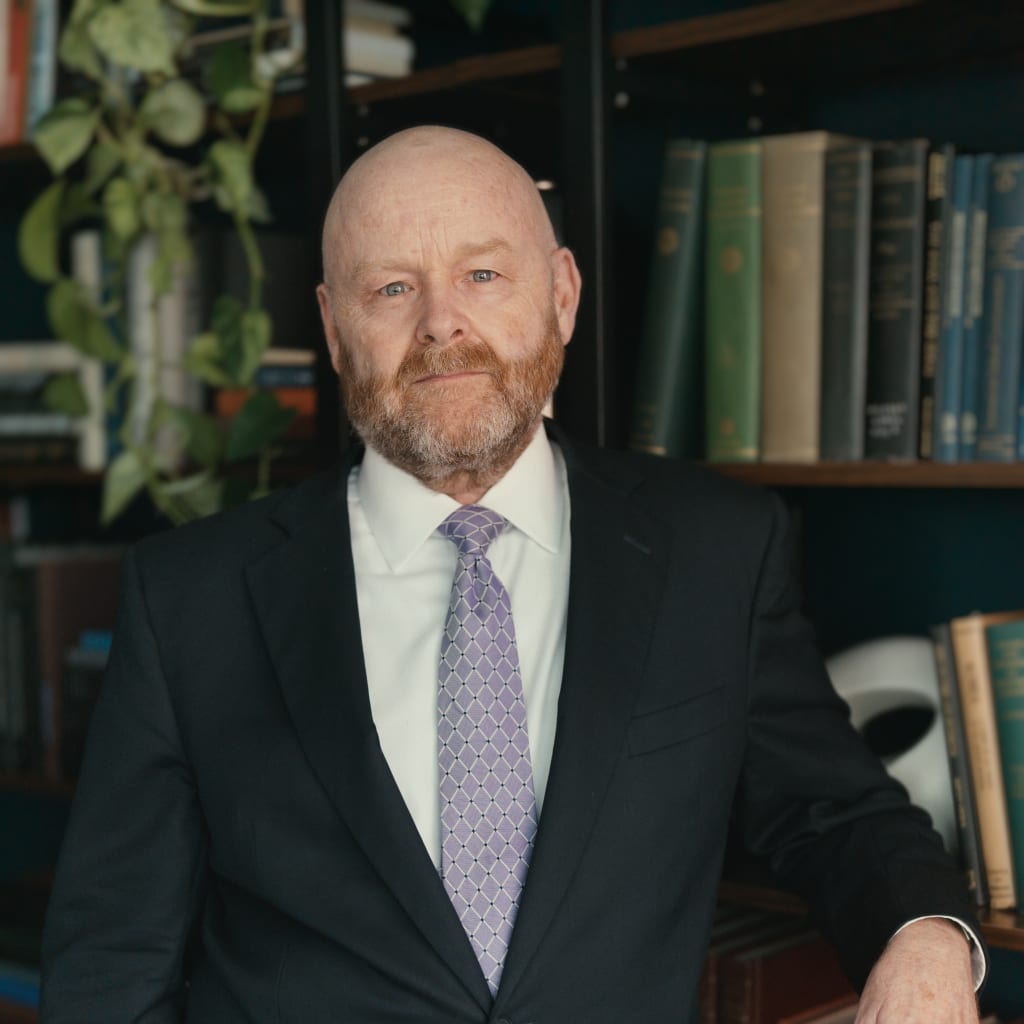 James M. LindsayCFR ExpertMary and David Boies Distinguished Senior Fellow in U.S. Foreign Policy
Guest
- Michael BustamanteEmilio Bacardí Moreau Chair in Cuban and Cuban-American Studies, University of Miami
[Video: https://youtu.be/AbhxzanVGf0?si=YuyPwPupp4Lckbwt]
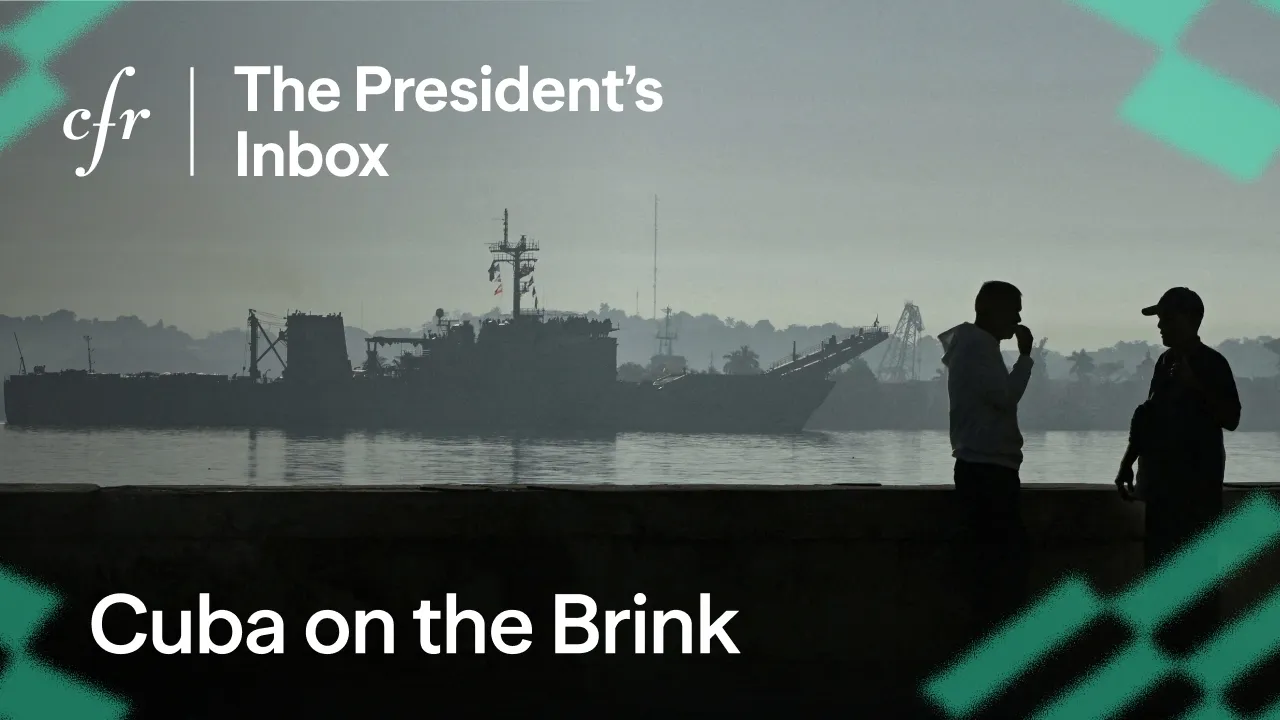
Michael Bustamante, Chair in Cuban and Cuban-American Studies at the University of Miami, sits down with James M. Lindsay to discuss the Trump administration’s maximum pressure campaign against Cuba.
Transcript
BUSTAMANTE:
But I think there’s something potentially different about this moment. What’s happening now is just this slow descent into something that feels very, very dark.
LINDSAY:
Does what the United States is doing right now rise to a level of an act of war? A month and a half after removing Nicolas Maduro from power in Venezuela, the Trump administration is turning up pressure on another Latin American country. Cuba. What is the Trump administration seeking to accomplish with its effort to deepen Cuba’s isolation? How is Cuba’s communist government responding to Washington’s intensifying economic pressure? And what might follow if the regime in Havana falls? From the Council on Foreign Relations, welcome to the President’s Inbox. I’m Jim Lindsay. Today I’m being joined by Michael Bustamante, chair in Cuban and Cuban-American Studies at the University of Miami. Michael, thank you very much for joining me.
BUSTAMANTE:
Thanks for the invitation, Jim.
LINDSAY:
I’d like to jump right into it, Michael, since the Trump administration captured Nicolas Maduro early last month, it has turned up the economic pressure on Cuba. Could you walk me through what it is that the administration has been doing?
BUSTAMANTE:
Sure. Essentially it’s mostly about oil. When Nicolas Maduro fell, Cuba lost its largest and most stable supplier of oil. And that’s important for Cuba because Cuba, while it produces about 40 percent of the oil that it consumes, it imports the rest. And all of that imported oil fuels the power grid, a power grid that had already been ailing. Just to give you an idea, Cuba had something like five nationwide power outages last year, so prior to Maduro’s removal.
So they’ve cut off Venezuelan supplies. The U.S. owns where Venezuelan oil goes at the moment, and they’ve also threatened tariffs on any country continuing to trade oil and supply oil to Cuba. And that was an action really targeted at Mexico in particular, which had emerged as another pretty important supplier for Cuba. So the electric grid is under strain, even more strain than it was. Transportation is sort grinding to a halt. Services are grinding to a halt. Trash is piling up in the streets. People can’t get to work. So the society is really, as I said, grinding to a halt. And I think what the Trump administration is trying to do is sort of force the Cuban government to some kind of negotiating table.
LINDSAY:
Help me understand exactly how threats of using tariffs are persuading countries not to send oil to Cuba, particularly the Mexican government. And I ask that against the backdrop of, last week, the Supreme Court struck down President Trump’s use of the International Emergency Economic Powers Act of 1977 to do just this. So in some sense, the threat that the president had has been waved away. So help me understand what’s going on now.
BUSTAMANTE:
Yeah, I mean that’s a great point, and I was going to mention the news from last week because it’s left us all sort of wondering, well, what happens with that executive order that the Trump administration had put out, again, threatening tariffs invoking precisely the law that you just referenced, to threaten tariffs on countries continuing to export oil to Cuba.
I think the government of Claudia Sheinbaum in general is between a little bit of a rock and a hard place, or a lot of a rock and a hard place with the Trump administration. For her political coalition, there is still, or a part of it, there’s still a kind of a romanticized view of Cuba, and oil supplies to Cuba are something that had begun under her predecessor or ramped up a little bit under her predecessor as Cuba was already enduring a pretty severe crisis. And so she’s under pressure domestically to continue to sort of support Cuba to continue to buck the United States infringements on Cuban national sovereignty as they perceive it.
But on the other hand, she’s got perhaps bigger fish to fry with the Trump administration on trade and security, and all kinds of other issues. As we’re seeing as we speak, there have been events unfolding in Mexico related to drug violence that are quite serious. So she, for the time being, has held off on shipments of oil to Cuba. Her government has sent some humanitarian assistance of other kinds. Whether her calculus changes in light of the Supreme Court decision on tariffs is a big open question. But I think even with that Supreme Court decision, there’s other kinds of indirect pressure that’s being placed on her government to not support Cuba in this way. So we’ll have to see how it plays out.
LINDSAY:
So Mexico City going forward recognizes that it faces a lot of pressure points vis-a-vis Washington that the Trump administration can press. And I would imagine President Sheinbaum also has to be thinking about the future of the U.S.-Mexico-Canada agreement, which is up for formal review starting this summer. Obviously a critical importance to Mexico and its economy. Help me understand the actions of another country, and that is Russia. My understanding is Russia has also in the past supplied oil to Cuba. And that there’s actually a Russian flag vessel, I think called the Seahorse, that’s currently on its way to Cuba. Are we seeing Moscow stepping up here, or is this a more symbolic sort of action on the Kremlin’s part?
BUSTAMANTE:
It’s another great question, and I think we have to see. You’re right, Moscow has been another important supporter of Cuba. They haven’t supplied as much oil lately as compared to Mexico and Venezuela. Do they have the capacity to supply more? Yes. Of the Cuban government’s kind of friends around the world, Moscow is perhaps in the best position in some ways to try to fill in the gap in terms of oil supplies.
I think the question that a lot of us are asking is how willing are they going to be to poke the United States in the eye, so to speak, so close to its shores? I’ve been following the news of the Russian flag vessel that you mentioned. There’s been conflicting reports even coming out as to whether it’s being accompanied by Russian naval assets. And it’s going to be the first test, I think, if that ship actually gets to Cuban waters as to how intently the United States intends to continue to police shipments of oil that in any way might touch Cuba. So that’s a potential flashpoint coming up.
But the broader picture on Russian relations with Cuba has been interesting. I mean, strategically, geopolitically, they’ve been an important partner. You’ve seen Cuba actually really double down over time in terms of alignment on Russian positions in the war in Ukraine, for example. There’s a side story there too about Cuban nationals showing up on the Russian front, whether with the Cuban government’s knowledge or not has been a subject of much debate.
But the Russians have also been pretty intent on telling the Cubans over the last few years, you all need to get your economy in order. You need to open your economy, you need to reform it. There have been big promises of investment, but my sense is that the Russians are also a little bit frustrated with the Cubans’ unwillingness to move the economic ball forward internally. So that raises the question sort of how far are they going to stick their necks out for Havana in this circumstance?
LINDSAY:
Well, I have to ask you, Michael, about another great power and that is China, communist-run China? Are we seeing any communist solidarity here? Is Beijing doing anything to help Havana?
BUSTAMANTE:
Lots of nice words and actions too in part, shipments of humanitarian aid, not oil. The Chinese actually over the last year or two have actually been helping Cuba to build out solar power capacity, which seems like a good idea in a place that famously gets a lot of sunshine. But the pace at which they are building that out is simply not going to be enough. It helps, don’t get me wrong, but it simply will not be enough to deal with the losses of imported oil.
And so it’s unclear to me. I mean, there was a couple of statements from Chinese officials in the wake of events in January to the effect of we will continue to support Cuba within our capabilities. And so that caveat, I think, struck me again. In a world that is not just about great power competition, but also increasingly the conversation seems to be about spheres of influence. The Chinese, the Russians have their own spheres of influence that they’re interested in. And I think the question is, are they going to seed the Western Hemisphere as the United States’ sphere of influence? So that’s some of the dynamics that we’re seeing play out.
LINDSAY:
Now, Michael, I’ve heard a number of people describe the Trump administration’s efforts to prevent oil from reaching Cuba as effectively a blockade. And a blockade under international law is an act of war. Now, I will note that the Trump administration has been very careful not to call what it’s trying to do a blockade, which for the older among us who remember the Cuban Missile Crisis would note that John F. Kennedy was quite careful to call his naval action, which involved U.S. naval ships, a quarantine and not a blockade for just that reason. But does what the United States is doing right now rise to a level of an act of war?
BUSTAMANTE:
I’m not an international lawyer, so I don’t know. I mean, I think what I’ve been calling it is a kind of a de facto blockade. Between the tariff threat, which we’ll see if that sticks given the news of last week, but also the presence of U.S. naval ships in the region, and efforts on the part of U.S. naval forces to, again, track down vessels that have had anything to do with either Venezuelan oil shipments to Cuba or other kinds of supplies to Cuba really far from the Caribbean in some cases, I think amount to, at the very least, a very serious show of force.
Whether this Russian ship that may or may not be on its way gets through is going to be the first test of that. I mean, above all, this set of actions does seem like, if not meeting the mark of a declaration of war, it’s certainly heating up the pressure on Cuba in a way that I don’t think we’ve ever seen before. I mean, they are going for the jugular in terms of the most important set of imports that help that economy function, and barely function at that. So this is going to have immediate humanitarian effects. This seems like a game of chicken in some ways between the Trump administration and the Cuban government as to who’s going to blink first. And the Cuban people are unfortunately, from my perspective, in the middle. And some of the humanitarian effects are starting to become really, really quite concerning.
LINDSAY:
I should note that my understanding is that the U.S. Navy, or perhaps it’s the U.S. Coast Guard, has already detained nine vessels believed to be carrying contraband oil. So that’s worth keeping in mind. One thing I just want to ask about the Trump administration’s policy, Michael, is that it began ramping up pressure on Havana even before ousting Nicolas Maduro. Can you just help me understand a little bit about some of the things the administration did, particularly last summer, to turn up the pressure on Cuba?
BUSTAMANTE:
Yeah, I mean, it might even be worth just refreshing our memory about the first Trump administration because I think some of what was already in place when Trump two began was holdovers from Trump one that never went away during the Biden administration. So in the first Trump administration, and let’s also remember, the first Trump administration comes into office on the heels of this historic effort on the part of the Obama administration to normalize, at the very least, diplomatic ties with Havana. They begin to unwind what Trump called Obama’s bad Cuba deal. It took a little while for that really to take effect.
But in 2019, there is a stated maximum pressure policy that’s put on both Cuba and Venezuela, though not to this degree with oil sanctions. But the administration through everything that had traditionally been in the sanctions toolbox for Cuba at Havana. They cut flights, cut remittances, activated a part of the Helms-Burton Act from 1996 that had always been waived by presidents, Republican and Democrat, that really helps to free sort of the foreign investment environment in Cuba.
So there was a lot that had already happened during Trump one. When Biden came in, he made some changes to policy, but did not go all the way back to what Obama had done. And so when the Trump administration comes in, there’s in a sense less to unwind or reput in place. I would say the big differences are that, at the very end of the Biden administration, Biden cut a deal with the Cubans through the Vatican to lift Cuba’s designation as a state sponsor of terrorism in exchange for the freeing of something like 500 political prisoners. On day one, the Trump administration re-designated Cuba as a state sponsor of terrorism.
There’s also been efforts earlier in 2025 to go after Cuban medical exports, that is the exports of medical personnel, and to really lean on governments in the region to cut off some of those contracts, or at the very least, pay Cuban doctors directly rather than to the Ministry of Health, which was garnishing the majority of those wages. And so there’s been a number of steps. But there are planes still going to Havana as we speak with Cuban-Americans going to see their family despite everything that’s going on. And so in some ways I’ve been surprised that some of the traditional things in the toolbox, like cutting flights, remittances, haven’t happened yet, but that may be coming down the pike.
LINDSAY:
Okay. So help me understand the impact of what’s taking place. Michael. You noted that seeing oil imports being cut off have wreaked some havoc. I mean, I have some statistics here. Apparently, Cuba’s gross domestic product has declined 11 percent over the last six years. So that’s the backdrop of economic failure before the oil cut off.
But satellite imagery finds that the level of light at night coming out of Cuba is at 50 percent. You mentioned trash piling up because there’s no trucks to move it. I will note that in Cuba, as in any country, you have water plants that run on pumps. Pumps need electricity. Electricity in most places comes from some fossil fuel generated source. And so no oil, no power. No power to the pumps, no water gets out.
Sort of give me a sense of how the Cuban people are reacting to the situation they now find themselves in. Are we seeing mass protests, people just sort of shrugging their shoulders and saying, I lived through the so-called special period of 1992, been there, done that? Give me some sense of what we know about what’s happening on the ground.
BUSTAMANTE:
We’ve neither seen mass protests yet, nor a simple shrugging of shoulders. Everything I’m hearing from Havana is that people are incredibly worried. There is this sort of sense of dread and anticipation, and almost a kind of an nihilistic sense that whatever’s going to happen, just let it be over with and let it be quick.
I think there’s some part of the Cuban population that is sort of stuck in the middle of this game of chicken, as I’m calling it, would just prefer for some kind of rapid action, decisive action, kinetic action, even to use that word that the administration likes so much. Because what’s happening now is just this slow descent into something that feels very, very dark. I mean, the images coming out of Havana alone and other cities of the country of, not just trash piling up, which to be clear, there have been trash collection issues for a while. But the trash collection issues have gotten worse, and people have just started burning trash in the streets. And so the kind of smoke that’s hovering over Havana now, the public health concerns that that raises.
I mean, you mentioned water. Not only is it a question of water not being able to be pumped out through the central system, but in a place like Havana, many people’s homes have electric water pumps that pump water from underground pipes up to sort of a cistern that sits on their roof, and that’s how water collection systems work. If there’s no electricity, you can’t do that. And the water supply was already unstable.
So we’ve also seen in light of the fact that there’s no electricity, there’s also not a steady supply of something like propane or other kinds of natural gas that people could use for cooking. People are knocking down the doors or breaking down a wooden chair in their house and starting a fire on the street and cooking with wood. So it’s really dramatic stuff.
And so it strikes me that, and maybe we’ll get here in the conversation, but as rumors have begun to trickle out about are the governments talking, is the secretary of state having a back channel with one of Raul Castro’s grandkids? What seems to be the very early stages of those talks are very mismatched from how quickly the situation is deteriorating. And that’s what has me most concerned.
LINDSAY:
Michael, I want to get to that question of back channel talks, but first I sort of want to just drill down on this issue of what is happening in Cuba and ask you the following question. Is it the case that the Cuban government has succeeded in essentially exporting dissent? I will note that roughly one in ten Cubans has fled the country in recent years. Is that what’s going on here? Or is there something deeper that leads to this sort of nihilism or fatalism among many of the Cuban people?
BUSTAMANTE:
I mean, that’s part of it, I think. Between the late 2021 and early 2025, the estimates vary, but on the low end, more than a million Cubans left. It’s the largest exodus in Cuban history. Much more than left during sort of the early 1960s in the initial years of the revolution, much more than the Mariel boat lift. I mean, it’s just it’s-
LINDSAY:
That was in 1980, right? Just for place in history.
BUSTAMANTE:
Exactly. In 1980. Much more than the rafter crisis of 1994. I mean, it’s just it’s a watershed. And that also came, that exodus also began a few months after these historic mass protests in July of 2021, which was sort of at the depth of the pandemic when Cuba’s borders were closed and things were already really bad.
And so I think the lesson that people on the island have taken from that is twofold. Get out if you can. But also that protest seemed to have limited returns. There were these historic protests, and the end result was that a lot of young people were put in jail for very long sentences, and a lot of folks remain. So we have seen a lot of people that, younger people in particular who might be more willing to take the streets, they left.
And I think it’s an open question sort of what are the reserves of civic anger that are there? I mean, if the situation deteriorates, I think it’s quite likely that there would be some kind of mass protests of some kind. How organized is a different question. But mass sporadic protests are now kind of a common occurrence in Cuba. The question is how and if that can ever be channeled into something sort of more concrete. And that was both the power and the weakness of the 2021 protests was the fact that they were so decentralized and kind of spontaneous, but that then they couldn’t be channeled in a particular direction.
So it’s interesting. And I think that situation now, and this is part of the maximum pressure strategy on the part of the Trump administration certainly, is that the migration pathway out is over, at least for now. Well, at least it’s over to the United States, I should say. Cubans are continuing to leave when they can to go to other places. But guess what? With no oil coming in, there’s also no jet fuel. And so a lot of the European flights that might exist from, say, Madrid, Spain to Cuba, they’re not going. Or they are reducing frequency because they have to do a layover somewhere like the Dominican Republic to refuel.
And so the pathways out have become much more complicated. And that seems quite deliberate on the part of the Trump administration that has said that the era of mass migration is over and has talked more openly than I think other administrations have in the past, that if you want to put maximum pressure on the Cuban economy, you can’t have an escape valve for migration. There’s a logic to that thinking, but it’s also, again, puts the Cuban people square in the middle as sort of, in some sense, cannon fodder for sanctions policies.
LINDSAY:
So Michael, let’s talk about what it is that President Trump is seeking to accomplish with his maximum pressures campaign against Cuba. When U.S. forces came in and captured Nicolas Maduro, I think a lot of Venezuelans in Venezuela and elsewhere assumed this was going to lead to regime change. What the Trump administration had really given us is leadership change with regime management. Are we looking at something similar in Cuba, or are we really looking at forcing the communists from power?
BUSTAMANTE:
It is unclear to me, and I think we’ve gotten mixed signals. On the one hand, it is no secret that particularly the secretary of state, Marco Rubio, the son of Cuban immigrants himself, has a long record of advocating for outright regime change and democratic transition in Cuba. That’s a position that, publicly, he still certainly defends.
The Trump administration though from the immediate days after Maduro’s capture, and Trump himself seemed to at times send a kind of different signal much in line with the kind of things we’ve heard from Trump before. The Cubans should make a deal before it’s too late. Well, what does that mean? A deal to leave power? It’s not really in the Cuban government’s DNA to just negotiate their exit.
LINDSAY:
Very few authoritarian regimes exit stage right voluntarily.
BUSTAMANTE:
Exactly. And so there have been some signs in recent days, and weeks frankly, that perhaps the administration is open to something more along the lines of the Venezuela outcome. Some U.S. diplomats, most notably the charge at the U.S. Embassy in Havana has explicitly said that what they’re after is to sort of identify the Cuban Delcy Rodriguez, right? A regime insider that could put a new face on the government that would be someone the United States could deal with, that would presumably be open to some kind of opening economically, politically. But that would avoid the risk of a crash landing rather than a soft landing.
I think the thing that’s hard to figure out here is, while in the Venezuelan case, natural resources have been such a clear point of focus. I mean, think about the word frequency with which the president has referenced Venezuelan oil. Cuba doesn’t scream out to American interest in sort of the same obvious way. Obviously there’s huge long-term economic potential for U.S. interests in Cuba. But what the United States wants is unclear to me, to completely blunt. And I wonder to what extent it is also dawning on them that the idea of actually forcing a full on regime change might require more of a forceful and kind of long-term U.S. commitment that would make this administration uncomfortable, and would be politically risky. The thing is, there doesn’t seem to be a very clear Delcy Rodriguez figure in the Cuban case.
LINDSAY:
Help me understand this, Michael, because let’s put aside for a second notion of regime change, because again, one possibility is that they have a narrower goal of changing Cuban foreign policy. And certainly the president has alluded to that at times he’s accused Cuba of harboring Russian spies and welcoming enemies like Iran and Hamas.
What would that narrower ask be? I mean, is there something tangible that the Cubans could do? I don’t know, shut down the Russian embassy, shrink the size of Russian diplomatic delegation in Havana. I’m just trying to understand if it’s not regime change and it’s regime management, is there a foreign policy angle to it? Or would it be somehow, as you alluded to, I think, try to manage a transition to something else over a longer period of time?
BUSTAMANTE:
I think it could be hypothetically any combination of those things. And again, the signals have been mixed. You’re right. The executive order that threatened tariffs for continued oil shipments, it makes reference to some of those national security concerns that you just mentioned. And Cuba’s ties to Russia, China, and other bad actors from the United States’ point of view.
So could Cuba hypothetically break off or seriously degrade its relations with China and Russia in exchange for some kind of sanctions relief? Perhaps. But it’s hard for me to envision a world where, particularly from the secretary of state’s point of view, that’s going to be enough. Not just because of his own personal feelings on the issue, but because there’s so much, I mean here in Miami, expectation is very high that the day is coming. U.S. diplomats have also been saying there’s going to be a big change in 2026. They have really upped expectations more in the regime change direction.
And so I think foreign policy changes could be part of a hypothetical deal, but I think also some Cuban government changes would have to be part of that. At a minimum, a gesture of freeing some of the political prisoners that are still in jail from these 2021 protests that I mentioned. At a minimum, a real commitment to economic reform that would open the Cuban economy to U.S. investment, pending changes in the U.S. sanctions regime.
But even the sort of transactional qualities of that deal, they run up against statutory limitations in this case that don’t exist in Venezuela. Because the Helms-Burton Act of 1996, which codified the embargo in most ways, sets a very specific and detailed set of conditions for full on regime change that have to be met before the United States can really liberalize sanctions policies. The president can poke holes to certain degrees. So I think how even the hypothetical transactional deal would work, given the legislative framework for regime change that’s on the books, is still a really, really big, big question.
LINDSAY:
Now, Michael, I promised you that we would get to the news reports that the secretary of state is engaged in some back channel negotiations with one of Fidel Castro’s grandchildren or grandsons. Tell me a little bit about what we think we know. I realize that this is all sort of being reported on background and the like. So we may not know all there is, and some of what we know may not be true, but sort of give me a sense of what we think is happening.
BUSTAMANTE:
Yeah. Huge caveats here obviously because there are those that are saying that these stories that appeared in the press are just about creating tension within the Cuban government itself and might be whole cloth fabricated. But the reporters that have been on this beat tend to have good sources.
What’s been reported is that the secretary of state has engaged in some kind of private dialogues with one of Raul Castro’s grandchildren. This is a grandson who is well known to many Cubans because for many years he served as his grandfather’s chief bodyguard, particularly in the time when he was head of state, and so traveled the world with him. He’s also known as somebody who is quite a party animal, who has some connections and perhaps interests in the emerging Cuban private sector.
He’s perhaps most famous in some Cubans eye’s because of a viral social media video where he was partying at a club in a New York Yankees jersey, by the way, and dousing himself with beer. I realize it’s a little bit off color. But I mention it because when that story came out, the first reaction I had was this is the interlocutor? And then I thought about it more. And if you want to get to Raul Castro who is retired, he is not the head of state, but by all stretches, at all of his ninety-four years, he’s still sort of the ultimate decider, that no big decision gets made without sort of his imprimatur.
And if you believe that he would be the one to have to unlock any deal that you would make, it makes sense that you would want to try to get to someone in his orbit. And someone like this grandson in particular who is, shall we say, doesn’t seem the most wedded to the hardcore ideology of the state, whatever the public performance might be in other realms.
That said, we don’t really know much about what’s been talked about. It’s just when reported that the conversations have been future oriented. There’s also been rumors of talks that another Raul Castro grandson who does fit more of the picture of a hard ideologue of the system was also in Mexico recently engaging in some kind of conversations with U.S. officials, though we don’t know who. That’s the same grandson that was the architect of the back channel negotiations during the Obama period. So it stands to reason that he might be also an interlocutor.
But again, what they’re talking about, and to what effect, is unclear. Again, the U.S. charge in Havana has been saying change is going to happen sooner than you think, but the reporting coming from Axios and others is that these conversations with the Castro family are still in their early stages. So that’s as much as we know if we know anything at all.
LINDSAY:
So Michael, perhaps we can close by looking to the future. And I realize the question I’m about to ask is going to put you on spot, and it’s a very difficult one I think to answer. But in your sense looking at it, how do you see the communist rule in Cuba coming to an end? I mean, do you think it is likely that you would have ideologues who will fight to the last Cuban to preserve their control? Do you think there’s something about the nature of communist ideology or the authoritarian spirit in Havana that’s really sort of broken and eventually will just sort of collapse like a house of cards, some other possibility?
BUSTAMANTE:
You’re right. It’s a really hard question to answer. And there’s a long list of folks who have made predictions and then been proven wrong. So I think some degree of humble pie is important here in terms of thinking about the longevity of the system, which has outlasted all predictions of its demise, obviously, to this point.
But I think there’s something potentially different about this moment. This is not the early 1990s when there was still sort of a vestige of belief and loyalty in the system, as much as that the special period crisis was also destabilizing. In Cuba, you have two generations at this point who’ve come up since the end of the Soviet Union. So they don’t know Cuban communism or socialism, quote, unquote, “at its height.” They’ve only lived in some sort of crisis.
LINDSAY:
And they didn’t live in Batista’s Cuba either.
BUSTAMANTE:
Exactly. And because they didn’t live in Batista’s Cuba, they’ve also become very open to, I think, a false nostalgia for how perfect supposedly everything was before the revolution. And I often have to remind folks that revolution doesn’t come from nowhere. The Cuban government may have simplified what Cuba was like before 1959, but the revolution happened for a reason too.
And so I think it’s unquestionable to me that the Cuban state is at a low point of legitimacy in the last thirty years in terms of in the eyes of its people. And there’s not a Castro in charge, at least publicly. Raul Castro is also ninety-four. I mean, he could go at any time. There’s very few members of that historic generation that are still left. One is rumored to be in a hospital as we speak.
It’s difficult for me to envision the sort of fissures in the system kind of just coming apart until you get past the point where that historic generation is really off the stage. Because there are a lot of people in sort of middling levels of the bureaucracy of the Communist party or the state itself that also have a lot to lose, or they think they have a lot to lose.
So I really don’t know. But the way that people describe the situation to me today is unsustainable. What I worry about are the consequences of a crash landing sort of linked to U.S. pressure, or maybe even more forceful kinds of intervention, as opposed to the soft landing that I think many Cubans I know were hoping for about a decade ago when they saw a gradual process of internal reform and normalization with the United States as the beginnings of ingredients to sort of put Cuba on a glide path to a more friendly transition that would be less disruptive.
But at this point, the Cubans have missed many opportunities to do the things that they need to do for their political and economic system, not because the United States tells them to, but because they’re people to serve it. And they’ve missed the opportunity to build a greater constituency for that kind of a softer glide path with the United States. And so we’re in a situation of real confrontation.
But I wouldn’t count them out necessarily. And I think there’s a lot of variables here. What happens if the Cubans sort of last past the midterm elections? Is the Trump administration going to turn its focus elsewhere if they’re battered because they’ve paid too much attention to foreign policy? If events in Iran escalate. I mean, there’s so many variables here that I think it’s really hard to predict. And I think makes it all the more concerning that there doesn’t seem to be a clear path or a clear set of conditions that the administration has articulated to try to get to some sort of deal or sanctions relief.
LINDSAY:
I take your point, Michael, about humility, and also I think you’re quite right that we’re likely to be coming back to this topic in the next several months. So stay tuned, and maybe we’ll have you back on the President’s Inbox. For now, I just want to close up this episode, and thank you very much for joining me. My guest has been Michael Bustamante, chair in Cuban and Cuban-American Studies at the University of Miami. Again, Michael, thank you very much. It’s been an illuminating conversation.
BUSTAMANTE:
Thanks, Jim.
LINDSAY:
Today’s episode was produced by Justin Schuster with Director of Video Jeremy Sherlick and Director of Podcasting Gabrielle Sierra. Our recording engineer was Elijah Gonzalez. Production assistance was provided by Oscar Berry and Kaleah Haddock.
Mentioned on the Episode:
Marc Caputo, “Exclusive: Rubio’s Secret Squeeze on Raul Castro’s Cuba,” Axios
Opinions expressed on The President’s Inbox are solely those of the host or our guests, not of CFR, which takes no institutional positions on matters of policy.
Associate Producer, Video and Audio
- Associate Producer, Video and Audio
Editorial Director and Producer
- Director, Podcasting
Director of Video
- Director of Video
More Episodes
 33:42Podcast
 36:05Podcast
 41:07Podcast
 39:26Podcast
 35:04Podcast
 31:46Podcast