Listener Mailbag: 2025 in Review, With Carla Anne Robbins and Matthias Matthijs
This episode unpacks the major developments, initiatives, and changes in U.S. foreign policy in 2025.
Published
Host
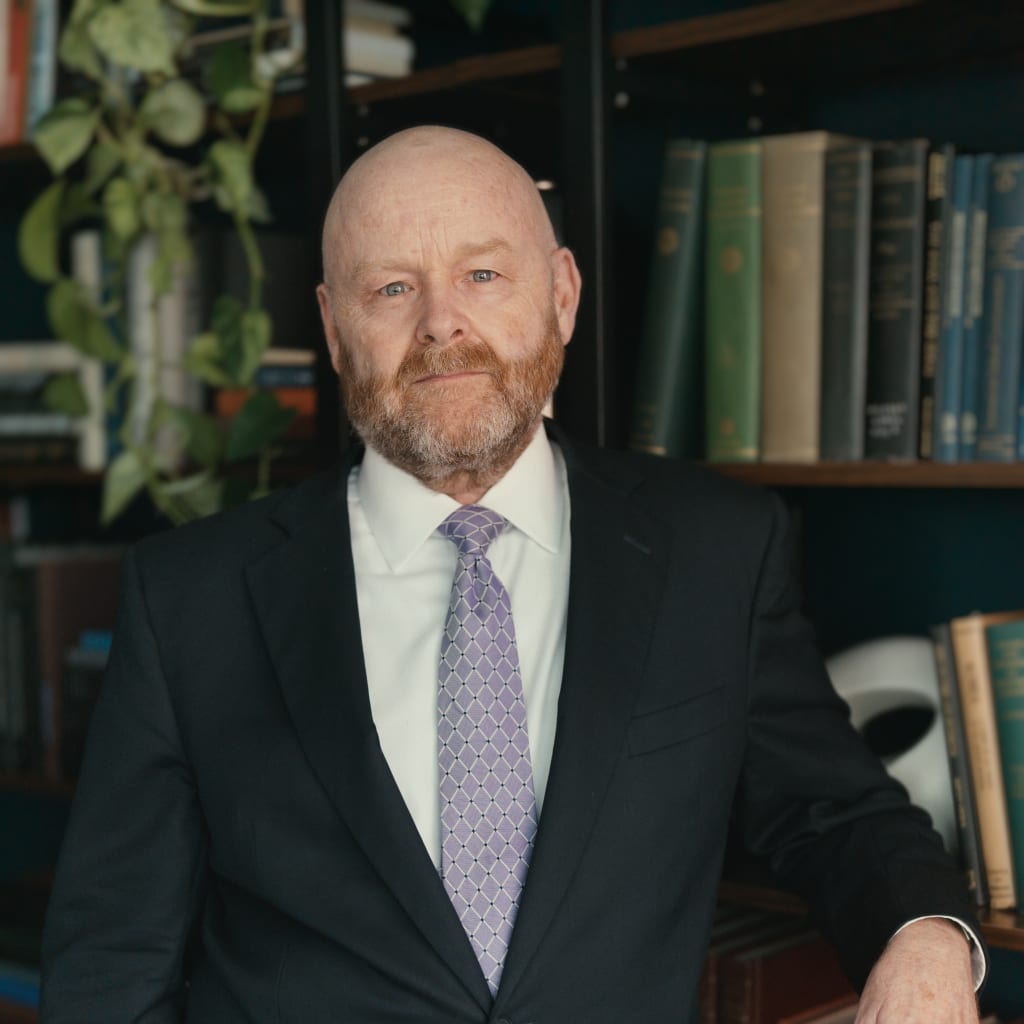 James M. LindsayCFR ExpertMary and David Boies Distinguished Senior Fellow in U.S. Foreign Policy
Guests
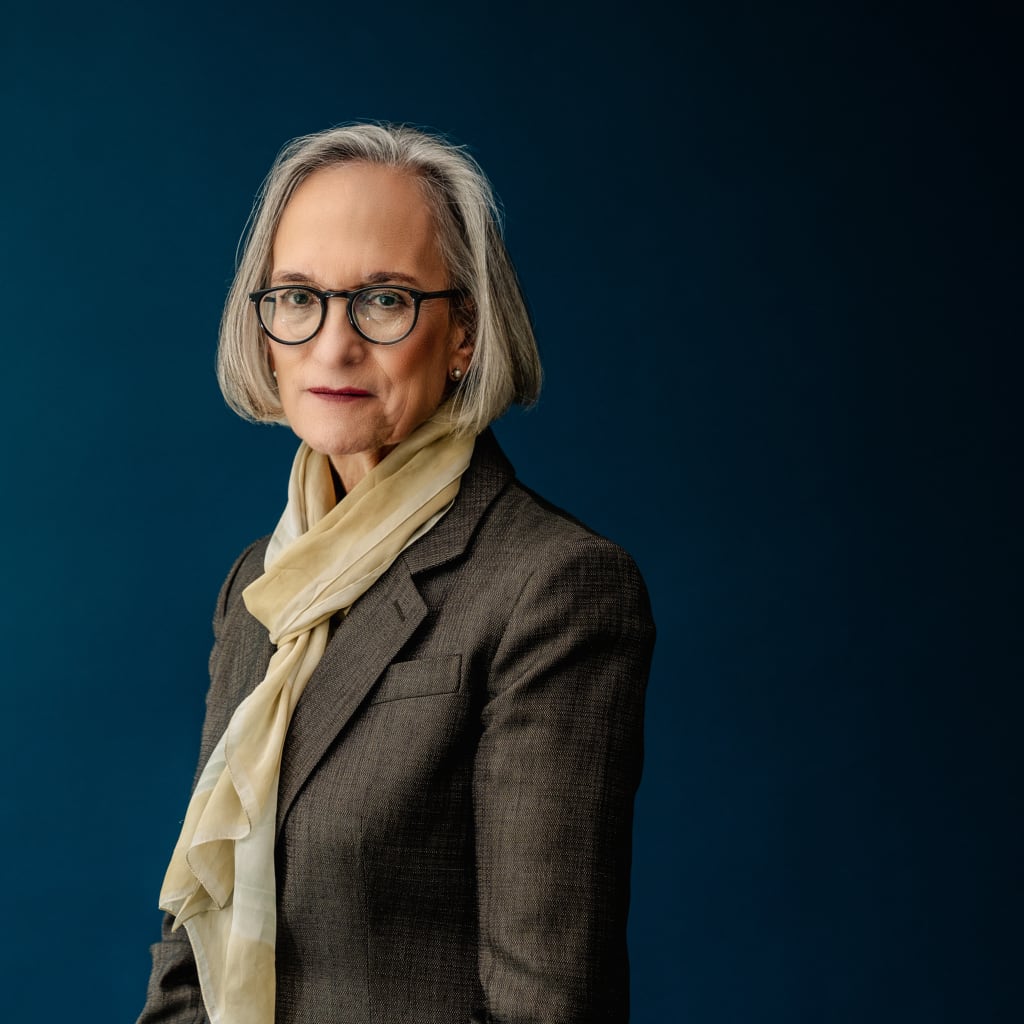 Carla Anne RobbinsCFR ExpertSenior Fellow
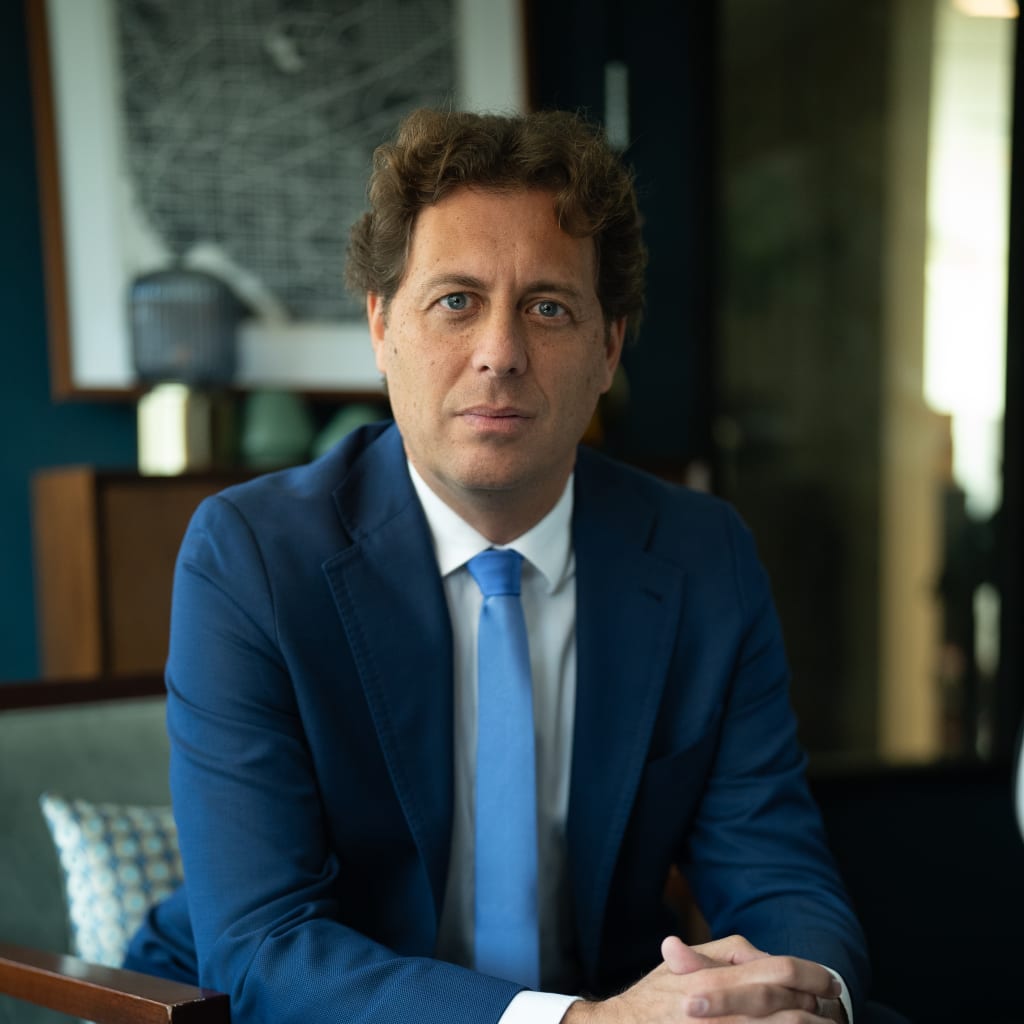 Matthias MatthijsCFR ExpertSenior Fellow for Europe
[Video: https://youtu.be/t9CqPY9oQcE?si=G_yTFYinhrPJuNVo]
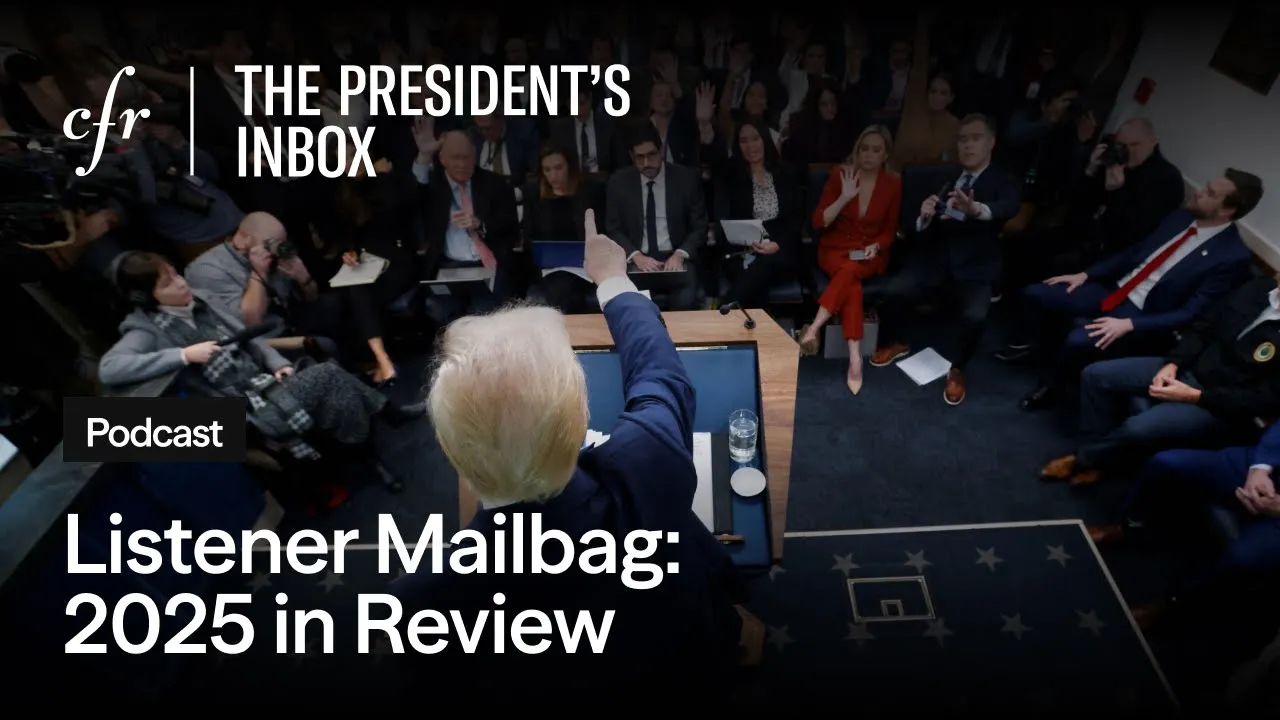
Carla Anne Robbins, senior fellow at the Council, and Matthias Matthijs, senior fellow for Europe at the Council, sit down with James M. Lindsay to answer listener questions about the major developments, initiatives, and changes in U.S. foreign policy over the course of 2025.
Transcript
PBS NewsHour:
Please raise your right hand and repeat after me. “I, Donald John Trump, do solemnly swear...”
PBSNewsHour:
[Donald Trump] I, Donald John Trump, do solemnly swear...
CBS News:
Tariffs, first a shutter, now an economic roar are here.
CBS News:
President Trump says he will meet with Russian President Vladimir Putin next Friday in Alaska.
Fox News:
Details are emerging this weekend of a U.S. proposed twenty-one point peace plan for ending the war in Gaza.
LINDSAY:
2025 is coming to a close. Over the past twelve months, we have seen a level of political and economic flux, unlike anything in decades. Both at home and abroad, the pillars of the global system are changing. With the United States walking away from many of the rules and institutions it created during its eight decades of global leadership. To help make sense of a turbulent year, we asked you for your questions on U.S. foreign policy. I have brought in some friends of the podcast to help answer them.
From the Council on Foreign Relations, welcome to the President’s Inbox. I’m Jim Lindsay. Today I’m joined by Carla Ann Robbins and Mathias Matthijs, senior fellows here at the council. Carla, Mathias, thank you for joining me.
ROBBINS:
Thanks for having us, Jim.
MATTHIJS:
Glad to be here.
LINDSAY:
Okay. Where I want to start is with your own takeaways about the past twelve months, and maybe we could start with you, Carla. What is your big takeaway from 2025?
ROBBINS:
Oh my God, has it only been twelve months?
LINDSAY:
Only twelve months, Carla.
ROBBINS:
It just seems like it has gone on and on forever. My big takeaway, for all that we expected about the level of disruption from the Trump administration internationally, it has been so much more disruptive, and probably more organized disruption than I could possibly ever imagine.
It’s not that there is a clear strategy at work here, but their systematic dismantling domestically is larger than it is internationality, but it’s pretty scary out there. I think that’s my big takeaway. Certainly the national security strategy, which I think we’ll talk more about during this, but the national security strategy, which we all predicted would be pretty remarkably disruptive. I mean, this focus is retreat from the rest of the world, a focus on the Western hemisphere, but the declaration of near war on Europe, I never expected that. So, it has been a pretty disruptive world, or disruptive to the world. And you talked about eighty years of American leadership. It has been a complete retreat. And it’s a pretty frightening year.
LINDSAY:
Mathias, let me bring you in here on this question. I will also note you grew up in Europe, Belgium specifically. Now, what is your takeaway from 2025?
MATTHIJS:
Yeah. I guess my major takeaway, and I’m going to try to make sense of the disruptive chaos that we’ve often seen in the last year, is that it’s been much better to be an enemy of the United States than it’s been of an allied nation. We’ve seen this, especially in Europe, but also in Korea and Japan, where the countries that heavily relied on the United States for their security, and for that matter, for their trade, became trapped to some extent in this cycle of having to appease the Trump administration, what Donald Trump wanted, whether it came to questions of security, whether it came to questions of trade. And even these were mostly democratic allies, let’s not forget, even on values of democracy rule of law where they would’ve spoken out in the past, and now felt constrained to do so in order to keep the peace between the U.S. and themselves and from things getting worse.
If you look at some of the other powers, especially China, Russia, even India and Brazil, less so, but China and Russia have had a very good year. They’ve seen much of the things that they wanted happen from the United States. And you could also say that the Chinese and the Russians have learned the lesson from Trump much better, and were much better prepared, I think, this time around for this administration than some of the others. But we can go into more detail into this. But that would be my big takeaway from the last eleven, twelve months, if there is one.
LINDSAY:
Well, thank you. You’ve both done a great job setting the scene. It sort of flows naturally into the questions we receive from listeners. As you might imagine, a lot of questions about Europe, a lot of questions about NATO. And Carla, I would like to start there with a question for you. This is from pharma.amy. “Mark Rutte and Germany’s foreign secretary expressed confidence in the US commitment to NATO. Do they actually believe that?”
ROBBINS:
I am not a confidant of Mark Rutte. Do they actually believe it? No, I suspect they don’t actually believe it. I think this is whistling in the dark. Rutte has done a very good job of playing up to Trump. And Mathias has written a lovely piece, which he can talk about, about how they probably shouldn’t play up to him so much. But why would they believe that? I mean, this plan they came up with for Ukraine in which they basically were going to sell out Ukraine. We’re in a constant moment one after another, one after another, in which they’re threatening to sell out all of our allies. So, I would suspect they don’t believe it. I would suspect that they’re trying constantly to figure out how to appease the United States, and particularly how to appease Donald Trump. And they’ve made a calculation that it is better to make him happy than to confront him. I’m not sure that’s the right calculation. But no, I don’t think they believe it.
LINDSAY:
Carla, I’m going to give Mathias a chance in a second to plug his peace in foreign affairs, but I want to draw you out on this issue of the peace plan. You used the words sell out. I keep hearing reports that were 90 percent of the way done, that Donald Trump is going to extend a NATO-like security guarantee to Ukraine. Why are you framing this as selling out?
ROBBINS:
I was talking about the previous version, and this is part of the great challenge of, and that’s one of the reasons why I love being a Daily News reporter, is because it changes all the time, the great flow of news. I was referring to the twenty-eight point plan, which as you recall was-
LINDSAY:
It was clearly tilted in favor of the Russians.
ROBBINS:
Tilted? I mean, tilted would suspect that there were still a few chats pieces on the board itself rather than the board being thrown out the window and the pieces lying on the ground.
The latest version that we’re hearing, and of course, this podcast is going to be out for a while there, latest version was that Kiev was going to commit to accepting the notion that they weren’t going to join NATO and that they were going to get NATO-like security guarantees. That’s a big change from the original plan itself. Is that the best of deals? Probably potentially the best that they’re going to get right now. What those NATO-like security guarantees are and whether the Russians would be willing to accept it, which troops are going to be on the ground? Are the Americans going to be flying some sort of air cap and protection itself? How much is the U.S. actually going to commit? All these things we don’t know. And perhaps most important at this point is, are the Russians going to accept the notion of NATO troops on the ground inside of Ukraine? So, lots of things we want to know.
LINDSAY:
I’ll just note on that point, Carla, that we talk about a NATO-like commitment. I would presume that that means in the form of a treaty, but I haven’t heard anybody talking about drafting a treaty that’s going to come before the United States Senate for its advice and consent. But Mathias, I want to bring you in here. Again, I think you should allude to your recent piece, but give me a sense of how all of this is being interpreted in Europe.
MATTHIJS:
Yeah. So one thing I should mention that I feel has been under-reported after the NATO summit in The Hague, June 2025, there was a lot of good feeling. President Trump was very pleased with the European commitment to dramatically ramp up defense spending from two to three and a half plus one and a half to 5 percent. This was a big win for him, this was sold this way. And of course, Mark Rutte was beaming during the summit. But I think the one thing he was asked about was his commitment to Article V. And he said, “Boy, of course, we’re committed to Article V.” But he did a sort of, for those lists-
LINDSAY:
Just refresh everybody’s mind what Article V refers to.
MATTHIJS:
So Article V is interpreted, it’s a little vague written, but it’s the key article of the North Atlantic Treaty, as it was signed in 1949. Basically means an attack against one ally is an attack against everybody. An attack against one is an attack against all. And the way this is interpreted, especially in Poland and the politics today, the ones that are on the front line with Russia, is that if there’s a Russian invasion of these countries or an incursion, that there will be 100,000 U.S. Marines immediately there in the next few days to respond and push them back. But that is not Donald Trump’s interpretation of Article V. He basically, and that was the story of The Hague in June, he said, “Yeah, of course we’ll help them and we’ll give them weapons, we’ll sell them weapons, we’ll help them with air support,” stuff like that. And that I think is very different from the way, especially Eastern European members on the frontline that are closest to Russia interpret Article V.
So, it’s a little bit like, again, for those listeners who are old enough to remember Prince Charles and Lady Diana, when Prince Charles was asked whether they were very much in love, he said, “Well, whatever in love means.” And so Donald Trump seems-
LINDSAY:
A ringing endorsement.
MATTHIJS:
... that approach to Article V.
ROBBINS:
That’s a really tragic analogy, isn’t it?
MATTHIJS:
Yeah, but I think that’s what’s often forgotten. So Jim, you’re absolutely right when you say, I mean, there’s not going to be a treaty. It’s also something they stressed when this was first put on the table, this Article V-like guarantee, that this was time limited. Time limited being this is not going to be on the table forever. So if Ukrainians, we don’t know what the ask for that is, right? Is it giving up all the Donbas? Is it something else? Is it something to do with economic contracts? We don’t know, but it does seem significant. And it does explain how the United States and Europe are on fundamentally different tracks. I mean, everybody will have noticed that merits, the German Chancellor, Emanuel Macron, the French president, are keen on getting funding for Ukraine, on seizing Russian assets to do so. But at the same time, it’s also clear that that would make a peace deal much harder. And that clearly seems to be the line the Americans are on.
LINDSAY:
Now Mathias, I gave you a chance to plug your piece, you didn’t plug your peace, it’s called how Europe lost, can the continent escape its Trump trap. What I want to do is actually drill down on the flip side of the question of Europe. We’ve just discussed the security side, I want to look at the economic side. And I have a question here from mohe.jamal. “Is U.S. foreign policy deviating from the liberal world order and specifically from the EU?” Tell me a little bit about Trump’s view of the European Union.
MATTHIJS:
Yeah. Trump’s view of the European Union has been pretty consistent, if there’s such a thing, in President Trump’s views. His views on trade have been consistent since the eighties, and his views on NATO have been consistent. Trade in America is being taken for a fool and for a ride. And NATO, he sees as a lot of rich allies free riding on U.S. generosity. And that’s clearly something that’s come into reality, and it’s become policy reality in 2025, meaning the allies are doing the bulk of their own defense, meaning they’re gradually ramping up spending. And the only way Trump has always believed you correct for economic imbalances is through tariffs. And that’s clearly been a big aspect of 2025 as well. Trump is a kind of... He fits very well into the sort of urban view of Europe, and in the far right view of Europe, that is that-
LINDSAY:
This is the prime minister of Hungary.
MATTHIJS:
Yeah, that is-
LINDSAY:
Who’s up for a reelection I think in February.
MATTHIJS:
Yeah. That Europe is wonderful, Europe’s nation states is what’s wonderful, their history, their culture, their languages, and that the EU is this sort of awful, godawful project, that is diminishing this diversity of Europe, that is taking the wrong direction on immigration, it’s way too progressive on this, that is taking the wrong direction on climate change, that is having weight, that’s obsessed with rules, and that at some point even believed the rest of the world was going to go that way, as Europe was. And that’s now many of these far right leaders in Europe, from Orbán, to Marine Le Pen, to the AFD, far right party in Germany, have an ally in Trump, because he shares that view. On the other hand, of course, he’s bad for Europe, because he’s bringing back old trade-offs between guns and butter, he is making Europe less secure by siding with Russia in Ukraine.
So, it’s difficult for many European far right parties to position themselves in this. But Trump’s been very clear, that the EU was founded to screw the United States, these are his words, not mine, and that they’re consistently very good at taking advantage, especially when it comes to trade, but also when it comes to defense of U.S. generosity, U.S. almost naivety on this. And that he’s the one to finally correct this imbalance and having Europe pay their fair share, whether it’s to do business with the United States, or whether it’s to be protected by the United States.
LINDSAY:
Carla, I want to come to you and I want to move our focus away from Europe, and pose a question that-
ROBBINS:
Before we do that, I have a question about the economic issue here with Trump.
LINDSAY:
Yes, you can take control of the podcast. Go for it.
ROBBINS:
You invited me to do that before we came on. You did that because ultimately I’m a journalist.
LINDSAY:
I did. I’m a man of my word.
ROBBINS:
I’m a question asker more comfortably than a question answerer. So here’s the thing that puzzles me, which is the EU is a large market, and think about it as a block. And I understand that President Trump in the first term had a problem with that for a while. He kept asking Angela Merkel to why she couldn’t cut a bilateral trade deal with him. He saw Germany as a great economy and she kept saying, “But Mr. President...” I mean, her people recounted this, “Mr. President, I don’t cut trade deals bilaterally. I’m part of a trade block.”
So here we have in the new national security strategy, which I keep coming back to. The notion that for the first time in three decades we’re not criticizing the Chinese for being authoritarian for their human rights abuses, we’re not even looking, we’re talking about an economic competition with China, but the one that the Trump administration wants to resolve in a mutually advantageous way. Why does the Trump administration not want to find some sort of mutually advantageous cooperation with Europe, and ignore the cultural differences that they have with Europe?
This to me is a great puzzle, because if you see the size of the European economy, and if you see the fact that ultimately the Chinese economy in many ways is, if you want to talk about screwing the U.S. economy, she said delicately, the Chinese consistently on intellectual property, on Trump in the first term constantly talking about currency manipulation from the Chinese. He campaigned and used the word rape when he talked about the Chinese economy. He campaigned on that. Why is he so much more interested in mutually advantageous economic relations with China than he is with the Europeans who have a much more consistent economies than with the United States? Puzzle me this, Mathias and Jim.
MATTHIJS:
No, it’s an excellent question. I mean, I think in the end, Donald Trump is fundamentally a mercantilist, right? So he looks at China, he looks at Germany, and he sees export powerhouses. He sees countries that make stuff, even though China is doing a lot more of it than Germany these days, and China is killing Germany at its own game in the last few years, and follow our colleague Brad Setzer on this, who shows the second China shock and how it’s hurting the Germans.
So, Donald Trump basically believes that these massive trade deficits of the United States are not a sign of strength. As every good economist knows, it means that there’s more money flowing in the United States, meaning a lot of Europeans investing in the United States, because the returns here are higher, and automatically that means a trade deficit on the export import side. But also means that the Americans can traditionally live beyond their means, can consume more than they produce. And given the role of the U.S. dollar and the world economy, they can do this seemingly forever.
The difference between Europe and China, of course, the way I see this, Carla, is that the Chinese have real leverage over the United States. Something that they didn’t have during Trump 1.0, where they had to sign on to these trade deals that didn’t lead anywhere, but also where they really got hurt by tariffs. This time around, because of critical minerals, because of rare earths, because of having a bit of a chokehold on things that the U.S. needs, from magnets to all these things that the US needs for its production chain, they can have much better deals with the U.S. Well, Europe is torn, right? I mean, in many ways, the Eastern Europeans are screaming, “Wait, we don’t want the Americans abandoning us when it comes to NATO and when it comes to Ukraine, so go easy.” He has some ideological allies like Giorgia Meloni in Italy who’s saying, “Well, go slowly.” The Germans want to keep their markets at all costs.
So you had a few, maybe Macron, maybe Sanchez in Spain, that were like, “Okay, let’s be a little tougher,” because at the end of the day, let’s not forget, in April and May 2025, the Europeans were laughing at the British deal, the British trade deal, because of 10 percent tariffs. “That’s unacceptable for us.” At best it’s going to be 5 percent, but probably zero-zero. That’s where their mindset was. In the end, they had to settle for way worse terms than the UK.
And to finish on this, that is also the tragedy of Europe right now. If you’re a far right, if you’re far left, if you’re Euro skeptic, you’re like, “Okay. So the UK left the EU and they got a better deal than the European Union with the U.S. But I thought the whole point of uniting our forces in the EU is that we were a bigger market and that we had bigger bargaining power, and that’s not turned out to be the case.”
LINDSAY:
Okay. I want to take us away from Europe again. I want to go back to our listener questions, and I want to pose one to you, Carla, from Hans Martin Shida, who asks, “Does the Trump administration have any sort of policy toward Africa?”
ROBBINS:
Blocking people from coming in, downgrading the Africa command. And when they do talk about Africa, it is limited and economically focused. So, oh yes, that’s right, and also President Trump seems very concerned about white South Africans. I think that’s the limit of my knowledge of Africa. And I think that’s the limit of their interest in Africa. Am I missing something?
LINDSAY:
I don’t think you are. I would just note that national security strategy has just three paragraphs on Africa. It really is focused on the issue of critical minerals, some strategic partners. But there’s no talk about humanitarian aid, which is sort of fitting with the administration’s dismantling of USAID. There’s talk about investment, but there’s no plan articulated in terms of how that might come about. Although I will note that the president obviously takes great pride in having, in his words, settled conflicts in Africa, the non-war between Egypt and Ethiopia. He has claimed having settled the conflict between Rwanda and the Congo, though that like several of the other conflicts that he has claimed to have settled seems to be reviving in actually grabbing some traction.
ROBBINS:
And not Sudan, which of course is the world’s worst humanitarian crisis right now.
LINDSAY:
Exactly right. Let me go beyond and ask another question. Maybe I’ll come to you, Mathias, which is really sort of a more economic question. It comes from Rohan Pasha. And you’ve already, I think, alluded to this somewhat. Rohan asks, “Since China makes the most mineral extraction equipment, will this allow for the United States to make deals with countries like Pakistan?” Obviously, critical minerals are a big deal, not just for the United States, I would say also for Europe, and China currently has a choke point. It controls the vast bulk of the production, refinement and distribution of critical minerals. So talk to me.
MATTHIJS:
Yeah. I mean, in a way, there’s something refreshing about Trump’s approach to the world. I mean, I don’t know if I want to give that a positive connotation, but if you think about how different US administrations have looked at the Middle East, for example, it’s always been there’s conflict, there’s wars, we’re getting sucked in, people are killing each other. Trump basically came in and gave a completely different approach to all of this. It was like, “Hey, here are countries we want to do business with, and let’s not focus on human rights, let’s not focus on authoritarianism,” which of course, his predecessor, Joe Biden, was very much still framing the world as authoritarians versus democracies. I mean, he tried to get the sort of summit of democracies of the ground and so on. So that’s all over, right?
And so he goes to Saudi Arabia and rather than talking about how there’s human rights abuses, or there’s a repressive regime in place, he talks about technology, and about doing deals and so on. I think that’s his approach to the whole world. That said, I mean, to come back to the Africa question, it does have very much a neocolonial element to it. Rather than rewarding countries for democratizing, for developing through aid and through all kinds of incentives, it’s more like, “Okay, you have something we want and we’re going to have a sort of America first aid or trade policy. And then in return, you get lower tariffs,” or something like this. So it’s not clear that for these countries there’s much into it, rather than avoiding something worse. And that seems to be his approach to all of the world.
And absolutely, I expect in 2026, ‘27, way more of those big deals being announced, where there’s a direct stake for the U.S. economy. I’m not sure how these things are going to be paid. I mean, famously, of course, Nvidia selling chips, advanced microchips into China. First, it was 15 percent that the most advanced chips are going to be 25 percent of the revenues of these sales, are going, supposedly, to the United States. I’m not sure how you can collect that money if there’s an account in the treasury you can just write a check to and send it in and Scott Bessent will cash it. But that’s clearly his approach, very much of the U.S. as a business, making deals all over the world, and then he will somehow make America great again by sending checks to people to make up for the higher cost of living and the affordability issues I think that he’s going to be struggling with in 2026.
LINDSAY:
Carla, Mathias’s remarks just now talk about how unusual, unconventional Trump has been in his approach to all of this. And I think there are real legal questions about this approach and how the money gets handled, who controls it. And I’m not going to ask either of you to weigh in on that, but it does sort of pose to me a question raised by one of our listeners, Jack Burke 919, who asks, “Where exactly does the Trump administration stand on the UN in multilateralism? That is, what is Trump’s approach to the conventional way of doing business? Is that over?”
ROBBINS:
Well, the United States has always said it was more of a multilateralist than it ever really was.
LINDSAY:
But I mean, I think Trump’s different. I mean, he didn’t send anybody to the recent G20 summit meeting in South Africa. Disinvited the South Africans to the G20 summit meeting. He’s going to host at his own golf course in Miami next December. He was a boost on to meet President Xi, but skipped the APEX summit meeting, which was noted by a lot of people in Asia, and seen as a sign of disrespect.
ROBBINS:
Well, South Africa had more to do with South Africa than it had to do with the G20. And we have seen, there is a traditional Republican strain, GOP strain of anti-multilateralism. And we saw that with George W. Bush, we’ve seen that in the past. But this is something obviously more intense. I mean, America first is America first. I mean, this is the rejection of international law, the little exhibitions tying us down, all of those things going on there. Sort of bullying unilateralism is really what it’s about. I think the notion of colonialism is quite an interesting one.
At the same time, not respecting your allies to work in concert with them, wanting to bully them is quite interesting, particularly for a president who in the past has talked about how we’re not going to do things the old way, where we’re not going to be bullying the world itself. If you look at, once again, I can’t believe we’re mentioning the national security strategy again, we may mention the national security strategy more than the Trump administration will actually ever think about the National Security Strategy. But when they talked about the Western Hemisphere, which is they’re claiming their main focus for national security work moving forward, they talked about the Monroe doctrine. The Monroe doctrine is really not a multilateralist approach to things. It is, “Stay out of our hemisphere.” Basically, that’s not their approach to it.
LINDSAY:
Yeah. I’m not so sure they really had the Monroe doctrine in mind.
ROBBINS:
They had the Roseville corollary.
LINDSAY:
It’s not just the Roosevelt corollary, I just want to do a shout-out to my story and friends on that score, but that seems to be what... In essence, we get to be the policeman of the Western Hemisphere.
ROBBINS:
Yes. But that’s a rejection of any notion of alliances, it’s a rejection of any notion of respect for your neighbors. Think about Trump’s speech to the UN General Assembly when he got up there. He dissed everybody in the room. So yes, he is not a multilateralist.
LINDSAY:
Well, let me ask you about that, Mathias. The National Security Strategy talks a lot about sovereignty and the sanctity of sovereignty as a fundamental pillar of the international system. Yet whether we’re talking about claiming the right to tell people in Latin America what they can and can’t do and who they can or can’t trade with, or talking about civilizational erasure in Europe, how do you interpret the real sort of feeling of the Trump administration on this issue of sovereignty, because clearly the administration wants to assert American sovereignty.
MATTHIJS:
Yeah. I think there was this sort of director scut of the national security strategy that the Trump administration strenuously deny ever existed, but it was leaked. And so this was a draft before the final draft came out. And I think one of the more interesting things that didn’t make the national security strategy was this idea of a C5, a core five. And this was basically, think of it as replacing the G7, or think of it even as replacing the permanent five UN security council members. And Europe has gone from it. So basically Russia takes the place of France, Germany, Italy, UK, in the G7, and then you add India, China, Japan, and the U.S.
LINDSAY:
It sounds like a concert of great powers.
MATTHIJS:
Yeah, exactly.
LINDSAY:
For the 21st century. Is that what you take it to mean?
MATTHIJS:
I think his view is that Russia can, because it’s a great power with nuclear weapons, a lot of nuclear weapons, which he’s obsessed with, and China is a great power, he thinks that these countries have sovereignty. They can do what they want in their hemisphere. Clearly American sovereignty goes well beyond what we think about the United States today. It goes into Canada, into Greenland, into the Panama Canal and Venezuela, and you name it, Mexico. And so it is very much a sort of strong man, strong powers, concert of powers that he views. I mean, people-
LINDSAY:
It’s the 19th century spears of influence approach.
MATTHIJS:
Spears of influence. And the Metternich system, between 1815 and 1850 that ended-
LINDSAY:
Famed.
MATTHIJS:
The first crime in the war. But that was a very sort of conservative thing, where you didn’t allow these progressive nationalist movements to question these great powers. And it avoided war. So, that’s his view, rather than hegemonic stability theory of the U.S. playing policemen around the world, providing global public goods the way Charles Kindleberger was writing about it, the MIT economic historian. He has much more of a sort of view that, actually, no, if everybody takes care of their own neighborhood and respects these boundaries, then we can get to world peace. And don’t forget, in the very beginning of his second term, when he was asked, I think his offhand comments as he does every day in the Oval Office, he’s asked all kinds of stuff, he was talking about he really wanted to have a summit with Xi and with Putin, where they were going to talk about dramatically reducing their nuclear weapons, even getting rid of them.
And so we haven’t heard that talk since Reagan. I believe Reagan actually thought these were evil weapons, and sometimes mused about completely getting rid of them. So he is, on the one hand, obsessed with peace and being a peacemaker, but on the other hand, he also is perfectly comfortable seeing local wars that don’t affect the United States break out because of territorial conquests happening, where he feels U.S. interests are not at stake.
LINDSAY:
I’ll just note, Mathias, that in the national security strategy, while it hails sovereignty as being fundamental foundation for international relations, it explicitly says great powers from time immemorial always had more influence over the rules than everybody else, and so just get used to it.
Carla, I want to come to you and ask a question that was posed to us by Sasha Blue Mansa.
ROBBINS:
Can I respond to the Trump?
LINDSAY:
Let me ask you the question, and then you can dodge it, and go back and answer whatever you want. But let me at least ask the question, because I owe it to Sasha Blue Mensat, which is, “How widely accepted are Trump’s policies within the Republican Party?”
ROBBINS:
Good question though. God, I’m torn.
LINDSAY:
That’s why I wanted to ask it.
ROBBINS:
Okay. I’m going to do it quickly the Trump is peacemaker notion, because I’ve been so nice to Mathias up until now, and now I’m going to wack him back, which is, Trump is peacemaker. Iran, bombing Iran. I mean, there’s no consistency here with Trump. Trump, he’s going to do away with all nuclear weapons. Let’s not forget that on his way to meeting with Xi, he declared that he’s going to resume nuclear testing. There is no consistency here.
LINDSAY:
It’s not clear what he meant by that, by the way.
MATTHIJS:
He’s true strength, is what he means.
ROBBINS:
I think that he misread what Putin was doing, but at the same time, I think that there’s no consistency with what he does. This is national security by whim, okay? So we see a consistency with this strategy, we are going to impose it because we are academics and we are national security analysts, and we’re going to impose a consistency here that one cannot expect with this administration.
Within the Republican Party, I think Marjorie Taylor Green summed up one very interesting split, in which she said about Trump, “You are MAGA, I am America First.” And I think this expectation of what Mathias was actually talking about, which is a more restrained American foreign policy, is actually not the foreign policy that Trump is pursuing.
If you look at what’s going on in the Caribbean and in the Pacific off the coast of Venezuela, blowing people out of boats, declaring war, this is a new war on terrorism, or so they claim it is. I mean, they’re just blowing people out with absolutely no authorization. That’s not what they were selling. That’s not the America First, the restraint national security policies. There’s that.
And then there’s the split with the traditional Republican internationalists. And interestingly enough, if you look at the National Defense Authorization Act, which that just went through the House and is now going back to the Senate, for the first time you were seeing people on the Hill and the Republican Party standing up on their hind legs and saying, “You know, Mr. President, this is not what we want here.” There are constraints in the NDAA on things like pulling troops back from Europe, pulling troops back from South Korea, demands for information on that double tap hit. The second is people hanging off the side of the boat in that first strike on the boat. They want to see the orders authorizing these strikes on the boats in the Caribbean.
For the first time you’ve seen, in this year, Republicans, and this is the internationalist wing, but backed up also by the restrainers, who are very uncomfortable because Donald Trump isn’t giving them the traditional Republican foreign policy, and he’s also not giving them the restraint of foreign policy. So yes, there are many splits and many fractures on national security. And in many ways, more fractures and restraints and more questions being raised on national security than on anything else Donald Trump is doing.
LINDSAY:
I want to close out, Mathias and Carla, by coming back to a question that was posed by sam_shetty06. And it is, “Is the liberal international order permanently dead, or is it evolving temporarily on hold?” Mathias, I’ll give you the first crack.
MATTHIJS:
I think it’s over. I didn’t think it was over in 2016, because I define the rules-based order in sort of very economic... I mentioned Charles Kindleberger in these sorts of terms. That by providing global public goods, you’re talking about freedom of the high seas, open sea lanes, the U.S. as the consumer of last resort, or the market for distressed goods. The U.S. is the lender of last resorts, the U.S. has stabilizing exchange rates. Trump sees all these things in the opposite ways.
And that’s what deeply worries me about this moment, that it has tremendous potential for great disruption. And the last time we didn’t have a sort of liberal hedgemon in the 1920s and 1930s when Great Britain couldn’t play that role anymore the way they had in the 19th century, and the United States was in sort of isolationist mode, is of course when we had the roots of the Great Depression, World War II and so on, and we all know how that ended.
So, I think why I’m saying this is I don’t think a new president, whether Democrat or Republican, in 2029, is going to fundamentally change the essence of the path we’re on right now. I don’t think tariffs are going to be taken off, I don’t think a new Democratic president is going to make it a priority to send more troops to Eastern Europe, or to Korea, or to Japan. And so I think this transactional approach, America First approach, is here to stay. And I can’t see a traditional Republican, or a more sort of left wing Democrat, or a more traditional centrist Democrat, changing at the core of this. I can see them be a little nicer, I can see them stressing the value of allies. I can-
LINDSAY:
That’s what Biden did after he took over from Trump’s first administration.
MATTHIJS:
Yeah. But I don’t think the first Trump administration was as disruptive as the second one. In that sense, our colleague Rebecca, our listener, had a great piece, which foreign affairs really should have called absent at the destruction, but I think they changed the title a bit a few foreign affairs ago in the middle of the year. But really where the opposite of Dean Atchison’s present at the creation idea where the U.S. was building all these institutions in the late forties and early fifties, now you see them systematically hack away at it. And it’s not clear that anything will replace it.
LINDSAY:
Carla, I’m going to give you the last word.
ROBBINS:
Well, two things. One is I would like to hear from you, Jim, because you and Ivo wrote about this at the time when the global South was not voting on Ukraine, in favor of Ukraine, weak countries did not see the threat from Russia. And you said that we had to look inside ourselves about what we had done to let it unravel, and it wasn’t just Trump. So I think that there’s got to be a certain reckoning in this, because this is longer and predates Trump, the doubts about this order.
So, I would love to hear your thoughts on this, but I will quickly say on my thought, I think there is still a yearning for many of the goods that came out of this order in the world. The stability in it, the sense of all boats rising together, and I also think the enemy gets a say. And I think that if the Russians keep pushing, I think that if the Chinese keep threatening, I think that good people out there still see strength in alliances. So I’m not writing the system off as quickly as you are, Mathias. Well, Jim, I defer to you on this.
MATTHIJS:
Talk to us about The Empty Throne, Jim, the book you wrote with Ivo Daalder, 2018 or something like that?
LINDSAY:
2018.
MATTHIJS:
Yeah. And so it was step priority-
LINDSAY:
If I want to remain on good terms with my producer of this show, Mathias, I am going to pass on that. I will simply say I think there’s a lot of wisdom in what you both said. I do think that the Trump administration has broken a lot of things that cannot be fixed. I also don’t see any evidence that potential Democratic presidential candidates are eager to challenge some of the basic changes that Trump has made, particularly on the economic front. I do think, however, that there are the ingredients to salvage parts of what we’ll call the liberal rules-based order, particularly I think there’s a potential to rebuild the West despite geographical or geopolitical West, not the geographical West, even though Donald Trump I think is doing great damage to it. But you can’t get to that point unless somebody is willing to push those policies.
And right now, I don’t see any critique emerging, certainly from the Republican side, but also from the Democratic side that would take us in a direction of both acknowledging the mistakes are made after the end of the Cold War, and I think sort of a great squandering of American power. I don’t see us really sort of coming to that reckoning and devising policies that would work in a world in which global power is far more distributed. I think what’s often lost in all this, it’s not only the mistakes the United States made, the invasion of Iraq coming foremost to mind, the financial crisis of 2008, 2009, maybe in second place, but it was also, in some sense, the success of the American vision of the 1990s, which is, if you sort of move in direction of more open markets, you were going to get richer, and people in fact got richer. But one of the downsides to it is power became more dispersed. And when power becomes more dispersed, it’s hard to get people to cooperate.
What I do think is if we do go fully in the direction of an America First foreign policy, we will come to think a lot about the words of the great Canadian American philosopher, Joni Mitchell, that you don’t know what you’ve got till it’s gone.
And on that note, I am going to close up the president’s inbox for this week. Today, I was joined by Carla Ann Robbins and Mathias Matthijs, both colleagues here at the Council on Foreign Relations. I want to thank you first off for joining me. Second, I want to wish you both a very happy holiday season. And I want to say the same thing to all of our listeners. But again, thank you very much for joining me here today. You can say thank you.
MATTHIJS:
Thank you for having us, Jim.
ROBBINS:
Thanks, Jim. Happy holidays.
MATTHIJS:
Happy holidays, everybody.
LINDSAY:
Today’s episode was produced by Justin Schuster, Director of Video Jeremy Sherlick, and Director of Podcasting Gabrielle Sierra. Production assistance was provided by Oscar Berry and Kaleah Haddock. Special thanks goes out to Megan Daley.
Mentioned on the Episode:
“2025 National Security Strategy of the United States of America,” The White House
Ivo H. Daalder and James M. Lindsay, “The Price of Trump’s Power Politics,” Foreign Affairs
Ivo H. Daalder and James M. Lindsay, The Empty Throne: America’s Abdication of Global Leadership
Rebecca Lissner, “America’s Quasi Alliances,” Foreign Affairs
Matthias Matthijs and Nathalie Tocci, “How Europe Lost: Can the Continent Escape Its Trump Trap?” Foreign Affairs
Brad Setser, “How German Industry Can Survive the Second China Shock,” Center for European Reform
Opinions expressed on The President’s Inbox are solely those of the host or our guests, not of CFR, which takes no institutional positions on matters of policy.
Associate Producer
- Associate Producer, Video and Audio
Editorial Director and Producer
- Director, Podcasting
More Episodes
 33:42Podcast
 36:05Podcast
 41:07Podcast
 39:26Podcast
 35:04Podcast
 31:46Podcast