The U.S., Denmark, and Greenland Reached a Security Deal. Here’s What to Know.
A new trilateral security agreement signed by the United States, Denmark, and Greenland expands U.S. military access to the island, reinforcing Arctic security amid increasing geopolitical competition in the region.
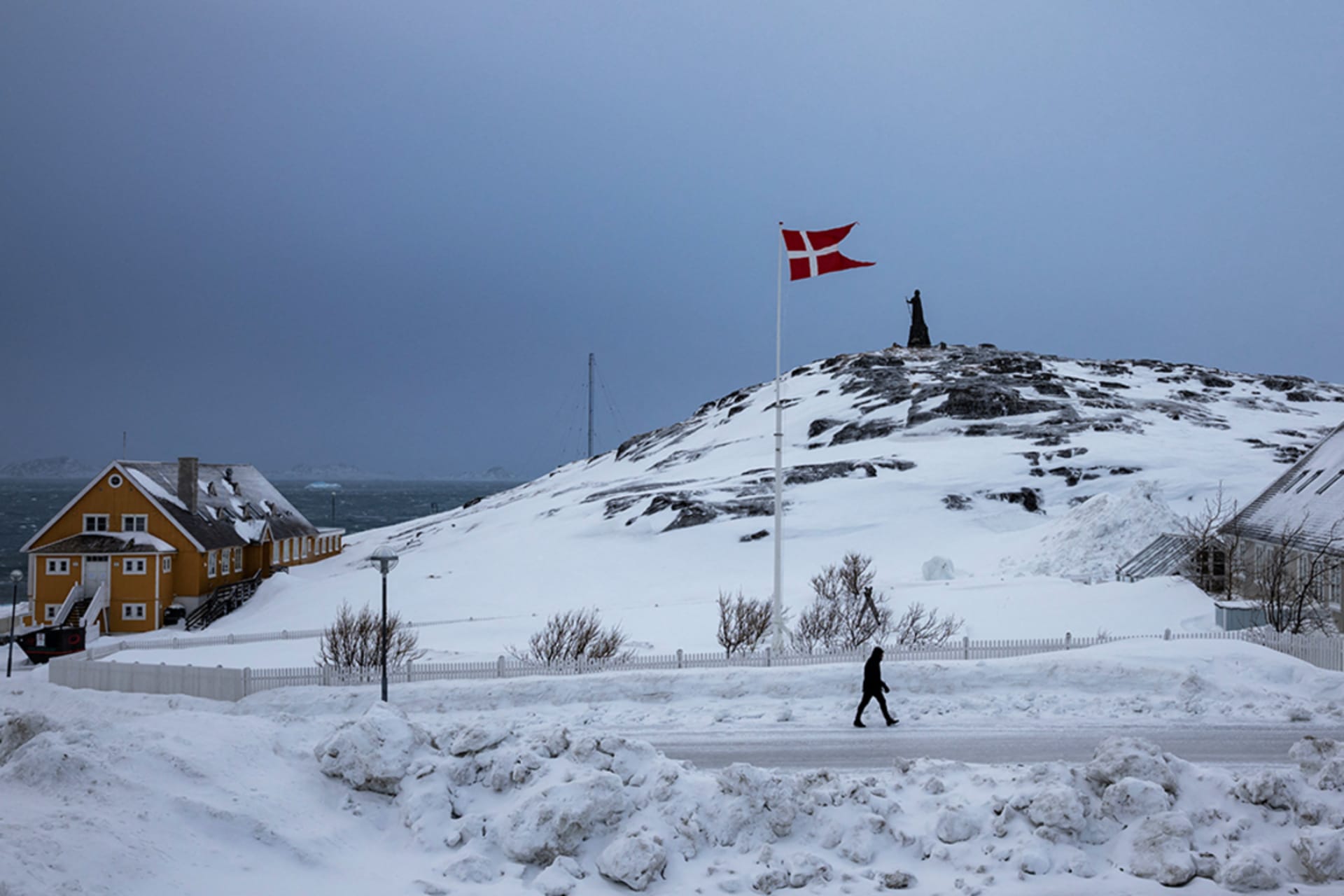
After nearly two years of escalating rhetoric from Washington, the United States, Denmark, and Greenland signed a trilateral security agreement in September 2026 that allows for a greater U.S. military presence on the island—including the establishment of “Golden Dome” missile-defense capabilities. Despite U.S. President Donald Trump’s previous calls to acquire Greenland, the deal preserves the status quo, maintaining the island’s status as a semiautonomous territory of Denmark.
Trump’s repeated remarks about assuming control over Greenland—an interest that dates back to his first term—had been met with sharp pushback, with Greenland’s government rejecting a U.S. takeover under “any circumstances.” NATO allies also warned that the use of U.S. military force to seize Greenland could threaten the decades-old transatlantic alliance. Trump’s rhetoric prompted Denmark to increase its military presence in and around Greenland, alongside several other European countries.
U.S. forces currently operate a military base on Greenland, and the United States and Denmark are NATO allies with a long-running bilateral defense partnership that includes shared patrols around Greenland. The new agreement expands that partnership, allowing the United States greater access to the island and its territorial waters in what experts say strengthens security in the Arctic.
What’s in the Greenland deal?
The deal amends a 1951 U.S.-Denmark defense pact that initially allowed the United States to build and operate military bases in Greenland. As part of the new agreement, which has no set end date, the United States can:
- “modernize and expand” its operations at Pituffik Space Base (formerly Thule Air Base);
- establish two defense areas at Narsarsuaq and Mestersvig, in southern and eastern Greenland; and
- have free overflight, land, and undersea access across Greenland and its territorial waters.
Trump said on social media that the deal gives the United States “permanent control over security, and all other needs, in Greenland,” though the island maintains its right to self-determination, as well as full ownership over its natural resources. The agreement also allows the United States to deploy the proposed “Golden Dome” missile defense system in Greenland, bars non-NATO states from establishing military installations on the island, and restricts foreign investment to NATO, NATO partners, and European Union (EU) members only.
What is Greenland’s status?
Greenland has been considered a Danish territory for more than three hundred years, but it wasn’t until 1979 that Denmark granted the sparsely populated island home rule. In 2009, Denmark passed the Act on Greenland Self-Government [PDF], significantly expanding the island’s authority over its domestic affairs, including the police, courts, and coast guard. Denmark still maintains control over Greenland’s foreign affairs, defense policy, and monetary policy, providing an annual subsidy of approximately $600 million.
As part of Denmark, which is a founding member of NATO, Greenland is covered under the transatlantic alliance’s security guarantees. However, Greenland is not a member of the EU or the European Single Market, despite being considered an overseas country and territory associated with the EU. Greenland’s roughly fifty-seven thousand citizens, the majority Indigenous Inuit, are EU citizens as well as Danish nationals.
In recent years, Greenland has witnessed a growing independence movement. Under the self-government act, the island can gain independence via a referendum with approval from the Danish Parliament. In 2023, Greenland unveiled its first draft constitution, calling for the creation of a Greenlandic republic, independence from Denmark, and recognition of the island’s Inuit heritage. In March 2025, Greenland’s center-right Demokraatit party—which advocates for a gradual approach to independence—won the island’s parliamentary election, and its leader, Jens-Frederik Nielsen, became prime minister.
Why does the Trump administration value Greenland?
Trump has repeatedly said that acquiring or controlling Greenland is critical to U.S. national security. Greenland’s location between Europe and North America and its proximity to the Arctic and North Atlantic Oceans makes it strategically important for military and defense purposes—particularly in monitoring increasing Chinese and Russian activity in the region.
“Greenland is growing in importance as we find ourselves in a global competition with China and in a new technological revolution with regards to warfare,” Rebecca Pincus, director of the Wilson Center’s Polar Institute, told Radio Free Europe/Radio Liberty in 2025. “So, Greenland is important from a missile-defense perspective, from a space perspective, and from a global competition perspective.”
There are also economic incentives. Rising temperatures associated with climate change are making Greenland’s rare earth metals such as lithium, a critical mineral for electric vehicles and batteries, more accessible. A 2023 report by the Danish government detailed Greenland’s potential as a deposit of critical raw materials, many of which are used in the green energy transition. (The United States currently relies heavily on China for rare earth minerals.)
Greenland is also believed to possess enormous untapped oil and gas reserves; a 2008 estimate by the U.S. Geological Survey put the amount at approximately thirty-one billion barrels of oil equivalent—the amount of energy contained in one barrel of crude oil—though the island banned all oil and gas exploration in 2021 over environmental concerns. Under the new trilateral security agreement, foreign investment in “particularly sensitive sectors or activities”—including resource extraction—that comes from outside NATO, NATO partners, or the EU is restricted.
Meanwhile, Greenland’s ice sheet, which covers roughly 80 percent of the island, is experiencing accelerating melting, making Arctic trade routes more navigable; these include the Northeast and Northwest Passages. Greater availability could open up shorter and faster trade routes between Asia, Europe, and North America, positioning Greenland as an international maritime hub.
How did the United States, Denmark, and Greenland reach a security deal?
Trump’s push to acquire Greenland echoed other territorial aims he expressed at the start of his second term, including regaining control of the Panama Canal—which the United States officially turned over to Panama in 1999—and making Canada the fifty-first U.S. state.
The United States could have legally acquired Greenland with the consent of the Danish government and Greenland’s self-ruling parliament, as it did when it bought Alaska from Russia in 1867. Some experts suggested Washington could also have pursued a Compact of Free Association with Greenland, establishing a relationship where the territory is self-governing but still closely tied to the United States for economic assistance and defense. The United States has several of these treaties already in place, including ones with Micronesia, the Marshall Islands, and Palau. However, such a deal would still require approval from both the Greenlandic and Danish governments.
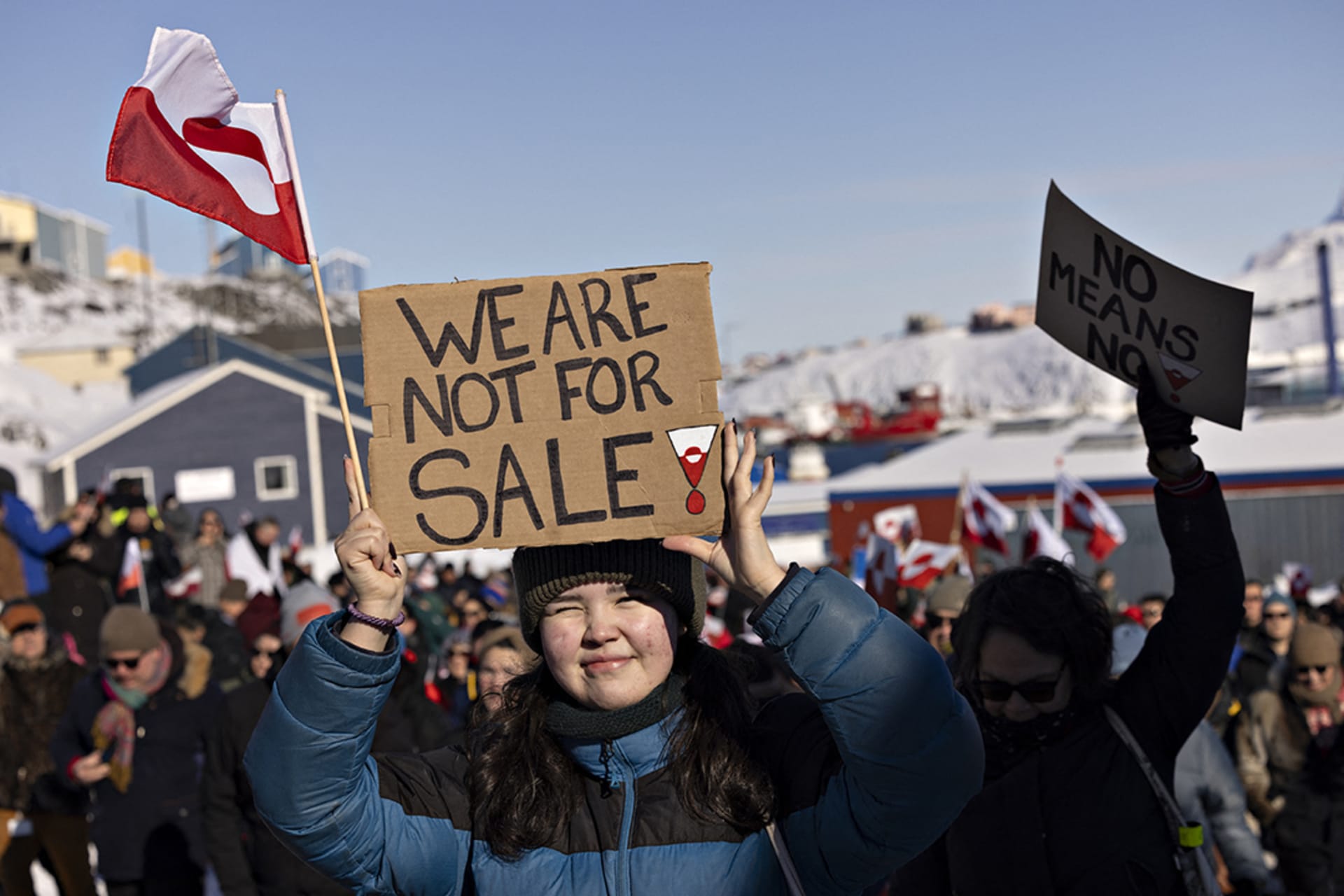
Both Greenlandic and Danish leaders have rejected U.S. attempts to take control of the island. “We don’t want to be Danish, we don’t want to be American, we want to be Greenlandic,” then Prime Minister of Greenland Múte B. Egede said in January 2025 and reiterated following Trump’s address to the U.S. Congress that March. Danish leaders said that Greenland is “not for sale” and that while Copenhagen would like to keep the island part of the Kingdom of Denmark, it respects Greenlanders’ decision to choose their own path forward. Meanwhile, Greenland officials told the Trump administration that they are open to enhancing the existing bilateral defense partnership on the island.
Speaking at the World Economic Forum in January 2026, Trump ruled out using military force to take control of the island, which he had previously said the United States would accomplish “one way or the other.” Forcefully seizing Greenland would constitute a rebuke of national sovereignty, a cardinal principle of international relations and U.S. foreign policy. The United States has long eschewed wars of conquest, and it hasn’t made large purchases of foreign territory for more than a century. The last such instance was the Woodrow Wilson administration’s 1917 purchase of the U.S. Virgin Islands from Denmark—primarily for military reasons—for $25 million.
While at the World Economic Forum, Trump met with NATO Secretary-General Mark Rutte and announced the framework of a future deal that did not include transferring ownership of the island, unnamed diplomatic sources told CBS News, though Trump was reportedly still seeking sovereign claims to parts of Greenland’s territory.
Trump also threatened in January 2026 to impose fresh tariffs on European countries, including Denmark, in response to their troop deployments to Greenland. European leaders initially pushed back on Trump’s tariff threat, with French President Emmanuel Macron suggesting that the EU could activate its “anti-coercion” measure—which allows the bloc to curb imports of goods and services—for the first time if Trump followed through. He ultimately did not.
What’s the United States’ history with Greenland?
During World War II, the U.S. military built a significant wartime presence on the then Danish colony, helping to patrol and protect it from Axis powers and supporting various Allied operations. Denmark itself was occupied by Nazi Germany from 1940 to 1945.
President Harry Truman viewed postwar Greenland as a prime location for permanent U.S. military assets that could detect and counter major air strikes—including nuclear strikes—by the Soviet Union. In 1951, the United States signed a treaty with Denmark that allowed Washington to retain its military bases on Greenland, as well as establish new bases or “defense areas” if NATO deemed necessary. The agreement was updated in 2004, and the September 2026 deal amends and supplements it.
Today, the only operable U.S. base on Greenland is Pituffik Space Base (formerly Thule Air Base), which was constructed between 1951 and 1953, and has been under U.S. Space Force command since 2020. The northernmost U.S. military base, Pituffik is home to approximately two hundred active-duty U.S. personnel as well as missile defense and space surveillance equipment—including radar that provides early warnings and detection for intercontinental ballistic missiles launched from Russia. Under the new trilateral security agreement, however, the United States plans to expand operations at Pituffik and set up new defense areas at Narsarsuaq and Mestervig, in southern and eastern Greenland.
What are Russia and China doing in the Arctic?
Eight countries, including the United States, have territory in the Arctic. In recent years, Western powers have raised concerns about Chinese and Russian expansionism in the region.
Russia boasts the largest territorial presence in the Arctic, with its border making up more than 50 percent of the Arctic coastline. In recent years, Russian military activity in the region—which peaked during the Soviet Union era—has increased. Additionally, experts say Russia’s full-scale invasion of Ukraine in 2022 has threatened its relations with other Arctic states; the outbreak of war prompted Finland and Sweden to join NATO.
China, too, has boosted its regional presence, calling itself a “near-Arctic state” and seeking to increase its economic and military role there. China has three icebreaker vessels, for example, as does the United States—far less compared to Russia’s roughly forty—and has sought to access the region’s natural resources and establish new trade routes. In a 2014 speech, Chinese President Xi Jinping stated the country’s desire to become a so-called polar power. In 2024, China sent three icebreakers into Arctic waters for the first time. Together, China and Russia have conducted joint military exercises in the Arctic, sparking concern among U.S. officials.
The new U.S.-Denmark-Greenland security agreement responds to that concern, blocking non-NATO countries, such as China and Russia, from building military installations on Greenland unless the three parties agree. Earlier this year, NATO countries had also launched Arctic Sentry, an initiative aimed at bolstering defense and deterrence efforts in the region in the face of growing Chinese and Russian competition.
Canada, meanwhile, the Arctic country closest to Greenland, has also taken steps aimed at bolstering its security and defense in the region. In 2019, Ottawa published its Arctic and Northern Policy Framework—laying out a vision for Canada’s activities and investments in the region—and in 2022, it released a North American Aerospace Defense Command modernization plan to enhance North America’s defense capabilities against evolving regional threats. U.S. and Canadian military forces also routinely conduct joint exercises in Greenland as part of an air defense operation.
Sky Cambron and Emilyn Larson contributed to this article. Michael Bricknell and Will Merrow created the graphics.