A Guide to Trump’s Section 232 Tariffs, in Maps
President Donald Trump has launched a wave of Section 232 tariffs and investigations, seeking to protect U.S. national security. These graphics show the scale and structure of U.S. reliance on foreign suppliers for products ranging from cars to copper.
By experts and staff
- Updated
 Shannon K. O'NeilCFR ExpertSenior Vice President of Studies and Maurice R. Greenberg Chair
- Julia HuesaSpecial Assistant and Research Associate to the Senior Vice President, Director of Studies, and Maurice R. Greenberg Chair
- Research Associate, Latin America and Geoeconomics
Section 232 tariffs aim to protect U.S. national security. Created by the Trade Expansion Act of 1962, Section 232 empowers the president to charge duties pending the results of a Department of Commerce investigation into the imports’ effects on national security. President Donald Trump’s administration has already used this tool to raise levies on aluminum, buses, cars and car parts, copper, drones, furniture, lumber, pharmaceuticals, polysilicon, semiconductors, steel, timber, and trucks. The White House has launched Section 232 investigations into six other types of products as well.
These graphics dive into each sector, laying out the scale of imports, their concentration by country, and the geopolitics of exporting nations, separating friends—NATO members, major non-NATO allies, and free trade agreement (FTA) partners—from potential foes.
Steel and Aluminum
In 2018, Trump imposed Section 232 tariffs of 25 percent on steel and 10 percent on aluminum. He re-upped duties quickly after reentering office, placing 25 percent tariffs on both metals in February 2025, then doubling fees to 50 percent in June. In August 2025, Trump broadened the scope of the tariffs, taxing the steel and aluminum content of goods ranging from motorcycles to lawn mowers.
Trump scrapped duties on hundreds of products with less than 15 percent steel and aluminum content in April 2026. Finished goods made substantially from the metals now face a 25 percent tariff on their full value, while commodity-grade steel and aluminum remain at a 50 percent rate.
There are carve-outs. Goods made from U.S.-sourced steel and aluminum are taxed at a lower 10 percent rate. Industrial machinery, agricultural equipment like tractors and harvesters, and components going into power grids and HVAC systems will be charged a 15 percent tariff until 2028. Steel and aluminum imports from the UK face a 25 percent levy, while the UK’s derivative products are charged just 15 percent.
Trump also carved out exemptions for a narrow set of industrial equipment including bulldozers and forklifts. These imports will be capped at a 15 percent tariff rate if they come from Argentina, Ecuador, El Salvador, Guatemala, Japan, Liechtenstein, South Korea, Switzerland, Taiwan, the UK, or the EU. For industrial equipment that complies with the U.S.-Mexico-Canada Agreement (USMCA), a 25 percent levy will apply only to the non-U.S. content of the product.
The United States imports just 25 percent of its steel, but Americans rely on imports for around half of their aluminum. That number is even higher for specialized aluminum used in many electronics, aerospace products, and defense equipment.
While the Trump administration’s tariffs aim to counter the flood of Chinese steel and aluminum in global markets, our recent expert brief shows they hit U.S. allies hard, as China ships little directly to the United States. In 2024, Canada was the top foreign supplier of both metals. Its exports made up more than a fifth of U.S. steel imports and half of aluminum products. In 2026, steel imports overall have fallen and Canada’s share even more, South Korea now the leading foreign supplier of U.S. steel. For aluminum imports, Canada’s share fell to around a third.
But Section 232 levies on steel and aluminum derivative products still directly affect China. China supplies 16 percent of the finished goods now subject to Section 232 steel tariffs, second only to Mexico. Mexico and China are also the leading suppliers of aluminum derivative products. Mexico accounts for roughly 29 percent of said imports, China 18 percent, and Canada 11 percent.
Copper
In August 2025, Trump imposed 50 percent tariffs on semi-finished copper products and certain copper derivative products. Trump stopped short of raising levies on refined copper, which accounts for roughly half of all U.S. copper imports. In April 2026, Trump lowered tariffs on certain copper derivative products to 25 percent. Copper is important to American businesses that use the metal for tech devices and power grid components, as well as in homes and autos.
Like steel and aluminum goods, imports made with copper that was smelted and cast in the United States will face a lower 10 percent tariff.
The United States imports around 45 percent of its copper. Over half of copper imports subject to Section 232 tariffs come from three countries. Mexico ships the most—supplying 22 percent of U.S. imports—followed by China, which sends 17 percent, and Canada at 14 percent.
Autos and Auto Parts
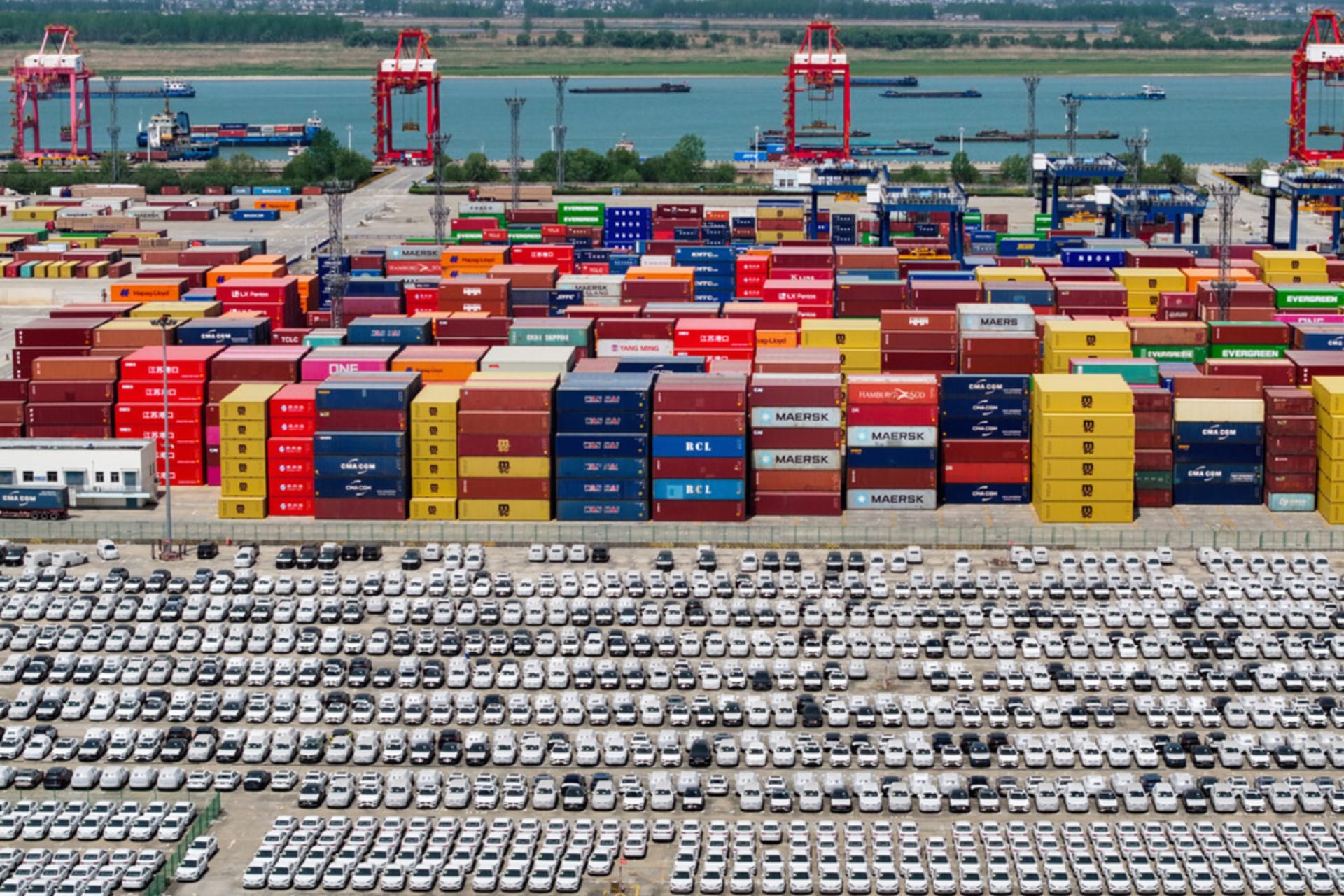
In March 2025, Trump imposed 25 percent tariffs on imported cars, small trucks, engines, and other auto parts. This is one of the largest markets affected by Section 232 tariffs, as the United States imports more than $640 billion in autos and auto parts every year.
Here, too, there are carve-outs. Automakers can receive a rebate on a percentage of foreign-supplied parts equal to 3.75 percent of the value of all cars they assemble in the United States until 2030. Autos imported from Japan, South Korea, and the EU face a lower 15 percent rate. As part of the U.S.-UK deal, one hundred thousand vehicles made in the UK are charged just 10 percent. Autos that comply with the USMCA are charged tariffs on the portion that is not made in the United States, as long as it meets the treaty’s rules of origin requirements. Auto parts from India will be subject to a preferential tariff rate quota while certain auto parts from Taiwan are capped at a 15 percent rate.
The United States imports nearly half of all new cars sold. Most come from six countries—Canada, Germany, Japan, Mexico, South Korea, and the UK—which are all close trading partners. Mexico alone exports a third of those cars.
Close to 60 percent of the parts used in American auto plants are imported. While a majority do come from close trading partners, China is second only to Mexico as a parts supplier. Together, the two countries account for more than half of all U.S. auto part imports.
Timber, Lumber, and Furniture
In October 2025, the Trump administration imposed a 10 percent tariff on softwood timber and lumber and a 25 percent tariff on upholstered wooden furniture and kitchen cabinets. On January 1, 2027, the levies on upholstered furniture—such as couches, sofas, and chairs—will rise to 30 percent, and kitchen cabinets will see an increase to 50 percent. Tariffs on wood products from the UK will be capped at 10 percent, while the EU, Japan, South Korea, and Taiwan face a 15 percent tariff ceiling.
The United States imports roughly 30 percent of the lumber that it consumes. A third of the wood products subject to Section 232 levies are sourced from Canada. Vietnam sends 26 percent, followed by China, which ships 11 percent. The U.S. lumber industry has sought restrictions on Canadian lumber imports for the past 25 years, which they allege receives unfair Canadian subsidies. They have also accused Canada of dumping its lumber in the U.S. market. In August 2026, Trump also levied 50 percent tariffs on Canadian furniture and wood products under Section 338 of the Tariff Act of 1930.
Trucks
In November 2025, the Trump administration imposed a 25 percent tariff on imported medium- and heavy-duty trucks and their parts and a 10 percent tariff on buses.
Like automakers, truck manufacturers that rely on imported parts can receive a rebate equal to 3.75 percent of the value of all trucks they assemble domestically. USMCA-compliant trucks are only charged tariffs on their non-U.S. content.
The United States imports around 25 percent of mid-sized trucks and 40 percent of heavy trucks. Just 5 percent of buses are imported.
Truck imports are more concentrated than cars. Canada and Mexico account for half of the imports of trucks, parts, and buses now subject to Section 232 tariffs. China supplies 9 percent.
Commercial Aircraft and Jet Engines
The Trump administration launched an investigation into imports of commercial aircraft, jet engines, and related parts. In July 2026, Trump issued a proclamation directing the Secretary of Commerce and U.S. Trade Representative to negotiate agreements with trading partners regarding these imports, but he stopped short of raising tariffs.
Despite being a net aerospace exporter, the United States imported $33 billion more than it exported in commercial aircraft, jet engines, and parts in 2024. Close to 50 percent of these imports come from the EU, and a quarter from Canada. Meanwhile, the UK supplies 8 percent, while less than 3 percent comes from China and India combined.
Pharmaceuticals
The Trump administration is imposing 100 percent tariffs on patented pharmaceuticals and their ingredients. Generic drugs—which account for around 90 percent of all U.S. prescriptions—will not face tariffs.
Pharmaceuticals from the EU, Japan, Liechtenstein, South Korea, and Switzerland will be charged a lower 15 percent tariff, while those from the UK face zero tariffs. Certain specialty drugs including fertility treatments, gene therapies, and drugs that treat rare diseases will not face any levies—provided they are from countries with which the United States has a trade deal or they meet an urgent public health need.
Trump has also granted tariff reprieves to specific companies. Those with plans to move pharmaceutical production to the United States will be charged a lower 20 percent tariff for four years. Companies that agree to move production and lower drug prices will be exempt from the levies.
The United States imports nearly 80 percent of generic drug tablets and capsules and half of all branded drugs. While Ireland is the top pharmaceutical supplier by value, this is partly the result of tax dodging by American companies. When measured by weight, Mexico accounts for over half of pharmaceuticals, mainly antihistamines.
Additionally, the United States sources 85 percent of the active pharmaceutical ingredients (APIs) in branded drugs from abroad. Europe leads, accounting for 43 percent of APIs. China supplies 3 percent. Yet, the passthrough of Chinese APIs through third countries masks U.S. dependence on its adversary. China and India together account for between 60 and 80 percent of the APIs in European medicines. And roughly 70 percent of India’s APIs come from China.
Semiconductors
The Trump administration has launched an investigation into imports of semiconductors, the equipment used to manufacture them, and the products made with them. In January 2026, Trump imposed a 25 percent tariff on a narrow set of semiconductors if they are shipped to the United States and then re-exported to other markets. He also directed the Secretary of Commerce and U.S. Trade Representative to negotiate agreements with respect to semiconductor trade and suggested he may soon move forward with broader semiconductor tariffs.
The EU, Liechtenstein, and Switzerland have secured a 15 percent tariff ceiling on their semiconductor exports, and Japan will pay the lowest tariff rate of any country. Tariffs on Korean semiconductors will be no higher than those the United States imposes on countries with similar semiconductor trade volumes.
The United States relies heavily on foreign suppliers for these goods, importing over $200 billion more than it exported in 2024. And while Washington is working to ramp up domestic semiconductor production through subsidies provided in the 2022 CHIPS and Science Act due to national security concerns, it still relies on imported chips, as well as imported material and chemical inputs. It also depends on testing and packaging abroad, often importing or reimporting its final chips.
Imports are highly concentrated, with five countries providing nearly 80 percent of U.S. semiconductor-tied imports. China tops the list, supplying more than a quarter of imports. It leads assembly, testing, and packaging (ATP) globally, home to nearly a third of ATP facilities, including those for many U.S.-owned firms. Taiwan supplies almost one-fifth of U.S. imports, sending both wafers and finished chips. Mexico ranks third, holding steady at 15 percent over the past decade, though that may rise as Taiwan-based electronics manufacturer Foxconn brings new ATP capacity online.
Processed Critical Minerals
The Trump administration investigated imports of processed critical minerals and derivative products that use them, such as batteries and wind turbines. In January 2026, Trump directed the Secretary of Commerce and U.S. Trade Representative to negotiate with trading partners over critical mineral imports but did not elect to raise tariffs.
The United States sources twelve critical minerals entirely from abroad. And it depends on imports for more than half of domestic demand for another twenty-eight critical minerals, out of the fifty identified by the U.S. Geological Survey as vital to the U.S. economy and national security.
Imports of critical minerals are less concentrated than in other categories under investigation, and no single country dominates. South Africa leads with 16 percent, mainly sending the platinum, rhodium, and palladium used in catalytic converters. Canada follows closely at 15 percent, sending significant amounts of uranium for nuclear power and zinc to coat steel.
While overall, China accounts for just 6 percent of imports, the United States is heavily dependent on its competitor and rival for specific critical minerals. China supplies nearly 70 percent of U.S. rare earth imports and close to half of imported arsenic, antimony, and tantalum. China’s domination of 90 percent of global gallium production, meanwhile, leaves the U.S. price vulnerable, even as it brings in most of its international supply from other countries. And China has a chokehold on certain products made from critical minerals, including rare earth magnets used in cars, planes, and all kinds of electronics.
Drones
Trump announced a 100 percent tariff on large drones, drones with thermal imaging technology, docking stations, and certain drone components in August 2026. Smaller drones weighing less than 25 kilograms and other drone parts will face a 25 percent tariff.
Drone imports from the EU, Japan, Liechtenstein, South Korea, Switzerland, and Taiwan will be taxed at 15 percent, and imports from the UK will face a lower 10 percent rate. There are no carve-outs for USMCA-compliant goods.
The United States imports nearly half a million drones a year, outpacing domestic manufacturers, which produce less than one hundred thousand. Agriculture, construction, energy, and other industries rely on drones to spray crops, inspect infrastructure, conduct land surveys, and more.
Over half of U.S. drone imports are sourced from Malaysia. China supplies 19 percent, followed by Vietnam, which sends 13 percent.
Yet, Malaysia’s lead masks U.S. dependence on Chinese-owned companies. Chinese drone-maker DJI —whose manufacturing is based in China and Malaysia—controls more than 70 percent of the U.S. commercial market alone. In December 2025, the Federal Communications Commission banned imports of new foreign-made drones and components, though it has since granted some exemptions.
Most U.S. imports of drone parts subject to Section 232 tariffs come from allies. Mexico ships 22 percent, followed by Canada, which sends 10 percent, and the UK at 9 percent.
Polysilicon
Trump announced a 15 percent tariff on polysilicon ingots and wafers, solar cells, and solar modules slated to go into effect in December 2026. Trump will also establish minimum import prices for polysilicon and polysilicon derivatives.
Polysilicon is a key input in the manufacturing of solar panels. The material is first turned into solar wafers, which are then fabricated into cells and assembled into modules. Though solar accounts for over 80 percent of polysilicon demand, the material is also used in semiconductors and consumer electronics.
In 2018, Trump imposed tariffs on Chinese polysilicon under Section 301 of the Trade Act of 1974. He also set tariffs on solar imports under Section 201 of the Trade Act of 1974, which Biden extended in 2022 for another four years—with some exemptions. In January 2025, Biden upped levies on Chinese polysilicon and solar wafers to 50 percent. And in April 2025, the Commerce Department announced antidumping and countervailing duties as high as 3,521 percent on solar cells and panels imported from Cambodia, Malaysia, Thailand, and Vietnam.
Though the United States is a net polysilicon exporter, it relies on imports for certain products in the solar supply chain that use polysilicon. The United States has no domestic production of solar wafers, with China controlling around 97 percent of global production. According to Rhodium Group, the domestic manufacturing capacity for solar cells is roughly 24 percent of current deployment levels, while the United States produces more solar modules than are deployed domestically.
U.S. polysilicon imports subject to Section 232 tariffs are concentrated in a handful of countries, most in Southeast Asia. Vietnam sends the most—around a third—followed by Thailand, which supplies nearly a fifth. China accounts for just 1 percent of U.S. solar imports. Yet China controls over 80 percent of the global solar supply chain, with Chinese-owned companies setting up export hubs across Southeast Asia in recent years.
Wind Turbines
The Trump administration is investigating imports of wind turbines and their parts and components.
Approximately two-thirds of the value of a typical U.S. wind turbine is imported, according to estimates by Wood Mackenzie. The United States is heavily dependent on imports for parts such as blades, drivetrains, and electrical systems.
Germany supplies nearly a quarter of U.S. wind turbine imports, followed by Mexico, which ships one-fifth. China accounts for roughly 5 percent of U.S. imports.
Medical Equipment
The administration is investigating imports of personal protective equipment (PPE), medical consumables—such as syringes and bandages—and medical equipment and devices, including wheelchairs, hospital beds, and hearing aids. Trump imposed tariffs on certain medical supplies from China during his first term under Section 301. Biden announced higher Section 301 levies for Chinese facemasks, gloves, needles, respirators, and syringes in 2024.
The United States imported $43 billion more than it exported in medical goods in 2024. Around 75 percent of medical devices marketed in the United States are manufactured abroad. And Americans rely heavily on imports for PPE, with over 90 percent of U.S. medical gear produced in China.
China and Mexico are the two leading suppliers of U.S. imports of medical goods—each ships 16 percent.
Robots and Industrial Machinery
The Trump administration is reviewing whether to impose tariffs on imports of robotics and industrial machinery.
The United States is a net importer of these goods, importing $25 billion more than it exported in 2024. The United States has no major company mass-producing industrial robots and few domestic component suppliers.
Most U.S. imports of industrial robots and machinery come from allies—Canada, Germany, Italy, and Japan supply half of all imports. China ships 8 percent.
anthracite coal
The Trump administration is investigating imports of anthracite coal, which is used to make steel.
The United States is a net exporter of anthracite coal. U.S. imports are highly concentrated, with nearly 90 percent sourced from Canada. China supplies just 5 percent.
Data Note: Autos and trucks include USMCA-compliant content, which is not subject to Section 232 tariffs. Pharmaceuticals include generic pharmaceuticals that are not subject to Section 232 tariffs. “U.S. allies” include NATO members or “Major Non-NATO Allies” as defined by the U.S. Department of State. U.S. law specifies that Taiwan is treated as an ally but not designated as such. “FTA partners” include countries with a comprehensive free trade agreement (FTA) with the United States as defined by the Office of the U.S. Trade Representative.
Will Merrow created the graphics for this article.