Mapping the U.S. Military Buildup Near Venezuela
The United States has significantly increased its military presence near Venezuela, carrying out strikes on alleged drug boats in the Caribbean Sea and threatening Nicolás Maduro’s regime with the possibility of invasion.
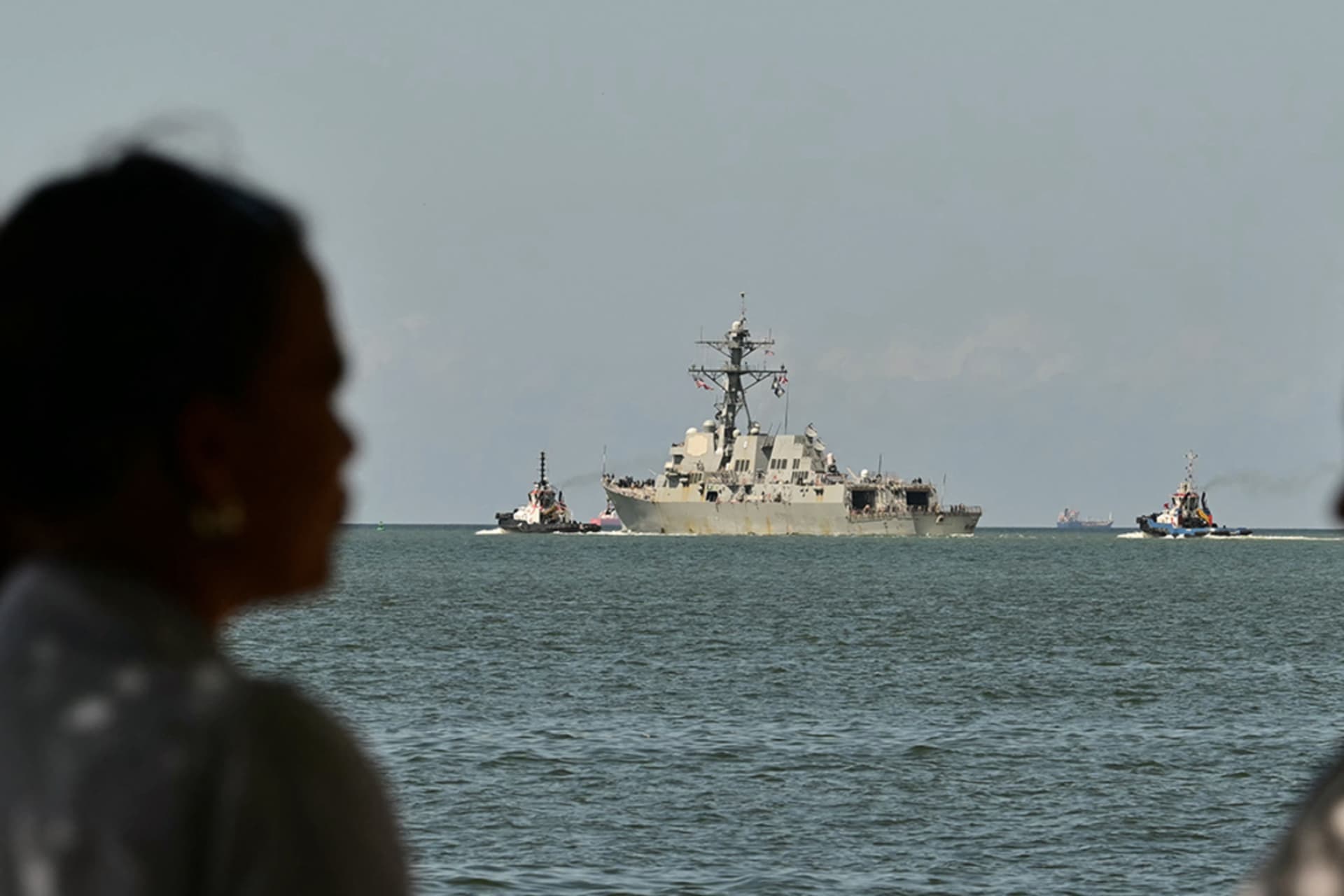
U.S. President Donald Trump’s recent call with Venezuelan leader Nicolás Maduro—during which Trump reportedly pressed Maduro to step down—follows a substantial increase in the U.S. military’s presence in the Caribbean Sea as part of Operation Southern Spear. The United States has positioned military assets that could potentially support an invasion of Venezuela, though it remains unclear whether the Trump administration is considering such a move.
Trump has signaled his intention to escalate beyond the recent maritime attacks on alleged drug boats, however, saying at a cabinet meeting on December 2 that “we’re going to start doing those strikes on land, too. You know, the land is much easier… And we know the routes they take, and we know everything about them. We know where they live.”
What’s happening?
In recent months, the United States has moved substantial air and naval assets near Venezuela and increased the capacity of military sites on the U.S. territories of Puerto Rico and the U.S. Virgin Islands.

Those naval assets include the USS Gerald R. Ford aircraft carrier, destroyers, cruisers, amphibious assault ships, and a special forces support ship. A variety of aircraft have also been active in the region, including bombers, fighters, drones, patrol planes, and support aircraft. The Washington Post estimates that ten thousand troops and six thousand sailors have been deployed on U.S. ships active in the region.

Additionally, Reuters reports that the United States appears to be working on new construction at the former Roosevelt Roads Naval Station in Puerto Rico, which closed twenty years ago, and at civilian airports in Puerto Rico and the U.S. Virgin Islands.

This comes as the United States has so far carried out more than twenty strikes on alleged drug boats since September 2, killing at least eighty-three people. The Trump administration has declared “armed conflict” against drug cartels and asserted that it does not need a formal declaration of war, though many legal scholars characterize the strikes as illegal extrajudicial killings.
CFR’s Matthew C. Waxman, a known authority on national security law, writes that the administration’s actions “raise legal and diplomatic questions by blurring the lines between law enforcement, interdiction, and war.”
What is the end goal of the buildup?
The Trump administration has threatened military action against the Maduro regime, alleging that Venezuela is responsible for drugs entering the United States. However, experts believe Venezuela plays no role in the trafficking of fentanyl, the most dangerous drug, and a limited role in the cocaine trade.
Trump has repeatedly advocated for regime change in Venezuela. In a November phone call, he reportedly gave Maduro an ultimatum to relinquish power immediately. And Trump previously authorized covert CIA actions in Venezuela, which could be preparation for a larger military operation—although details have not been released.
But the end goal of the military deployments remains unclear. Experts have speculated that the wide array of military assets could be part of a broader plan to take direct action against the Venezuelan government, or it could be a show of force designed to pressure Maduro into stepping down without a fight. According to a Center for Strategic and International Studies analysis, the U.S. air and naval assets assembled are enough to conduct strikes against Venezuela, but the number of troops required for an invasion would likely be higher than what is currently deployed in the region.
Venezuela is already in the midst of a humanitarian crisis, with nearly eight million people having fled the country since 2014. Meanwhile, war games conducted by the U.S. government during Trump’s first term projected that the overthrow of the Maduro regime could result in “chaos for a sustained period of time with no possibility of ending it.”