When General William Westmoreland Said the “End Begins to Come Into View” in Vietnam
Shielding the public from unpleasant truths about U.S. military operations abroad can backfire on a president.
By experts and staff
- Published
 James M. LindsayCFR ExpertMary and David Boies Distinguished Senior Fellow in U.S. Foreign Policy
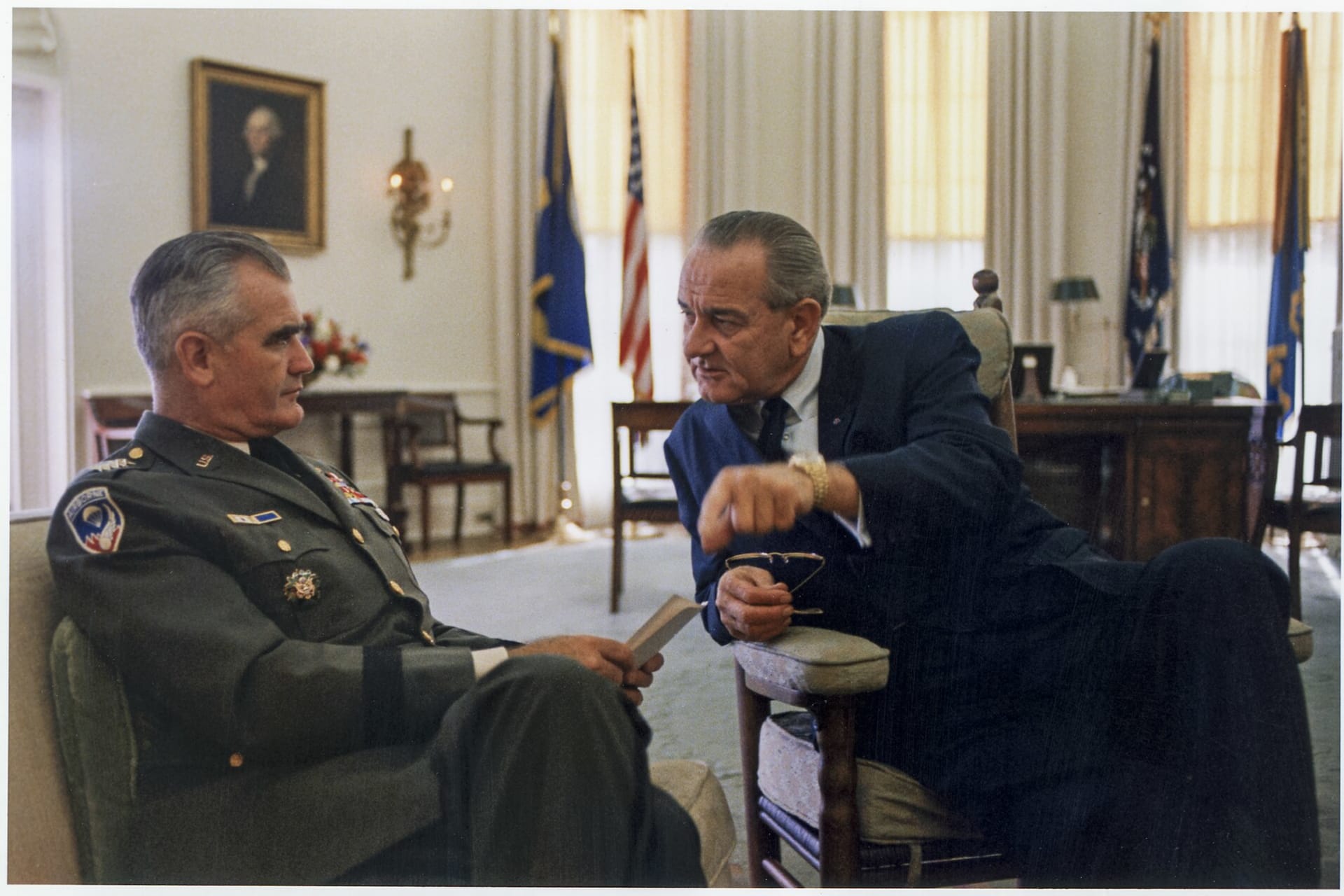
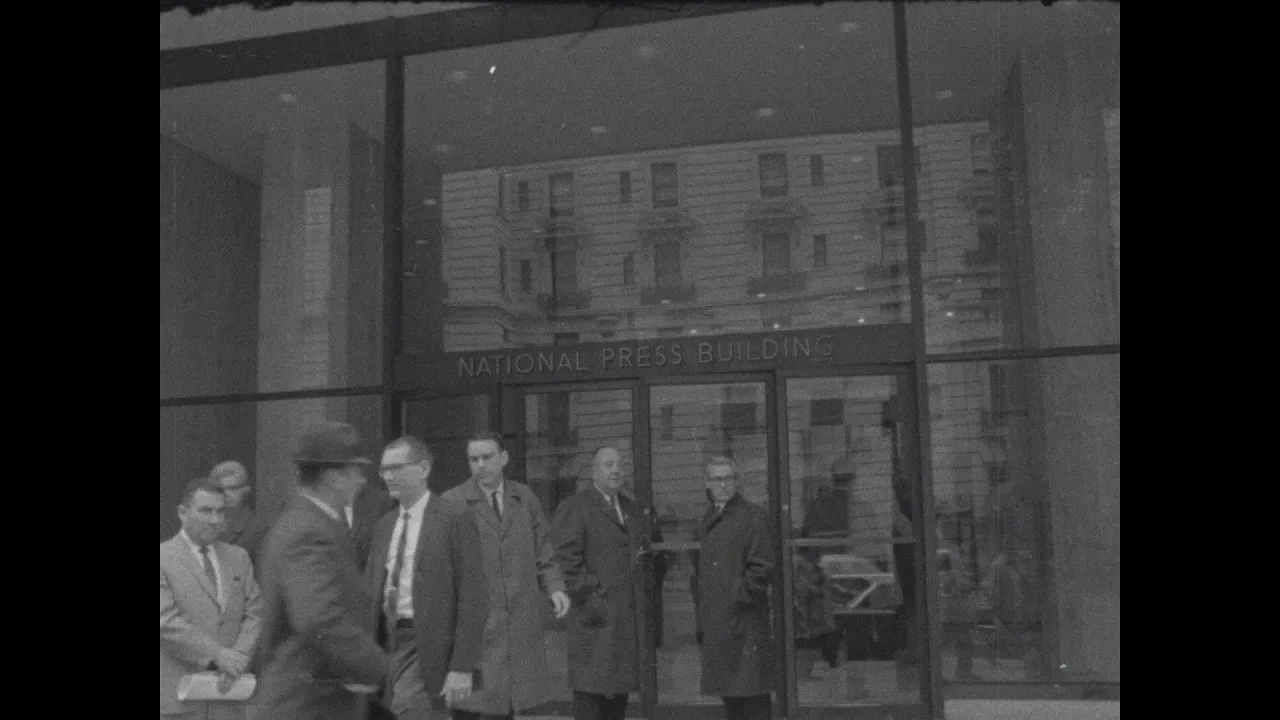
Never overpromise and under deliver. General William Westmoreland should have followed that advice when he addressed the National Press Club in Washington, DC, on November 21, 1967. Instead, at the request of President Lyndon B. Johnson, who saw the public turning against the Vietnam War, the commanding general of U.S. military forces in South Vietnam gave his audience an upbeat assessment of the prospects for victory. Within weeks, he would be proven tragically wrong.
“Work Like the Very Devil”
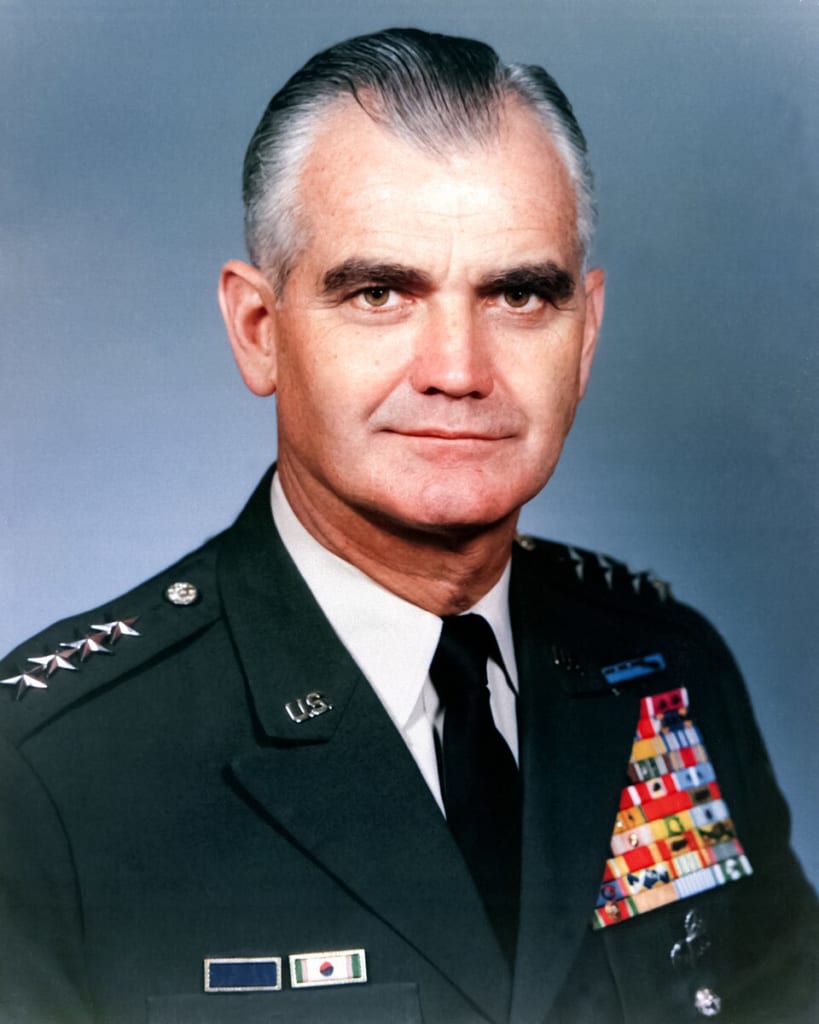
Westmoreland took charge of the U.S. military effort in South Vietnam in March 1964. A highly decorated veteran of World War II and the Korean War, he looked like a general straight out of Hollywood central casting. Time magazine was so taken with his commanding presence that it named him Man of the Year for 1965. The Time profile waxed rhapsodic about the West Point product:
There is an almost machinelike singlemindedness about him. His most vehement cuss words are “darn” and “dad-gum.” A jut-jawed six-footer, he never smokes, drinks little, swims and plays tennis to remain at a flat-bellied 180 Ibs.—only 10 Ibs. over his cadet weight.
Westmoreland’s mantra, which he shared with newcomers to Vietnam was: “Work like the very devil.” He prided himself on his seven-day, 60-hour work week, calling it “the very minimum for this course.”
The Americanization of the War
When Westmoreland first took command in Saigon, the United States had some 16,000 military advisors in South Vietnam. Their official job was to train and advise the South Vietnamese military in the fight against the North Vietnamese and the Viet Cong, the pejorative name Americans used for the National Liberation Front (NLF), the guerrilla force seeking to overthrow the South Vietnamese government. But unofficially, many U.S. advisers were supporting and even participating in combat operations.
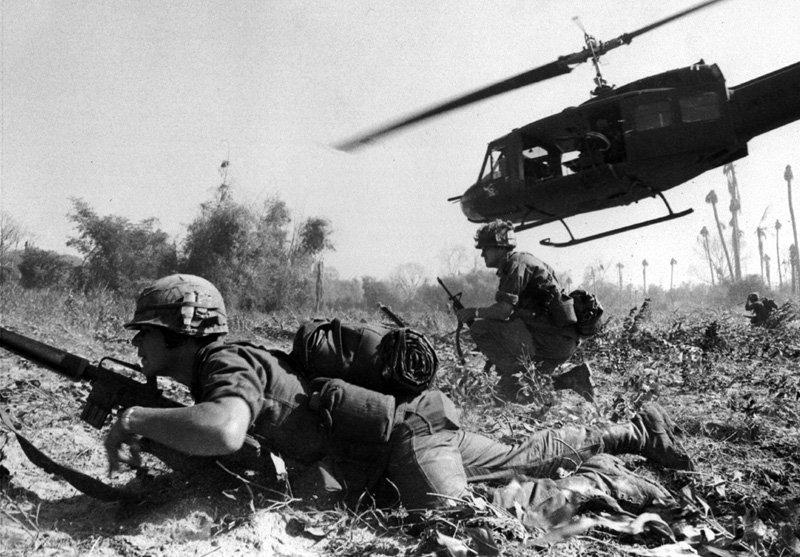
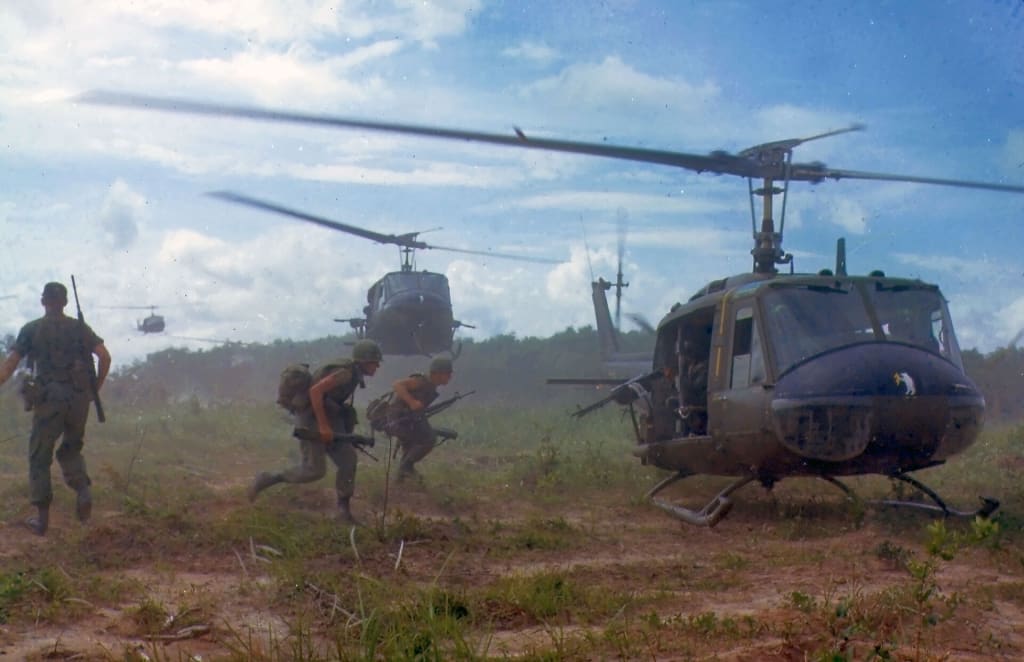
Westmoreland believed that NLF and North Vietnamese forces could be turned back only if the United States sent combat troops to South Vietnam. He got his wish in March 1965 when the first Marines hit the shores of Da Nang after NLF attacks killed thirty-one Americans. The American phase of the Vietnam War had begun. But as President John F. Kennedy had predicted just a few years earlier, dispatching combat forces had been like taking a drink—the fix quickly wore off and more were needed. By late summer 1967, the United States had 450,000 troops in Vietnam.
Victory Remains Elusive
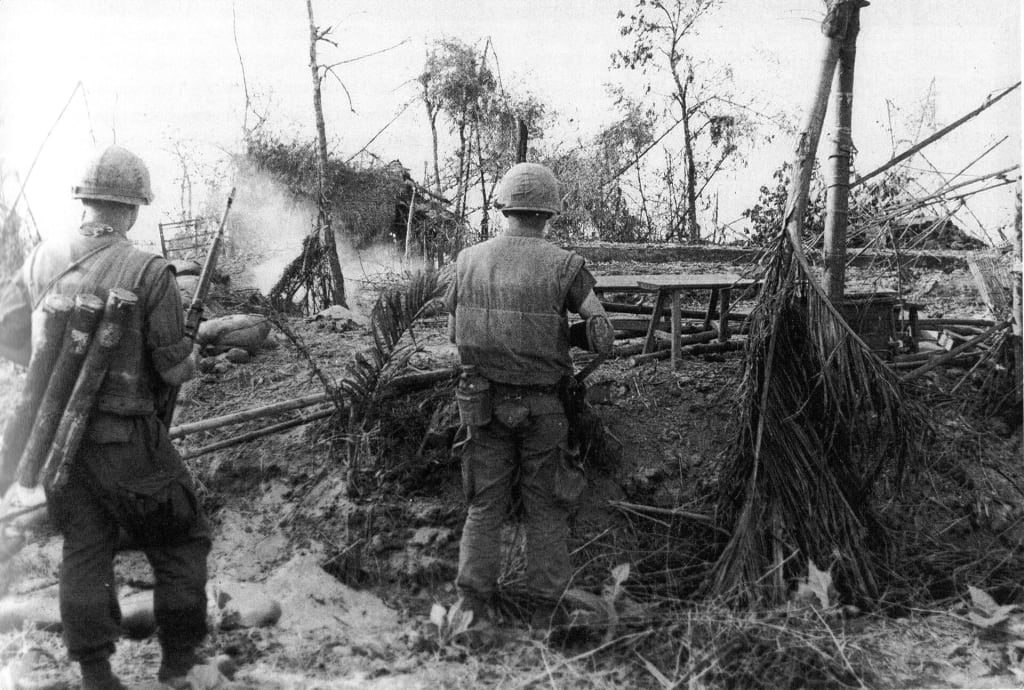
Contrary to Westmoreland’s hopes, the Americanization of the war did not produce a breakthrough in the fighting. NLF and North Vietnamese forces held their own even though the U.S. military owned the skies and enjoyed a lopsided firepower advantage on the ground. As the end of 1967 approached, U.S. forces had suffered nearly 20,000 combat deaths, with more than half of them having occurred that year alone.
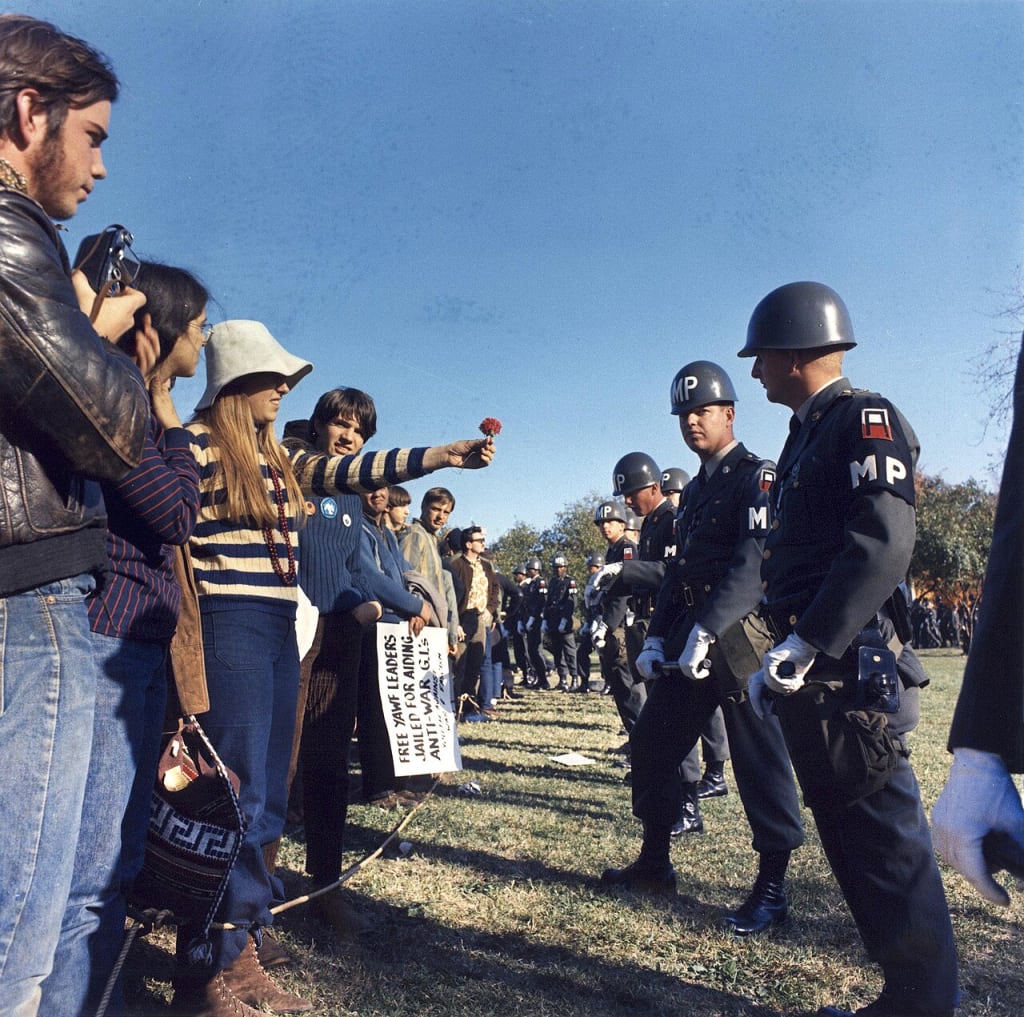
The lack of progress on the battlefield and the soaring casualty rate eroded public support for the war. In October 1967, Gallup found for the first time that more Americans (46 percent) thought that it had been a mistake to send U.S. troops to fight in Vietnam than thought it had not (44 percent). Perhaps even more significant for President Lyndon B. Johnson, who was about to enter a presidential election year, the percentage of Americans thinking the war was a mistake had doubled from just two years earlier. The public opinion trend was not LBJ’s friend.
Stay, Go, or Neither
Discussions inside the administration gave LBJ no reason to believe he would soon have good news for the American people. Secretary of Defense Robert McNamara, one of the architects of the Americanization of the war, had concluded by the spring of 1967 that the war could not be won and pressed Johnson to scale back the U.S. commitment. Meanwhile, Westmoreland, with the support of the Joint Chiefs of Staff, argued that the war could be won, but only if the United States sent 200,000 more troops and widened the aerial campaign.
Unwilling to reduce the U.S. commitment to South Vietnam or to increase it, LBJ opted to try to shore up public support. He ordered U.S. officials in Saigon to highlight evidence showing that the United States was winning the war. The White House created a group to share favorable developments with opinion leaders and news outlets. At the recommendation of the so-called Wise Men, a group of former senior foreign policy officials convened to advise LBJ, Westmoreland was ordered home to reassure the American people that the war was going well.
“The Most Optimistic Appraisal”
Westmoreland willingly took up the task. He had already returned briefly to Washington seven months earlier at Johnson’s request to give a well-received speech to a joint session of Congress on the state of the war. That had been the first time in U.S. history that a president had asked a wartime commander to return from the field to speak to Congress.
In his address to the National Press Club, Westmoreland was even more upbeat than he had been on Capitol Hill in April. He assured his audience that “we have reached an important point where the end begins to come into view.” He stressed that “I am absolutely certain that whereas in 1965 the enemy was winning, today he is certainly losing.” He detailed the problems plaguing the NLF and North Vietnamese forces and argued that they had been dealt “a mortal blow by the election of a freely elected representative government.” And lest his fundamental optimism be missed, he ended his prepared remarks by saying “the enemy’s hopes are dim.”
[Video: https://www.youtube.com/watch?v=E8xDMT5nKcc]
Westmoreland knew that he had put the best face possible on the war. He later wrote, “I permitted myself the most optimistic appraisal of the way the war was going that I had yet made.” Some of his fellow generals worried he had been too optimistic—and too willing to serve LBJ’s political objectives. As Army Chief of Staff General Harold K. Johnson put it: “Westy’s trip has gone extremely well, and I only hope that he has not dug a hole for himself with regard to his prognostications. The platform of false prophets is crowded.”
The Tet Offensive
General Johnson turned out to be prophetic. On January 30, 1968, just ten weeks after Westmoreland’s National Press Club speech, the North Vietnamese and the NLF launched the Tet Offensive, overrunning cities and villages across South Vietnam. What Americans saw on television and read in the newspapers looked nothing like the rosy picture Westmoreland had painted less than three months earlier. While U.S. and South Vietnamese forces ultimately turned the tide, inflicting punishing losses on the North Vietnamese and essentially destroying the NLF as a fighting force, in political terms everything had changed. The end was not in sight, and no one knew when it would be.
On March 22, 1968, LBJ announced that Westmoreland would be leaving Vietnam to succeed General Johnson as Army Chief of Staff. Nine days later, LBJ surprised by the nation by saying he would not seek reelection. Rather than helping sustain his presidency, Johnson’s decision to downplay the difficulties the United States faced in Vietnam helped end it.
Oscar Berry and Jack Patton assisted in the preparation of this article.
The United States celebrates its 250th anniversary in 2026. To mark that milestone, I am resurfacing essays I have written over the years about major events in U.S. foreign policy. A version of this essay was published on November 21, 2017.
This work represents the views solely of the author(s). The Council on Foreign Relations is an independent, nonpartisan membership organization, think tank, and publisher, and takes no institutional positions on matters of policy.