Restoring Support for Foreign Assistance Requires Sharpening its Objectives
By experts and staff
- Published
 William HenaganCFR ExpertResearch Fellow
- Jon FinerAdjunct Senior Fellow for U.S. Foreign Policy
Across the developed world, citizens and their governments are reconsidering what types of spending best advance their interests at home and abroad. From 2018 to 2023, foreign aid from wealthy governments to poorer countries grew steadily, averaging some 6 percent year-over-year globally. But over the past two years, a global retrenchment has occurred. In addition to the United States, Belgium, France, the Netherlands, Sweden, Switzerland, the United Kingdom, and others have all announced reductions to their foreign aid budgets.
According to recent analysis, that aid, referred to often as official development assistance, has fallen by between 15 and 22 percent relative to 2023. Simultaneously, global military expenditures reached $2.7 trillion in 2024 on the back of the steepest year-on-year increase since the end of the Cold War. Europe, Canada, and other Group of Seven (G7) economies have all made major commitments to increase defense spending in the last twelve months— effectively committing to reallocate long-term investments in internationally focused aid, diplomacy, and other forms of proverbial butter to guns.
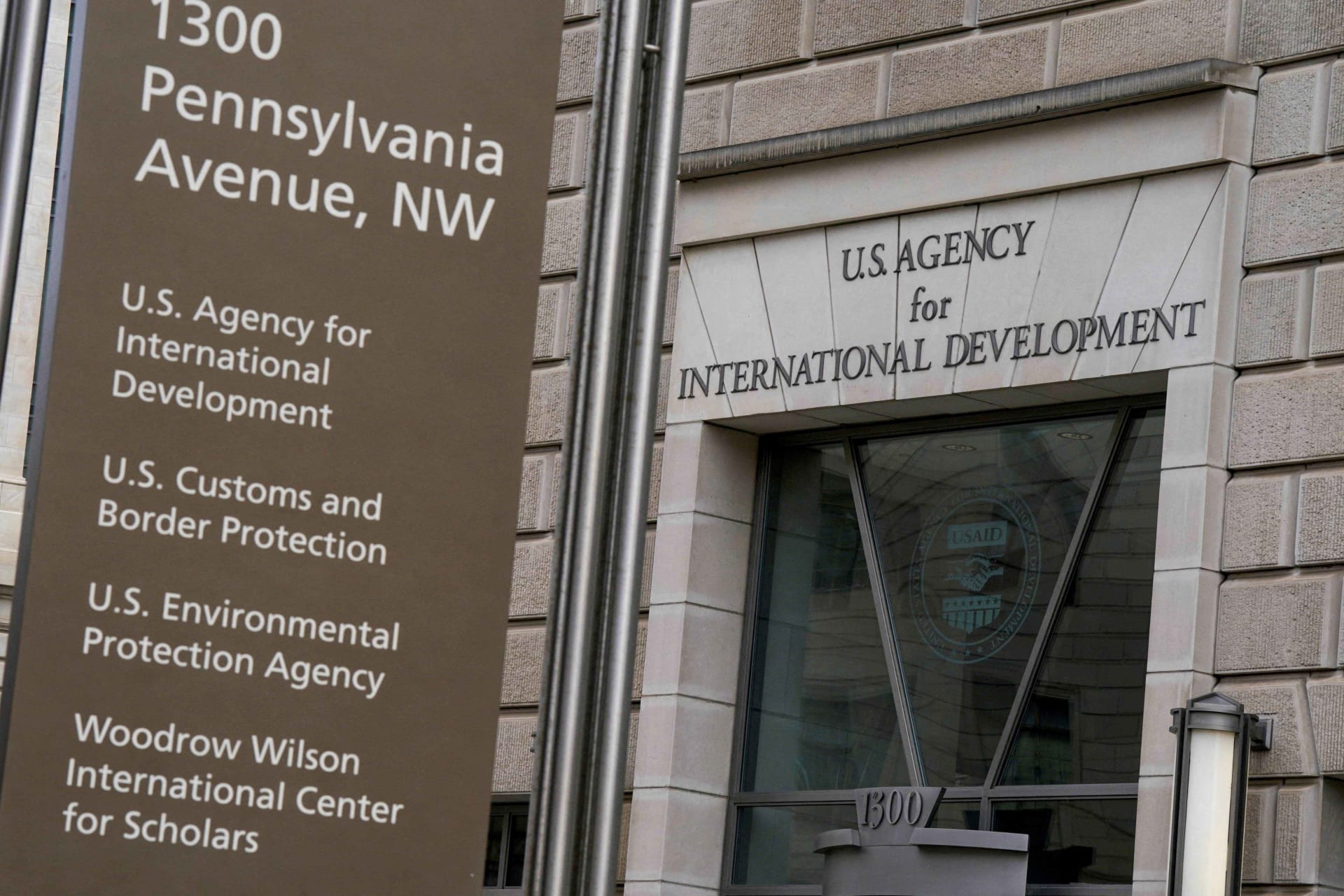
In the United States, the recent dismantlement of the U.S. Agency for International Development (USAID), sweeping proposals to nearly eliminate traditional foreign assistance altogether in President Donald Trump’s budget, and recent efforts to pocket veto already-appropriated foreign assistance funds, all occurred in parallel with the first proposed $1 trillion U.S. defense budget. Though the increasing instability of U.S. security guarantees under the Trump administration can explain a portion of the boom in defense spending abroad, and newfound Republican hostility to foreign assistance programs explains a portion of these cuts at home, a global shift in government spending patterns on foreign assistance began before Trump’s return to office.
In the United States, Americans and their government must now reconsider what types of spending best advances America’s interest at home and abroad. What is the real, and importantly the perceived, value of spending U.S. taxpayer dollars to support economic growth in emerging economies – and, perhaps most importantly, what could a new, more durable political consensus look like in the United States for foreign assistance programs and other forms of soft diplomacy?
Do Americans Still Care About Foreign Assistance?
Opinion polling that followed the elimination of USAID indicated modest disapproval within the American public for the wholesale dismantling of the government’s foreign-assistance architecture. The tepid political backlash to those cuts, paired with a slight rise in Trump’s approval rating around the time of their announcement, has further decreased the probability that the Trump administration will suddenly reverse course on this issue, despite Elon Musk’s unceremonious exit from government and the waning influence of his Department of Government Efficiency.
Realistically, the United States’ capacity to deliver foreign assistance will decline over the next three years, and any return to pre–Trump administration funding levels for traditional development and humanitarian work is at best four or five years away. Public acceptance of this radical reorientation and resizing necessitates an honest and open conversation among policymakers on the political economy of foreign assistance. This is particularly pressing given the emerging Republican commitment to support economic statecraft or foreign investment activity, as indicated by the proposed 280 percent increase in funding for the U.S. International Development Finance Corporation and ongoing chatter about a sovereign investment fund.
Politicians, particularly members of Congress allocating scarce resources between domestic and foreign policy challenges, have an obligation to speak with constituents about whether they want their government to spend money abroad and on what, as well as what they should expect in return. Proponents of foreign assistance—and we put ourselves in this category— have erred over many years by too often extolling the benefits to recipient countries and the costs to our own citizens, as if that assistance were solely charity. Too infrequently have they emphasized these programs as strategically calibrated investments in Americans’ interests.
To win back support, foreign assistance will need to pass muster under the more self-interested intellectual architecture of Trump’s America First and Joe Biden’s Foreign Policy for the Middle Class—each of which requires that programs and investments contain clear, measurable, and explainable linkages to benefits for the American public. For example, many of the foreign assistance programs that the Trump administration has targeted in fields such as global health benefit ordinary Americans by preventing dangerous diseases from reaching our shores; rebuilding a national consensus on that and similar programs is now an urgent necessity.
Without such a popular political consensus, future foreign assistance funding will struggle for support in an increasingly challenged discretionary spending environment. Even future Democratic administrations could find themselves unable to justify major increases in development funding once it has been left off the federal budget for multiple spending cycles, particularly at the scale necessary to compensate for the recent declines when weighed against other expensive domestic policy goals.
Building a Durable Consensus
The United States needs a focused effort to redefine the objectives and justifications for those funds, programs, and agencies. USAID’s official mission was to end extreme poverty and promote resilient, democratic societies, while advancing American security and prosperity. Whether the requisite support for this justification exists within the voting public is up for debate. To help determine this, three formal strategic objectives for development assistance should be considered—which members of Congress should take to town halls, students at high schools and universities should strenuously debate, and everyone with an interest in the topic should discuss.
First, foreign assistance should fight crises abroad that threaten the homeland. This justification mirrors the Department of Defense’s strategy and doctrine to project power forward to fight wars abroad before they affect the American homeland. Global health, humanitarian response efforts, and other programs that clearly and demonstrably prevent crises from harming everyday Americans (e.g., those that stop the spread of lethal diseases or mitigate migration crises) fall into this category. As a measurable objective, funding for those programs could demonstrably protect ordinary Americans from nonkinetic threats.
Second, foreign assistance should be used to compete with our adversaries. Much ink has been spilt about the soft power advantage that the United States’ adversaries, particularly China, have gained with the dismantling of USAID in the race to win over geopolitical swing states. But even prior to that cut in U.S. foreign assistance spending, the U.S. government woefully lagged China and Chinese state-owned enterprises in the scale of capital deployed to support foreign projects.
According to the Government Accountability Office, the United States spent $76 billion compared to China’s $679 billion on global infrastructure projects from 2013 to 2022. This objective policy failure could be remedied with bipartisan support for $50–100 billion in annual foreign investment spending to support the United States’ strategic interests and the growth of emerging economies. Those countries want the United States’ help unlocking private capital flows at lower borrowing rates through high-quality, no-strings-attached financing options from a democratic partner. But the United States cannot keep showing up with a checklist and technical assistance, while China brings a blank checkbook.
In terms of more traditional assistance, the mere existence of an adversary’s high-impact, high-profile foreign assistance program in an emerging economy should be sufficient justification for a U.S. foreign assistance program. The clear competition between the United States and China in the fields of development and economic statecraft should provide a new suite of justifications for a race-to-the-top spending effort that underwrites global economic growth. Winning this race is essential to maintaining the centrality of the American economy within the global financial system, helping support the maintenance of the dollar as the global reserve currency, and bolstering the United States’ injured credibility as a long-term partner and ally. Competing with autocratic governments also provides a clearer justification for programs that support American values like democracy or human rights, which can otherwise struggle to connect specific investments and their impact to the daily lives of working Americans.
Third, foreign assistance should invest in the resilience of critical American supply chains and export markets. Foreign assistance programs can significantly enhance the resilience of the American economy and develop new export markets. Even today, those programs are one of the few ways the U.S. government can deploy targeted resources abroad to address supply chain chokepoints that can be exploited by U.S. adversaries. They can also quickly surge funding to backstop an unexpected breakage in the highly connected global economy.
Codifying this justification could create a testable filter for new development finance programs. A meaningful test for whether new programs or investments enhance a certain sector’s supply chain resilience would further necessitate active engagement from the State Department, Development Finance Corporation, a successor to USAID, and other foreign-facing government agencies with domestic market participants. This domestic engagement, and the results those programs could deliver, would help build real political support for foreign assistance and the agencies that administer it.
Funding activity abroad that facilitates the production of key raw materials, equipment, refined products or inputs, transportation nodes, and other critical components of the global supply chain for American companies creates clear benefits for everyday Americans. Foreign assistance that can plausibly claim to bring down prices or limit the risks or effects of major economic shocks makes a compelling case in future congressional spending fights. And while every foreign assistance program should not need an economic justification for its existence, measurable impacts linked to agreed-upon justifications can facilitate a publicly popular rebuilding effort at an unprecedented scale.
Conclusion: What Do Americans Actually Want?
Underpinning this national discussion is the fundamental question of how the nation, and specifically most voting Americans, wants to be perceived on the global stage. This is different than determining the most advantageous or effective way to execute U.S. foreign policy. There are types of foreign assistance the U.S. government should conduct, with the support of the American public, for the simple betterment of the world and eradication of suffering. And though those values traditionally differentiate the United States from its adversaries, it is no longer obvious the degree to which the American people wish to resource the programs once thought to be pillars of bipartisan consensus.
As government officials in this administration and the next consider new institutions to advance the types of foreign investment or assistance essential to U.S. foreign policy, they should consider what the American public wants and build a national consensus it will support. That is an important first step toward rebuilding U.S. aid architecture—and avoids going to court over what the government should be doing with taxpayer dollars abroad.
---
Jon Finer was formerly the assistant to the president and principal deputy national security advisor.
William Henagan is a research fellow at the Council on Foreign Relations (CFR).