U.S.-Iran Truce Deadline Looms
By experts and staff
- Published
Welcome to the Daily News Brief, CFR’s flagship morning newsletter summarizing the top global news and analysis of the day.
Top of the Agenda
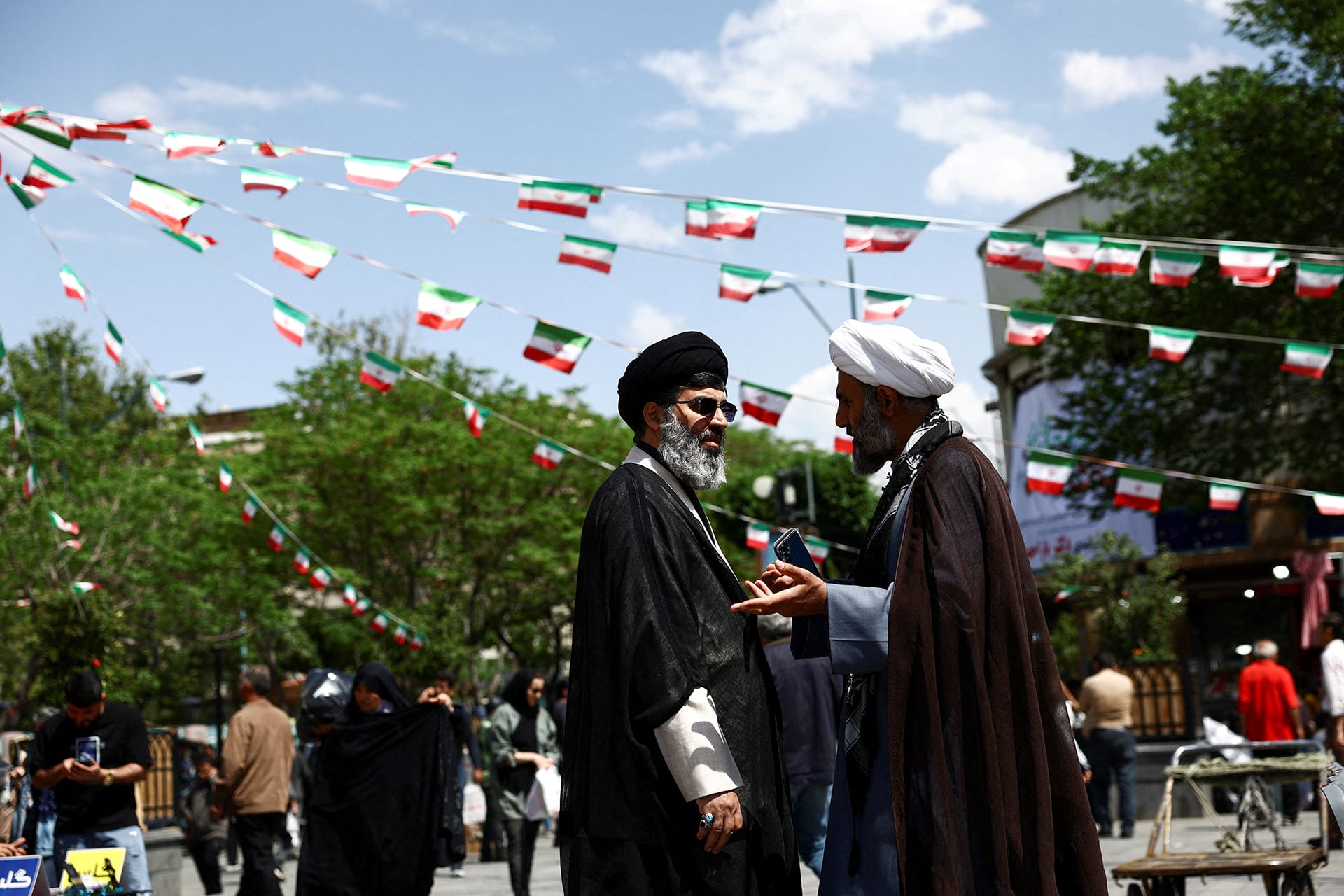
U.S.-Iran talks remain uncertain ahead of the expiration of the two countries’ truce tomorrow, while another round of Israel-Lebanon talks this week signaled progress on another front. A U.S. State Department spokesperson confirmed yesterday that Israel-Lebanon peace negotiations will occur on Thursday in Washington, but the United States and Iran’s participation in potential Pakistan peace talks had not been confirmed as of early Tuesday morning in the United States. A U.S.-Iran truce was expected to expire tonight according to a timeline originally announced by U.S. President Donald Trump, but Trump told Bloomberg yesterday that he believed it expires “Wednesday evening Washington time”—slightly extending the window for talks.
U.S.-Iran diplomacy. Pakistan continued with logistical preparations for potential U.S.-Iran talks in Islamabad despite the doubt surrounding them. Trump suggested on social media yesterday that he was seeking a stronger agreement than the 2015 nuclear deal negotiated by the Obama administration. Competing factions within Iran’s top leadership have been divided in recent days on some of the key sticking points in negotiations, the Economist reported. Nevertheless, unnamed Iranian officials told the New York Times that Parliament Speaker Mohammad Bagher Ghalibaf would attend talks in Pakistan if U.S. Vice President JD Vance did too.
Israel-Lebanon diplomacy. Lebanon’s delegation in separate talks with Israel will be led by the country’s former U.S. ambassador, Simon Karam, President Joseph Aoun said. Israel will be represented by its ambassador to the United States, an unnamed U.S. official told the Times of Israel. A ten-day truce in Lebanon announced last Thursday has largely held, though Israel has warned some displaced Lebanese families not to return to their homes inside the Israeli military buffer zone. Lebanon’s Prime Minister Nawaf Salam is meeting with French President Emmanuel Macron—who has repeatedly called for a peace deal in Lebanon—in Paris today ahead of the Thursday talks.
“There is a logic for both the United States and Iran to avoid a new round of fighting and to reach agreements. But logic and history do not always go hand-in-hand. Making it all the more uncertain is an erratic American president, an Israeli prime minister who seems intent on continuing the war, and an Iranian leadership that appears to be more hardline and still in the process of sorting out who is in charge. Agreements become ripe for resolution only when there is leadership willing and able to compromise.”
—CFR President Emeritus Richard Haass on Substack
Across the Globe
South Korea-India ties. The two countries formed their first ministerial-level economic cooperation committee as part of efforts to double bilateral trade by 2030, South Korean President Lee Jae-myung said yesterday during a visit to India. The countries plan to focus on areas like energy and shipbuilding, a joint statement said.
Japan’s new arms export permission. Japan lifted arms export restrictions today so that sales of any kind of defense equipment could become possible “in principle,” Prime Minister Takaichi Sanae announced on social media. Until now, exports had been limited to equipment for rescue, transportation, warnings, surveillance, and minesweeping purposes. She cited the “increasingly severe security environment” for the policy change.
Rise of renewables in 2025. Renewable energy supplied more of the world’s electricity than coal last year for the first time in more than a century, according to a new report from think tank Ember. The report found that Asia was the only region in the world where renewable generation had yet to overtake coal in 2025, though fossil fuel generation fell in both China and India.
Ukraine pipeline repair. Repairs are being tested today on the Druzhba pipeline after damage to it sparked a dispute between Ukraine and Hungary, unnamed sources told Bloomberg. The pipeline was damaged by Russia airstrikes in January, and Hungary subsequently claimed Ukraine was delaying repairs. Budapest has signaled it will lift its veto on European Union (EU) aid to Kyiv once the pipeline is repaired.
Gaza reconstruction cost. Rebuilding the enclave will take $71.4 billion over the next decade, according to a report yesterday from the EU, United Nations, and World Bank, a marked increase from their $53.2 billion estimate in February 2025. Despite a ceasefire that began last October, there has been a “limited” reversal of economic paralysis in the enclave, the report said.
Rare earths deal in Brazil. USA Rare Earths—a firm partially owned by the U.S. Commerce Department—announced plans yesterday to buy a Brazilian rare earth mining and processing company in a deal valued at $2.8 billion. The Brazilian firm, Serra Verde, is expected to account for nearly half of all heavy rare earths outside of China by 2027, USA Rare Earth said.
Chinese pressure in Africa. Taiwanese President Lai Ching-te cancelled a visit to Eswatini this week after Madagascar, Mauritius, and Seychelles revoked permission for his plane to fly through their airspace due to Chinese pressure, a senior official from Lai’s office said today. China, Mauritius, and Seychelles did not immediately comment, while an unnamed Madagascar foreign ministry official told Reuters the country “recognizes only one China.” Lai wrote on social media that “no threat or suppression can change Taiwan’s determination to engage with the world.”
Mexico anti-drug operation. Mexican President Claudia Sheinbaum called for an explanation yesterday after the U.S. Embassy said two of its officials died returning from a joint anti-drug operation with Mexican officials in Chihuahua state. Four officials died in a car crash. Sheinbaum said she had not been informed of any joint operation, which is required by Mexican federal law.
What’s Next
- Today, Federal Reserve chair nominee Kevin Warsh attends a Senate hearing in Washington, DC.
- Today, UN secretary-general candidates begin presenting their agendas for the institution in New York.
- Today, NATO Secretary-General Mark Rutte begins a visit to Turkey.
- Tomorrow, the Delphi Economic Forum begins in Greece.