Airline Disasters Bring Obscure Global Organization to the Fore
By experts and staff
- Published
- Stewart M. PatrickJames H. Binger Senior Fellow in Global Governance and Director of the International Institutions and Global Governance Program
Coauthored with Daniel Chardell, research associate in the International Institutions and Global Governance program.
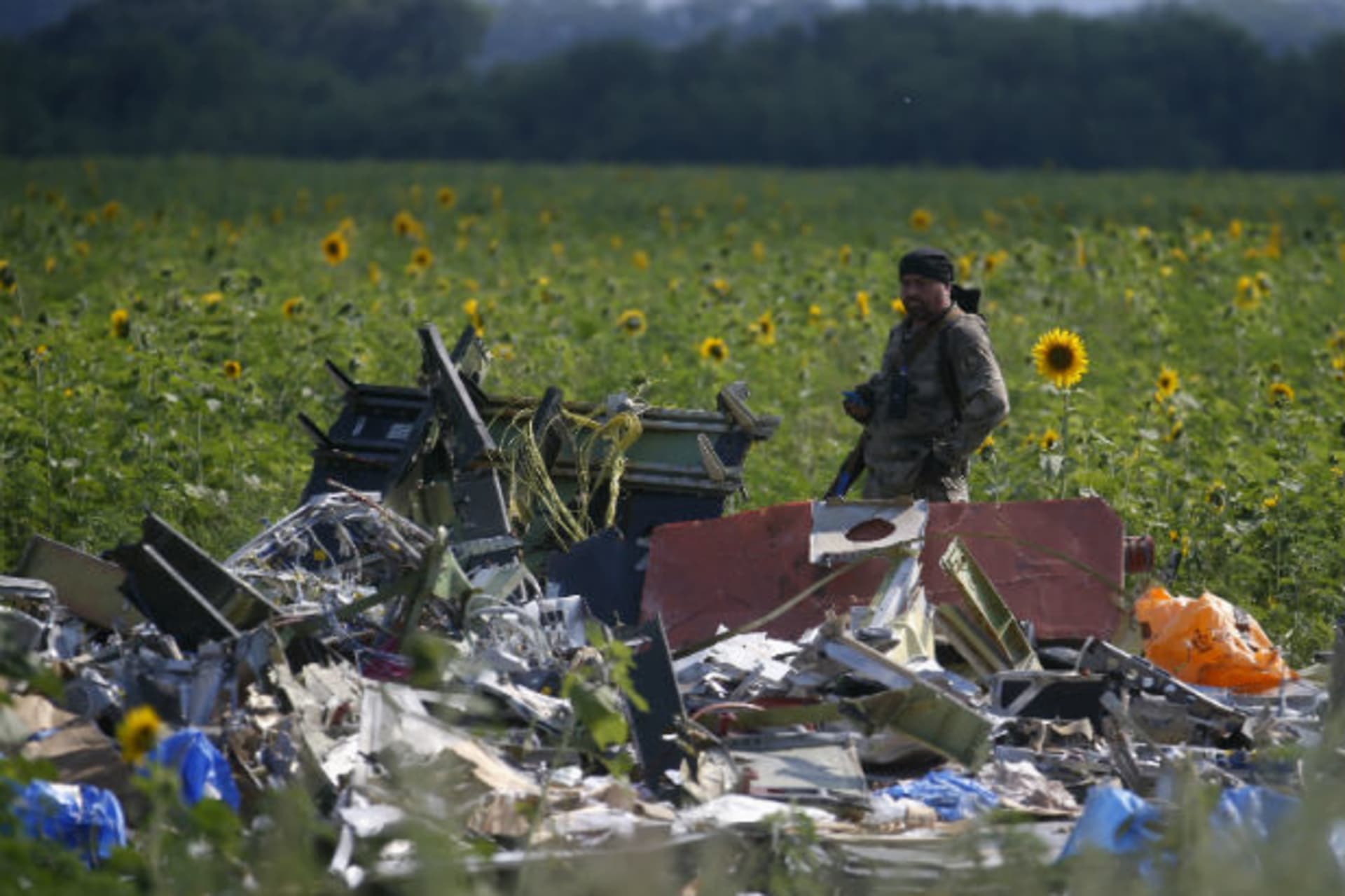
You might think twice about getting on a plane these days. The headlines are full of bad news. Consider the downing of MH17 in rebel-held eastern Ukraine. Or the crash of an Air Algerie jet over a disputed region of Mali in bad weather. Or the temporary cancellation of U.S. flights to Tel Aviv due to Hamas rocket fire. Or the still-mysterious disappearance of a Malaysian airliner in the Indian Ocean. Not to mention the fear that your fellow passenger’s “carry-ons” may include the Ebola virus.
Beyond elevating the blood pressure of white-knuckled fliers, these incidents raise questions about the safety of air travel. They have also brought unprecedented attention to a global agency accustomed to operating (as it were) under the radar: the International Civil Aviation Organization (ICAO).
But first, the reassuring statistics. As your pilot often reminds you, civil aviation remains the safest mode of transportation. The odds of dying in a commercial plane crash have been estimated at one in eleven million—significantly lower than being killed by a shark and far lower than dying in a car accident.
Still, these tragedies have naturally increased anxieties about the safety of civil aviation, especially over conflict zones. They have brought unfamiliar scrutiny to ICAO, perhaps the most important international institution you’ve never heard about. Based in Montreal, ICAO was established by the Chicago Convention of 1944—a year before the United Nations itself. It includes almost every UN member state and is the world’s premier forum for developing standards and procedures for civil aviation.
That said, ICAO’s mandate and powers are quite limited. The Chicago Convention expressly affirms that each state retains exclusive sovereignty over the airspace above its territory (Art. 1). Thus, member governments reserve the right, for reasons of military necessity or public safety, to “restrict or prohibit uniformly the aircraft of other States from flying over certain areas of its territory” (Art. 9a). National agencies may also bar their own domestic airlines from flying over dangerous areas—as when the U.S. Federal Aviation Authority (FAA) temporarily halted all U.S. carriers from using Tel Aviv’s Ben Gurion Airport.
ICAO is not empowered to close air routes or declare airspace unsafe—nor does it have this responsibility. On this point, however, there remains much confusion. After flight MH17 went down, Malaysian Transport Minister Liow Tiong Lai claimed that ICAO had “approved” the route the plane was flying—mistakenly ascribing to the UN body a power it does not have. The organization rebuffed Malaysian criticism, noting that it is up to sovereign member states to notify other states about potential safety hazards. As ICAO spokesman Anthony Philbin bluntly put it, “It’s not our job.”
In exceptional circumstances, ICAO may circulate “hazard notifications” to all member states, but governments can ignore them. Ironically, the organization issued one such notification just four months ago, with respect to Crimea. This April 2 letter advised that states take measures to avoid the airspace above the city of Simferopol. This warning had nothing to do with rebels on the ground or anti-aircraft weaponry, however. Rather, ICAO was concerned that planes flying in Crimean airspace might receive conflicting air traffic direction from the two states competing for control—Russia and Ukraine.
Recognizing Malaysia’s apparent misunderstanding, on July 24, ICAO Secretary-General Raymond Benjamin issued a letter of clarification to member states emphasizing each state’s responsibility to monitor threats and conflicts within its territory and, if necessary, to take measures to restrict or close airspace.
But recent events have highlighted shortcomings in civil aviation protection, and ICAO faces pressure to up its own game. On July 29, the body hosted an emergency meeting on risks to civilian aviation with its major industry partners—the International Air Transport Association (IATA), Airports Council International (ACI), and the Civil Air Navigation Services Organization (CANSO).
In the ensuing press conference, IATA Director General and CEO Tony Tyler—speaking on behalf of IATA’s 240 member airlines—declared that the MH17 tragedy had “exposed a gap in the system.” At the same time, he affirmed, “[t]he system is not broken. It works extremely well in the vast majority of cases.” This is true: by and large, the system works. The paucity of accidents confirms this. But the system certainly is imperfect. MH17 was cruising at an altitude of 33,000 feet when struck by a missile, 1,000 feet above the threshold of airspace that was deemed unsafe by Ukrainian and Russian authorities. “We now know how wrong that guidance was,” said Tyler.
This seemingly minor error points to five larger problems: