Americans Trust Each Other Less and It’s Making Them Sick
Social trust in the United States has roughly halved since 2002, while life expectancy has fallen compared to peer countries. A new study details the connection between these two worrying trends.
By experts and staff
- Published
 Thomas J. BollykyCFR ExpertBloomberg Chair in Global Health; Senior Fellow for International Economics, Law, and Development; and Director of the Global Health Program
- Program Coordinator, Global Health
- Nishali PatelPre Doctoral Research Assistant, Department of Health Metric Sciences, University of Washington
- Joseph L. DielemanProfessor, Department of Health Metric Sciences, University of Washington
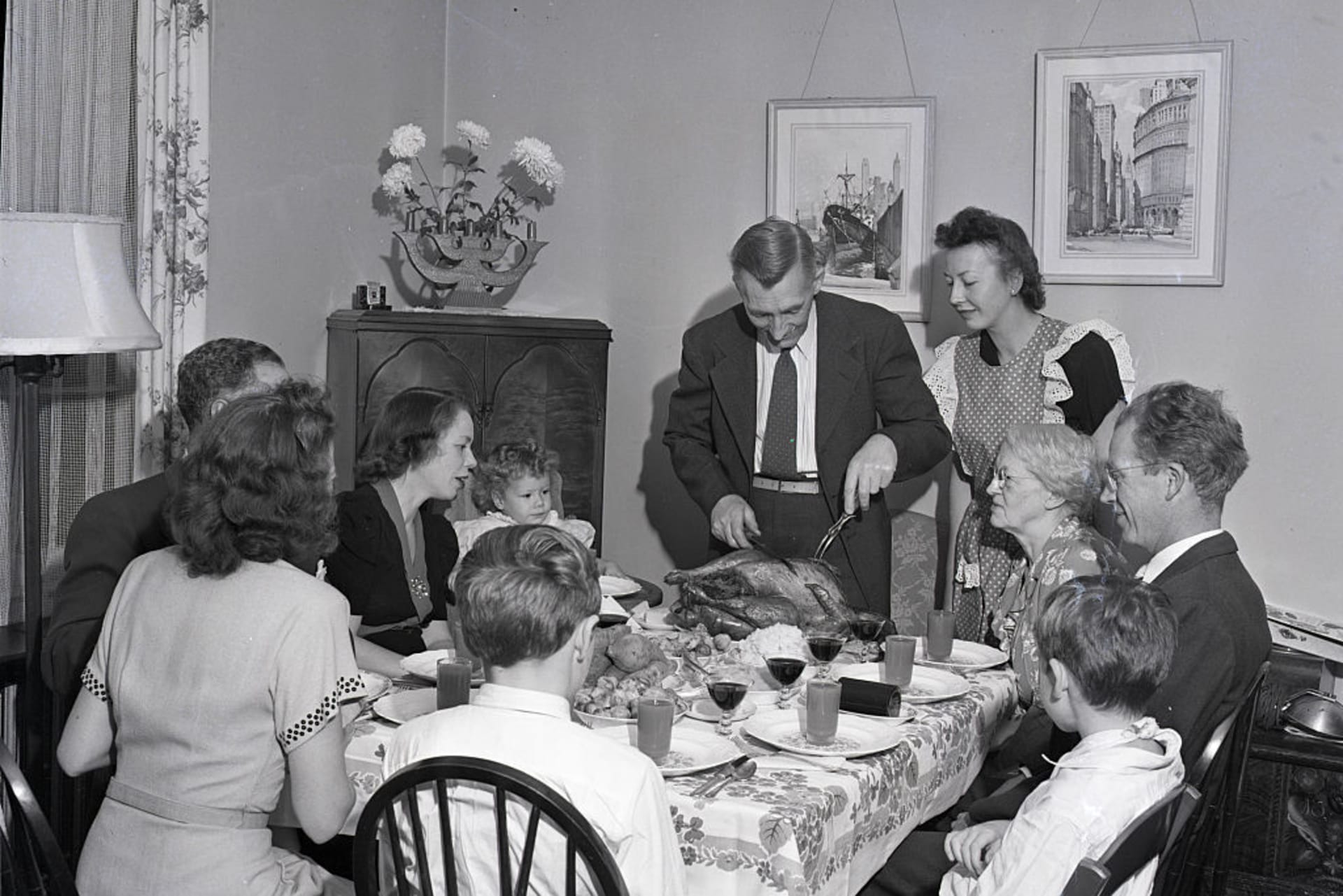
Most years, Thanksgiving guests would not consider U.S. life expectancy and working-age mortality appropriate subject matter for dinner table conversation—but 2026 could be different. As the one holiday dedicated exclusively to eating together, Thanksgiving, the most associational of American occasions, is the perfect time to tell friends and loved ones about the new research published in JAMA Health Forum, which shows that how we feel about one another could actually be killing us. Literally.
Alongside its longevity crisis, the United States has been anomalous among liberal democracies in another way: it has been experiencing a steep and alarming decline in social trust, or the share of people who say that “most people can be trusted.” According to the General Social Survey, a long-running, nationally representative study of the attitudes and behaviors of U.S. adults, U.S. social trust has roughly halved, from 49.4 percent in 2002 to 25.4 percent in 2024. In other liberal democracies, social trust has been rising or stagnant over that time.
Scholars have long theorized connections between health outcomes and various forms of trust, especially during the COVID-19 pandemic, when it was easy to see the link between a polarized, distrustful public and a public health disaster. Yet the empirical evidence of the benefits of social trust for other disease-specific, measurable health outcomes is limited.
The ways in which social trust influences health outcomes are similarly unclear. Some scholars posit that social trust affects healthy behaviors by convincing people to follow health guidelines on immunization or diet because they trust that others are doing the same. Others conclude that low social trust affects health outcomes directly by increasing alcohol and substance use disorders, anxiety disorders, and self-harm, including suicide. Still others argue that the primary benefit of social trust is to function as a necessary precursor of other forms of trust more closely associated with health. In other words, trusting each other could increase the likelihood that people also trust doctors, nurses, scientists, media reporting, and government officials about their health.
The study by the Council on Foreign Relations and the Institute for Health Metrics and Evaluation published in JAMA Health Forum provides new evidence on the questions of whether social trust affects health and the mechanisms by which it occurs.
Two other findings also stand out. Populations most affected by rising U.S. working-age mortality match the changing demography of U.S. social trust. Historically, groups that felt disadvantaged—Americans who are female, Black, low-income, or without a high school degree—often expressed less social trust, often for valid historical reasons.
Over the past twenty years, trust has also fallen precipitously among younger adults, those with high school or associate’s degrees, and white individuals. In 2004, 36 percent of Americans aged eighteen to twenty-nine reported that “most people can be trusted,” just four percentage points lower than the next least-trusting U.S. age cohort; by 2024, the level of social trust among Americans aged eighteen to twenty-nine dropped to just 11.9 percent, a whopping fourteen percentage points lower than the next-lowest age cohort. The historical gaps in U.S. social trust across age, income, and education have also widened since the early 2000s, but racial divides have notably narrowed, driven not by increasing social trust among Black individuals but instead by social trust among white individuals nearly halving since 2004, particularly during and after the COVID-19 pandemic. At the same time, that population has been at the forefront of spiking rates of cardiometabolic diseases such as obesity.
Last, the study results suggest that social trust could affect the U.S. longevity crisis by encouraging healthier lifestyles, better health-care practices, and good public norms around safe sex practices, vaccination, and violence. Less weekly physical activity, more smoking, higher obesity rates, more interpersonal violence, and the absence of health insurance were all associated with lower social trust. Each health risk behavior was also associated with shorter U.S. adult life expectancy (at age fifteen).
By contrast, the study found no evidence of the theorized links between lower social trust and mortality associated with self-harm, anxiety disorders, or substance use disorders involving alcohol, amphetamine, and cannabis.
Those results suggest that policymakers, communities, and health-care providers concerned about U.S. longevity falling behind other nations should also be concerned with eroding U.S. social trust, and not just at Thanksgiving time. The study found that 37.1 percent of the gap between life expectancy in the United States and other rich countries would be closed if U.S. social trust rebounded to its 2002 levels.
Given the unsurprising finding that economically and socially disadvantaged communities report lower levels of social trust across the board, the first step should be listening to those high-risk communities and monitoring their reasons for mistrust. Poor U.S. health is not only a consequence of the inequities and perceived unfairness of American life but also one of its leading contributors. High health-care bills and catastrophic medical expenditures are significant sources of financial insecurity for American families. Rising U.S. drug prices disproportionately affect people without health insurance or with high-deductible insurance plans. U.S. COVID-19 policies exacerbated inequities and perceptions of societal unfairness.
Those insights should continuously inform targeted health promotion strategies that could succeed even with individuals who have limited trust. Trusted local institutions such as churches or clinics, and the community health programs developed by the National Institutes of Health and Centers for Disease Control and Prevention, all deserve expanded support.
Those interested in learning more about U.S. social trust and its decline can explore the data here to see changes in social trust by age, education, income, state, sex, and race.
This interactive was made possible by a generous grant from Bloomberg Philanthropies. This work represents the views solely of the author(s). The Council on Foreign Relations is an independent, nonpartisan membership organization, think tank, and publisher, and takes no institutional positions on matters of policy.
Colophon
Data Visualization
- Austin Steinhart