The Global AI Data Center Debate, Explained
As countries race to build the infrastructure behind artificial intelligence (AI), the electricity, water, and land that data centers demand are shaping who can compete.
By experts and staff
- Published
- Emilyn LarsonIntern, Digital Content, Editorial
Global construction of data centers is accelerating as the race to lead in AI development heats up. These facilities have the computational and physical infrastructure needed to train and run large-scale AI models, making them a critical part of countries’ efforts to drive AI expansion. However, while technology companies are pouring hundreds of billions of dollars into building these facilities, countries’ approaches to their construction differ, shaped by energy supply, land availability, and economic capital.
Data centers consume enormous amounts of electricity and water, and communities have pushed back over concerns about rising power bills and strained resources. In response, some countries have restricted new construction, while others have taken action to fast-track projects with the goal of attracting investment.
These differing approaches reflect broader uncertainty about AI proliferation. “It’s not really about energy or water so much as people’s concerns about AI,” David Hart, CFR senior fellow for climate and energy, said of the backlash to data center construction. “It’s very hard to tackle that directly because it’s a very abstract, amorphous thing, but if the data center is right there, then it’s a much easier target.”
CFR unpacks what data centers are, the debate surrounding them, and how different countries and regions are approaching their development.
What are data centers, what do they do, and how do they work?
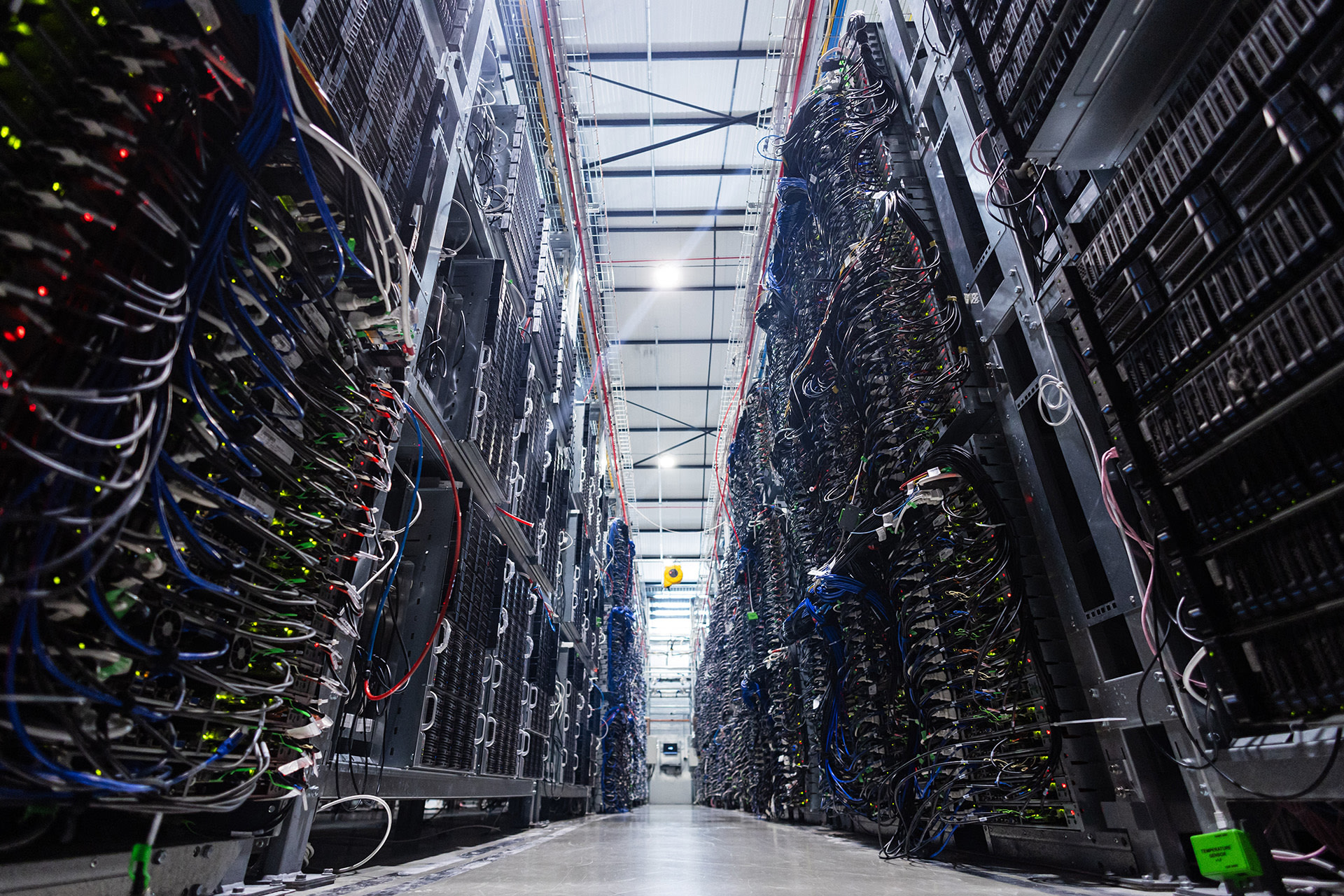
Data centers are large facilities filled with servers that store and process the data behind nearly everything people do online. Traditional data centers run mainly on central processing units and were built to supply roughly five to ten kilowatts of power per rack—the cabinet that holds a stack of servers. These centers use air cooling systems to prevent servers from overheating.
AI data centers, however, rely mostly on graphics processing units (GPUs)—specialized processors that can run thousands of calculations simultaneously, making them well suited to building and running large-scale AI models. These systems require substantially more power: A single rack of Nvidia’s GB200 NVL72 system, for example, draws approximately 120 kilowatts per rack, equivalent to the average electricity demand of one hundred American homes. To manage the added heat, AI facilities primarily use liquid cooling systems that pipe coolant directly to the chips.
AI’s growing power demands are driving a rapid consumption of electricity. Data centers consumed an estimated 415 terawatt-hours of electricity in 2024—about 1.5 percent of all electricity consumed worldwide that year—and the International Energy Agency estimates that figure will more than double by 2030, primarily due to the increase in AI use.
Much of that electricity demand is a result of how AI models are built and used. Before an AI model can be deployed, it needs to be trained, a process that involves feeding enormous amounts of data through many thousands of GPUs at once. Because these models run around the clock, AI data centers require a reliable, continuous power supply that renewables such as wind and solar alone cannot provide, causing developers to look increasingly to natural gas and nuclear energy.
How many data centers are in the United States and globally?
The United States has more data centers than any other country, with more than five thousand operational and planned facilities of varying sizes listed across the country, according to Data Center Map. Globally, more than 13,000 planned or operational data centers are listed across over 180 countries. Beyond the United States, these centers are clustered primarily in major European economic hubs, such as France and Germany, as well as large Asian markets such as China and India.
Why do data centers use so much water?
Data centers use water directly to cool their servers and indirectly through the power plants that generate their electricity. Many still rely on evaporative cooling, which requires a constant water supply because lost water cannot be immediately reused. In 2025, global data centers used almost 1.2 trillion gallons of water, according to a report [PDF] by the United Nations University Institute for Water, Environment, and Health—enough to meet the annual basic household water needs of more than six hundred million people in sub-Saharan Africa.
AI expansion could drive water consumption much higher. By 2030, the UN report projects that AI-related water consumption could reach nearly 2.5 trillion gallons annually. Where data centers are built also matters: S&P Global estimates that 43 percent of data centers worldwide face high water stress, including 38 percent in the United States and roughly 60 percent in China.
Why are data centers controversial?
Concerns about AI infrastructure center on two major issues:
Environmental. In addition to concerns over water usage, AI data center growth is driving up carbon emissions and increasing demand for coal and natural gas, which still power many facilities. AI-related carbon dioxide emissions could reach four hundred million tons annually by 2030—roughly what the entire United Kingdom emitted in 2025. AI’s expansion is also challenging tech companies’ climate goals. Microsoft, which has promised to become carbon negative by 2030, saw its emissions rise 25 percent in fiscal year 2025, largely because of data center development.
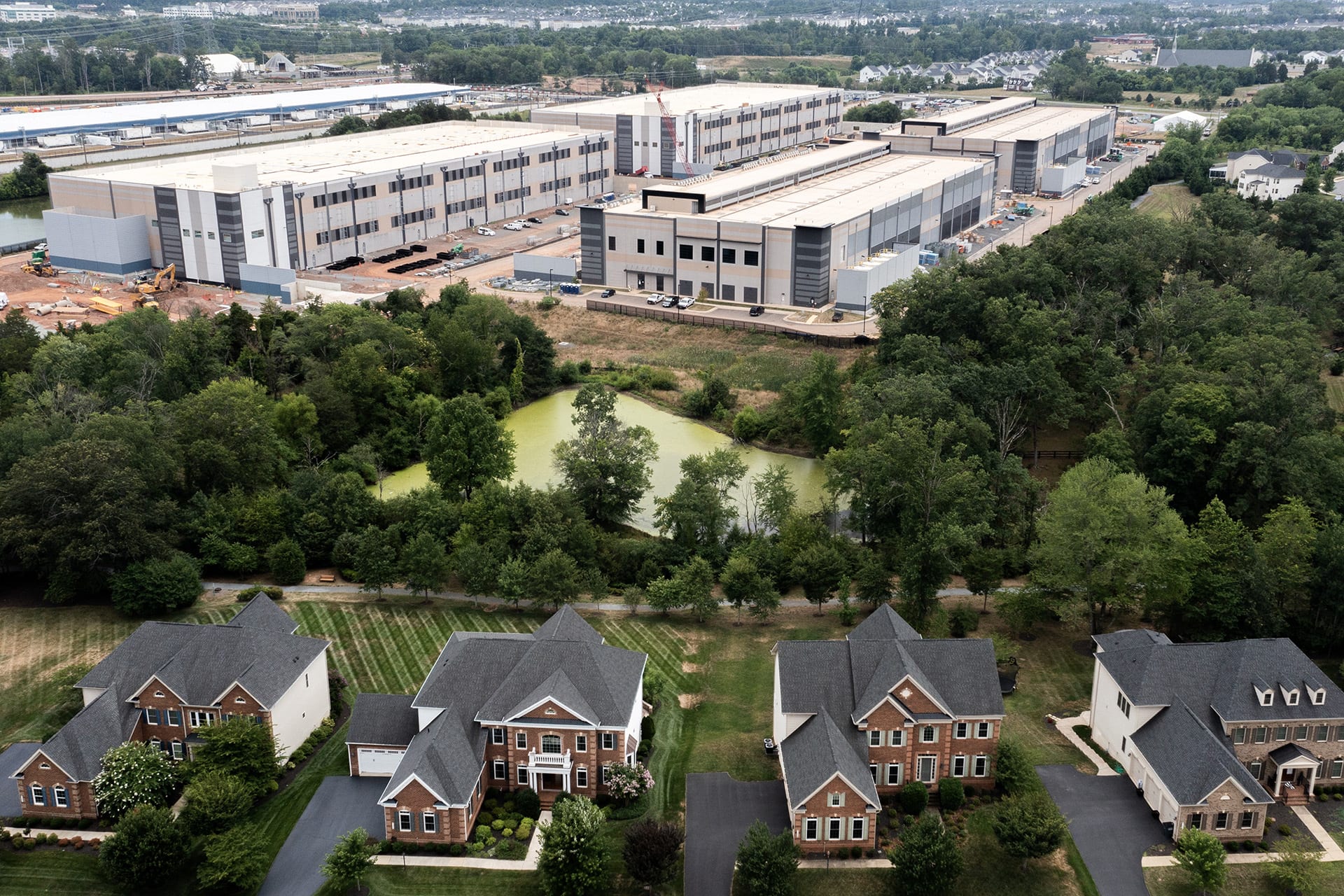
Data centers can also pose health risks to nearby communities. Harvard University researchers estimated that the power supply for a single data center in Loudoun County, Virginia—dubbed the data center capital of the world—could cause between $53 million and $99 million in annual health damages from related air pollution. These facilities also take up sizable portions of land. By 2030, the land needed to generate electricity for AI data centers globally could exceed 14,500 square kilometers (more than 5,500 square miles).
Economic. Building AI infrastructure requires significant investment, and tech companies are betting that the payoff will be worth it. For example, Alphabet (the parent organization for Google), Amazon, Meta, and Microsoft collectively plan to spend roughly $725 billion on capital expenditures in 2026, with most of that money funding AI infrastructure. However, a growing share of the AI build-out is financed by debt, which experts warn could make lenders more cautious as it becomes less clear when AI’s economic gains will materialize. “There’s just too much uncertainty in the market,” Connor Martin, a CFR international affairs fellow, said.
A large share of the capital powering the AI boom in the United States also comes from abroad, particularly Gulf countries. The United Arab Emirates (UAE), for example, committed in 2025 to a ten-year, $1.4 trillion framework to boost investment in AI infrastructure, semiconductors, and other areas of the U.S. economy. Saudi Arabia also struck a nearly $1 trillion investment deal with the United States last year.
But Martin noted that those commitments were made before the outbreak of the Iran war. “It would be totally reasonable for the Saudi or Emirati governments to cut back at least some of that committed money to focus on their own defense and oil infrastructure,” he said. “I wouldn’t be surprised if some of their commitments don’t end up materializing, or at least take longer to materialize than we thought.”
For many countries, however, the AI boom represents a major economic opportunity. Africa’s data center market is expected to attract $10–20 billion in investment by 2030, while in Southeast Asia, Malaysia has attracted billions of dollars from major tech companies with its relatively cheap land and electricity. But these investments can come with trade-offs. Data centers have so far used an average of 7 percent of Malaysia’s electricity in 2026, and that share is projected to climb to roughly one third by 2035.

How are countries approaching data center construction?
Governments have taken markedly different approaches to data center development.
United States. In the United States, private companies decide where and how to build, while the federal government has focused on facilitating expansion. In July 2025, U.S. President Donald Trump signed an executive order directing federal agencies to fast-track permits for construction of AI data centers and power plants and support related projects through federal loans, grants, and tax incentives. “The private sector leads, and that’s the source of our strength,” Martin said. “But it also means that the federal government has less leverage to strategically plan where these data centers should go. As a result, they go where the economics say they should.” Most U.S. data centers are heavily concentrated in Georgia, Texas, Virginia, and major metropolitan hubs like Silicon Valley.
Hart argued that the United States’ patchwork of utilities, state regulators, and regional grid operators “is falling short as a whole,” and described the Trump administration’s energy policy as “sort of contradictory,” as it is fast-tracking data centers while also blocking wind and other sources that could come online quickly and cheaply.
China. China has taken a more centralized approach. In 2022, Beijing launched a national project called East Data, West Computing, which directs new data centers to be built away from the eastern provinces—where land is expensive and energy supplies are tight—and in the country’s western provinces, where large solar and wind farms are located. Although China still gets roughly half of its electricity from coal, Hart said its massive renewable build-out means power isn’t what’s holding it back. “Their big constraint on AI is chips,” he said, adding that although the United States has the necessary chips, it is constrained by an aging power grid.
The Gulf. Gulf states are using their vast energy resources and sovereign wealth funds to build AI infrastructure as quickly as possible. Following strikes by Iran, the UAE is reassessing the design and layout of Stargate UAE, a U.S.-backed AI data center infrastructure project projected to cost more than $30 billion. Meanwhile, Saudi Arabia plans to invest tens of billions of dollars through HUMAIN, an AI company backed by the country’s public investment fund, which manages over $1 trillion in assets.
Europe and Southeast Asia. Given limited land space and grid capacity, some European and Southeast Asian governments have leaned on moratoriums and rationing, slowing down data center development. The Netherlands, for example, imposed a nationwide ban on new hyperscale data centers in 2024, and Ireland now requires newly constructed facilities to supply their own power. Meanwhile, Singapore, Southeast Asia’s original data center hub, halted new approvals from 2019 to 2022 over concerns about energy use, and now only admits facilities that meet strict efficiency standards.
This work represents the views solely of the author(s). The Council on Foreign Relations is an independent, nonpartisan membership organization, think tank, and publisher, and takes no institutional positions on matters of policy.