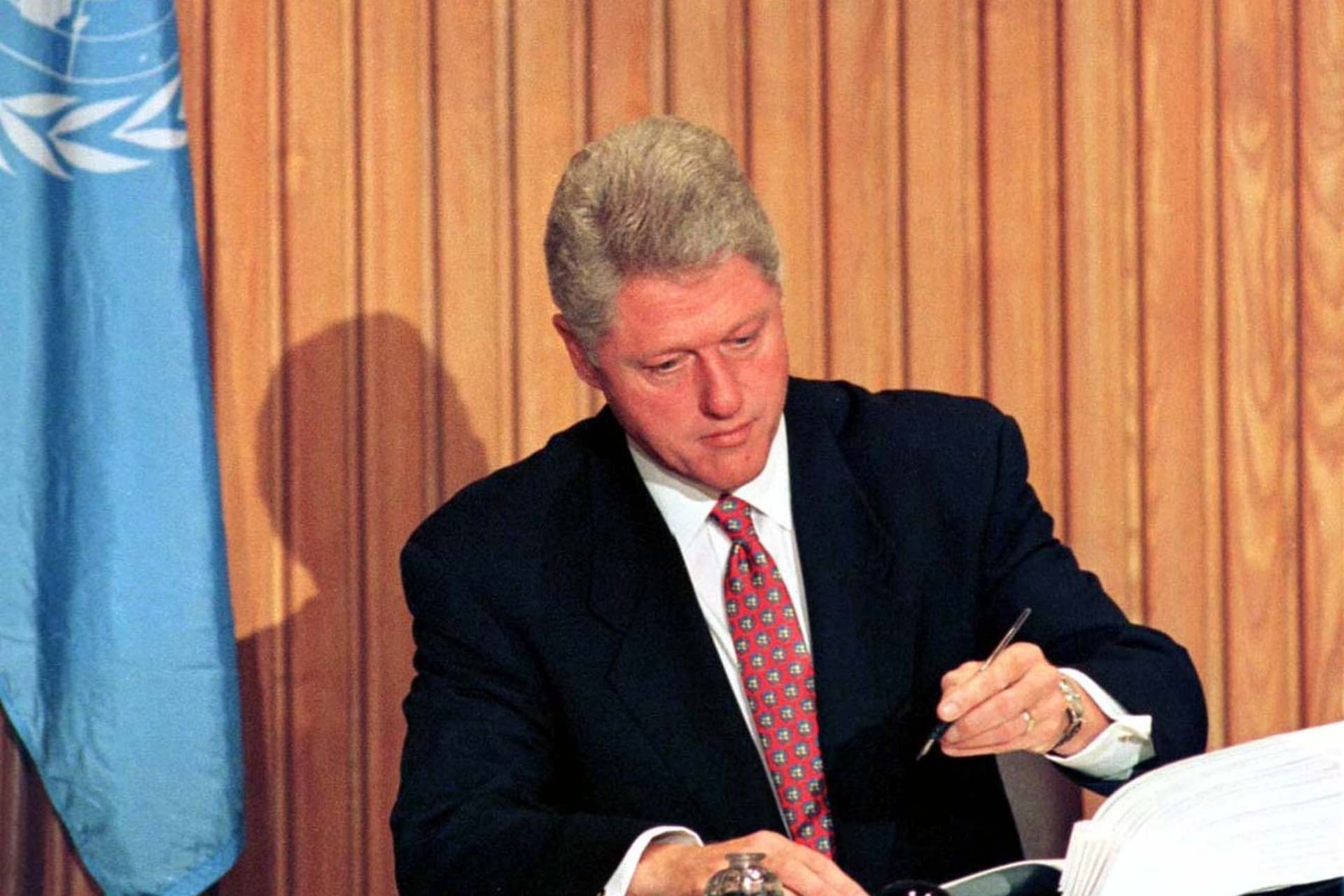
Bill Clinton Signs the Comprehensive Nuclear Test Ban Treaty
A landmark 1996 treaty to ban all nuclear weapons tests has yet to go into effect.
By experts and staff
- Published
 James M. LindsayCFR ExpertMary and David Boies Distinguished Senior Fellow in U.S. Foreign Policy
Thirty years ago today, President Bill Clinton signed the Comprehensive Nuclear Test Ban Treaty (CTBT). The treaty bars signatory countries from exploding nuclear devices for military or civilian purposes. In signing the treaty with the same pen that John F. Kennedy used three decades earlier to sign the Limited Test Ban Treaty, Clinton called the CTBT “the longest-sought, hardest-fought prize in arms control history.”
Clinton didn’t realize at the time how accurate and prophetic his statement was. From the start, the CTBT faced substantial opposition, especially from Republican senators. They argued that it would handicap future efforts to modernize the U.S. nuclear arsenal and that U.S. adversaries would find ways to cheat undetected. The treaty finally came to a vote in 1999. It fell well short of the two-thirds majority needed for passage, making it just one of twenty-two treaties to be defeated on the floor of the Senate in U.S. history.
As of today, 188 countries have signed the CTBT and 179 have ratified it. The treaty does not go into effect until all forty-four “Annex II states”—so-called because they are listed in Annex II to the treaty—sign and ratify the treaty. India, North Korea, and Pakistan have not signed the treaty. China, Egypt, Indonesia, Iran, and Israel have followed the U.S. lead and signed the treaty but not ratified it. Russia signed and ratified the treaty but revoked its ratification in 2023.
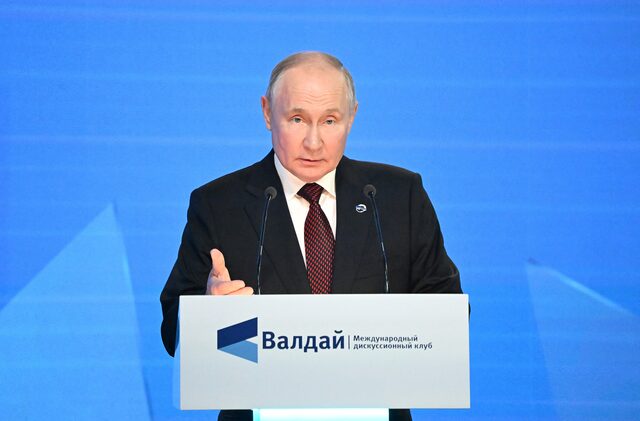
President Obama vowed in a 2009 speech in Prague:
My administration will immediately and aggressively pursue U.S. ratification of the Comprehensive Test Ban Treaty. After more than five decades of talks, it is time for the testing of nuclear weapons to finally be banned.
Not quite. The political forces for ratification weren’t aligned in 2009 for Senate action. They were even less aligned after the 2010 midterm elections saw Republicans pick up six Senate seats. Obama turned his attention instead to the successful but politically draining effort to persuade the Senate to approve the New START Treaty.
The prospects for securing Senate approval of the CTBT have not improved since. President Donald Trump’s first administration explicitly declined to resubmit it for Senate consideration but pledged to “not resume nuclear explosive testing unless necessary to ensure the safety and effectiveness of the U.S. nuclear arsenal.” Joe Biden reaffirmed U.S. support for CTBT but never pushed for its reconsideration given continued Republican opposition in the Senate.

The CTBT now operates in a sort of limbo. The treaty itself has not gone into effect. However, the Comprehensive Nuclear-Test-Ban Treaty Organization (CTBTO), which was created with the treaty’s signing, operates a global monitoring system to detect nuclear weapons tests. And while the CTBT’s terms are not yet binding on its signatory parties, the world has largely observed an informal ban on nuclear testing.
Trump said last October in a Truth Social post that “because of other countries testing programs, I have instructed the Department of War to start testing our Nuclear Weapons on an equal basis.” Secretary of Energy Chris Wright, whose department oversees the research, development, production, and maintenance of the nation’s nuclear weapons stockpile, moved quickly to deny that the United States had plans to resume nuclear testing. In the eleven months since, it has not done so, and Trump has not repeated his claims that it would.
North Korea remains the only country to explode a nuclear device this century. The last of its six tests was in September 2017.
Oscar Berry and Jack Patton assisted in the preparation of this article.
The United States celebrates its 250th anniversary in 2026. To mark that milestone, I am resurfacing essays I have written over the years about major events in U.S. foreign policy. A version of this essay was published on September 24, 2011.
This work represents the views solely of the author(s). The Council on Foreign Relations is an independent, nonpartisan membership organization, think tank, and publisher, and takes no institutional positions on matters of policy.