China and Climate: Xi-Putin Discuss Energy, Ties Following Trump Visit
May’s edition of China and Climate discusses President Vladimir Putin’s recent trip to China, highlighting the countries’ energy ties and pipeline agreement, China’s support of a recent UN General Assembly climate resolution, and China’s response to the conflict in Iran.
By experts and staff
- Published
- Research Associate, Climate and Energy
- Research Associate, Climate Change Policy
The China and Climate primer series tracks and breaks down China’s engagement with energy and climate issues around the world.
Xi-Putin Discuss Energy, Ties Following Trump Visit
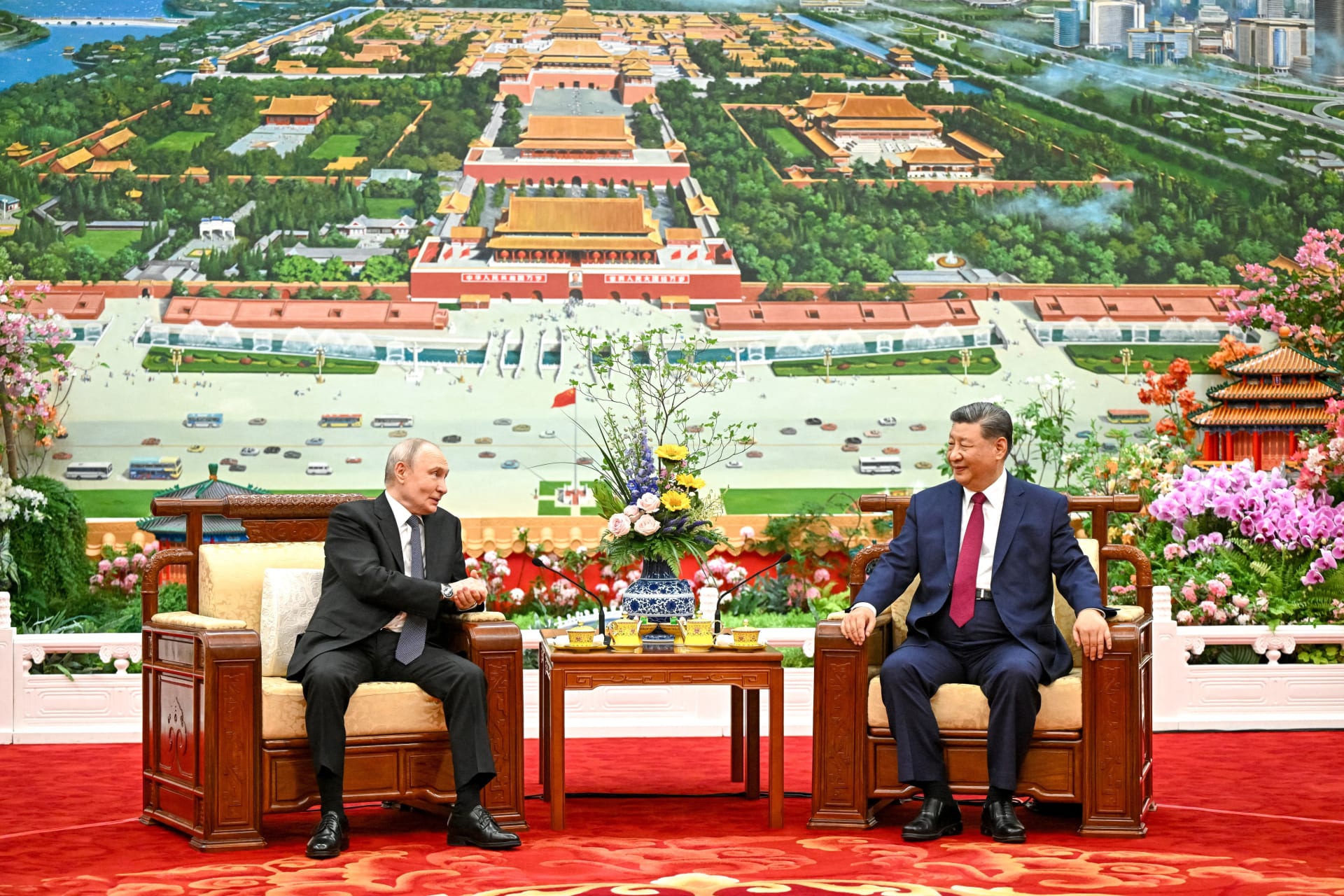
In late May, Russian President Vladimir Putin traveled to China for bilateral talks. The summit produced more than forty cooperation agreements, with Chinese President Xi Jinping describing the two countries’ ties as at “the highest level in history.” The energy trade between both countries is a fundamental piece of those ties: China’s imports of Russian oil have increased in the first quarter of 2026. And Putin described energy as the “driving force” behind Chinese-Russian economic cooperation. Among the energy-related agreements signed by China and Russia is a memorandum of understanding (MOU) on cooperation in nuclear industries, including nuclear fusion. The joint statement made by the two countries’ presidents pledged to continue work on the Tianwan and Xudapu nuclear power plants. However, the meeting between Putin and Xi produced limited progress on the Power of Siberia 2 pipeline.
If finalized, the pipeline could transport up to fifty billion cubic meters (m3) of gas annually from Russia’s Arctic Yamal Peninsula to China via Mongolia. Crossing thousands of kilometers, that amount is nearly as large as the Nord Stream 1 pipeline, which previously brought Russian gas to Europe at a capacity of fifty-five billion m3 per year. In September 2025, the Russian-owned energy corporation Gazprom and the China National Petroleum Corporation signed an MOU for the project.
Headed into the May 2026 summit, the Kremlin noted that the pipeline would be discussed in detail. However, the Chinese government made no such mention of the pipeline headed into the summit. Putin’s trip to Beijing followed closely after U.S. President Donald Trump’s visit, which produced comparatively little in the way of cooperation or agreements.
China Votes in Favor of a UNGA Climate Resolution
On May 20, 2026, 141 nations, including China, voted in favor of a UN General Assembly (UNGA) resolution on the obligation of states in regard to climate change. The United States was one of eight nations that opposed the resolution. A draft of the resolution to support the advisory opinion of the International Court of Justice (ICJ) was introduced by Vanuatu back in February 2026. In the intervening months leading up to the vote, the text of the resolution attracted debate, and four last-minute amendments on the day of the vote were rejected.
The resolution welcomed the ICJ’s opinion and called on member states to comply with its obligations under international law, as identified by the ICJ. And rather than explicitly mentioning the phaseout of fossil fuels, the text urges states to transition away from them. The resolution also calls on the UN secretary-general to produce a report on “ways to advance compliance with all obligations” related to the advisory opinion.
When the original ICJ opinion came out in July 2025, a spokesperson for China’s Ministry of Foreign Affairs noted that the “advisory opinion reflects the long-standing stance and proposition of developing countries, including China.” One should note, however, that although the ICJ opinion retains some distinction in responsibility between states, it does not simply endorse a binary set of obligations for developed and developing countries but instead places an obligation on all states. Additionally, China has a history of opposing explicit references to fossil fuel language at past Conferences of Parties.
Trade Pressures Continue
EU leadership held an early discussion on Europe’s trade relationship to China. As imports into Europe from China continue to rise, leaders are hoping to develop a new strategy to address this dependence. China is the EU’s second-largest trading partner, following the United States, and, in particular, electric vehicles (EVs) from China have risen dramatically. In December 2025, Chinese-made EVs accounted for 15 percent of EVs sold in the EU and, in April 2026, they accounted for nearly 30 percent of all plug-in hybrid cars sold. Leaders have called for policies that would help the EU protect strategic industries. One proposed policy is the Industrial Accelerator Act, which focuses on building the EU’s manufacturing base, including specifically EV manufacturing. The proposed plan has not been popular in Beijing because it excludes China from access to certain subsidies.
Iran War Update
In March and April, China halted much of its fuel exports following the closure of the Strait of Hormuz. That trend continued into May, as shipments of refined fuel to Asian economies remained low. In addition, China’s independent refiners are reducing output as costs rise following the third month of the conflict. That comes despite China’s instruction for small refiners to stay open. Finally, Chinese officials in state media discussed the 2026 State of Coal Report. Regarding the conflict in the Middle East, they reported that the coal industry will be attentive to market disruptions and maintain stability in the industry.
A Month of Weather Extremes
China experienced its highest-recorded May rainfall levels in a decade last month. Reporting indicates rainfall between April and May was more than 18 percent higher than the norm. Flashfloods and landslides followed torrential downpours in several provinces, damaging homes and infrastructure and even causing deaths, according to China Daily. The Chinese government has started mobilizing funds in response. Around 280 million yuan ($41 million) in total was dedicated to supporting disaster-affected provinces, with the majority of those funds directed to provinces impacted by flooding. From 2019 to 2023, China reported that its disaster prevention emergency management spending totaled more than $400 billion, growing at just shy of 9 percent each year.
As El Niño emerges in the Pacific Ocean, it pumps moisture into the atmosphere, creating conditions for more rainfall in southern China and worsening other climate extremes. While this climate phenomenon may exert some influence on weather as it develops, it had not fully emerged when torrential rains hit parts of China in May. Some research suggests that warming in the Indian Ocean, attributed to climate change, could be driving a long-term rise in extreme rainfall events in China’s pre-flood season. The national temperature in China was 0.6°C (1.08°F) above its historical norm in May, and demand on the China Southern Power Grid reached a new high of 259 gigawatts due to spikes in air-conditioning use, reported Dialogue Earth.