China Tries to Breathe Free
By experts and staff
- Published
 Elizabeth C. EconomyHoover Institution, Stanford University
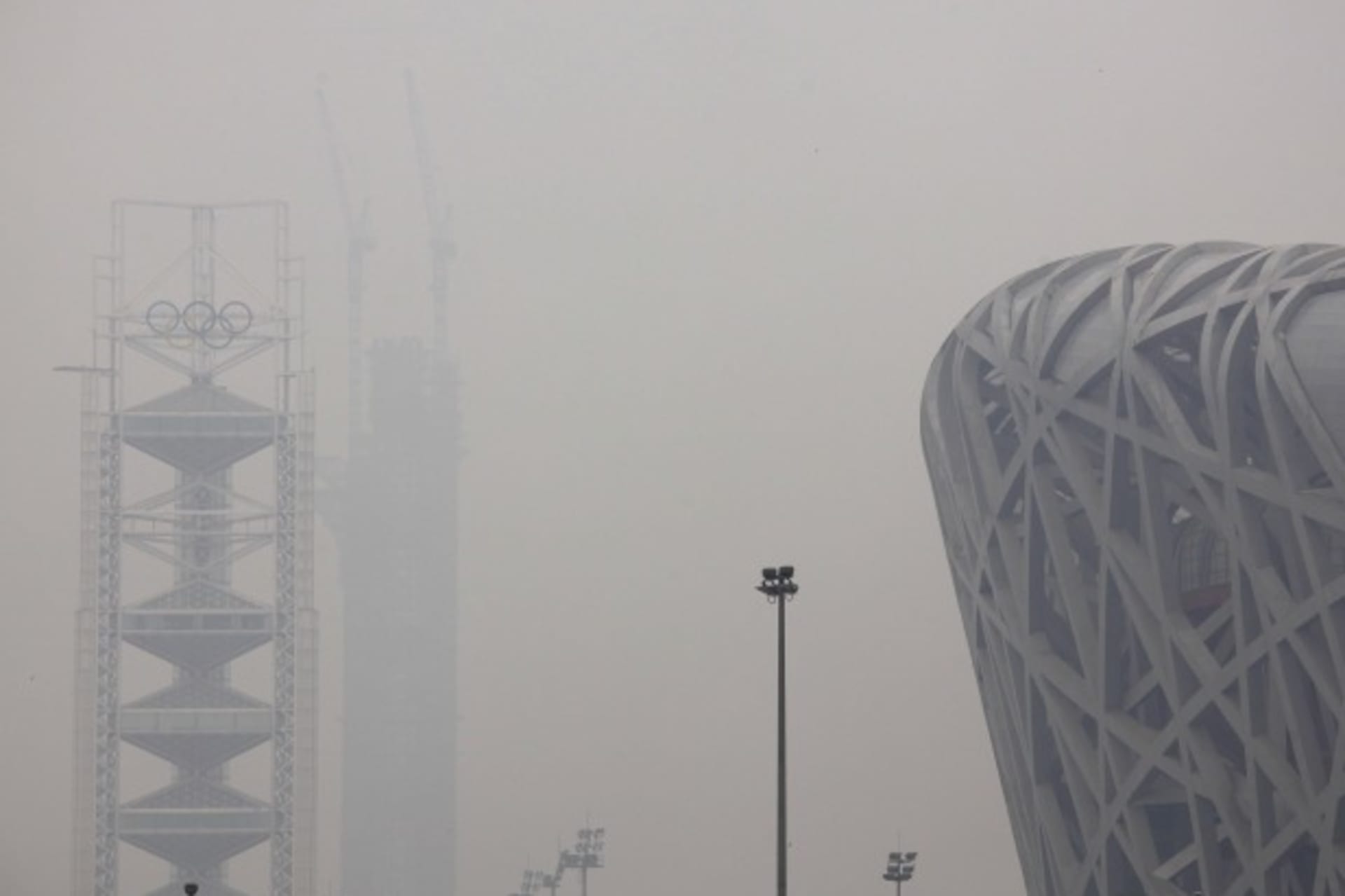
After one day in Beijing, I had a sore throat. After two days, I had a cough. In nine days, the sun never made an appearance. So, when I returned to New York from Beijing earlier this week, I wasn’t surprised to learn from a friend who tracks China’s air quality that the pollution in the country’s capital during my stay had been among the worst since 2007.
There really isn’t any mystery as to why Beijing’s air pollution is so bad. Crawling in traffic from one corner of Beijing to another, it’s clear that vehicle emissions are a top culprit. Add in coal burning, dust from the Gobi desert and construction, and industrial pollution, and you have a potent mix of polluted particulates. There also isn’t much mystery as to what this pollution means for the health of Beijing residents—increased lung and respiratory problems, higher hospital admissions, and even premature death.
The real question is: What can Beijing—and other Chinese cities facing such severe air pollution—do about the problem?
First, they need to move beyond petty politics. Earlier this year, Beijing was dragged into releasing statistics on the pollutant PM 2.5 (which is particularly hazardous to people’s health) through a combination of pressure from the U.S. embassy in Beijing—which was already tweeting PM 2.5 levels in its vicinity on an hourly basis—and popular agitation by the Chinese people who wanted to know what they were really up against in terms of their pollution problem. Now, six months later, Beijing is trying to shut down the U.S. embassy (and various Consulate) tweets, arguing that they contravene the Vienna Convention on Diplomatic Relations, in which “foreign diplomats are required to respect and follow local laws and cannot interfere in internal affairs.” As a Chinese Foreign Ministry spokesman Liu Weimin stated, “If the Foreign embassies want to collect this kind of information for their own staff and diplomats, I think it’s up to them. They can’t release this information to the outside world.”
Why this new assault on transparency? There are a couple of likely reasons:
The reaction from the Chinese people to this diplomatic tempest is not surprising. As others have reported, Weibo has been full of comments mocking Beijing’s stance. What the people want is not political blame but a plan of action. The non-governmental organization (NGO) Greenpeace, which has a top-notch team in Beijing, has several practical suggestions, some of which are already underway: set clear targets to limit coal consumption; have the major cities within particular regions formulate and coordinate legally binding plans to reach national air quality standards (for Beijing this will mean Beijing, Tianjin and Hebei); and introduce policies to limit the rapid growth of vehicle usage. All of this is easier said than done, of course, but as the head of the NGO Greener Beijing has noted, the environmental community is just waiting for the government to accept its offer of help.
The Chinese government now has at its disposal an informed and engaged public along with NGOs committed to a better environment. So instead of wasting time, Beijing should seize the moment, tap into the energy and concern of the Chinese people, and mobilize them around a real initiative to address the challenge at hand.