Crude Calculations: Why the Iran War Hasn’t Yet Caused an Oil Shock
The Iran war has triggered the largest oil supply disruption in market history yet barely dented global growth after six months of conflict. Strategic reserves and shale get the credit, but the unexpected cushion is the fuel everyone forgets—demand itself.

By experts and staff
- Published
 Vijay V. VaitheeswaranCFR ExpertPhilip D. Reed Senior Fellow and Director of the Energy Security and Climate Change Program
Vijay V. Vaitheeswaran served as the global energy and climate innovation editor at the Economist, where he led coverage of the fossil fuel industry and Organization of the Petroleum Exporting Countries (OPEC), power utilities and the nexus of artificial intelligence and energy, and renewables and emerging energy technologies. He was named 2025 Writer of the Year by the American Energy Society and is the author of three books on energy, innovation, and the climate.
This week marks six months since the outbreak of military conflict between the United States and Iran. This on-again, off-again, on-again conflagration has severely disrupted exports of oil, liquefied natural gas, and other vital commodities through the Strait of Hormuz. With more than two billion barrels of oil shipments already disrupted already this year, the International Energy Agency (IEA) calls this the “largest supply disruption in the history of the global oil market.”
But that is not the biggest story here.
Adjusted for inflation, benchmark petroleum prices remain well below the peaks seen during past global crises. Unlike the energy disruptions caused by the Arab oil embargo (1973–74) and the Iranian Revolution (1978–79), both of which whacked growth and triggered inflation, today’s trouble in the Middle East has hardly slowed things down. The International Monetary Fund has trimmed its outlook only modestly, now predicting 3 percent growth for the global economy this year and even higher next year—a forecast that assumes no major escalation in the war.
So how did the largest physical disruption of energy supplies in history produce the oil shock that wasn’t? The answer points to lessons that will outlast the conflict, however and whenever it is ultimately resolved.
The straightforward explanations come from the supply side. Luck played a part. Oil markets were well supplied when hostilities broke out—the IEA had projected a surplus of nearly four million barrels per day for 2026—so traders did not panic. So too did planning. Advanced economies, coordinated by the IEA, quickly made the largest-ever release of strategic stocks of petroleum, some 273 million barrels, which further cooled markets. Flexible infrastructure helped. Saudi Arabia and the United Arab Emirates have diverted millions of barrels per day through underutilized pipelines that bypass the problematic maritime passage. Innovation boosted supply too. Thanks to the shale revolution, the United States has gone from being an energy-scarce importer in the 1970s to an energy-abundant exporter helping lubricate global oil and gas markets today.
These cushions are the product of vital lessons learned from previous oil shocks. The IEA was created in 1974 explicitly to coordinate strategic reserves. Earlier conflicts encouraged big producers to invest in redundant routes to market, and they provided an incentive for investors to develop non-OPEC sources of hydrocarbons in the Americas and other regions spared the periodic turmoil that periodically besets the oil-rich Middle East. Without them, the harm of the Hormuz cut-off would surely have been much worse.
However, this supply-side analysis ignores the largely unanticipated role played by demand. Conventional wisdom has long held that oil supply can be more easily and rapidly managed in a crisis than demand. That is because supply is, in part, coordinated by OPEC. Saudi Arabia, the swing producer and OPEC’s kingpin, was long seen as the central bank of oil. More recently, the United States’ ability (at least in the short term) to squeeze out more hydrocarbons during a crisis has also helped cool global energy markets.
Demand, in contrast, is dispersed among fractious market players, myriad countries, and billions of oil-guzzling consumers. When there is a demand response during an energy shock, it is usually chaotic and painful—a result of ad hoc policies, price spikes, shortages, and rationing. There is evidence of this during this crisis, too, in the hardest-hit places, especially in Africa and Asia, where the poorest consumers have suffered the most.
The World Bank’s June 2026 Global Economic Prospects report, for example, found that the Iran war had compounded longtime economic fragilities in Bangladesh, negatively affecting the country’s external balance and widening its fiscal deficit. In Nigeria, the war has reportedly caused fuel prices to spike by nearly 50 percent, intensifying inflation just as political campaigning for the 2027 general election begins.
[Video: https://www.youtube.com/watch?v=lDMCOmSsAOM&t=18s]
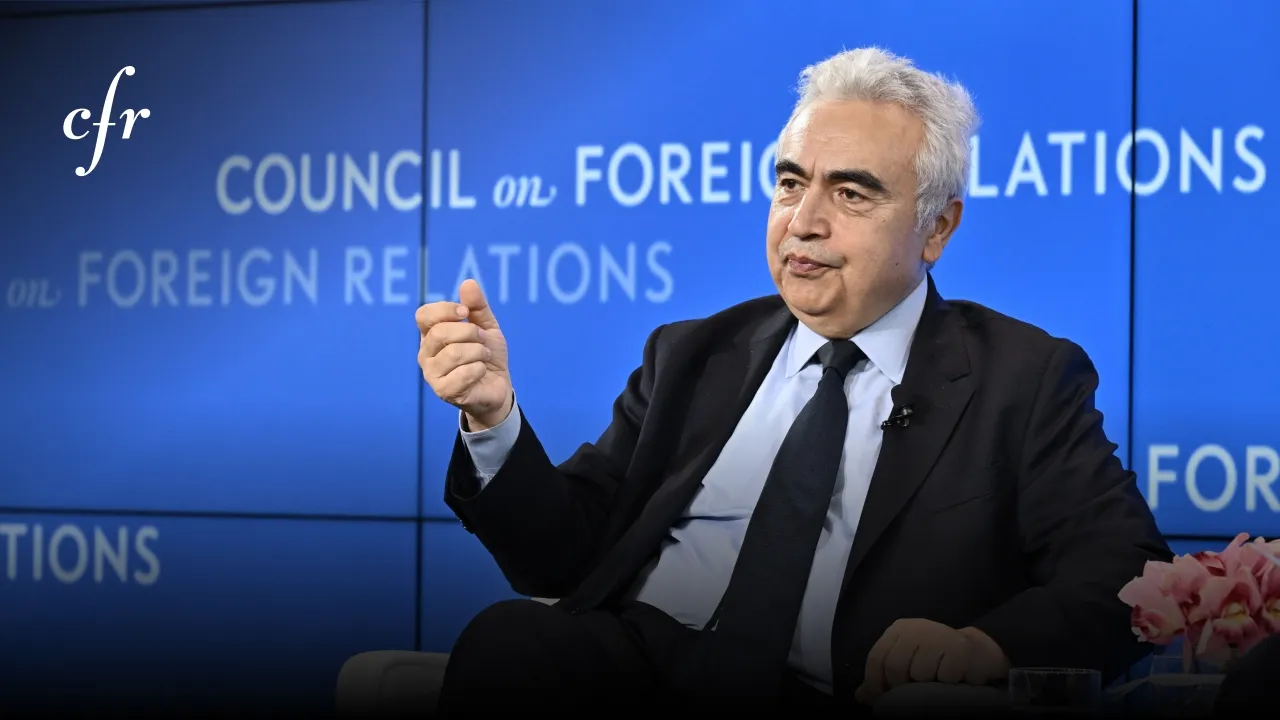
It was widely assumed that mobilizing a coherent and calm demand response quickly in a crisis was nigh impossible—until now.
China, with its centralized energy planning and long-standing paranoia about the vulnerability of oil imports, has proven that wrong. Astonishingly, it cut seaborne imports of crude oil by more than five million barrels per day through June—over 40 percent below prewar levels—without precipitating an economic calamity at home. (China’s National Bureau of Statistics noted steady GDP growth between the first and second quarters of 2026, despite the ongoing energy disruption.) One way China did this was by dipping into its enormous strategic reserves, which it had built up when oil was relatively inexpensive, and relying temporarily on domestic coal and renewables to offset lost imports. Another way involved restricting product exports, to the chagrin of its customers abroad. Most intriguingly, Beijing curbed domestic demand for fossil fuels through policies that boost alternative vehicles, energy conservation, and public transportation.
That points to the larger lesson. Demand, sometimes called the “forgotten fuel” [PDF], can play a far greater role in energy management than imagined by policymakers who reflexively reach for supply-side solutions during times of crisis. This argument was made eloquently by Amory Lovins precisely fifty years ago, during an earlier era of Middle Eastern wars and energy shocks, in a seminal Foreign Affairs article titled “Energy Strategy: The Road Not Taken?”
Lovins forecast in the article that the United States could, if aggressive efforts at diversification and efficiency were implemented, slash energy demand to 95 quadrillion Btu (quads) at the turn of the millennium. He was widely derided at the time as that was over a quarter lower than what official forecasters were predicting. The actual energy consumption for the United States in 2000 was ninety-seven quads. This October, CFR will convene a symposium in Washington, DC, to mark that anniversary and reflect on lessons from that era for the future of U.S. energy strategy.
Happily, the tools for harnessing demand-side solutions are proliferating. During the United Nations’ annual climate conference in Dubai in 2023, nearly two hundred countries, including the United States, committed to doubling the global average rate of improvement in energy efficiency to 4 percent per year by 2030. Progress has been too slow, but there is reason for optimism. Electrification, a far more efficient way to use energy than combustion, is growing at two to three times the rate of overall global energy demand. In the early months following the Strait of Hormuz cut-off, exports of electric vehicles from China soared—they shot up to $9.2 billion in May, nearly 50 percent higher year-on-year—as countries sought to diversify away from volatile fossil fuel imports.
As electrification and related technologies spread from transportation to buildings to heavy industry, efficiency may yet be seen not as the forgotten fuel, but what the IEA already calls it: the first fuel. If so, future energy shocks will be much easier to manage. “Drill, baby, drill” need not be the United States’ only path to energy abundance.
This work represents the views solely of the author(s). The Council on Foreign Relations is an independent, nonpartisan membership organization, think tank, and publisher, and takes no institutional positions on matters of policy.