The Iran War at Six Months: A Region—and Its Relationship With the U.S.—Transformed
The U.S. war with Iran has raised new questions about the United States’ role in the Middle East, the balance of power in the region, and whether U.S. actions will fuel extremism.
By experts and staff
- Published
 Steven A. CookCFR ExpertEni Enrico Mattei Senior Fellow for Middle East and Africa Studies
 Farah PandithCFR ExpertSenior Fellow
 Henri J. BarkeyCFR ExpertAdjunct Senior Fellow for Middle East Studies
 Elliott AbramsCFR ExpertSenior Fellow for Middle Eastern Studies
 Bruce HoffmanCFR ExpertShelby Cullom and Kathryn W. Davis Senior Fellow for Counterterrorism and Homeland Security
 Ed HusainCFR ExpertSenior Fellow
 Elisa EwersCFR ExpertSenior Fellow for Middle East Studies
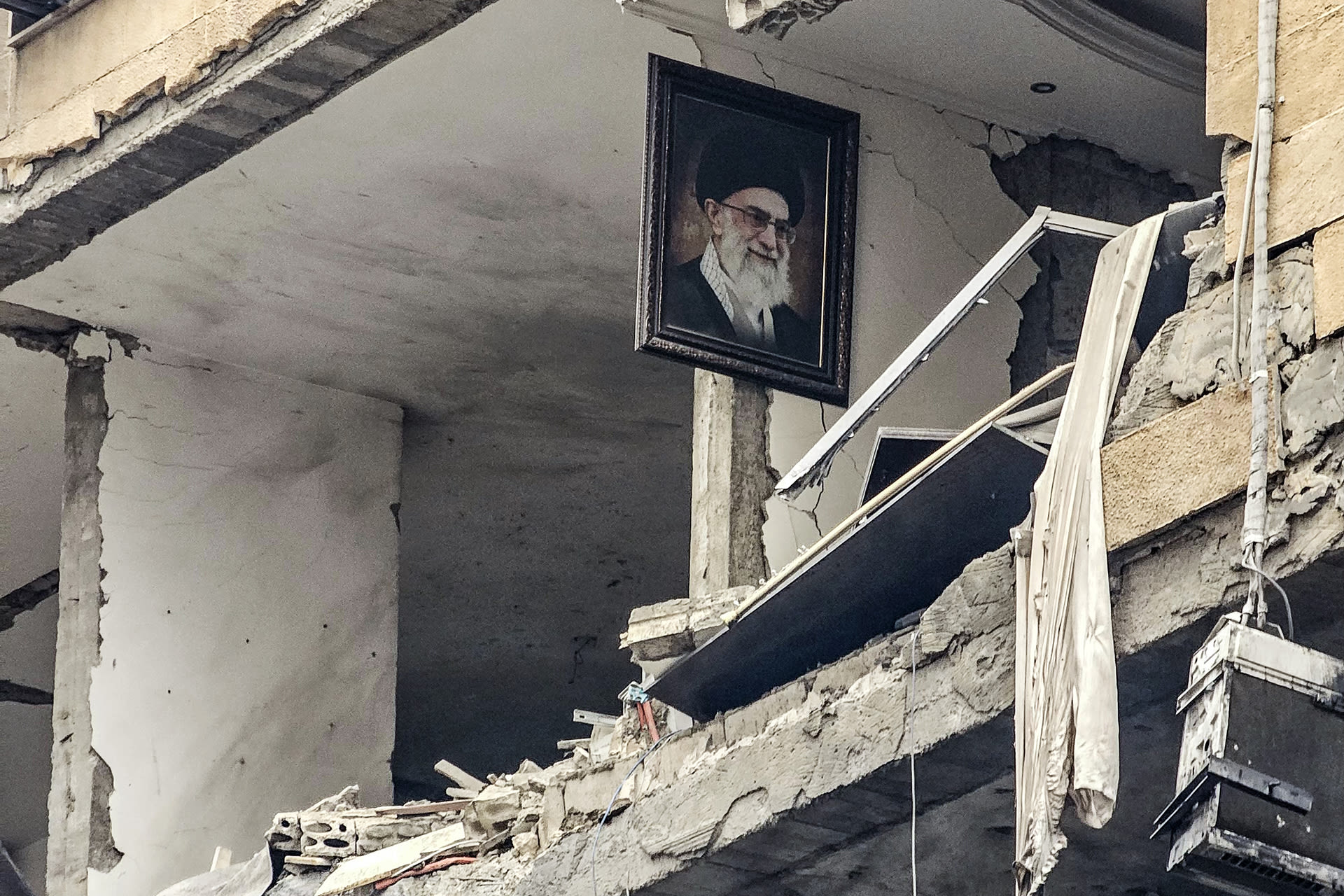
On February 28, 2026, the United States and Israel attacked Iran, killing Supreme Leader Ali Khamenei and targeting the country’s nuclear and military infrastructure. A Pakistan-mediated ceasefire and June memorandum of understanding halted large-scale fighting, but both sides have since traded strikes over alleged violations. Six months on, CFR experts weigh in on what the war means for the United States and the region, and what to look for moving forward.
Trump’s Iran Miscalculation Leaves U.S. Confronting Strategic Defeat
Steven A. Cook is Eni Enrico Mattei senior fellow for Middle East and Africa studies at CFR. He is an expert on Arab and Turkish politics as well as U.S.-Middle East policy.
U.S. President Donald Trump has sought to salvage Operation Epic Fury, which he expected would require four to six weeks to secure victory, with economic pressure. The president clearly never expected Iran’s willingness to resist U.S. military power. It was a major miscalculation. After six months of war, on-again, off-again negotiation, intermittent escalation, and stalemate, freedom of navigation through the Strait of Hormuz is greatly compromised, U.S. partners on the western side of the Persian Gulf are vulnerable to Iranian attacks, and the incentive for Tehran to weaponize its nuclear program (or what is left of it) is greater than ever. These are significant setbacks and represent a strategic defeat for Washington if they are not reversed.
By pursuing Operation Economic Outcast, the president believes that inflicting economic pain will force the collapse of the regime—or at a minimum render Iranian leaders more amenable to negotiation. But Trump may be overstating the potential effect of more economic pain. After all, the economic situation for most Iranians has been bad for years and has only gotten worse since the beginning of the war. That is why, in part, they took to the streets in December 2025 and January 2026, demanding change. The defenders of the Islamic Republic will not come unprepared. They have already demonstrated a willingness to kill, arrest, and otherwise suppress their own citizens who are seeking change.
Economic warfare is just as uncertain as the conventional variety. Because Trump expected a quick victory, he is now confronted with the possibility of defeat and a stack of questions (with few answers) among regional leaders about the United States’ ability and willingness to ensure their security.
[Video: https://youtu.be/Asykfcte8ZM]
The Iran War Has Opened New Chapter of Extremism
Farah Pandith is a senior fellow at CFR whose expertise includes countering violent extremism. She served in the administrations of U.S. Presidents Barack Obama, George W. Bush, and George H.W. Bush, and is the author of How We Win.
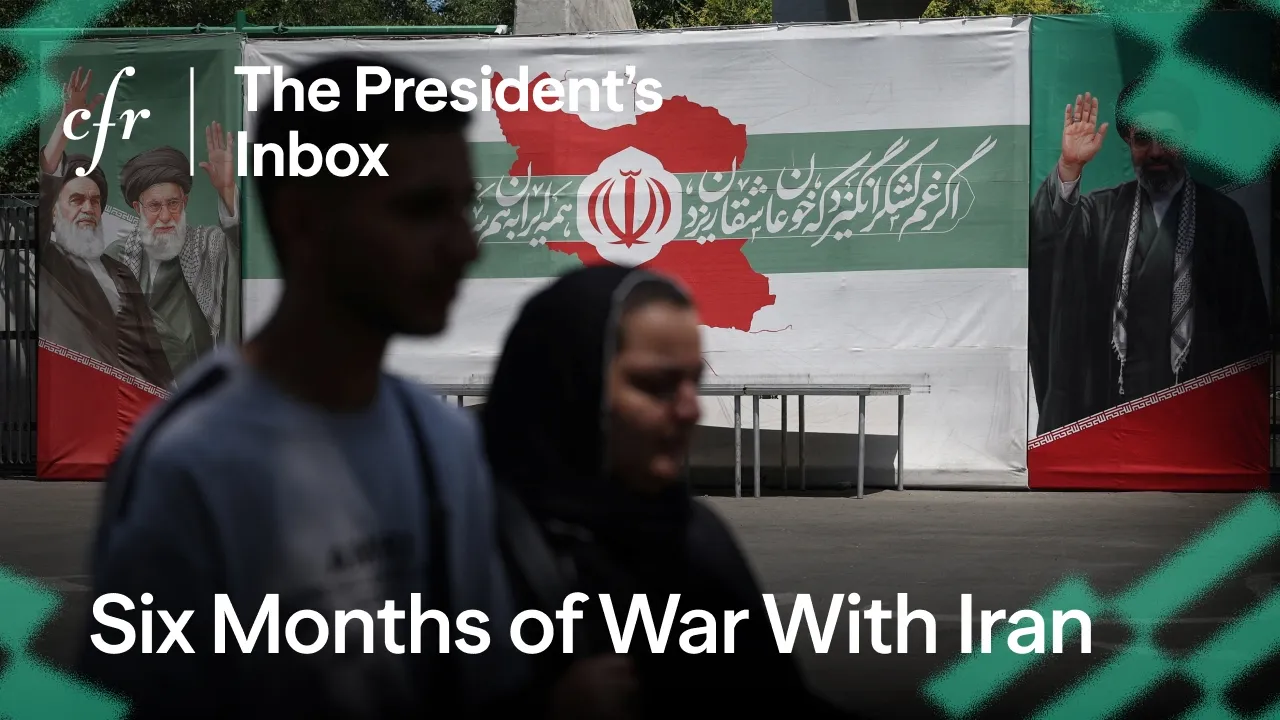
The U.S.-Israeli war against Iran has provided Tehran and its proxies with another opening to radicalize and recruit new adherents, particularly global youth vulnerable to extremist ideology. Of course, the war is just one facet of an already fraught and complex ecosystem fueled by Hamas’s 2023 attack on Israel, the Israeli response in the Gaza Strip and Lebanon, the fall of Syrian President Bashar al-Assad, diplomatic normalization between Israel and Muslim-majority nations, and significant anti-Muslim and anti-Arab political and online rhetoric in the United States and Israel.
These issues have helped shape the way Gen Z sees the world. But the war has added further fuel to Iran’s use of well-timed, sophisticated online propaganda that utilizes memes, videos, and social media to reinforce decades-old narratives and grievances about Israel and the United States, emphasize taking action against soft targets such as infrastructure and synagogues, and seize increasingly ripe opportunities to sow fear among ordinary citizens.
Indeed, Iran has demonstrated six months of successful storytelling in the online space, creating a dangerous content advantage that will encourage individuals to act even if they are not formally associated with Iran or its proxies. This could involve attempted assassinations of public figures and other violence in the U.S. homeland through radicalization and recruitment, including efforts to engage youth and criminals through cash incentives. Having a new opportunity to inspire violence against Jews, symbolic targets, and businesses associated with the United States and Israel also fuels Iran’s recruitment machine—an edge that will persist without a concerted effort by Washington to counter Tehran’s influencing efforts. And by expanding its geographic reach, including finding ways to poke inside of the United States and finding targets to hit, Iran will gain more power and influence on future ideological armies.
Even if hostilities cease tomorrow, there has been so much content generated—and there are so many ways for Iran to engage young people 24/7 to tell the story it wants to tell—that it is likely the damage from this war will reverberate for years to come. Extremists thrive when they can create new armies. The events of the last six months, showcased on small phone screens in every possible manner, have opened a new chapter in violent extremism for which the United States is not prepared.
With Iran War, Turkey Wins Regardless of Who Prevails
Henri J. Barkey is an adjunct senior fellow for Middle East studies at CFR and the Bernard L. and Bertha F. Cohen chair in international relations at Lehigh University (Emeritus).
Turkish President Recep Tayyip Erdoğan has striven to make his country a significant regional and global power—and the war in Iran is an opportunity to expand Turkey’s influence in the Middle East. Paradoxically, Ankara benefits regardless of the war’s outcome. As one of the strongest military powers in the region, Turkey would see its standing as a counterweight or balancer boosted by a U.S. defeat.
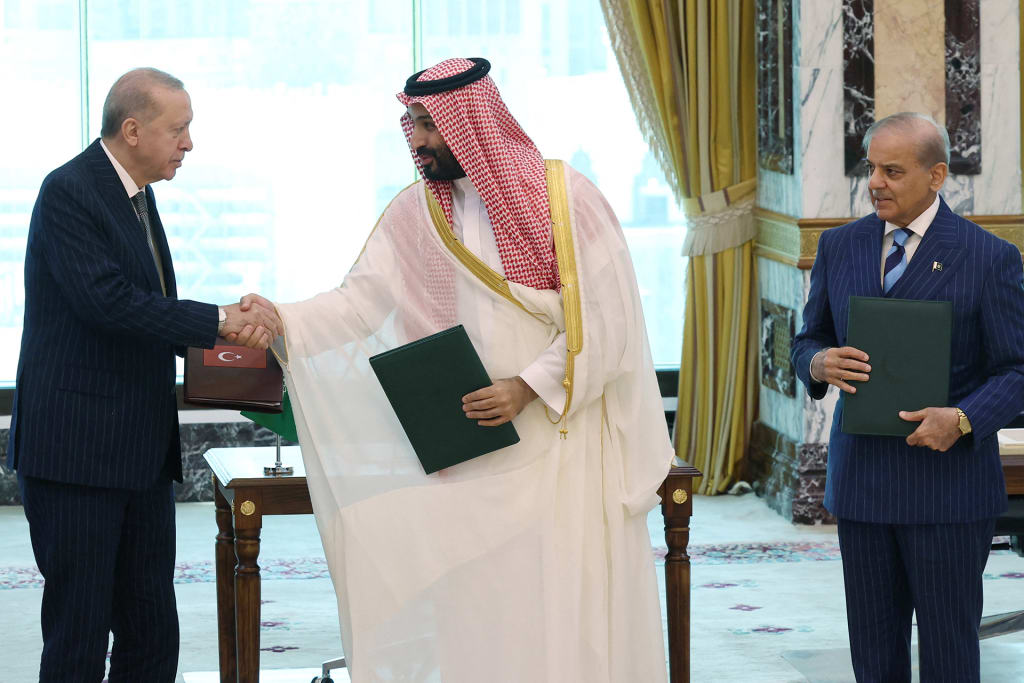
The Mecca Joint Defense Agreement, which Pakistan, Saudi Arabia, and Turkey signed on August 7, is a sign of the region’s growing need for Turkey. Initiated by Saudi Arabia, the agreement formally incorporates Turkey into a regional security alliance. This is the first such arrangement since the Baghdad Pact in 1955. Even if the Mecca accord does not amount to much, it will have helped Turkey break through the invisible veil of distrust maintained by the Gulf countries.
Washington has never wanted Ankara to play an autonomous role in the region, except perhaps as a supporter. Motivated by a desire to upset previous U.S. foreign policy preferences—and by his sympathy for a fellow populist and tough authoritarian leader—U.S. President Donald Trump has signaled a change in this policy. Trump, quite the contrary, expects Erdoğan to be of assistance when the time comes to constrain Iranian meddling.
Even before the war, Trump had envisioned that increased Turkish clout could help set in motion a reduction in the regional U.S. military presence. The Iran war may even accelerate this process. A defeat that reduces the United States’ sway in the region, and correspondingly Israel’s as well, is a win for Erdoğan’s long-term objectives.
A U.S. victory against Iran would also benefit Turkey, although perhaps not as much strategically. Iran’s revisionist and disruptive policies have historically engendered instability and conflict in the region. It has been Iran’s way to shape it. As such, it has become Turkey’s primary rival. Hence, the defeat of the ayatollahs and regime change in Iran would open new avenues, especially economic, for Ankara.
U.S.-Israel Military Ties as Tight as Ever, Despite Political Tensions
Elliott Abrams is senior fellow for Middle East studies at CFR. He served as special representative for Iran in the first Trump administration.
The conflict with Iran has tightened U.S.-Israel military relations, but it has led to diplomatic differences and intensified attacks on the bilateral relationship from extremes on both the left and right in the United States.
Much like the joint attack on Iran’s nuclear sites in June 2025, the 2026 conflict has cemented collaboration between the Israel Defense Forces and U.S. forces under U.S. Central Command (CENTCOM). Dozens of U.S. Air Force planes are now based in Israel, the two militaries share targeting data on Iran, and U.S. Air Force tankers have refueled Israeli Air Force combat jets. This is one of the most extensive patterns of military cooperation since the alliance between the United States and the United Kingdom during World War II.
Yet during this same period, disagreements over Gaza, Lebanon, Syria, and Iran itself have caused intermittent friction and elicited critical language in Washington about Israeli policy. The U.S. goal now is to force a change in the Iranian regime’s behavior, particularly over its nuclear weapons program and efforts to control the Strait of Hormuz, although Israel sees regime change in Iran as the only real option. As a result, U.S.-Iran compromise, such as the memorandum of understanding signed in June, will continue to be a cause of discord.
Opinion polls suggest that support for Israel has declined substantially among both major political parties in the United States, though how much of that decline reflects the Iran conflict and how much reflects criticism over Gaza or other issues is difficult to distinguish. Fierce U.S. critics of Israel on the left and right continue to suggest that it lured the United States into war with Iran and seeks to do so again. In that sense, the continuing conflict feeds preexisting antisemitic and anti-Israel forces.
Iran’s Proxies War
Bruce Hoffman is Shelby Cullom and Kathryn W. Davis senior fellow for counterterrorism and homeland security at CFR.
At the outset of the U.S.-Iran war, many expected Iran to activate its proxy terrorist network to target the United States, United Kingdom, Germany, and other European countries. But, instead of directly deploying sophisticated operatives from Hezbollah or Islamic Revolutionary Guard Corps (IRGC) Quds Force, Iran has relied on a variegated collection of pay-for-hire criminals, often recruited online, or turned to expatriates with long-standing ties to, or familiar relations in, Iran and Lebanon. Through these cut-outs, Tehran has sought to obscure its hand behind a series of relatively unsophisticated attacks that have mostly involved arson, crude incendiary devices, vehicular rammings, stabbings, and more serious incidents using actual bombs and hand grenades.
In Europe, for instance, a previously unknown group calling itself Harakat Ashab al-Yamin al-Islamia (HAYI) had claimed eighteen attacks across Europe and London in March and April. While property damage has been the most common outcome, two Jewish men were seriously wounded in an April knife attack in London’s Golders Green neighborhood. British authorities believe that the IRGC and Quds Force are behind the HAYI incidents.
In March, a Lebanese-born naturalized American citizen carried out a vehicle-ramming and shooting at a synagogue in West Bloomfield, Michigan—the largest Jewish temple in the state. Two of his brothers—one of whom was a Hezbollah commander in Lebanon, according to Israel’s Foreign Ministry—had been killed by the Israel Defense Forces, and the attacker reportedly sought revenge. The FBI characterized the assault as “a Hizballah-inspired act of terrorism purposely” targeting the Jewish community.
It is also worth noting that, since 2022, the so-called Foxtrot Network, an Iranian-backed organized crime group, is believed to have been responsible for three-dozen murders as well as a series of attacks and attempted attacks—two involving explosives—on Israeli targets in Europe. Law enforcement authorities describe the network as a “violence-as-a-service” or VaaS criminal enterprise, that recruits teenage operatives who are paid in cash—unless they are caught, when they are abandoned. This is an ominous development that is unlikely to abate—especially if the war escalates.
Issues Remain, but Arabian Peninsula Is Safer Than Before
Ed Husain is a senior fellow at CFR focused on U.S. foreign policy toward the Middle East, particularly Arab-Israeli relations after the Abraham Accords, the geopolitical interplay of Arab Gulf states, and Islamist terrorism.
If there was any sympathy across the Arabian Peninsula for Iran’s cause and plight since 1979, these last six months have seen it definitively crater. The Shiite Iranian government’s victimhood narrative no longer holds, as it has repeatedly attacked every Arab Gulf state. In doing so, Iran has isolated itself from Sunni Arabs. Saudi Arabia is home to Islam’s two holiest sites, and to a Sunni tradition that is followed by around 90 percent of the world’s more than 1.8 billion Muslims. Iran’s government amplifies the Palestinian cause to outbid Saudi Arabia and the peninsula, but it has failed again. The United Arab Emirates (UAE) has come under particularly heavy fire, sustaining more attacks than even Israel since the war started.
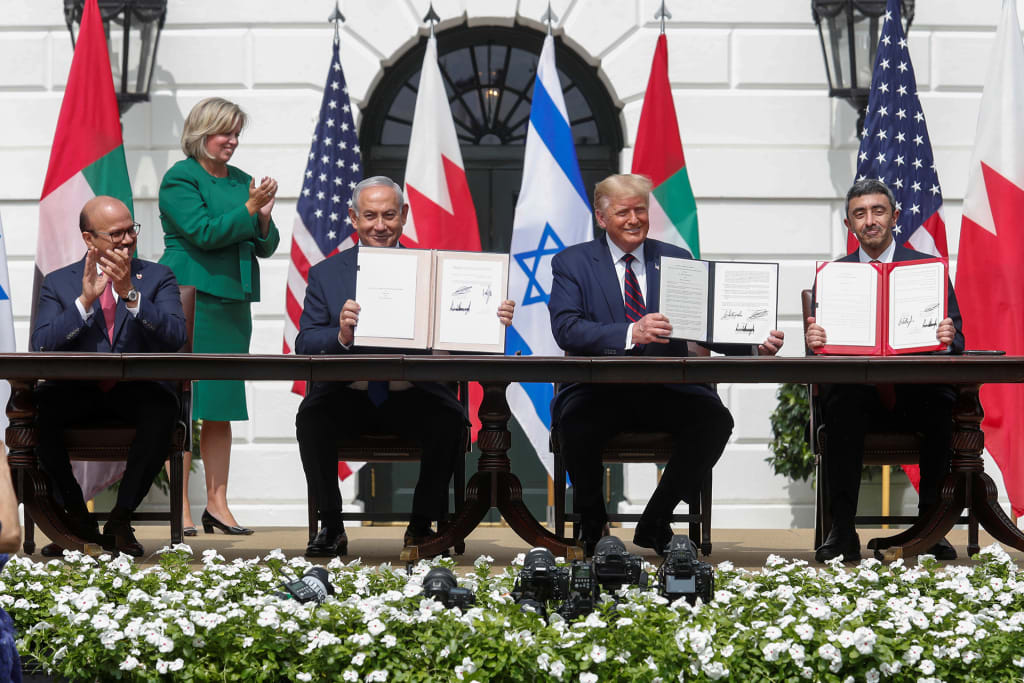
As Iran’s clerical regime has attacked civilian infrastructure across the Arabian Peninsula, as well as U.S. interests and bases, the leadership of Bahrain, Kuwait, Qatar, and the UAE has moved ever closer to the United States. And although Iran has tried to destroy the Abraham Accords alliance between Israel and Arab countries, those accords have helped protect the skies of the UAE with an interception success rate above 90 percent.
Beyond battles and drones, Iran’s attacks are about competing visions for the future of the Middle East. Gulf nations may not have been united in their responses to Iran’s attacks, but their leadership, defenses, and partnership with the United States still demonstrate strength.
Two issues remain of immediate concern: the Iran-backed Houthi rebel group in Yemen and the Strait of Hormuz. For all the commentary claiming Iranian victory, a nuclear Iran controlling the strait and supporting the Houthis would have been much more devastating.
Although conflict will not end until the regime in Tehran falls, there is no doubt the Arabian Peninsula is safer today with a defanged and denuclearized Iran—for now.
Two Countries Offer Cautious Promise Amid War and Instability
Elisa Ewers is a senior fellow for Middle East studies at CFR.
Amid the Iran war, developments in two countries offer important lessons: Lebanon and Syria. Both are in consequential yet fragile phases of rebuilding after half a century of strife and Iranian influence. Both find their futures dependent on an emerging region reshaped by war and instability. And in both cases, the Trump administration has sought an uncharacteristically diplomatic role, leading mediation and rallying international support. These efforts have been important, even if the results have been mixed.
The Lebanese government remains the most promising actor—it has prioritized asserting sovereignty over its own territory and decision-making after decades of ceding both to Hezbollah. That effort faces limitations, most critically Israel’s continued presence in the south and an air campaign that has killed thousands and displaced one million more. Hezbollah is down but not out, giving the Islamic Revolutionary Guard Corps a restricted but continuing foothold in Lebanon. Hezbollah’s disarmament—along with Lebanon’s economic recovery—remains an over-the-horizon, yet still possible aspiration.
The fall of Syrian President Bashar al-Assad’s regime in 2024 dealt Iran a crucial setback, and Ahmed al-Sharaa’s government has spent its first eighteen months trying to build functioning institutions and distance Damascus from Tehran’s orbit. But Syria remains fragile: the new security forces have clashed with minority communities, while ISIS holdouts and a lingering Iran-aligned network continue to wait in the wings. Israeli military operations in the southwest only complicate Syria’s recovery.
Neither transition was going to be easy. And although both governments have tried to stay out of the Iran war, they are deeply affected by it. Israel’s own security posture—buffer zones, strikes on Syrian forces, renewed war in Lebanon—acts as an additional driver of the instability that Beirut and Damascus are trying to escape. A region rattled by contested shipping lanes, attacks on infrastructure, and a changed investment climate limits the attention span and capital available to support these countries.
Still, development in Lebanon and Syria are arguably the most promising since the June 2025 strikes on Iran, even if they remain vulnerable to the region’s broader instability.
This work represents the views solely of the author(s). The Council on Foreign Relations is an independent, nonpartisan membership organization, think tank, and publisher, and takes no institutional positions on matters of policy.