Europe Must Step Up to Settle the Russia-Ukraine War
European leaders must accept that settling the war will mean addressing the broader security order on the continent. Doing so will require finding a clear voice.
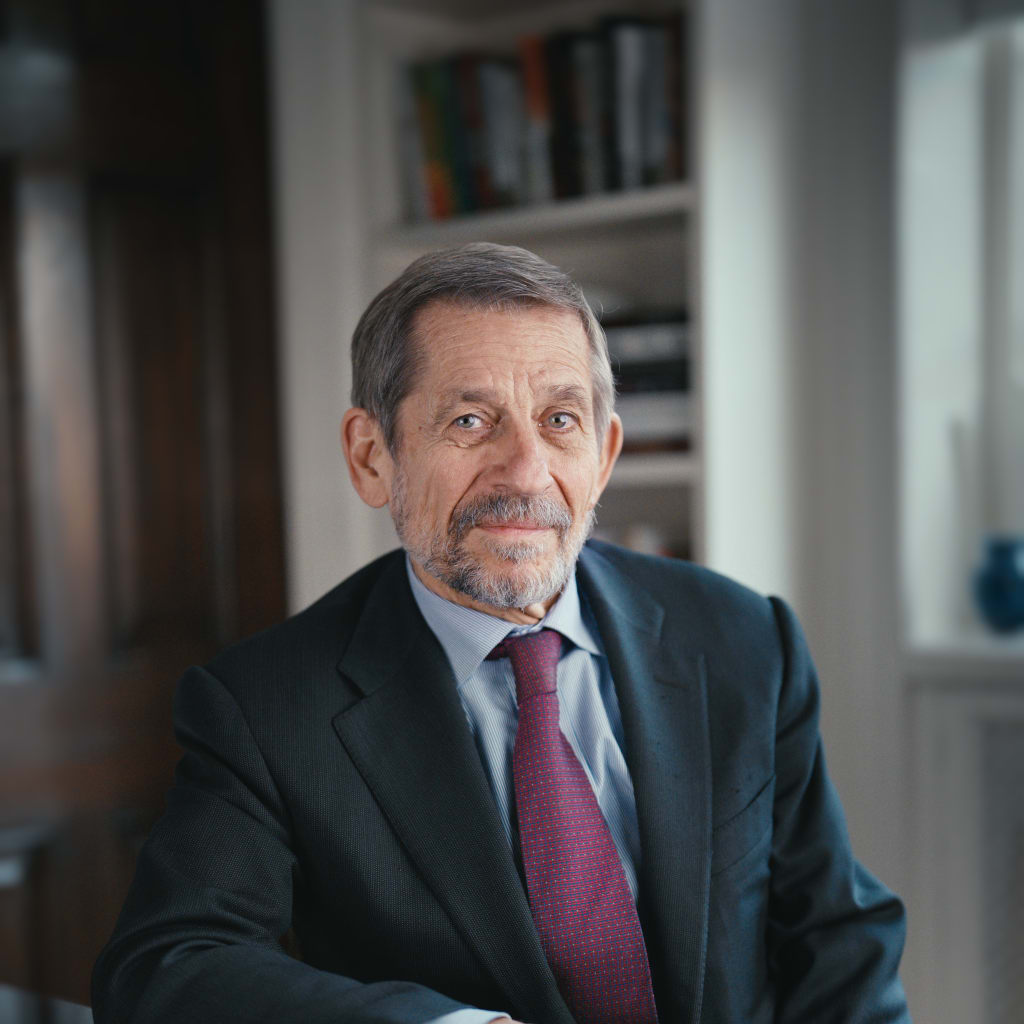
Thomas Graham is an expert in U.S.-Russia relations and Russian foreign policy and is the author of Getting Russia Right.
The trilateral U.S.-Russia-Ukraine talks in Abu Dhabi this week did not produce a breakthrough in efforts to end the Russia-Ukraine war. No one thought that they would: the yawning gaps between the positions of the belligerents are not easily bridged. But reports from the gathering and from the follow-up meetings of U.S. envoys Steve Witkoff and Jared Kushner with Russian President Vladimir Putin and Ukrainian President Volodymyr Zelenskyy suggest all sides are committed to trying to build on the positive momentum.
That Russia and Ukraine are intensifying their search for an exit—despite the maximalist public rhetoric from the Kremlin—should surprise no one. The political, economic, and demographic costs of a bloody war are mounting rapidly for both sides. But the success of this push will depend to a large degree on Europe—not just as a participant in the current round of diplomacy, but also as a subject of discussions of a future European security order.
That the trilateral talks have included broader questions of Europe’s security architecture has rung alarm bells in key European capitals, which have long insisted that a ceasefire must precede substantive discussions of European security. Indeed, many European leaders saw the agreement to discuss this matter as a major concession to Russia, which they believe wants to use it to erode NATO’s position in eastern Europe and drive wedges between NATO allies. These leaders also fear that Moscow will try to use this complex issue to prolong the war—in line with its insistence that it is among the “root causes” of the conflict that must be resolved before it is prepared to agree to a ceasefire.
Yet the European position is increasingly untenable. The war is embedded in the broader question of European security, something Russia made clear in the draft treaties on security guarantees it released about two months before its massive invasion of Ukraine. Contained in those treaties were three key demands: no further NATO expansion eastward, no deployment in NATO states of deep-strike weapons capable of reaching Russian territory, and the withdrawal of NATO infrastructure back to the lines of 1997, when the NATO-Russia Founding Act regulating their mutual relations was signed and two years before the first post-Cold War wave of expansion eastward.
One does not have to accept Moscow’s claim that NATO posed an existential threat to understand that some of the issues at the core of the current settlement talks have implications for broader questions of European security. Ukraine’s relationship to NATO, European- and U.S.-backed security guarantees for Ukraine, and possible limitations on the size of Ukraine’s military capabilities (likely in exchange for limitations on Russia’s military deployments along its border with Ukraine), among other matters, have a direct bearing on future security arrangements in Europe.
That said, it is also clear that it will take considerable time to reach agreement on a new European security order—one that will be built gradually, as discrete issues become ripe for resolution, as was the case for both the Cold War and post-Cold War security arrangements. That means that the Russian position that the “root causes” must be resolved as a condition for a settlement of the war is also untenable. Waiting for agreement on a new European security order would be a recipe for unending war—something European leaders should stress in public comments.
The goal in the ongoing negotiations should thus be an agreement on the principles and parameters that would underpin a future security order, coupled with a credible commitment to commence negotiations to flesh them out once a ceasefire has been achieved—in short, a framework agreement. That would represent a compromise between the European position of no talks on the security order without a ceasefire, and the Russian position of no ceasefire until the talks on the security order have been completed.
Defining Limits
How the Russia-Ukraine war is resolved will also define the limits of Europe as a geopolitical actor. Any settlement will formalize the Ukrainian stretch of the border between Russia and Europe—a frontier now extending from the Barents Sea to the Black Sea. For an extended period, everything west of that line would be part of Europe geopolitically, and everything east of it—that is, Belarus, Russia and perhaps Moldova—would lie in a different geopolitical zone. (The South Caucasus will remain a region contested between Russia and Turkey, among others.) This geographical reality would put a natural end to NATO expansion eastward, helping to satisfy a key Russian requirement for its future security.
A new security order will require establishing an equilibrium between Europe and Russia. Such a reordering will not be a cooperative effort grounded in shared values, as was the hope—and to some extent the reality—in the initial post-Cold War decades, even if it allows for the restoration of commercial and cultural ties. Europe and Russia will continue to be rivals in the Arctic, the Black Sea, the eastern Mediterranean, and the Middle East, just as Russia and major European powers have been for centuries. But an arrangement that includes agreement on transparency, arms-control, and other confidence-building measures could radically reduce the risk of a devastating military conflict on the European continent and lay the foundation for a long-term relationship based on what we might call competitive coexistence.
How to Walk Through an Open Door
Building a new security order obviously requires Europe’s participation. The United States clearly understands that—it has made a concerted effort to consult European capitals as it conducts this latest round of diplomacy. It wants to bring the Europeans directly into the talks, and it supports the creation of a Europe-Russia channel to deal with the war and other issues of bilateral concern.
Russia also understands that it needs to engage Europe on this matter—one consequence of the tension between Europe and the United States under the Trump administration is that it has upended Moscow’s conviction that Europe was simply a U.S. vassal that would bend to Washington’s will. In line with this thinking, the U.S. envoys and Putin apparently agreed to Europe’s participation, although the messaging from the Kremlin has been somewhat vague, with Kremlin spokesperson Dmitry Peskov saying on November 13 that Russia is willing to talk with Europe “if the Europeans truly have someone who is authorized to hold discussions.”
Finding Their Voice(s)
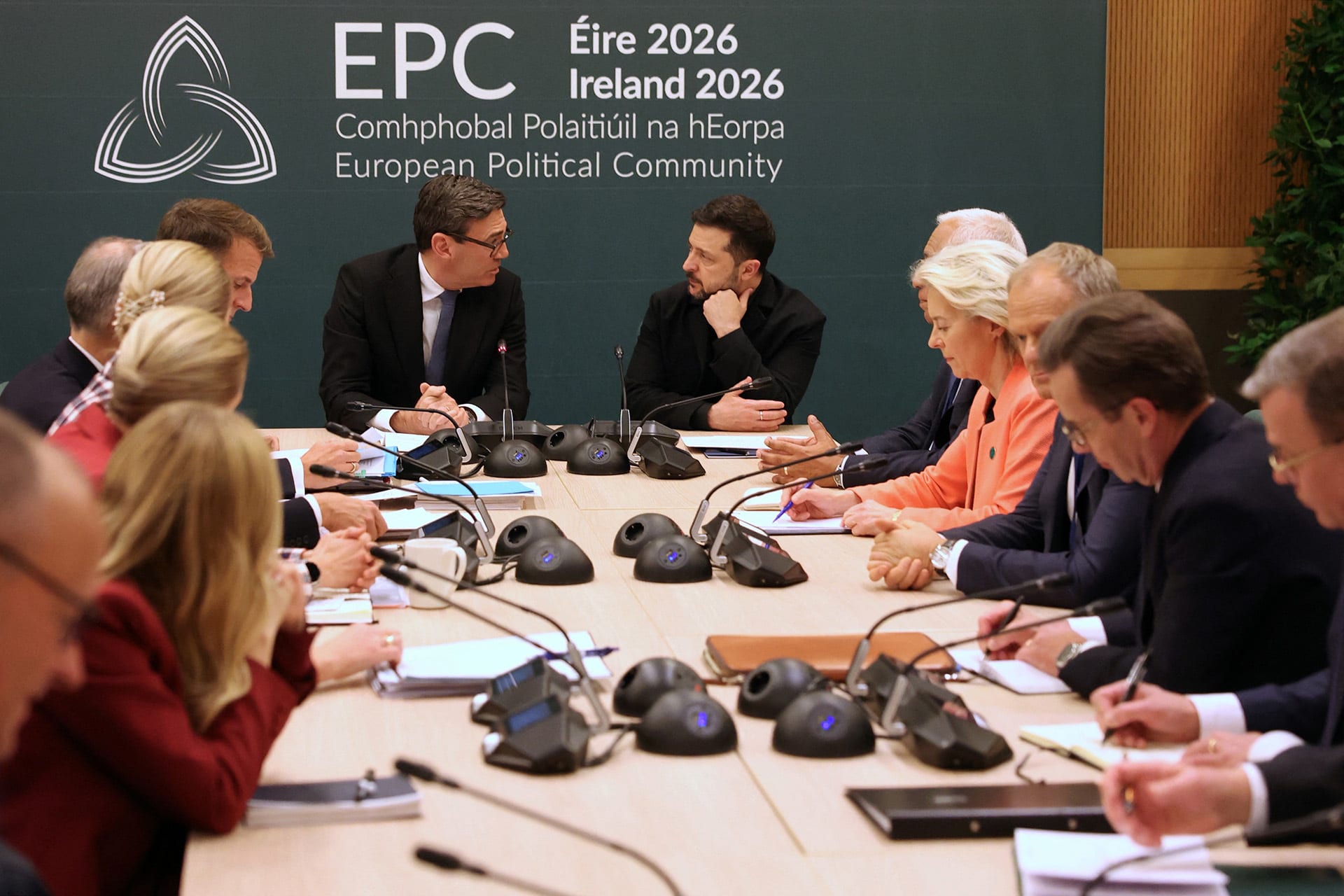
The onus is now on the Europeans to decide how they want to participate and to articulate a coherent position. Building a consensus is never an easy task inside Europe. The Finnish and Norwegian leaders’ recent outreach to Putin, for example, was criticized in certain European capitals, as breaking with what they thought was an agreement to coordinate efforts. Meanwhile, the E3—France, Germany, and the United Kingdom—are reportedly seeking to build a channel to Moscow. But Poland, among others, fears that these big European powers plan to negotiate arrangements with Russia over the heads of other European states.
If Europe wants to participate in discussions of European security, it urgently needs to decide who will represent it. There does not necessarily need to be a single interlocutor—even if that would simplify matters. The E3 national security advisors could participate directly in the multilateral talks, for example, while the Finnish and Norwegian leaders continued their direct conversations with Putin. But the roles of various channels would have to be clearly delineated and smoothly coordinated.
None of this should be taken to mean that peace is close at hand. Still, it is now thinkable in a way it has not been since Russia invaded Ukraine nearly five years ago. The United States has so far played the central role in launching and sustaining the recent negotiations, and its engagement will be critical to success. Nevertheless, despite all the Europeans’ complaints and fears about being left out, the negotiations have reached a point where all sides acknowledge that their participation is indispensable. Peace cannot be achieved without them.
The task before Europe is to decide what it wants to accomplish, see clearly what can be reasonably achieved on what timetable, and determine, finally, who will represent it as diplomacy to end this devastating war continues to accelerate.
This work represents the views solely of the author(s). The Council on Foreign Relations is an independent, nonpartisan membership organization, think tank, and publisher, and takes no institutional positions on matters of policy.