Fukuyama, Thiel, and the Revenge of the Last Man
The career and political thought of Peter Thiel undermine Francis Fukuyama’s famed but fragile “End of History” thesis—which the author sought to shore up in his new memoir.
Originally published at Project Syndicate
By experts and staff
- Published
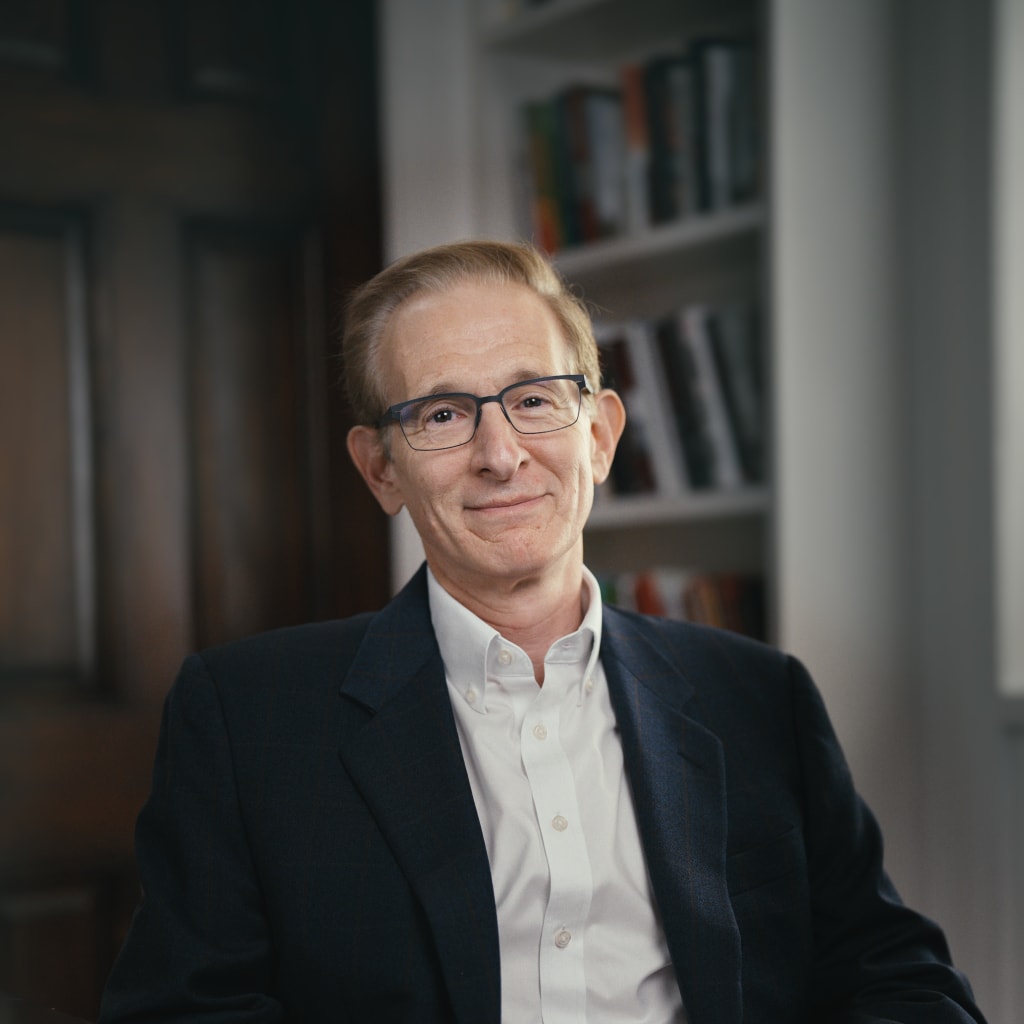 Benn SteilCFR ExpertSenior Fellow and Director of International Economics
NEW YORK—In the Realm of the Last Man, the title of Stanford University political scientist Francis Fukuyama’s new memoir, is an unmistakable reference to his 1992 bestseller The End of History and the Last Man. The reason he chose it, Fukuyama explained, was that people had ignored his famous book’s warning that “democracy could break down in the future because of some of the intrinsic stresses within a liberal order”—stresses born of the discontent of those whose desire for recognition exceeds what liberal democracy can satisfy.
Yet this claim is an opportunistic twisting of what was only a passing speculation in his celebrated book: that future individuals facing “no tyranny and oppression worthy of the name” might, out of sheer “boredom” rather than systemic “stresses,” choose to “struggle against the just cause” of liberal democracy. But liberal democracy has been in retreat for at least two decades. To salvage his career-making thesis that history had ended, then, Fukuyama now asserts that we all just misunderstood him.
Who is this “Last Man” whom Fukuyama’s readers ignored? Fukuyama borrowed the term from Friedrich Nietzsche, casting the modern version as a political eunuch whose libido has been sapped by the consumer comforts of a “post-historical” world—one in which liberal democracy and capitalism no longer have ideological rivals.
Fukuyama’s Last Man has none of his forebears’ passion for political struggle or new world orders. To be sure, he has aspirations—namely, to make money. But this focus is an unmitigated blessing for his liberal-democratic fellows. Not only does the successful money seeker, according to Fukuyama, “create wealth which migrates through the economy,” but he is “kept out of politics and the military,” where his “restlessness” might otherwise lead him “to propose innovations at home or adventures abroad, with potentially disastrous consequences.”
Silicon Valley Man
The money seeker who takes Fukuyama most seriously is the storied Silicon Valley venture capitalist Peter Thiel. He is also the money seeker whose thought and behavior make the greatest mockery of Fukuyama’s Last Man thesis.
Thiel—Facebook’s first outside investor, a co-founder of PayPal and data-analysis giant Palantir, and an early investor in Elon Musk’s SpaceX—has engaged with Fukuyama and his ideas for many years. In a 2012 public interview with Fukuyama, he remarked that “your ‘end of history’ strikes me as very much true today.” Economic globalization, Thiel believed, was clearly spreading the developed world’s standards of political organization.
Unlike most self-declared libertarians at the time, however, Thiel was hardly comforted by this fact. He was instead troubled by the secular decline in developed-world innovation and growth since the late 1960s. In 2009, he had drawn great applause at the Singularity Summit in New York by dismissing Fukuyama’s fears about the human impact of uncontrolled bioscience as “hysterical.” Restraining technological progress to protect humanity, Thiel held, would only impoverish and enslave it.
By 2024, Thiel’s take on the accuracy of the End of History thesis had soured. “The one that ... got it completely wrong,” he told commentator and current CBS News editor-in-chief Bari Weiss, “is the Fukuyama book.” Authoritarianism was on the march; China’s rise had made that clear. When Xi Jinping effectively became “president for life” in 2017, Thiel said, it was “maybe the year that the end of history comes to an end.”
As for the lobotomized Last Man, he now had every reason to shake off his political indolence and see struggle as meaningful once again. “We can talk about trends and forces, but it does matter what people do,” Thiel insisted. In the fractious post-liberal global order, “there’s room for human agency.
At the June 2026 Aspen Ideas Festival, Thiel again appeared with Fukuyama. No recording or transcript of their discussion was made this time, but a CNN reporter present highlighted the “notable departure” from their last public interaction 14 years earlier. The pair, he wrote, now “framed the broader fate of Western democracy in more drastic terms.”
Fukuyama, alarmed by US President Donald Trump’s trampling of congressional and judicial prerogatives, stressed the “danger” of “abandoning institutions that have sustained democracy”—still, in his view, humanity’s best political system.
Thiel seemed less sure, observing that American democracy had “gone haywire” in recent years. The source of democratic failure, to him, was not Trump but the rise of far-left socialists within the Democratic Party. Their ascent had motivated him to finance the political campaigns of Trump, JD Vance, and other Republicans pledging to back tech deregulation. Though at times accused of promoting “techno-authoritarianism,” Thiel has insisted that tech’s growing influence on American politics is a force for liberty, one that helps disperse entrenched “power centers.”
The Coming of the Antichrist
So where do Thiel’s political and economic views come from? An early and enduring intellectual influence is René Girard, an eclectic French literary theorist and Christian anthropologist who taught Thiel as a Stanford undergraduate. Girard is best known for his mimetic theory of social life, which holds that people routinely imitate the desires of others, giving rise to rivalries that can engulf entire communities in violence.
Such social crises were traditionally resolved through “scapegoating”: concentrating communal blame and punishment on a single victim, whose expulsion or murder restored peace. Girard held that the New Testament uniquely recounts this process from the perspective of the innocent victim, Jesus, thereby revealing the falsity of the accusation and stripping the ritual of its sacred legitimacy.
Yet Christianity’s vindication of the victim did not eliminate the mimetic rivalries that produced him; it merely deprived societies of their traditional means of containing such rivalries. This loss has left the modern world at once more protective of victims and more vulnerable to violence without end.
Thiel also developed a set of beliefs—sometimes very different from those of the pacifist and anti-individualist Girard—to mitigate the supposedly pernicious political consequences of mimetic pathology. Girard’s reasoning underlies several of Thiel’s distinctly illiberal conclusions.
Since conflict is rooted in mimesis, prosperity cannot eliminate it. To believe, as End of History liberals do, that disagreement can and must be resolved through discussion and debate is to misunderstand the actual, non-rational sources of social dissension. Societies require independent forces—exceptional founders, technological innovators, and alternative jurisdictions—to resist mimetic conformity.
The classical liberal celebration of economic competition is misguided when competition itself becomes a personal ideal, since it induces imitation and therefore conflict. The true entrepreneur serves society by aiming instead to create monopoly—that is, something genuinely new that cannot be imitated.
The nation-state, in Thiel’s telling, is irreplaceable as a mechanism for keeping conflict geographically contained. Globalization and global institutions erase boundaries and differences, spreading and intensifying mimetic rivalry and ultimately giving some world authority reason to declare an emergency that allegedly only it can contain. This phenomenon is at the root of Thiel’s conception of the modern “Antichrist,” which he sees as a figure or body that promises peace and safety while using that promise to impose total control.
Thiel is clearly no comfort-maximizing Last Man—a figure whose desire for political struggle has been deadened by ample outlets for material ambition. He believes that Western society, whose moral and scientific achievements he celebrates, is threatened by nihilism, neo-socialism, the regulatory state, and the rise of what he calls “One-World totalitarian” rule.
The Crooked Timber of Peter Thiel
Thiel’s political vision rests on five elements: individual freedom, untethered by majority rule; jurisdictional competition and easy exit; liberation of “founders” from bureaucratic restraint; informed, decisive, and well-armed government; and an embrace of unbounded technological progress.
The tensions among these elements are apparent. More resolute and powerful states are likelier to stifle entrepreneurial heroes than to cultivate them. It is perhaps unsurprising, then, that the thinkers to whom Thiel is most drawn—foremost among them Girard, the political philosopher Leo Strauss, and the far-right German jurist Carl Schmitt—were formidable critics of liberalism who proved more adept at exposing its weaknesses than articulating compelling alternatives.
In a short and bracing 2009 article titled “The Education of a Libertarian,” Thiel wrote that he “no longer believe[d] that freedom and democracy are compatible.” The 1920s, under Presidents Warren Harding and Calvin Coolidge, had been “the last decade in American history during which one could be genuinely optimistic about politics.” In contrast to that era of small and mostly non-interventionist government, the 2000s showed “capitalist democracy” to be “an oxymoron.” The government had socialized trillions of dollars of financial risk, provoking an explosion of debt-fueled speculation.
The coming mass bailout, Thiel reasoned, would necessarily mean “way more government” and far less freedom. The great task for libertarians, then, was to “find an escape from politics in all its forms.”
As an investor, Thiel “focused [his] efforts on new technologies that may create a new space for freedom.” He saw three such frontiers. The first was digital businesses, through which “an entrepreneur may create a new world” that would “force change on the existing social and political order.” The second was to “commercialize [outer] space,” which offered a “limitless possibility for escape from world politics.” And the third was the creation of floating communities in international waters, where technology might provide a more immediate means of escaping government control.
These were not merely speculative frontiers for Thiel, who had already made a fortune on the first of them. PayPal’s founding vision, he explained, was a “libertarian project” to create “a new world currency, free from all government control and dilution”—nothing less than “the end of monetary sovereignty.” PayPal would eventually become a financial success, but only by speeding the movement of sovereign money. Thiel would later call Bitcoin “the centralized currency we [had] fantasized about” when creating PayPal.
Thiel’s $500,000 investment in Facebook, the company’s first from an outside investor, likewise backed new forms of community and dissent transcending national borders. Yet cyberspace offered only an incomplete escape. Its new worlds remained virtual, and therefore vulnerable to being recaptured by the political orders they were meant to disrupt.
Thiel’s money followed his imagination into the disruption and expansion of physical frontiers. His Founders Fund was an early investor in SpaceX. By 2011, he had committed more than $30 million to slashing the cost of reaching space, supposedly opening the future to galactic tourism and interplanetary emigration.
Between the virtual and the extraterrestrial frontiers were the oceans. From 2008 to 2014, Thiel contributed some $1.7 million to Patri Friedman’s Seasteading Institute, which proposed floating “startup countries” whose governments would compete for mobile residents rather than rule over captive ones. Engineering and legal obstacles eventually cooled his enthusiasm for sea cities, but he never gave up on his desire to create alternatives to legacy states.
Through Pronomos Capital, he later backed experimental charter cities, including Próspera in Honduras, which offered regulatory autonomy on land instead of sovereignty at sea. He also leveraged his investments in New Zealand to gain fast-tracked citizenship in 2011, giving himself a form of passport arbitrage should things go awry in the US.
Head for the Exits
Across all three domains, Thiel’s underlying project was the same: to use private capital to escape politics, subject governments to private competition, and wrest control of the future from stultifying democratic majorities.
One of his ventures is already reshaping global politics. Starlink, the satellite-based internet service developed by the Thiel-backed SpaceX, is upending the traditional assumption that states can, and naturally should, control the essential infrastructure through which they govern and defend their territory.
The governments of Iran, South Africa, Cambodia, and other countries have tried unsuccessfully to stop the spread of unlicensed portable Starlink terminals across their borders. The company has also become deeply entangled in the Russia-Ukraine war, providing communications and targeting capabilities vital to Ukrainian defenses, initially free of charge. Musk, however, has exercised his control over Starlink to deny its use for operations to which he personally objects, such as attacks on Russian forces in occupied Crimea. It is no exaggeration to say that the company will play a key role in determining who ultimately controls what territory when the fighting finally stops.
While using his wealth to help entrepreneurs escape government control, Thiel has also invested in ventures that seek to expand the range of government functions outsourced to private companies. The most consequential of these is Palantir, which he co-founded in 2003. Its proprietary software systems now perform critical functions in defense, intelligence, border enforcement, and infrastructure protection, significantly altering the traditional relationship between the public and private sectors in areas once handled almost exclusively by the state. Governments that contract Palantir’s services may retain formal sovereignty, but at the cost of becoming dependent on capabilities beyond their control.
The company, for its part, has been unusually forthright about the political ends its capabilities are meant to serve. By proclaiming allegiance to the United States and the West more broadly, and openly refusing to work with states outside Western alliances, it rejects neutrality within the existing world order. Instead, it seeks to shape that order according to the political values of its founders, who retain strategic control through an unusual corporate governance structure.
Freedom Without Liberalism
At the heart of Thiel’s political vision is an apparent contradiction: he wants to save “the West,” but not liberalism, its most celebrated universal virtue. For Thiel, there is no contradiction. Like Strauss, he draws a sharp distinction between Western civilization and liberal democracy.
In Thiel’s conception, the West encompasses Christian belief and mythology, Greek rational inquiry, Roman institutional capacity, scientific mastery, technological creation, and individual distinction. All of these, in his view, are threatened by liberal proceduralism, bureaucracy, conformism, majoritarianism, egalitarianism, and universalism.
Like Schmitt, Thiel sees liberal reluctance to confront hostile non-Western civilizations, particularly Islam, as a dangerous denial of “the political,” inhibiting the West from defending its “true” virtues. Yet if political legitimacy rests not on universal principles but on civilizational identity, technological prowess, military power, and elite judgment, then Thiel has merely reduced the West to a peculiar brand of oligarchy with no more claim to legitimacy than authoritarian China.
“The West” is clearly not the same entity for Fukuyama as it is for Thiel. For Fukuyama, the apparent triumph of liberal democracy in the decade before the 9/11 terrorist attacks marked the glorious culmination of political history. Thiel regarded that same moment as a dangerous abandonment of vigilance against the eternal enemies of progress and freedom, at home and abroad.
The irony is that Fukuyama expected money-seeking entrepreneurs to be “kept out of politics and the military.” Thiel has done precisely the opposite. Like some rogue AI agent, he has broken out of his capitalist sandbox and hacked into history. The Last Man has taken his revenge.
Francis Fukuyama, In the Realm of the Last Man, Farrar, Straus and Giroux, 2026.
This work represents the views solely of the author(s). The Council on Foreign Relations is an independent, nonpartisan membership organization, think tank, and publisher, and takes no institutional positions on matters of policy.