With Genocide Ruling, Justice Finally Descends Upon Myanmar and the Rohingya
The International Court of Justice’s decision this week is a legal watershed and advances novel interpretations of the Genocide Convention that will shape future cases.
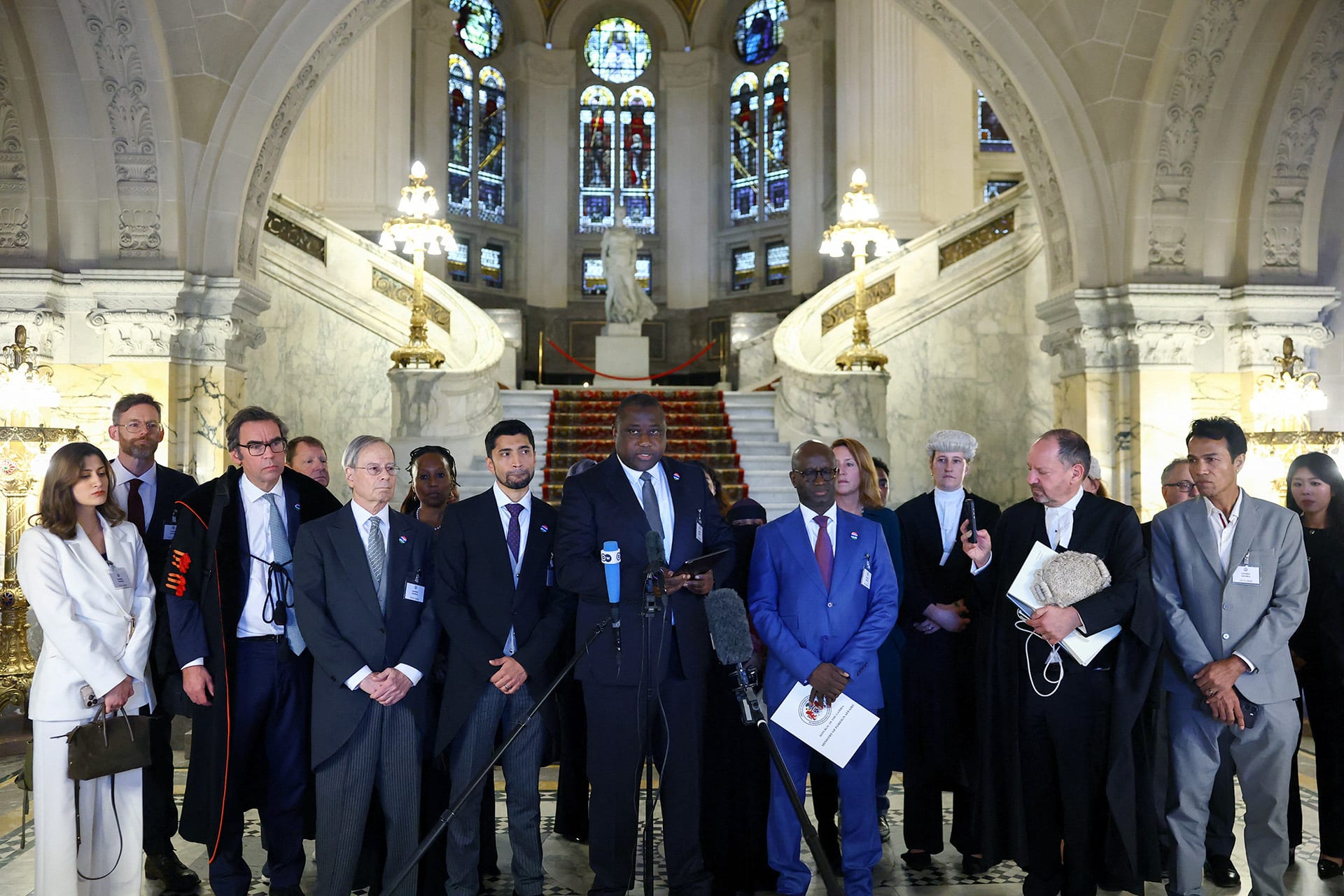

David J. Scheffer focuses on international law and international criminal justice, and served as the first U.S. ambassador-at-large for war crimes issues.
A landmark ruling by the International Court of Justice (ICJ) for the first time in history found a country, Myanmar, responsible for committing genocide. The “protected group” in this case was the Rohingya, a Muslim ethnic minority who have lived for centuries in Myanmar’s northern Rakhine State, adjacent to Bangladesh and the Bay of Bengal.
The Court’s judgment introduced fresh interpretations of the 1948 Convention on the Prevention and Punishment of the Crime of Genocide (Genocide Convention), to which Myanmar is a state party, as is the West African nation of Gambia, which lodged the case in 2019, joined by eleven other nations also party to the Genocide Convention. The Court’s reasoning in the Myanmar case will likely influence other genocide cases pending before the ICJ, including South Africa v. Israel on the conduct of Israeli forces in Gaza.
What did the ICJ decide in the Myanmar case?
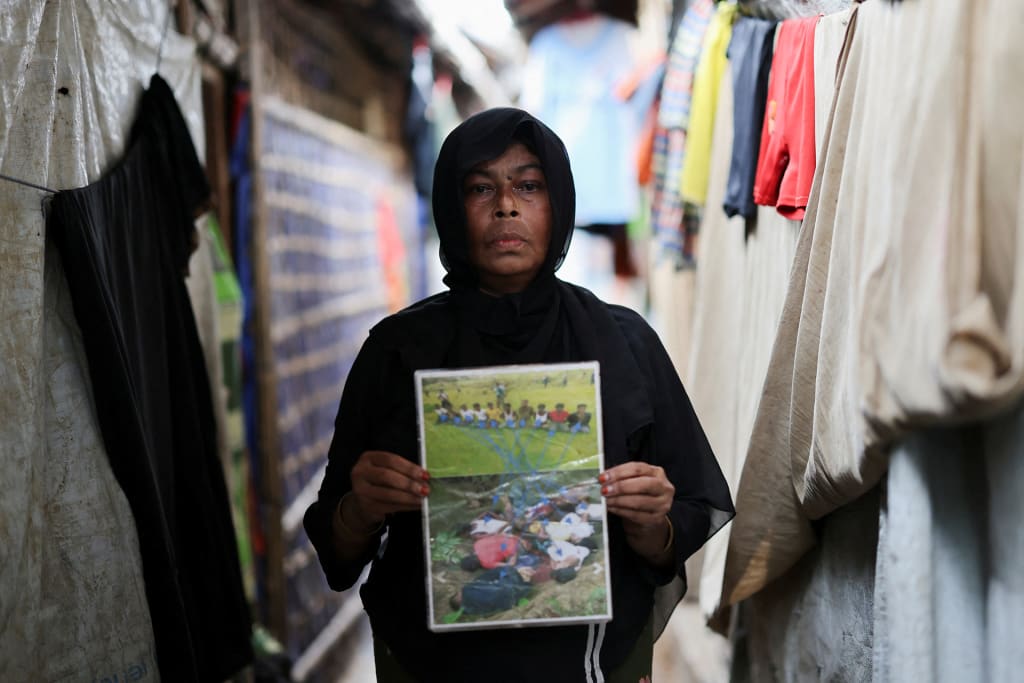
The ICJ determined that during their “clearance operations” against the Rohingya group, Myanmar security forces killed at least 10,000 civilians, committed widespread acts of gang and mass rape and other forms of sexual violence, perpetrated widespread acts of extreme violence against children, and continued to commit these acts while the Rohingya were fleeing. The Court also found “a deliberate, organized process of destroying Rohingya villages and farmland, replacing them with other permanent structures, including security force bases, and promoting resettlement by non-Rohingya ethnic groups on land on which Rohingya had formerly lived.”
Three acts of genocide against members of the Rohingya group were confirmed: killing the group’s members, causing serious bodily or mental harm to members, and imposing measures intended to prevent births within the group. The Court ruled that on the basis of all the evidence taken together, the only reasonable inference that could explain such actions is an intention by the state of Myanmar to destroy a substantial part of the protected group, namely the Rohingya population in northern Rakhine State.
In prior judgments regarding genocide, the ICJ provided guidance for interpreting the obligations of states under the Genocide Convention. The Court’s Bosnia v. Serbia and Montenegro and Croatia v. Serbia cases concerning the wars in the former Yugoslavia in the early 1990s defined acts of genocide and how to prove the required specific intent to “destroy, in whole or in part, a national, ethnical, racial or religious group, as such.” Serbia was found responsible for failing in its duty under the Genocide Convention to prevent and punish the genocide committed by Bosnian Serbs at Srebrenica in 1995, but the ICJ had never—prior to the Myanmar judgment—found any nation responsible for actually committing genocide.
What, if any, are the consequences for the Myanmar regime and the Rohingya?
The ICJ ordered Myanmar to prevent similar genocidal acts against the Rohingya in the future, to investigate and punish individuals who committed the crime of genocide, and to produce a report within two years describing the measures of restitution it has adopted. These measures include allowing and facilitating the return of the displaced Rohingya (most living in refugee camps in Bangladesh) to their places of residence, returning or replacing their property, facilitating the search for the disappeared, providing physical and psychological rehabilitation, and protecting the Rohingya from discrimination and persecution. But if full reparation by such restitution “proves materially impossible,” then Myanmar’s report must identify the amount and modalities of compensation for the Rohingya.
The plight of more than one million Rohingya refugees in Bangladesh remains dire. Addressing their many needs will require urgent and sustained attention by not only UN agencies and sympathetic governments but also the military regime in Myanmar acting lawfully rather than violently.
The UN Security Council has the power to enforce the ICJ ruling against Myanmar, but such action would be unlikely given the veto power of the current governments of the United States, China, and Russia. Washington has reportedly shifted to a policy of engagement with Myanmar’s military regime despite the State Department’s 2022 finding of genocide and crimes against humanity and continued U.S. sanctions against Myanmar’s president, Min Aung Hlaing. Russia, litigating its own genocide case at the ICJ involving Ukraine, would shun enforcement of the Genocide Convention against Myanmar. China has long been accused (including by the United States at the end of the first Trump administration) of genocide against its predominantly Muslim Uyghur minority and has close ties to Myanmar’s regime.
How might the decision influence other genocide cases?
Despite its historic significance, the ICJ’s judgment in the Myanmar case presents a minefield of contentious interpretative issues that judges will continue to grapple with in future genocide judgments, such as the pending South Africa v. Israel case.
Inference of genocidal intent. Lacking more direct evidence of genocidal intent, such as documents in which leaders expressed an intention to commit genocide, nine of the fifteen ICJ judges inferred from a mosaic of circumstantial factors that such specific intent existed within the leadership ranks of Myanmar’s security forces. The judges assessed “(a) the general context, including the perpetration of other culpable acts systematically directed against the Rohingya; (b) the selective targeting of the Rohingya; (c) the perpetration of acts that violate the foundations of the Rohingya group; and (d) the systematic nature and the scale of Myanmar’s actions.”
However, the majority’s approach to determining an inference of genocidal intent elicited fierce resistance by six judges who dissented, arguing that “the new method used by the Court leads to a holistic assessment that is, in reality, so indeterminate that it borders on arbitrariness.” Dissenting Judge Georg Nolte from Germany elaborated that the majority exceeded the narrower constraints on a finding of inferential intent that had been required in prior ICJ jurisprudence and thus, without sufficient explanation, made the exercise easier. The dissenters also found available “at least two alternative inferences that are incompatible with the existence of genocidal intent,” thus denying proof of genocide in Myanmar because of the Court’s long-standing requirement that the only possible inference drawn from the circumstantial evidence must be one of genocidal intent before genocide can be established. Nonetheless, the holistic examination favored by the majority of judges probably will survive as the more pragmatic means to determine the inference of intent by a state to commit genocide.
Duty to prevent genocide. The Court reversed the precedent established in prior jurisprudence that genocide in any situation must actually occur before a state party to the Genocide Convention can be held responsible for having failed to prevent the genocide. But in the Myanmar judgment, the majority reasoned for the first time that “the obligation to prevent genocide does not allow a State that is in a position to act in the face of a serious risk of genocide to remain idle and gamble that the risk might not ultimately materialize.” In dissent, Judge Nolte wrote, “Indeed, from now on, every State must expect to be held responsible, including before this Court, for not acting diligently enough to prevent a genocide which has not occurred….I fear that, in its efforts to safeguard and develop the civilizing purpose of the Genocide Convention…the Court has navigated the law and itself into perilous waters from which it may not easily return.”
Genocidal intent of a State. Although ignored in the Judgment of the Court, two judges separately wrote at length about the difficulty in identifying a State’s own genocidal intent in contrast to the means by which criminal courts establish such intent in the mind of a natural person. Judge ad hoc Claus Kress (a German legal scholar appointed by Myanmar) advanced a useful “collectivist understanding of genocidal intent” that should help the Court explore this issue more cogently in pending and future cases.
What are the political ramifications of the decision, including for the United States?
Myanmar will come under increased international pressure to address the plight of the Rohingya far more humanely and to restore their livelihoods in Rakhine State. The European Union immediately called for compliance by Myanmar while the United Kingdom expelled Myanmar’s defense attaché and requested an urgent UN Security Council meeting.
It is also possible that the Association of Southeast Asian Nations (ASEAN) will finally awaken to the genocide’s reality and press Myanmar, which is an ASEAN member, to undertake the restitution ordered by the Court. As of this writing, there has been no reaction from the White House or State Department. If there were one, it should at minimum call upon the military regime in Myanmar to plan for restitution and offer U.S. technical assistance to address the long-denied rights and needs of the Rohingya people.
This work represents the views solely of the author(s). The Council on Foreign Relations is an independent, nonpartisan membership organization, think tank, and publisher, and takes no institutional positions on matters of policy.