How I Got My Career in Foreign Policy: Bruce Hoffman
Bruce Hoffman has studied terrorism and insurgency for half a century, trying to understand the mindset of people who carry out political violence. In a conversation with CFR, he discussed what he’s learned from interviewing terrorists and insurgents, how the terrorist threat has evolved, and his major takeaways from 9/11.
By experts and staff
- Published
- Senior Writer/Editor, Latin America
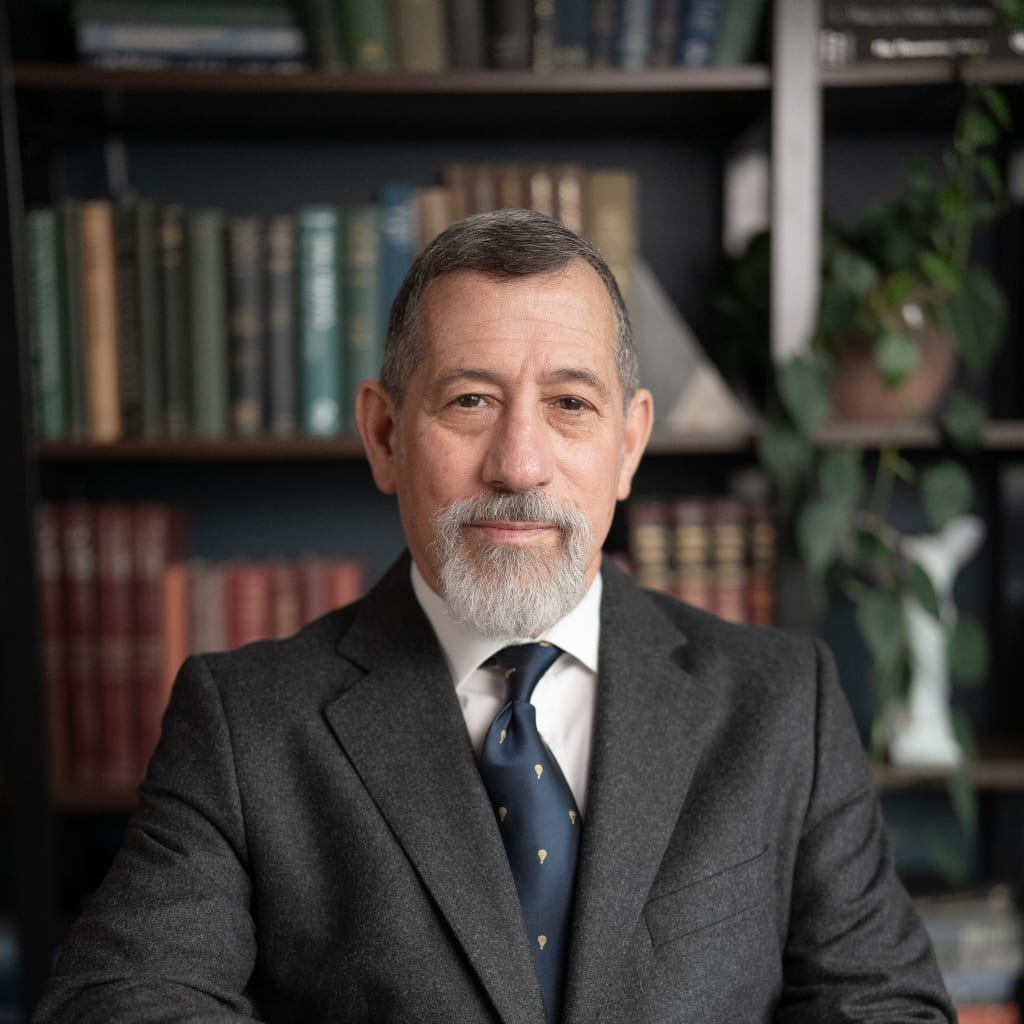 Bruce HoffmanCFR ExpertShelby Cullom and Kathryn W. Davis Senior Fellow for Counterterrorism and Homeland Security
Bruce Hoffman’s interest in terrorism was piqued after watching the 1972 Summer Olympics attack unfold on television. A relatively niche topic of study at the time, it quickly became the focus of Hoffman’s professional career—one he attributes as much to fate and luck as to deliberate choices. Over five decades, he has studied terrorism and insurgency across academia and the think tank world, served in Baghdad with the Coalition Provisional Authority and then with the Multi-National Force Headquarters, been scholar-in-residence at the CIA, and served on the FBI’s 9/11 Review Commission. Currently a CFR senior fellow, Hoffman reflects on what the United States learned—and failed to learn—from 9/11, the growing threat of domestic extremism, and how complacency leaves the country vulnerable to repeating past mistakes.
Here’s how Bruce Hoffman got his career in foreign policy. If you’re interested in this series, check out more editions here.
What did you want to be when you were little?
I wanted to go into politics. When I was in the first grade, I wrote a letter to Jacqueline Kennedy telling her how pleased I was that her husband had been elected and got a response—not from her, but from her social secretary, Letitia Baldrige. But I lost interest in politics as an adult.
I’m just going to jump right into it because you have a very long, interesting career. You’ve been studying terrorism and insurgency for half a century. When did you first become interested in those topics?
When I was in high school in the late 1960s and early 1970s, international terrorism had burst onto the scene, so I was certainly aware of it. But I didn’t have any particular interest in it until my freshman year of college in 1972.
The attack on the Munich Summer Olympics occurred that September. While everyone was off doing freshman activities, I was glued to a black-and-white TV over the next couple of days as the attack unfolded. At the time, there was no way to study terrorism, but I thought, “This is fascinating.” Terrorism, even today, is routinely derided as ineffectual. Strategically, it rarely delivers victory to terrorists. Even then, I thought: if it’s so unsuccessful, why is the whole world watching?
Four years later, I was in a two-year master’s program at Oxford. Around the time I was trying to figure out my thesis topic in December 1976, the French arrested Abu Daoud, one of the masterminds of the Olympic attack. Despite extradition agreements with West Germany and Israel, the French released him. I thought back to what I had wondered four years earlier—everybody said terrorism was a failed strategy, but here you had a Western country with close relationships with two allies completely defying treaties and breaking international law.
I went to my thesis supervisor and said I wanted to do something on international law and terrorism. He thought it was intriguing but explained that international law is international law: You either abide by it or you don’t. Instead, he suggested something more ambiguous and intellectually challenging: a comparison between the Zionist terrorist groups of the 1940s and contemporary Palestinian terrorist groups.
While researching my thesis in 1977 and 1978, the archives were being released for the final years of British rule over what was then called Palestine and Transjordan. I realized this was a rare opportunity to see how terrorism affected government policy and decision-making. I had never envisioned becoming an academic, but the subject became the means to an end and drove me to get a PhD.
For me, studying terrorism wasn’t an academic pursuit so much as a way to understand how governments previously responded to threats so we wouldn’t make the same mistakes again.
That’s a great example of how passion for a topic can drive the work you do.
That’s 100 percent true in my case. I was completely impractical—I had no idea what I would do with the degree. But I thought it was a tremendous opportunity to delve into archives in Britain, Israel, and the United States and understand the policymaking process and the dynamics between the civilian bureaucracy, the military, intelligence, police, and international humanitarian organizations.
In undergrad, I double majored in government and history. I started out focusing on urban American history and I thought I would go into city planning. My focus changed when, in the spring of my junior year, I took a course called Peace and War in the Nuclear Age. Because of the teachers and course material, I had an epiphany and concluded, “This is really interesting.”
It changed my life. I switched from urban government and basically doubled down on international relations. What I think is significant about that—and about my career—is that fate and luck played as much of a role as intention. If I hadn’t had great mentors and teachers, my mind wouldn’t have been opened up in completely different directions. That’s why my career ended up so different from what I imagined when I started college in 1972.
Later in your career, you co-founded the Center for the Study of Terrorism and Political Violence at the University of St. Andrews—one of the first academic centers of its kind. What inspired you to start the center at a time when terrorism studies was still a relatively niche area of focus?
In 1992, I went to a conference at St. Andrews on terrorism and technology. There was tremendous interest in Scotland at the time because of the bombing of Pan Am Flight 103 four years before, and more students were coming to St. Andrews to study terrorism. Professor Paul Wilkinson, someone I looked up to when I was researching my thesis, believed deeply in the strengths of the liberal Western democratic state in countering terrorism. At lunch on the last day of the conference, I’ll never forget he said to me, “We’re going to open up a faculty line for terrorism studies. Would you consider applying for it?”
You have to remember what was happening in the United States in 1992. The Berlin Wall had fallen in 1989, completely transforming international politics and the defense industry. Everybody was looking for the peace dividend, so defense funding was declining. Interest in terrorism was also declining, because it was seen as a passé, a Cold War-era threat orchestrated by the Soviet Union. With the demise of the Soviet Union and the end of communism, there was a widespread assumption that terrorism would stop occurring.
President H.W. Bush was talking about a “new world order,” and there was no funding for terrorism research. But I thought, “This is my field. I don’t want to leave it, and here I have an offer to go into academia.” I jumped at it.
Paul, who passed away in 2011, was an incredibly rigorous thinker and an excellent academic, but he wasn’t very well organized. Academia doesn’t really train you to be a manager, but I had developed substantial management experience at RAND. Paul was smart enough to realize that to establish a research center at St. Andrews, he needed a partner with those skills. So we co-founded it together and I became its first director. I’m very proud that it’s still going strong.
That’s wonderful—really a testament to your impact on the field. You then went on to work in the counterterrorism field. You were a scholar-in-residence for counterterrorism at the CIA, and later, a commissioner on the FBI’s 9/11 Review Commission. Looking back, what did the United States get right post-9/11, and what did it get wrong?
What I’ve always found is that terrorists, for their survival, have to be learning organizations. They study their mistakes and the mistakes of other terrorist groups, and then strive not to repeat them—otherwise, they won’t survive. That’s the paradox: terrorists are very good at learning, while governments aren’t. I’ve seen governments time and time again marshal resources to counter terrorism and then forget the lessons they’ve learned when the threat recedes. And then terrorism increases again because terrorists see a window of opportunity or a vulnerability they can exploit when we lower our guard.
So that’s the biggest lesson: we would be far better off if we had a consistent, stable counterterrorism policy—not one that overreacts and swings to extremes. That, to me, is what we got wrong.
What we get right is reorganizing bureaucracies, sometimes over-organizing them, to counter a threat. Some agencies we created after 9/11 admittedly are still struggling for relevance, but others have been tremendously successful. The National Counterterrorism Center, for example, has been vital to our defense.
I worry that today terrorism is becoming more politicized than ever. The danger in labeling something you don’t like as terrorism is that rather than being empirically objective, you become politically selective. That’s a huge problem—and a huge mistake.
Your career spans the think tank world, academia, and government-adjacent work. Were those transitions part of a deliberate strategy, or did they happen organically?
I would say fate, but also luck. You have to be in the right place at the right time, and cognizant enough to take advantage of opportunities when they come your way. I think it was pivotal to be in Washington, otherwise I wouldn’t have had those opportunities.
I never actually worked for the CIA or the FBI. I was a congressionally appointed commissioner when I worked at the Hoover Building for seventeen months. With the CIA, I was on a temporary assignment through the Interpersonal Government Act—similar to the way we have military and intelligence fellows at CFR. It made the transition from a think tank very easy, because the think tank continued paying my salary while I was at the CIA, and later with the Coalition Provisional Authority and multi-force headquarters in Baghdad.
The congressional commission was, for me, also fate. In 2009, I wrote a Washington Post op-ed and Congressman Frank Wolf, a Republican, called me up and said, “I really liked your op-ed, and I’d like to meet with you. Are you a Republican or a Democrat?” And then he caught himself and said, “I don’t care. I like how you’re thinking, and I want to learn from you.”
We formed a very close relationship. At that stage, I was probably more connected to a number of centrist Democrats. This was when Congress was willing to work across the aisle and had a much more bipartisan mentality. So when you had a congressman willing to work with the other party, you could get a lot done. I became a kind of bridge for doing that.
Following the Boston Marathon bombing in 2013, there were all sorts of questions about whether the FBI had successfully transitioned from being a law enforcement agency to one with an intelligence mandate. That’s why Wolf set up the FBI 9/11 Review Commission, and I was the independent member. Unlike the original 9/11 Commission, which was quite large, there were only three commissioners: one Republican, one Democrat, and me as the independent.
You’ve traveled to conflict zones and interviewed terrorists and extremists. What were those experiences like, and what did they teach you that research alone couldn’t?
It was easier to do those interviews then than it is now. Before social media and the internet, terrorists were always looking for a cipher. They wanted to get their message out, and they were willing to talk to academics to do so, whether they were sympathetic to their cause or not. Many groups thought they had “made it” if a researcher was interested in interviewing them.
What always struck me in these conversations was how normal terrorists are. That’s not to justify or excuse the violence they commit, but it’s too easy to dismiss them as monsters. If you do that, you can’t understand why they chose this particular path, what their motivations were, and what they hope to achieve. If you write them off simply as monsters, you can’t engage them in dialogue and, from that, build more targeted and effective measures to counter terrorism.
I have also met lots of young people who became terrorists. The one thing I found consistent is that, especially in the 1980s and 1990s, the conventional wisdom was that the media was the main reason people became terrorists, that the media glorified or romanticized terrorism. But talking to these young people, I found that was not the case at all. It had nothing to do with the media and was usually something the security forces—the police, military, or intelligence services—had done, like treating an elderly relative or a younger family member with disrespect or with particular violence. That goes back to what we were saying earlier: that governments often overreact, and that overreaction was why people were becoming terrorists.
Recently, you’ve shifted your focus to domestic terrorism—you published a book on the topic a few years ago. Did you ever anticipate that domestic extremism could come to rival, or perhaps even overshadow, international terrorism as a focus of governments and policymakers?
No, not to the extent that it has. But I have to say my original focus, when I first became an analyst at RAND in 1981, was violent, far-right extremism. I mainly focused on Europe, especially West Germany, Italy, and France, where there were neo-Nazi or neo-fascist movements.
By 1984, I was researching violent extremism in the United States. RAND had contracts with the Department of Energy, which was very concerned about their nuclear weapon sites because most of them were in the south, west, or Pacific Northwest—the centers of white supremacism, anti-government sentiment, and far-right extremism. The Department of Energy was interested in understanding the movement, so from 1984, I was researching and writing on domestic terrorism, including violent left-wing extremism, but also continued my research on violent far-right extremism.
Then, like every other terrorism analyst after the 9/11 attacks, I became solely focused on Salafi jihadism, al-Qaeda, and the groups it spawned. I had completely forgotten about domestic terrorism and violent far-right extremism until 2020, and there were two reasons it reignited my interest. The first is a convoluted story that I won’t go into, but I received a series of death threats that reengaged my interest in domestic terrorism and far-right violent extremism.
Then the COVID-19 pandemic happened. Within days of lockdown, Jacob Ware—my CFR research associate at the time—and I began seeing all this vitriol appearing on social media, essentially blaming Jews. I said to Jacob, “We should write a book on violent far-right extremism,” a topic he had previously studied and published on.
This is what saddens me as we approach the twenty-fifth anniversary of the 9/11 attacks. Twenty-five years ago, our enemies were foreign, and we only had to worry about the threat from one very prominent foreign terrorist organization: al-Qaeda. Today, it’s not just al-Qaeda, but also ISIS and all the franchises and branches they’ve spawned, as well as significant threats of domestic terrorism from both the far left and the far right. This is a much more complex threat environment we face today than we did a quarter of a century ago.
What is the most important lesson you took away from 9/11?
I think it’s indisputable that terrorism is one of the preeminent threats to national and international security in the twenty-first century—as much as we want to deny that.
Secretary of Defense James Mattis was explicit in 2018 when he said that we’re shifting away from counterterrorism to focus on geopolitical competition with rivals. I agree with that shift completely, but that doesn’t mean we should dismiss the threat of terrorism. I think there has been complacency over the past few years, as we’ve seen tremendous downsizing, as well as the loss of institutional knowledge and experience, in counterterrorism. I worry, especially when terrorism has become so politicized, that we’re just going to repeat the same mistakes as before. You can’t treat terrorism as a threat that we focus on episodically and inconsistently.
The other interesting thing is that counterterrorism is so multifaceted. It’s not just the military. It’s not just the police. It’s not just the intelligence agencies. It’s about the soft power as well as the hard power.
What advice would you give to young people who want to work in counterterrorism, national security, or policy research more broadly?
This is not the most favorable environment to go into national security, but it wasn’t when I went into it forty-five years ago, either. It was the election of President Ronald Reagan that resulted in a spike in defense funding that enabled me to be hired at RAND in the first place. A few years earlier, I wouldn’t have been able to get a job there.
But there was no smooth glide path into my career, and it was never obvious. It was my interest in the subject and dedication to pursuing it that resulted in me uprooting my family and moving to Scotland for almost five years, and then coming back to the United States—specifically Washington, DC—when the opportunity presented itself. It was understanding that you couldn’t create these opportunities themselves, but if you weren’t aware of them, you couldn’t take advantage of them.
Even for people pursuing a PhD, my advice is always that you have to be passionate about the subject and then figure out a way to pursue it. It’s rarely easy to achieve your career goals, but if you are dedicated and committed, hopefully the confluence of opportunity and good fortune will intersect and propel you forward.
More specifically on terrorism, one piece of advice is to always have more than one specialization. Working at a think tank like RAND, you were forced to be something of a utility player. You could know a lot about one thing, but you were forced into a much more comparative mindset, where you were drawing from different experiences and able to make comparative judgments. That was enormously invaluable in helping formulate policy from a broader perspective.
So it’s very important to have a specialization, or perhaps two, but also to understand how that applies to broader national security interests or priorities as well.
Finally, is there any work-related trip, moment, or meal where you really felt the weight of the field you’re in?
It would have to be the morning of 9/11. I was across the road from the Pentagon when American Airlines Flight 77 crashed into it. I didn’t see the plane crash, but I certainly felt the ground shake, heard the explosion, and saw the fireball.
It was pure bedlam right after that, because the federal government told everyone to go home and the streets were gridlocked. You couldn’t go anywhere. There was just complete panic, and I remember thinking that World War III had started. I also thought, “We’re never going to fail to take the threat of terrorism seriously again, and we’ll finally adopt a steady counterterrorism policy.” That belief is, regrettably, eroding nowadays.
We got many things wrong in the war on terrorism. But I remember that night, members of Congress linked arms on the steps of the Capitol and sang “God bless America.” After the panic and fear earlier that day, there was an enormously comforting sense that, united, there’s nothing that can defeat us. The fear, anxiety, and the unity that day produced—I think we’ve kind of forgotten that. We’ve become such a divided nation now that you could never imagine members of Congress doing that now. Or we’ve forgotten that fear, and it’s made us complacent. If anything, we’re even more interconnected with the world today—local events have global repercussions, especially with respect to terrorism. I’m not sure we still completely understand that.
This conversation has been edited for length and clarity.
This work represents the views solely of the author(s). The Council on Foreign Relations is an independent, nonpartisan membership organization, think tank, and publisher, and takes no institutional positions on matters of policy.