How I Got My Career in Foreign Policy: Edward Fishman
Edward Fishman’s career has taken him from government to think tanks to Silicon Valley. He sat down with CFR to discuss the importance of developing your own voice, how tech converges with foreign policy, and the pivotal lesson he learned on a trip to Lithuania.
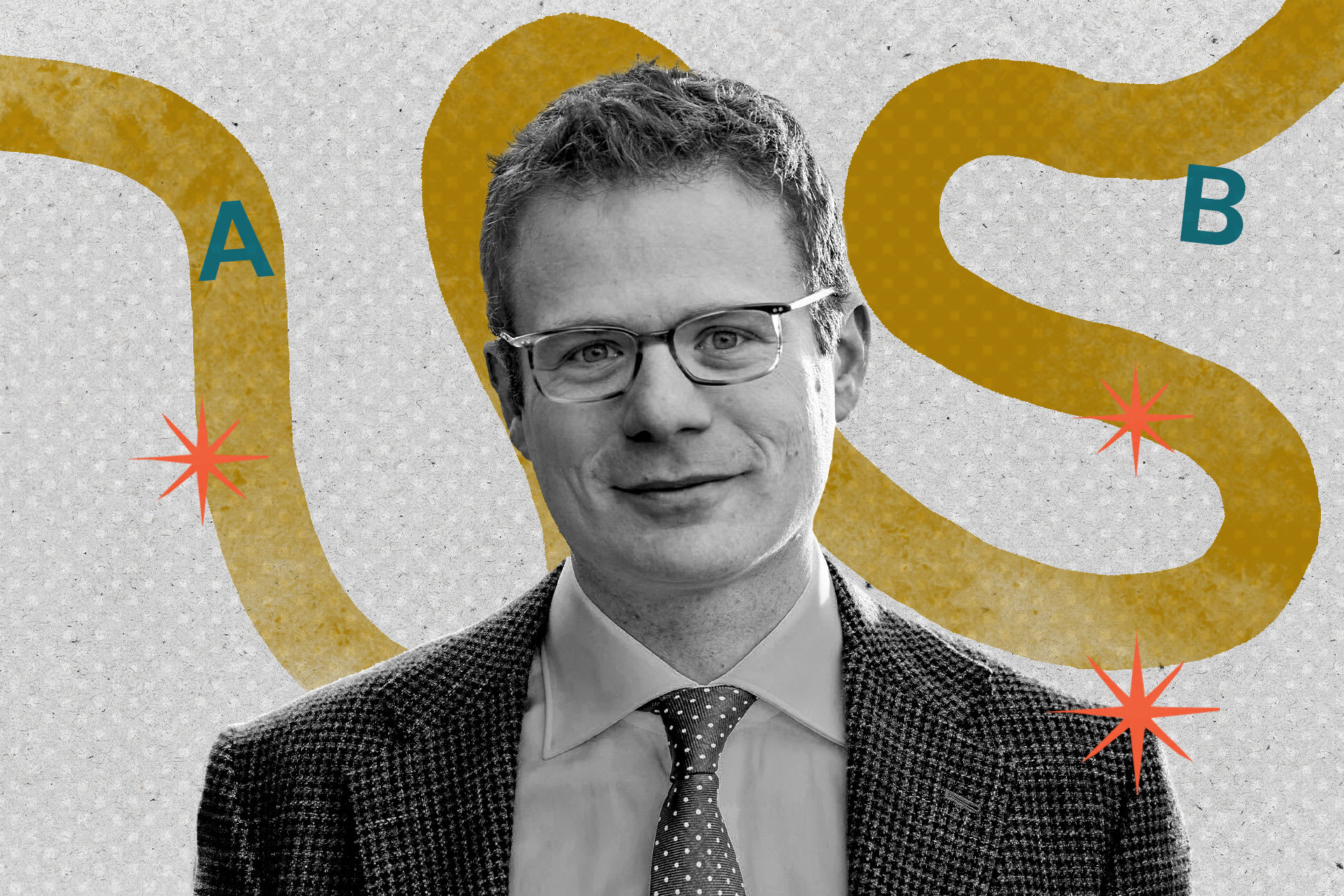
By experts and staff
- Published
- Editor
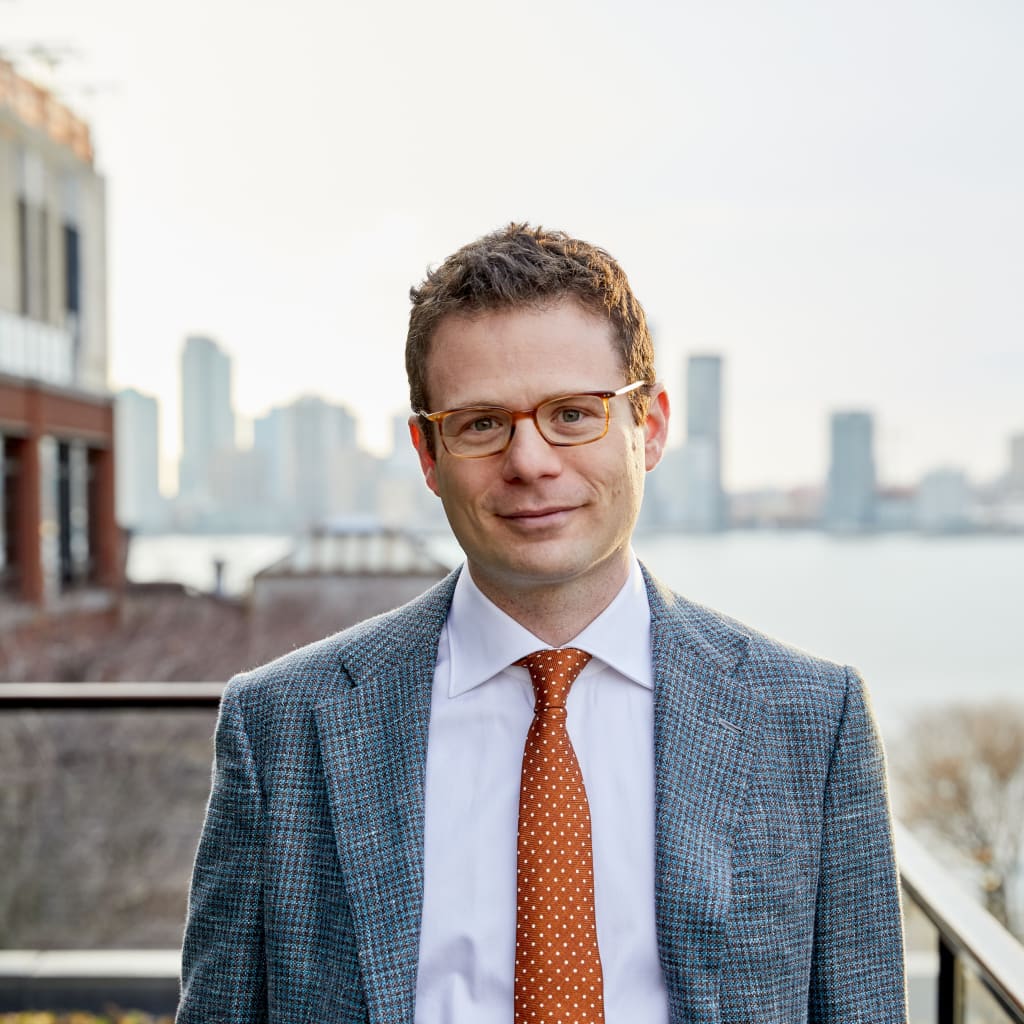 Edward FishmanCFR ExpertSenior Fellow and Director of the Maurice R. Greenberg Center for Geoeconomics
Edward Fishman’s fascination with foreign policy started with his childhood love of hockey and its international players. His interest in world affairs developed into a career that has spanned government, tech, media, and think tanks. After working on Iran and Russia sanctions at the State Department, he left the government to get an MBA at Stanford and cut his teeth at Silicon Valley start-ups. He currently leads the Maurice R. Greenberg Center for Geoeconomics at CFR. Read more about why Fishman believes tech and business experience is crucial to foreign policy, his advice for how young professionals can develop their own perspectives, and how a Lithuanian dairy farmer reminded him of the stakes of international relations.
Here’s how Edward Fishman got his career in foreign policy. If you’re interested in this series, check out more editions here.
What did you want to be when you were little?
I wanted to be an ice hockey player. I grew up outside of Philadelphia in the 1990s when the Flyers went to the Stanley Cup with the so-called Legion of Doom—Eric Lindros, John LeClair, and Mikael Renberg. I was really obsessed with the Flyers and extremely excited about the prospect of joining the team one day.
When did you start getting interested in world affairs or foreign policy?
My interest in world affairs is directly connected to my childhood fantasy of being a hockey player. My hockey career didn’t last very long. But as a fan, I became fascinated by the countries my favorite players came from—Canada, Finland, the Czech Republic, Russia, Sweden. I relished learning the players’ life stories, how to pronounce their names, and how to locate their home countries on the map. In elementary school, I was assigned a project on a country of my choice, and I picked the Czech Republic. That’s probably the earliest seed of my interest in world affairs.
As I got older, I joined the World Affairs Club at my high school and participated in a program called HACIA Democracy—a simulation of the Organization of American States that was held every year in a different Latin American country. That gave me my first taste of what diplomacy would be like and got me more interested in foreign policy.
I saw one of your first jobs after college was at Foreign Affairs magazine. Did you intend to go into journalism, or is that just where you landed?
At Yale, I was a history major and took a lot of classes on international affairs. I studied with professors like Donald Kagan, John Gaddis, Paul Kennedy, Charles Hill, Adam Tooze, and Walter Russell Mead, who was a senior fellow at CFR at the time. Their classes got me hooked on foreign policy, and I knew I wanted to devote a big part of my career to it.
In college, I was the editor of Yale’s student political journal, The Politic. I learned that two previous editors, Fareed Zakaria and Gideon Rose, had gone on to work at Foreign Affairs. I envisioned myself becoming a scholar-practitioner, and I thought the best place to start was at a magazine like Foreign Affairs, where I could learn from the top minds in the field and develop my own voice as a writer. I decided to join the Foreign Affairs editorial staff more as a continuation of my education than as a springboard into journalism.
After Foreign Affairs, you went to work at the State Department. What motivated that transition?
I went to college in the 2000s when the United States was fighting wars in Afghanistan and Iraq, and they weren’t going particularly well. Yet in my classes, I was learning that we were living in a unipolar moment, and that the United States was the most powerful country in history. I felt like there was this contradiction—that the United States was so powerful, but it couldn’t actually achieve its foreign policy objectives.
I became interested in how the United States could use instruments of power beyond military force, particularly economic power. I read a profile by journalist Robin Wright of a Treasury official named Stuart Levey who was creating novel forms of financial sanctions to pressure Iran to give up its nuclear ambitions. Within a week of graduating college, I moved to Washington, DC, to work at the Treasury Department for Stuart Levey’s successor, David Cohen, who was undersecretary for terrorism and financial intelligence.
After that, I went to grad school at Cambridge, then joined Foreign Affairs. I loved my time at the magazine, but by the end of Obama’s first term, I missed being in the action.
So I moved back to Washington and joined the State Department, where I worked on the Iran sanctions team. The timing was fortuitous because I arrived right before Hassan Rouhani was elected president of Iran and right before we entered the pivotal phase of imposing major sanctions and eventually negotiating the nuclear deal.
This is a perfect transition because I was going to ask you about your time working on both Iran and Russia sanctions policies in the Obama administration. Both spheres have changed so much since then. How do you look back on that time—or those achievements—now that everything looks so different?
I’m very proud of what we accomplished, particularly with respect to Iran. President Barack Obama made a strategic decision that instead of going to war, the United States would use economic pressure to try to get Iran to accept meaningful constraints on its nuclear program. The strategy was to combine escalating economic sanctions with serious diplomacy. And it worked.
I remember when we got the Joint Plan of Action (JPOA), which froze Iran’s nuclear program, in November 2013—we were surprised. All of us were hopeful diplomacy could work, but I don’t think we thought it was the most likely outcome. In retrospect, it’s tragic what’s happened since. President Donald Trump undid those gains when he pulled out of the Iran nuclear deal in 2018. But I think history has vindicated Obama’s judgment: that a war with Iran should be a last resort, and that the right approach is to leverage economic pressure to secure concrete, verifiable concessions rather than pursuing maximalist goals like regime change.
We got the JPOA in November 2013, and then Russia invaded Ukraine and annexed Crimea in February and March 2014. This happened at the high point of U.S. confidence in the efficacy of sanctions because we’d just successfully used economic pressure to get Iran to freeze its nuclear program.
At the State Department, we didn’t have a Russia sanctions team because we didn’t have a Russia sanctions program. I raised my hand and volunteered to do it. I’m grateful that experienced diplomats like Daniel Fried took me under their wing and put me in a position to make a difference. They gave me the opportunity to shape a sanctions program from the ground up against Russia. We negotiated the sanctions with the European Union (EU) and the rest of the Group of Seven (G7), which meant I was engaged in several years of constant diplomacy with our European allies. I also served on the State Department’s Policy Planning Staff, which gave me a chance to think more broadly about economic statecraft and the transatlantic relationship while remaining engaged in the day-to-day work of diplomacy.
In retrospect, I think we should have imposed much stronger sanctions on Russia. But I’m proud that we kept the transatlantic alliance together. We didn’t have a catastrophic split between the United States and Europe, which was a real risk given how intertwined the European and Russian economies were at the time.
In 2017, you left the government to work at tech start-ups Zoox and Via. That seems like a big sector shift. Why tech?
When I was in the government working on economic statecraft, two things became clear to me. First, there wasn’t enough understanding of how businesses operated within the national security community. Oftentimes we were crafting these policies aimed at changing the incentives of businesses, but few people around the table had actually worked in operating companies. That made me curious about understanding how businesses and financial markets actually work.
Second, Washington in the 2010s was beginning to recognize how important technology was for geopolitical competition. But I had no Silicon Valley experience. I’d grown up outside Philadelphia, gone to Yale and Cambridge, worked at Foreign Affairs in New York and in the government in DC—I had no exposure to the tech industry.
I wanted both to understand how businesses operate and to demystify Silicon Valley in particular. It wasn’t just a means to an end, but I did know that at some point, I’d want to work in foreign policy again.
That’s so interesting. I saw that you did your MBA at the same time, right? That’s a rare degree for a foreign policy expert to have.
Totally, and I’m grateful to have had the opportunity. I did my MBA at Stanford, which put me at the heart of the tech ecosystem. I got to know a lot of entrepreneurs and venture capitalists—the same way that when you work and study in DC, you meet a lot of people in foreign policy and government.
I think an MBA has been incredibly beneficial overall. It helped me in my work in business, because I hadn’t done the traditional route that a lot of people do out of college, working at a consulting firm or a bank. It gave me the opportunity to learn the hard skills like accounting and finance that are necessary for those jobs.
But beyond that, Stanford has always emphasized management and people management in particular. How do you build teams? How do you motivate people? When I was at Via, a transit tech company, I developed and led a new business line. Here at CFR, I direct the Center for Geoeconomics. The management and leadership skills I learned at Stanford have been invaluable in both of those contexts.
What lessons did you take from your time in Silicon Valley and bring to your work at CFR and Columbia University?
I feel lucky that I’ve been able to demystify a lot of different industries—government, tech, media, think tanks, academia. I don’t think there’s any big secret to success in tech that isn’t applicable elsewhere. What made leaders successful in tech is the same as what made the best leaders I saw in government successful: setting a vision, hiring the best people and building the best teams, and then empowering those people. You give people real responsibility and trust.
The best tech companies do that. Even people without a lot of experience are given responsibility they might never get in a big corporation relatively early in their career. The same is true in government. I think one of the big misconceptions is that the government is so bureaucratic that if you’re young, you’ll have no responsibility and it’ll take twenty years before you’re actually making a difference. That’s not my experience at all.
The U.S. government has such a massive agenda, and there are so many pressing issues, that if you’re a young person willing to roll up your sleeves, work hard, be collegial, and hop on a flight to Europe whenever you’re asked—which is much easier to do in your twenties before you have responsibilities like a family and kids—you’re going to go far. In many ways, DC is an extraordinary place to be a young professional. I don’t know if there’s anywhere else where twenty- and thirty-something-year-olds have so much responsibility over important issues.
Speaking of young people, what’s your advice to those starting out today who want to carve out a career in foreign policy?
A couple things. One is to follow your heart. That’s my number-one career advice, because you will do a better job if you’re pursuing something you’re intrinsically excited to work on. My career in retrospect has taken a lot of twists and turns because I’ve always decided to do what felt most interesting at the time. I didn’t have some grand plan for getting to where I am today.
Put yourself in positions where you’re excited to be there, where you’re working on topics you’re reading about in your free time and excited to talk about, and where you’re surrounded by people you’re excited to learn from.
For foreign policy specifically, I think one of the most important things is developing your own voice and the confidence to formulate your own perspectives. Whether you’re in government debating policy in the White House Situation Room, at a think tank writing books and papers that resonate with people, or at a university teaching and mentoring students, having your own perspective and being willing to state it is crucial. A lot of people, especially younger people, feel they don’t have the right to formulate their own opinion because they haven’t had experience. But you do.
I’m extremely grateful for my time at Foreign Affairs because it gave me the confidence to write out my own ideas and put them forward in the public domain, and to take criticism when necessary. Without that experience, I never would have written my book Chokepoints. You have to be willing to put yourself out there. The earlier in your career you can build that muscle and confidence, the better.
Over the years, I assume you’ve had many fascinating work trips and meals. Is there a most memorable one?
There’s one that really stands out. When I was working on Russia sanctions at the State Department, I spent a lot of time in Europe talking to EU countries about sanctions, understanding how they were affecting their economies, and sustaining political support for them. The EU required unanimous support every six months to renew sanctions. Any country could have said the sanctions were hurting their economy too much, vetoed them, and all the sanctions would have disappeared.
I remember going to Vilnius, the capital of Lithuania, a wonderful city. Lithuania had taken the biggest economic hit because they’d sold a lot of goods to Russia—milk, cheese, yogurt, chocolates. Russia was their main export market before the 2014 annexation of Crimea. After meeting with members of the government in Vilnius, we went out into the countryside to meet with a woman who ran a large dairy farm.
For the first fifteen minutes, she talked about how sanctions had affected her business. She’d lost 50 percent of her revenue. We were all sitting there, the U.S. delegation, wondering how to convince her to support sanctions when she was suffering so much. We expected her to ask for carve-outs. But instead she said, “You should be hitting Russia harder.”
Lithuania borders Russia and had been subjugated by the Soviet Union. It illustrated something that will live with me forever—when you’re on the front lines of geopolitical conflict, there are higher priorities than material well-being. For this dairy farmer, it was the ability to live in a free and independent Lithuania. That lesson has stayed with me and given me a sense of the stakes of the work we do in foreign policy.
This interview has been edited for length and clarity.
This work represents the views solely of the author(s). The Council on Foreign Relations is an independent, nonpartisan membership organization, think tank, and publisher, and takes no institutional positions on matters of policy.